
A SPAC Transaction Comfort Letter provides essential financial assurance to underwriters during a merger or acquisition. These documents verify historical financial data and ensure compliance with regulatory standards, mitigating risk for all parties involved in a de-SPAC transition. Understanding these requirements is critical for successful deal execution. To help you get started, below are some ready to use template.
Image cover: A Comprehensive Guide to SPAC Transaction Comfort Letter Samples and Templates
Letter Samples List
- Initial Form S-1 Registration Statement Comfort Letter
- Draft Registration Statement Submission Comfort Letter
- Special Purpose Acquisition Company Pricing Comfort Letter
- Initial Public Offering Closing Bring-Down Comfort Letter
- Form S-4 Business Combination Proxy Comfort Letter
- De-SPAC Transaction Target Financials Comfort Letter
- Unaudited Pro Forma Financial Information Comfort Letter
- Super 8-K Current Report Filing Comfort Letter
- Subsequent Events Negative Assurance Comfort Letter
- Capital Table and Dilution Verification Comfort Letter
- Merged Entity Consummation Bring-Down Comfort Letter
- Securities and Exchange Commission Response Comfort Letter
Initial Form S-1 Registration Statement Comfort Letter
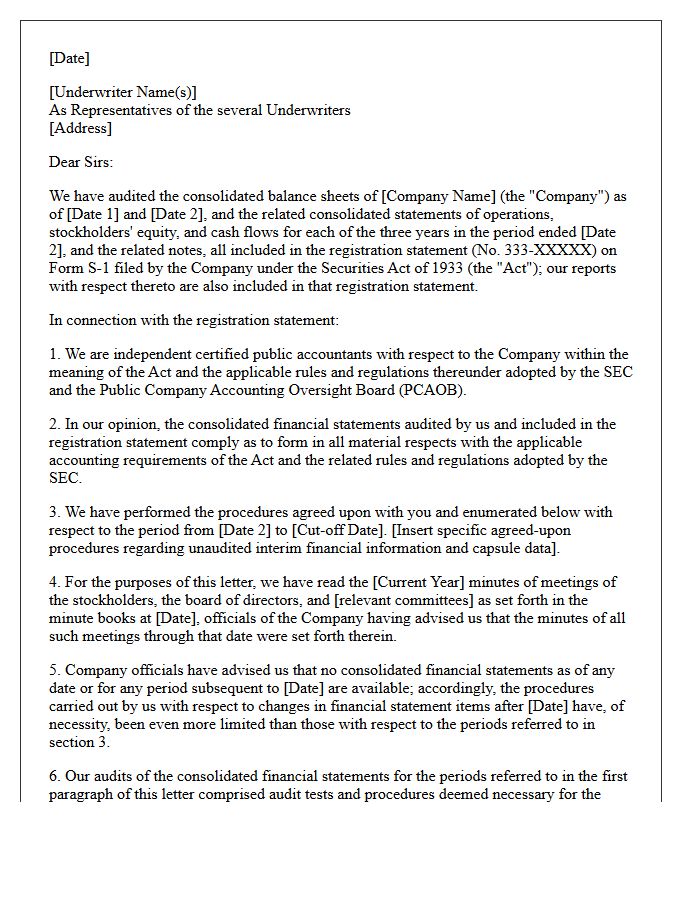
An initial Form S-1 registration statement requires a comfort letter to provide negative assurance to underwriters. This document, prepared by independent auditors, verifies that financial data not covered by audited statements remains consistent with accounting records. It serves as a vital due diligence tool, protecting underwriters from potential liabilities under the Securities Act. By confirming the accuracy of interim figures and subsequent changes, the letter ensures transparency and builds investor confidence during the complex IPO process before the registration statement becomes effective.
Draft Registration Statement Submission Comfort Letter
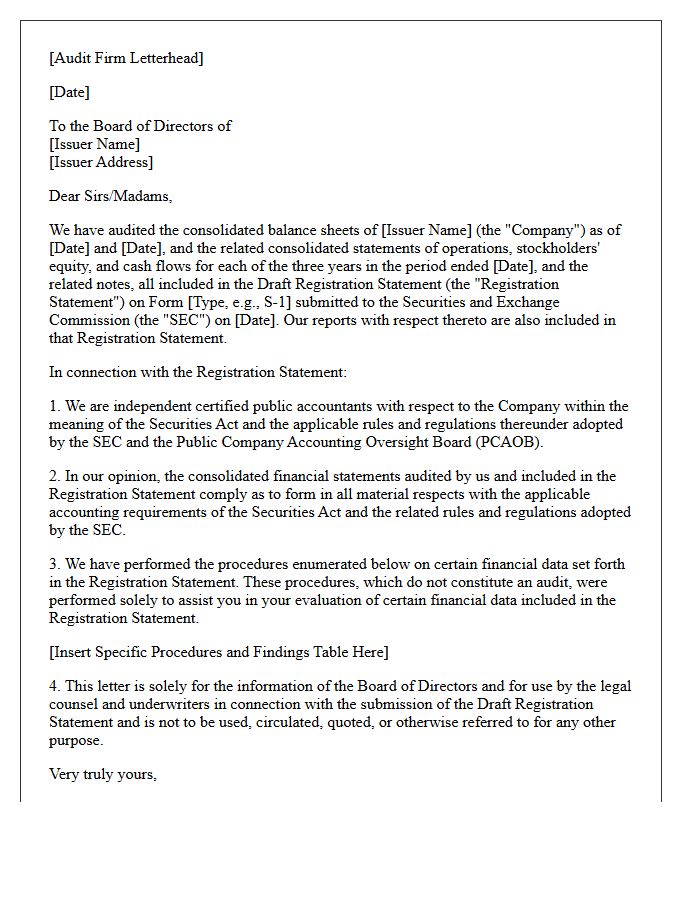
A Draft Registration Statement Submission Comfort Letter is a professional assurance issued by independent auditors to underwriters during the confidential filing process. It verifies that financial data within the preliminary prospectus aligns with audited records. This document provides negative assurance, confirming no material changes have occurred since the last audit. It serves as a vital due diligence tool, protecting parties from liability by validating the accuracy of unaudited financial information before a company officially goes public through an IPO.
Special Purpose Acquisition Company Pricing Comfort Letter
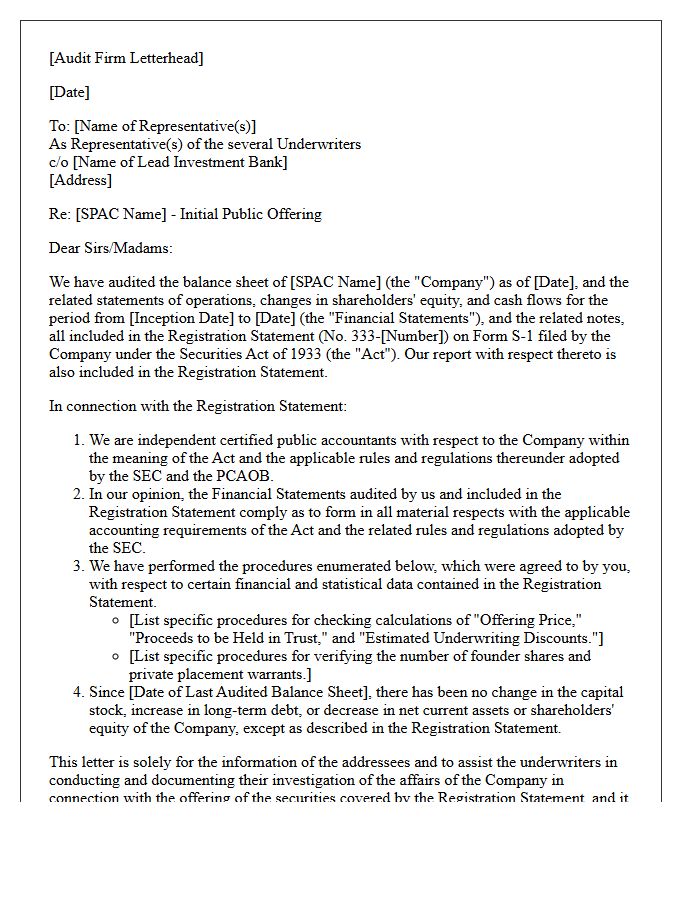
A Special Purpose Acquisition Company (SPAC) pricing comfort letter is a vital document issued by auditors to underwriters during an IPO. It provides negative assurance regarding the accuracy of financial data within the registration statement. This letter validates that financial information, not subject to a full audit, aligns with the company's accounting records. For investors and sponsors, it minimizes liability risks and ensures financial transparency. Ultimately, it serves as a critical due diligence tool, confirming the integrity of the figures used to price the SPAC's initial public offering effectively.
Initial Public Offering Closing Bring-Down Comfort Letter
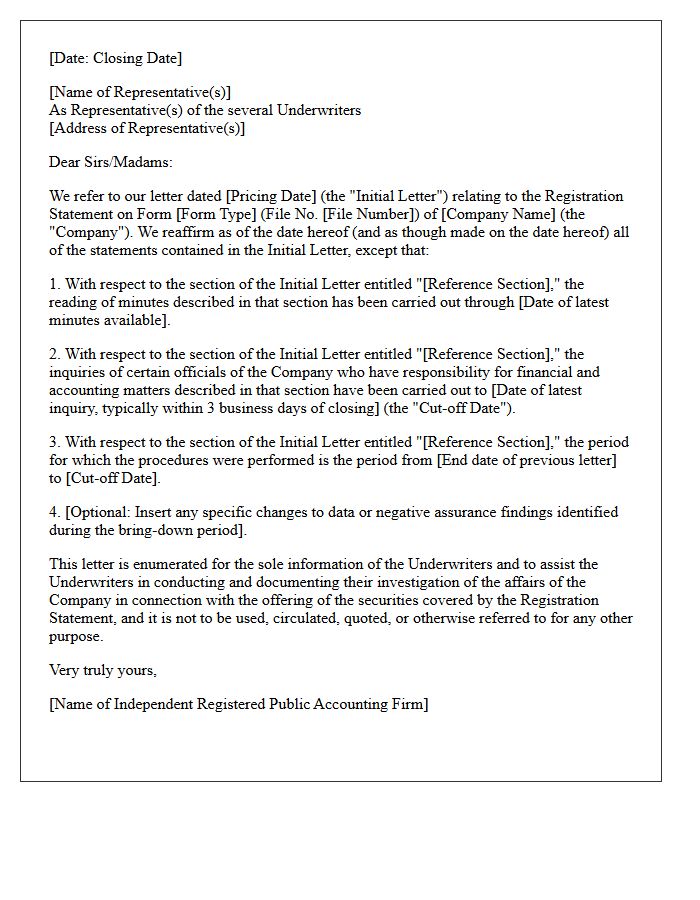
An Initial Public Offering closing bring-down comfort letter is a critical financial document issued by independent auditors to underwriters. It serves as a reaffirmation of the data provided in the initial comfort letter, ensuring that no material adverse changes have occurred in the company's financial position between the effective date and the closing date. This letter provides negative assurance, verifying that financial statements remain accurate and compliant with accounting standards. It is an essential component of the due diligence process, protecting underwriters from potential liability and confirming the issuer's continued fiscal integrity.
Form S-4 Business Combination Proxy Comfort Letter
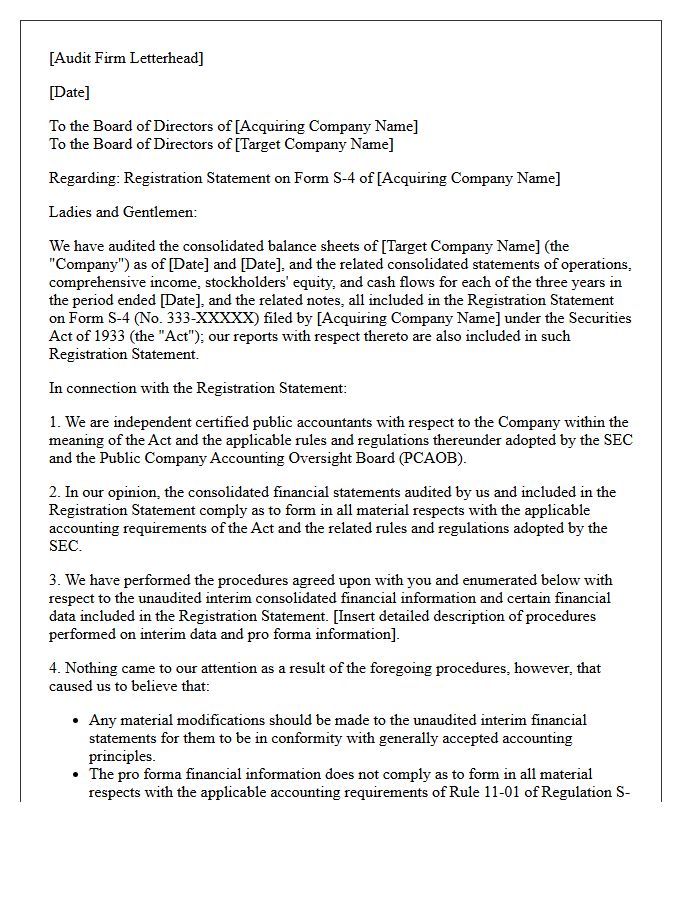
A Form S-4 Business Combination Proxy Comfort Letter is a critical document issued by independent auditors to underwriters and boards during a merger. It provides negative assurance regarding the accuracy of financial data and unaudited statements within the registration filing. This letter mitigates legal liability by demonstrating due diligence, ensuring that financial figures remain consistent between the audit period and the effective date. It serves as a vital risk management tool, verifying that no material adverse changes have occurred, thereby maintaining investor confidence during complex M&A transactions and corporate reorganizations.
De-SPAC Transaction Target Financials Comfort Letter
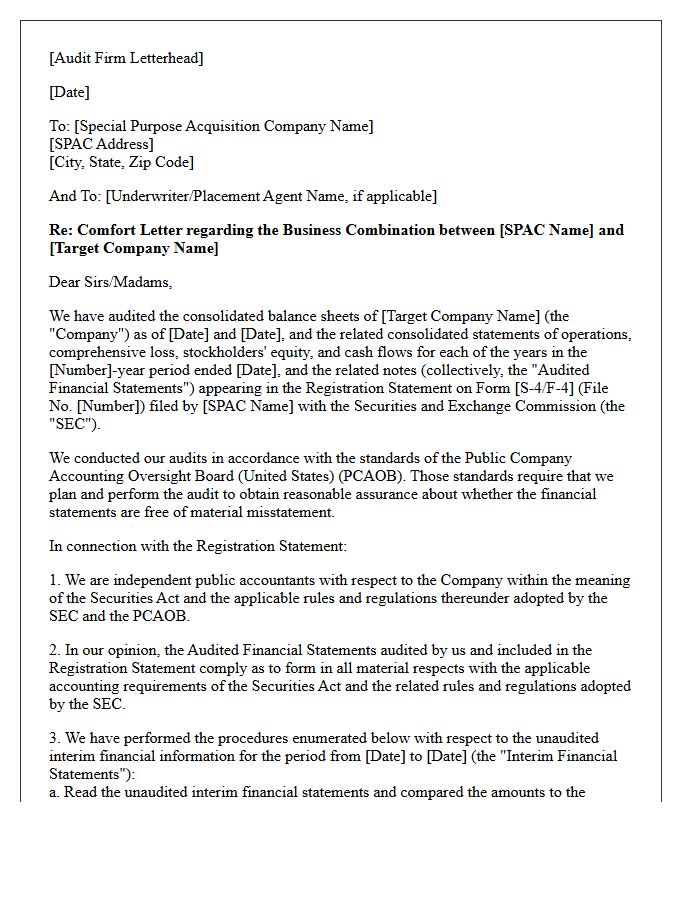
A De-SPAC comfort letter is a critical document issued by independent auditors to provide negative assurance on the accuracy of a target company's financial data. It ensures that the financial statements and pro forma information included in the registration statement are reliable for investors. This process bridges the gap between private accounting standards and public market requirements, mitigating legal risks for underwriters. Obtaining this letter is essential for maintaining financial integrity and securing underwriter due diligence during the complex transition of a private entity into a publicly traded corporation.
Unaudited Pro Forma Financial Information Comfort Letter
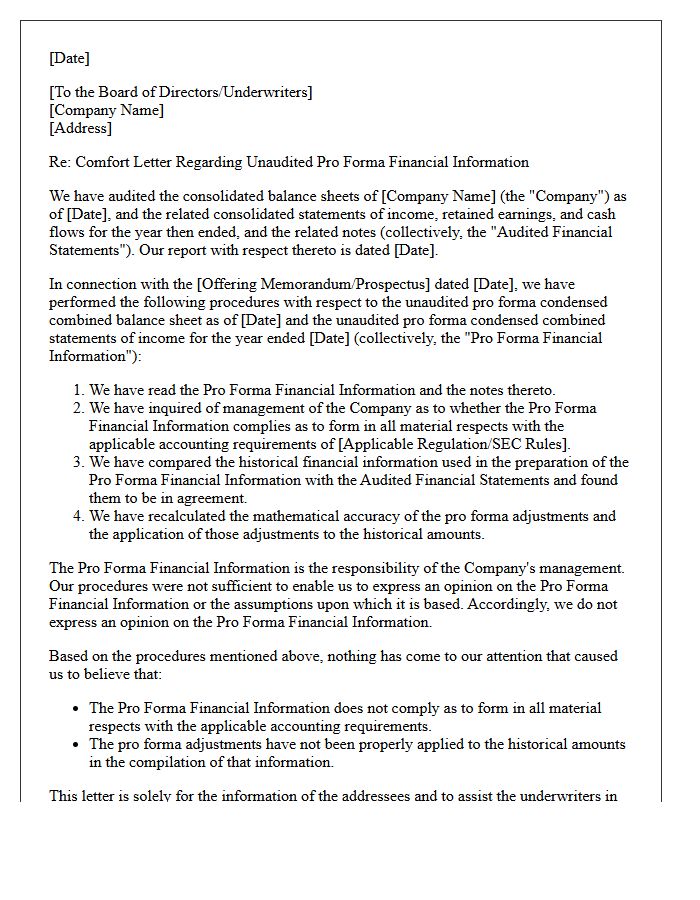
An Unaudited Pro Forma Financial Information Comfort Letter provides negative assurance to underwriters regarding adjusted financial data. This document verifies that pro forma adjustments are based on reasonable assumptions and comply with accounting standards. It ensures that hypothetical events, such as mergers or acquisitions, are correctly reflected in historical statements for regulatory filings. While not a formal audit, this due diligence tool is essential for managing risk and validating financial projections during capital market transactions.
Super 8-K Current Report Filing Comfort Letter
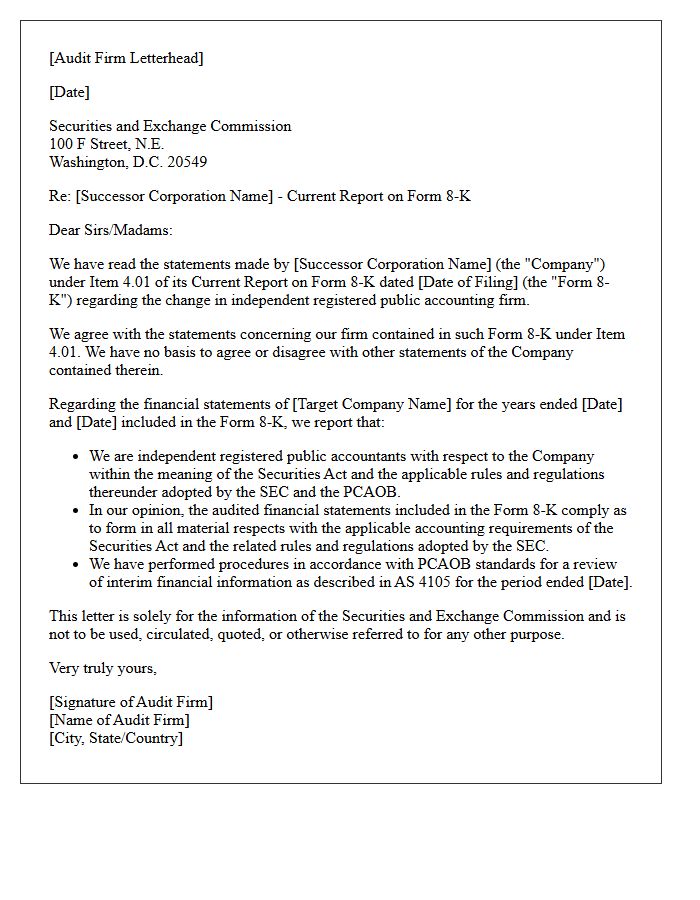
A Super 8-K Current Report is a critical filing required when a shell company completes a reverse merger. A comfort letter is often issued by independent auditors to provide negative assurance regarding financial data within this filing. It verifies that no material modifications are needed for the financial statements to comply with GAAP. This document is vital for investors as it mitigates risk by ensuring the accuracy of the pro forma information provided during a significant corporate transition, maintaining transparency and regulatory compliance under SEC standards.
Subsequent Events Negative Assurance Comfort Letter
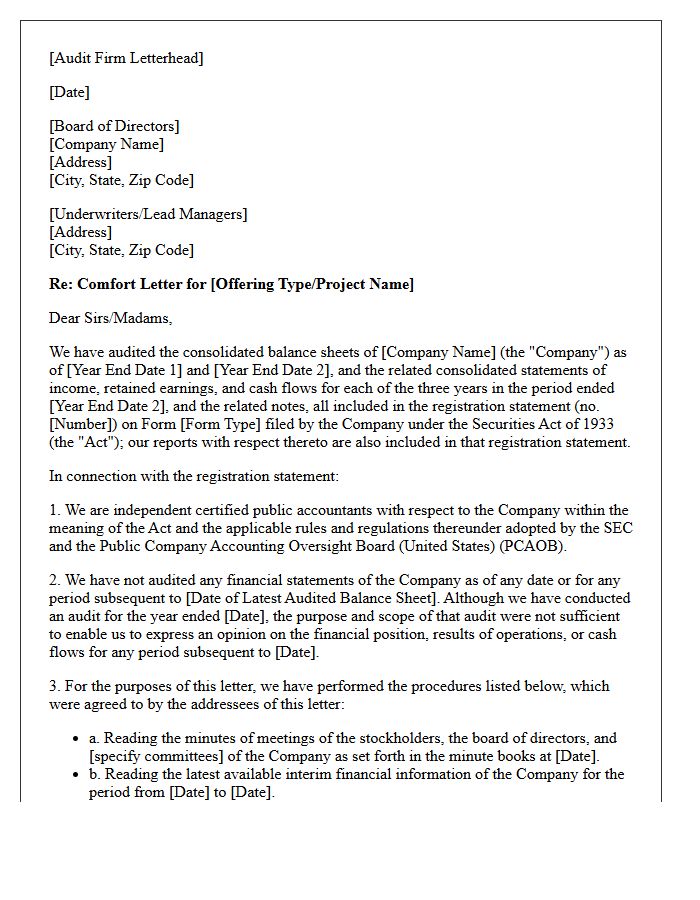
A negative assurance comfort letter provides limited assurance to underwriters regarding subsequent events occurring after the latest audit. It confirms that based on specific procedures, nothing came to the auditor's attention indicating material adverse changes in the entity's financial position or results. This document is essential for due diligence in securities offerings, helping mitigate legal risks for underwriters. It bridges the gap between the last financial statements and the effective date of the registration statement, ensuring no undisclosed downturns have occurred during the intervening period.
Capital Table and Dilution Verification Comfort Letter
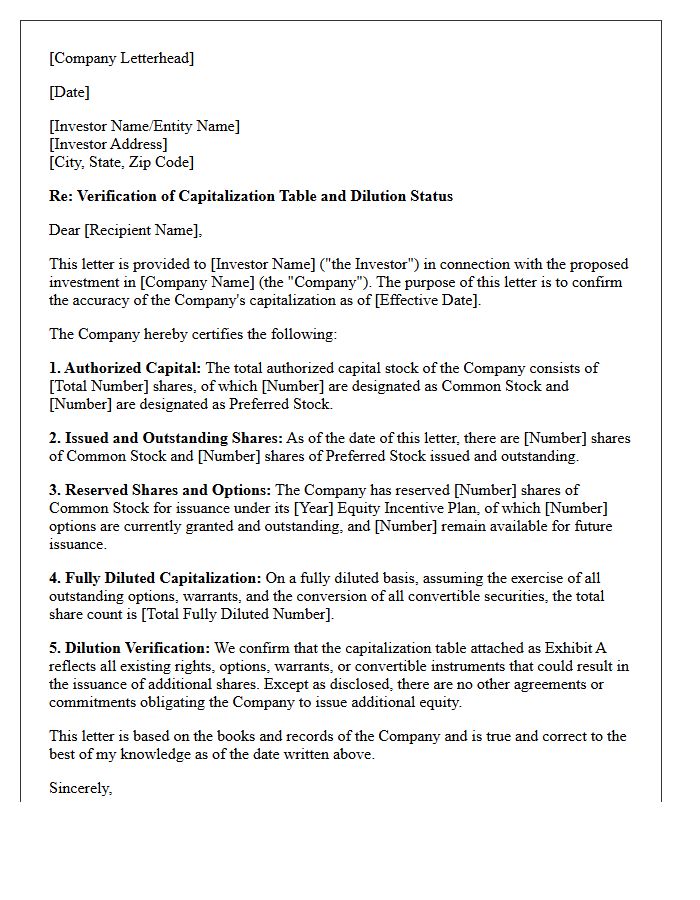
A Capital Table and Dilution Verification Comfort Letter is a formal document issued by an independent accountant or auditor to provide assurance regarding a company's ownership structure. It verifies the accuracy of the capitalization table, ensuring that share counts, options, and warrants are recorded correctly before a transaction. This letter is crucial during an IPO or major funding round to confirm shareholder dilution levels for investors and underwriters. It mitigates financial risk by validating that the equity data presented in legal disclosures aligns with the company's official accounting records and historical issuance data.
Merged Entity Consummation Bring-Down Comfort Letter
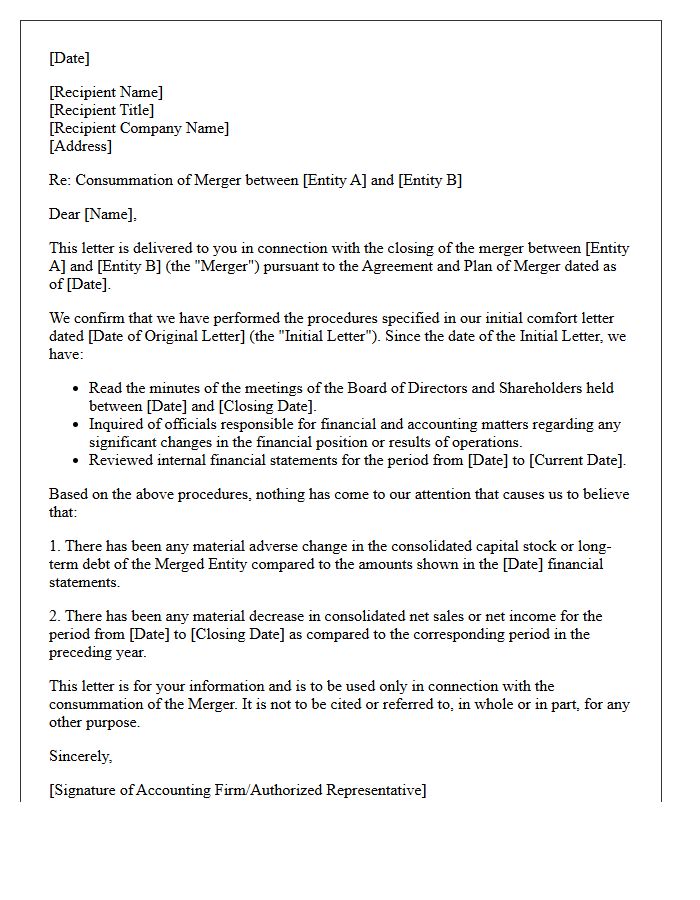
A Merged Entity Consummation Bring-Down Comfort Letter is a vital financial reporting document issued by independent auditors during corporate mergers. It serves to reconfirm that no material adverse changes have occurred in the financial position between the initial audit and the transaction's closing date. This letter provides underwriters and stakeholders with necessary due diligence protection, ensuring that all financial statements remain accurate and compliant up to the final consummation of the deal, thereby mitigating investment risks associated with the newly formed entity.
Securities and Exchange Commission Response Comfort Letter
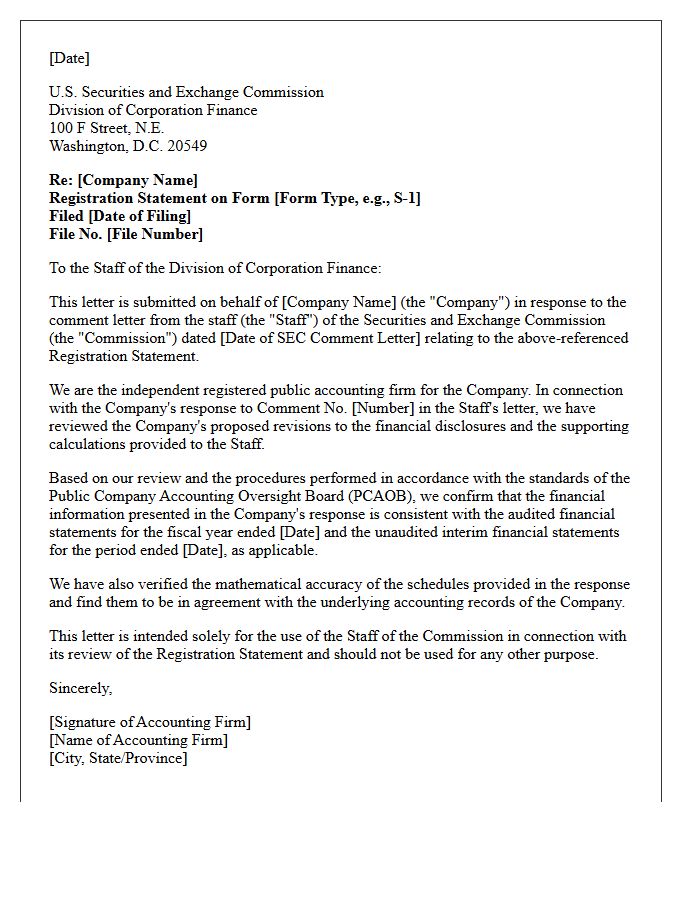
A Securities and Exchange Commission response comfort letter is a critical document issued by independent auditors to underwriters during a securities offering. It provides negative assurance that no material financial changes occurred since the last audited statement. This process ensures due diligence compliance under the Securities Act of 1933, verifying that financial data in the registration statement remains accurate. By mitigating legal risks, it reinforces investor confidence and confirms the financial integrity of the issuing company before the transaction is finalized.
What is a SPAC transaction comfort letter?
A SPAC transaction comfort letter is a document issued by an independent auditor to underwriters or acquisition targets during a de-SPAC merger. it provides negative assurance regarding the accuracy of financial data, subsequent changes in financial statements, and the compliance of pro forma financial information with SEC regulations.
Why are comfort letters required in a de-SPAC business combination?
Comfort letters are required to provide "due diligence" protection for underwriters and the board of directors under Section 11 and 12 of the Securities Act. They verify that the financial information included in the Registration Statement (Form S-4 or F-4) has been properly vetted by the company's auditors.
What specific financial information is covered in a SPAC comfort letter?
The letter typically covers audited historical financial statements of the target company, unaudited interim financial statements, and "capsule" financial data. It also includes a "tick-and-tie" verification of specific numerical data, such as debt figures, EBITDA calculations, and capitalization tables found throughout the merger proxy statement.
Who are the typical recipients of a comfort letter in a SPAC deal?
The primary recipients are the investment banks acting as underwriters or placement agents in the initial SPAC IPO or the subsequent PIPE (Private Investment in Public Equity) financing. The SPAC's Board of Directors may also receive a reliance letter to support their fiduciary duty and due diligence defense.
How does the PCAOB auditing standard impact SPAC comfort letters?
Under AS 6101, auditors must follow strict guidelines when providing comfort to non-underwriters. In de-SPAC transactions, auditors ensure that the financial statements of the private target company are upgraded from AICPA standards to PCAOB standards, which is a prerequisite for the issuance of a formal comfort letter for an SEC filing.


Comments