
A Related Party Transactions Representation Letter is a formal document where management confirms the completeness and accuracy of disclosures regarding dealings with affiliated entities. It serves as critical audit evidence to ensure transparency and compliance with financial reporting standards. Understanding these obligations protects organizational integrity. To simplify your documentation process, below are some ready to use templates.

Image cover: Mastering Related Party Transaction Representation Letters: Essential Samples and Templates
Letter Samples List
- Management Representation Letter for Related Party Transactions
- Board of Directors Related Party Transactions Acknowledgment Letter
- Shareholder Related Party Transactions Disclosure Letter
- Subsidiary Related Party Transactions Confirmation Letter
- Audit Committee Related Party Transactions Approval Letter
- Vendor Related Party Transactions Declaration Letter
- Key Management Personnel Related Party Transactions Representation Letter
- Affiliated Entity Related Party Transactions Verification Letter
- Joint Venture Related Party Transactions Representation Letter
- Parent Company Related Party Transactions Assurance Letter
- Intercompany Balances and Related Party Transactions Representation Letter
- Executive Officer Related Party Transactions Disclosure Letter
Management Representation Letter for Related Party Transactions
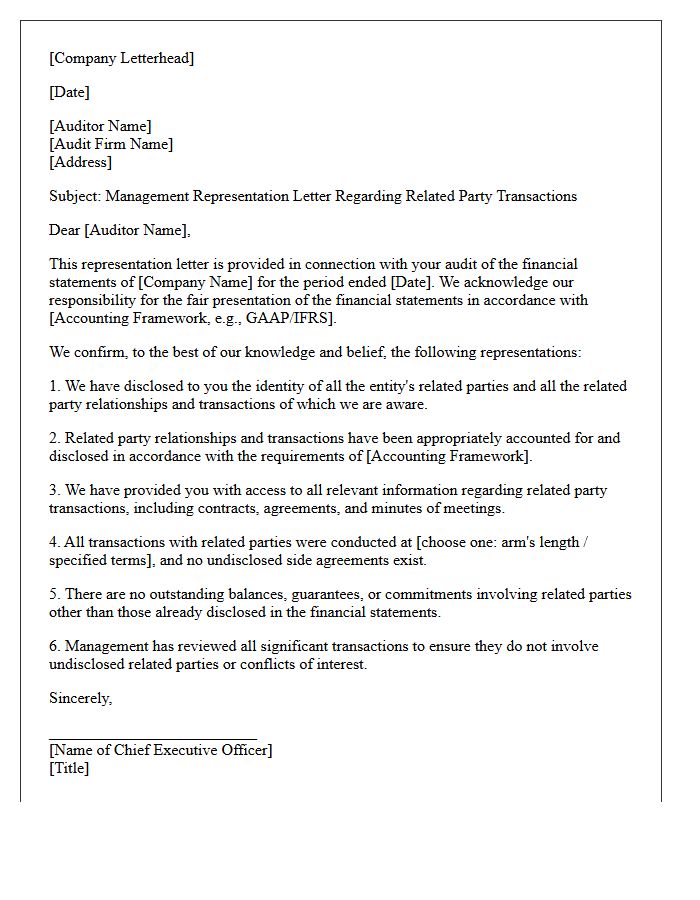
A Management Representation Letter for Related Party Transactions is a formal document where executives confirm the completeness and accuracy of reported dealings with affiliated entities. It serves as crucial audit evidence, ensuring that all intercompany relationships and balances are fully disclosed in the financial statements. This letter protects auditors by affirming that management has identified every related party and documented terms appropriately. Accurate representation is vital to prevent conflicts of interest and ensure transparency, as these transactions must be recorded at arm's length to reflect true financial health.
Board of Directors Related Party Transactions Acknowledgment Letter
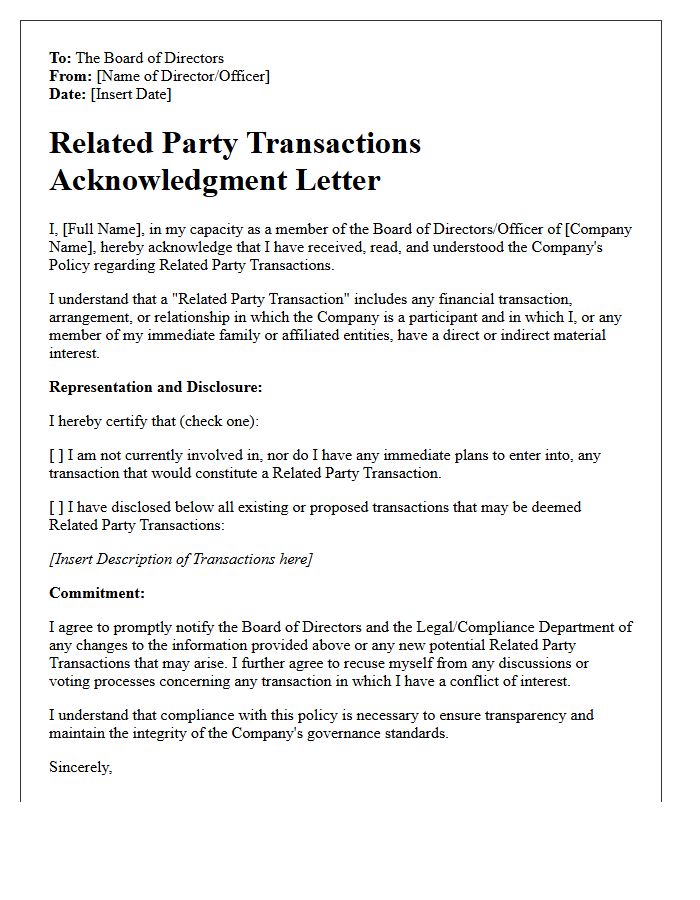
A Board of Directors Related Party Transactions Acknowledgment Letter is a formal document ensuring transparency and ethical governance. It requires directors to disclose personal interests or relationships that may conflict with the organization's welfare. By signing, members confirm their fiduciary duty to prioritize the company above private gain. This process is essential for regulatory compliance, preventing self-dealing, and maintaining stakeholder trust. Accurate disclosure allows the board to review, manage, or recuse individuals from potential conflicts, safeguarding the entity's integrity and legal standing during financial audits or oversight reviews.
Shareholder Related Party Transactions Disclosure Letter
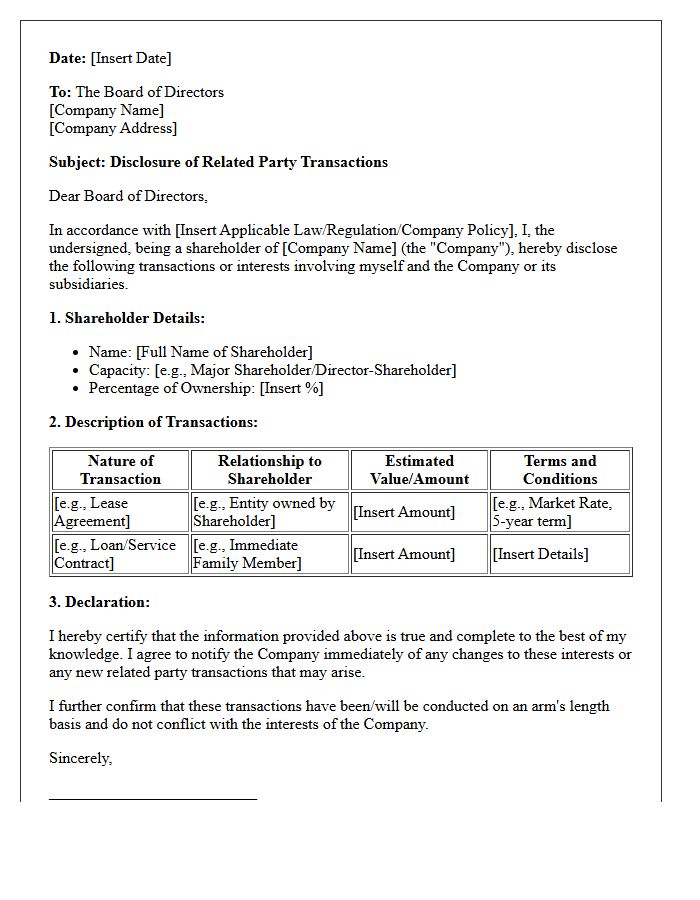
A Shareholder Related Party Transactions Disclosure Letter is a formal document used to maintain transparency regarding financial dealings between a company and its significant owners or their affiliates. It serves to prevent conflicts of interest by detailing the nature and value of these exchanges. Proper reporting ensures compliance with regulatory standards and protects minority investor rights. Accurate disclosure is essential for maintaining corporate accountability, preventing the misuse of assets, and providing a clear audit trail for stakeholders during financial reviews or legal assessments.
Subsidiary Related Party Transactions Confirmation Letter
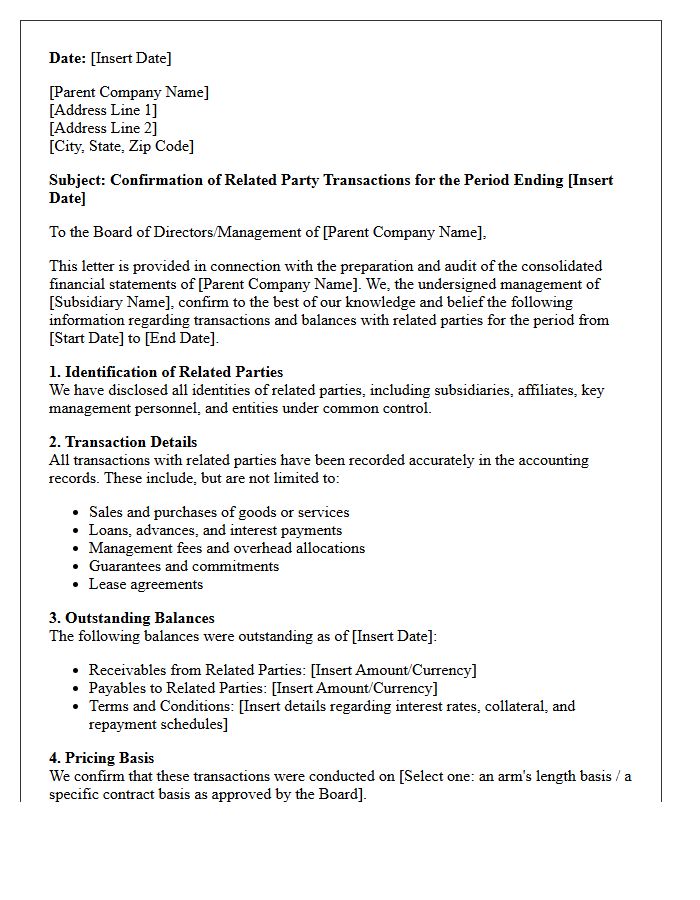
A Subsidiary Related Party Transactions Confirmation Letter is a critical audit document used to verify financial dealings between a parent company and its subsidiaries. It ensures that all intercompany loans, sales, and services are accurately recorded and disclosed according to accounting standards. This formal confirmation helps prevent financial misstatement and ensures transparency for stakeholders. By signing this letter, management validates that every arm's length transaction is legitimate, helping auditors mitigate risks of fraud or reporting errors during the consolidated financial reporting process.
Audit Committee Related Party Transactions Approval Letter
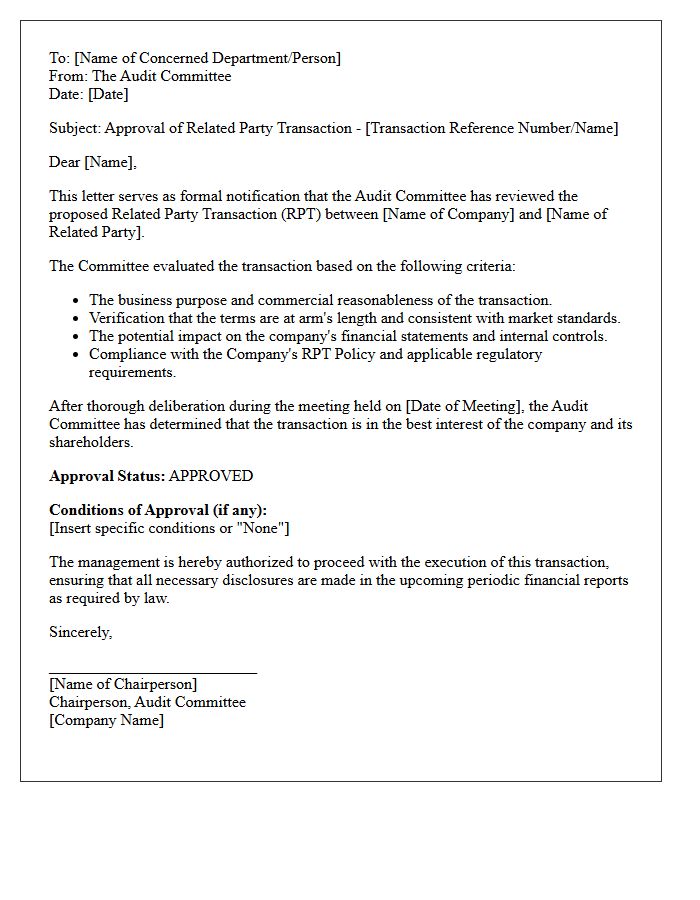
An Audit Committee Related Party Transactions Approval Letter serves as formal documentation that a company's independent directors have reviewed and authorized a deal involving insiders. This letter ensures the transaction is conducted at arm's length to prevent conflicts of interest and protect minority shareholders. It verifies that the terms are fair, reasonable, and in the best interest of the corporation. Maintaining this record is crucial for regulatory compliance and demonstrates transparent corporate governance during financial audits or legal reviews.
Vendor Related Party Transactions Declaration Letter
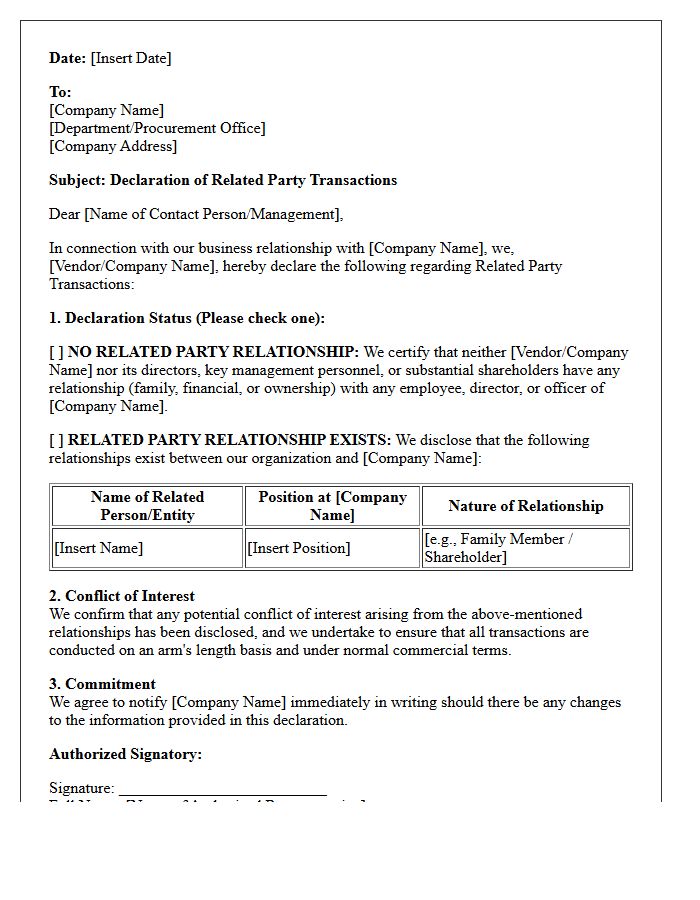
A Vendor Related Party Transactions Declaration Letter is a formal document used to ensure corporate transparency and ethical procurement. It requires suppliers to disclose any financial or personal affiliations between their organization and the hiring company's employees or management. This declaration helps mitigate conflicts of interest, prevents fraud, and ensures compliance with internal governance policies. By signing this letter, vendors confirm that the bidding process remains fair and that no undue influence affects the commercial selection, protecting both parties from legal risks and reputational damage during the onboarding process.
Key Management Personnel Related Party Transactions Representation Letter
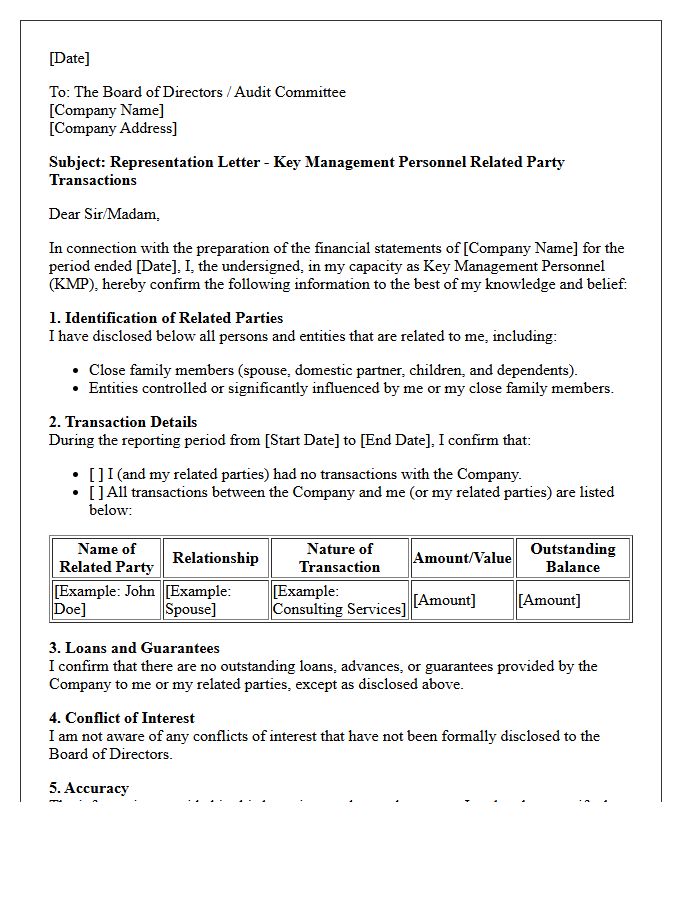
A Key Management Personnel Related Party Transactions Representation Letter is a critical compliance document used during financial audits. It requires directors and senior executives to formally declare all personal or family business dealings with the entity. This ensures transparency, prevents conflicts of interest, and verifies that financial statements accurately reflect related party disclosures in accordance with accounting standards. By signing, management confirms the completeness of transaction data, protecting the organization from undisclosed legal risks and potential financial misstatements.
Affiliated Entity Related Party Transactions Verification Letter
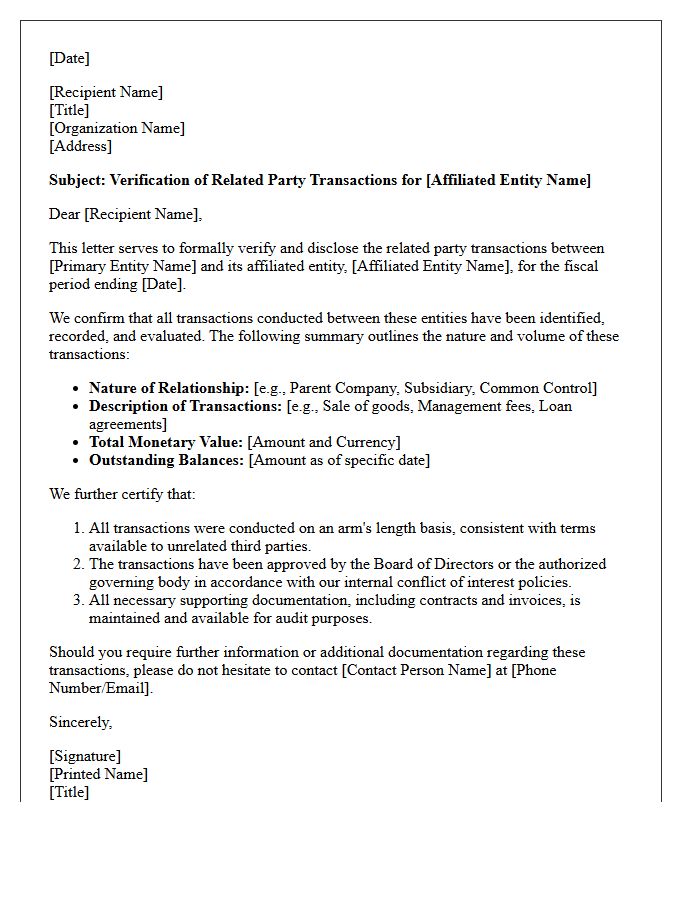
The Affiliated Entity Related Party Transactions Verification Letter is a formal document used to confirm financial dealings between interconnected businesses. It ensures transparency by verifying that transactions occur at fair market value, preventing tax evasion or profit shifting. Auditors and regulators require this letter to validate compliance with accounting standards. It strictly documents loans, services, or asset transfers to safeguard stakeholder interests. Accurately disclosing these intercompany relationships is essential for legal integrity and financial reporting accuracy during corporate audits or regulatory reviews.
Joint Venture Related Party Transactions Representation Letter
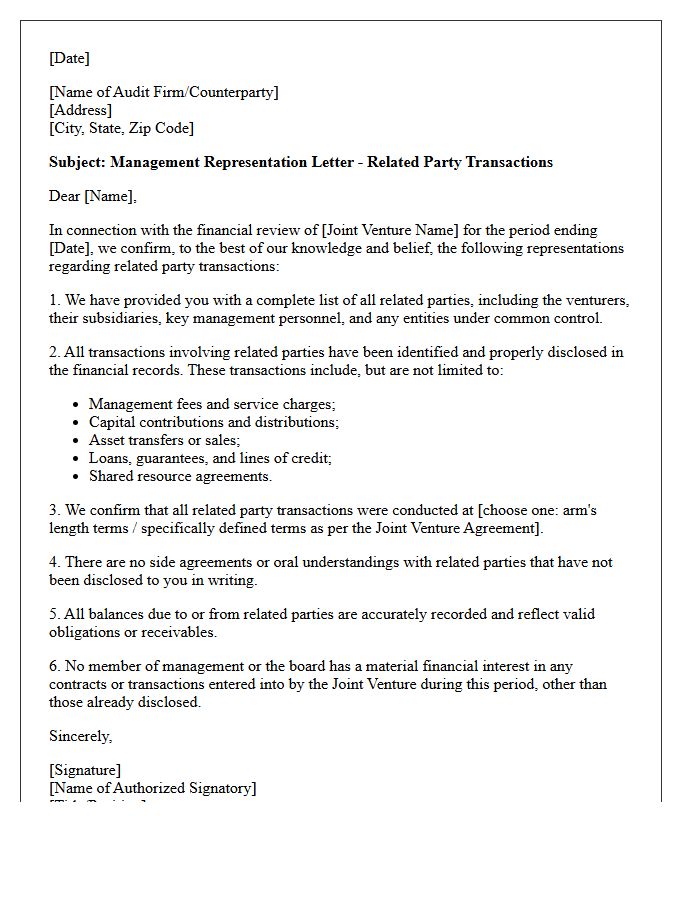
A Joint Venture Related Party Transactions Representation Letter is a formal document where partners confirm the accuracy of intercompany dealings. It ensures that all financial disclosures between associated entities are transparent, conducted at arm's length, and free from undisclosed conflicts of interest. This letter is crucial for regulatory compliance and audit trails, as it protects stakeholders by verifying that no preferential treatment or hidden transfers have occurred. Effectively, it serves as a legal assurance that the joint venture's financial integrity remains intact regarding all related party engagements.
Parent Company Related Party Transactions Assurance Letter
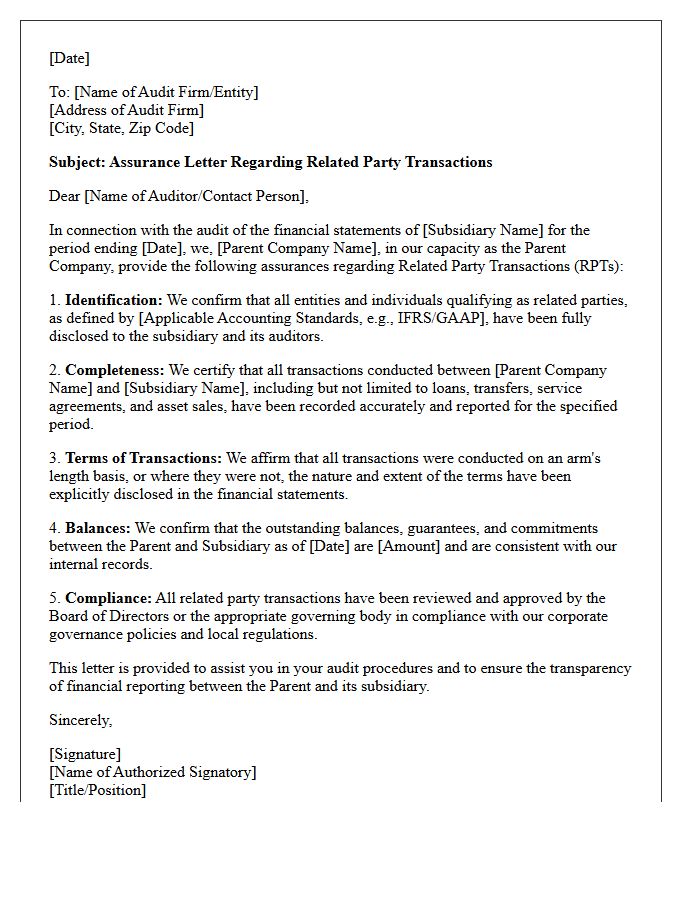
A Parent Company Related Party Transactions Assurance Letter is a formal confirmation provided to auditors or regulators. It ensures that all financial dealings between a parent entity and its affiliates are transparently disclosed and conducted at arm's length. This document validates the completeness and accuracy of intercompany balances, mitigating risks of financial misstatement. By signing this letter, management provides legal assurance that related party relationships do not compromise the integrity of the financial statements, fostering stakeholder trust and maintaining strict regulatory compliance within corporate structures.
Intercompany Balances and Related Party Transactions Representation Letter
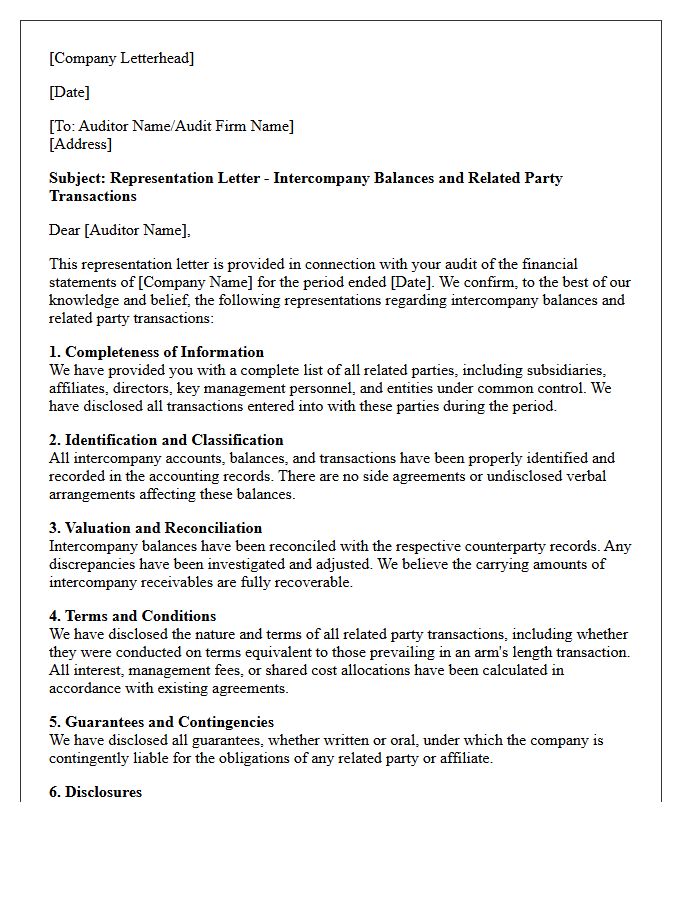
An Intercompany Balances and Related Party Transactions Representation Letter is a formal document where management confirms the accuracy and completeness of internal financial dealings. It ensures that all debts, assets, and transactions between affiliated entities are disclosed and valued at arm's length prices. This letter mitigates risk by certifying that no hidden liabilities exist, providing essential assurance to auditors during the consolidation process. Proper documentation prevents financial misstatement and ensures regulatory compliance across the entire corporate structure.
Executive Officer Related Party Transactions Disclosure Letter
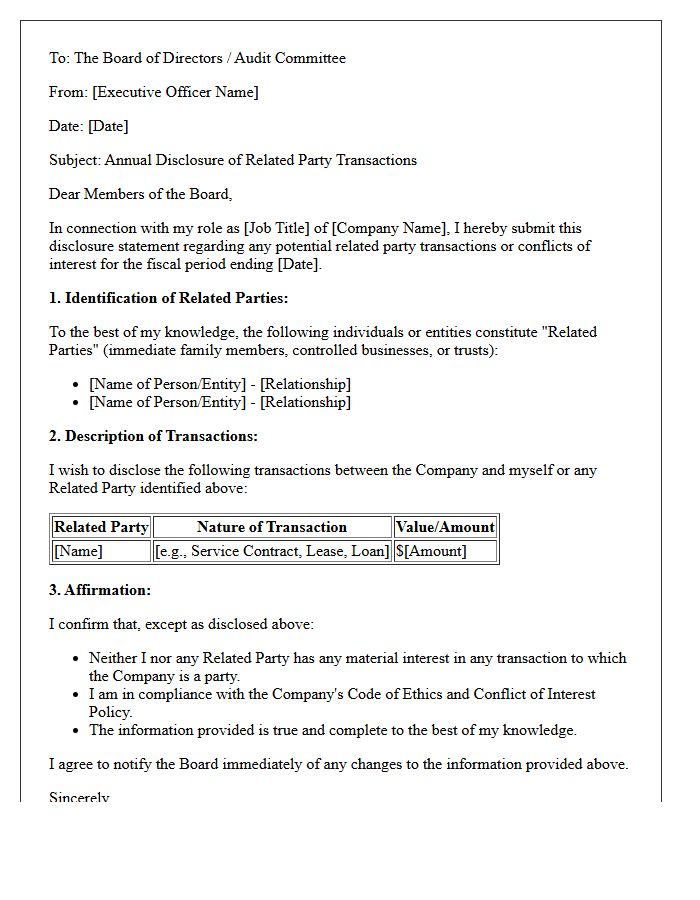
The Executive Officer Related Party Transactions Disclosure Letter is a mandatory compliance document used to identify potential conflicts of interest. It requires executives to formally declare financial dealings between themselves, their immediate family members, and the company. Ensuring transparency in these disclosures is vital for corporate governance and regulatory adherence. By revealing these relationships, organizations protect shareholder interests and maintain ethical integrity. Accurate completion of this letter helps mitigate legal risks and ensures that all material transactions are properly scrutinized by the board of directors and auditing committees.
What is a Related Party Transactions Representation Letter?
A Related Party Transactions Representation Letter is a formal document provided by management to auditors confirming that all relationships, transactions, and balances with related parties have been appropriately identified, accounted for, and disclosed in the financial statements.
What are the key disclosures required in a Related Party Representation Letter?
The letter must disclose the names of all related parties, the nature of the relationships, the types of transactions executed (such as sales, loans, or asset transfers), and the specific dollar amounts and outstanding balances at the end of the reporting period.
Who is responsible for identifying related parties in an audit?
Management holds the primary responsibility for identifying all related party transactions and ensuring they comply with the relevant financial reporting framework (such as GAAP or IFRS), while the auditor is responsible for performing procedures to verify the completeness of these disclosures.
How do auditors use the Management Representation Letter for related parties?
Auditors use the letter as a form of audit evidence to support management's assertions regarding the completeness of the related party list and to document that management has communicated all "arms-length" or non-arms-length transaction details accurately.
What are the consequences of failing to disclose a related party transaction?
Failure to disclose related party transactions can lead to material misstatements in financial reports, increased risk of fraud allegations, qualified audit opinions, and potential legal or regulatory penalties for the organization and its management.


Comments