
A corporate transition can impact your banking experience. If your financial provider undergoes a merger or acquisition, you may choose to relocate your funds to a different institution. This guide explains how to draft a formal notification to finalize your departure and ensure a smooth transfer of assets. To simplify the process, below are some ready to use templates.

Image cover: Closing Your Account After a Bank Merger: Sample Letters and Templates
Letter Samples List
- Letter of Account Closure Due to Bank Merger
- Corporate Account Termination Letter Following Institutional Acquisition
- Customer Letter to Close Account Post-Merger
- Notice Letter for Account Closure After Bank Acquisition
- Business Account Cancellation Letter Due to Banking Consolidation
- Personal Banking Account Closure Letter Prompted by Merger
- Letter to Transfer and Close Account After Financial Institution Merger
- Client Letter of Account Termination Due to Bank Buyout
- Formal Letter to Close Checking Account Following Bank Acquisition
- Savings Account Closure Request Letter Due to Institutional Merger
- Letter Declining New Terms and Closing Account Post-Acquisition
- Institutional Merger Account Withdrawal and Closure Letter
Letter of Account Closure Due to Bank Merger
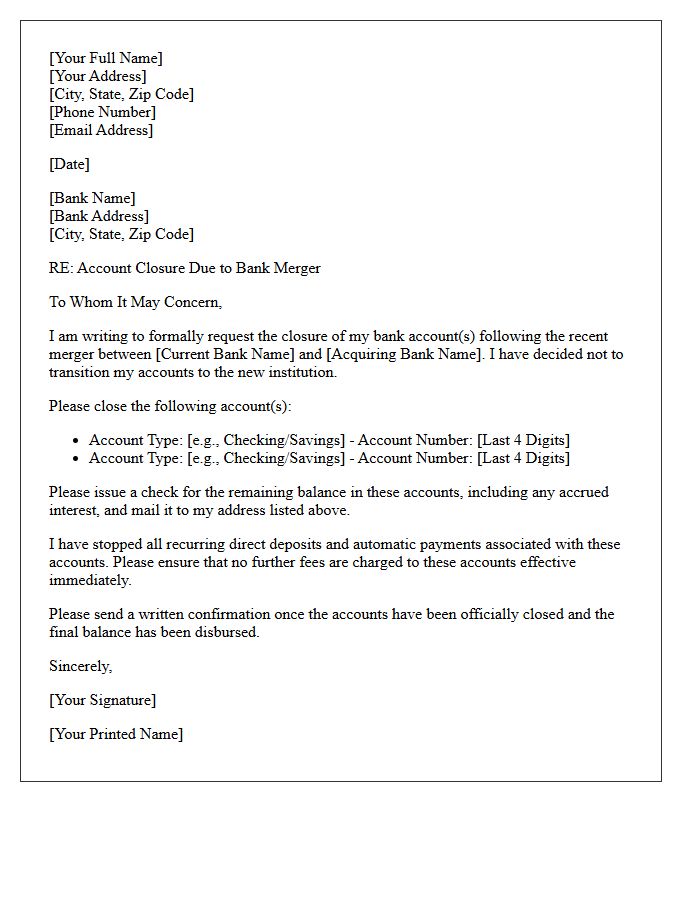
When your bank undergoes a merger, you may receive a Letter of Account Closure if your specific account type is not being migrated to the new institution. It is crucial to review the effective date to ensure all outstanding checks and automated payments are cleared. This notice typically explains how to transfer your remaining balance and provides details on new account options. Acting promptly ensures continuous access to funds and prevents service interruptions during the corporate transition period between the two merging financial entities.
Corporate Account Termination Letter Following Institutional Acquisition
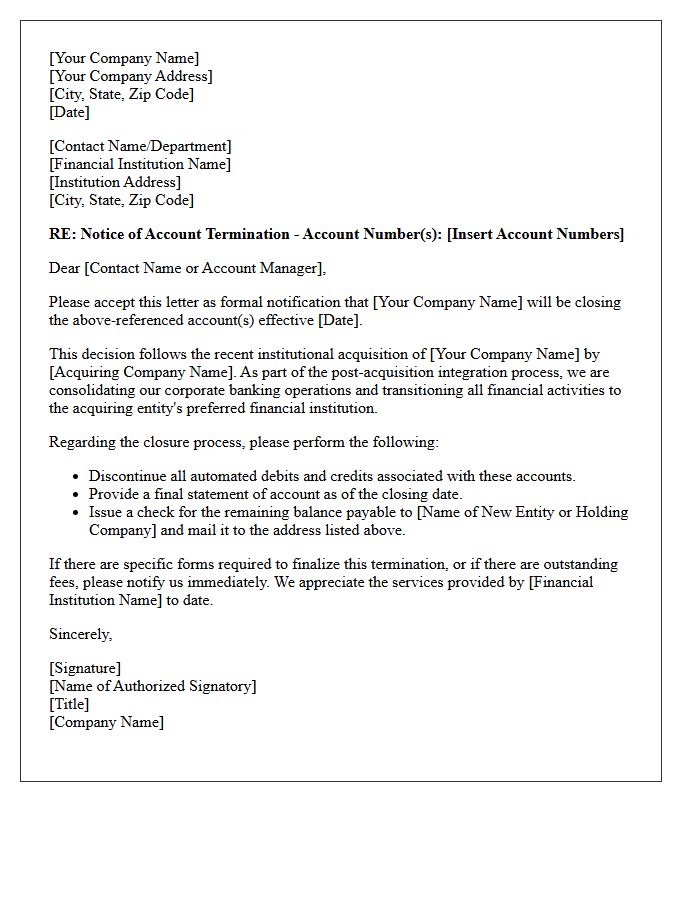
A corporate account termination letter following an institutional acquisition serves as formal notice to end a business relationship due to structural changes. The merger and acquisition process often requires consolidating vendors or aligning with the parent company's existing partnerships. This document must clearly state the effective date, settlement of outstanding balances, and data transition protocols. Providing professional contractual notice ensures legal compliance and preserves professional goodwill while migrating operations to the new institutional framework. Timely communication prevents service disruptions and facilitates a smooth administrative handover between the entities involved.
Customer Letter to Close Account Post-Merger
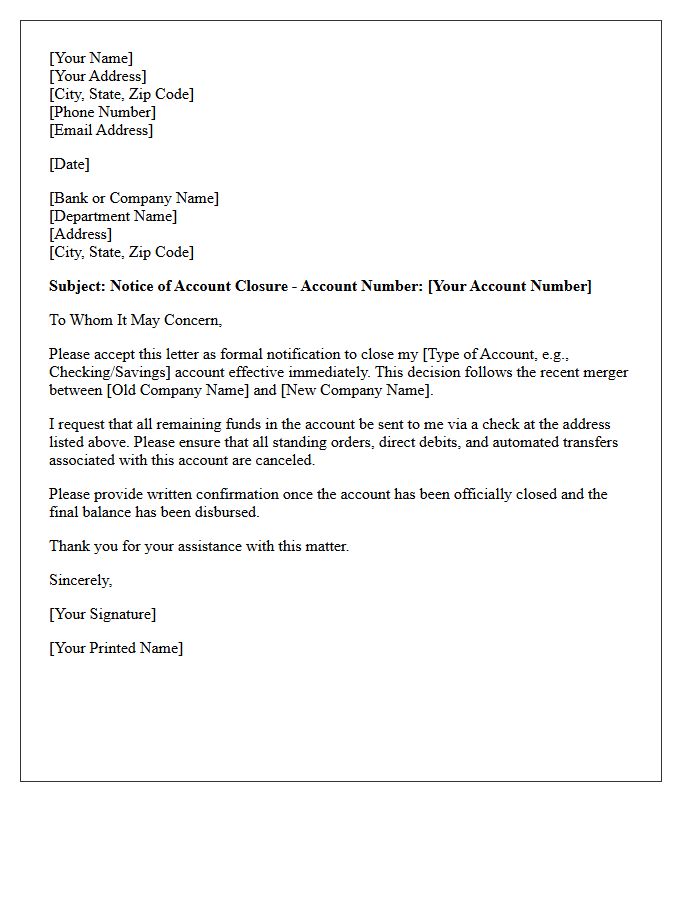
When drafting a customer letter to close account post-merger, clearly state your intent to terminate the relationship due to service changes or updated fee structures. Reference your specific account numbers and the effective date of closure to ensure a smooth transition. Request written confirmation that the account is finalized and that no outstanding balances remain. Ensure all automated payments and direct deposits are redirected beforehand to avoid penalties. Providing a clear reason helps institutions improve their transition processes while protecting your financial records during the banking integration.
Notice Letter for Account Closure After Bank Acquisition
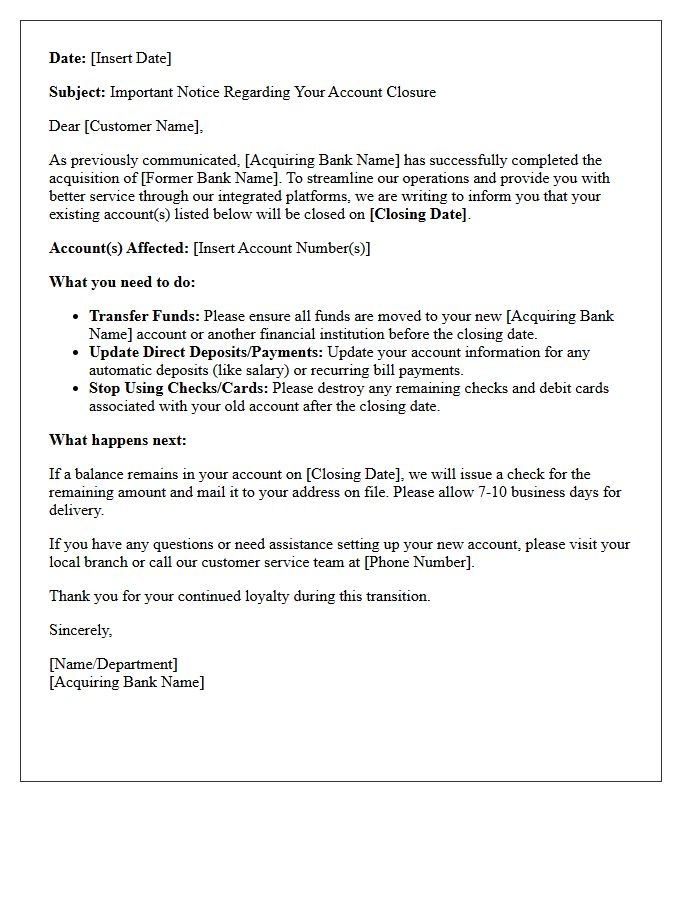
When a bank undergoes an acquisition, customers must prioritize reviewing the Notice Letter regarding Account Closure. This document outlines critical deadlines for transferring funds and updating automated payments. Failure to act can lead to service interruptions or lost access to capital. It is essential to verify new routing numbers and update direct deposits immediately to ensure a seamless transition to the successor institution. Always monitor your final statements for accuracy and confirm that any remaining balances are securely transferred before the specified termination date to avoid financial complications.
Business Account Cancellation Letter Due to Banking Consolidation
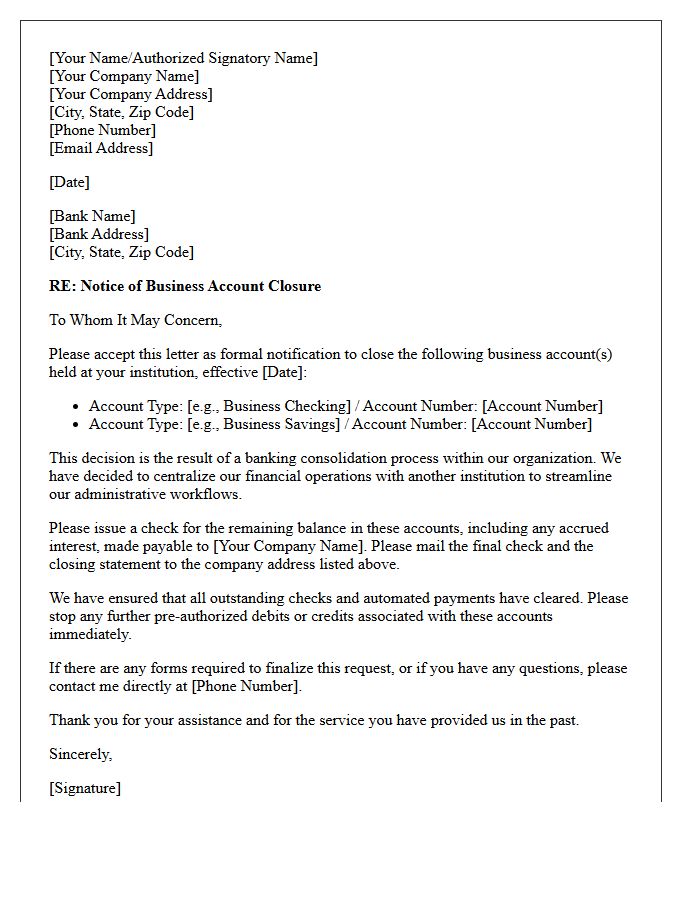
When drafting a business account cancellation letter due to banking consolidation, clarity is essential. Formally notify your bank that you are closing the account because your financial institutions have merged or restructured. Explicitly request the transfer of remaining funds to your new designated account and ask for a written confirmation of closure. Ensure you provide your specific business details and account numbers to prevent processing delays. Managing this transition effectively maintains your credit reputation and ensures that all outstanding transactions are settled before the final account termination.
Personal Banking Account Closure Letter Prompted by Merger
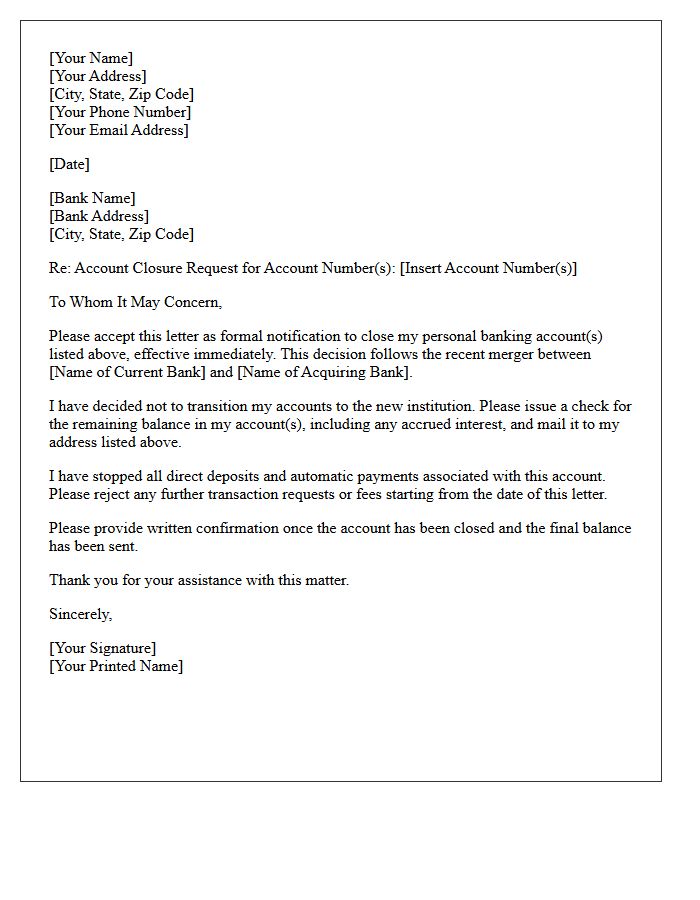
When a bank merger occurs, your account terms may change significantly. If you decide to end the relationship, sending a formal Account Closure Letter ensures a clear paper trail. You must explicitly request the transfer of remaining funds to a new institution and demand written confirmation that the account is closed. This prevents unexpected fees or negative credit reporting during the transition. Always verify your final balance and update any automated payments before submission to avoid service disruptions or overdrafts during the merger integration process.
Letter to Transfer and Close Account After Financial Institution Merger
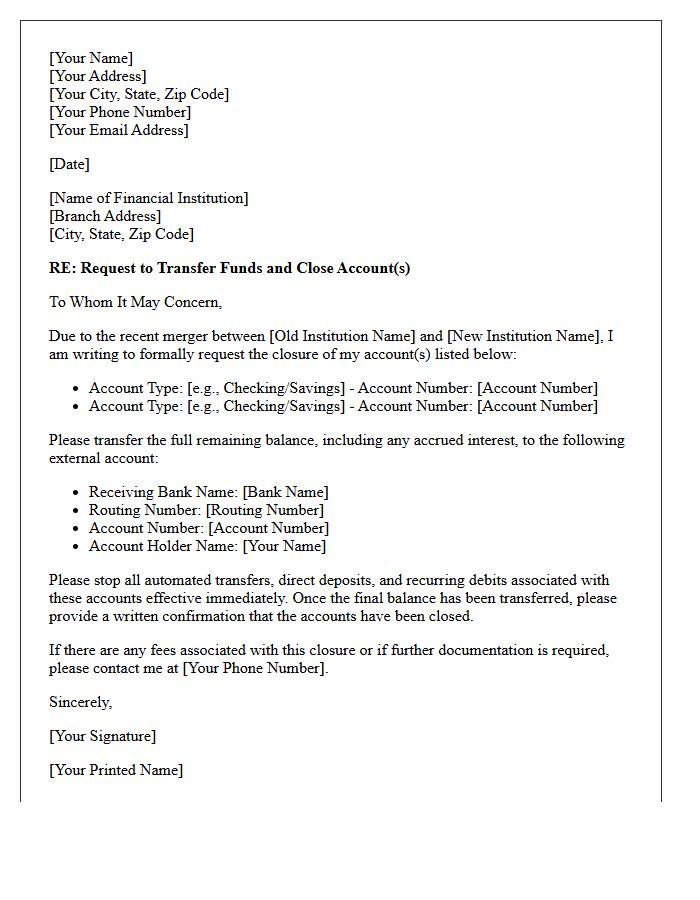
When drafting a Letter to Transfer and Close Account following a financial institution merger, clearly specify your new account details to ensure a seamless transition of funds. Explicitly request the final closure of your legacy account to prevent unexpected maintenance fees or zombie account activity. Include your full name, old account number, and instructions for handling automatic payments or direct deposits. Sending this formal notification via certified mail provides a legal paper trail, protecting your financial standing during the institutional consolidation process while maintaining control over your liquid assets.
Client Letter of Account Termination Due to Bank Buyout
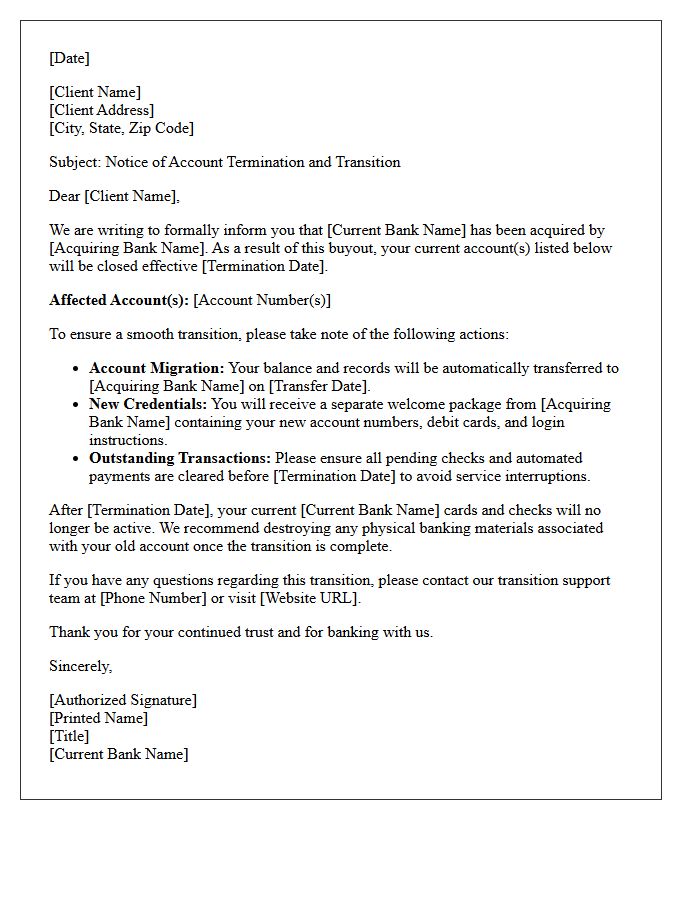
When a bank undergoes a merger or acquisition, customers may receive a Letter of Account Termination if their existing financial products are incompatible with the new institution's framework. It is critical to verify the effective closure date to prevent service interruptions. Customers should promptly transfer automated payments and direct deposits to a new provider. Understanding the transition timeline ensures your funds remain accessible during the buyout. Always review the notice for specific instructions regarding final statements, outstanding checks, and the disbursement of remaining balances to maintain continuous financial stability.
Formal Letter to Close Checking Account Following Bank Acquisition
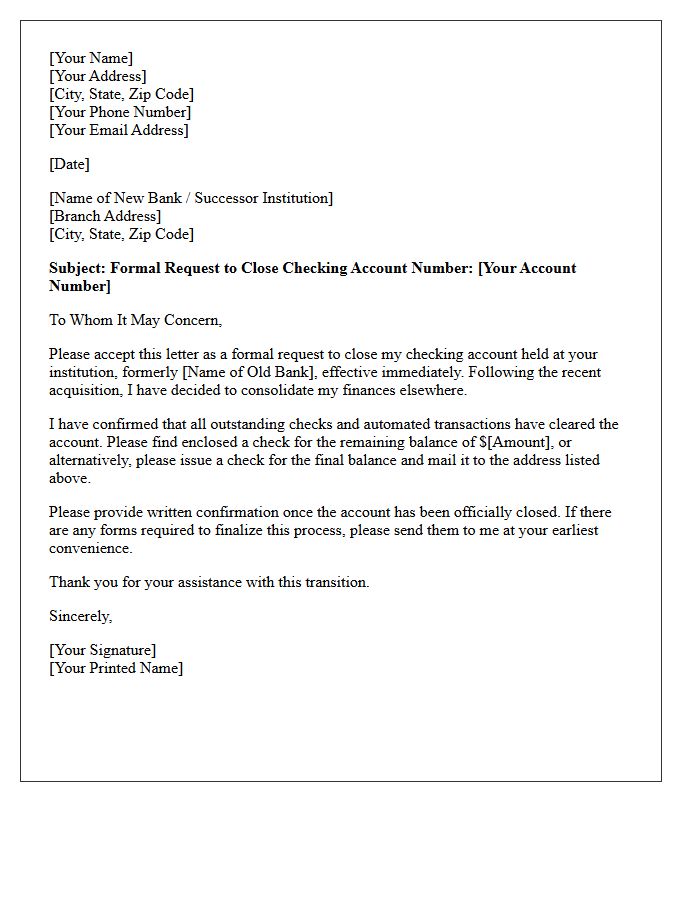
When drafting a formal letter to close a checking account following a bank acquisition, clearly state your intent to terminate the relationship. Explicitly request the full balance disbursement via a cashier's check or electronic transfer to your new institution. Ensure you provide your specific account number and current contact details to prevent processing delays. Formally ask the bank to confirm the closure in writing to verify that no residual fees or automatic payments remain active. This ensures a clean transition and protects your credit standing during the merger transition period.
Savings Account Closure Request Letter Due to Institutional Merger
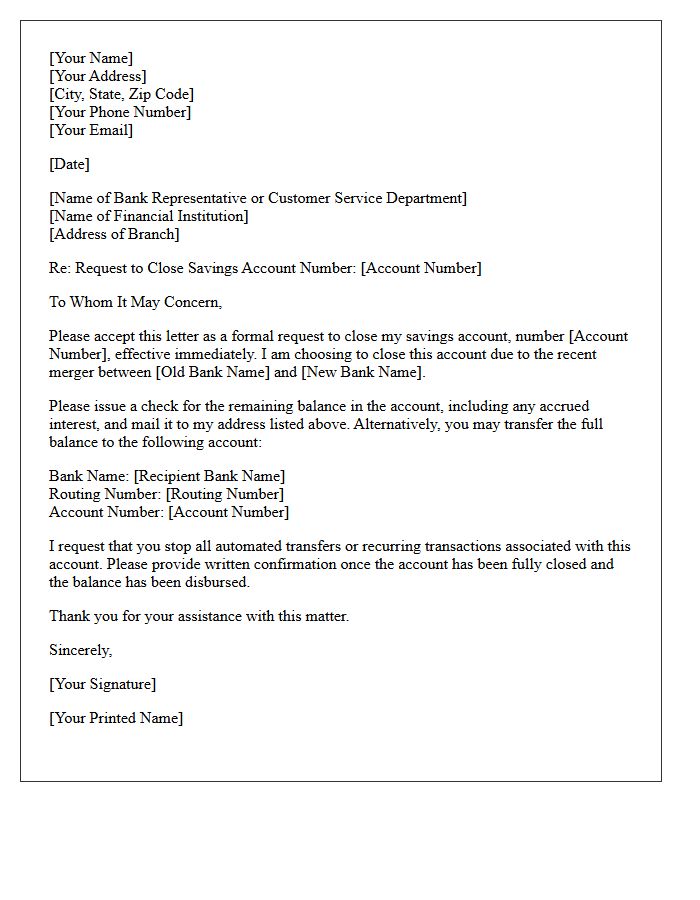
When drafting a Savings Account Closure Request Letter due to an institutional merger, clearly state your intent to terminate the relationship. Mention the merger event as your specific reason to avoid potential early closure fees or administrative hurdles. Ensure you provide your full account number and explicit instructions for the transfer of remaining funds to a new institution. Request a written confirmation of closure to maintain clean financial records and prevent future identity theft or unintended service charges during the banking transition period.
Letter Declining New Terms and Closing Account Post-Acquisition
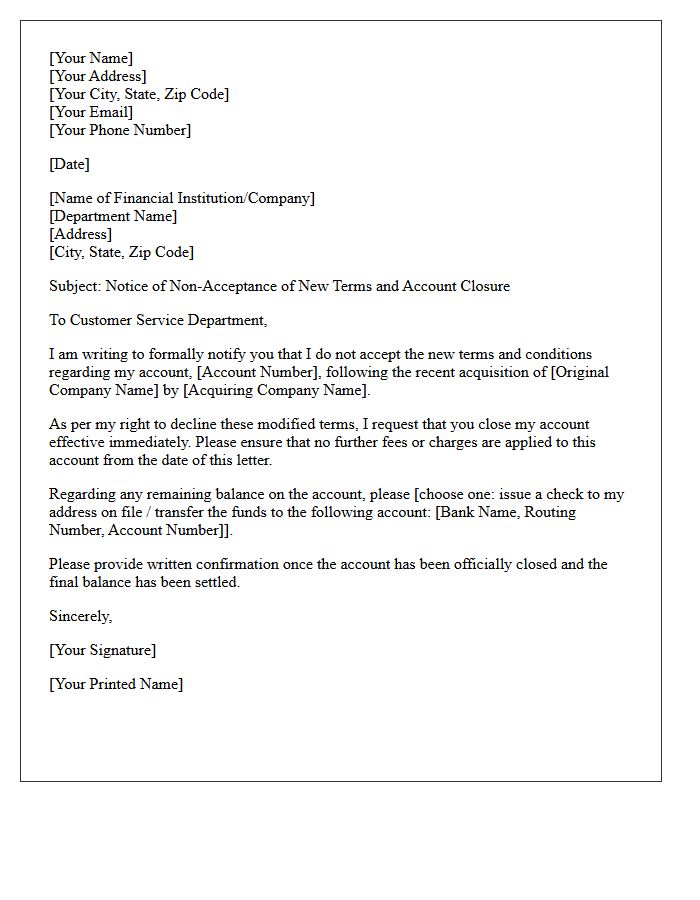
When a bank or service provider updates its policy following a corporate takeover, you have the right to refuse. A Letter Declining New Terms and Closing Account Post-Acquisition formally notifies the institution that you do not accept their revised service agreement. To ensure a smooth transition, explicitly request the liquidation of balances and the formal closure of your account to avoid unauthorized fees or penalties. Sending this via certified mail provides a legal paper trail, protecting your financial autonomy during the transition period.
Institutional Merger Account Withdrawal and Closure Letter
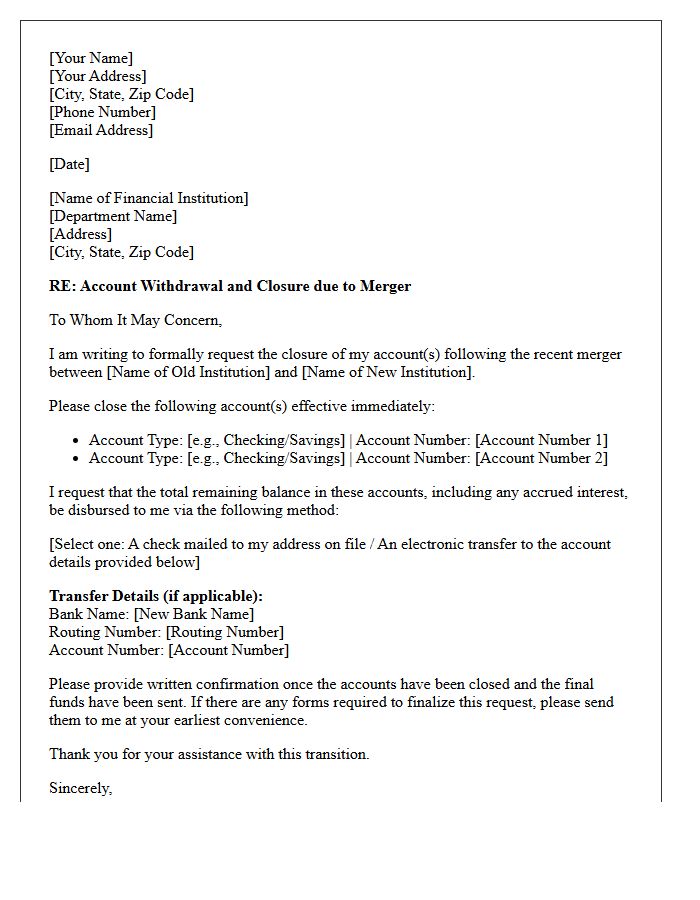
An Institutional Merger Account Withdrawal and Closure Letter is a formal notification used to terminate banking relationships during corporate transitions. This document ensures the secure transfer of remaining balances to a newly designated institution while providing a clear audit trail. It must include the specific merger effective date, account numbers, and explicit disposition instructions for liquidating assets. Properly executing this letter prevents administrative delays, avoids unnecessary maintenance fees, and maintains financial compliance during the consolidation of institutional entities or complex organizational restructuring processes.
How do I close my bank account following a merger or acquisition?
To close your account, you should submit a formal written notice to your current institution. Your letter should include your account details, a request to terminate the relationship due to the merger, and instructions on how to disburse your remaining balance.
What should be included in a letter to close an account due to an institutional merger?
Your letter must include your full name, account number, the date of the request, a clear statement regarding the closure due to the acquisition, and a mailing address for your final statement and closing check.
Are there fees for closing an account during a bank merger?
Most institutions waive early account closure fees during a merger or acquisition period. However, you should explicitly request a waiver of any closing fees in your letter, citing the change in ownership as the reason for your departure.
How long does it take to process an account closure after a merger notification?
Once your written request is received, banks typically process the closure within 5 to 10 business days. Ensure all outstanding checks and automated payments have cleared before submitting your letter to avoid overdrafts or returned items.
Can I close my account if I do not agree to the new terms after an acquisition?
Yes. When one institution acquires another, customers have the right to close their accounts if they do not wish to accept the new terms of service, fee structures, or privacy policies. Providing a formal letter ensures your dissatisfaction with the new terms is documented.


Comments