
Managing the affairs of a loved one is difficult. A formal Letter to Close Account of Deceased Relative is essential for notifying banks and service providers of a passing. This legal correspondence ensures security and prevents identity theft during the probate process. To simplify this task, below are some ready to use templates.
Image cover: Closing a Deceased Relative's Account: Professional Templates and Letter Samples
Letter Samples List
- Letter to Close Checking Account of Deceased Relative
- Letter to Close Savings Account of Deceased Relative
- Executor Letter to Close Bank Account of Deceased Relative
- Next of Kin Letter to Close Account of Deceased Relative
- Letter to Close Joint Bank Account of Deceased Relative
- Letter to Close Fixed Deposit Account of Deceased Relative
- Letter of Instruction to Close Account of Deceased Relative
- Letter to Close Trust Account of Deceased Relative
- Surviving Spouse Letter to Close Account of Deceased Relative
- Small Estate Letter to Close Bank Account of Deceased Relative
- Letter Requesting Fund Transfer and Closure of Deceased Relative Account
- Letter to Close Investment Account of Deceased Relative
Letter to Close Checking Account of Deceased Relative
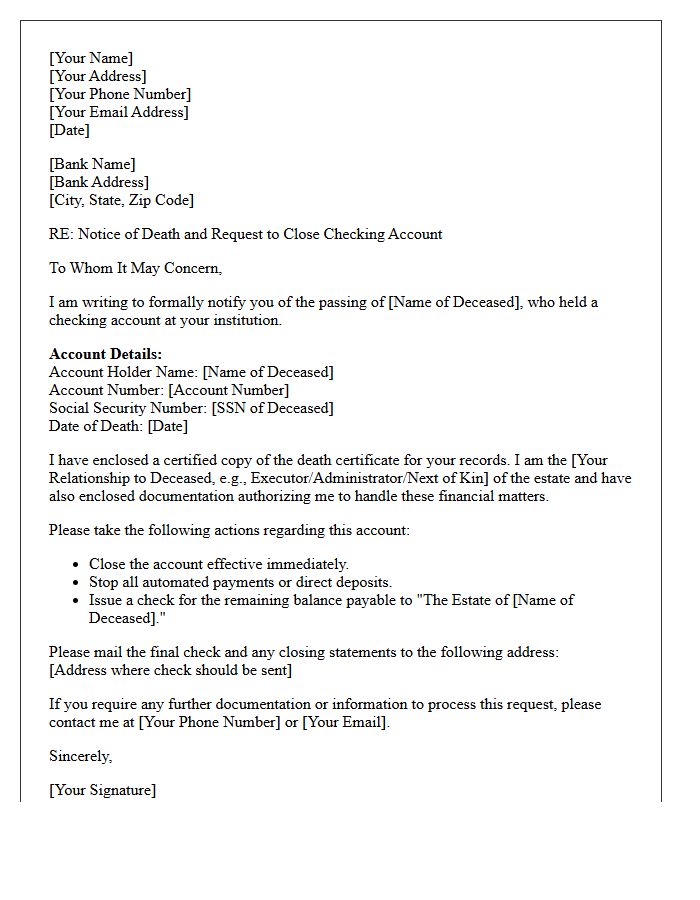
To finalize an estate, sending a formal Letter to Close Checking Account of Deceased Relative is essential. You must include the decedent's full name, account number, and date of death. Attach a certified copy of the death certificate and your legal authorization, such as Letters Testamentary or Letters of Administration. Clearly instruct the bank to issue a check for the remaining balance to the Estate of the Deceased. Providing your contact information ensures the financial institution can verify documents and complete the account closure process efficiently.
Letter to Close Savings Account of Deceased Relative
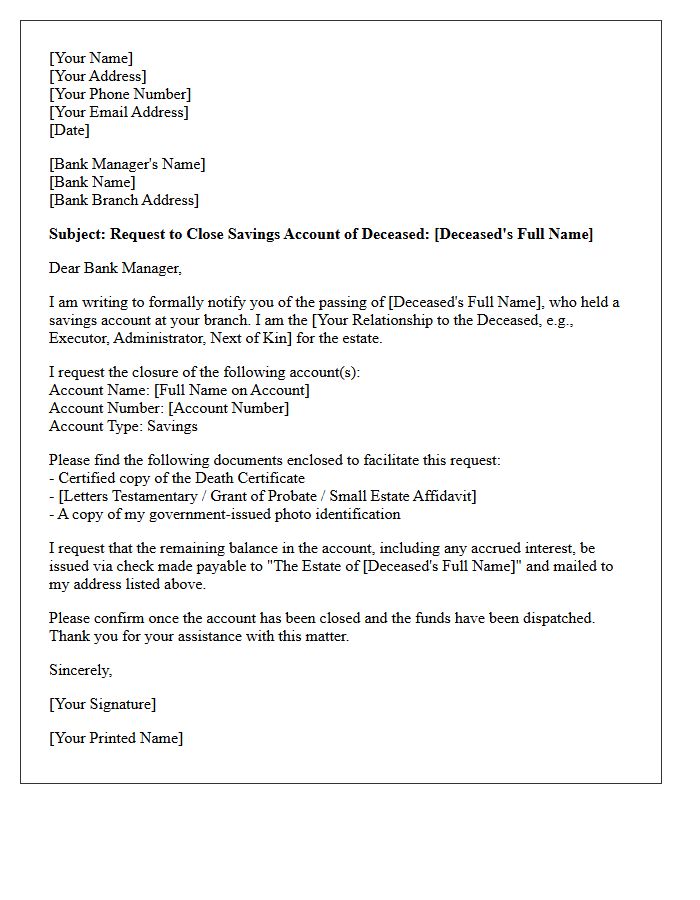
When writing a letter to close a deceased relative's savings account, clarity and legal proof are essential. You must include the account holder's full name, account number, and date of passing. To facilitate the estate settlement, attach a certified copy of the death certificate and your Letters Testamentary or small estate affidavit proving your authority. Clearly state how the remaining balance should be distributed, whether by check or transfer to an estate account. Providing your contact information ensures the bank can resolve any final verification requirements quickly.
Executor Letter to Close Bank Account of Deceased Relative
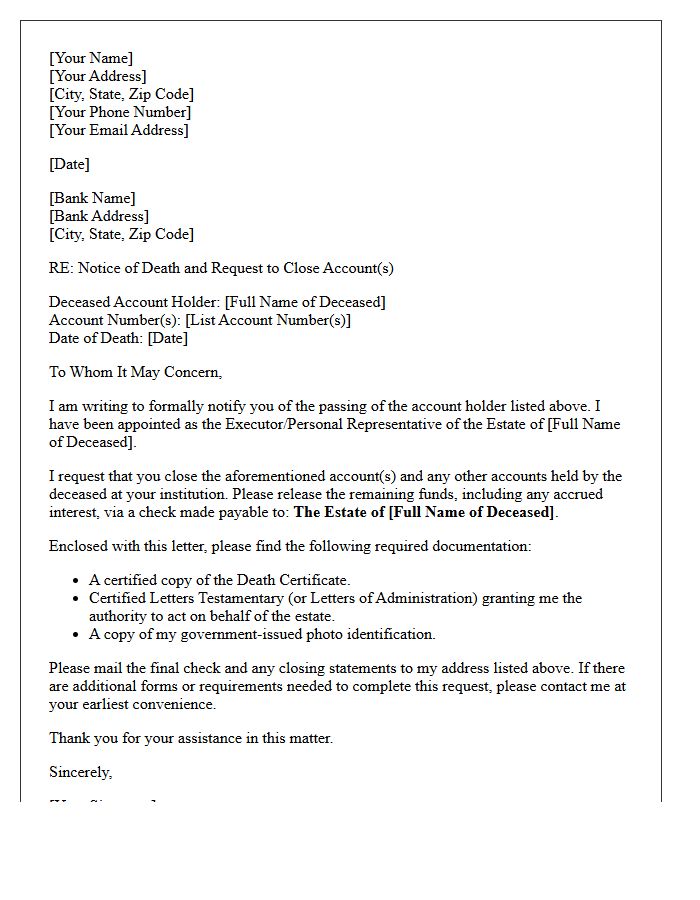
An Executor Letter is a formal legal request used to close the bank account of a deceased relative. This document must be submitted by the court-appointed personal representative alongside a certified copy of the Death Certificate and Letters Testamentary. It instructs the financial institution to liquidate remaining assets and transfer funds into a designated estate account. Ensuring accuracy in account numbers and providing valid identification is essential to prevent delays in the probate process and ensure the lawful distribution of the decedent's final estate assets.
Next of Kin Letter to Close Account of Deceased Relative
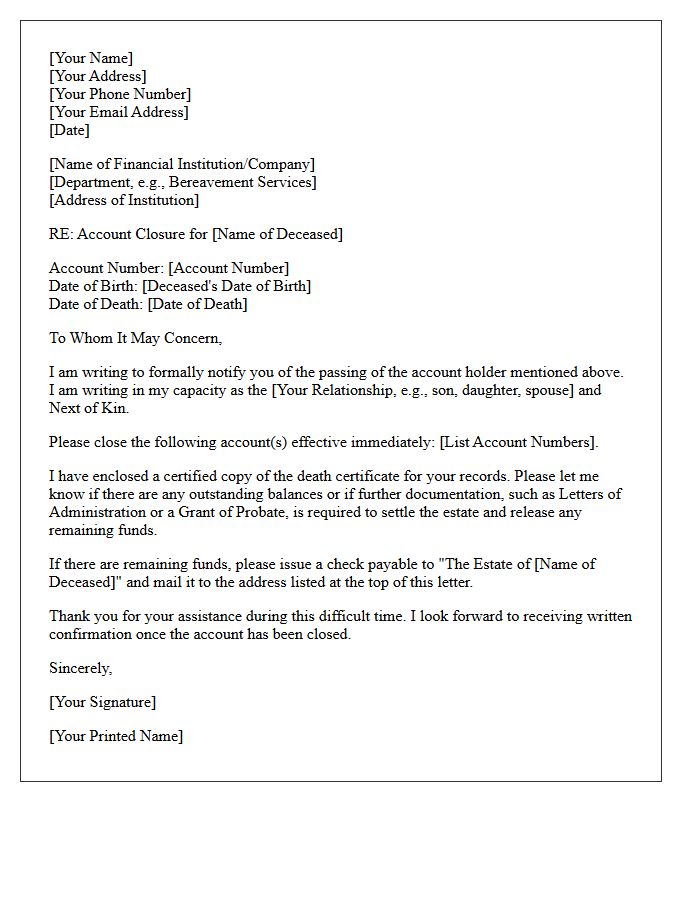
A Next of Kin Letter is a formal notification sent to financial institutions to settle a deceased relative's affairs. This legal document must clearly state your relationship to the departed and explicitly request the account closure. To ensure processing, you must enclose a certified copy of the Death Certificate and proof of your identity. Providing the specific account number and a return address for residual funds or final statements is essential. This step is critical for preventing identity theft and managing the distribution of the estate assets efficiently.
Letter to Close Joint Bank Account of Deceased Relative
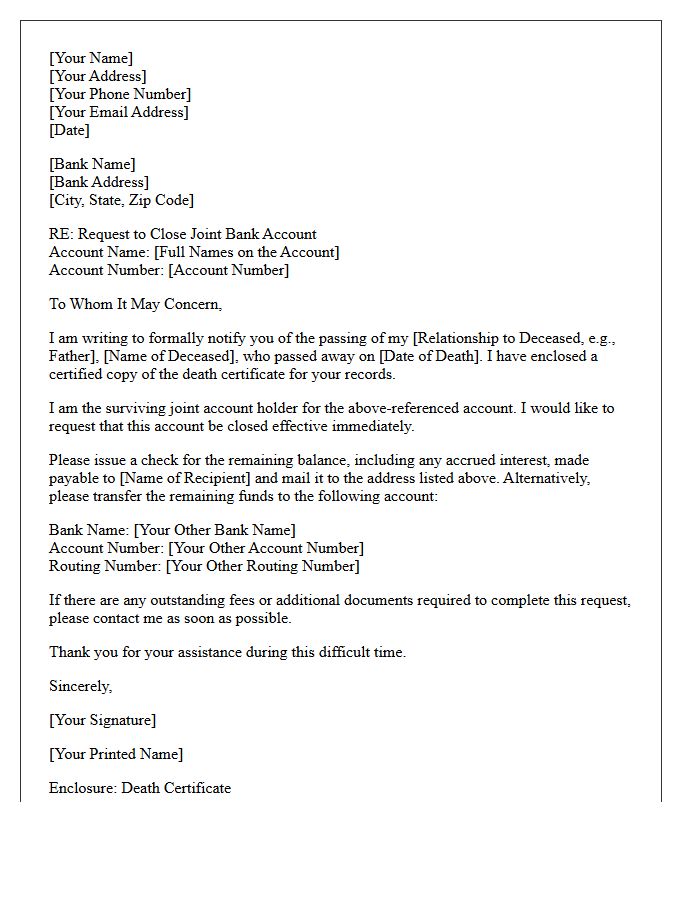
When drafting a Letter to Close Joint Bank Account of Deceased Relative, you must provide a certified copy of the death certificate to the financial institution. Clearly state the account number and the names of all holders. While most joint accounts include rights of survivorship, allowing the surviving owner to assume full control, some banks require formal notification to update records. Ensure you request the distribution of any remaining outstanding balance and confirm the final closure in writing to prevent future fees or identity complications during the probate process.
Letter to Close Fixed Deposit Account of Deceased Relative
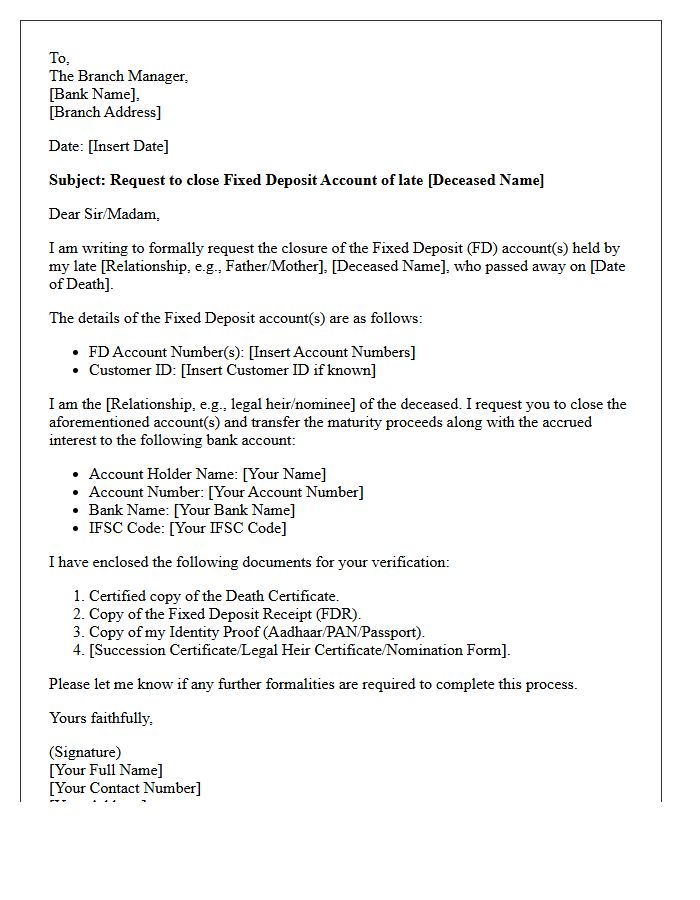
A formal letter to close a deceased relative's fixed deposit must include the death certificate and legal heir documents. Clearly state the account number and provide a Letter of Administration or a succession certificate to establish legal authority. If a nominee was previously registered, the process is significantly faster. Ensure you include a valid indemnity bond and proof of identity for all claimants. This formal request allows the bank to release the accrued interest and principal balance to the rightful beneficiaries according to probate laws and banking regulations.
Letter of Instruction to Close Account of Deceased Relative
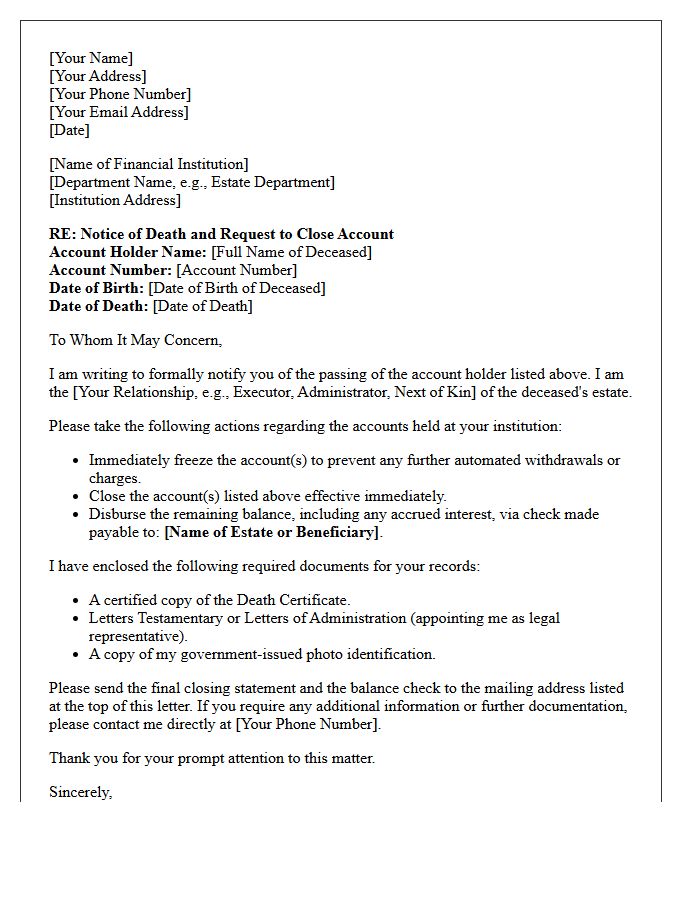
A Letter of Instruction is a formal document sent to financial institutions to initiate the settlement of a late family member's estate. This letter must include the account holder's full legal name, date of death, and account numbers. You must attach a certified Death Certificate and legal proof of your authority, such as Letters Testamentary or Letters of Administration. Clearly state whether funds should be transferred to an estate account or issued via check to ensure the secure and lawful closure of accounts according to probate requirements.
Letter to Close Trust Account of Deceased Relative
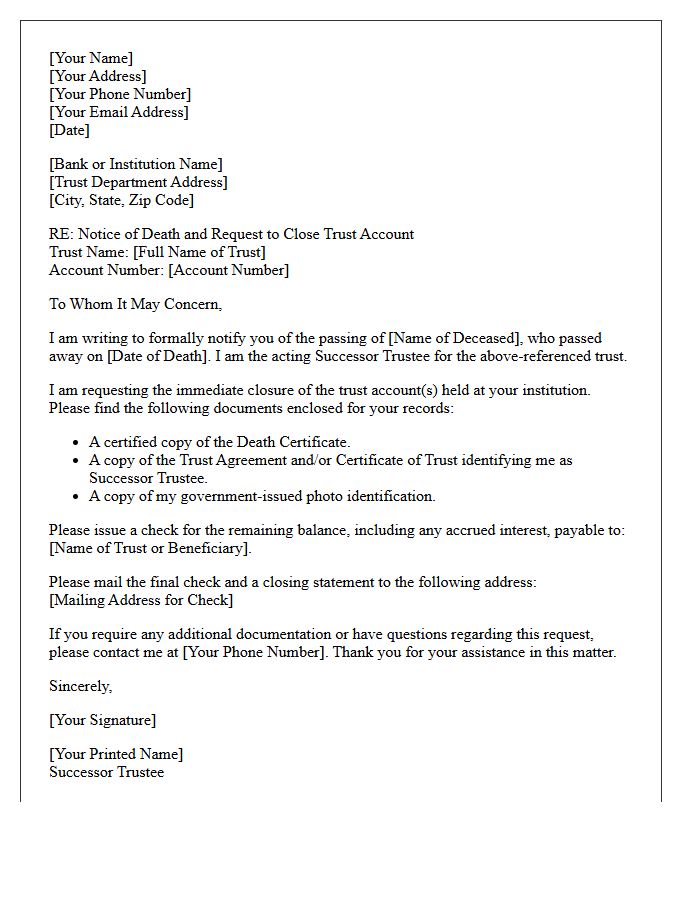
When writing a Letter to Close Trust Account of Deceased Relative, you must include a certified copy of the death certificate and the legal Trustee Appointment documents. Clearly state the trust's full name, account number, and explicit instructions for the distribution of assets to beneficiaries. Ensuring all tax identification numbers are accurate prevents processing delays. This formal notification legally signals the financial institution to terminate the account according to the trust agreement, protecting the estate from unauthorized access and ensuring a smooth transition of legacy funds.
Surviving Spouse Letter to Close Account of Deceased Relative
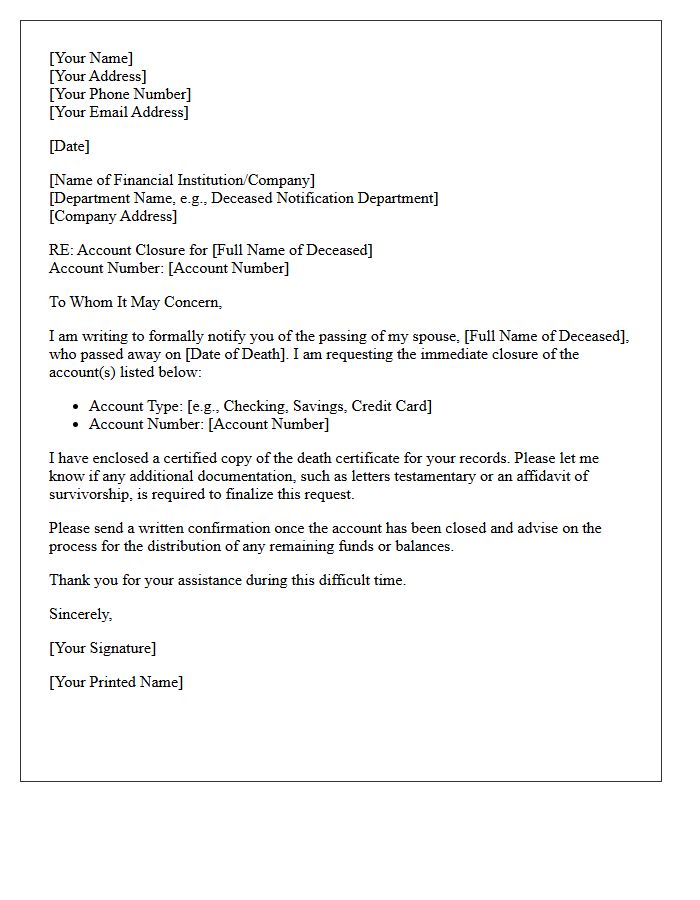
A surviving spouse letter is a formal notification sent to financial institutions to close the account of a deceased partner. This document serves as a legal request to terminate services or transfer remaining funds to the rightful beneficiary. It must include the deceased's full name, account number, and date of passing. To ensure processing, always attach a certified death certificate and proof of executor status. Clearly stating instructions helps prevent unauthorized charges and protects the estate from potential identity theft during the probate process.
Small Estate Letter to Close Bank Account of Deceased Relative
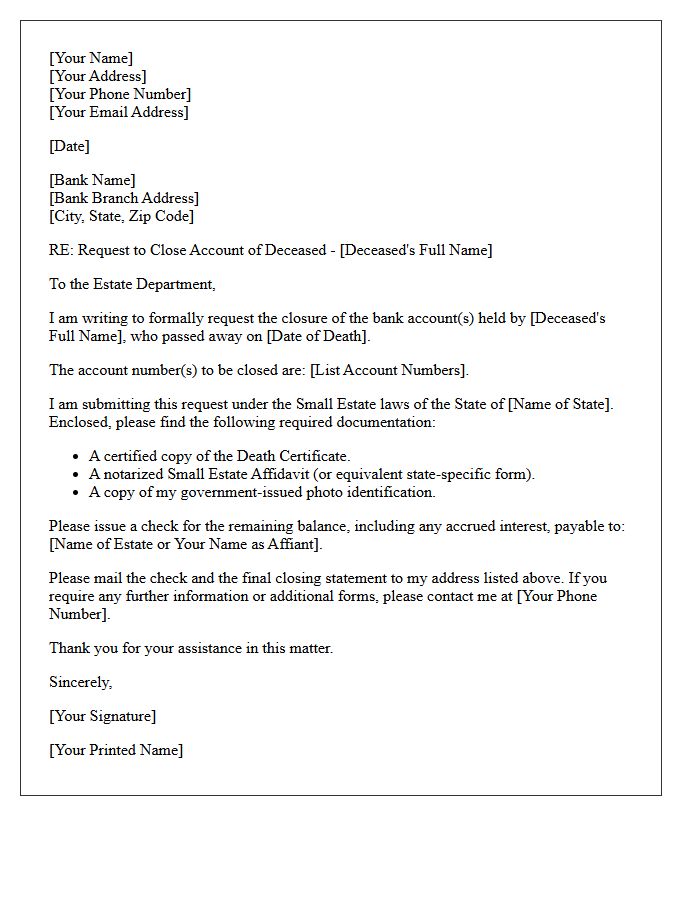
A Small Estate Affidavit is a legal document used to bypass formal probate when a deceased relative's assets fall below a specific state value threshold. To close a bank account, you must present this notarized form along with a certified death certificate. This process allows the voluntary administrator to collect and distribute remaining funds to rightful heirs quickly. Requirements vary by jurisdiction, so ensure the estate qualifies as "small" under local law to avoid costly court proceedings and simplify the transfer of assets to beneficiaries.
Letter Requesting Fund Transfer and Closure of Deceased Relative Account
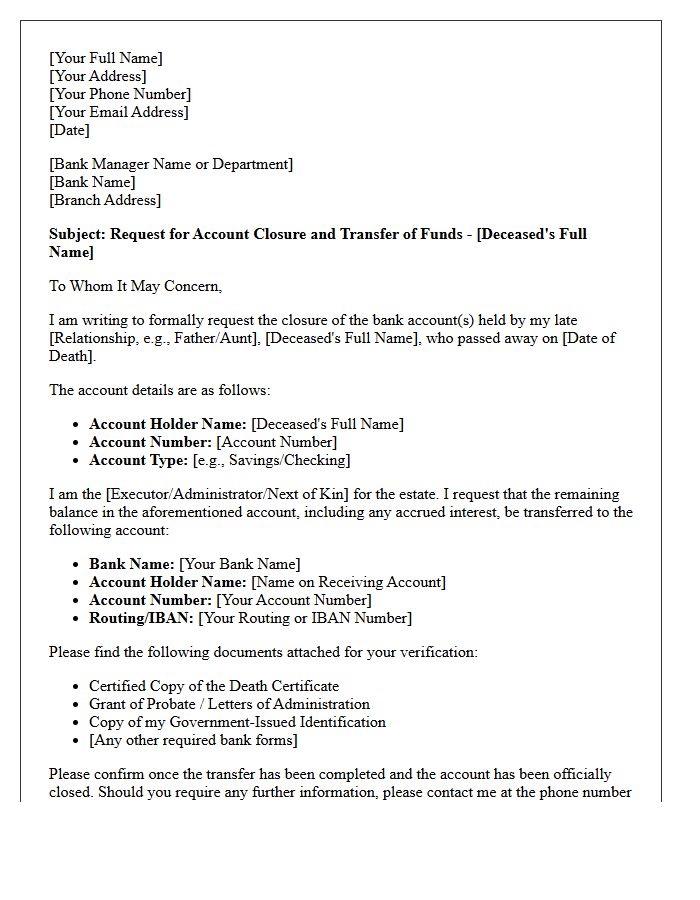
When drafting a letter to close a deceased relative's account, you must provide a certified copy of the death certificate and proof of your legal authority, such as Letters of Administration or Grant of Probate. Clearly state the account details and provide notarized instructions for the fund transfer to a designated beneficiary account or the estate's account. Ensuring all legal documentation is attached prevents delays in the probate process and ensures the bank complies with security protocols for distributing the decedent's remaining assets correctly.
Letter to Close Investment Account of Deceased Relative
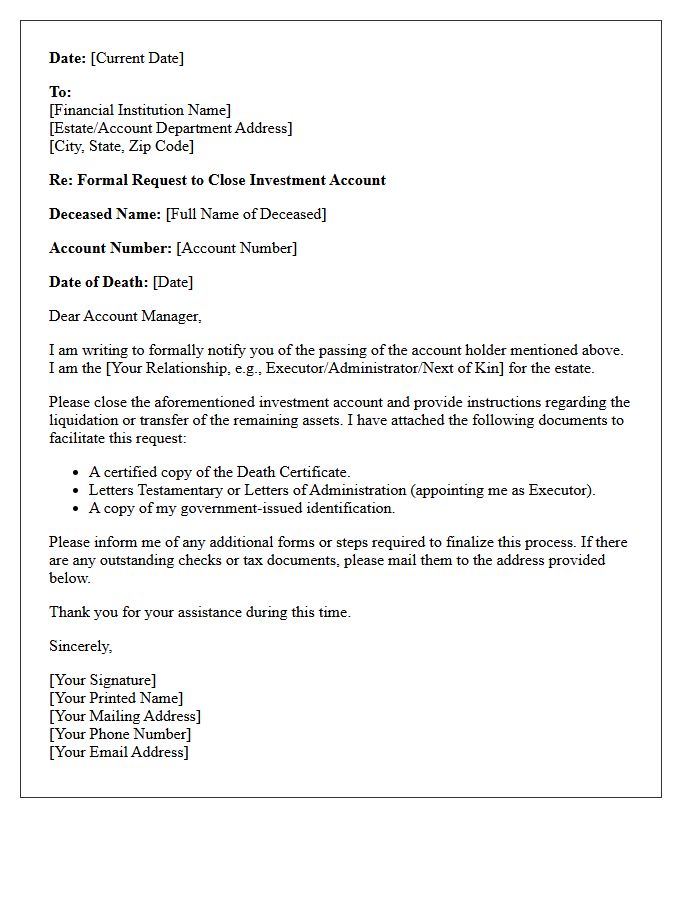
When writing a letter to close a deceased relative's investment account, you must provide a certified death certificate and proof of legal authority, such as Letters Testamentary or an Affidavit of Domicile. Clearly state the account number and provide distribution instructions for the remaining assets. Notifying the financial institution promptly prevents unauthorized activity and ensures the probate process proceeds correctly. Always request a written confirmation once the account is officially liquidated and closed to finalize the estate's financial obligations and ensure proper tax reporting.
How do I write a formal letter to close the bank account of a deceased relative?
The letter should include the deceased person's full name, date of death, and account numbers. You must state your relationship to the deceased, express your intent to close the accounts, and provide instructions on where to send any remaining funds. It is essential to attach a certified copy of the death certificate and proof of your legal authority, such as Letters Testamentary.
What documents must accompany a letter to close a deceased person's account?
Typically, banks require a certified copy of the death certificate, the deceased person's social security number, and legal documentation proving you are the executor or administrator of the estate. Depending on the account type and state law, you may also need a Small Estate Affidavit or a court-appointed Grant of Probate.
To whom should the account closure letter for a deceased family member be addressed?
Address the letter to the specific department handling deceased estates, often called the "Estate Department," "Bereavement Services," or "Legal Processing Department" of the financial institution. Sending the letter via certified mail with a return receipt requested is recommended to ensure you have proof of delivery.
Can I close a deceased relative's bank account online or via email?
Most major financial institutions require a formal written letter with original or notarized signatures and physical copies of legal documents. While some banks allow you to upload documents via a secure portal, a formal letter sent via mail remains the most legally sound method to ensure all compliance requirements are met for closing an estate account.
What should be included in the "Distribution of Funds" section of the closure letter?
The letter must clearly specify how the remaining balance should be handled. You should instruct the bank to issue a check made payable to the "Estate of [Deceased's Name]" or provide the routing and account numbers for a dedicated Estate Account. Do not request funds to be transferred to a personal account unless you are the sole designated beneficiary or joint owner with right of survivorship.

Comments