
When your investment term ends, submitting a formal Letter to Close Certificate of Deposit ensures a smooth fund transfer. This document provides clear instructions to your bank regarding the withdrawal or relocation of your balance upon maturity. Properly notifying your financial institution prevents unwanted automatic renewals and secures your savings. To help you get started, below are some ready to use templates.
Image cover: Official Notice of CD Closure Upon Maturity: Template and Guide
Letter Samples List
- Letter to Close Certificate of Deposit Upon Maturity and Transfer Funds to Checking Account
- Letter to Close Certificate of Deposit Upon Maturity and Issue a Cashier's Check
- Business Letter to Close Certificate of Deposit Upon Maturity
- Letter to Close Certificate of Deposit Upon Maturity and Wire Transfer Funds
- Joint Account Letter to Close Certificate of Deposit Upon Maturity
- Letter to Close Trust Certificate of Deposit Upon Maturity
- Letter to Close Certificate of Deposit Upon Maturity with Instructions to Mail Check
- Corporate Letter to Close Certificate of Deposit Upon Maturity
- Letter to Close Certificate of Deposit Upon Maturity and Transfer to External Bank
- Estate Letter to Close Certificate of Deposit Upon Maturity
- Letter to Close Certificate of Deposit Upon Maturity for Non-Resident Account
- Letter to Close Individual Certificate of Deposit Upon Maturity
Letter to Close Certificate of Deposit Upon Maturity and Transfer Funds to Checking Account
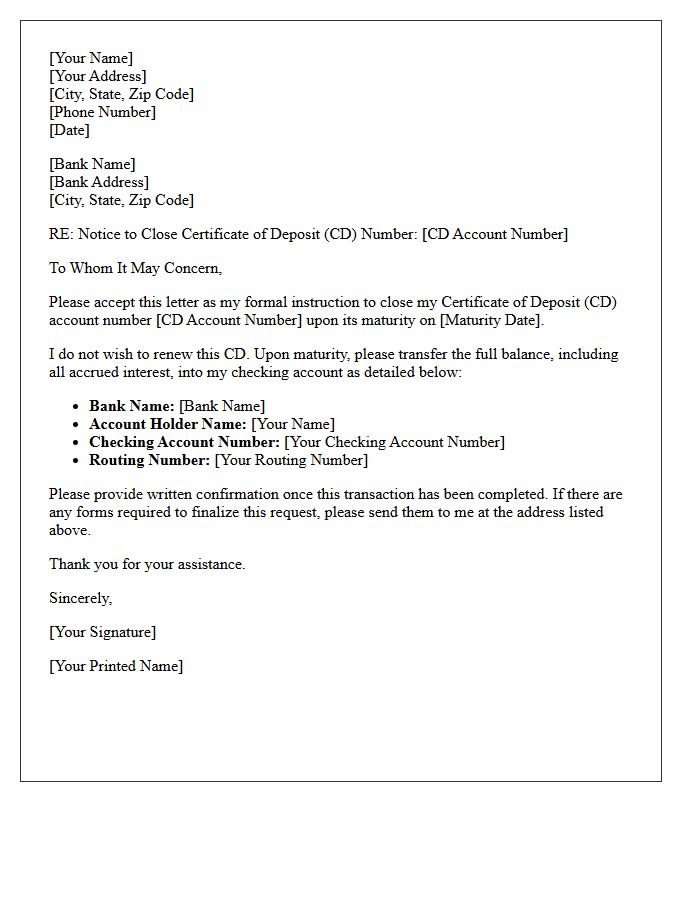
To redeem your investment, send a formal CD closure letter to your bank before the grace period ends. Clearly state your account number and explicit instructions to liquidate the Certificate of Deposit upon its maturity date. Request the bank to transfer the full balance, including earned interest, directly into your linked checking account. Providing written notice ensures you avoid automatic renewal at potentially lower rates, maintaining liquidity and control over your personal finances without incurring early withdrawal penalties.
Letter to Close Certificate of Deposit Upon Maturity and Issue a Cashier's Check
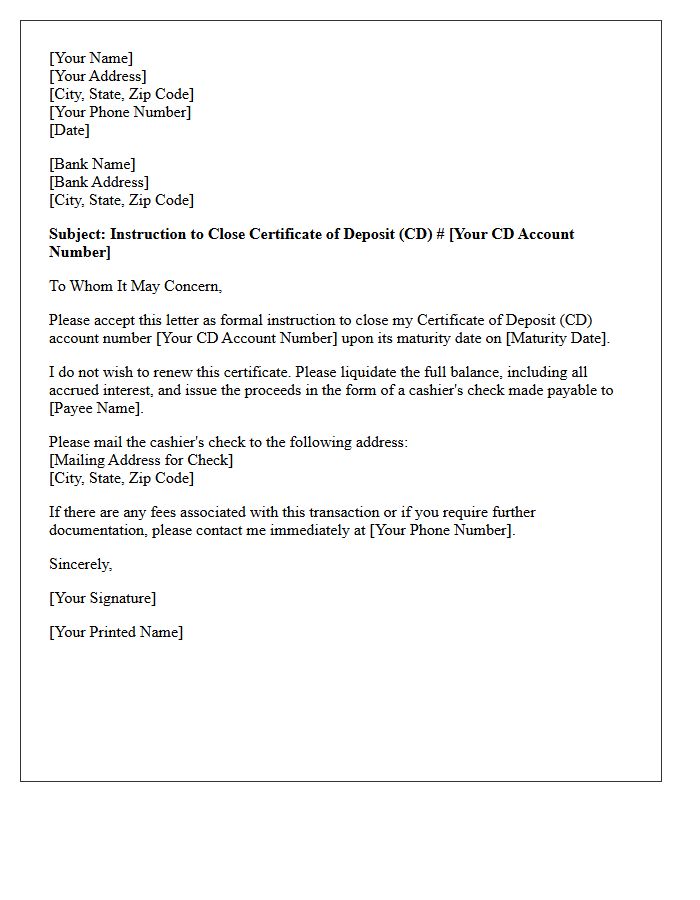
To finalize your investment, send a formal Letter to Close Certificate of Deposit to your bank before the grace period ends. Clearly state your intent to liquidate the account exactly upon maturity to avoid automatic renewal or penalties. You must include your account number, current contact details, and explicit instructions to Issue a Cashier's Check for the total balance, including accrued interest. Providing a mailing address ensures the secure delivery of your funds, officially documenting the closure for your personal financial records and future tax purposes.
Business Letter to Close Certificate of Deposit Upon Maturity
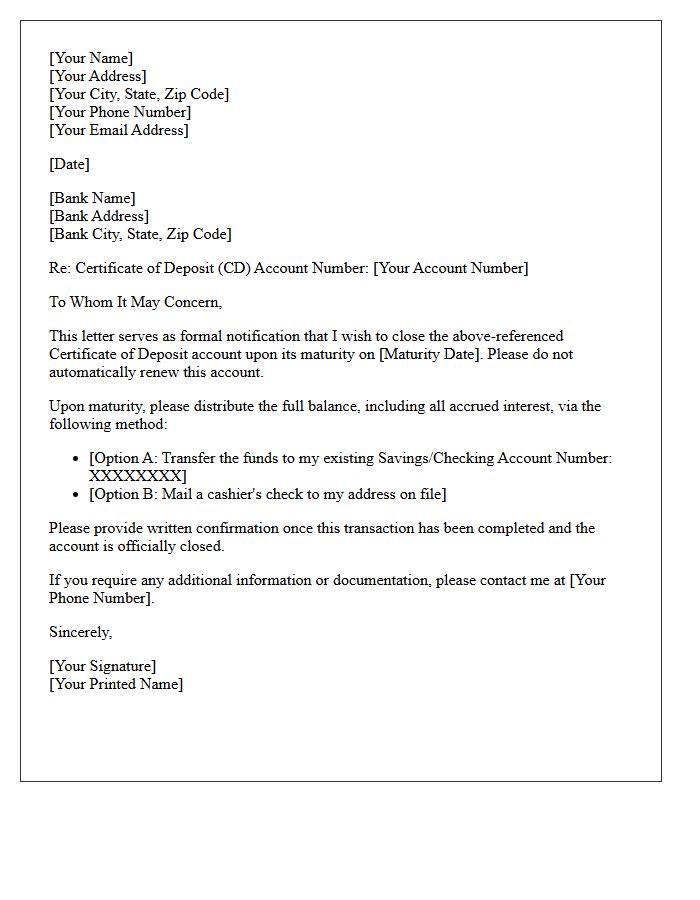
To redeem a Certificate of Deposit (CD) upon maturity, you must submit a formal written request to your bank. Clearly state your account number and specific instructions to close the account rather than allowing an automatic renewal. Specify your preferred disbursement method, such as a transfer to a linked savings account or a mailed check. Ensure your letter includes your contact information and is delivered during the established grace period to avoid liquidity restrictions or potential early withdrawal penalties. This documentation ensures a smooth transfer of your principal and earned interest.
Letter to Close Certificate of Deposit Upon Maturity and Wire Transfer Funds
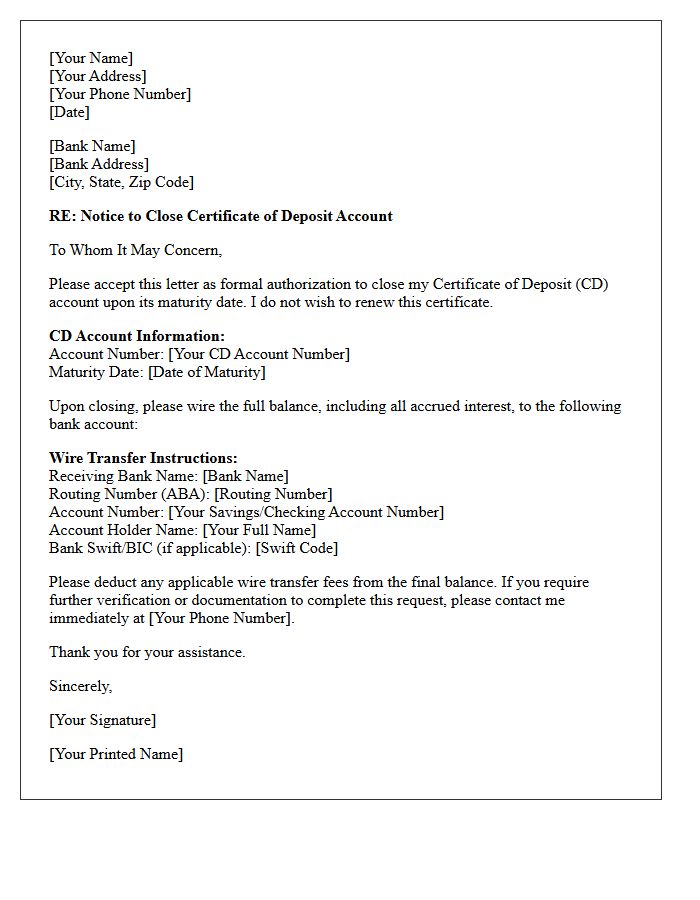
To redeem your savings, send a formal Letter to Close Certificate of Deposit Upon Maturity to your bank. Clearly state your account number and explicit intent to liquidate the full balance including accrued interest. To expedite access, request a wire transfer by providing your destination bank's routing number and recipient account details. Ensure your signature matches bank records and verify any outgoing wire fees to avoid delays. Sending this written instruction before the grace period ends prevents an automatic rollover and ensures immediate liquidity for your capital.
Joint Account Letter to Close Certificate of Deposit Upon Maturity
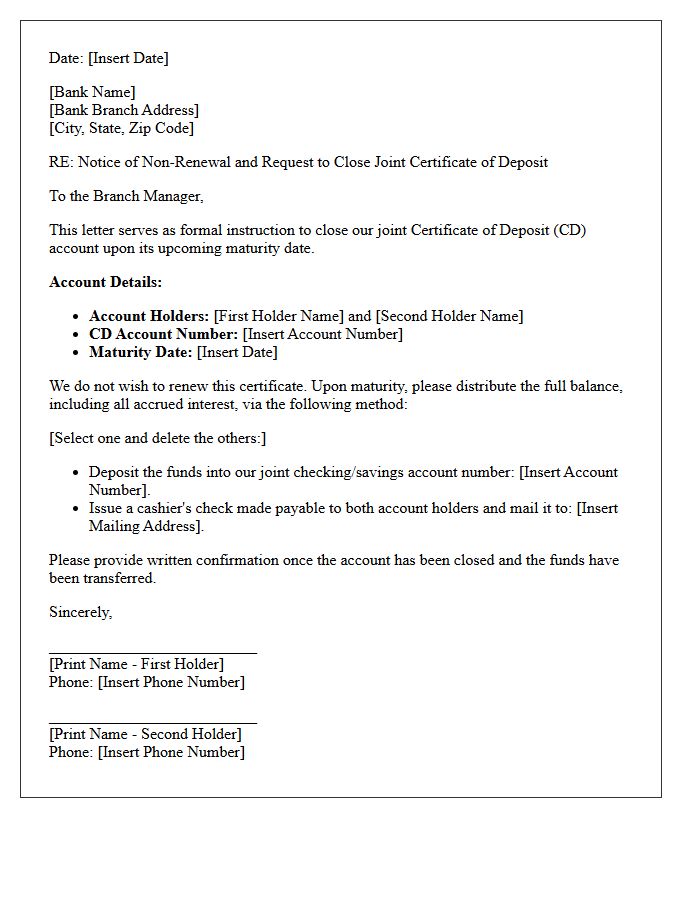
To prevent automatic renewal, you must submit a written Joint Account Letter to Close your Certificate of Deposit (CD). This formal instruction must be received by the bank during the maturity grace period. Ensure the letter includes the account number and explicit payout instructions, such as transferring funds to a linked savings account or issuing a check. Because the account is jointly held, most institutions require the signatures of all owners to authorize the closure and ensure the CD principal plus interest are distributed correctly without incurring penalties.
Letter to Close Trust Certificate of Deposit Upon Maturity
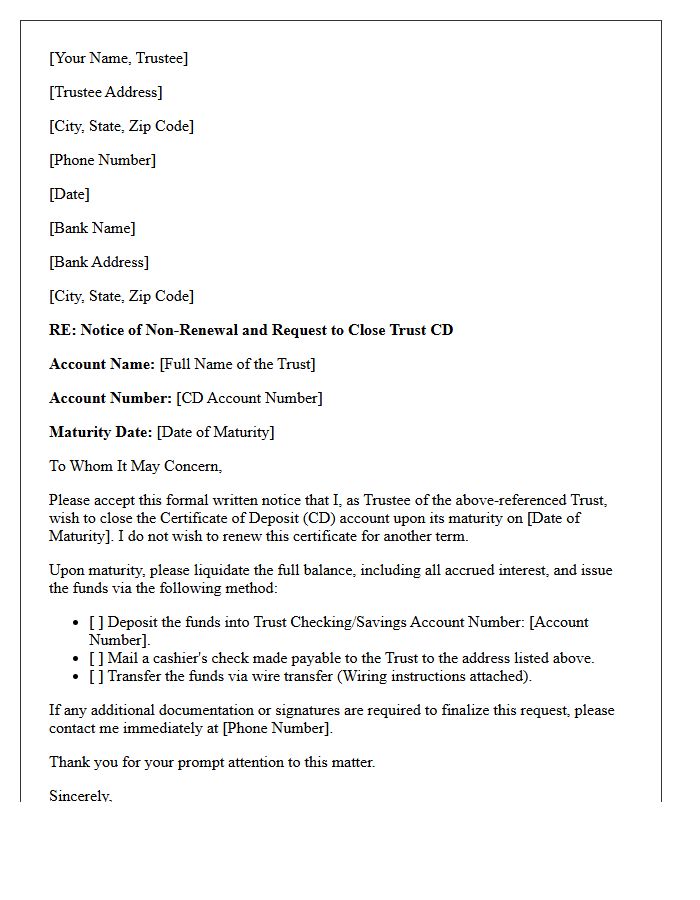
To redeem a trust certificate of deposit at maturity, you must submit a formal written request to the financial institution. Ensure the letter includes the trust name, account number, and specific distribution instructions. Providing a copy of the Trust Agreement or Certificate of Trust is essential to verify trustee authority. You must specify whether to transfer funds to a linked trust checking account or issue a check. Timely notification prevents automatic renewal into a new term, ensuring immediate access to the trust's principal and accrued interest.
Letter to Close Certificate of Deposit Upon Maturity with Instructions to Mail Check
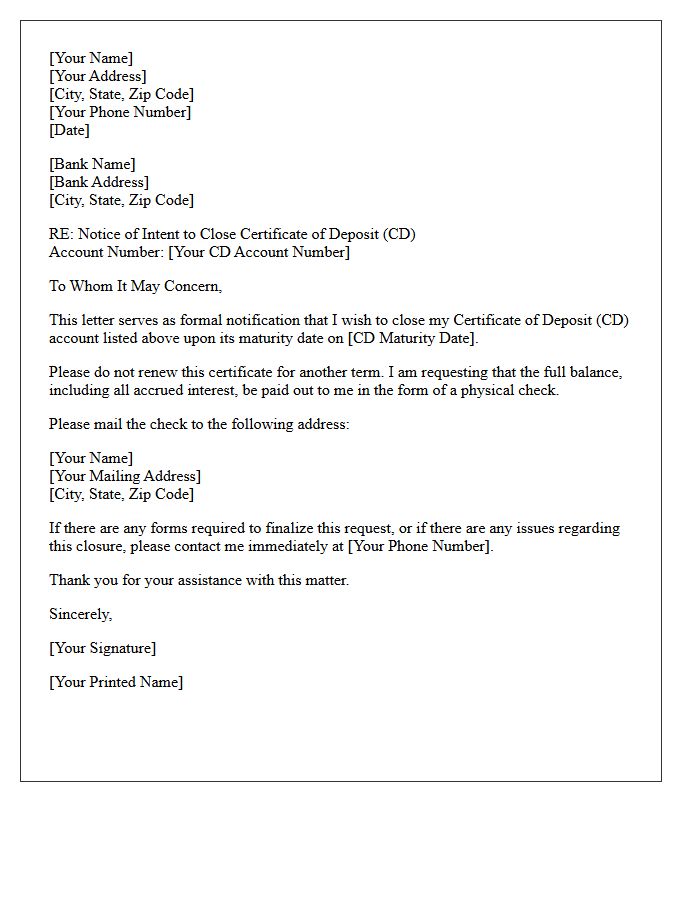
To redeem your savings, send a formal Letter to Close Certificate of Deposit to your bank before the grace period ends. Clearly state your account number and provide explicit instructions to mail a check for the total balance, including accrued interest, to your verified address. This ensures a liquid payout without automatic renewal. Sign the document to authorize the account closure upon maturity and request a confirmation receipt to prevent unwanted reinvestment of your funds.
Corporate Letter to Close Certificate of Deposit Upon Maturity
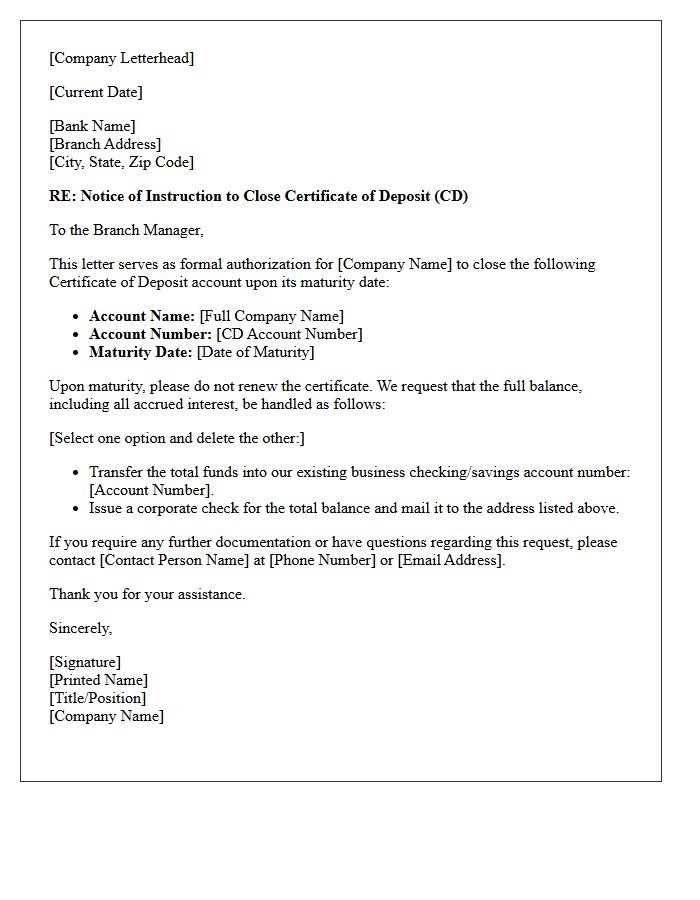
When preparing a corporate letter to close a Certificate of Deposit, you must provide formal instructions before the maturity date to avoid automatic renewal. The document should be printed on official company letterhead and include the account number, specific closing date, and clear disbursement directions. Ensure the letter is signed by an authorized signatory as designated in your corporate resolution. Timely submission prevents the bank from locking funds into a new term, ensuring immediate liquidity for your business operations and effective cash flow management.
Letter to Close Certificate of Deposit Upon Maturity and Transfer to External Bank
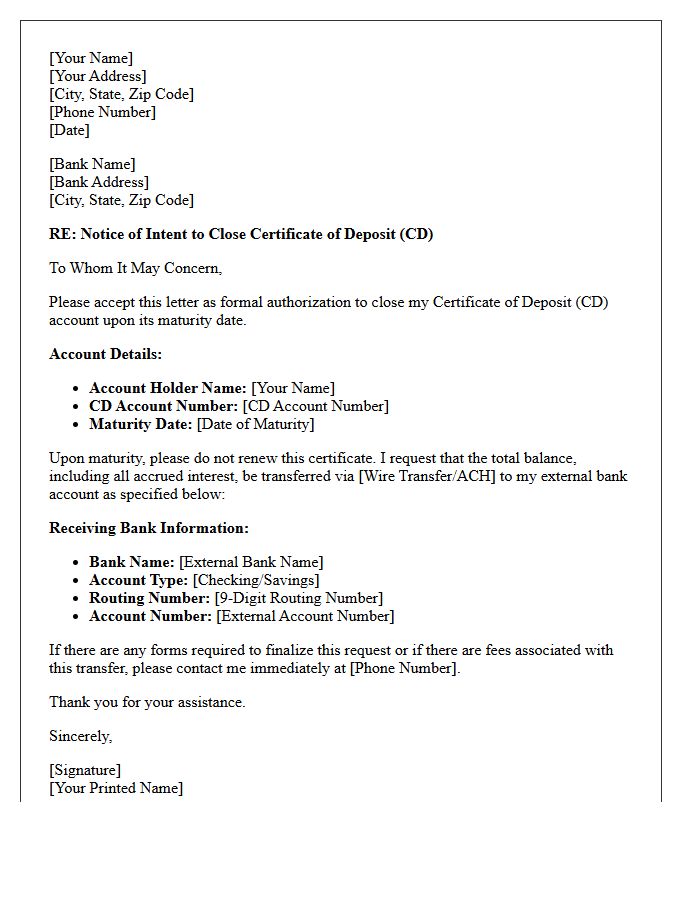
To redeem your savings, send a formal Letter of Instruction to your bank before the grace period ends. Clearly state your intent to close the Certificate of Deposit exactly upon its maturity date to avoid automatic renewal. Provide your full account details and specific wire transfer instructions, including the external bank's routing number and account information. Explicitly request that both the principal and all accrued interest be moved to prevent funds from being locked into a new term with potential early withdrawal penalties.
Estate Letter to Close Certificate of Deposit Upon Maturity
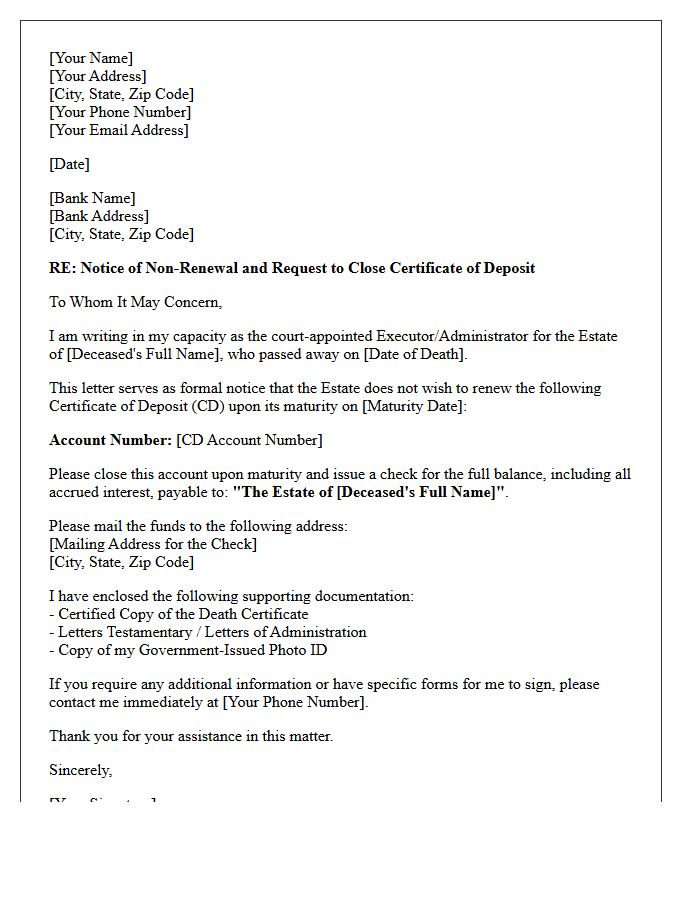
An estate letter to close a CD is a formal legal notification sent by an executor to a financial institution. This document instructs the bank to liquidate the Certificate of Deposit upon its maturity date to avoid automatic renewal. It must include the decedent's account details, a certified copy of the death certificate, and valid letters testamentary. Providing these documents ensures the probate assets are properly transferred into the estate bank account for eventual distribution to beneficiaries without incurring early withdrawal penalties.
Letter to Close Certificate of Deposit Upon Maturity for Non-Resident Account
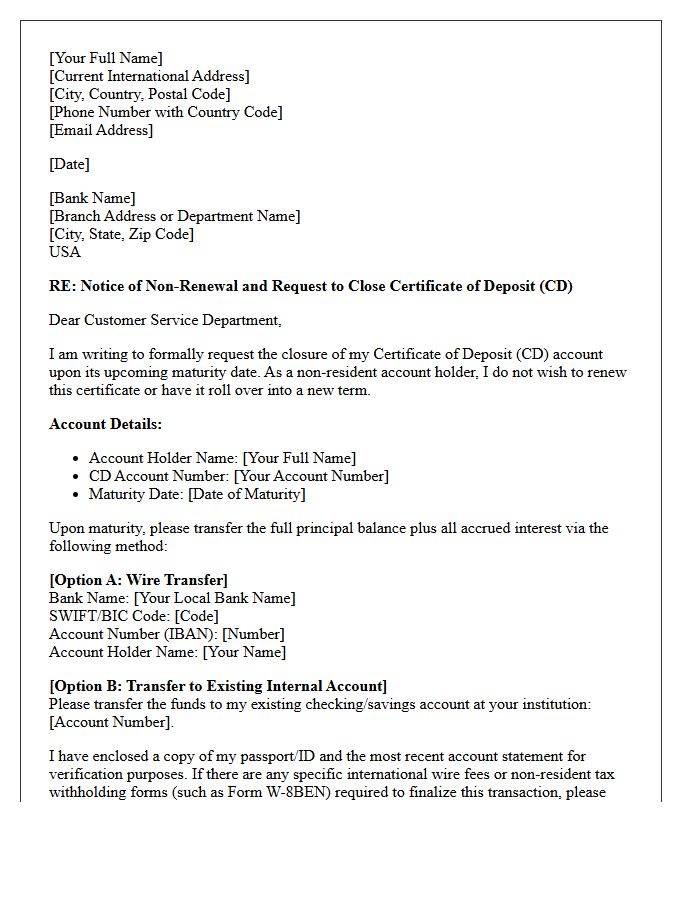
When preparing a Letter to Close Certificate of Deposit at maturity for a non-resident account, you must include your full name, account number, and notarized signature to verify identity. Clearly state your disposition instructions, such as transferring funds via international wire or issuing a cashier's check. To comply with tax regulations, ensure your current foreign address and W-8BEN form are up to date. Sending the request via certified mail before the grace period ends prevents automatic renewal and ensures a smooth closure of the international investment.
Letter to Close Individual Certificate of Deposit Upon Maturity
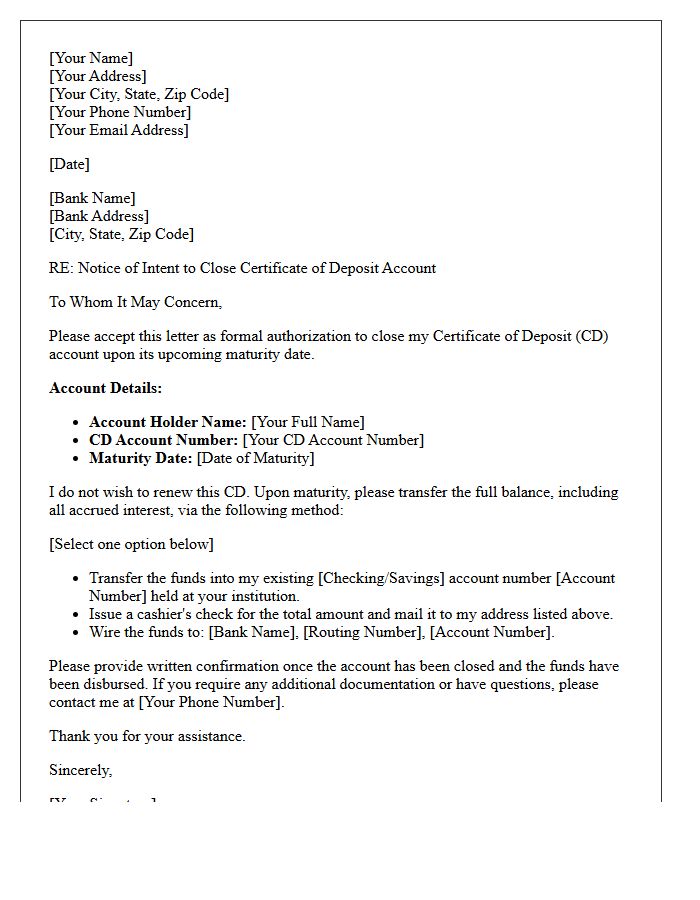
To redeem your savings, you must send a formal Letter to Close Individual Certificate of Deposit Upon Maturity during the specified grace period. This written request ensures you avoid automatic renewal into a new term with potentially lower rates. Clearly state your account number and provide specific disbursement instructions, such as transferring funds to a checking account or receiving a check. Timely notification is essential to maintain liquidity and gain full access to your principal and earned interest without incurring early withdrawal penalties.
How do I write a letter to close a Certificate of Deposit (CD) at maturity?
To close a CD at maturity, write a formal letter to your bank including your full name, account number, the maturity date, and clear instructions to close the account rather than renewing it. Specify how you would like the principal and earned interest to be disbursed, such as via a mailed check or a transfer to a linked savings account.
What information must be included in a CD closure request letter?
Your letter should include your contact information, the specific CD account number, the date of maturity, and your signature. You must also provide explicit payout instructions, such as "transfer funds to my checking account [Account Number]" or "issue a cashier's check to my mailing address."
When should I send a letter to close my CD to avoid automatic renewal?
You should send your closure letter during the "grace period," which typically lasts 7 to 10 days after the maturity date. However, it is best to submit your written request a week before the maturity date to ensure the bank processes the request before the CD automatically rolls over into a new term.
Can I submit a letter to close a CD before the maturity date?
Yes, you can submit a letter of intent to close the CD before the maturity date. Most banks will hold the instructions on file and execute the closure on the day of maturity to ensure you earn the full interest and avoid early withdrawal penalties.
Do I need to notarize my letter to close a Certificate of Deposit?
While most banks do not require a notarized letter for standard CD closures, it is recommended to check your bank's specific policy. If you are closing a high-value account or sending the request by mail from a different state, a notarized signature can help prevent processing delays or identity verification issues.

Comments