
Protecting your financial security after identity theft requires immediate action. This guide explains how to write a formal letter to close compromised account details following unauthorized activity. Learn the essential information needed to notify your bank and legally document the dispute to prevent further losses. Below are some ready to use template options to help you secure your finances quickly.
Image cover: Official Request to Close a Compromised Account After Fraudulent Activity: Templates and Guide
Letter Samples List
- Letter Requesting Closure of Compromised Checking Account
- Letter to Close Savings Account Following Fraudulent Activity
- Fraudulent Transaction Notification and Account Closure Letter
- Letter of Instruction to Close Compromised Joint Bank Account
- Account Compromise and Closure Request Letter to Bank Manager
- Letter to Terminate Business Account Due to Unauthorized Transactions
- Identity Theft Notification and Account Cancellation Letter
- Letter to Close Compromised Credit Card Account Immediately
- Fraud Alert and Deposit Account Closure Letter
- Letter to Transfer Funds and Close Compromised Banking Account
- Security Breach Notification and Account Termination Letter
- Letter Authorizing Closure of Compromised Corporate Account
Letter Requesting Closure of Compromised Checking Account
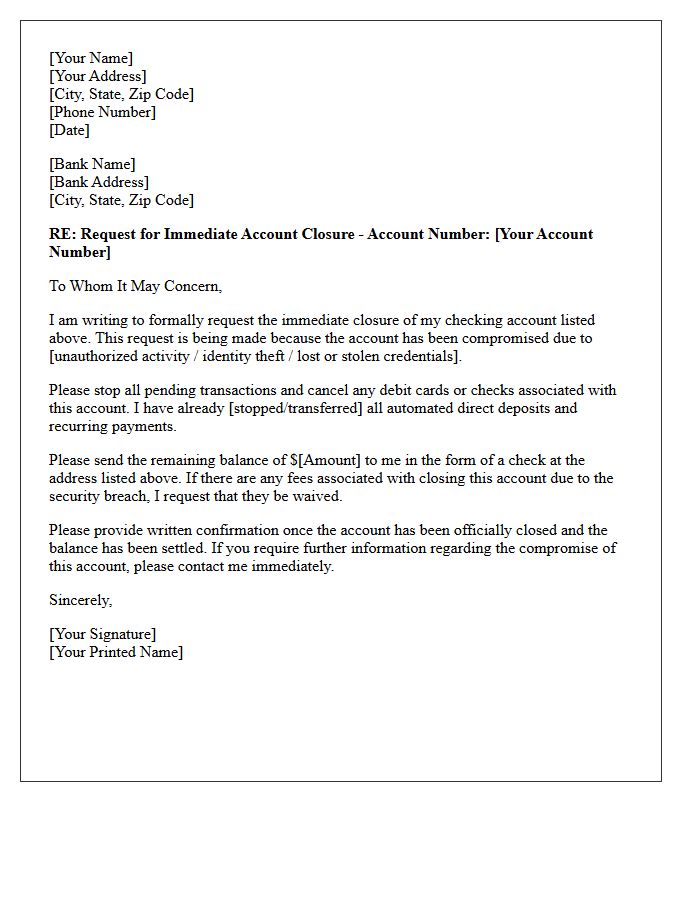
When writing a Letter Requesting Closure of Compromised Checking Account, prioritize security and clarity. Clearly state your intent to close the account due to unauthorized activity or identity theft. Include your full name, account number, and the specific date for termination. Request written confirmation that the account is fully closed and the balance is zeroed out. Ensure you have moved all automatic payments and direct deposits to a new, secure account first. Sending this via certified mail provides essential legal proof of your request to the financial institution.
Letter to Close Savings Account Following Fraudulent Activity
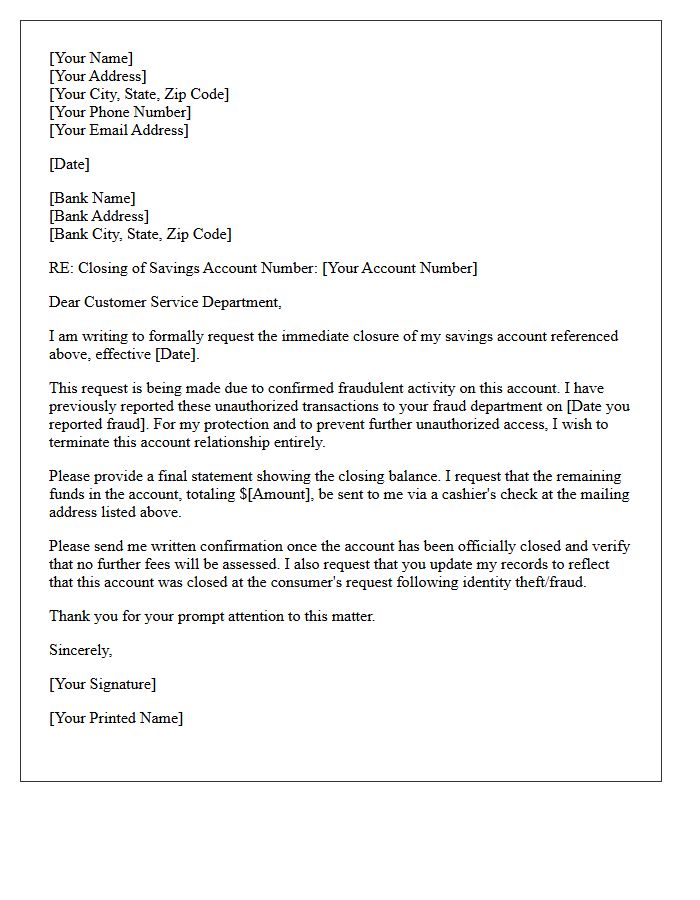
When drafting a formal account closure letter due to security breaches, explicitly state that the request stems from unauthorized transactions. Clearly include your full name, account number, and the specific date the fraudulent activity occurred. Request a written confirmation that the account is finalized and that any remaining balance be transferred to a secure, new account. For security, send this notification via certified mail to create a legal paper trail. Ensure all automatic payments and direct deposits are redirected beforehand to prevent failed transfers or additional fees during the closure process.
Fraudulent Transaction Notification and Account Closure Letter
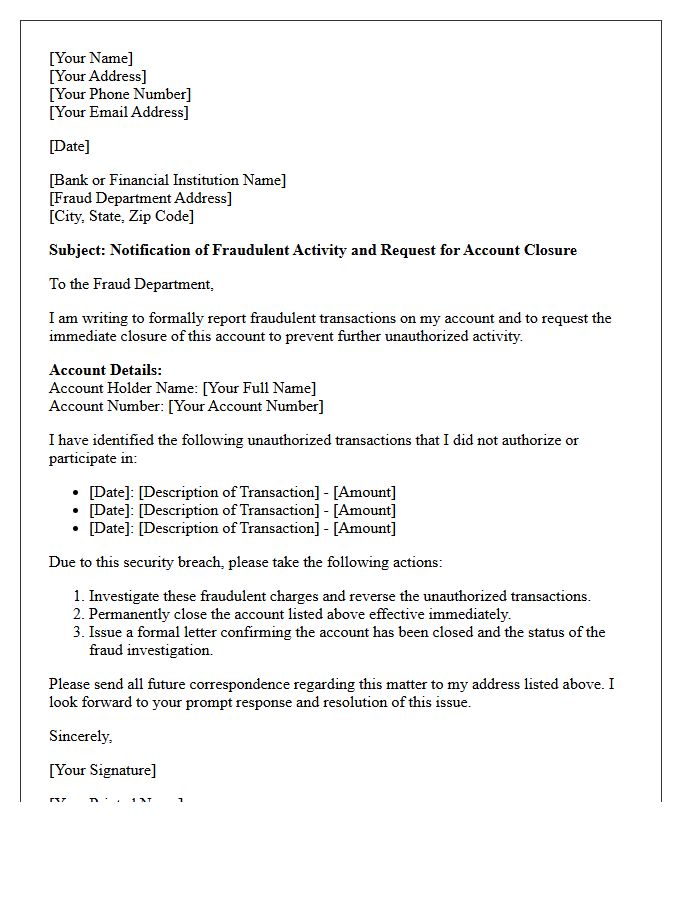
A Fraudulent Transaction Notification and Account Closure Letter serves as official documentation that an account was compromised and subsequently terminated. It is vital to verify the sender to avoid phishing scams. This letter typically outlines specific unauthorized charges, confirms the final balance, and provides instructions for identity protection. Retaining this record is essential for potential credit disputes or legal verification. Always ensure the document includes a formal reference number and contact information for the financial institution's security department to confirm the closure's authenticity.
Letter of Instruction to Close Compromised Joint Bank Account
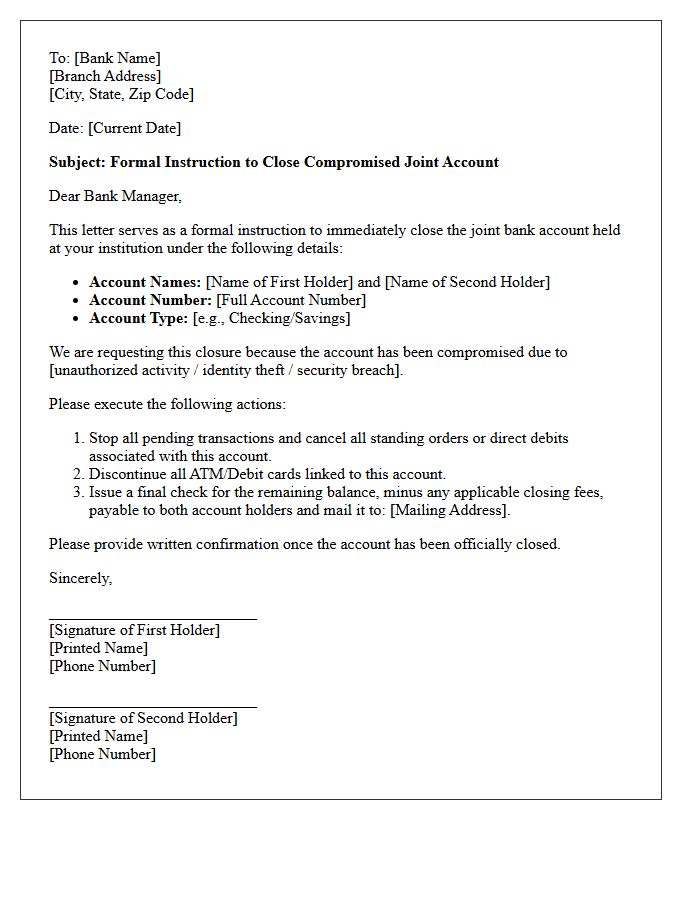
A Letter of Instruction is a formal document required to authorize the immediate closure of a compromised joint bank account. Both account holders should ideally sign to prevent unauthorized access and clear any pending liabilities. It is critical to specify the exact disposition of remaining funds, typically via a cashier's check or transfer to a secure, new account. Providing clear identification details and account numbers ensures the bank processes the request swiftly, effectively terminating financial liability and protecting assets from ongoing fraudulent activity or security breaches.
Account Compromise and Closure Request Letter to Bank Manager
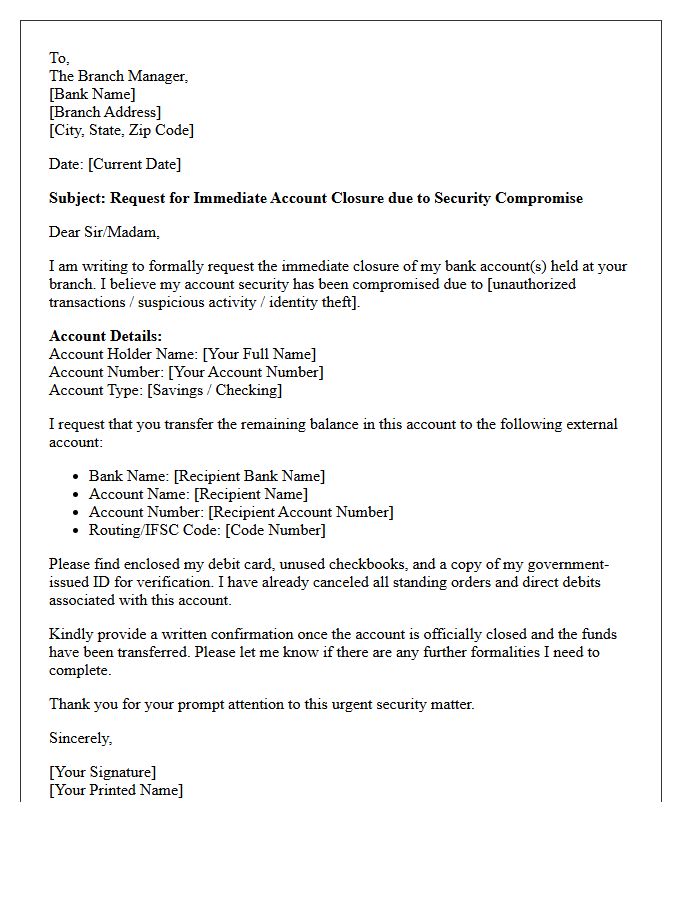
An Account Compromise and Closure Request Letter is a formal document used to notify your bank of unauthorized access. It serves as a legal record to mitigate financial liability and protect your credit score. Clearly state your intent to terminate the relationship due to security breaches, providing specific account details and dates of suspicious activity. Request a final balance statement and confirmation that the account is permanently closed. This written notice is vital for identity theft protection and ensuring the bank ceases all future transactions or automated debits immediately.
Letter to Terminate Business Account Due to Unauthorized Transactions
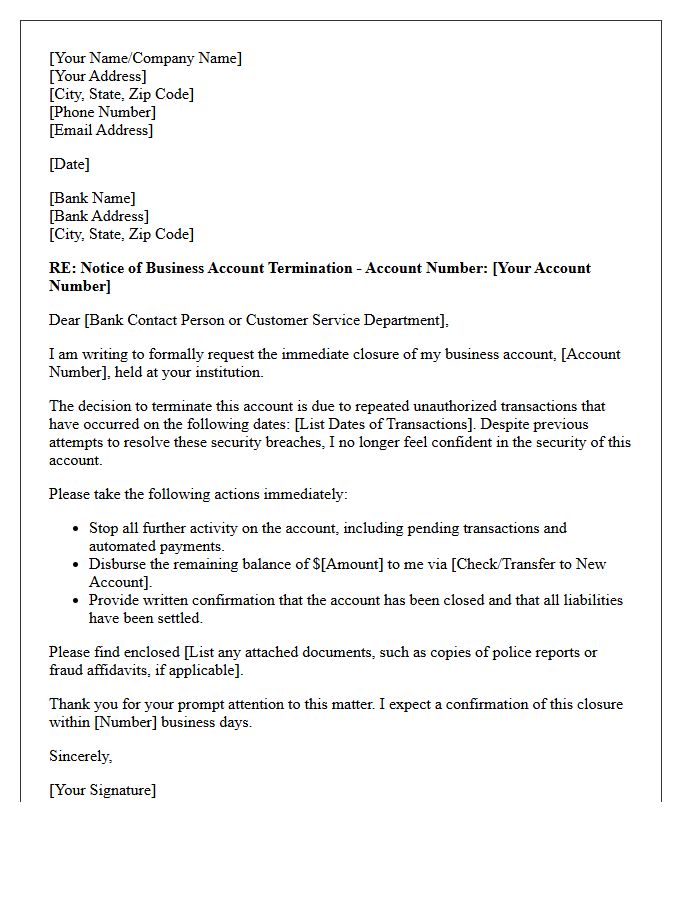
When drafting a letter to terminate a business account due to unauthorized transactions, you must prioritize clarity and legal protection. Clearly state your intent to close the account immediately to prevent further fraudulent activity. Include essential details such as the account number, specific dates of disputed charges, and a formal request for a full investigation. Ensure you demand a written confirmation of the closure and the reimbursement of lost funds. Sending this notice via certified mail establishes a critical paper trail for your business's financial security and liability defense.
Identity Theft Notification and Account Cancellation Letter
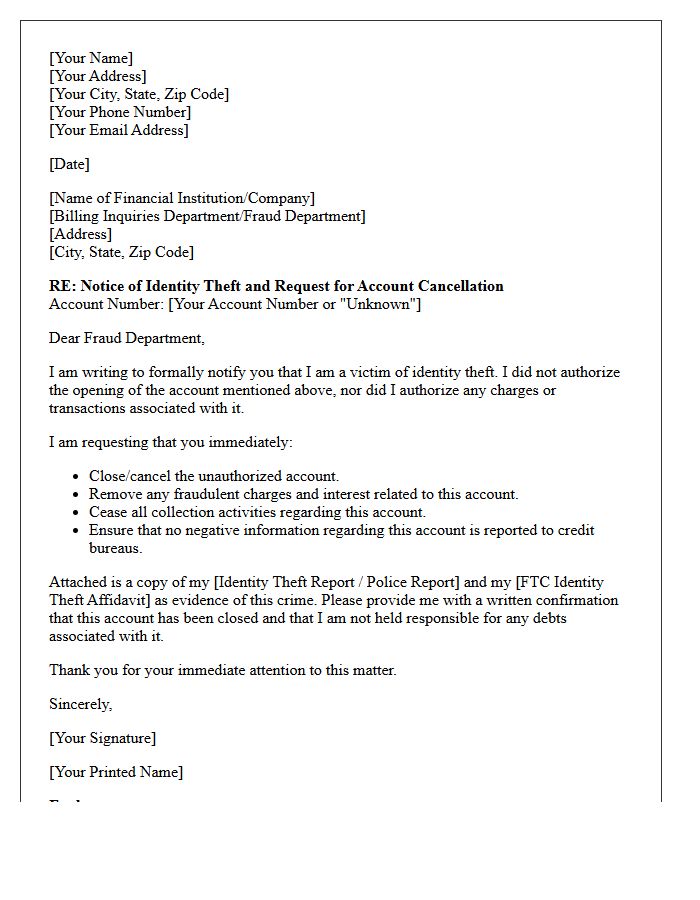
An Identity Theft Notification and Account Cancellation Letter is a formal document used to inform creditors and financial institutions about unauthorized activity. It serves as legal evidence that you have disputed fraudulent charges and requested the immediate closure of compromised accounts. To ensure maximum protection, include your FTC Identity Theft Report and police case number. Sending this letter via certified mail creates a paper trail, which is essential for restoring your credit score and protecting your legal rights against future liability for debts you did not incur.
Letter to Close Compromised Credit Card Account Immediately
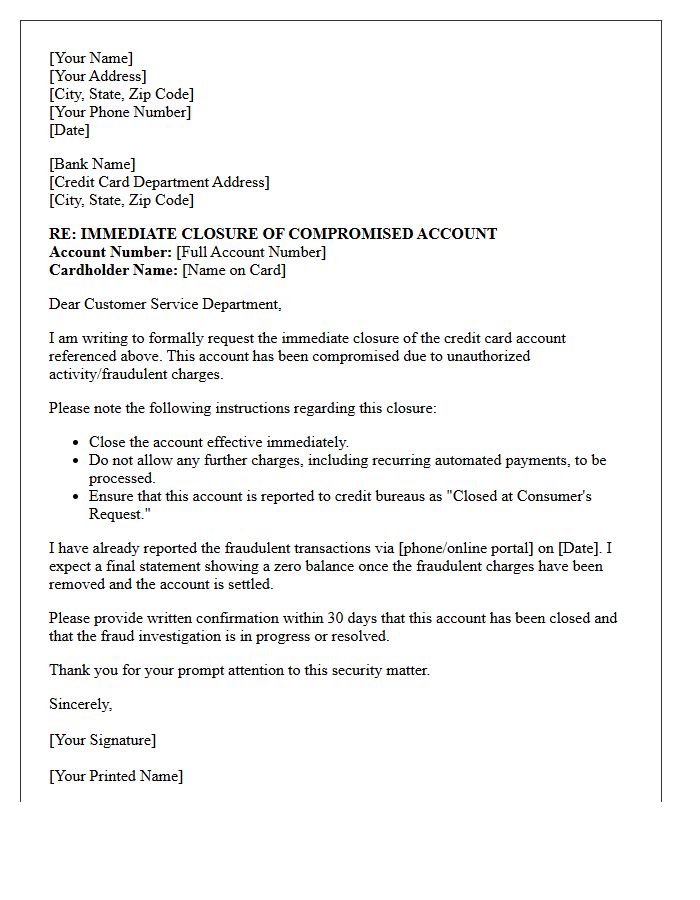
When you discover unauthorized charges, you must send a formal letter to close a compromised credit card account to your issuer immediately. Clearly state that the account was accessed without permission and request an immediate permanent closure to prevent further fraudulent transactions. Include your account details and specific dates of the suspicious activity to ensure legal protection under consumer rights. Sending this notice via certified mail provides essential documentation, effectively minimizing financial liability and safeguarding your credit score from damage caused by identity theft or security breaches.
Fraud Alert and Deposit Account Closure Letter
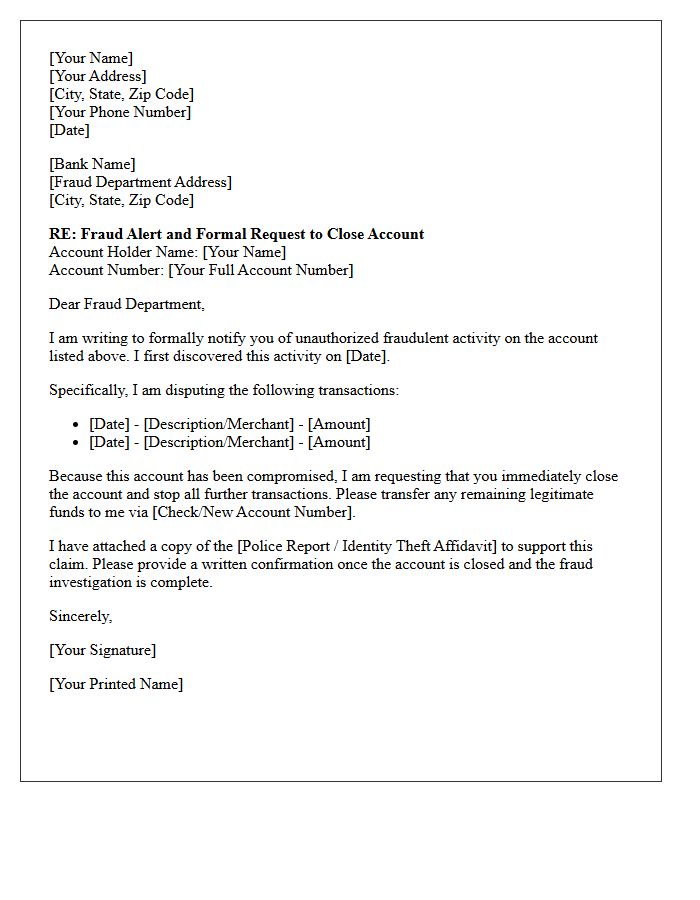
Receiving a bank account closure letter often follows a fraud alert triggered by suspicious activity or policy violations. Financial institutions exercise their right to terminate relationships to mitigate risk. Upon receiving notice, immediately verify the letter's authenticity to avoid phishing scams. Secure remaining funds, update direct deposits, and clear outstanding checks to prevent overdrafts. If the closure was an error, request your ChexSystems report to dispute inaccuracies. Timely action is essential to maintain financial stability and protect your banking reputation from long-term negative records.
Letter to Transfer Funds and Close Compromised Banking Account
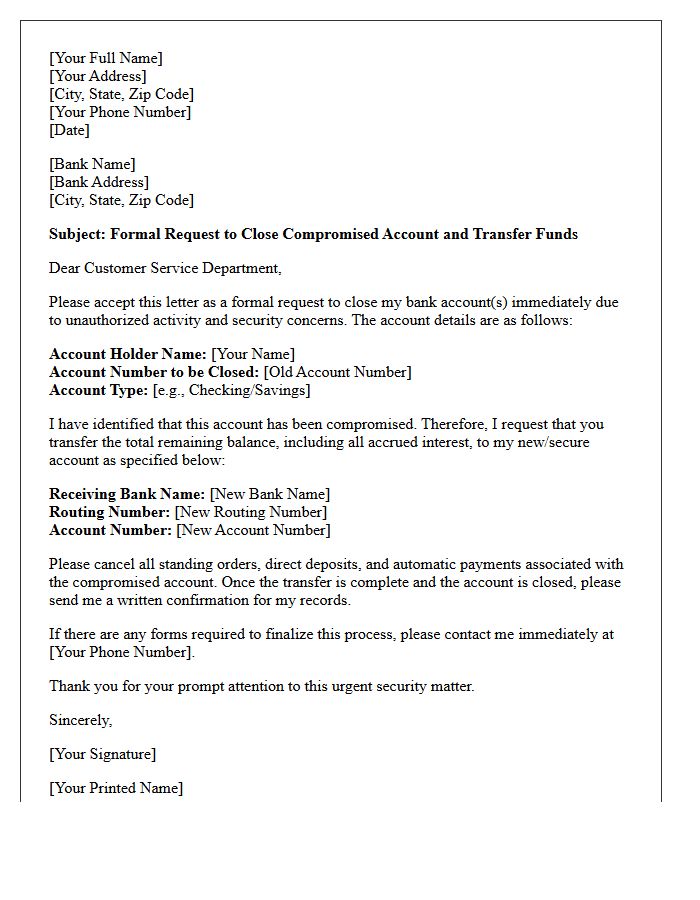
When your bank account is compromised, you must act quickly by submitting a written formal request to your financial institution. This letter serves as an official instruction to close the vulnerable account and transfer all remaining funds to a secure, new account. Clearly state the security breach, provide identification details, and specify the destination account numbers. Documenting this process in writing ensures legal protection and helps resolve unauthorized transactions while securing your personal finances against further identity theft or fraudulent activity.
Security Breach Notification and Account Termination Letter
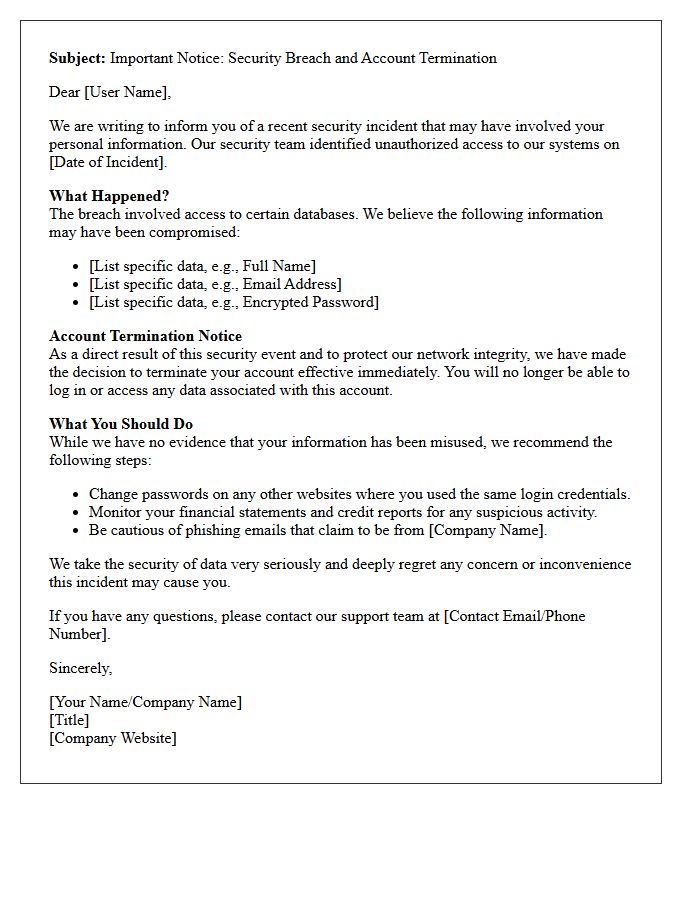
A Security Breach Notification is a legal requirement informing users that their personal data was compromised. It must detail the nature of the leak and steps for protection. Conversely, an Account Termination Letter formally ends a service agreement, often due to policy violations or security risks. Both documents serve as critical communication protocols to manage liability and protect privacy. Understanding these notices helps users secure their digital identity and respond effectively to unauthorized access or permanent loss of service access during a critical security event.
Letter Authorizing Closure of Compromised Corporate Account
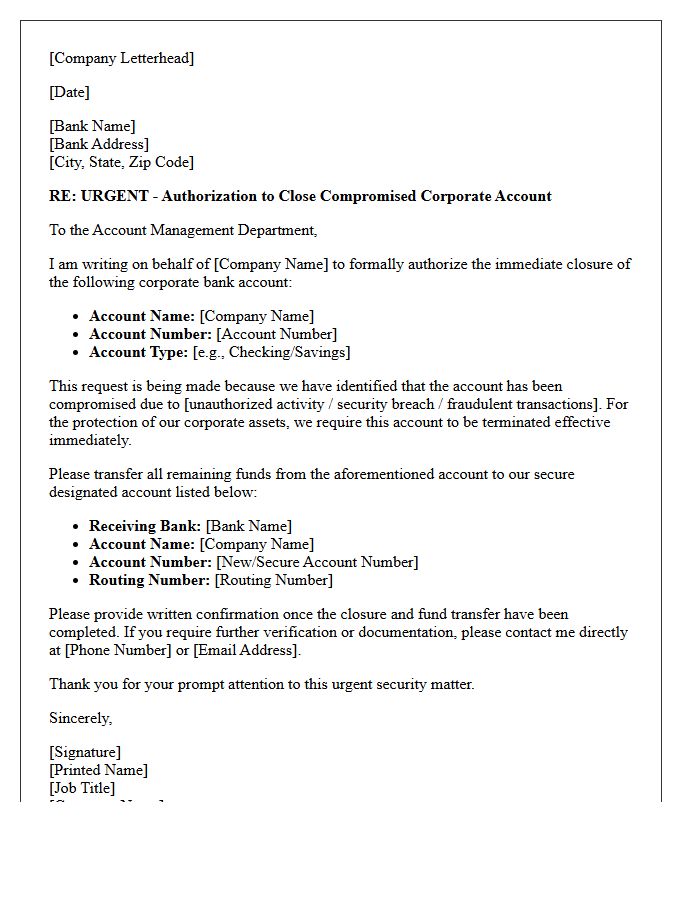
A letter authorizing the closure of a compromised corporate account is a critical security measure to prevent unauthorized financial loss. It must be issued on official company letterhead and signed by an authorized signatory. The document should clearly state the account details, provide proof of identity, and issue an immediate instruction to terminate all electronic access. Promptly notifying your financial institution in writing creates a legal record of the breach, effectively mitigating potential liabilities and ensuring the protection of remaining business assets during an emergency security event.
How do I write a formal letter to close a compromised bank account?
To close a compromised account, your letter should include your full name, the account number, a clear statement requesting the immediate closure of the account, and a reference to the specific fraudulent transactions that occurred. Ensure you also request a written confirmation that the account has been closed and that all liabilities related to the fraud have been resolved.
What information should be included in a fraud notification letter to a bank?
A fraud notification letter must detail the unauthorized transaction amounts, the dates they occurred, and any relevant merchant names. You should also include your police report case number (if available) and a request for the bank to investigate the charges under the Fair Credit Billing Act or relevant local banking regulations.
Can I close my account via mail if it was used for fraudulent activity?
Yes, closing a compromised account via certified mail with return receipt requested is a recommended practice. This provides a legal paper trail proving that you notified the financial institution of the fraud and officially requested the termination of the account relationship to prevent further unauthorized access.
Should I mention a police report in my account closure letter?
Yes, including a police report number or attaching a copy of the identity theft affidavit significantly strengthens your case. It serves as official evidence that the transactions were non-consensual and helps the bank's fraud department expedite the closure and recovery process.
What happens to my remaining funds when I close a compromised account?
In your closure letter, you should explicitly instruct the bank to transfer any remaining, non-disputed funds to a new, secure account or to issue a paper check via mail. Ensure you specify that the remaining balance should be moved only after the bank has secured the funds from further fraudulent attempts.

Comments