
Protecting your financial reputation after fraud requires swift action. This guide explains how to draft a formal Letter to Close Compromised Account to prevent further unauthorized transactions and secure your identity. Following professional protocols ensures banks treat your request with urgency. Learn the essential details to include for legal protection. To simplify the process, below are some ready to use template.
Image cover: Securing Your Future: Essential Letter Templates to Close Accounts After Identity Theft
Letter Samples List
- Letter to Close Compromised Checking Account Following Identity Theft
- Letter to Close Compromised Savings Account Following Identity Theft
- Letter to Close Compromised Credit Card Account Following Identity Theft
- Letter to Close Compromised Business Bank Account Following Identity Theft
- Letter to Close Compromised Joint Bank Account Following Identity Theft
- Letter to Close Compromised Line of Credit Account Following Identity Theft
- Letter to Close Compromised Certificate of Deposit Account Following Identity Theft
- Letter to Close Compromised Trust Account Following Identity Theft
- Letter to Close Compromised Brokerage Account Following Identity Theft
- Letter to Close Compromised Wealth Management Account Following Identity Theft
- Letter to Close Compromised Student Banking Account Following Identity Theft
- Letter to Close Compromised Personal Loan Account Following Identity Theft
Letter to Close Compromised Checking Account Following Identity Theft
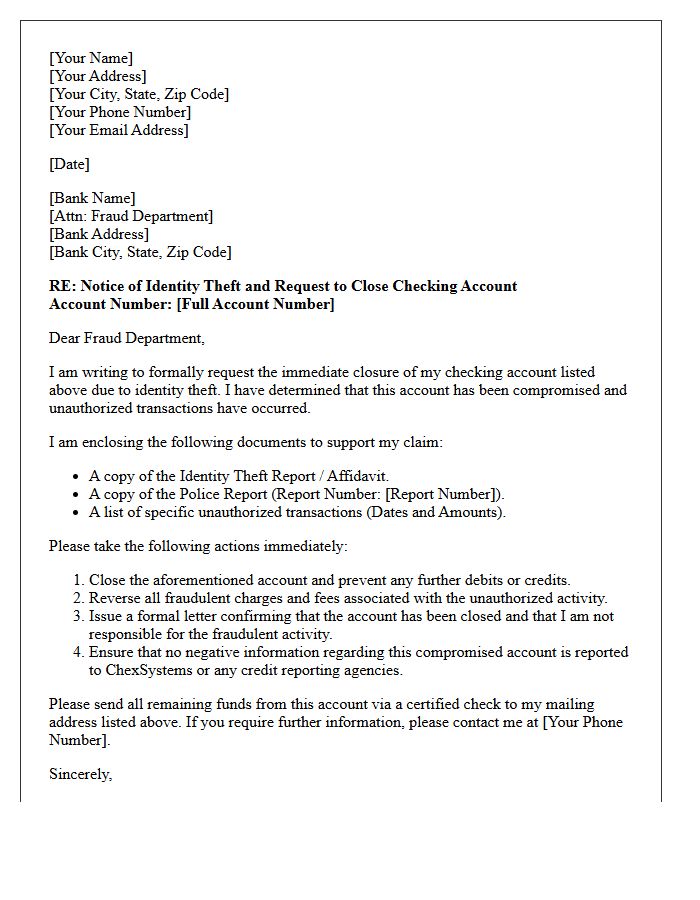
When sending a letter to close a compromised checking account due to identity theft, you must prioritize security. Formally request an immediate account freeze to prevent unauthorized transactions. Clearly state that the closure is a direct result of identity theft and include your police report number or FTC affidavit for verification. Explicitly instruct the bank to stop all recurring electronic transfers. Request written confirmation that the account is closed and that your credit standing remains unaffected. Keep copies of all correspondence to protect your financial future.
Letter to Close Compromised Savings Account Following Identity Theft
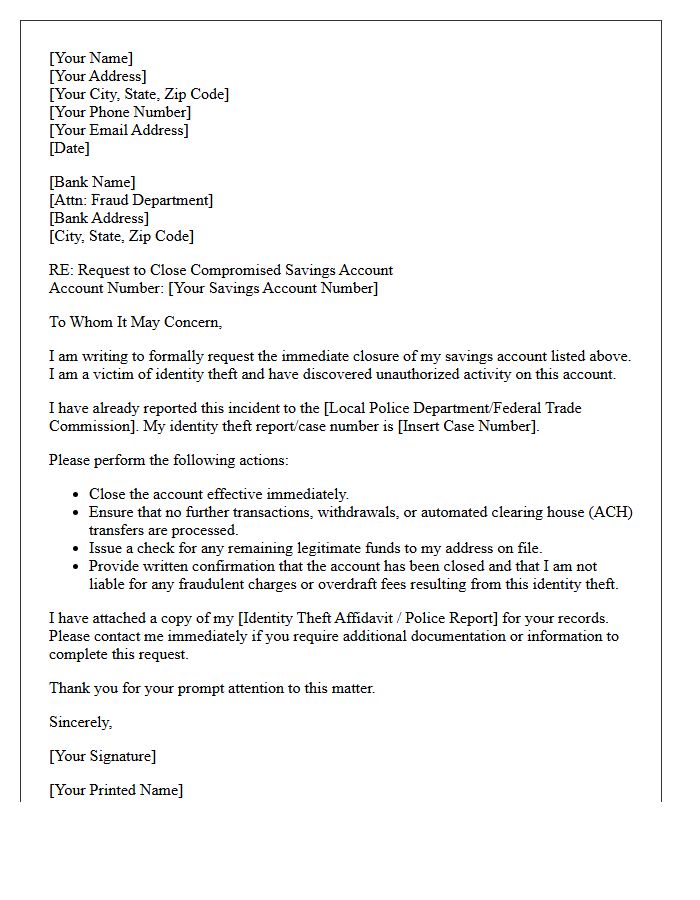
When drafting a letter to close a compromised savings account due to identity theft, clearly state your intent to terminate the relationship immediately. Explicitly mention that the closure is a direct result of fraudulent activity to ensure the bank flags the internal record correctly. Request a written confirmation that the account is closed with a zero balance. Include your police report number or FTC affidavit to provide legal proof of the crime, protecting your credit reputation and preventing any future liability for unauthorized transactions or overdraft fees occurring after the notification.
Letter to Close Compromised Credit Card Account Following Identity Theft
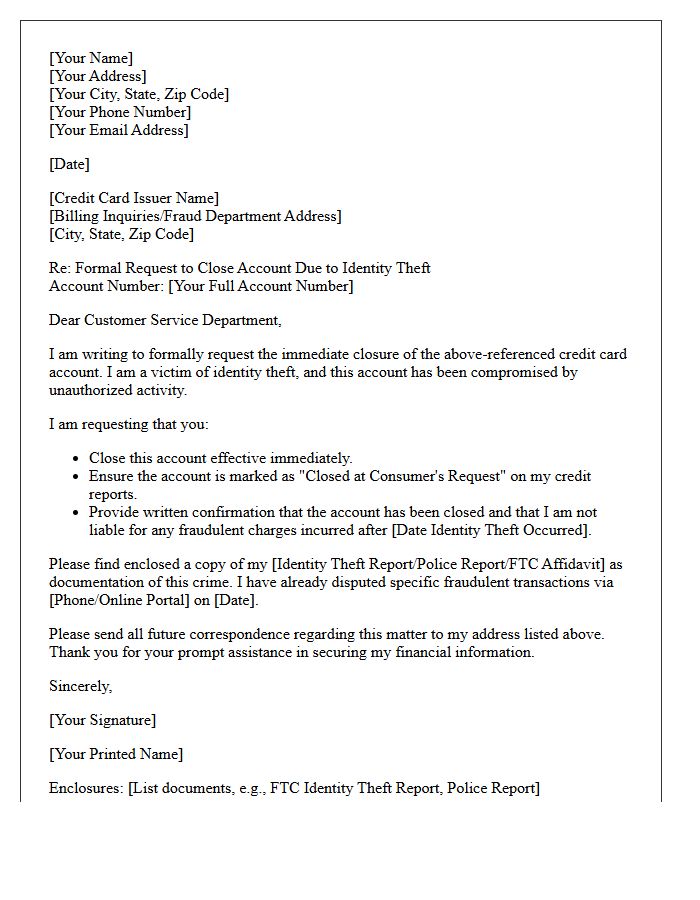
When drafting a letter to close a compromised credit card due to identity theft, you must clearly state that the closure is due to unauthorized activity. Provide your account details, the date the fraud was discovered, and a formal request for a written confirmation of the closure. Sending this via certified mail with a return receipt ensures legal proof of your request. This step is essential for disputing fraudulent charges and protecting your credit score from further damage during the recovery process.
Letter to Close Compromised Business Bank Account Following Identity Theft
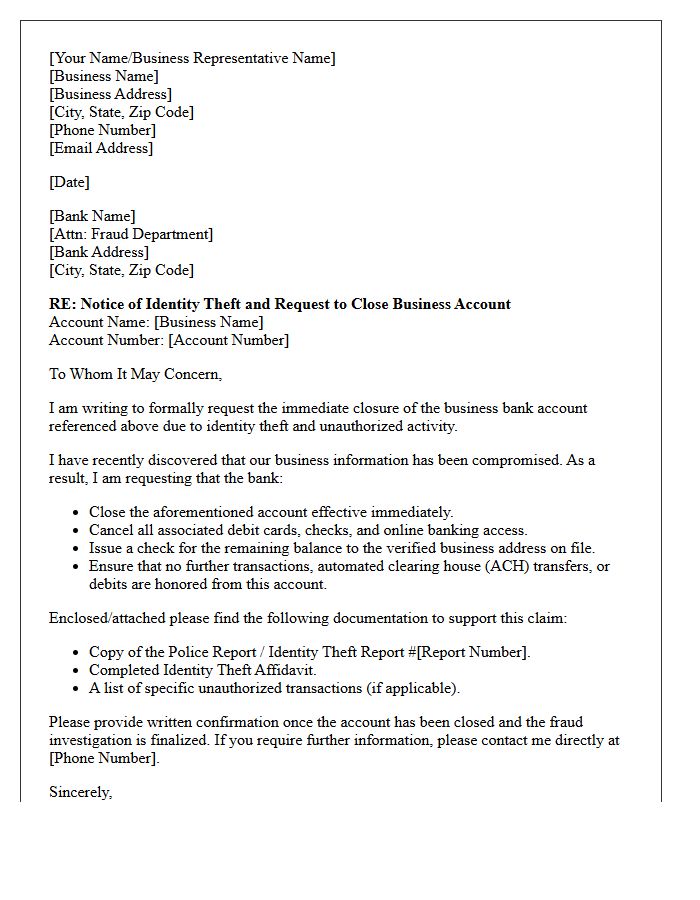
To secure your finances after identity theft, you must formally request to close compromised business bank accounts. A written letter provides a legal paper trail, ensuring the bank terminates all access and stops unauthorized transactions. Clearly state your account details, reference the reported fraud, and demand a written confirmation of the closure. This step is vital to prevent further liability and protect your company's credit standing. Always include a copy of the police report or identity theft affidavit to expedite the process and substantiate your claim.
Letter to Close Compromised Joint Bank Account Following Identity Theft
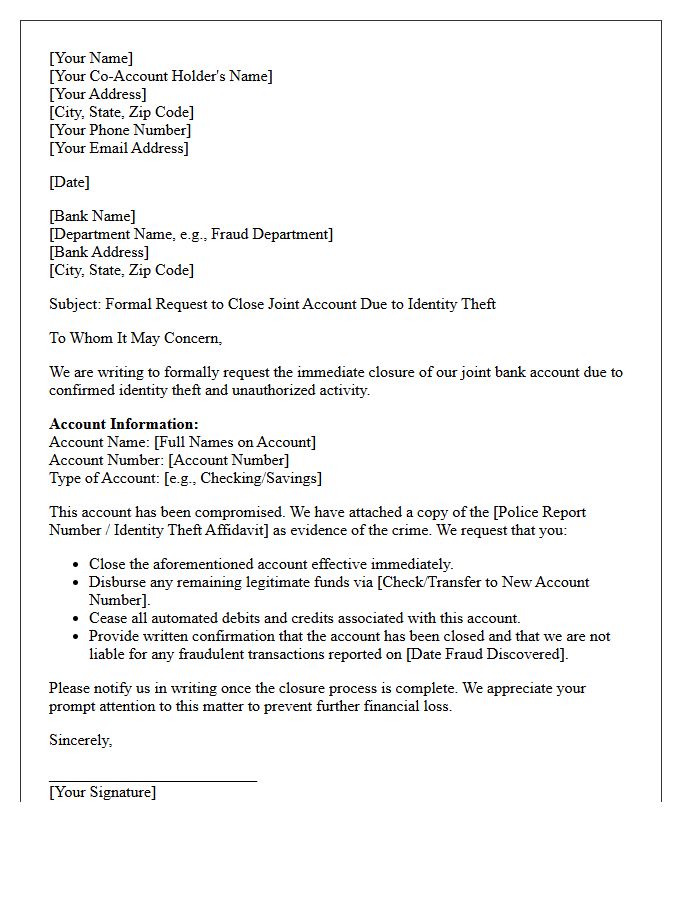
When closing a compromised joint bank account due to identity theft, both account holders should sign a formal letter to ensure immediate action. This written notice serves as a legal record to prevent further unauthorized transactions and limit liability. Explicitly request the bank to freeze the account, transfer remaining funds to a new secure number, and issue a confirmation of closure. Attaching a police report or an FTC identity theft affidavit provides necessary documentation to protect your credit and strengthen your case during the recovery process.
Letter to Close Compromised Line of Credit Account Following Identity Theft
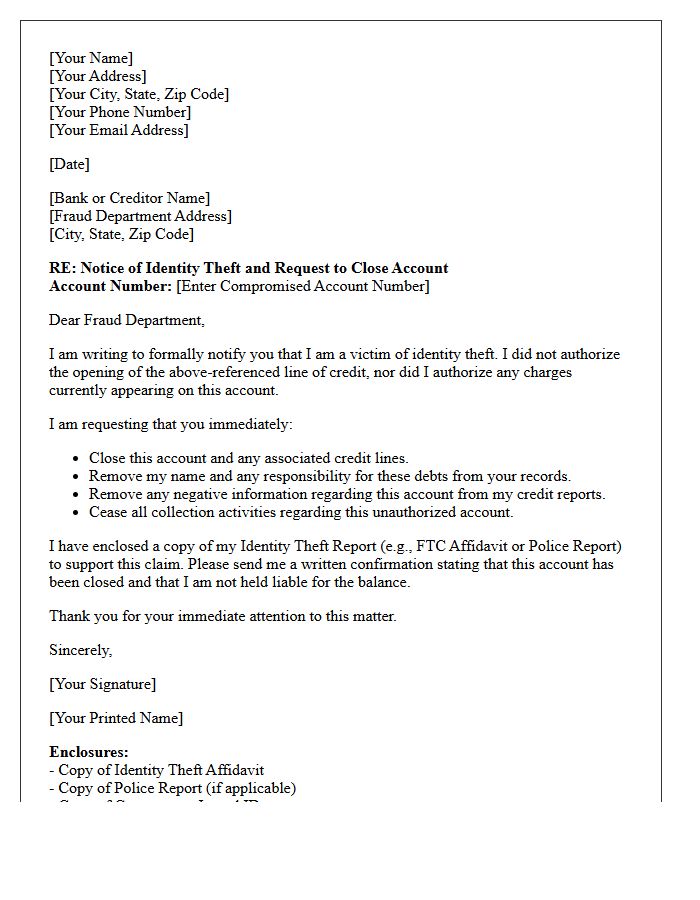
If you are a victim of identity theft, you must immediately send a formal letter to close a compromised line of credit. This document acts as a legal record, requesting the bank to permanently terminate the fraudulent account to prevent further financial liability. Ensure the letter includes your Identity Theft Report from the FTC and a clear demand to cease collection activities. Using certified mail provides essential proof of delivery, ensuring the creditor acknowledges your request to secure your credit profile and mitigate long-term damage to your financial standing.
Letter to Close Compromised Certificate of Deposit Account Following Identity Theft
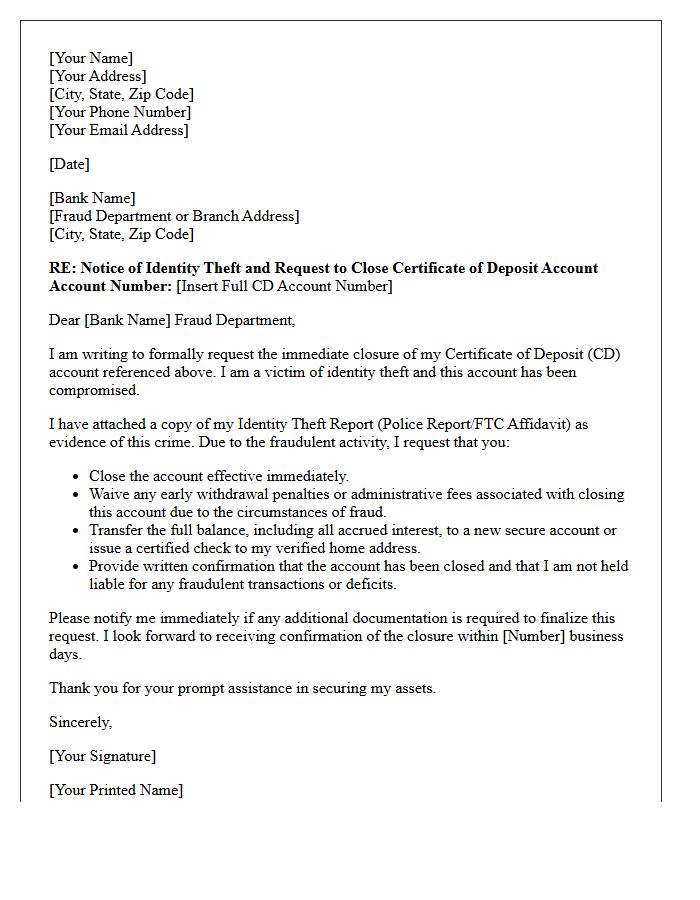
When closing a Certificate of Deposit (CD) compromised by identity theft, you must submit a formal written notice to your bank. Clearly state that the closure is due to unauthorized activity to protect your consumer rights. Demand the transfer of funds to a secure, new account and request a waiver for any early withdrawal penalties associated with the breach. Ensure you include the official police report or identity theft affidavit to expedite the process and maintain a clear paper trail for legal and financial protection.
Letter to Close Compromised Trust Account Following Identity Theft
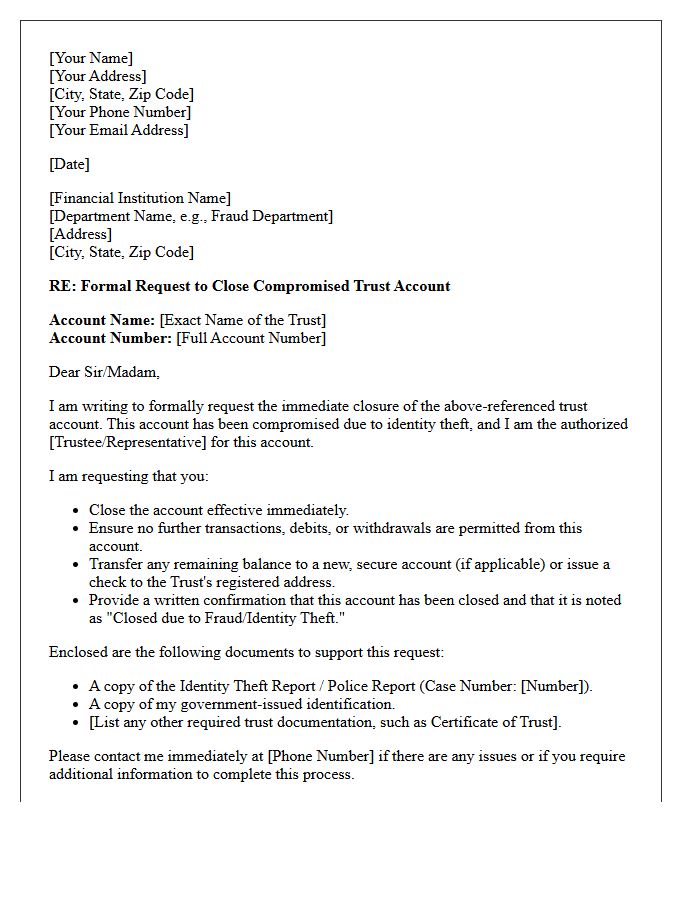
When closing a compromised trust account due to identity theft, you must submit a formal written notice to your financial institution immediately. This letter serves as a legal record to mitigate liability for unauthorized transactions and protects remaining fiduciary assets. Ensure you include the specific account number, a copy of the police report, and clear instructions to cease all activity. Promptly requesting a notarized confirmation of the closure helps restore financial integrity and prevents further exploitation of the trust's beneficiaries during the recovery process.
Letter to Close Compromised Brokerage Account Following Identity Theft
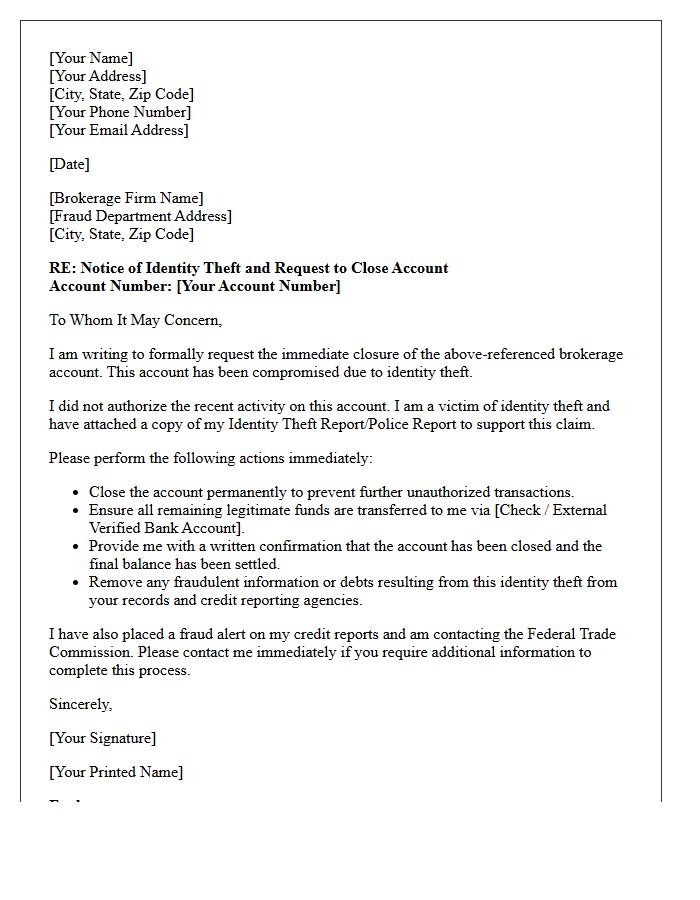
When sending a letter to close a compromised brokerage account due to identity theft, you must explicitly request an immediate permanent closure to prevent further unauthorized trades. Include your full name, account number, and a copy of the official police report or FTC Identity Theft Affidavit for verification. Demand a final written confirmation stating the account is closed and that your liability for fraudulent activity is cleared. This creates a vital paper trail to protect your credit and financial recovery efforts from future exploitation.
Letter to Close Compromised Wealth Management Account Following Identity Theft
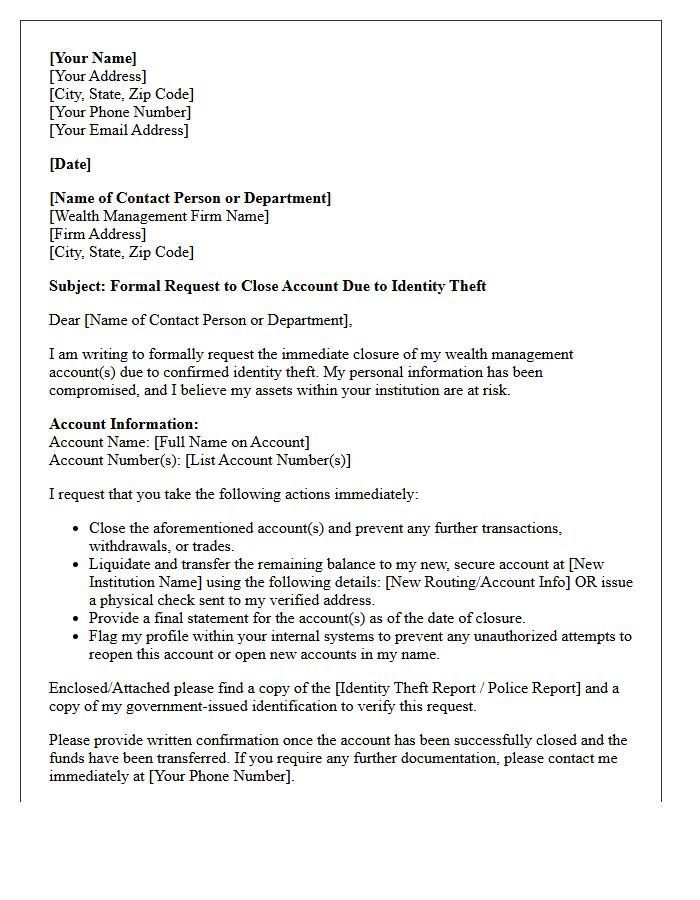
When sending a letter to close a wealth management account due to identity theft, immediate action is vital to protect your assets. Clearly state that the closure is due to unauthorized access and request a full freeze on all linked credentials. Ensure you include the official police report number and an identity theft affidavit to formalize the claim. Demand a final accounting statement and written confirmation that the account is closed. This documentation is essential for legal protection and resolving future credit disputes stemming from the security breach.
Letter to Close Compromised Student Banking Account Following Identity Theft
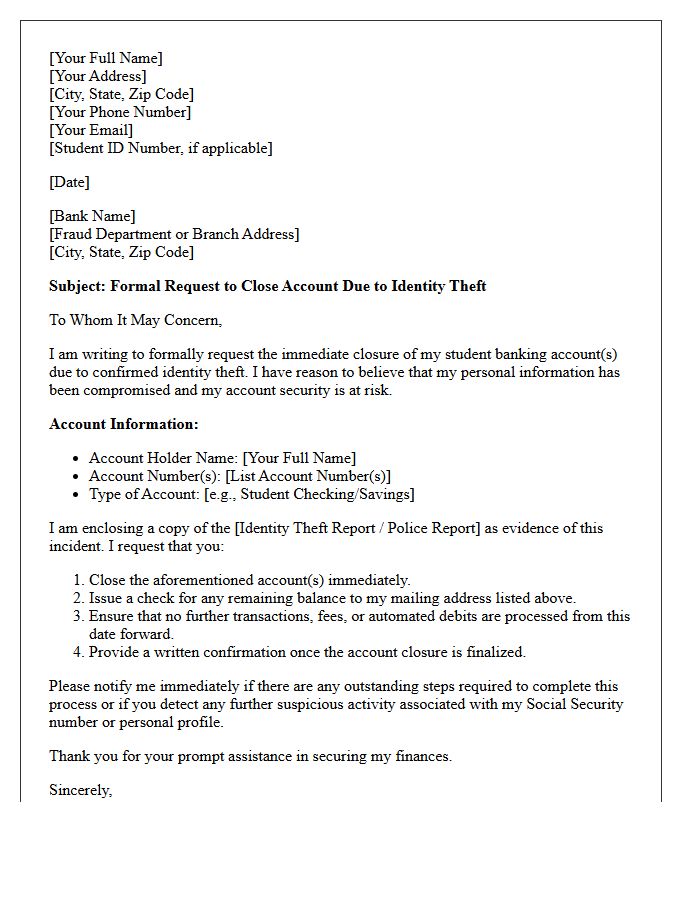
When writing a letter to close a compromised student banking account after identity theft, you must act quickly to prevent further financial loss. Clearly state your intent to terminate the account and include the specific account number. Attach a copy of the police report or an identity theft affidavit as formal evidence of the crime. Explicitly request that the bank stops all unauthorized transactions and provides written confirmation that the account is closed. This documentation is essential for restoring your credit and protecting your future financial reputation from ongoing fraudulent activity.
Letter to Close Compromised Personal Loan Account Following Identity Theft
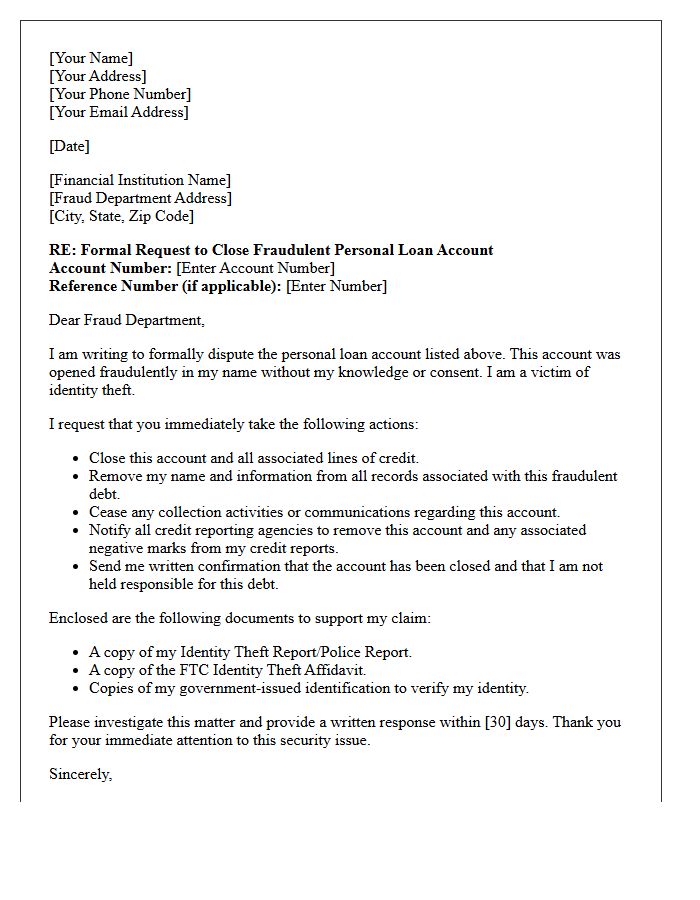
When drafting a letter to close a compromised personal loan account, you must formally notify the lender that the account was opened through identity theft. Clearly include your full legal name, the fraudulent account number, and a formal request for immediate closure. Attach a copy of the official Identity Theft Report or police filing to validate your claim. Explicitly demand that the institution removes any derogatory information from your credit reports. Sending this via certified mail with a return receipt ensures you have legal proof of your dispute and protection.
How do I write a formal letter to close a compromised account due to identity theft?
Your letter should include your full name, the specific account number, a clear statement that you are closing the account due to unauthorized activity, and a reference to your identity theft report or police case number. Send the letter via certified mail with a return receipt requested to ensure you have proof of delivery.
What information should be included in a notice to close a fraudulent account?
Include the date the fraud was discovered, a request for a formal letter of clearance confirming the account is closed and you are not liable, and copies of supporting documents like the FTC Identity Theft Report or a formal police report.
Should I call the bank or send a letter first to close a stolen identity account?
You should call the bank immediately to freeze the account, but you must follow up with a written letter. A physical letter sent through certified mail serves as legal evidence of your request to close the account and protects your rights under the Fair Credit Billing Act.
Do I need a police report to close a compromised bank account?
While some institutions may close an account upon request, most require an official police report or an FTC Identity Theft Affidavit to waive fraudulent charges and officially document that the closure is due to identity theft rather than standard account termination.
What happens to my credit score after closing a compromised account?
Closing a compromised account itself usually does not hurt your credit score. However, you must ensure the bank marks the account as "closed at consumer's request" or "closed due to fraud" to prevent unauthorized collections from appearing on your credit report.

Comments