
Managing your subscriptions effectively requires clear communication. Writing a formal Account Downgrade Request Letter helps you reduce service tiers while preserving your data and maintaining a professional relationship with the provider. This guide explains how to draft a concise notification to ensure a smooth transition to a lower-cost plan. To simplify the process, below are some ready to use templates.
Image cover: Professional Account Downgrade Request Letters and Templates
Letter Samples List
- Standard Checking Account Downgrade Request Letter
- Premium to Basic Account Downgrade Request Letter
- Commercial to Small Business Account Downgrade Request Letter
- Credit Card Tier Downgrade Request Letter
- Wealth Management to Retail Account Downgrade Request Letter
- Platinum to Gold Account Downgrade Request Letter
- Joint Checking Account Downgrade Request Letter
- High-Yield Savings Account Downgrade Request Letter
- Corporate Banking Account Downgrade Request Letter
- Merchant Services Account Downgrade Request Letter
- Fee-Free Checking Account Downgrade Request Letter
- Investment Portfolio Account Downgrade Request Letter
Standard Checking Account Downgrade Request Letter
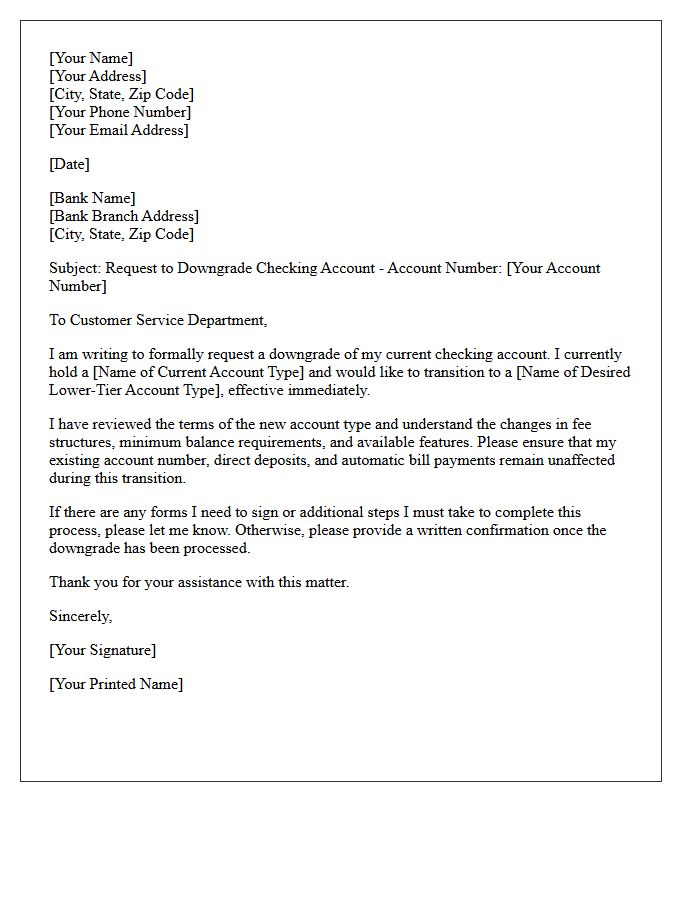
A Standard Checking Account Downgrade Request Letter is a formal document sent to your bank to move your funds to a lower-tier account, typically to avoid monthly maintenance fees or high minimum balance requirements. Clearly state your current account number and the specific account type you wish to transition to. Ensure you request the waiver of any pending service charges during the process. Sending this written notice creates a paper trail, protecting your financial rights while maintaining your banking history without the burden of unnecessary costs.
Premium to Basic Account Downgrade Request Letter
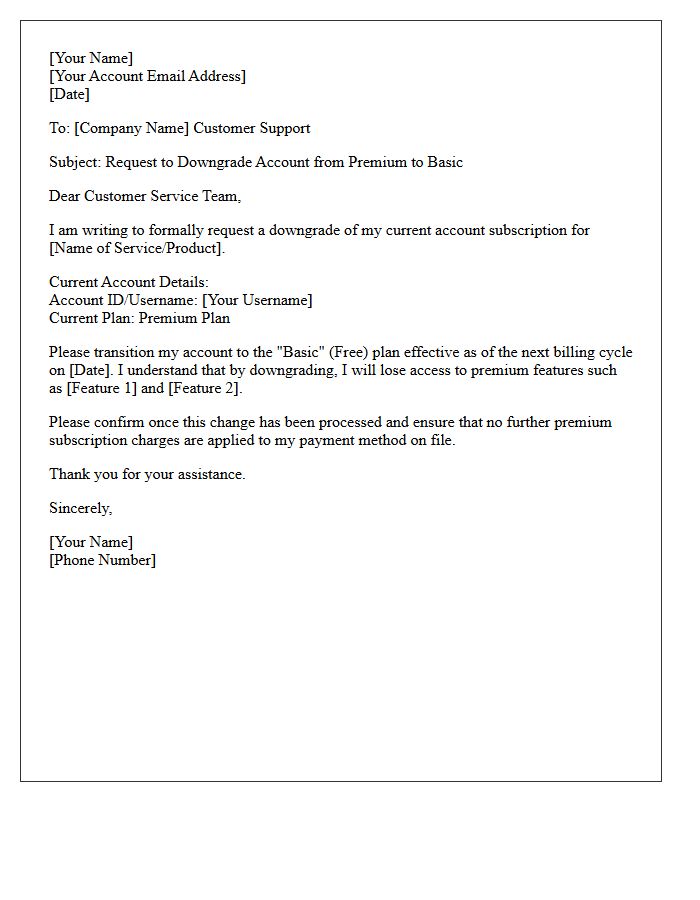
A Premium to Basic Account Downgrade Request Letter is a formal notification sent to a service provider to reduce subscription tiers. It must clearly state your account details, current plan, and the effective date to prevent unwanted billing cycles. Formally documenting your request provides essential proof of cancellation for your records. Ensure you mention that you wish to retain access to core features while removing paid add-ons. Clear communication helps avoid recurring charges and ensures a smooth transition to a free or lower-cost membership level without service interruptions.
Commercial to Small Business Account Downgrade Request Letter
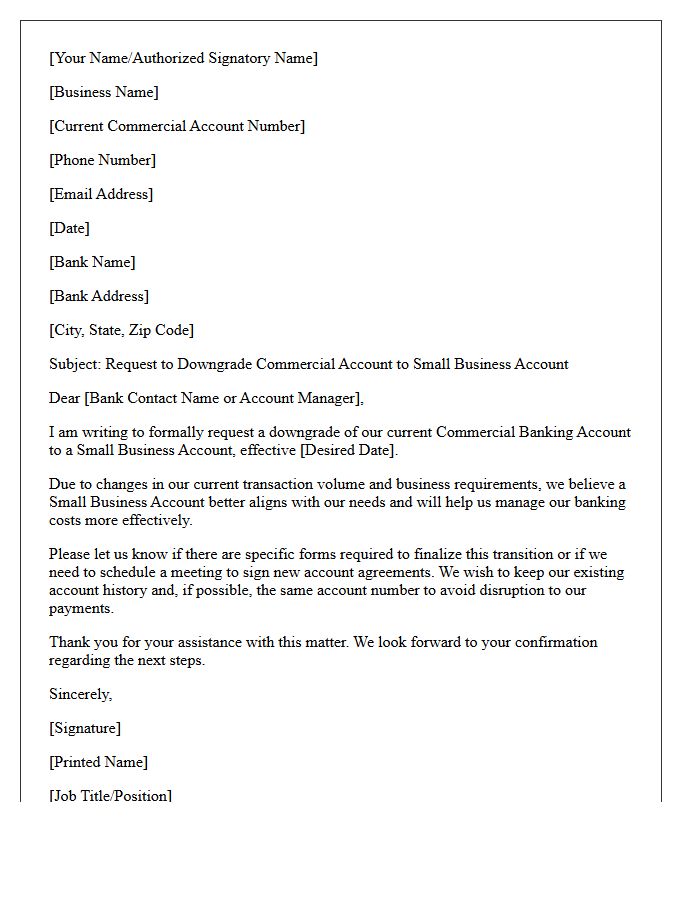
A Commercial to Small Business Account Downgrade Request Letter serves as formal notice to your bank to transition your profile to a more cost-effective tier. Clearly state your account number and business legal name to ensure accurate identification. Explicitly mention that your current revenue or transaction volume aligns better with small business criteria. This request aims to reduce monthly maintenance fees and optimize banking overhead. Always request a written confirmation once the downgrade is processed to maintain clear financial records and ensure your new fee structure is active.
Credit Card Tier Downgrade Request Letter
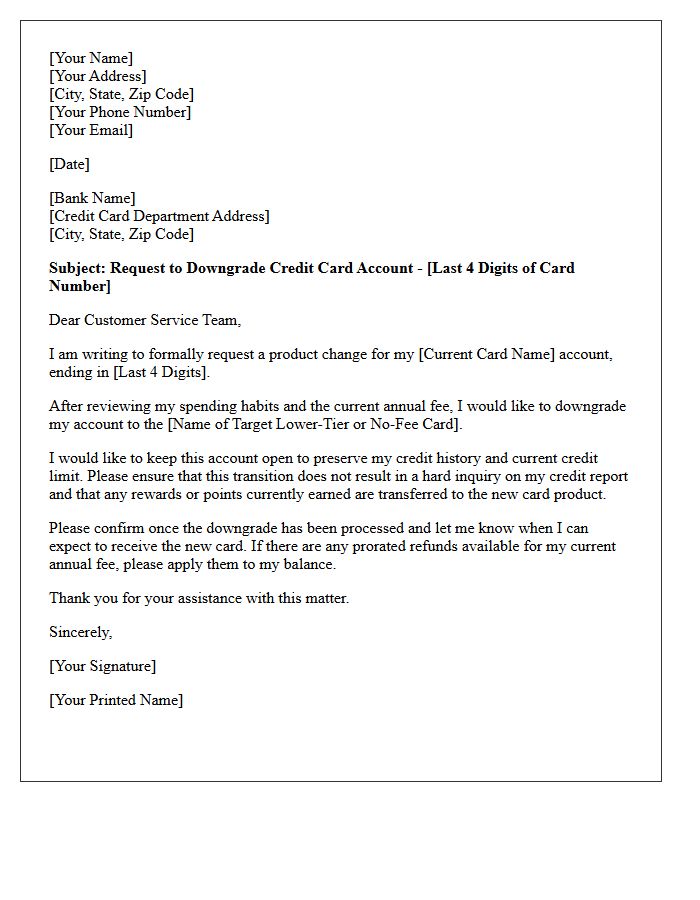
When writing a Credit Card Tier Downgrade Request Letter, clearly state your intent to transition to a no-annual-fee version of your current card. Specify your account details and explicitly request to retain your earned rewards and credit history. This strategy helps avoid canceling accounts, which can negatively impact your credit score. Ensure you mention that you wish to bypass a new hard credit inquiry. This formal request is an effective way to maintain long-term banking relationships while reducing unnecessary financial overhead.
Wealth Management to Retail Account Downgrade Request Letter
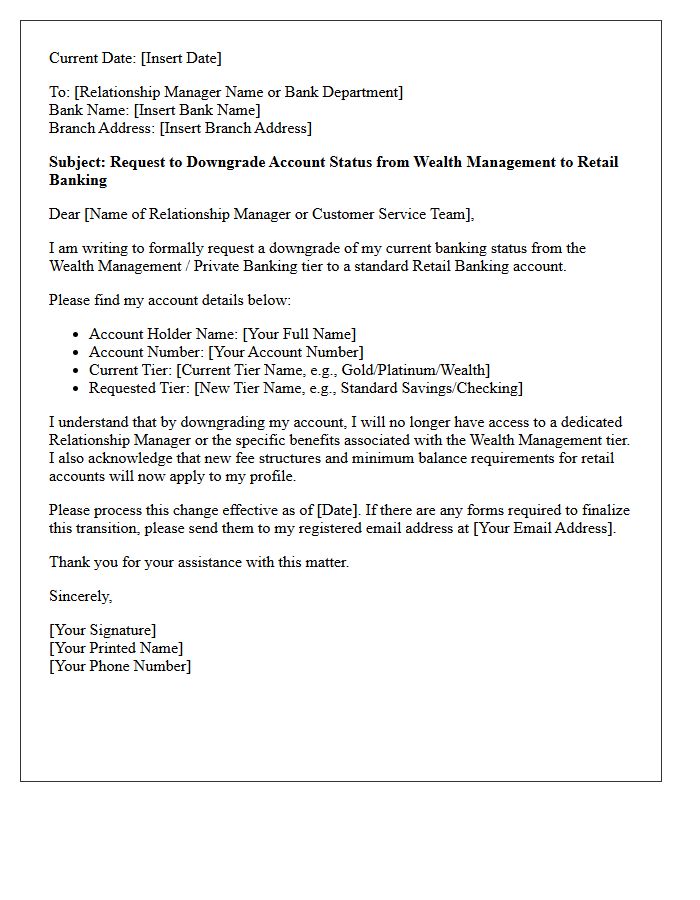
A Wealth Management to Retail Account Downgrade Request Letter formally instructs a financial institution to transition your status to a standard banking tier. It is essential to include your full name, account number, and a clear statement requesting the removal of premium services. Mention that you understand the change in fee structures and the potential loss of a dedicated relationship manager. Ensure the letter is signed and dated to prevent processing delays while maintaining a documented record of your instruction to adjust your service level and associated costs.
Platinum to Gold Account Downgrade Request Letter
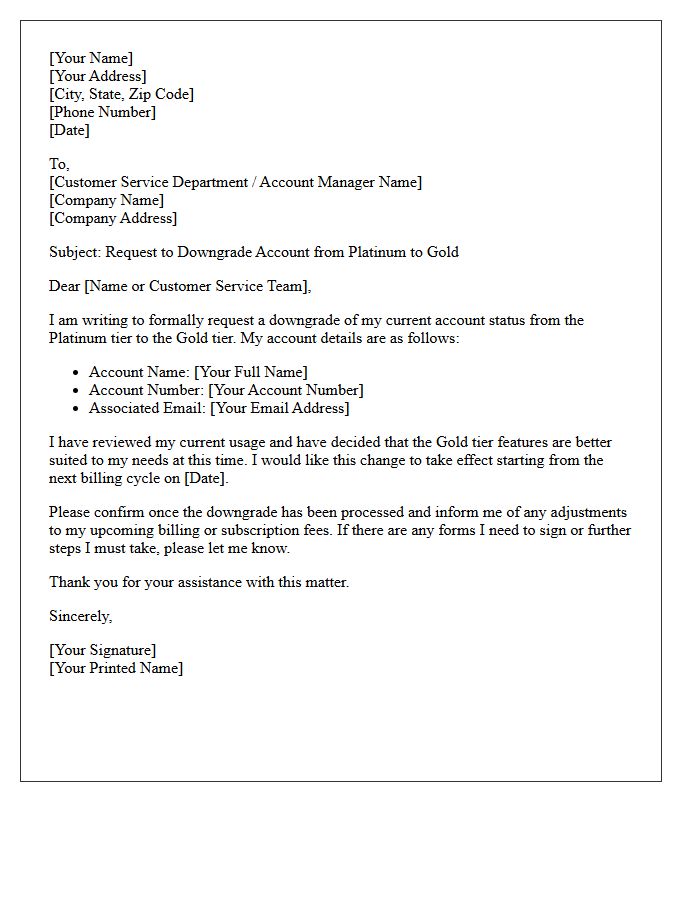
A Platinum to Gold Account Downgrade Request Letter is a formal notification sent to a service provider to reduce service levels and associated fees. To ensure clarity, include your unique account details, the specific date for the transition, and a clear request to cancel premium features. Mentioning the reason for the downgrade is optional but can expedite the process. Always request written confirmation to ensure your billing cycle reflects the lower Gold tier pricing immediately, preventing unnecessary charges for unused Platinum benefits.
Joint Checking Account Downgrade Request Letter
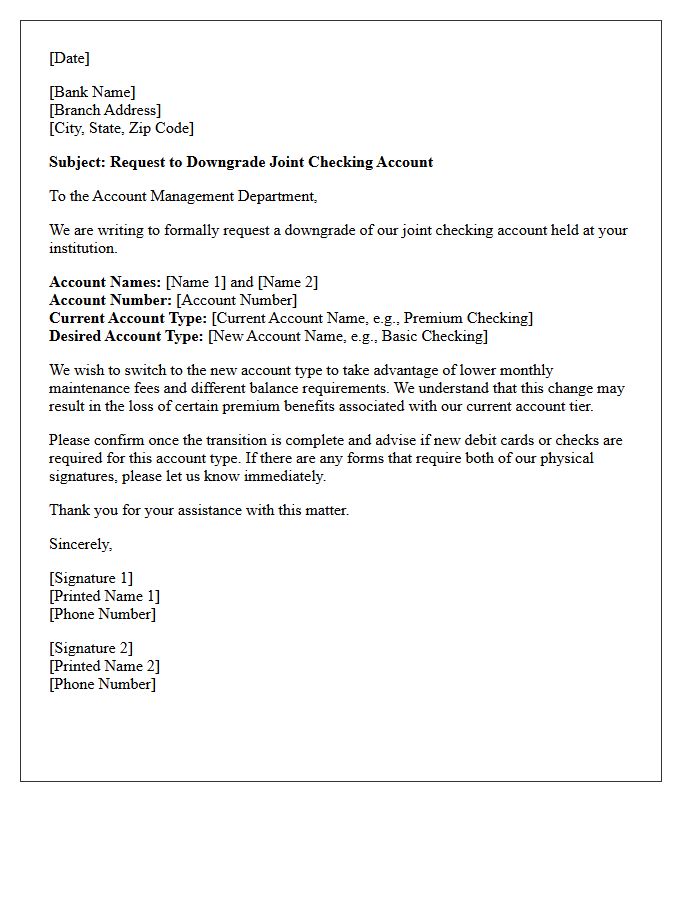
A Joint Checking Account Downgrade Request Letter is a formal document used to transition a premium bank account to a basic tier while maintaining shared ownership. It must clearly state the account number and the specific new account type desired to avoid higher monthly fees. To ensure legal processing, both co-owners must provide authorized signatures. Submitting this request helps preserve financial history and avoids the complications of closing the account entirely. Always request a written confirmation from the bank once the downgrade is successfully processed.
High-Yield Savings Account Downgrade Request Letter
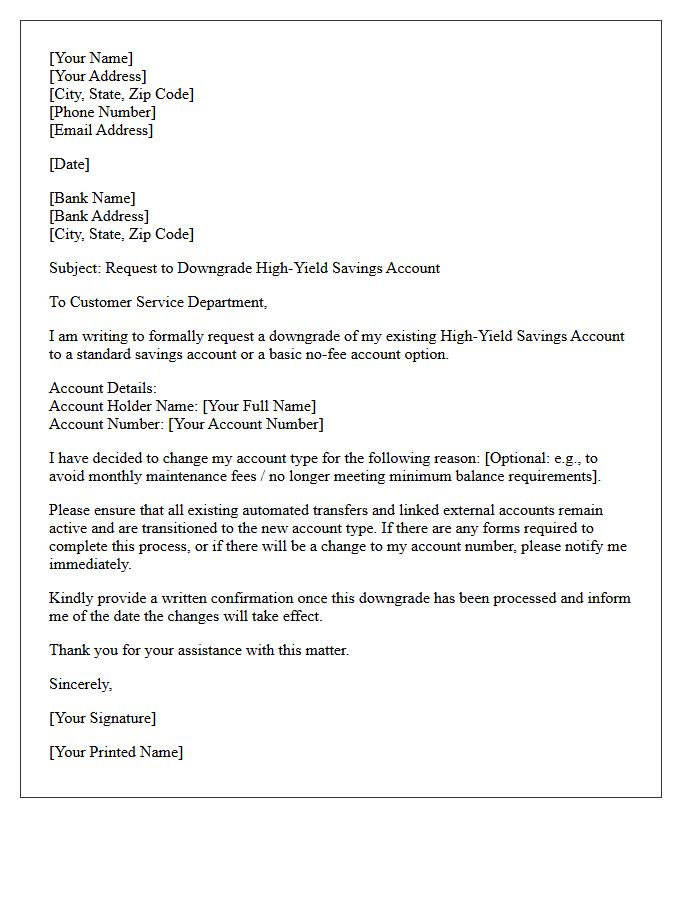
A High-Yield Savings Account Downgrade Request Letter is a formal document used to transition your account to a lower-tier service level while maintaining your banking relationship. It is essential to clearly state your account details and explicitly request the removal of maintenance fees or high balance requirements. Ensure you ask for written confirmation of the downgrade to protect your financial history. This process allows you to keep your funds accessible without the pressure of meeting minimum balance thresholds typically associated with premium high-yield products.
Corporate Banking Account Downgrade Request Letter
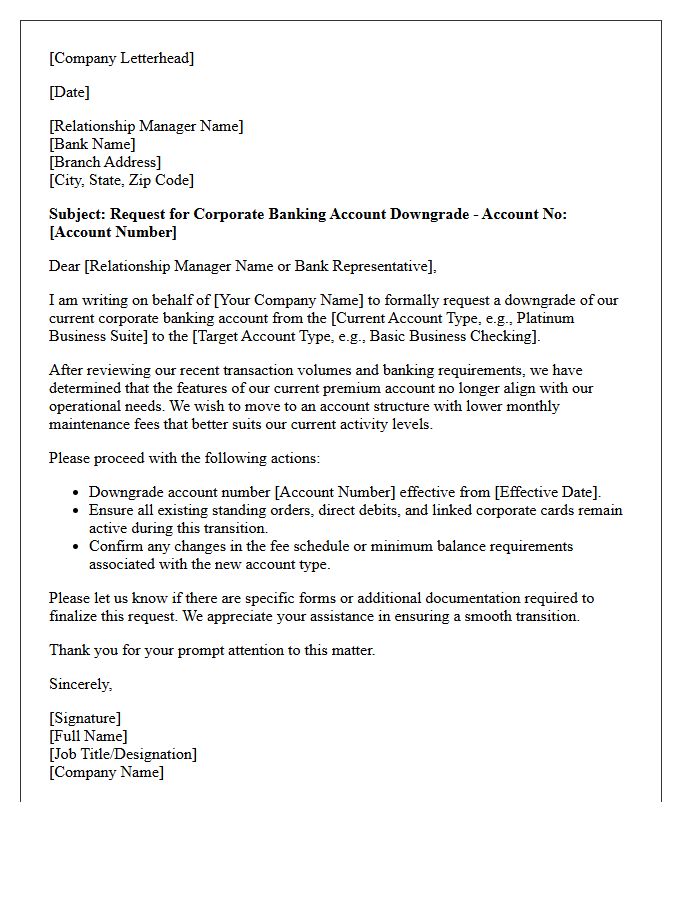
A Corporate Banking Account Downgrade Request Letter is a formal document submitted to transition a business account to a lower tier. It must clearly state the account number and the specific service level desired. Clearly articulate the reason for the change, such as cost reduction or reduced transaction volume, to ensure compliance with bank protocols. Providing an authorized signature is essential for validation. This professional communication helps businesses optimize banking fees while maintaining an active financial relationship without closing the account entirely.
Merchant Services Account Downgrade Request Letter
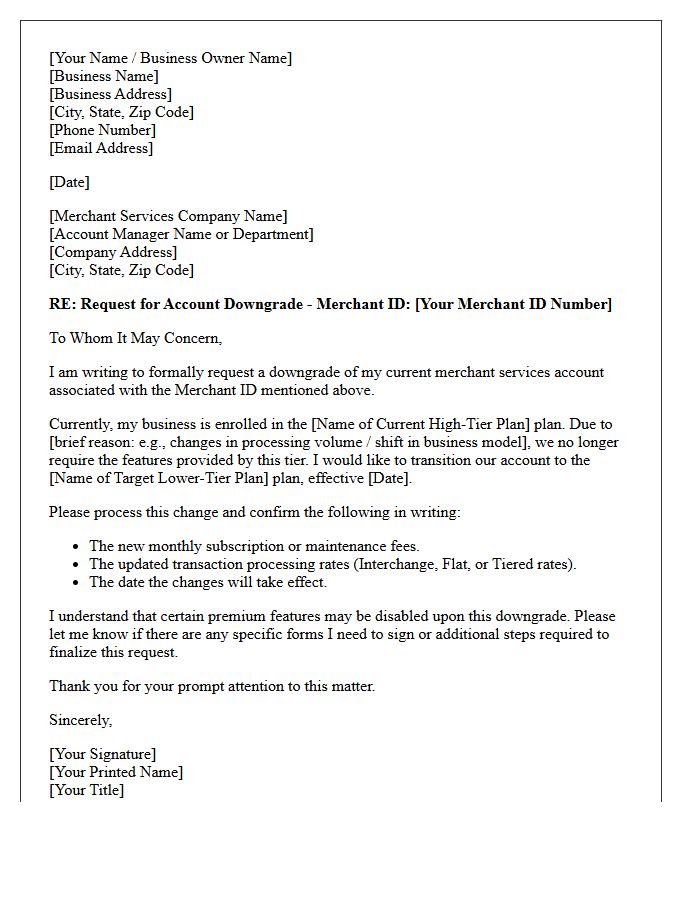
A Merchant Services Account Downgrade Request Letter is a formal document sent to a payment processor to lower service tiers and reduce processing fees. It is crucial to highlight your current processing volume and request specific adjustments to your pricing model, such as moving from tiered to interchange-plus. Clearly state your account details and the effective date to ensure the provider acknowledges the change. This proactive step helps businesses optimize overhead and maintain profitability by aligning merchant services with actual transactional needs without canceling the entire contract.
Fee-Free Checking Account Downgrade Request Letter
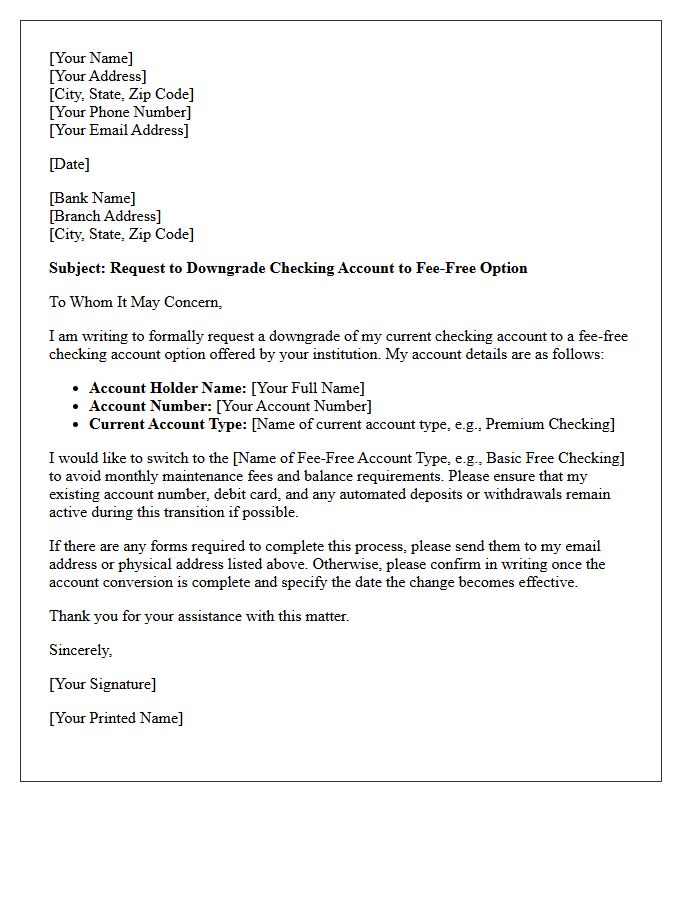
A Fee-Free Checking Account Downgrade Request Letter is a formal document sent to your bank to transition from a premium, high-fee tier to a basic, no-monthly-maintenance-fee option. When writing, clearly state your current account details and specify the exact product you wish to switch to. Emphasize your desire to maintain your banking relationship while eliminating recurring service charges. Using a written request creates a verifiable paper trail, ensuring the bank processes your downgrade promptly without requiring you to close your accounts or lose your established transaction history.
Investment Portfolio Account Downgrade Request Letter
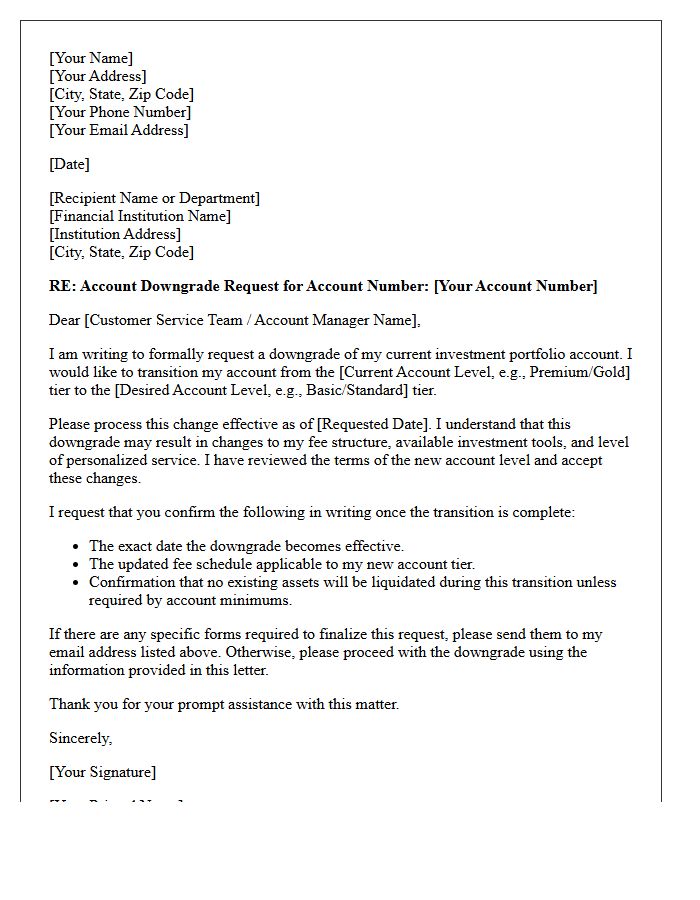
An Investment Portfolio Account Downgrade Request Letter is a formal document used to reduce service levels or change account types to lower fee structures. It must clearly state your account details and the specific tier adjustment requested. Ensuring the request is in writing provides a legal record of your intent to minimize management costs or transition to self-directed trading. Confirm that the letter addresses potential liquidation requirements or asset transfer limitations to ensure a seamless transition without unintentional tax liabilities or service interruptions.
How do I write a professional account downgrade request letter?
To write an effective account downgrade request letter, include your account details, specify the exact plan you wish to move to, state your reason for the change, and request written confirmation of the adjustment and new billing rate.
What information must be included in a subscription downgrade letter?
A subscription downgrade letter should include your full name, account number or username, current subscription level, the name of the target plan, the effective date of the change, and a clear instruction to stop charges for the premium service.
Can I request an account downgrade to avoid cancellation fees?
Yes, many service providers allow you to downgrade to a lower-tier or "basic" plan instead of canceling entirely. Mentioning this in your request letter can help maintain your account history while reducing monthly costs without triggering termination penalties.
When should I send my account downgrade request to ensure it processes on time?
You should send your account downgrade request letter at least 30 days before your next billing cycle. This provides the billing department sufficient time to process the administrative change and prevents being charged the higher rate for another month.
Is an email sufficient for an account downgrade request letter?
An email is generally sufficient for an account downgrade request, provided you send it to the official support or billing address. Ensure you save a copy of the sent message and any automated ticket numbers as proof of your request date.

Comments