
Notifying financial institutions about a death is a critical step in estate administration. A Deceased Account Holder Notification Letter formally informs banks or creditors to secure assets and prevent unauthorized access. Providing clear documentation, including death certificates, ensures a smooth legal transition for executors and beneficiaries. To simplify this process, below are some ready to use template.
Image cover: Notification Letter Templates for Closing a Deceased Person's Account
Letter Samples List
- Initial Deceased Account Holder Notification Letter
- Executor Deceased Account Holder Notification Letter
- Next Of Kin Deceased Account Holder Notification Letter
- Deceased Account Holder Document Request Letter
- Joint Account Survivor Deceased Notification Letter
- Deceased Account Holder Asset Release Letter
- Beneficiary Deceased Account Holder Claim Letter
- Deceased Account Holder Freeze Confirmation Letter
- Safe Deposit Box Deceased Account Holder Letter
- Deceased Account Holder Mortgage Notification Letter
- Estate Representative Deceased Account Holder Letter
- Deceased Account Holder Final Closure Letter
- Deceased Account Holder Outstanding Balance Letter
Initial Deceased Account Holder Notification Letter
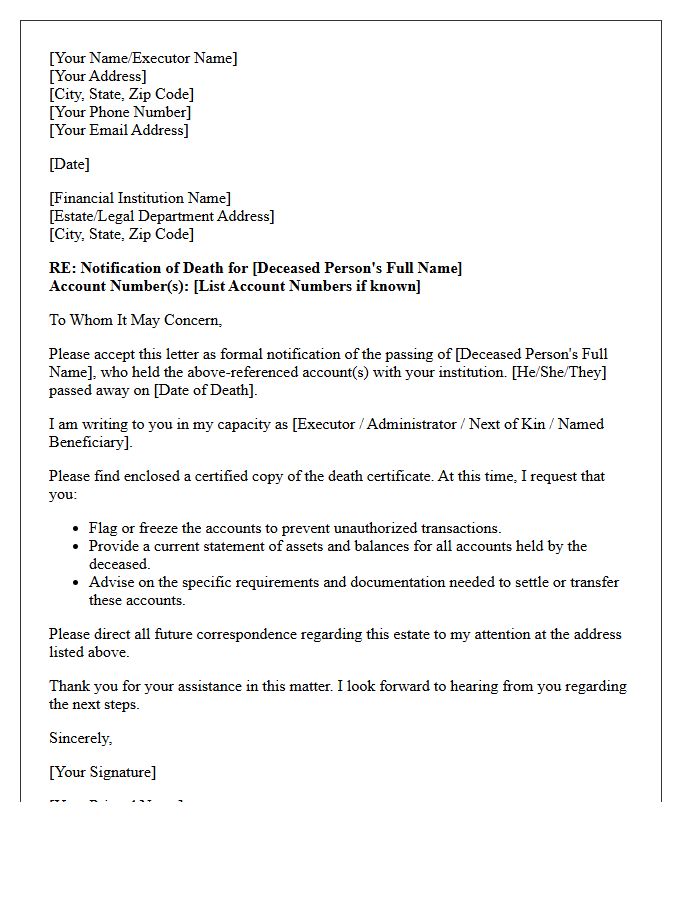
An Initial Deceased Account Holder Notification Letter is a formal legal document sent to financial institutions to report a client's passing. It serves as the primary official notice to initiate the estate settlement process and prevent identity theft. The letter must include the decedent's full name, account numbers, and date of death. Typically, it is accompanied by a certified copy of the Death Certificate. Timely delivery ensures that accounts are secured, automated payments are paused, and the executor gains authorized access to manage the remaining assets correctly.
Executor Deceased Account Holder Notification Letter
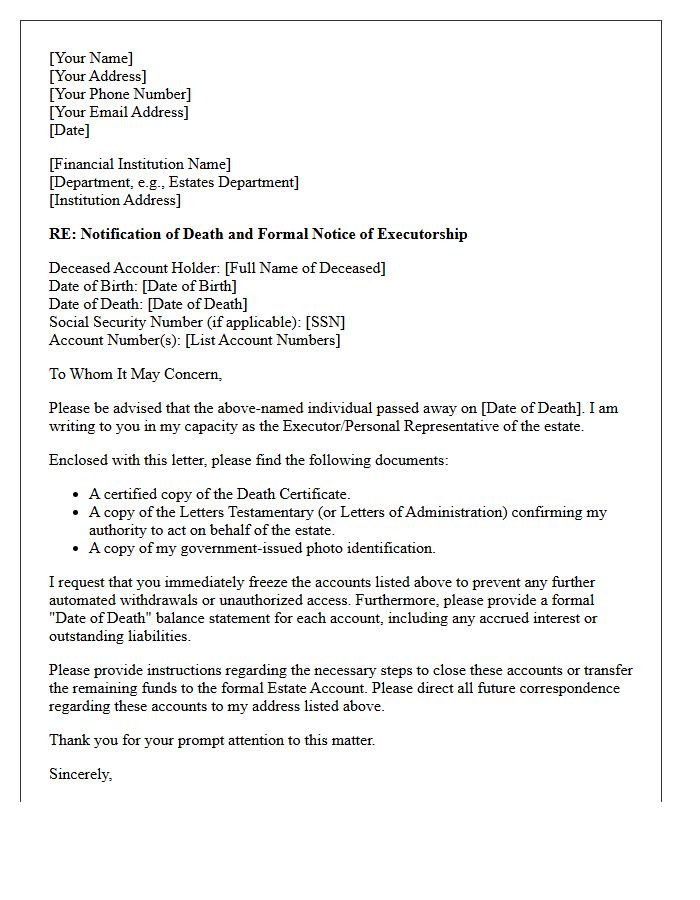
An Executor Deceased Account Holder Notification Letter is a formal legal document sent to financial institutions to freeze assets and initiate the estate settlement process. It is crucial to include the death certificate and letters testamentary to verify your legal authority. Promptly notifying banks prevents identity theft and ensures that debts are managed according to the will or local probate laws. Providing a clear return address and contact information facilitates the efficient transfer of funds to beneficiaries while maintaining compliance with fiduciary responsibilities.
Next Of Kin Deceased Account Holder Notification Letter
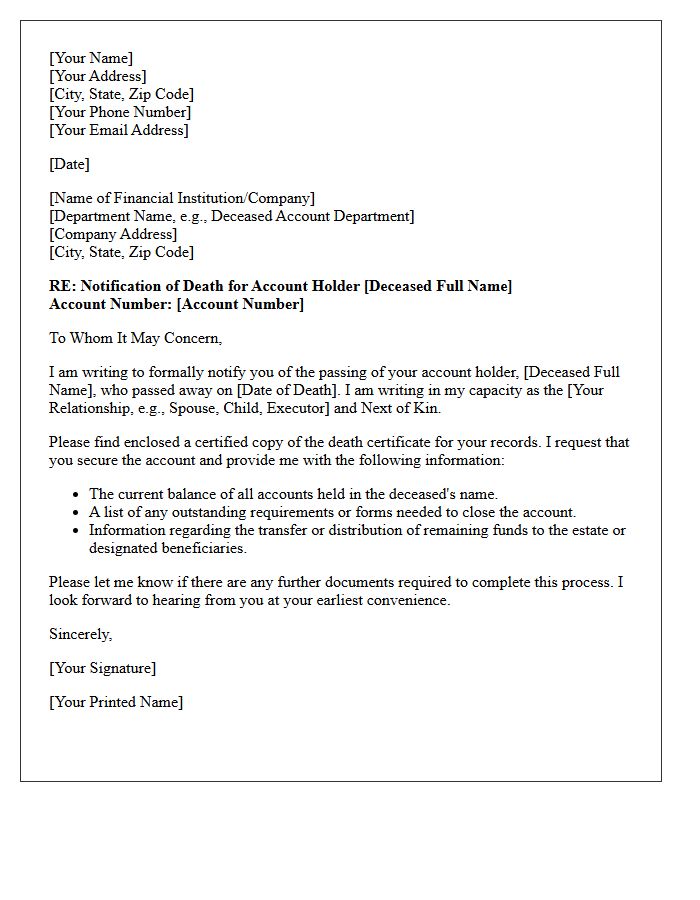
A Next of Kin Deceased Account Holder Notification Letter is a formal document used to inform financial institutions about a client's passing. This essential notice initiates the estate settlement process, allowing banks to freeze assets and prevent unauthorized transactions. It should include the deceased's full name, account numbers, and a certified copy of the death certificate. Providing proof of executorship or kinship ensures legal compliance, helping beneficiaries secure the distribution of assets while protecting the estate from identity theft or financial mismanagement during the probate period.
Deceased Account Holder Document Request Letter
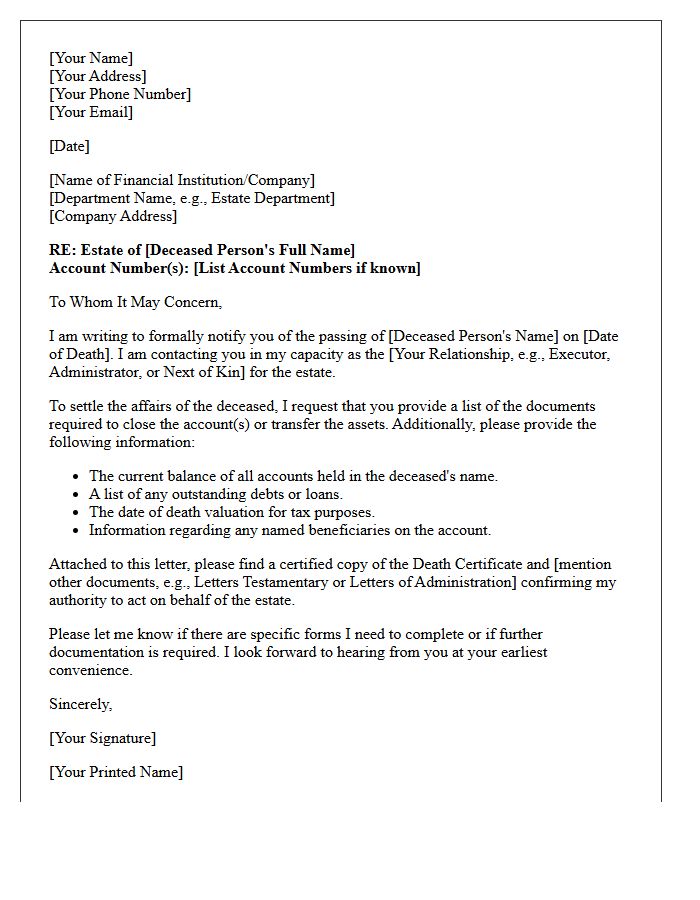
A Deceased Account Holder Document Request Letter is a formal notice sent to financial institutions to settle an estate. It serves as an official inquiry to obtain account balances, transaction histories, and asset details. To ensure compliance, you must include a certified copy of the Death Certificate and proof of your legal authority, such as Letters Testamentary. This document is essential for executors to identify all holdings, satisfy debts, and ensure the legal distribution of remaining funds to rightful heirs according to the will or state law.
Joint Account Survivor Deceased Notification Letter
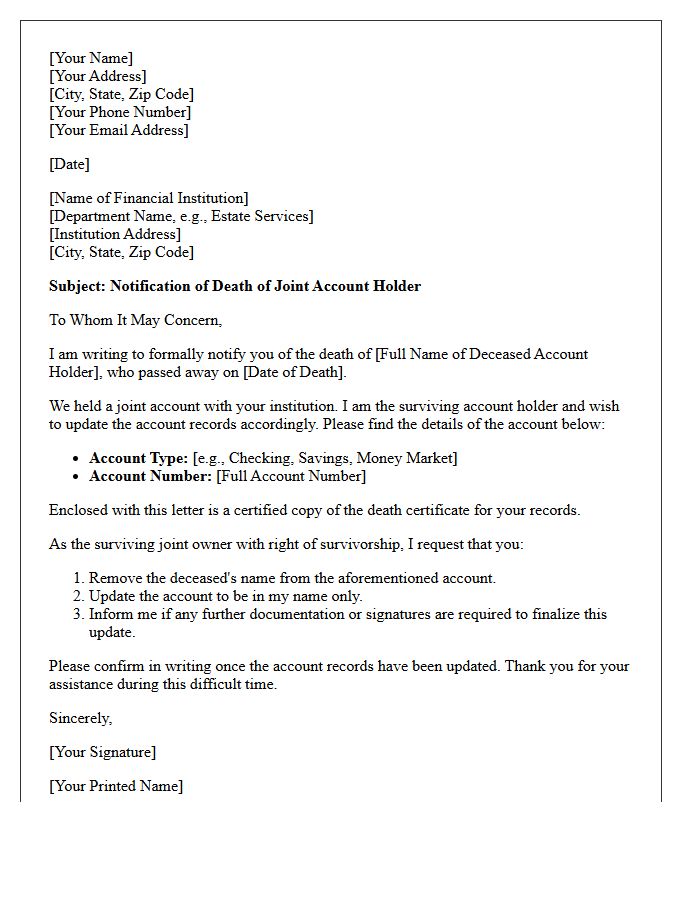
A Joint Account Survivor Deceased Notification Letter is a formal document sent to a financial institution to report the death of a co-owner. Notifying the bank promptly is essential to ensure the Right of Survivorship, which typically allows the surviving member to maintain full access to funds without entering probate. You should include a certified copy of the death certificate and the account details. This notification protects the estate and helps update the legal ownership status to reflect the survivor as the sole account holder, preventing unnecessary freezes or administrative delays.
Deceased Account Holder Asset Release Letter
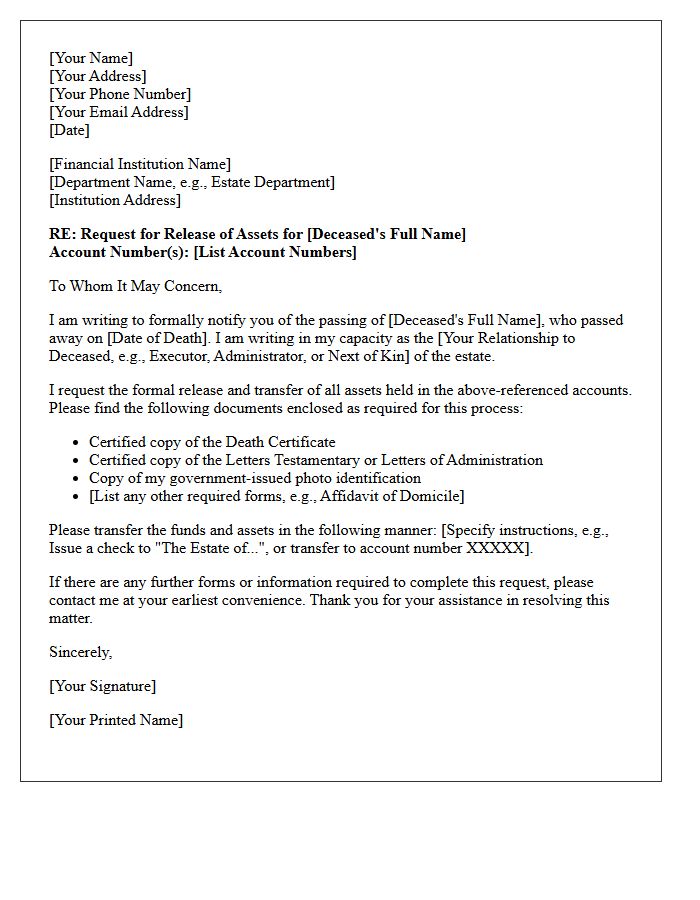
A Deceased Account Holder Asset Release Letter is a formal request sent to financial institutions to claim funds from a late individual's account. This legal document must be accompanied by a certified Death Certificate and official Letters of Testamentary or administration. It ensures the lawful transfer of probate assets to designated beneficiaries or the legal estate executor. Providing accurate account details and proof of identity is essential to prevent delays during the inheritance distribution process and to comply with banking security regulations and state probate laws.
Beneficiary Deceased Account Holder Claim Letter
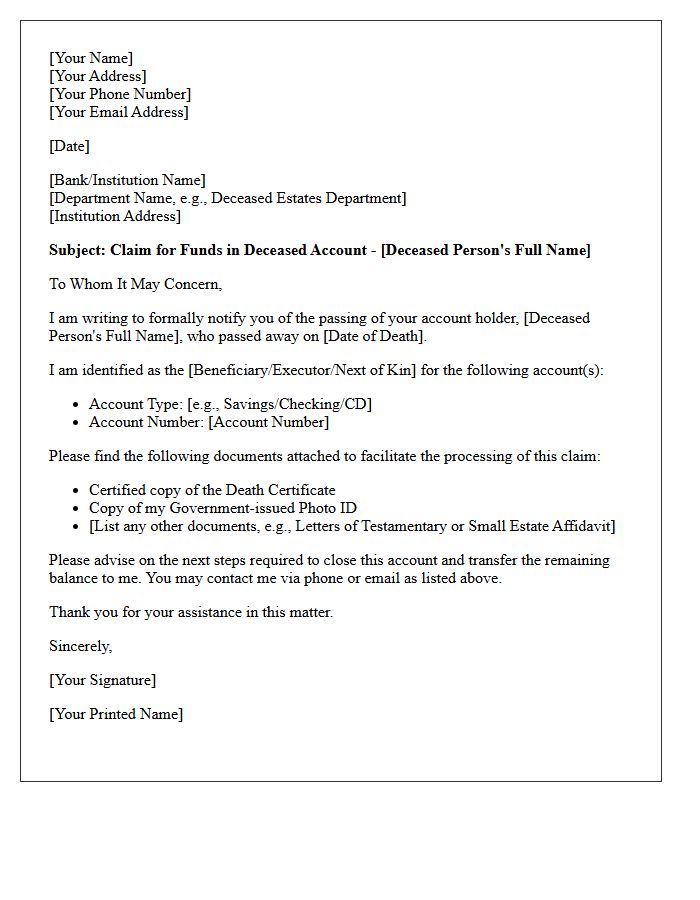
A Beneficiary Deceased Account Holder Claim Letter is a formal request sent to a financial institution to initiate the asset transfer process. It must include the deceased person's full details, account numbers, and a certified copy of the death certificate. Providing proof of identity and legal entitlement ensures compliance with banking regulations. Accuracy in this document prevents delays in estate settlement and ensures funds are distributed according to legal designations or probate court mandates. Professionalism and clear documentation are essential for a smooth administrative transition.
Deceased Account Holder Freeze Confirmation Letter
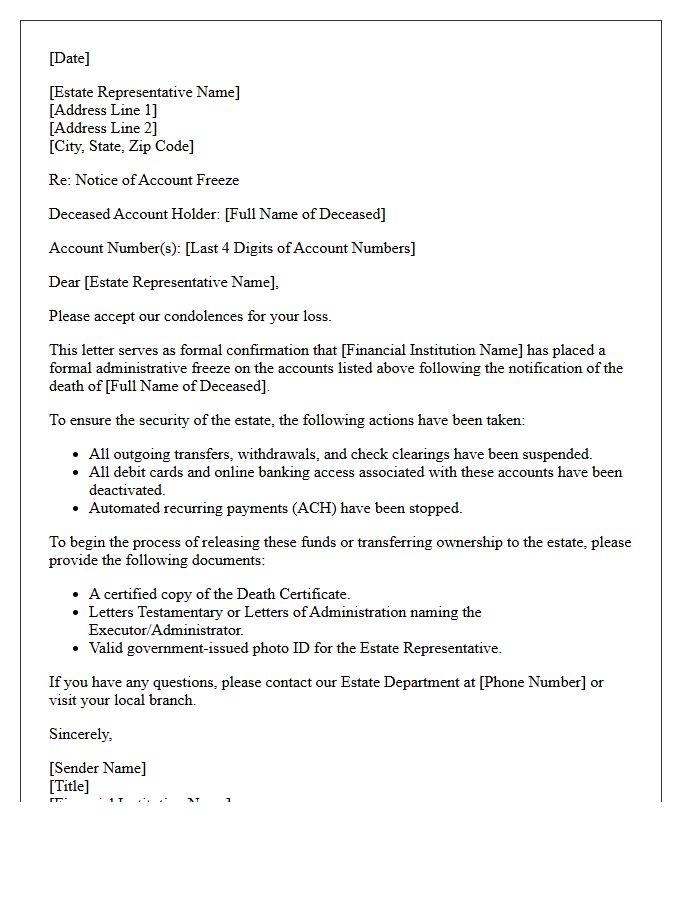
A Deceased Account Holder Freeze Confirmation Letter is a formal document issued by a financial institution to verify that a late individual's assets are secured. This letter confirms that all withdrawals and transfers are restricted to prevent unauthorized access and potential fraud. It serves as essential proof for executors or legal heirs during the probate process. Receiving this confirmation ensures that the estate's value remains intact until the bank receives certified letters of administration or a death certificate to finalize the legal distribution of funds to beneficiaries.
Safe Deposit Box Deceased Account Holder Letter
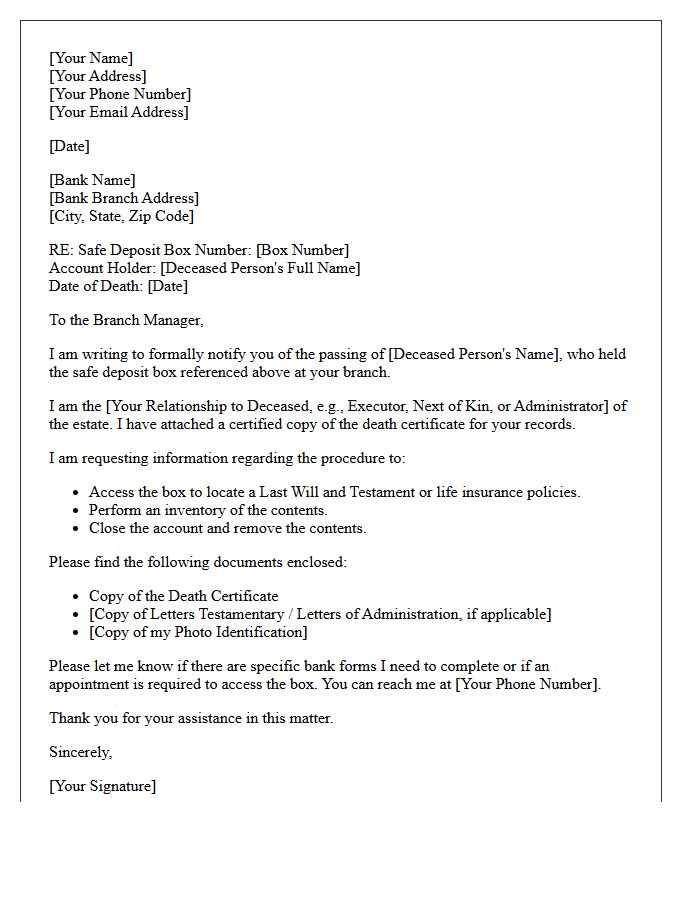
A Safe Deposit Box Deceased Account Holder Letter is a formal request sent to a bank by an executor or next of kin to gain access to a decedent's vault. This legal document initiates the process of inventorying contents for probate. It must typically be accompanied by a certified death certificate and letters testamentary or a court order. Providing this written notice ensures the financial institution follows state laws regarding the drilling or opening of the box to secure assets for the estate's beneficiaries.
Deceased Account Holder Mortgage Notification Letter
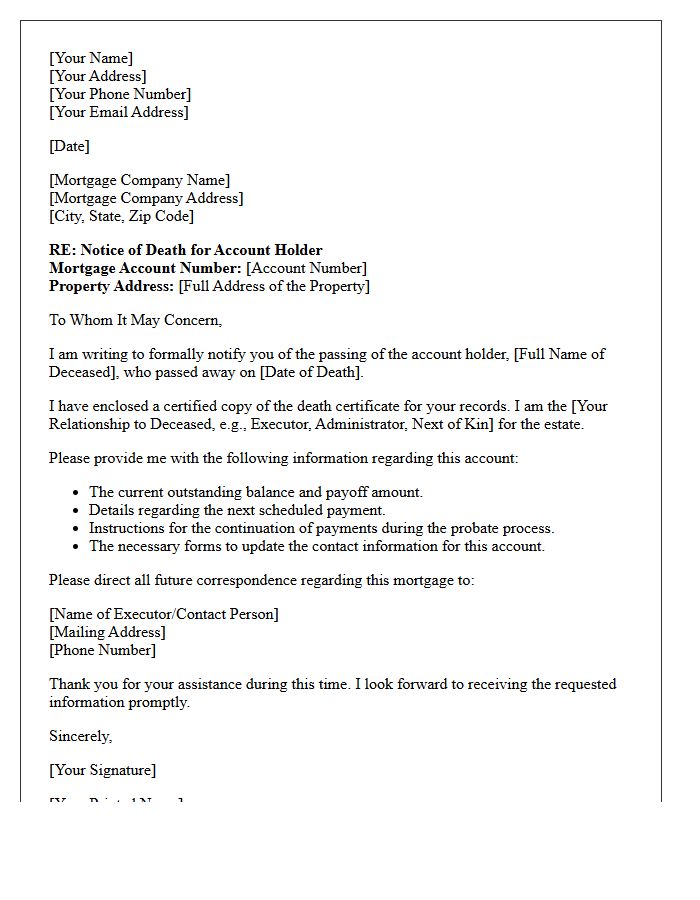
When a borrower passes away, timely mortgage notification is critical to prevent foreclosure. The letter should include the account number, the deceased person's name, and a certified copy of the death certificate. Sending this formal notice establishes communication with the servicer and allows the heir or executor to discuss payment options or loan assumption. Acting quickly ensures the lender acknowledges the transition of responsibility, protecting the property's equity while legal probate processes determine the official successor in interest to the home.
Estate Representative Deceased Account Holder Letter
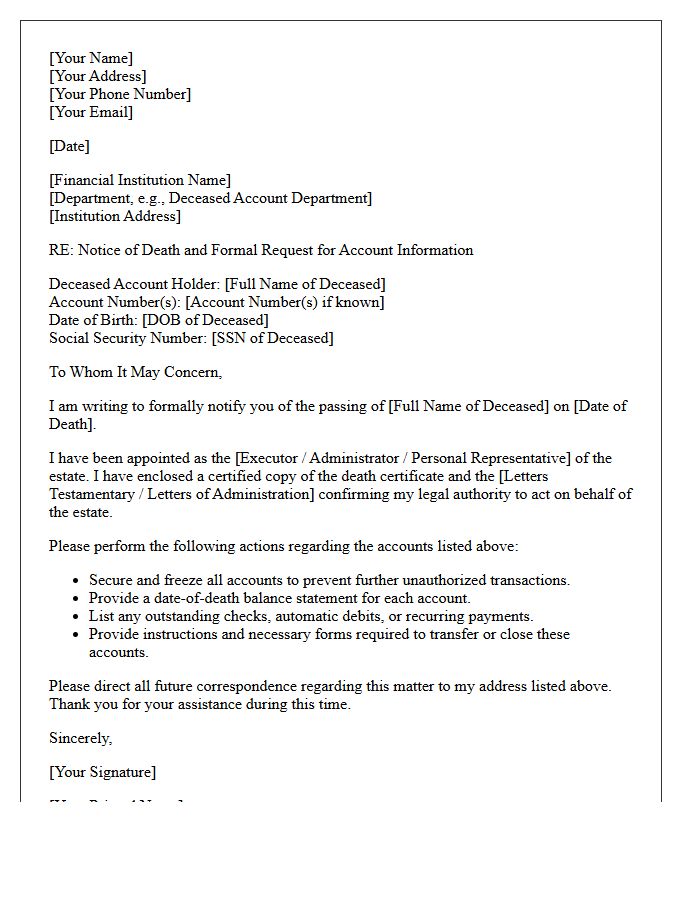
An Estate Representative Deceased Account Holder Letter is a formal notification sent to financial institutions to initiate the settlement of a decedent's assets. This document must include the Letters of Testamentary or Administration to prove legal authority. Providing a certified death certificate and the representative's contact details ensures the probate process moves forward efficiently. Clearly state the account numbers and request a final balance statement to prevent unauthorized access while securing the estate's financial legacy for beneficiaries.
Deceased Account Holder Final Closure Letter
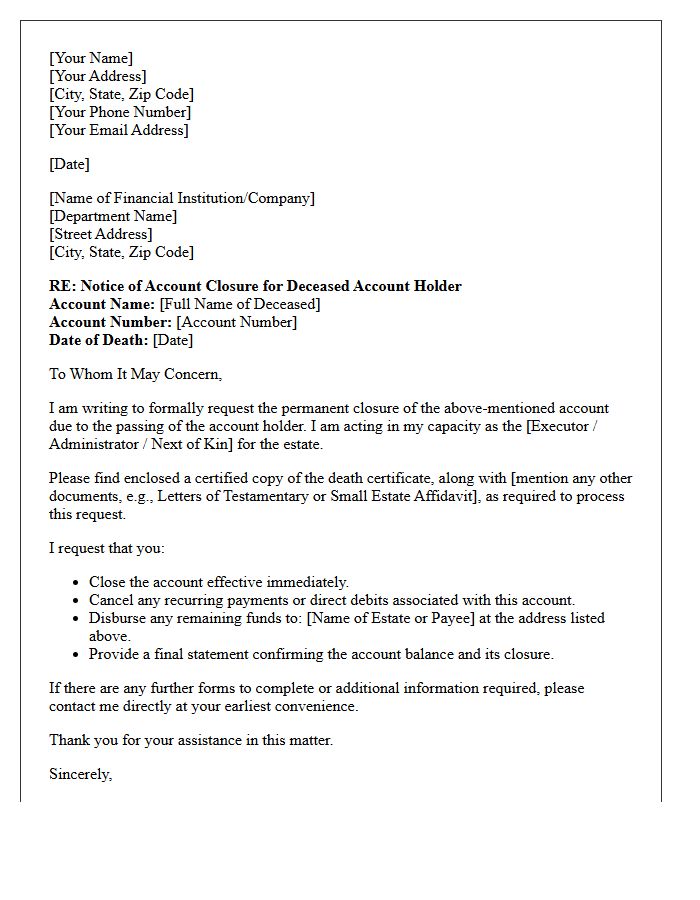
A Deceased Account Holder Final Closure Letter is a formal notification sent to financial institutions to permanently close the accounts of someone who has passed away. This document is essential for estate settlement and preventing identity theft or ongoing fees. It must include the decedent's full name, account numbers, and a certified copy of the death certificate. Providing the executor's authorization or letters testamentary ensures the bank can legally distribute remaining funds to the designated beneficiaries or the estate's legal representative efficiently.
Deceased Account Holder Outstanding Balance Letter
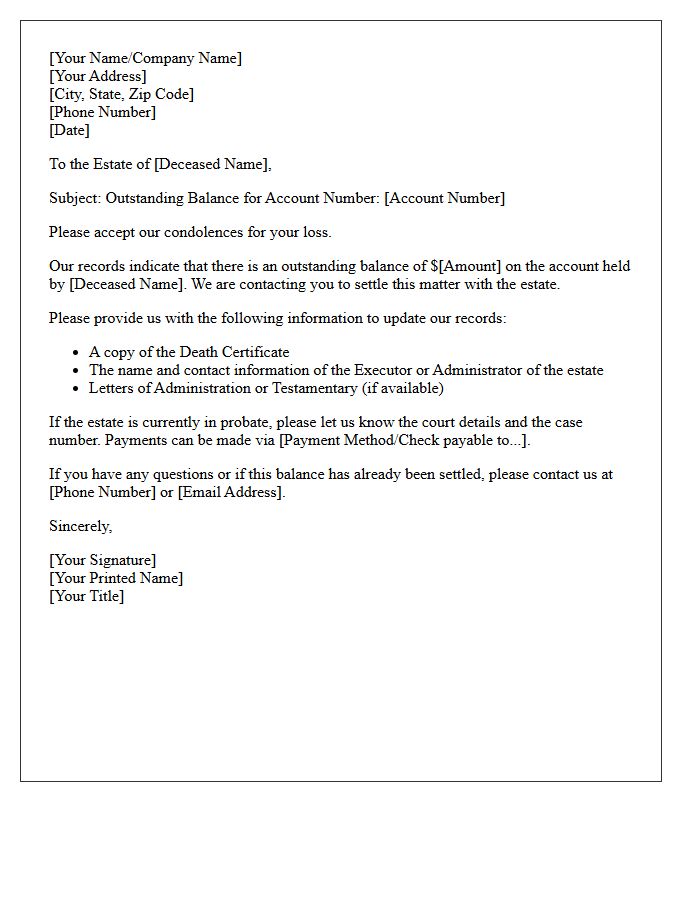
A deceased account holder outstanding balance letter notifies executors or next of kin regarding unpaid debts. It is essential to understand that beneficiaries are typically not personally liable for these costs; instead, the balance is settled using the deceased person's estate assets. When receiving this correspondence, verify the debt's validity and ensure all legal protocols are followed before making payments. Timely communication with creditors helps prevent probate delays and ensures the estate is settled according to law, protecting the rights of all heirs and legal representatives involved.
What is a Deceased Account Holder Notification Letter?
A Deceased Account Holder Notification Letter is a formal written notice sent to a bank or financial institution to officially inform them that an account holder has passed away. This letter initiates the process of freezing the account, preventing unauthorized transactions, and starting the formal transfer of assets to beneficiaries or the estate.
What documents must be included with a notification of death letter?
When sending a notification letter, you must typically include a certified copy of the death certificate. Depending on the institution's requirements, you may also need to provide a copy of the will, Letters of Administration, or Grant of Probate to prove your legal authority to manage the deceased person's affairs.
Who is responsible for notifying a bank about a deceased account holder?
The responsibility generally falls upon the Executor of the will or the Administrator of the estate. If no will exists, a next of kin or a legal representative typically handles the notification to ensure the deceased person's financial assets are secured and managed according to state laws.
How soon should I send a notification letter after an account holder dies?
It is recommended to notify financial institutions as soon as possible, ideally within a few days of receiving the death certificate. Prompt notification prevents automated payments from continuing, protects the account from potential identity theft, and stops interest or fees from accruing unnecessarily.
Can I still withdraw money from an account after sending a notification letter?
Once the bank receives the notification letter and death certificate, they will typically freeze the account. No further withdrawals can be made by unauthorized individuals. Funds are generally only released to the named beneficiaries of a "Payable on Death" (POD) account or to the legal representative of the estate once probate is cleared.

Comments