
Managing shared finances often requires formal documentation to update ownership status. A Removal of Joint Account Holder Letter is a professional request sent to a bank to legally detach an individual from a shared account while maintaining its continuity. This process ensures clear financial liability and updated records. To simplify your request, below are some ready to use templates.
Image cover: Request for Removal of a Joint Account Holder: Letter Templates and Samples
Letter Samples List
- Standard Joint Account Holder Removal Letter
- Mutual Consent Joint Account Holder Removal Letter
- Divorce Decree Joint Account Holder Removal Letter
- Deceased Joint Account Holder Removal Letter
- Voluntary Self-Removal From Joint Account Letter
- Court Ordered Joint Account Holder Removal Letter
- Business Partnership Dissolution Joint Account Holder Removal Letter
- Medical Incapacity Joint Account Holder Removal Letter
- Adult Child Joint Account Holder Removal Letter
- Primary Account Holder Initiated Removal Letter
- Account Conversion And Joint Holder Removal Letter
- Notarized Joint Account Holder Removal Letter
Standard Joint Account Holder Removal Letter
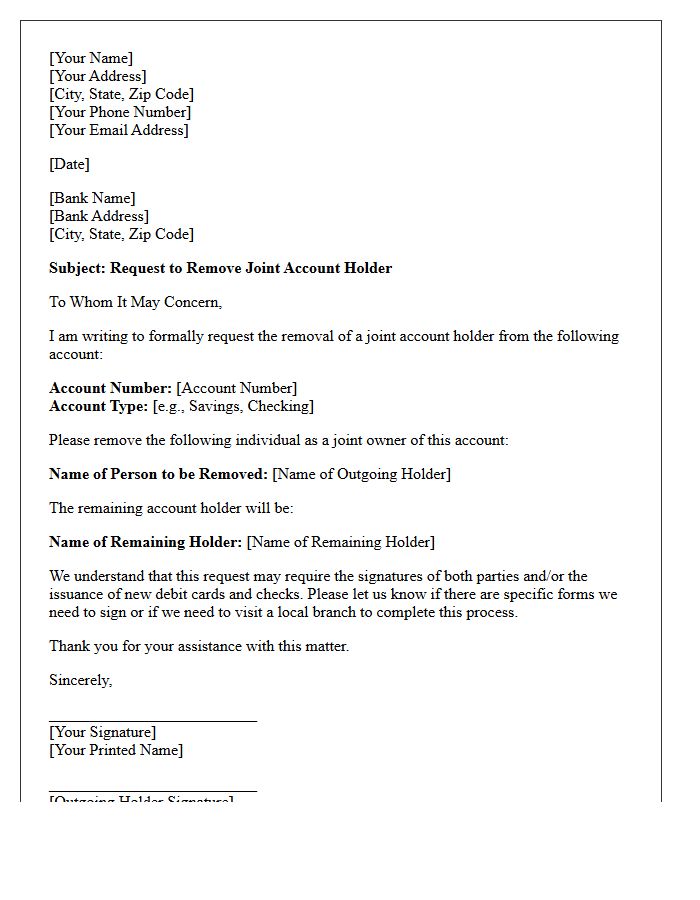
A Standard Joint Account Holder Removal Letter is a formal request used to legally detach an individual from a shared bank account. This document must clearly state the account number, the identity of the departing party, and instructions for the remaining balance. Most financial institutions require notarized signatures from both parties to authorize the change. Providing this written notice ensures a clear audit trail, protecting both account holders from future liability or unauthorized transactions during the transition to a single-ownership status.
Mutual Consent Joint Account Holder Removal Letter
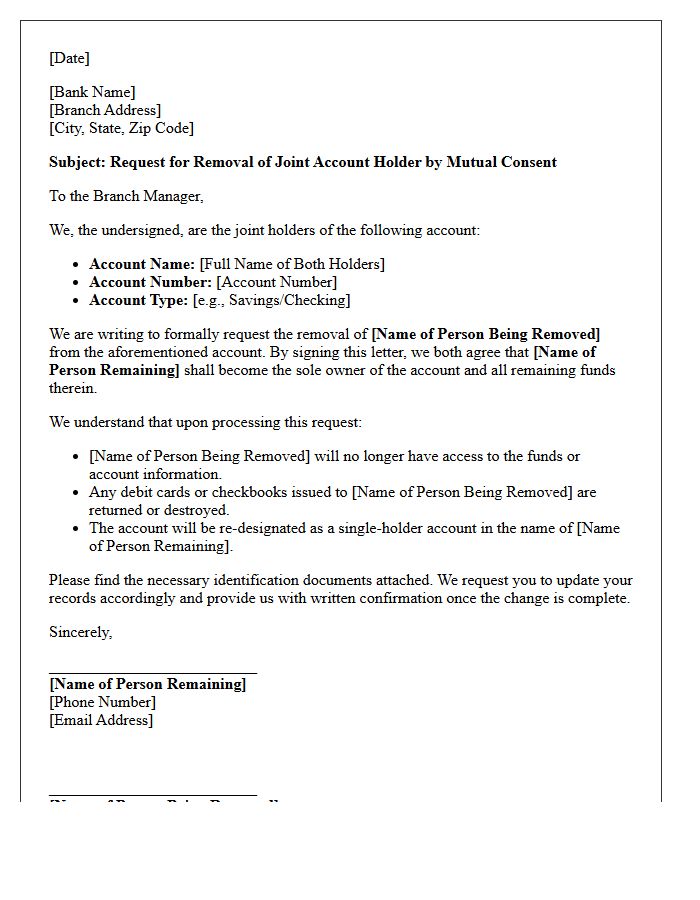
A Mutual Consent Joint Account Holder Removal Letter is a formal document used to voluntarily transition a bank account to a single user. It requires the notarized signatures of both parties to verify agreement, preventing future legal disputes or claims of unauthorized fund seizure. This written notice instructs the financial institution to legally detach one individual's liability and access while maintaining the account's continuity for the remaining owner. Ensuring clear account identification and explicit intent is essential for the bank to process the change and update ownership records securely.
Divorce Decree Joint Account Holder Removal Letter
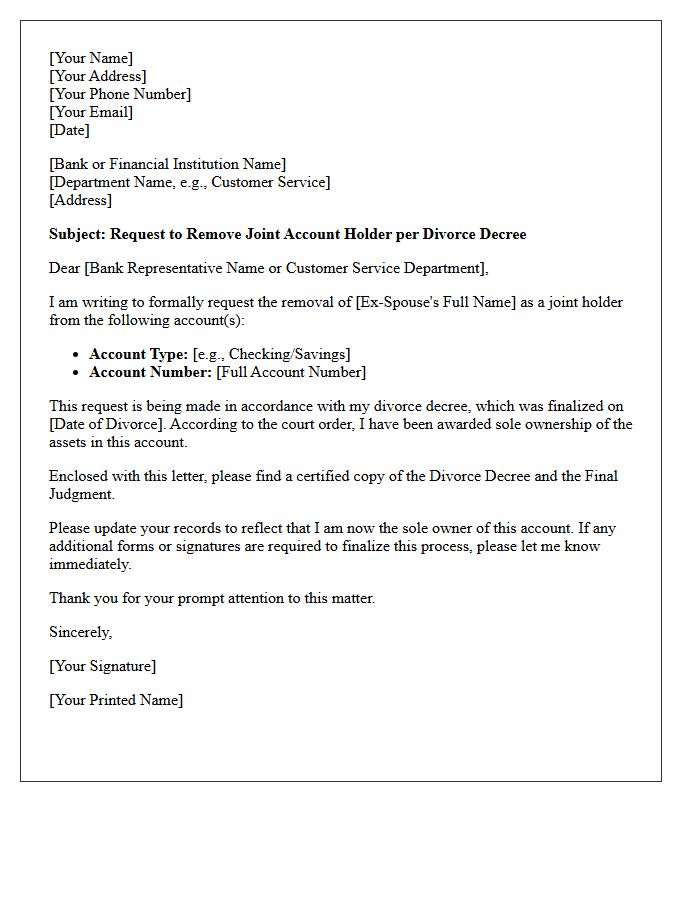
A Divorce Decree Joint Account Holder Removal Letter is a formal request sent to financial institutions to update ownership based on a legal judgment. It serves as official notification that a marriage has ended, requiring the bank to remove a former spouse's name from shared accounts. To ensure processing, you must attach a certified copy of the court order. Providing clear instructions and account details prevents future liability, protects your credit score, and establishes individual financial independence as mandated by the final decree.
Deceased Joint Account Holder Removal Letter
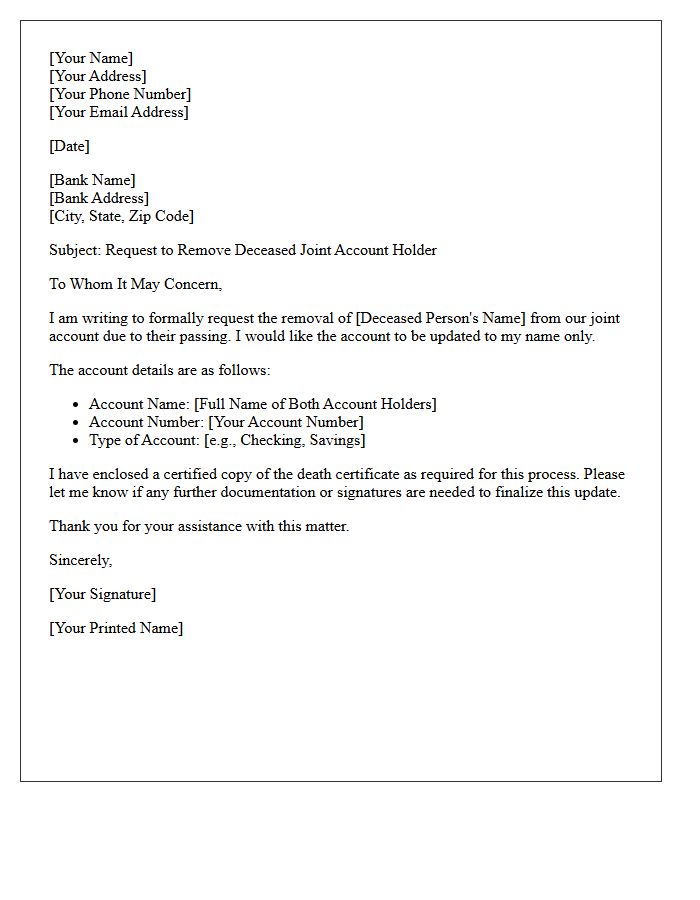
A Deceased Joint Account Holder Removal Letter is a formal notification sent to a financial institution to update ownership records. To ensure a smooth transition, you must provide a certified copy of the death certificate and account details. This document requests the bank to remove the decedent's name while maintaining survivorship rights for the remaining owner. Properly filing this letter prevents legal complications, secures access to funds, and ensures financial continuity. Always include your contact information and request written confirmation once the account title has been legally updated.
Voluntary Self-Removal From Joint Account Letter
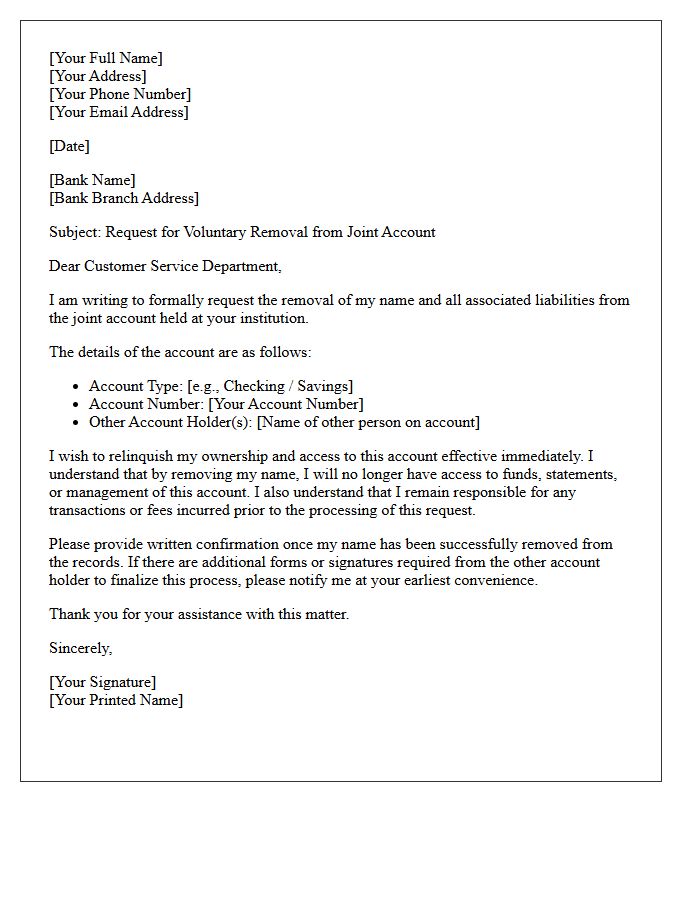
A voluntary self-removal letter is a formal request to a financial institution to terminate your liability and access to a shared banking product. To ensure a successful transition, the document must include your full name, the specific account number, and a clear statement of intent. While some banks require all parties to sign, many allow an individual to relinquish ownership independently. Submitting this written notice is essential for protecting your credit and financial independence, as it officially ends your legal obligation for future transactions or debts incurred by the remaining co-holder.
Court Ordered Joint Account Holder Removal Letter
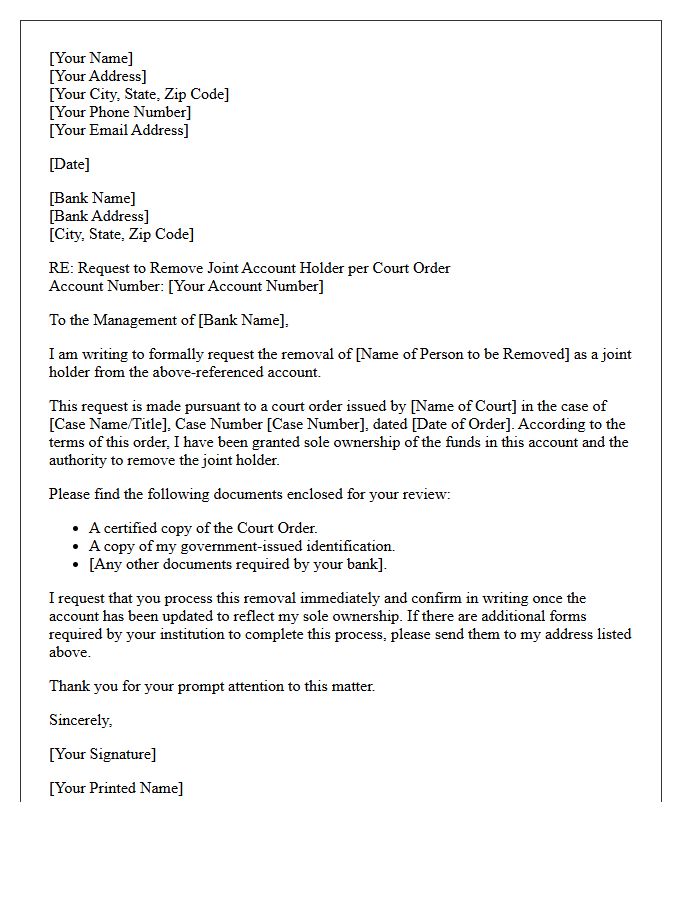
A Court Ordered Joint Account Holder Removal Letter is a formal legal notification sent to a financial institution to enforce a judicial decision. It serves as official proof that a judge has mandated the separation of shared assets, typically following a divorce or legal dispute. To ensure compliance, the letter must include a certified copy of the court order and specific account details. Providing this documentation protects your financial autonomy and prevents the removed party from accessing funds or incurring new liabilities under your name.
Business Partnership Dissolution Joint Account Holder Removal Letter
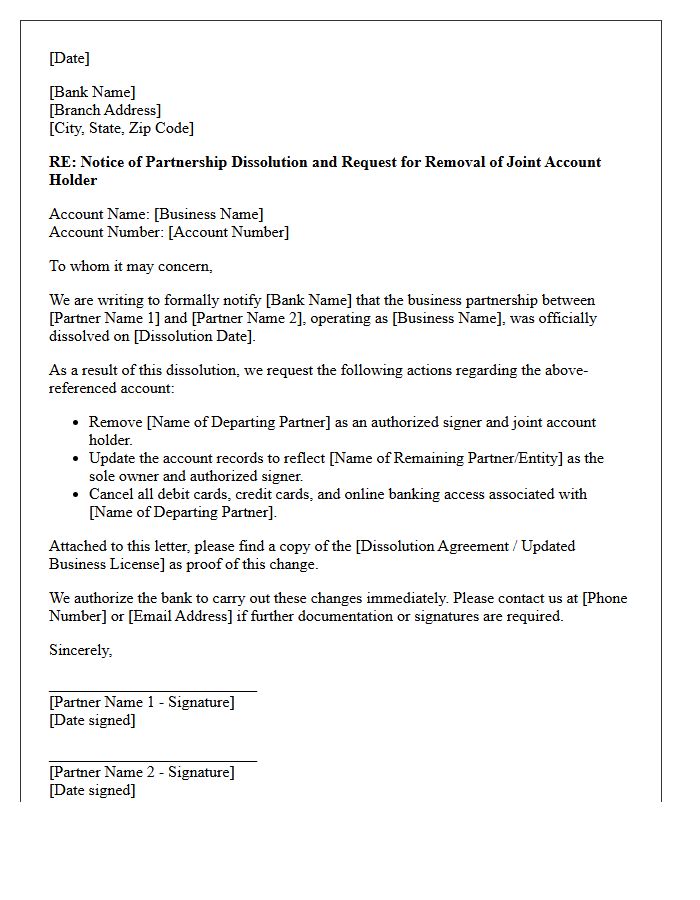
A business partnership dissolution letter serves as a formal notification to financial institutions for the removal of joint account holders. This document is critical to prevent unauthorized withdrawals and protect individual assets during a legal separation. It should clearly state the effective date, provide the account numbers, and include signatures from all partners to authorize the change. Sending this letter via certified mail ensures a documented trail, effectively mitigating liability and ensuring a clean transition as the entity winds down or transitions to a sole proprietorship.
Medical Incapacity Joint Account Holder Removal Letter
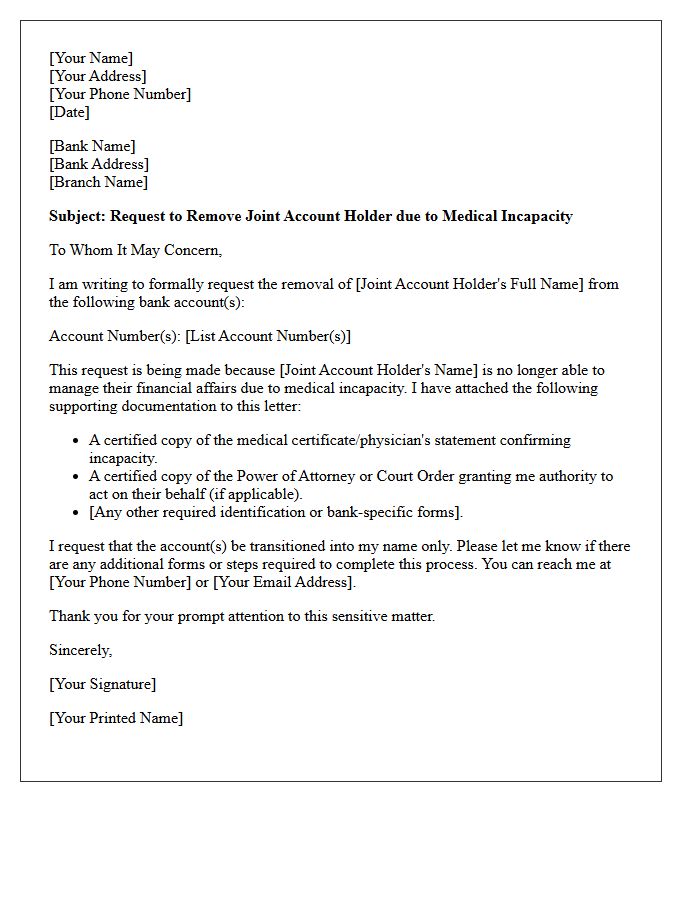
A medical incapacity joint account holder removal letter is a formal document used to sever financial access when a co-owner can no longer manage affairs. It must include the account details, the incapacitated individual's name, and a certified physician's statement verifying their condition. Most banks require this letter to protect assets from mismanagement. Ensure you specify whether you are revoking signature authority or closing the account entirely. Providing a durable power of attorney alongside this letter often streamlines the legal transition and ensures compliance with banking regulations.
Adult Child Joint Account Holder Removal Letter
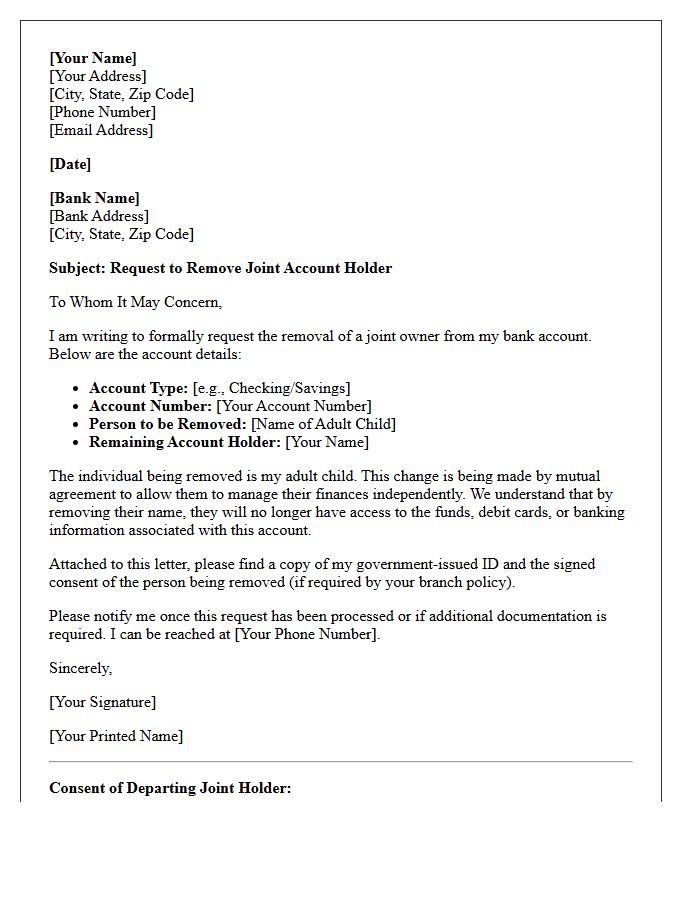
An Adult Child Joint Account Holder Removal Letter is a formal request to modify bank ownership. It must include the full account number, specific names, and clear instructions to transition from a joint to an individual account. Both parties typically need to sign to authorize the change and prevent future liability issues. Providing notarized identification or visiting a branch in person ensures security. This document is essential for financial independence and protects each party's credit score and assets during life transitions or estate planning adjustments.
Primary Account Holder Initiated Removal Letter
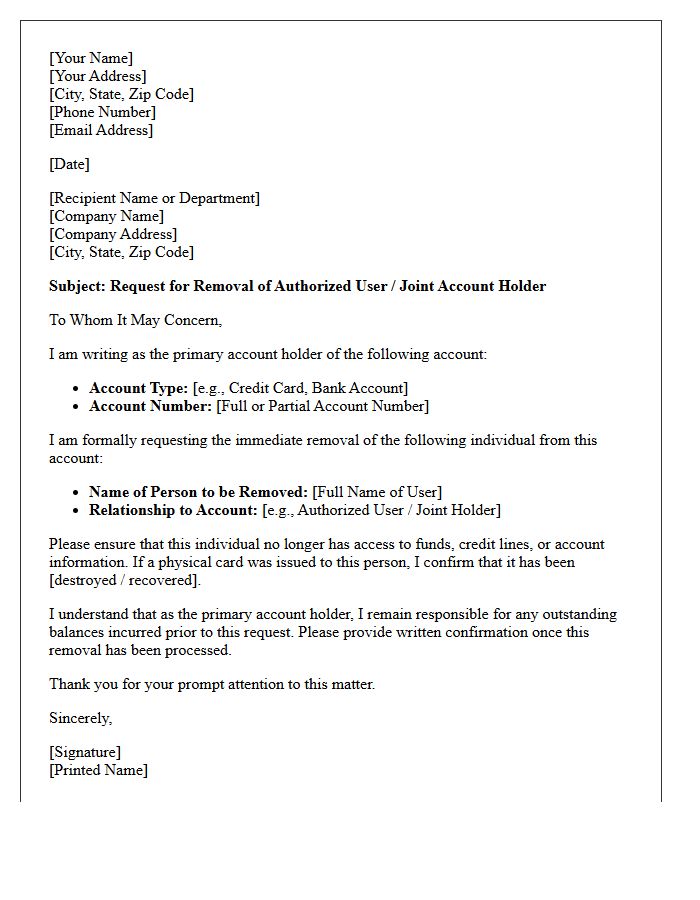
A Primary Account Holder Initiated Removal Letter is a formal document used to terminate a specific user's access to a shared account. This written notice ensures legal compliance and clear communication when revoking secondary member privileges. It is essential for managing account security and defining financial liability. The letter should clearly state the effective date of removal and any subsequent changes to service terms. Using this protocol protects the primary owner from unauthorized unauthorized activity while maintaining an accurate record of administrative changes to the account hierarchy.
Account Conversion And Joint Holder Removal Letter
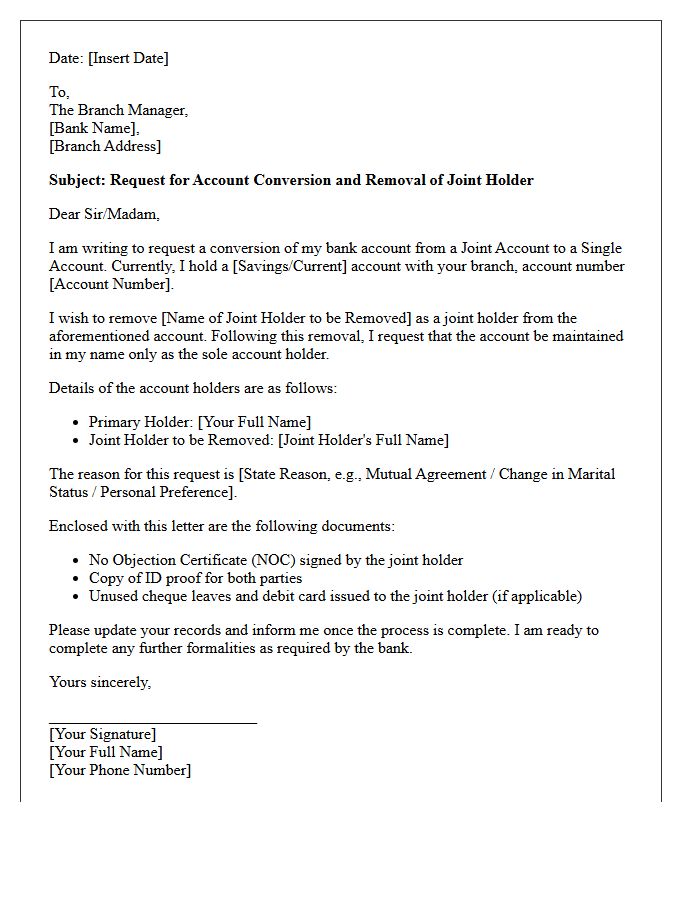
An Account Conversion and Joint Holder Removal Letter is a formal request to transition a multi-user bank account into an individual account. This legal document authorizes the financial institution to delete a secondary party's access while maintaining the primary owner's banking history. It must include the account number, the outgoing holder's consent, and notarized signatures to ensure security. Using this letter is essential for managing assets after a divorce, separation, or when a co-signer is no longer needed to maintain financial independence.
Notarized Joint Account Holder Removal Letter
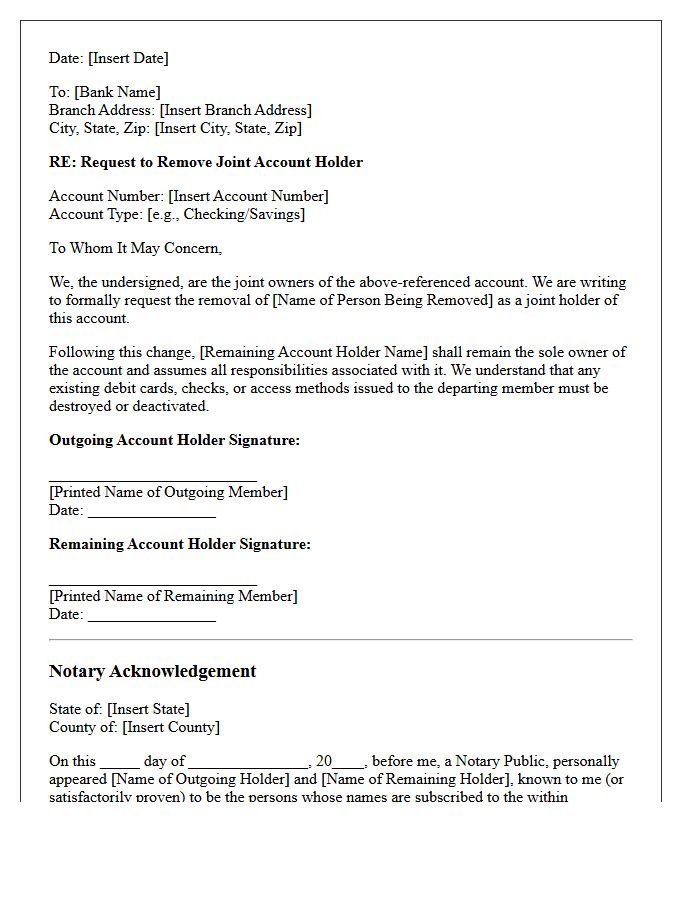
A Notarized Joint Account Holder Removal Letter is a formal legal document used to voluntarily relinquish ownership of a shared bank account. Most financial institutions require this letter to be notarized to verify identities and prevent unauthorized changes or fraud. The letter must clearly state the account number, the departing member's intent, and the remaining owner's consent. Once signed before a notary public, it provides legal protection for all parties involved, ensuring the bank can safely update records and transition the account to a single-owner status.
How do I write a formal letter to remove a joint account holder?
To remove a joint account holder, you must write a formal letter addressed to your bank branch. The letter should include the account number, the names of both account holders, a clear request for removal, and the signatures of both parties to signify mutual consent.
Can I remove someone from a joint bank account without their consent?
In most cases, banks require a signed "Removal of Joint Account Holder" letter or form from both parties before a name can be removed. If the other person is unwilling to sign, you may need to close the account entirely and open a new individual account, provided the bank's terms allow for unilateral closure.
What information should be included in a joint account removal request?
A professional request letter should include the date, the full bank name and address, the specific account number, the name of the person being removed, the name of the person remaining on the account, and notarized signatures if required by your financial institution.
Do I need to visit the bank in person to submit a removal letter?
While some banks allow you to mail a notarized "Removal of Joint Account Holder Letter," many institutions require both parties to visit a branch in person with valid government-issued identification to verify the request and sign new signature cards.
Does removing a joint account holder affect my credit score?
Removing a person from a standard checking or savings account does not typically impact your credit score. However, if you are removing a joint holder from a credit card or loan account, it may affect your credit utilization ratio or the age of the account, which can influence your overall credit profile.


Comments