
Preparing for leadership transitions is vital for long-term stability. A Business Succession Planning Advisory Letter serves as a formal guide to outline transfer strategies, protect asset value, and ensure organizational continuity. Professional advice helps stakeholders navigate legal and financial complexities during ownership changes. To help you draft your own communication, below are some ready to use template.

Image cover: Securing Your Legacy: Professional Business Succession Planning Templates and Advisory Letter Guides
Letter Samples List
- Initial Enterprise Valuation and Succession Advisory Letter
- Family Wealth Transfer and Equity Transition Letter
- Corporate Restructuring and Ownership Succession Letter
- Key Executive Retention and Leadership Continuation Letter
- Liquidity Analysis and Business Continuity Advisory Letter
- Buy-Sell Agreement Funding and Structuring Letter
- Next Generation Leadership and Governance Advisory Letter
- Management Buyout Financial Strategy Advisory Letter
- Fiduciary Trust and Estate Integration Succession Letter
- Tax-Efficient Shareholder Transfer Advisory Letter
- Family Office Establishment and Wealth Succession Letter
- Post-Transition Asset Management Advisory Letter
- Contingency Planning and Risk Mitigation Advisory Letter
Initial Enterprise Valuation and Succession Advisory Letter
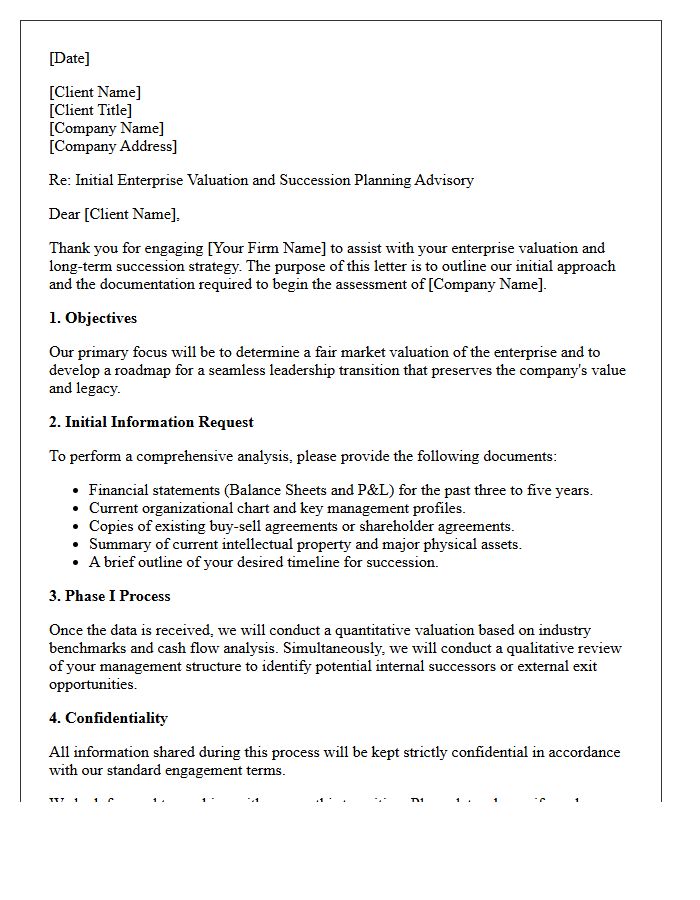
An Initial Enterprise Valuation and Succession Advisory Letter is a critical formal document used to determine a company's current fair market value. It serves as the strategic foundation for exit planning and internal ownership transitions. This letter provides business owners with clear insights into value drivers, potential financial risks, and structural readiness for a future sale. By establishing an objective baseline, it allows stakeholders to make informed decisions regarding succession strategies and long-term tax implications, ensuring a professional and profitable transfer of leadership or ownership interest.
Family Wealth Transfer and Equity Transition Letter
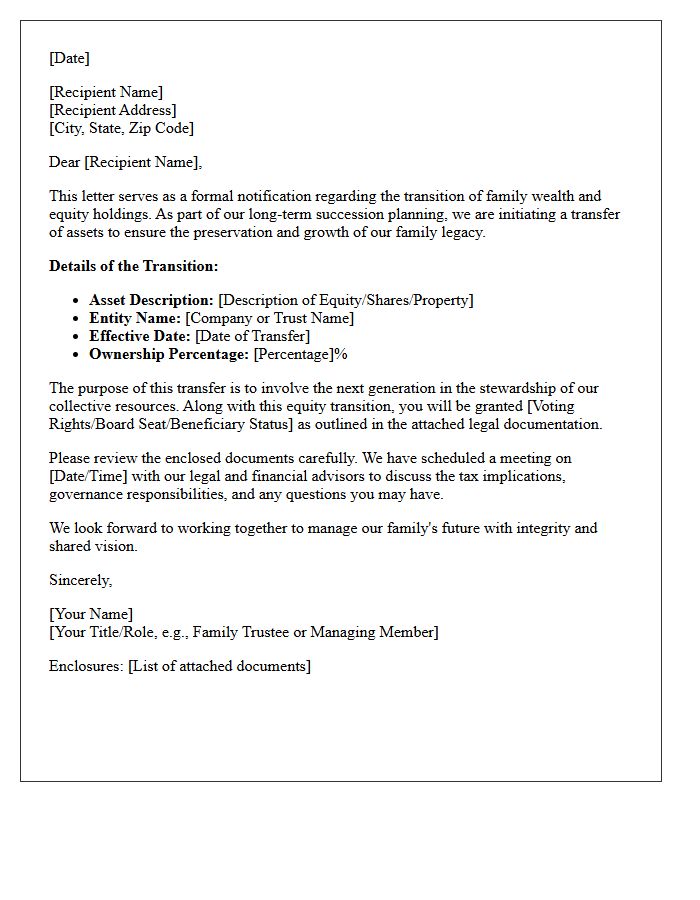
A Family Wealth Transfer and Equity Transition Letter is a critical succession planning document. It outlines the strategic transfer of ownership and management control to the next generation. This letter clarifies the distribution of family assets, business interests, and voting rights, ensuring transparency among heirs. By formalizing equity transition goals, families can minimize legal disputes, manage tax implications, and preserve a lasting legacy. It serves as a roadmap for aligning family values with financial sustainability during complex generational shifts.
Corporate Restructuring and Ownership Succession Letter
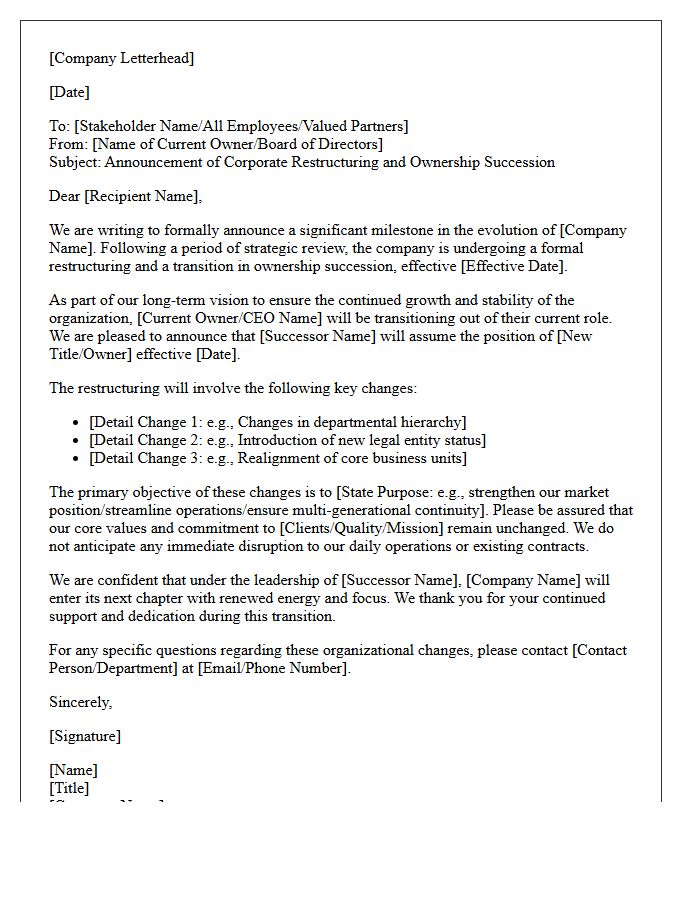
A Corporate Restructuring and Ownership Succession Letter is a formal notification detailing significant changes in a company's legal framework and leadership hierarchy. It serves to inform stakeholders about transitions in equity distribution and management control to ensure business continuity. This document clearly outlines the strategic vision behind the reorganization, clarifying how the new ownership structure affects daily operations and long-term stability. Providing this written transparency is essential for maintaining investor confidence and ensuring a smooth operational handover during periods of corporate evolution or generational shifts in leadership.
Key Executive Retention and Leadership Continuation Letter
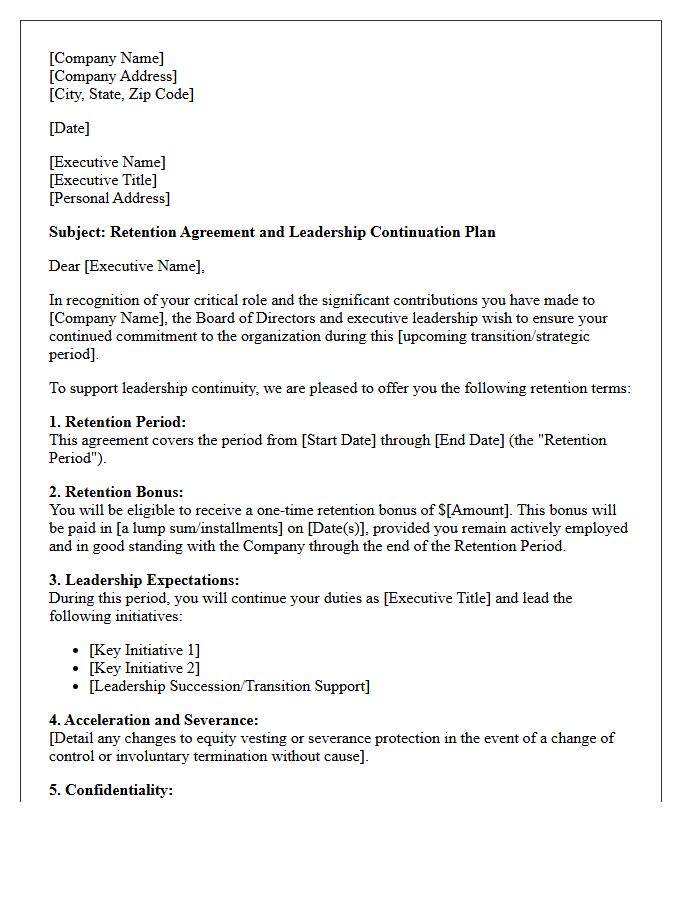
A Key Executive Retention and Leadership Continuation Letter is a strategic document used during corporate transitions to secure mission-critical talent. It outlines specific financial incentives, such as stay bonuses or equity vesting, contingent upon the executive remaining with the firm for a defined period. This ensures operational stability and maintains investor confidence during mergers or leadership shifts. By formalizing commitment terms, companies mitigate the risk of brain drain, preserving institutional knowledge and ensuring a seamless transition of authority while aligning executive interests with long-term organizational goals.
Liquidity Analysis and Business Continuity Advisory Letter
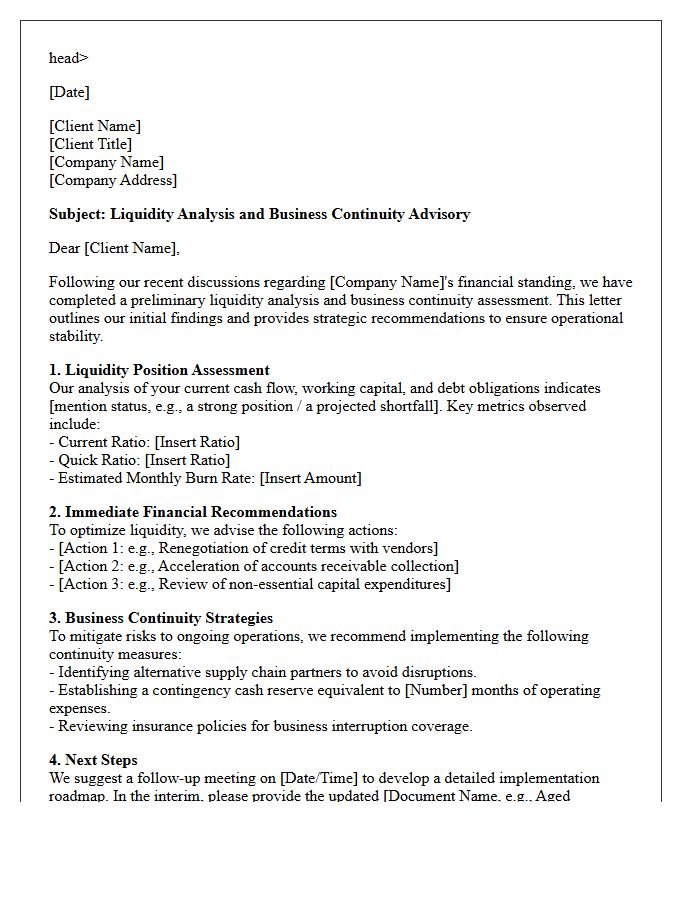
A Liquidity Analysis and Business Continuity Advisory Letter is a strategic document assessing a company's ability to meet short-term obligations during economic volatility. It provides a detailed evaluation of cash flow, working capital, and emergency reserves. By identifying potential funding gaps, the letter offers actionable guidance to maintain operational stability. This advisory is essential for risk management, ensuring that businesses can navigate unforeseen disruptions while preserving stakeholder confidence and long-term financial health.
Buy-Sell Agreement Funding and Structuring Letter
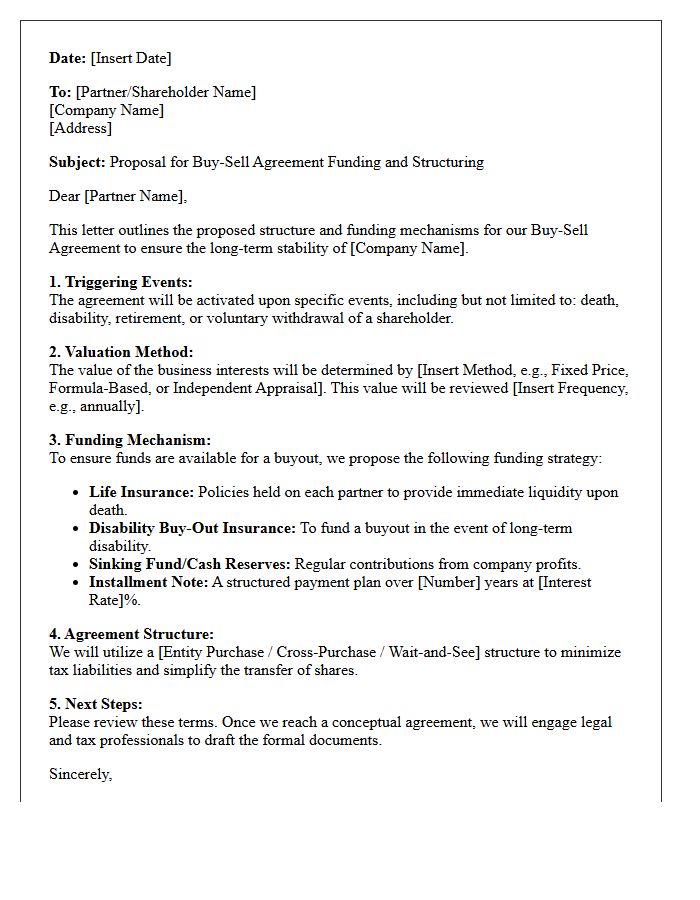
A Buy-Sell Agreement Funding and Structuring Letter is a critical document outlining how a business ownership transfer will be financed and organized upon a triggering event, such as death or disability. It specifies the valuation methodology and identifies funding vehicles, typically life insurance or disability buyout policies. This letter ensures legal clarity, provides immediate liquidity for the buyout, and protects the company's continuity. By formalizing these financial arrangements, partners prevent future litigation and guarantee that departing owners or their heirs receive fair compensation without jeopardizing the firm's stability.
Next Generation Leadership and Governance Advisory Letter
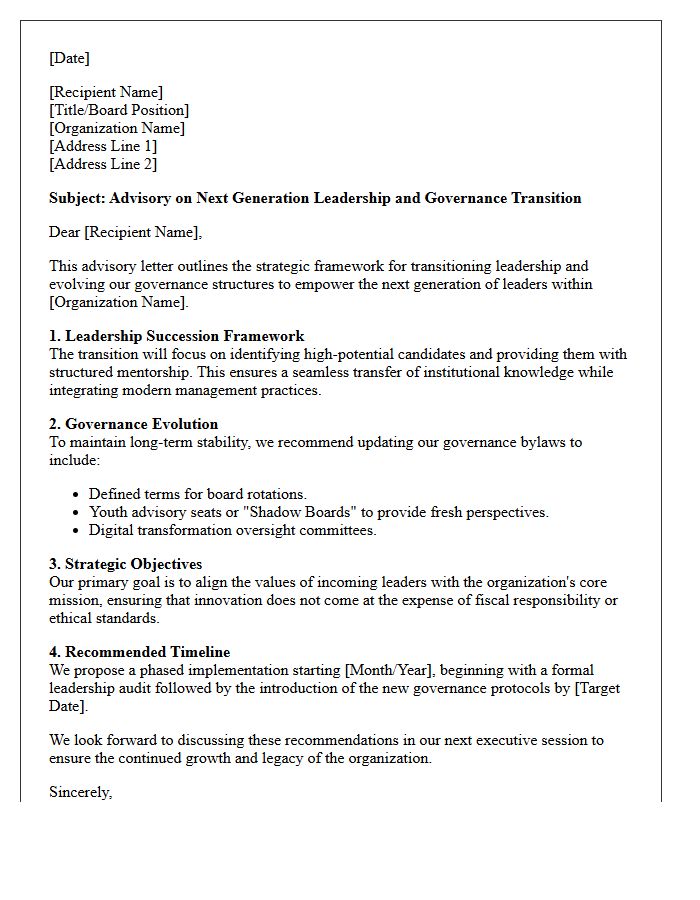
The Next Generation Leadership and Governance Advisory Letter provides strategic insights for organizations navigating leadership transitions. It focuses on succession planning, digital transformation, and sustainable corporate governance models. By addressing the evolving expectations of stakeholders, the letter guides boards in developing future-ready leaders who balance innovation with ethical oversight. This resource is essential for maintaining organizational resilience and ensuring long-term institutional stability in a rapidly changing global market.
Management Buyout Financial Strategy Advisory Letter
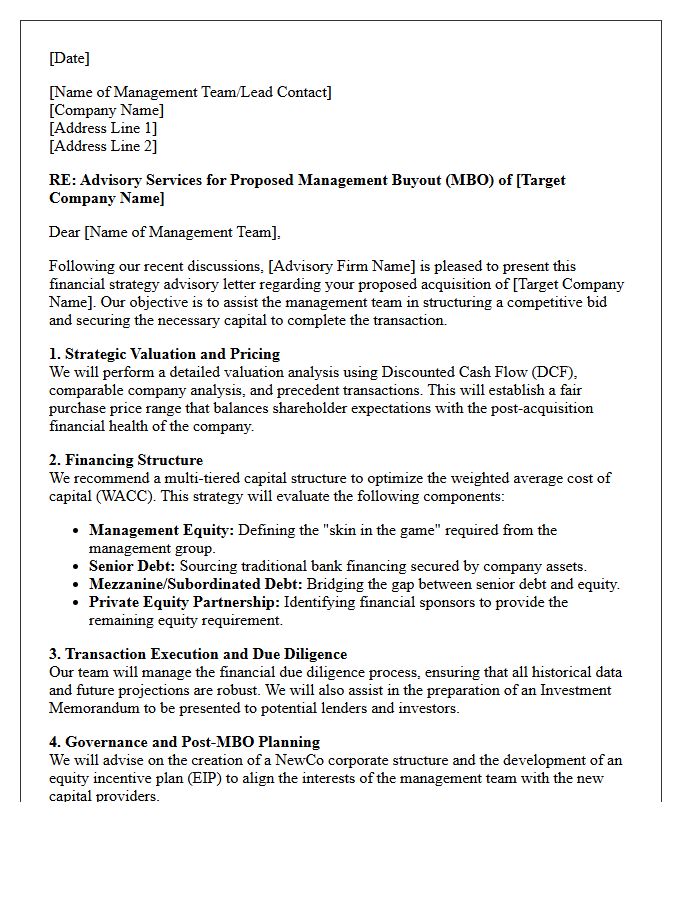
A Management Buyout (MBO) strategy letter outlines the financial roadmap for executives transitioning into business owners. It provides a structured framework for valuation, debt financing, and equity contributions. This advisory document ensures that the management team understands the leveraged buyout mechanics while aligning interests with sellers. Key elements include funding sources, tax implications, and due diligence protocols. By formalizing the acquisition strategy, the letter acts as a critical blueprint to secure capital and guarantee long-term operational stability after the change in control.
Fiduciary Trust and Estate Integration Succession Letter
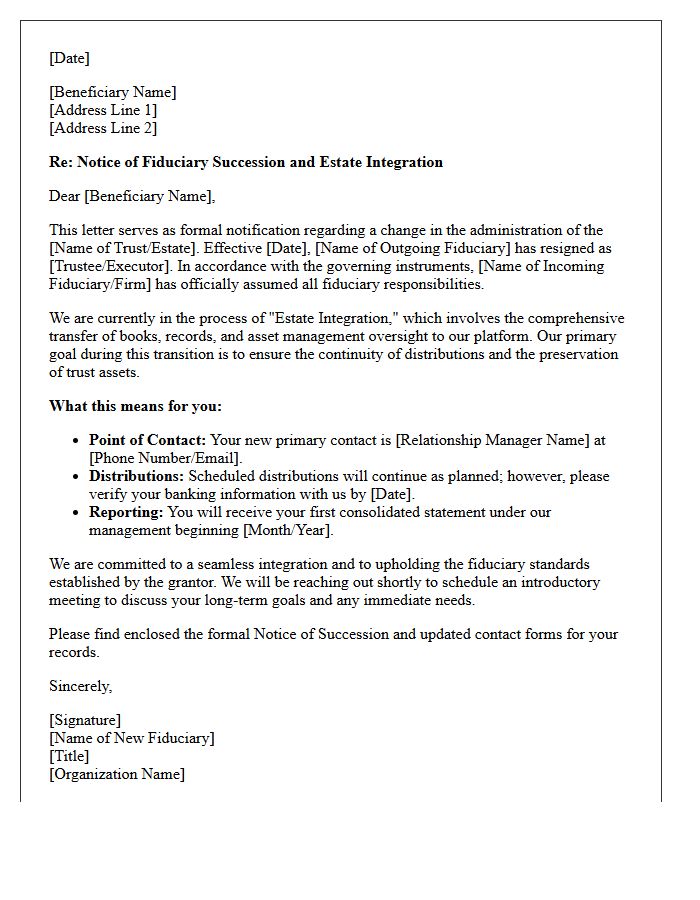
A Fiduciary Trust and Estate Integration Succession Letter is a vital document ensuring the seamless transfer of management responsibilities. It formally outlines the transition of authority from a current trustee to a successor, protecting the continuity of asset administration. This letter integrates legal directives with practical instructions, detailing account access, pending obligations, and beneficiary information. By clarifying these fiduciary duties, it minimizes legal disputes and administrative delays, ensuring that the estate's strategic objectives and the grantor's final wishes are honored during a sensitive leadership change.
Tax-Efficient Shareholder Transfer Advisory Letter
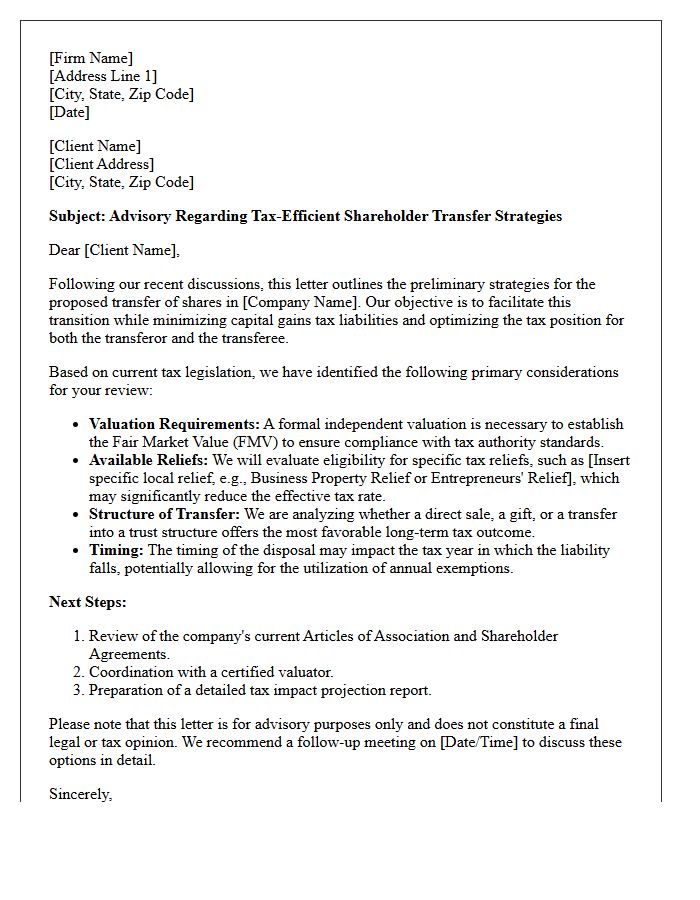
A Tax-Efficient Shareholder Transfer Advisory Letter is a critical document used to structure the reallocation of equity while minimizing fiscal liabilities. It provides expert guidance on navigating capital gains, gift taxes, and valuation methods. By utilizing strategic tax planning, shareholders can transfer ownership through buy-sell agreements or family successions without triggering unnecessary penalties. This advisory ensures compliance with evolving regulations, protecting the company's liquidity and preserving shareholder wealth. Understanding these legal frameworks is essential for maintaining corporate stability during internal transitions and optimizing long-term financial outcomes for all parties involved.
Family Office Establishment and Wealth Succession Letter
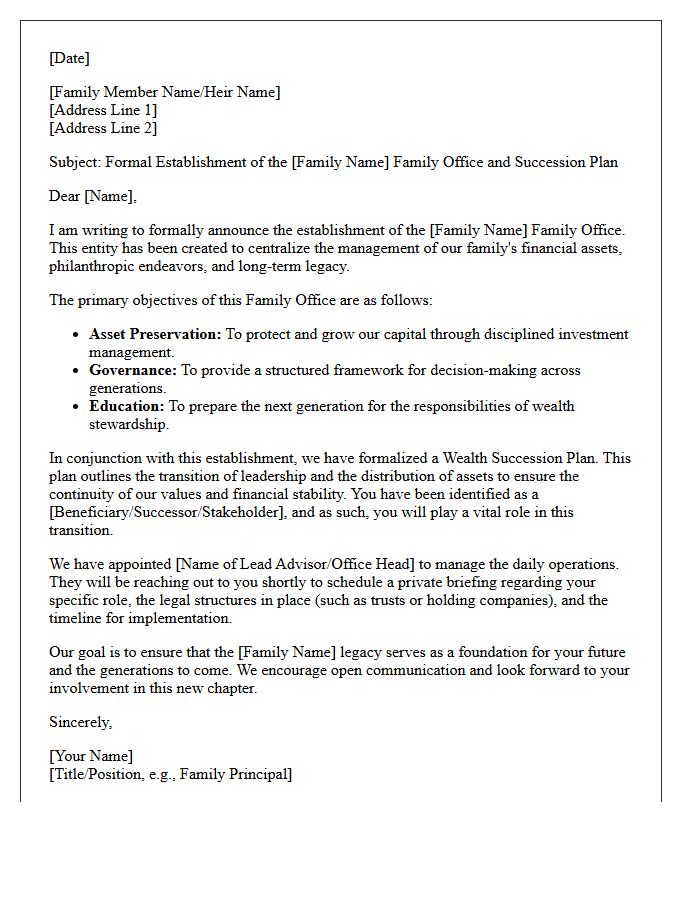
Establishing a family office requires a robust framework for asset protection and long-term governance. A well-drafted wealth succession letter serves as a critical roadmap, clarifying the founder's vision and distribution strategies. This document ensures intergenerational wealth transfer remains seamless by outlining values, legacy goals, and leadership roles. By integrating professional management with formal succession planning, families can mitigate legal risks, minimize tax liabilities, and preserve capital for future descendants, ensuring the enduring stability of the family estate through structured financial oversight.
Post-Transition Asset Management Advisory Letter
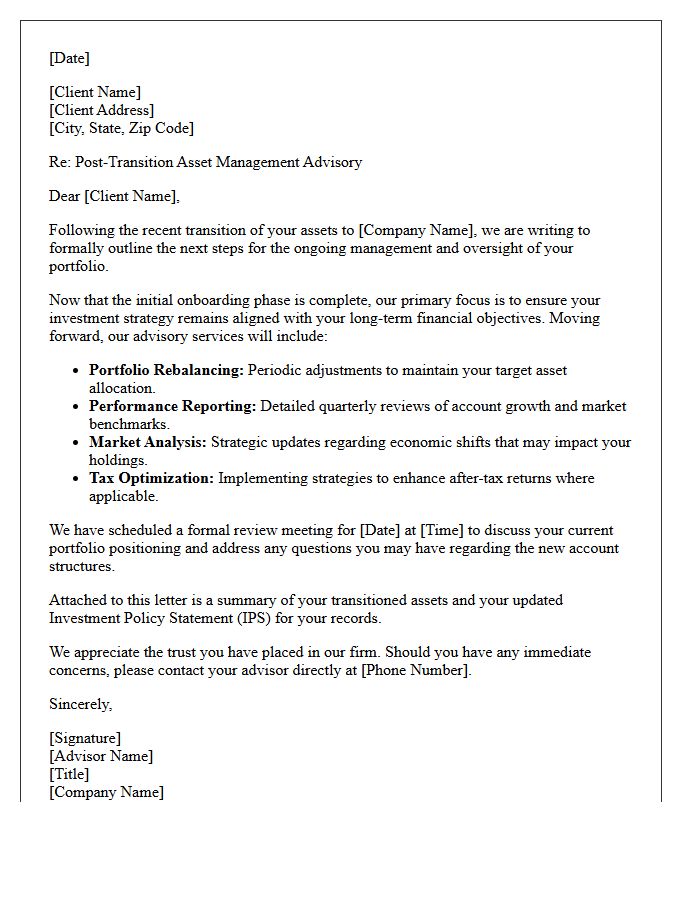
The Post-Transition Asset Management Advisory Letter provides critical guidance for REITs and property owners following a management shift. It outlines essential protocols for maintaining operational continuity, legal compliance, and financial reporting accuracy. Key focuses include risk mitigation, asset valuation updates, and the seamless transfer of fiduciary responsibilities. Stakeholders must review these letters to ensure strategic alignment and to safeguard long-term investment performance during the stabilization phase of the asset lifecycle.
Contingency Planning and Risk Mitigation Advisory Letter
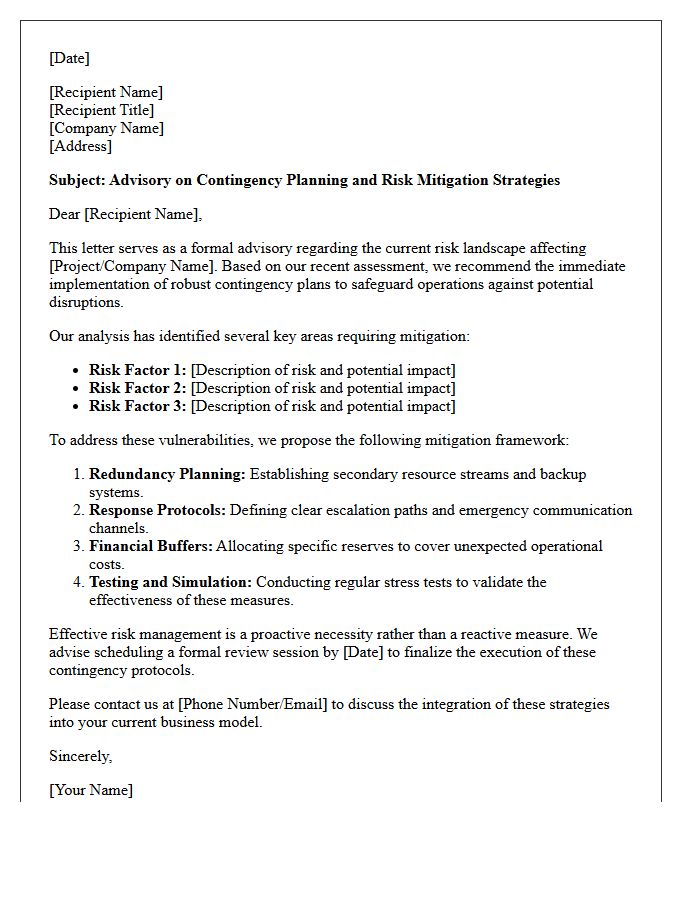
A Contingency Planning and Risk Mitigation Advisory Letter is a strategic document designed to identify potential business disruptions and outline proactive responses. It serves as a formal roadmap for risk management, ensuring organizational resilience against unforeseen events. By addressing vulnerabilities before they escalate, the letter provides actionable guidance to minimize financial loss and maintain operational continuity. Understanding these mitigation strategies is essential for stakeholders to protect assets and ensure long-term stability during periods of uncertainty or institutional crisis.
What is a Business Succession Planning Advisory Letter?
A Business Succession Planning Advisory Letter is a formal document drafted by consultants or legal advisors that outlines the strategic framework, valuation methods, and transition timelines for transferring company ownership to a successor.
Why is an advisory letter essential for business continuity?
The advisory letter serves as a roadmap that minimizes operational disruptions, clarifies leadership roles during the transition, and ensures that the legal and financial interests of both the current owner and the future stakeholder are protected.
What key components are included in a succession planning letter?
A comprehensive advisory letter typically includes a business valuation summary, identification of internal or external successors, a detailed tax strategy, a contingency plan for unexpected leadership loss, and a structured timeline for the transfer of authority.
How does a succession advisory letter address tax implications?
The letter outlines specific tax-efficient strategies-such as Buy-Sell Agreements, Grantor Retained Annuity Trusts (GRATs), or Family Limited Partnerships-to minimize capital gains taxes and estate taxes during the ownership transfer process.
When should a business owner seek a succession planning advisory letter?
Experts recommend initiating the advisory process at least five to ten years before a planned retirement or exit to allow for proper leadership grooming, financial restructuring, and market-driven valuation adjustments.

Comments