
When a debtor passes away, creditors must navigate the legal process of an estate claim to recover outstanding debts. This procedure involves filing formal notices against the deceased's assets during probate to ensure repayment before inheritance distribution. Understanding priority rankings and statutory deadlines is essential for successful recovery. To assist your legal outreach, below are some ready to use template.
Image cover: Formal Debt Claim Letters and Templates for Deceased Estates
Letter Samples List
- Estate Claim Notification Letter
- Request for Death Certificate Letter
- Account Freezing and Hold Letter
- Executor Demand for Payment Letter
- Testamentary Documentation Request Letter
- Outstanding Debt Balance Statement Letter
- Right of Offset Notification Letter
- Collateral Release Authorization Letter
- Probate Court Claim Filing Letter
- Small Estate Affidavit Acknowledgment Letter
- Debt Settlement Agreement Letter
- Uncollectible Debt Forgiveness Letter
- Surviving Spouse Liability Notice Letter
- Estate Claim Resolution and Closure Letter
Estate Claim Notification Letter
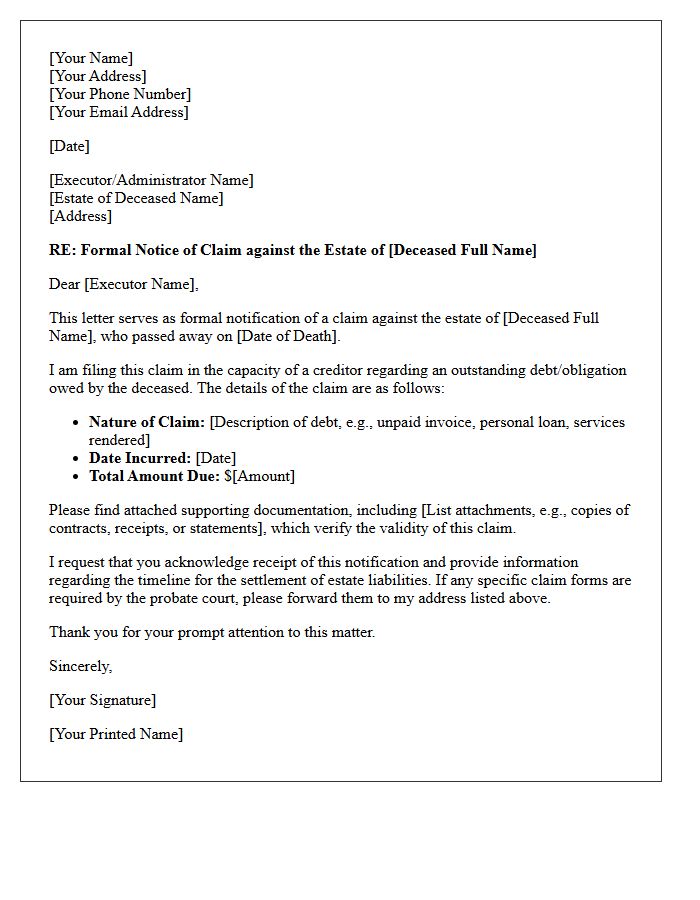
An Estate Claim Notification Letter is a formal legal document sent to inform executors or personal representatives about a debt owed by a deceased individual. It is crucial to notify the estate promptly to ensure the claim is recorded before assets are distributed to heirs. This letter must include the total balance, account details, and supporting evidence of the obligation. Creditors must adhere to strict statutory deadlines, as failing to submit a timely claim may result in the permanent loss of the right to recover outstanding funds.
Request for Death Certificate Letter
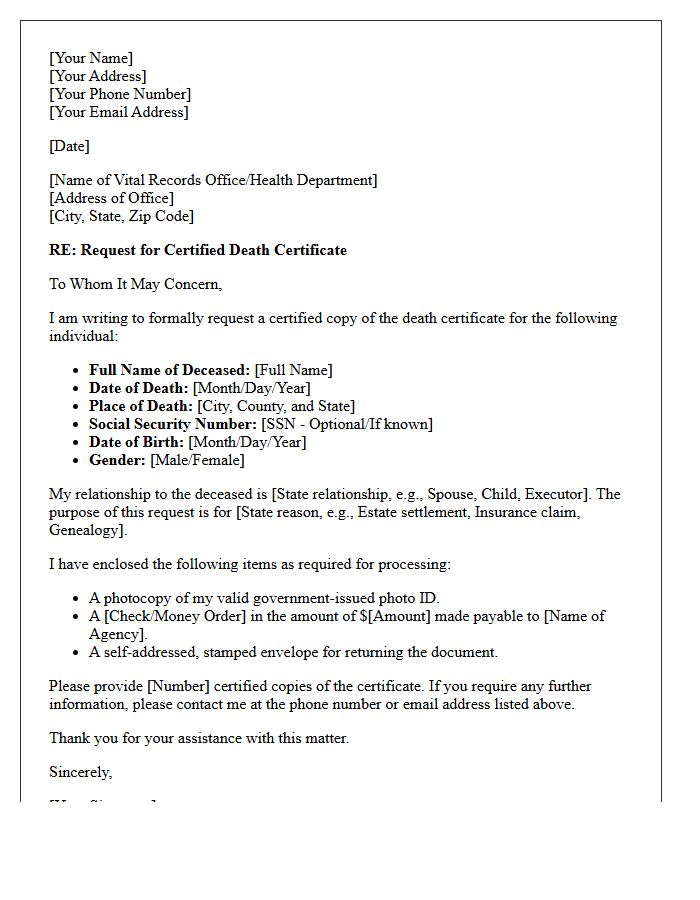
A Request for Death Certificate Letter is a formal document used to obtain official proof of passing from government authorities. It is essential for settling the deceased's estate, managing insurance claims, and closing financial accounts. The letter must include the deceased person's full name, date of death, and place of passing. You should also state your legal relationship to the individual and include a valid photo ID or required fee to ensure the vital records office processes your official application accurately and without delay.
Account Freezing and Hold Letter
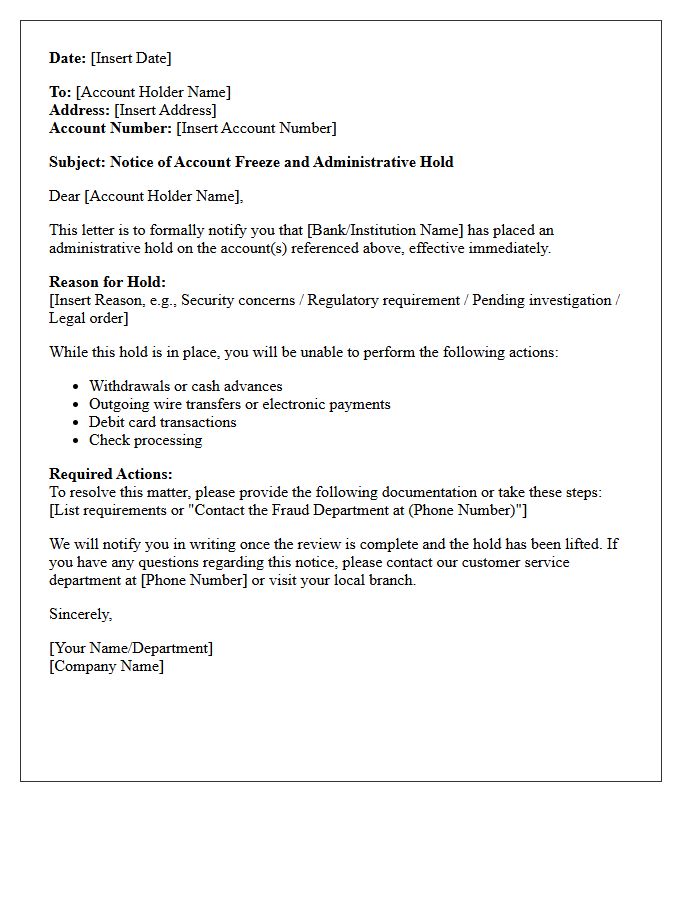
An Account Freezing and Hold Letter is a formal legal notice issued by authorities or financial institutions to restrict access to funds. This action typically occurs due to suspicious activity, unpaid debts, or ongoing litigation. Receiving this notice means you cannot withdraw or transfer money until the underlying legal issue is resolved. It is crucial to review the compliance requirements immediately and seek legal counsel to challenge the freeze or negotiate a release. Timely action is essential to regain financial liquidity and protect your assets from further legal complications.
Executor Demand for Payment Letter
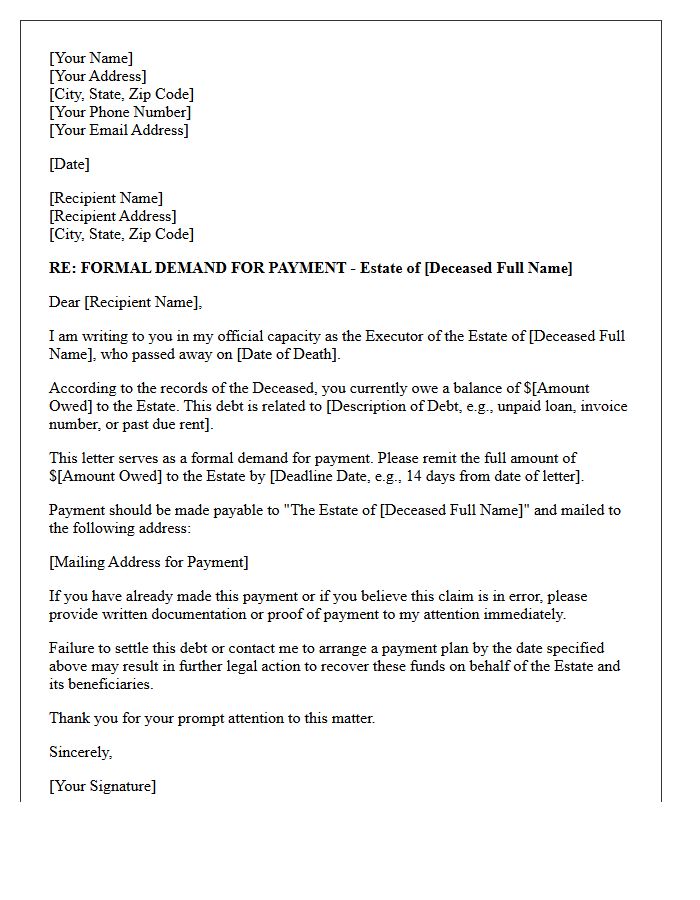
An Executor Demand for Payment Letter is a formal legal notice sent by an estate representative to recover outstanding debts owed to a deceased person. This document serves as a final request before initiating litigation to protect the estate assets for distribution to beneficiaries. It must clearly outline the total amount due, specify a strict payment deadline, and provide detailed instructions for settling the debt. Issuing this demand is a critical step in fulfilling fiduciary duties and ensuring the comprehensive collection of all valuation belonging to the decedent's estate.
Testamentary Documentation Request Letter
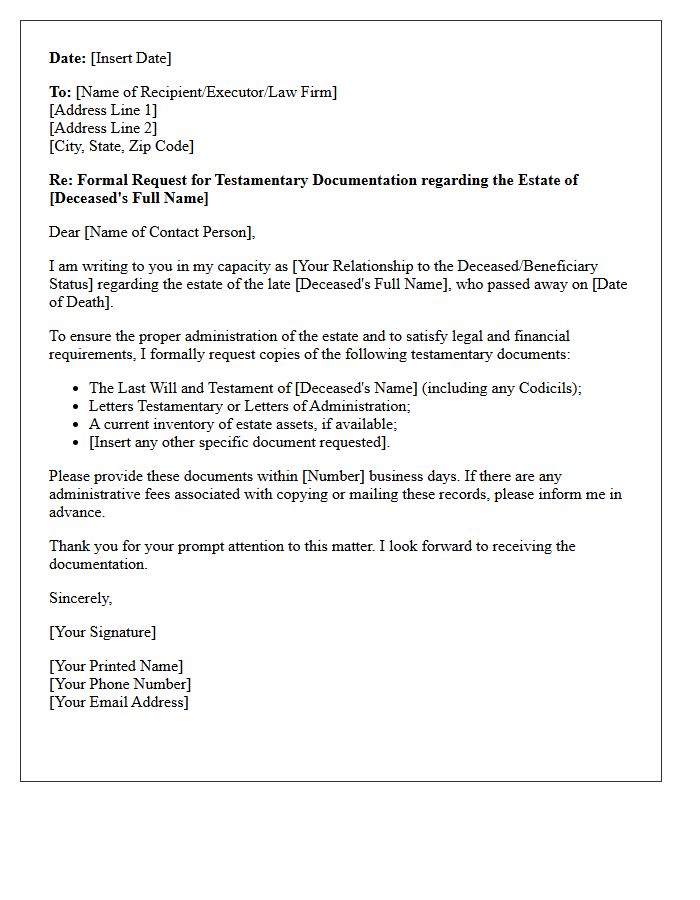
A Testamentary Documentation Request Letter is a formal written inquiry used to obtain legal records related to a deceased person's estate. This document is typically sent by beneficiaries or legal representatives to executors or government registries to verify the existence of a will. Its primary purpose is to secure letters of administration or a grant of probate, ensuring transparency during the probate process. Providing clear identification and proof of interest is essential to facilitate the timely release of these sensitive financial and legal records for effective estate settlement.
Outstanding Debt Balance Statement Letter
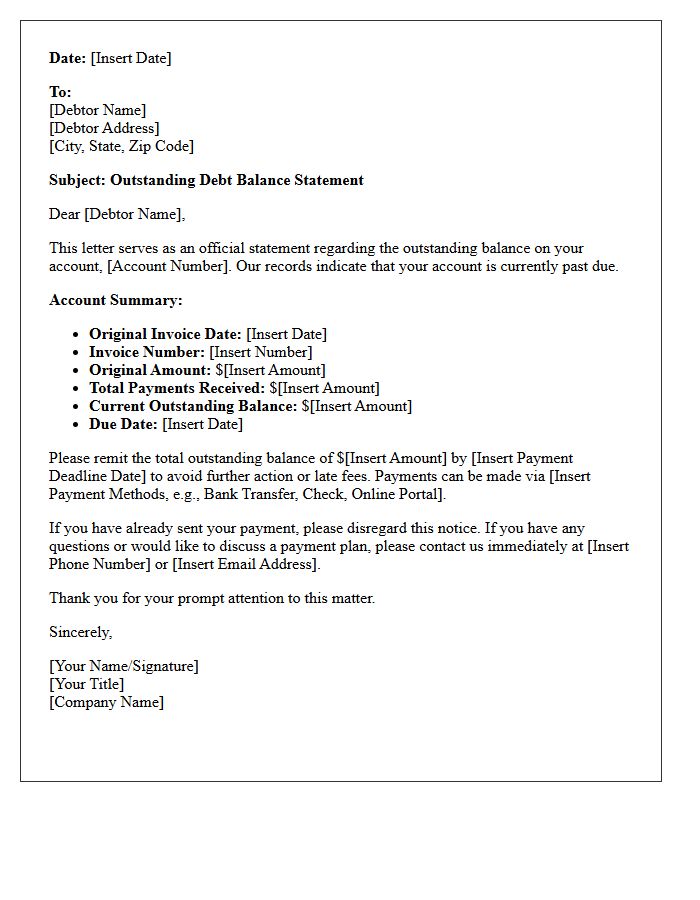
An Outstanding Debt Balance Statement Letter is a formal document detailing the total unpaid amount a debtor owes. It serves as an official record of the principal, accumulated interest, and any applicable late fees. This statement is essential for financial reconciliation and serves as legal evidence of financial liability. For borrowers, it provides clarity on their repayment status, while for creditors, it acts as a formal payment demand. Understanding this document is crucial for maintaining credit health and ensuring accurate debt settlement during the recovery process.
Right of Offset Notification Letter
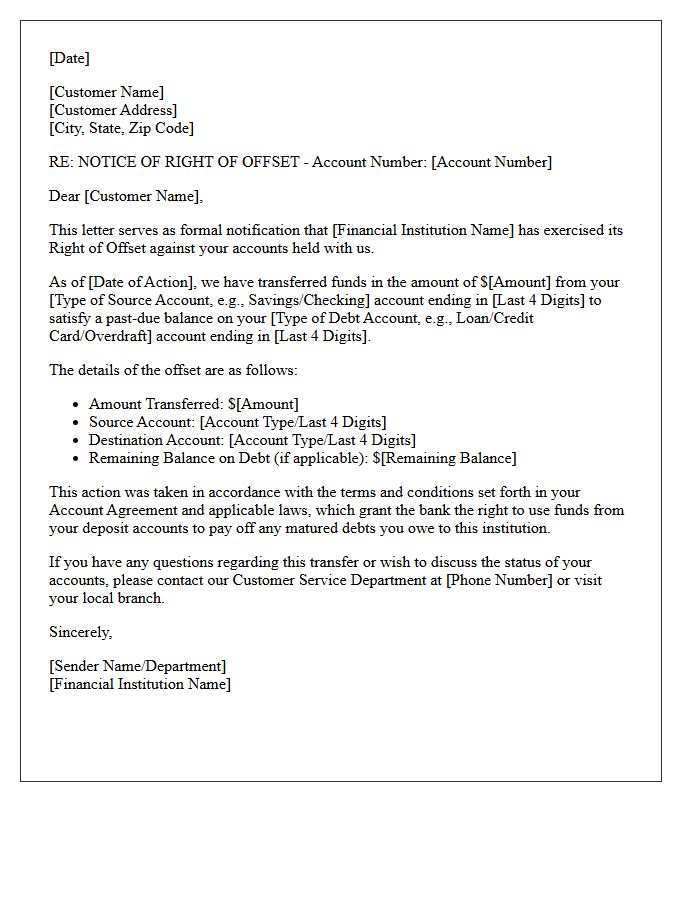
A Right of Offset Notification Letter is a formal legal notice issued by a financial institution informing a debtor that funds will be seized from their deposit account to cover an outstanding debt, such as a delinquent loan. Under the Right of Offset, banks can bypass standard collection processes to recover owed balances directly. This letter serves as critical documentation of the action taken, outlining the specific accounts affected and the total amount offset. Understanding this notice is essential for managing liquidity and addressing underlying credit obligations promptly.
Collateral Release Authorization Letter
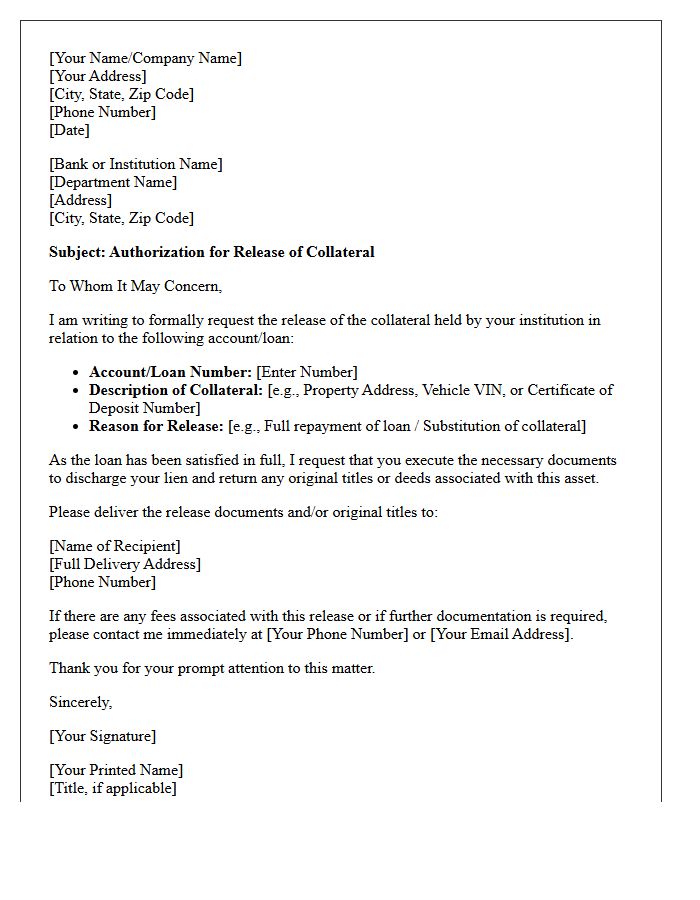
A Collateral Release Authorization Letter is a formal legal document issued by a lender to relinquish their claim on an asset used as loan security. Once a debt is fully repaid, this letter instructs the relevant authorities to remove the lien or encumbrance, officially restoring full ownership rights to the borrower. It is essential for updating public records and ensuring the asset can be legally sold or transferred. Always verify that the document includes the specific loan account number and a detailed description of the property being released.
Probate Court Claim Filing Letter
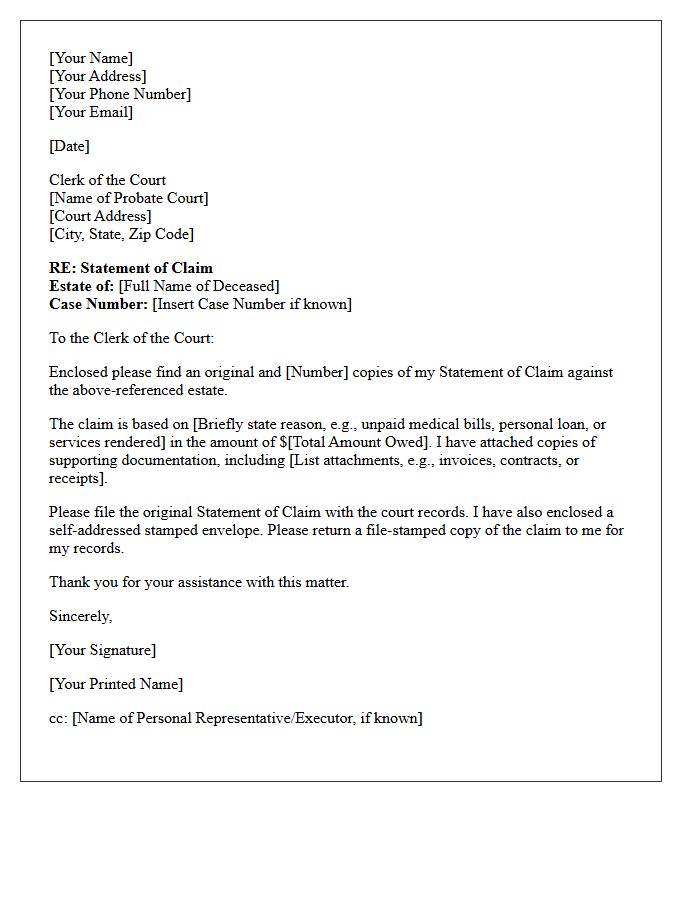
A probate court claim filing letter is a formal legal notice sent to an estate's executor to demand payment for outstanding debts. It is crucial to submit this document within the state's specific statutory deadline to ensure the claim remains valid. The letter must clearly outline the total amount owed, the nature of the debt, and include supporting documentation like invoices or contracts. Timely filing protects a creditor's right to seek reimbursement from the deceased person's assets before the remaining estate distribution occurs to heirs and beneficiaries.
Small Estate Affidavit Acknowledgment Letter
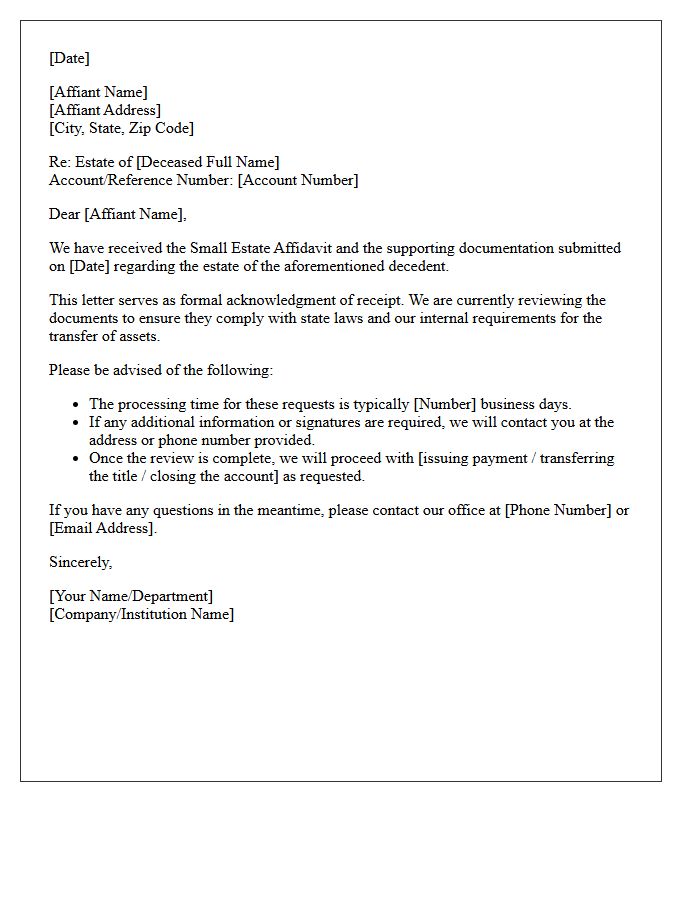
A Small Estate Affidavit Acknowledgment Letter is a formal document issued by a financial institution or government agency to confirm receipt of a Small Estate Affidavit. This letter serves as legal verification that the entity recognizes the successor's authority to claim assets without formal probate. It is essential for tracking the transfer of property and ensuring the estate meets state-specific value thresholds. Receiving this acknowledgment validates that your documentation is complete, allowing for the efficient distribution of the decedent's remaining funds or personal holdings to rightful heirs.
Debt Settlement Agreement Letter
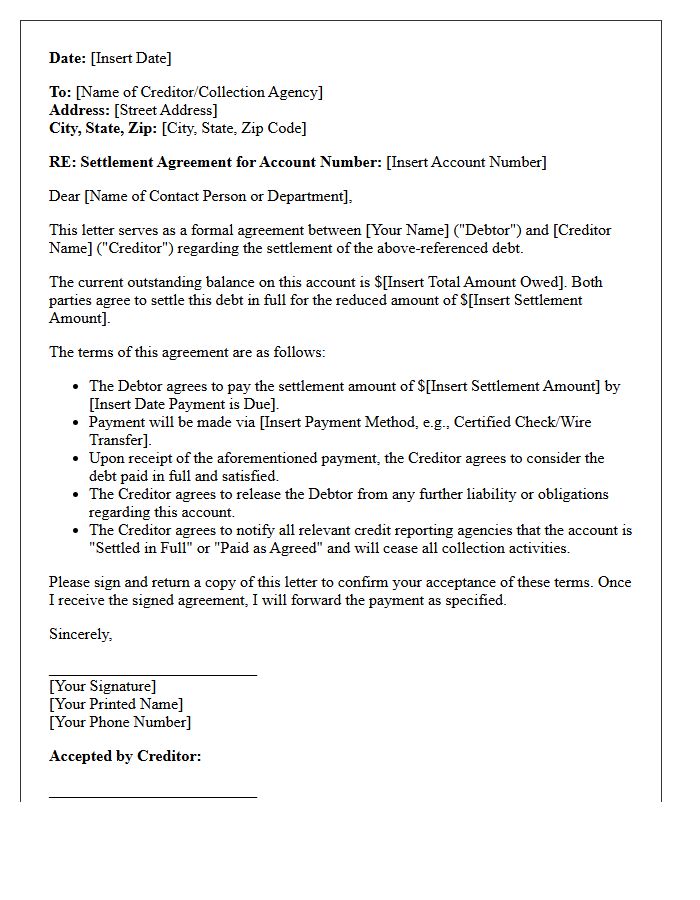
A Debt Settlement Agreement Letter is a legally binding document that outlines terms for resolving outstanding balances for less than the total amount owed. It must clearly state the reduced payment figure, the specific payment deadline, and a formal confirmation that the debt is considered fully satisfied upon receipt. Obtaining this written commitment is crucial before transferring funds, as it protects consumers from future collection attempts and ensures the creditor reports the account as settled to credit bureaus, preventing further legal action or ongoing interest accumulation.
Uncollectible Debt Forgiveness Letter
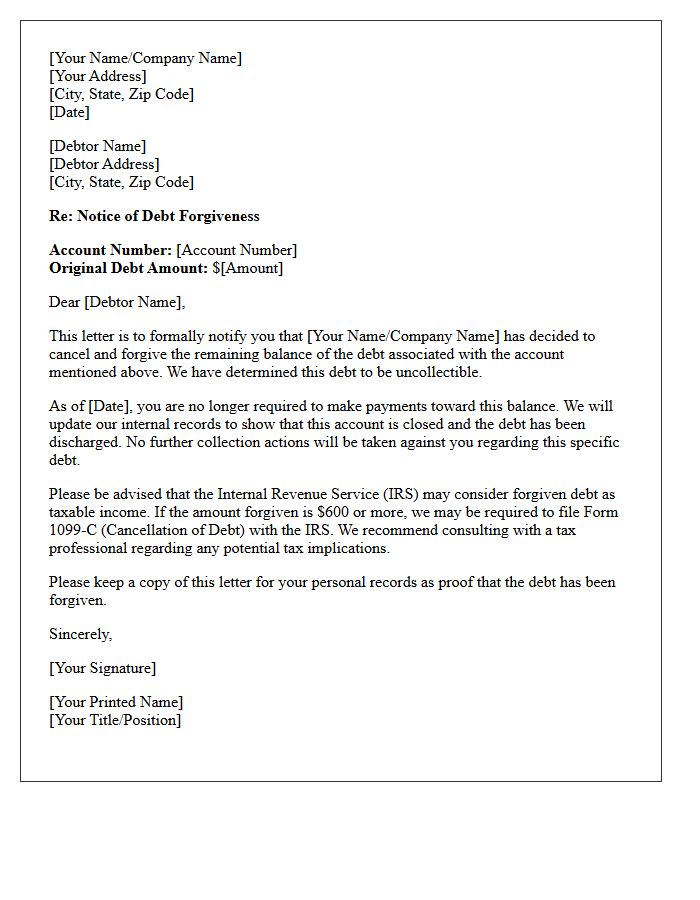
An Uncollectible Debt Forgiveness Letter is a formal document issued by a creditor to notify a debtor that an outstanding balance has been cancelled. This occurs when the lender deems the amount unrecoverable due to financial hardship or insolvency. While this provides immediate relief, it is essential to understand the tax implications; forgiven debt is often considered taxable income by the IRS. Recipients should retain this written confirmation to ensure their credit reports accurately reflect the discharge and to protect against future collection attempts on the same account.
Surviving Spouse Liability Notice Letter
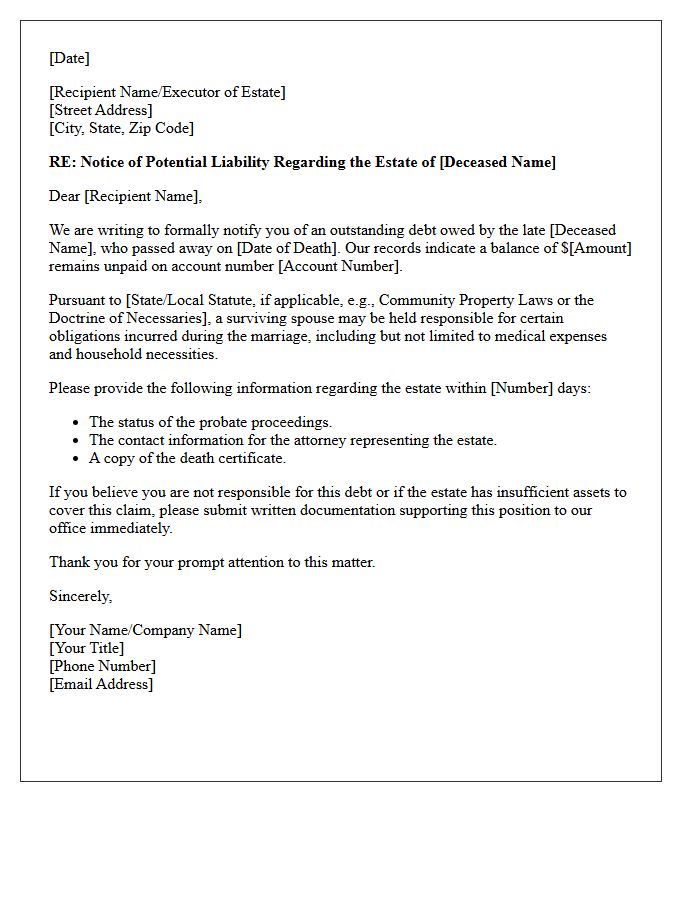
A Surviving Spouse Liability Notice Letter is a formal document notifying a widow or widower of their legal responsibility for a deceased partner's debts. It is crucial to understand that community property laws or specific state statutes may hold you liable for medical expenses or shared obligations. You should immediately verify the validity of the claim and check for probate protections before making payments. This notice serves as a critical step in the estate settlement process, determining whether personal assets are at risk during creditor recovery efforts.
Estate Claim Resolution and Closure Letter
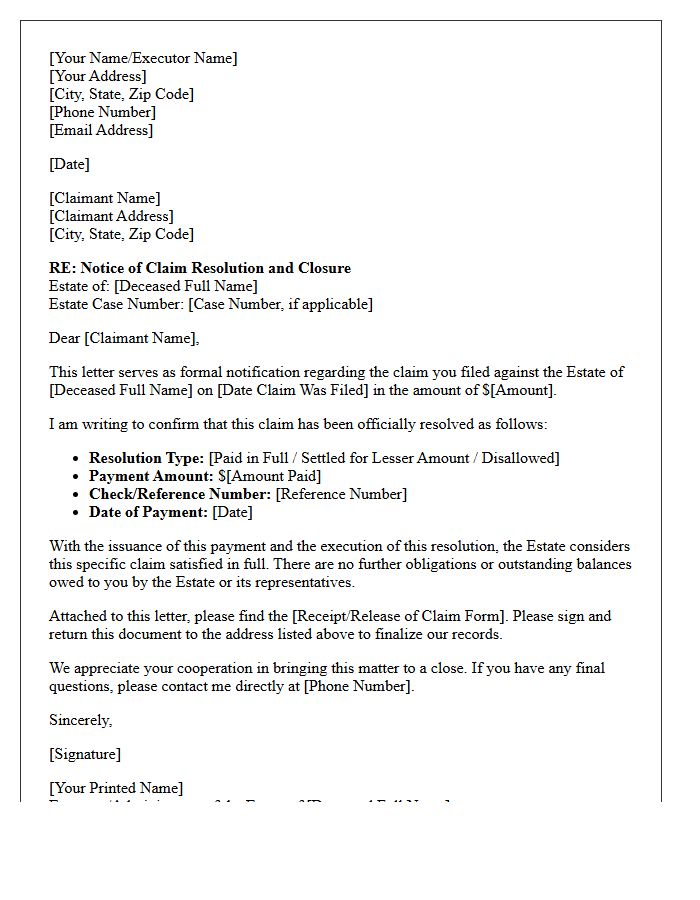
An Estate Claim Resolution and Closure Letter serves as the final official confirmation that a debt or claim against a deceased person's estate has been settled. This document provides legal protection for executors and heirs by verifying that no further liabilities exist regarding a specific creditor. It outlines the final payment details, confirms the account balance is zero, and releases the estate from future obligations. Retaining this written discharge is essential for the formal distribution of assets and ensures the probate process can be concluded without lingering financial disputes.
How do I file a claim against a deceased debtor's estate?
To file a claim, you must submit a formal Creditor's Claim form to the probate court in the county where the deceased resided. You must also provide a copy to the appointed executor or personal representative within the state's specific statute of limitations.
What is the deadline for creditors to claim unpaid debts from an estate?
The deadline, often called the "non-claim period," varies by state but typically ranges from four to six months after the date the probate notice is published or mailed to known creditors. Failure to file within this window usually results in the claim being barred forever.
Which debts are paid first from a deceased person's estate?
Estate debts are paid according to a statutory hierarchy. Generally, administrative expenses (court fees, attorney fees), funeral costs, and taxes are paid first. Unsecured debts, such as credit cards and personal loans, are typically the last priority and may not be paid if the estate is insolvent.
Can a creditor collect from an estate if there is no probate opened?
If no probate has been opened, a creditor may have the legal right to petition the court to open probate as an "interested party." This allows the creditor to seek the appointment of a representative so that a formal claim can be processed against the assets.
What happens to a debt if the estate does not have enough money to pay it?
If an estate is "insolvent," meaning its liabilities exceed its assets, debts are paid in order of priority until funds are exhausted. Remaining lower-priority creditors receive nothing, and the debt is typically discharged; heirs are generally not personally liable for the deceased's individual debts.


Comments