
Receiving a Subpoena for Financial Records requires a prompt and legally sound response to protect your privacy and ensure compliance. This guide outlines how to draft an official response letter, address scope concerns, and meet judicial deadlines effectively. To help you get started quickly, below are some ready to use template.
Image cover: Responding to a Financial Subpoena: Professional Letter Templates and Guide
Letter Samples List
- Full Compliance Subpoena Response Letter
- Partial Production Subpoena Response Letter
- No Responsive Financial Records Subpoena Letter
- Customer Notification of Financial Subpoena Letter
- Subpoena Deadline Extension Request Letter
- Production Cost Reimbursement Subpoena Letter
- Overbroad Scope Objection Subpoena Letter
- Defective Service Subpoena Rejection Letter
- Protective Order Requirement Subpoena Letter
- Grand Jury Subpoena Confidential Response Letter
- Undue Burden Objection Subpoena Letter
- Subpoena Scope Clarification Request Letter
Full Compliance Subpoena Response Letter
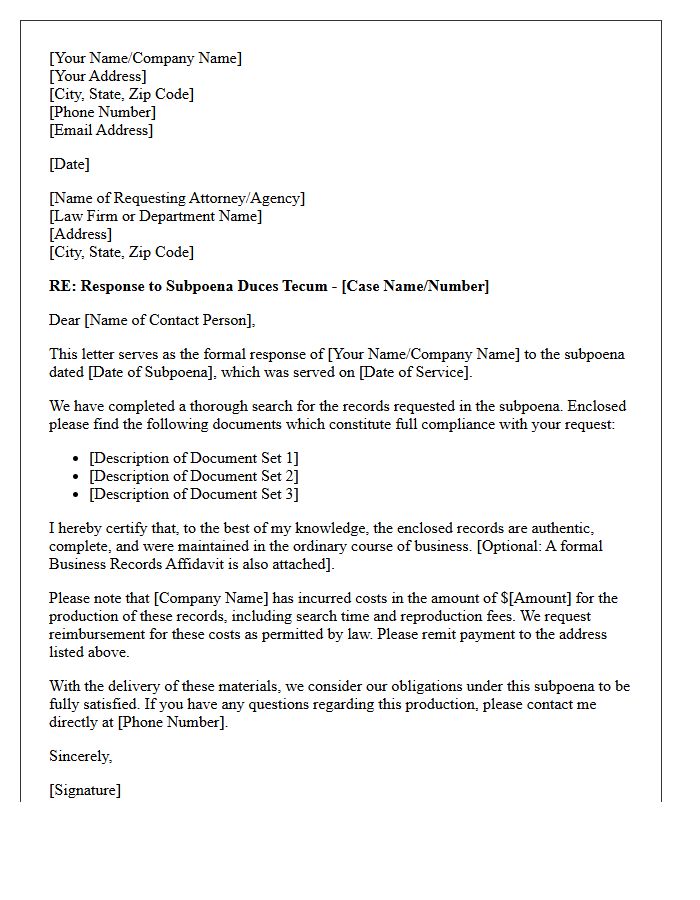
A Full Compliance Subpoena Response Letter is a formal legal document confirming that a recipient has provided all requested documents or testimony. To ensure legal sufficiency, the letter must clearly reference the case number and list all produced materials. It serves as a certified record that the responding party has met its discovery obligations in full. Drafted accurately, this response protects the entity from potential contempt of court charges or sanctions by verifying that no further information remains outstanding under the specific legal demand issued.
Partial Production Subpoena Response Letter
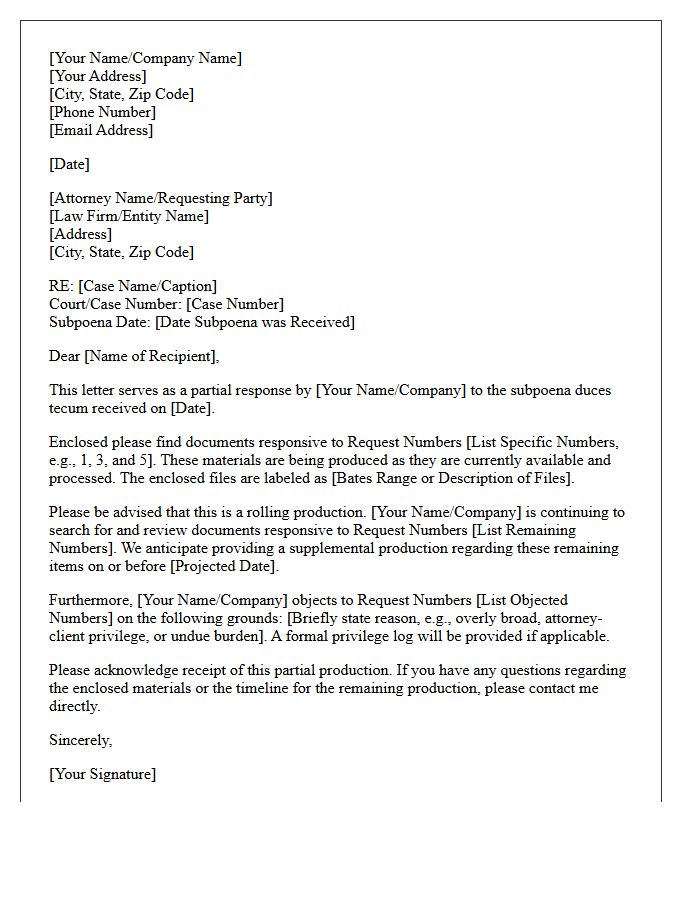
A Partial Production Subpoena Response Letter is a formal legal document issued when a party can only fulfill specific portions of a records request. It is essential to explicitly state which documents are being provided while clearly defining the legal objections or privileges preventing a complete disclosure. This letter preserves your rights, prevents claims of non-compliance, and establishes a timeline for any remaining items. Proactively communicating limitations helps manage expectations with the issuing court or attorney, ensuring transparency throughout the discovery process while protecting sensitive or irrelevant information from unnecessary exposure.
No Responsive Financial Records Subpoena Letter
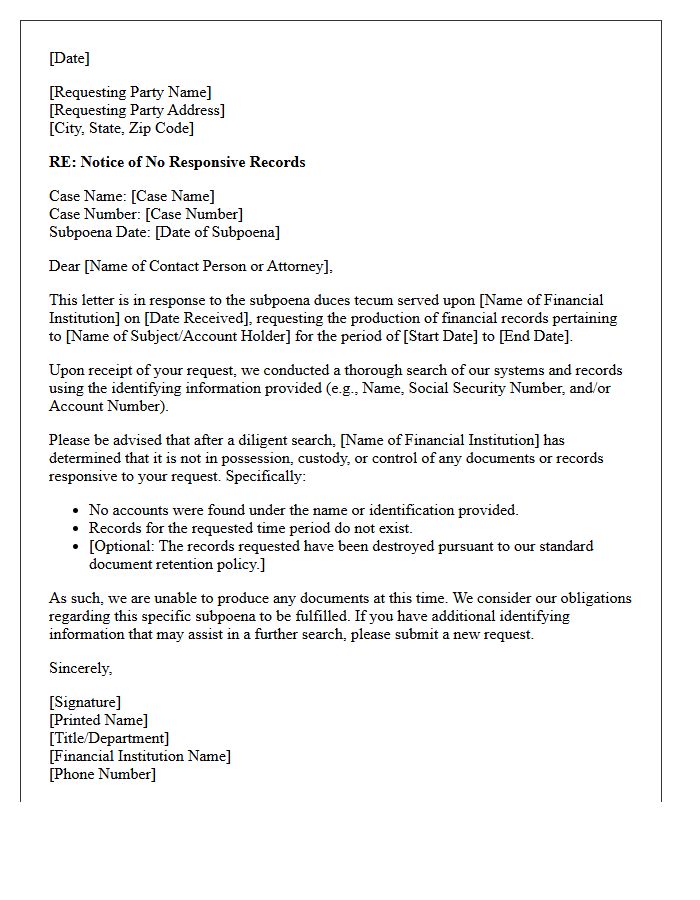
Receiving a No Responsive Financial Records Subpoena Letter indicates that a financial institution searched its database but found no accounts or transactions matching the legal request. This official notification serves as legal proof of non-existence for the specified criteria. It is crucial to verify that all identifying information, such as names or tax IDs provided in the original subpoena, was accurate. If errors exist, an amended subpoena must be issued to ensure a comprehensive search and maintain the integrity of the judicial discovery process.
Customer Notification of Financial Subpoena Letter
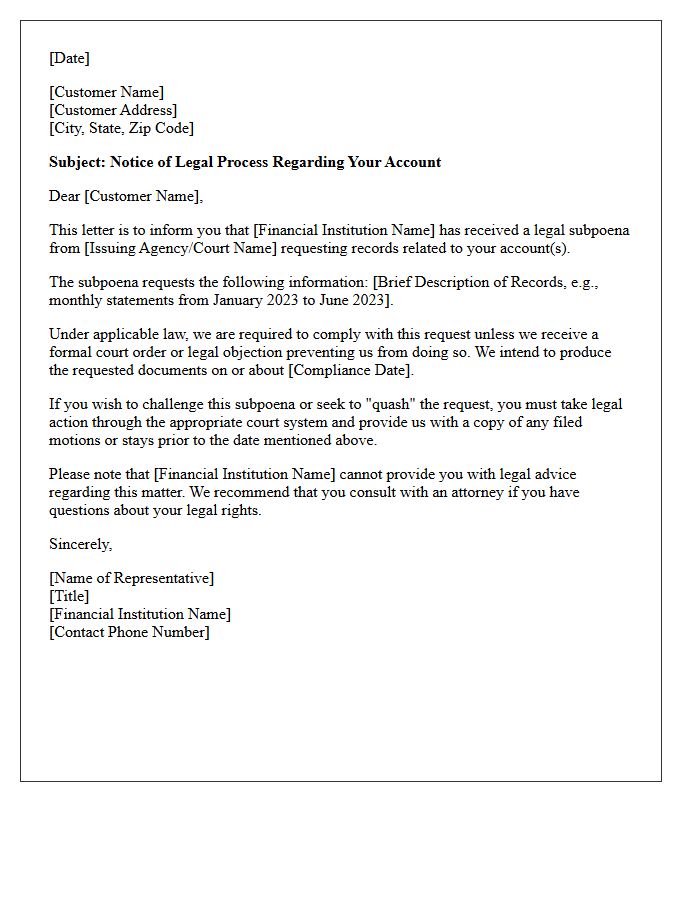
A Customer Notification of Financial Subpoena is a legal notice informing you that a government agency or third party has requested access to your private banking records. It is mandatory for financial institutions to notify customers under the Right to Financial Privacy Act. Upon receiving this letter, you have a limited statutory timeframe to file a motion to quash or legally challenge the request. Failure to act promptly allows the institution to release your confidential data to the requesting authority for investigation or litigation purposes.
Subpoena Deadline Extension Request Letter
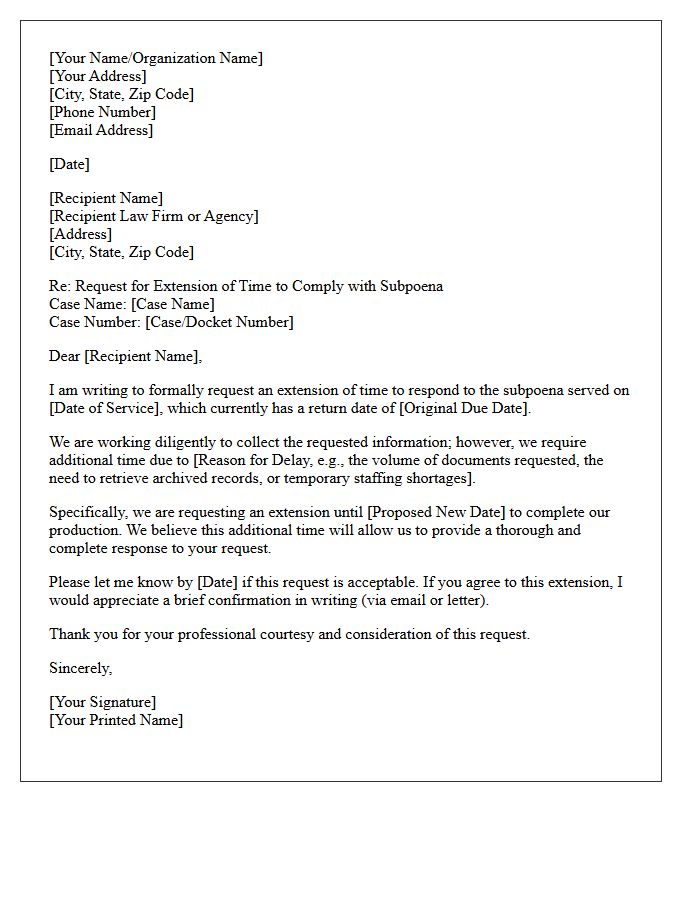
A subpoena deadline extension request letter is a formal document sent to legal counsel to ask for more time to provide testimony or documents. It must clearly state the original due date, the specific reasons for the delay, and a proposed new deadline. To ensure validity, the request should be made well before the initial expiration. While it serves as a professional courtesy to avoid contempt of court, you should always obtain written confirmation or a signed stipulation to protect your legal standing and document the agreement.
Production Cost Reimbursement Subpoena Letter
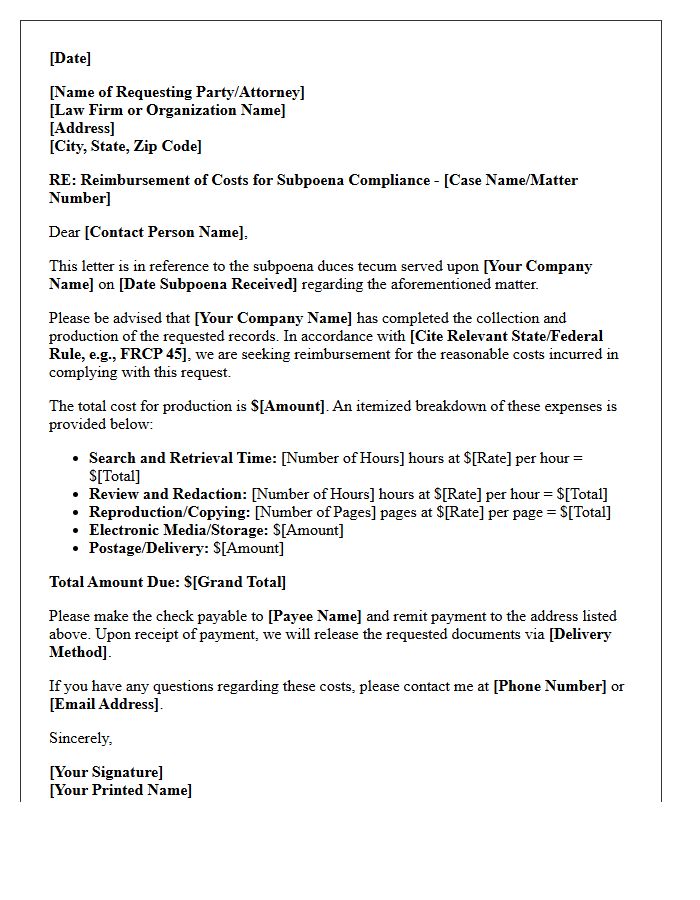
A Production Cost Reimbursement Subpoena Letter is a formal request sent to a discovering party demanding payment for the expenses incurred while gathering electronically stored information. Under legal procedures, cost-shifting allows the responding entity to recover reasonable fees for labor, materials, and technical processing. It is essential to provide a detailed, itemized invoice of these costs to ensure compliance and avoid financial burden. Timely communication regarding these expenses prevents disputes and ensures that the producing party is fairly compensated for complying with complex legal discovery mandates.
Overbroad Scope Objection Subpoena Letter
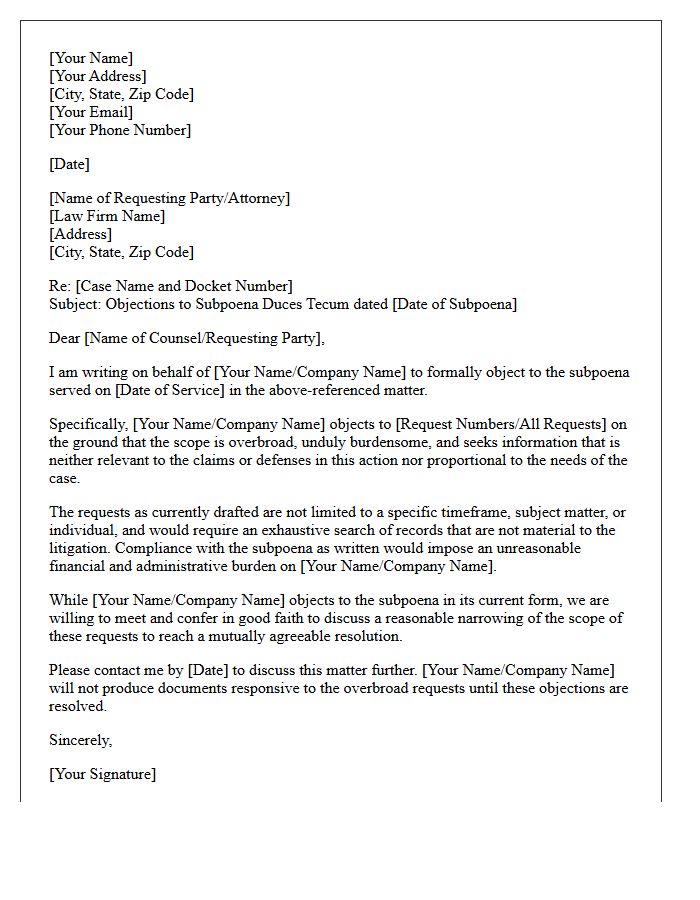
An Overbroad Scope Objection is a formal legal response used when a subpoena demands an excessive volume of documents or irrelevant information. This letter asserts that the request is unreasonably burdensome and exceeds the legal limits of discovery. By filing this objection, you protect sensitive data and prevent "fishing expeditions" that lack specific focus. It is essential to serve these objections promptly to preserve your legal rights and potentially narrow the request's requirements. Clearly identifying which parts of the subpoena are overly broad helps ensure compliance remains manageable and legally relevant.
Defective Service Subpoena Rejection Letter
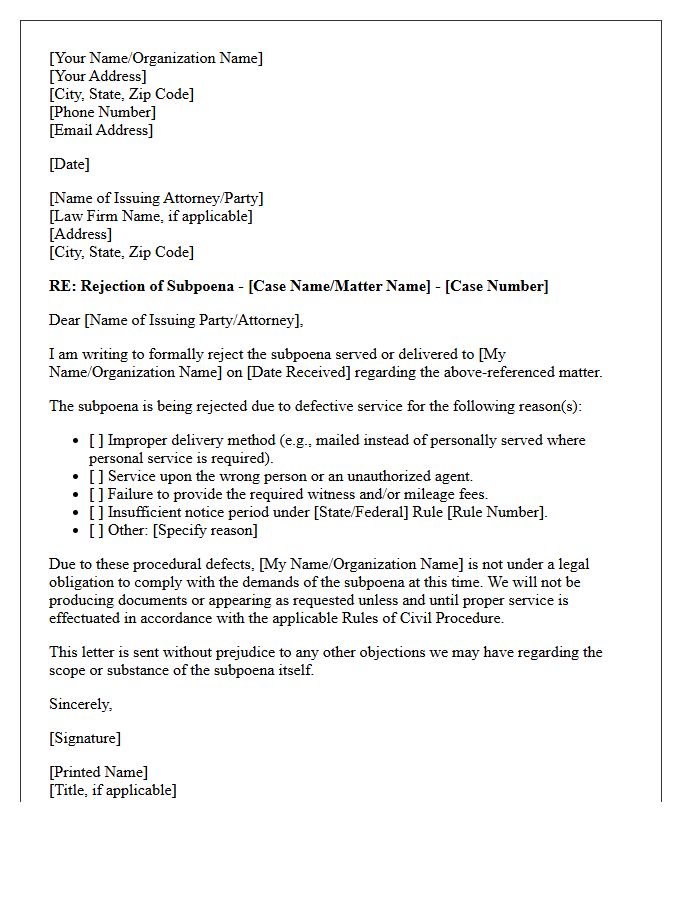
A Defective Service Subpoena Rejection Letter is a formal legal response used to challenge a subpoena that was improperly delivered. To be legally binding, service must strictly adhere to procedural rules, such as personal delivery or authorized mail. If the method of service is flawed, the recipient may use this letter to formally decline compliance without being in contempt. It is essential to clearly specify the procedural deficiency, such as improper jurisdiction or lack of witness fees, to ensure the legal objection is documented and protects the recipient's rights.
Protective Order Requirement Subpoena Letter
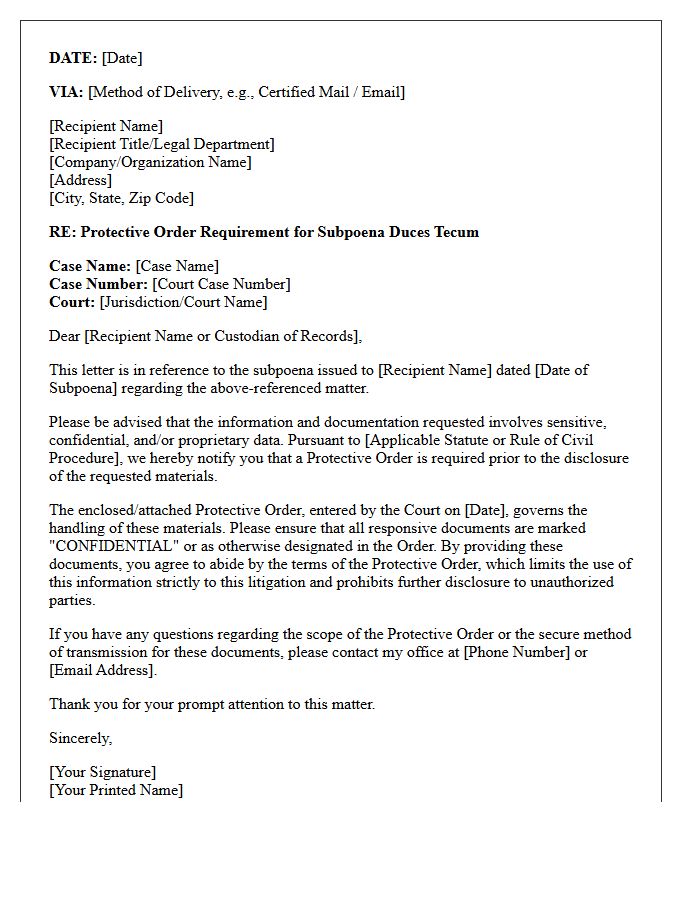
A Protective Order Requirement Subpoena Letter is a formal notification sent when a party seeks to compel the release of sensitive information. It serves as a legal mandate requiring the recipient to provide specific documents or testimony. Importantly, it often includes a protective order to ensure that confidential or proprietary data remains restricted from public disclosure. Recipients must act quickly to evaluate the scope of the request and comply with deadlines to avoid judicial penalties or contempt of court charges while safeguarding their legal privacy rights.
Grand Jury Subpoena Confidential Response Letter
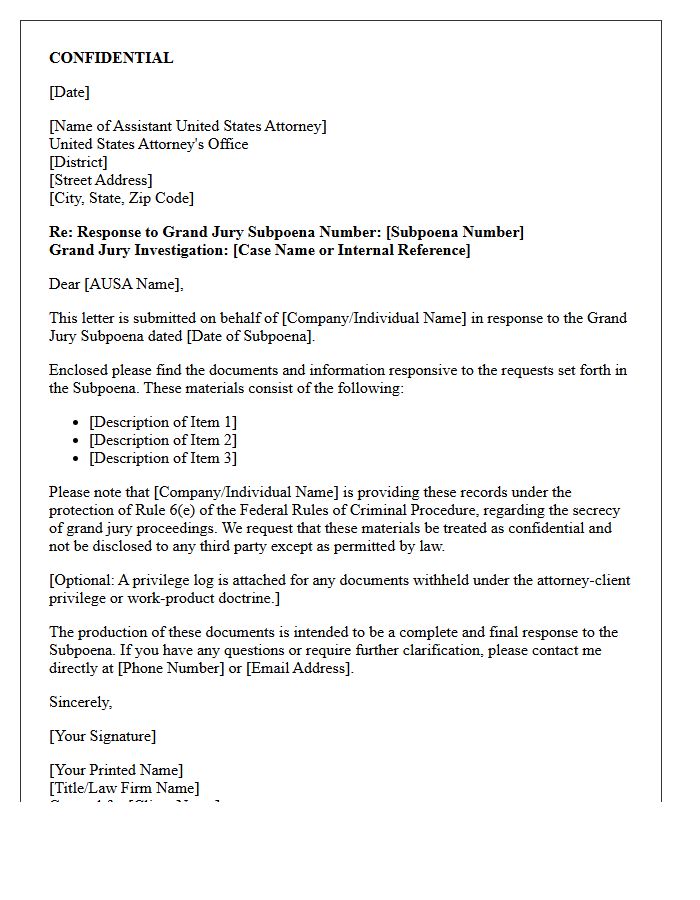
A Grand Jury Subpoena Confidential Response Letter is a formal legal document drafted by an attorney to address federal inquiries while protecting constitutional rights. This correspondence often asserts the Fifth Amendment privilege against self-incrimination or protects attorney-client privilege. It serves to negotiate the scope of document production, request extensions, or clarify legal obligations. Ensuring confidentiality during this stage is critical to preventing reputational damage and mitigating potential criminal exposure before a formal indictment occurs. Professional legal counsel is essential when responding to maintain procedural compliance and strategic defense.
Undue Burden Objection Subpoena Letter
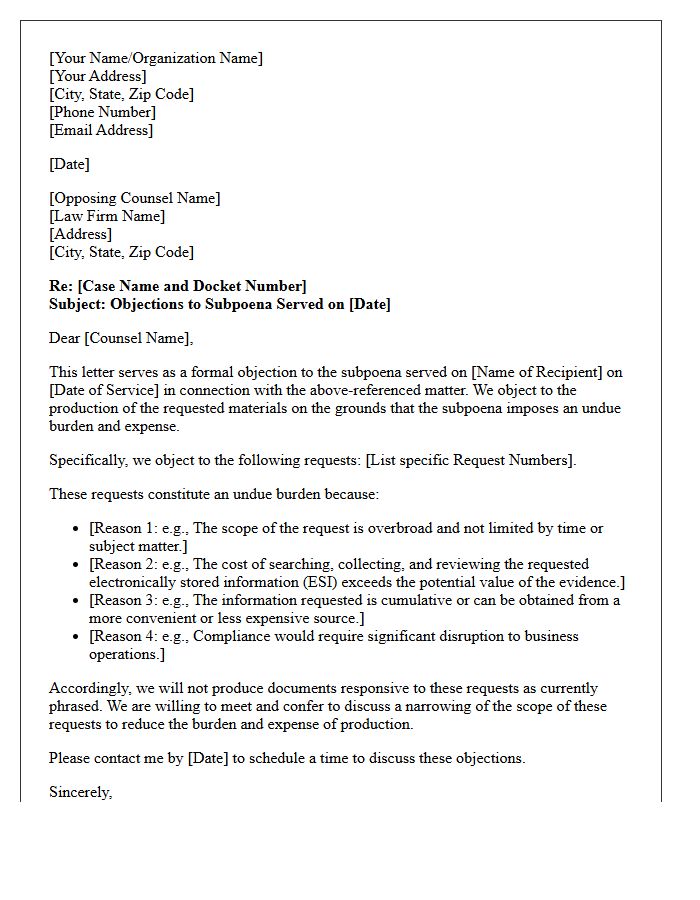
An Undue Burden Objection is a formal legal response to a subpoena that is disproportionately expensive, time-consuming, or oppressive. To protect your rights, the letter must specifically detail why the requested documents or testimony impose an unreasonable hardship compared to their potential relevance. Under legal rules, this objection can stay the obligation to comply until the court intervenes or the parties reach a compromise. Timely service of this letter is critical to avoid waiving your right to challenge the overbroad discovery request and minimize unnecessary litigation costs.
Subpoena Scope Clarification Request Letter
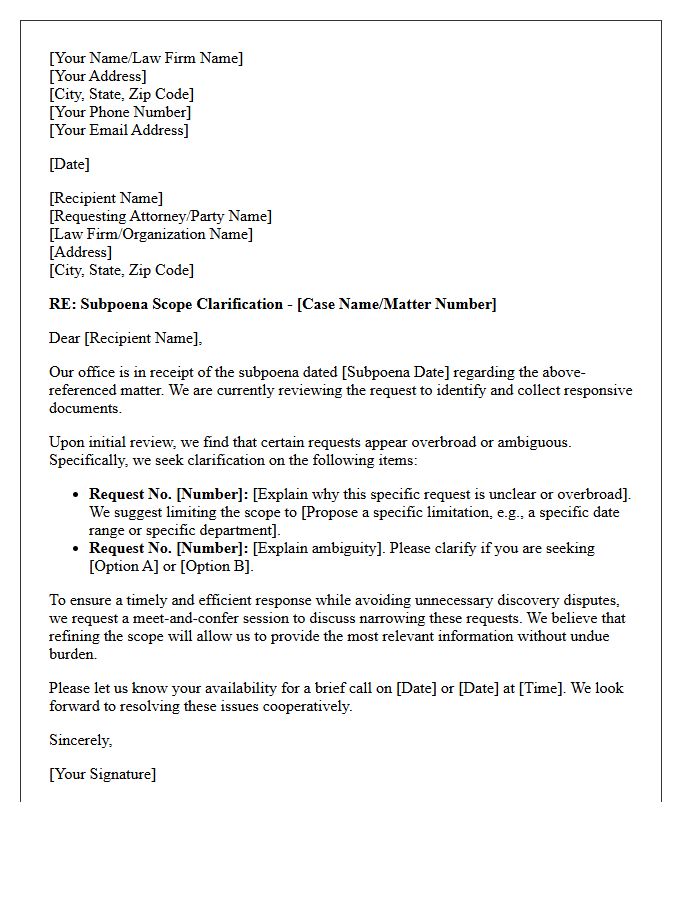
A Subpoena Scope Clarification Request Letter is a formal legal document sent to request precise boundaries on a demand for information. It is essential for protecting privileged communications and preventing the disclosure of irrelevant or sensitive data. By seeking specific definitions of requested materials, the recipient can ensure compliance while avoiding the high costs associated with overbroad discovery. This proactive step helps clarify legal obligations, minimizes procedural risks, and establishes a clear record of cooperation with the issuing party or court during the litigation process.
What should be included in a formal response letter to a subpoena for financial records?
A formal response letter should include the case caption, the subpoena reference number, a clear statement of whether you are complying or objecting, a description of the records being produced, and any legal assertions regarding privilege or confidentiality.
How do I object to a subpoena for financial records in my response letter?
To object, your letter must specify the legal grounds for non-compliance, such as the request being overbroad, unduly burdensome, irrelevant to the case, or seeking documents protected by attorney-client privilege or privacy laws.
What is the deadline for sending a response letter to a financial subpoena?
The deadline is typically governed by state or federal rules of civil procedure, often requiring a response or written objection within 14 days of service or by the date specified on the subpoena itself.
Can I request more time to produce financial records through a response letter?
Yes, you can use a response letter to formally request an extension of time. This is often done by proposing a "rolling production" schedule or a new mutually agreed-upon deadline with the issuing party's counsel.
Should I mention consumer privacy notices in a subpoena response for bank records?
Yes, if you are a financial institution, your response letter should address compliance with the Right to Financial Privacy Act (RFPA) or relevant state privacy laws, ensuring the consumer was properly notified before records are released.

Comments