
Addressing a deficit is critical for financial recovery. A Demand Letter for Overdrawn Checking Account Balance serves as a formal request for immediate repayment of outstanding funds and associated fees. This legal notification documents the debt and establishes a timeline for resolution to avoid further collections or litigation. To simplify your process, below are some ready to use templates.
Image cover: Professional Demand Letter Templates for Overdrawn Checking Accounts
Letter Samples List
- Initial Demand Letter for Overdrawn Checking Account Balance
- Second Notice Demand Letter for Negative Checking Balance
- Final Notice Demand Letter for Overdrawn Account Resolution
- Urgent Demand Letter for Outstanding Checking Overdraft Fees
- Pre-Litigation Demand Letter for Unresolved Checking Overdraft
- Account Closure and Demand Letter for Overdrawn Checking Balance
- Collections Transfer Demand Letter for Overdrawn Checking Account
- Commercial Checking Account Overdraft Demand Letter
- Retail Banking Demand Letter for Overdrawn Checking Balance
- Overdrawn Checking Account Repayment Agreement Demand Letter
- Grace Period Expiration Demand Letter for Checking Overdraft
- Final Settlement Demand Letter for Overdrawn Checking Balance
Initial Demand Letter for Overdrawn Checking Account Balance
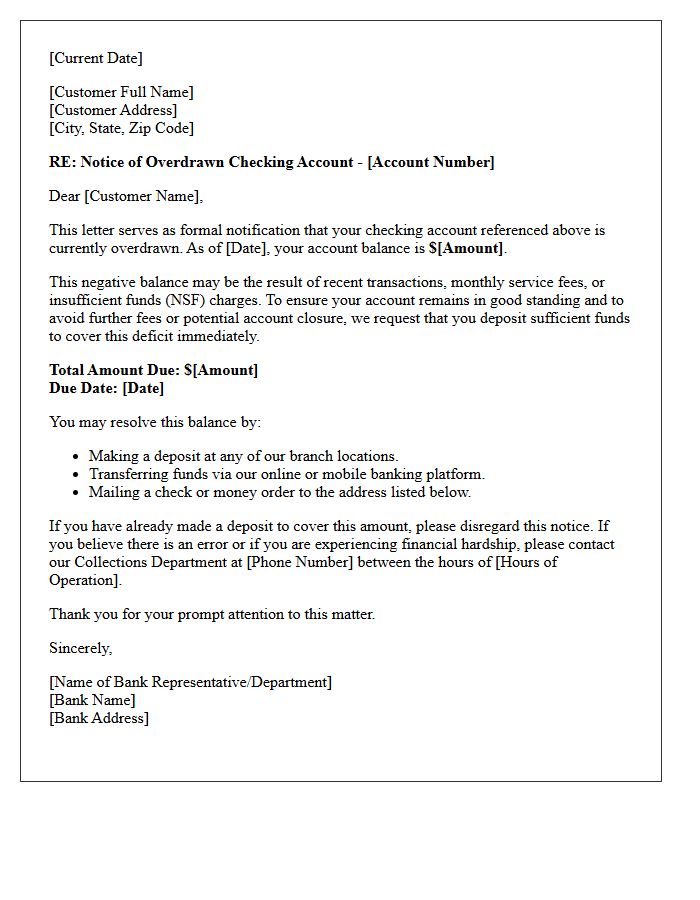
An Initial Demand Letter serves as a formal legal notice requiring the immediate repayment of an overdrawn checking account balance. Financial institutions issue this document to recover funds before involving third-party collection agencies or pursuing litigation. It typically specifies the outstanding debt, applicable overdraft fees, and a strict deadline for resolution. Addressing this notice promptly is essential to prevent negative reports to agencies like ChexSystems, which can severely restrict your ability to open future bank accounts and damage your overall credit standing.
Second Notice Demand Letter for Negative Checking Balance
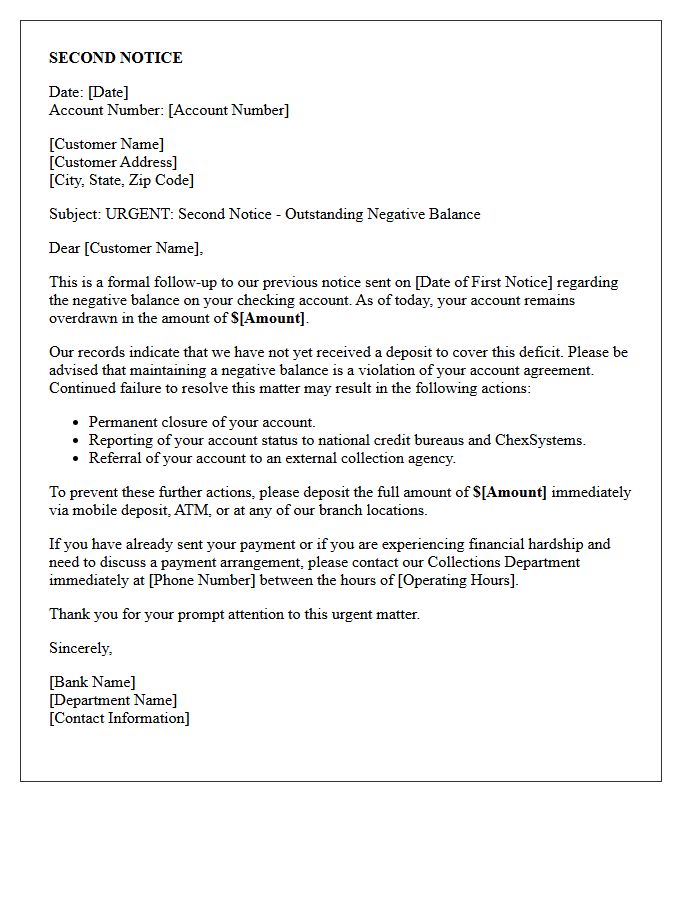
Receiving a Second Notice Demand Letter for a negative checking balance is a critical warning that your financial institution requires immediate repayment. This formal notification indicates that previous requests were ignored and failure to resolve the overdraft may lead to account closure. Unpaid balances are often reported to ChexSystems, severely damaging your ability to open future bank accounts. To avoid legal action or referral to a third-party collection agency, you must contact your bank immediately to settle the debt or negotiate a structured repayment plan before the final deadline expires.
Final Notice Demand Letter for Overdrawn Account Resolution
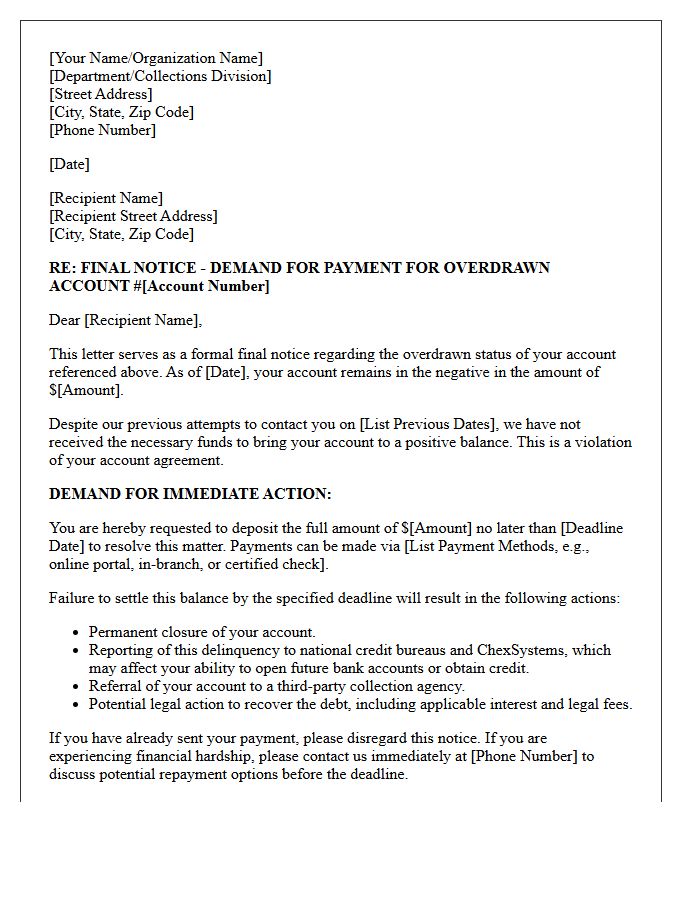
A Final Notice Demand Letter is a critical legal notification issued by financial institutions before initiating debt collection or legal action. It serves as the last opportunity to resolve an overdrawn account balance and accrued fees. Ignoring this document can lead to account closure, a negative impact on your credit score, and reporting to specialty agencies like ChexSystems. To protect your financial standing, you must prioritize immediate repayment or contact the bank to establish a formal settlement agreement and prevent further litigation or permanent loss of banking privileges.
Urgent Demand Letter for Outstanding Checking Overdraft Fees
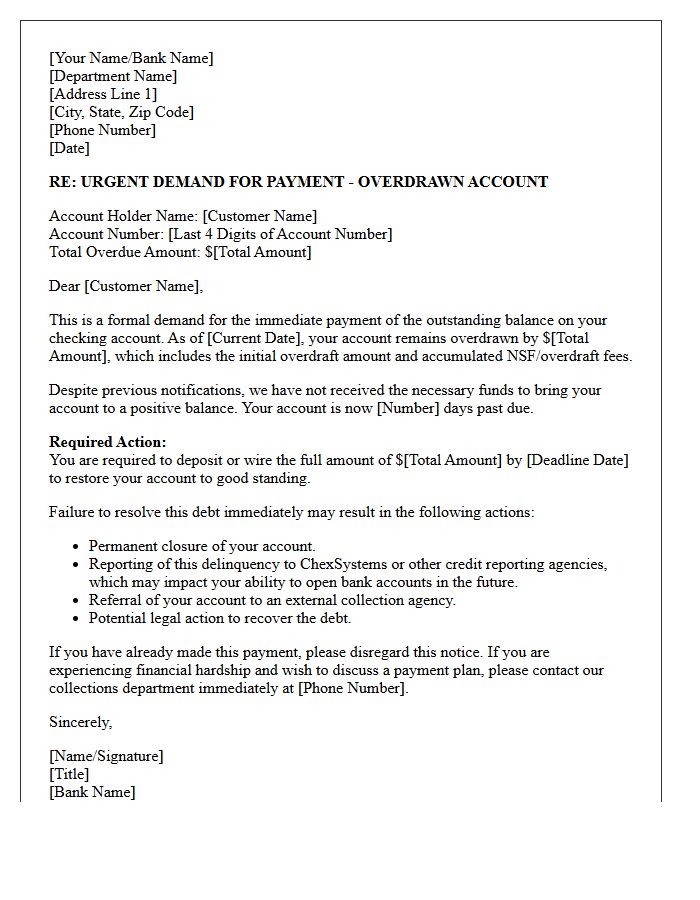
An Urgent Demand Letter serves as a final formal notice to settle unpaid checking overdraft fees before a bank initiates aggressive collection actions. This document outlines the total debt, including accumulated interest, and specifies a strict deadline for payment. Failing to respond can lead to account closure, significant damage to your ChexSystems report, and potential legal litigation. To protect your financial standing and avoid being blacklisted from future banking services, it is essential to prioritize immediate repayment or negotiate a settlement directly with the financial institution upon receipt.
Pre-Litigation Demand Letter for Unresolved Checking Overdraft
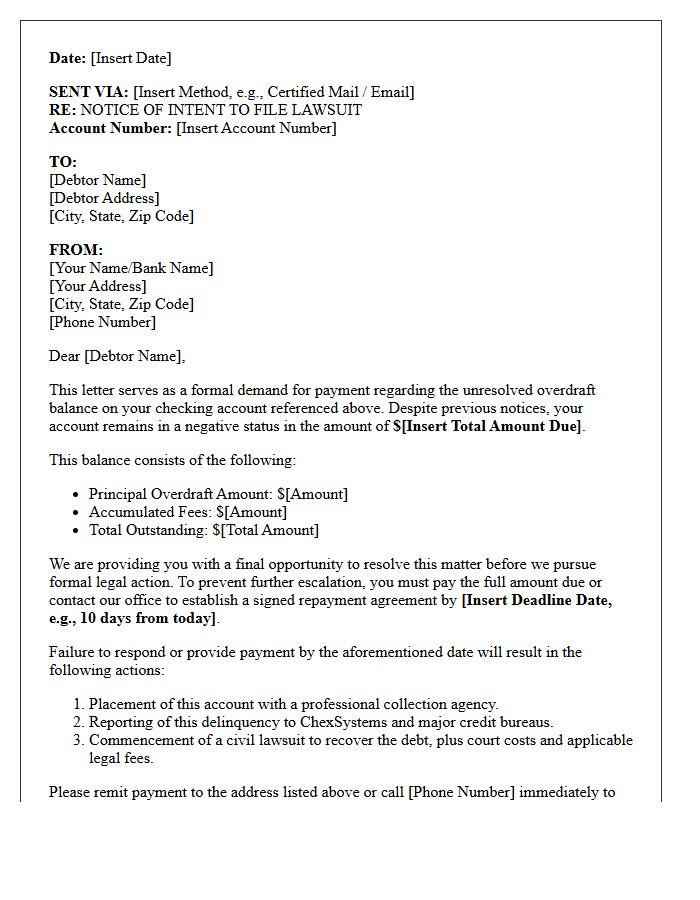
A pre-litigation demand letter is a formal notice sent to a bank or creditor regarding an unresolved checking overdraft dispute. This document serves as a final attempt to settle the financial discrepancy before initiating legal action. It must clearly outline the disputed transaction details, the specific amount owed, and a strict deadline for resolution. Properly drafting this letter establishes a legal paper trail, demonstrating your good faith effort to resolve the debt. Failure to respond may lead to litigation, credit reporting impacts, or formal arbitration to recover the contested funds.
Account Closure and Demand Letter for Overdrawn Checking Balance
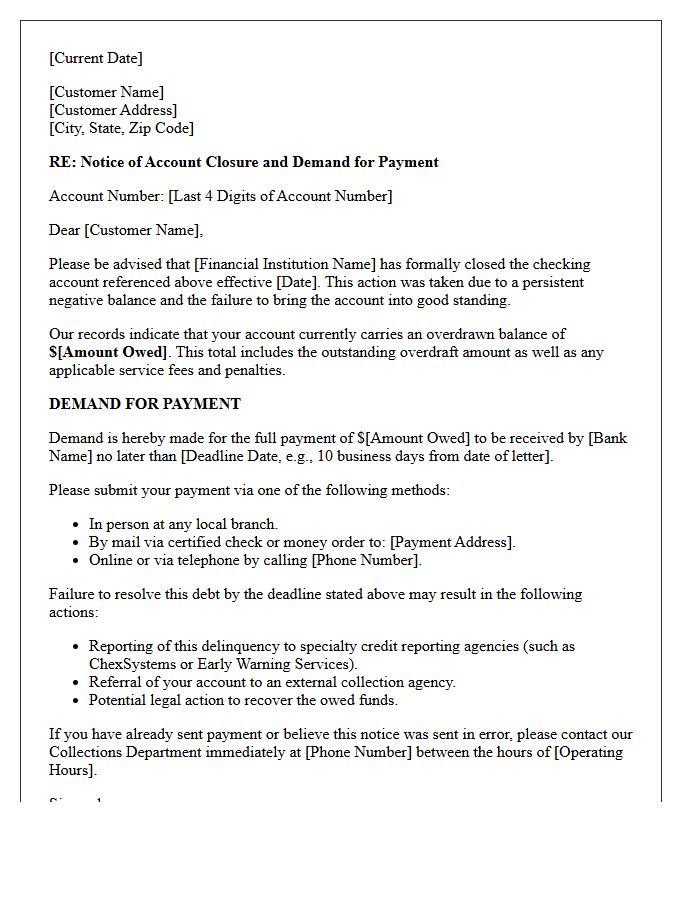
When a checking account remains overdrawn, the bank will initiate Account Closure and issue a formal Demand Letter for the negative balance. This legal notice requires immediate repayment to avoid further escalation. Failure to settle the debt often results in a report to ChexSystems or similar agencies, severely limiting your ability to open future bank accounts. Additionally, unpaid balances may be transferred to third-party collection agencies, negatively impacting your credit score. Prompt communication with your financial institution is essential to negotiate a repayment plan and protect your financial reputation.
Collections Transfer Demand Letter for Overdrawn Checking Account
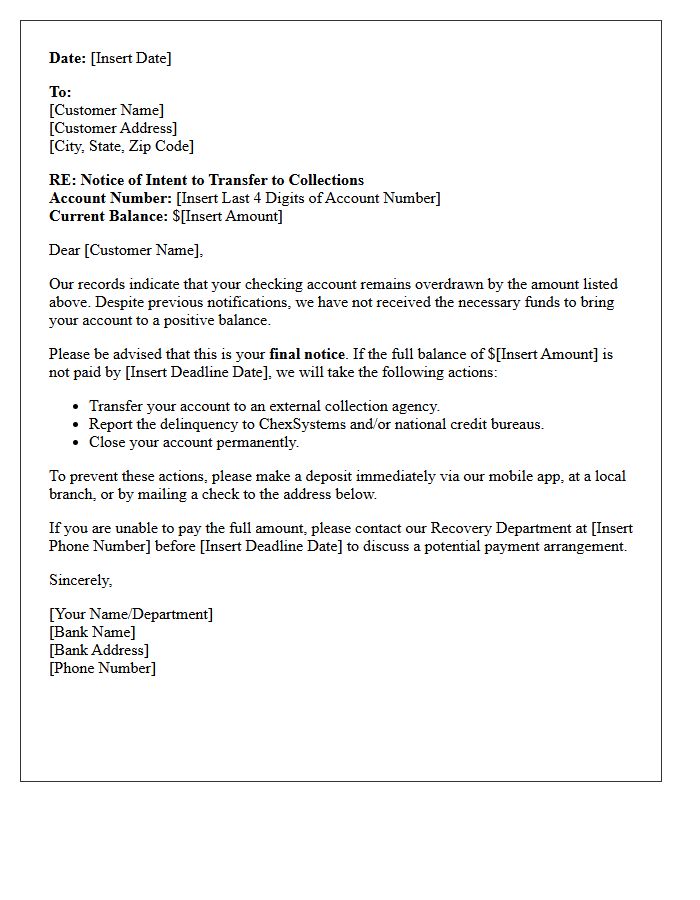
A Collections Transfer Demand Letter is a formal notice sent when an overdrawn checking account is moved from a bank's internal recovery department to a third-party collection agency. This document signals a final opportunity to settle the outstanding balance before your credit score is negatively impacted. It is essential to verify the debt amount and respond immediately to avoid legal action or a report to ChexSystems. Always request a written validation of the debt to ensure accuracy and protect your consumer rights under the Fair Debt Collection Practices Act.
Commercial Checking Account Overdraft Demand Letter
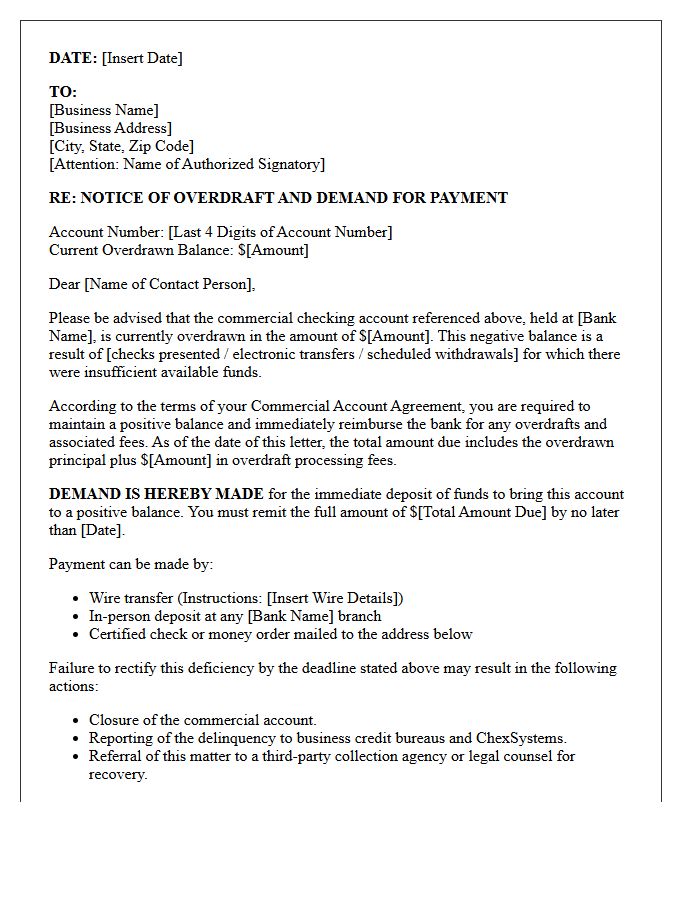
A Commercial Checking Account Overdraft Demand Letter is a formal legal notification sent by a bank to a business owner. This document serves as an official notice demanding the immediate repayment of a negative balance plus associated fees. Unlike consumer accounts, business accounts often lack the same regulatory protections, making the repayment timeline critical. Failure to resolve the debt promptly can lead to account closure, legal action, or damage to your business credit score. It is essential to communicate with the financial institution immediately to negotiate a repayment plan or settlement.
Retail Banking Demand Letter for Overdrawn Checking Balance
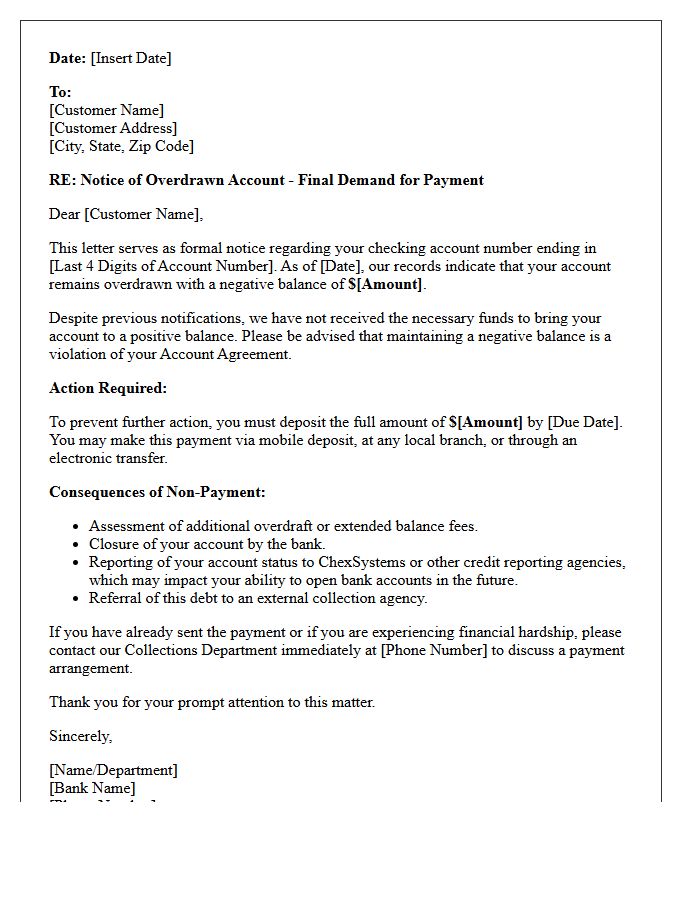
A retail banking demand letter is a formal notice requiring the immediate repayment of a negative account balance. When a checking account remains overdrawn, the bank issues this document to highlight the outstanding debt and specify a deadline for resolution. Failing to respond can lead to account closure, negative reports to agencies like ChexSystems, or referral to a collection agency. To protect your financial standing, you should prioritize repaying the overdraft or contacting the bank to negotiate a settlement plan before further legal or credit actions are taken.
Overdrawn Checking Account Repayment Agreement Demand Letter
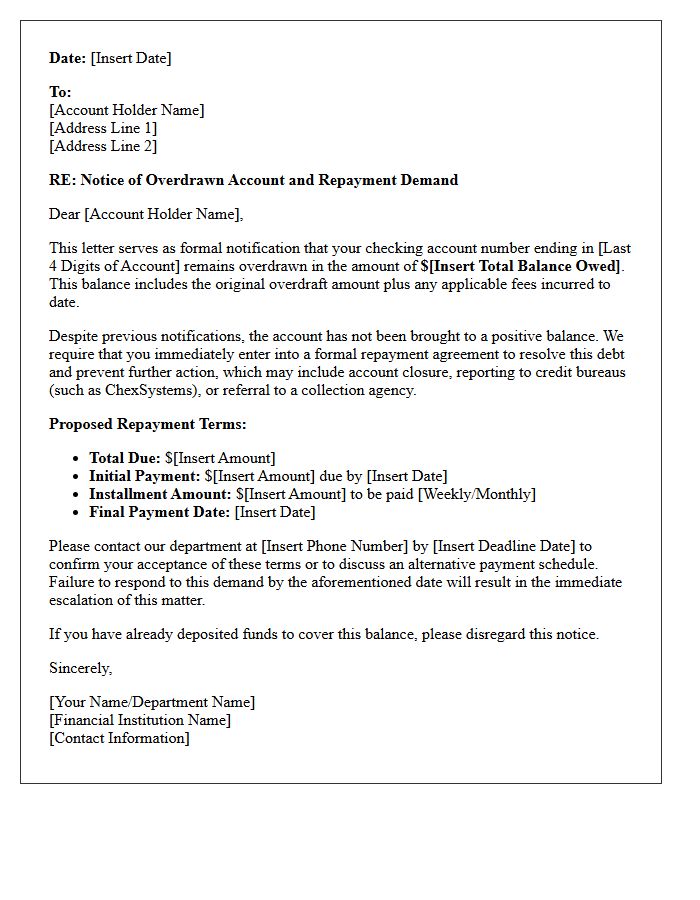
An Overdrawn Checking Account Repayment Agreement Demand Letter is a formal notice from a financial institution requiring immediate action to resolve a negative balance. It serves as a legal warning that you must repay the debt or establish a formal repayment plan to avoid further consequences. Failure to respond can result in account closure, negative credit reporting, and referral to third-party collection agencies. This document outlines the total amount owed, payment deadlines, and potential legal actions, making it critical to communicate with your bank promptly to protect your financial standing.
Grace Period Expiration Demand Letter for Checking Overdraft
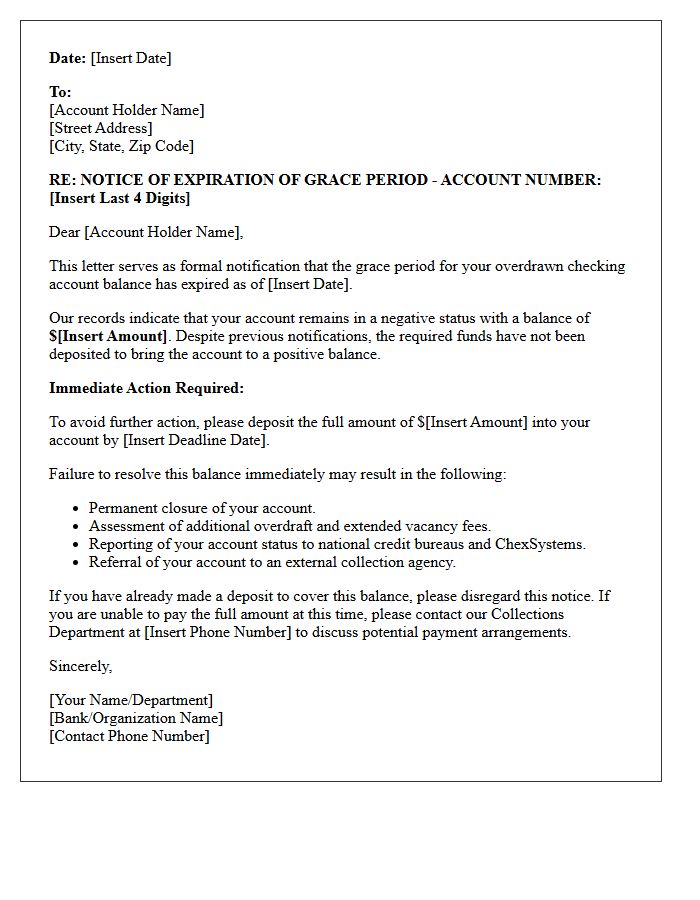
A Grace Period Expiration Demand Letter is a formal notification that the deadline to rectify a negative balance has passed. This document warns that the checking overdraft must be repaid immediately to avoid account closure or negative reporting to credit agencies. It serves as a final opportunity to settle the debt before the bank initiates legal action or refers the account to a third-party collection agency. Promptly addressing this demand is essential to preserve your financial standing and maintain access to future banking services.
Final Settlement Demand Letter for Overdrawn Checking Balance
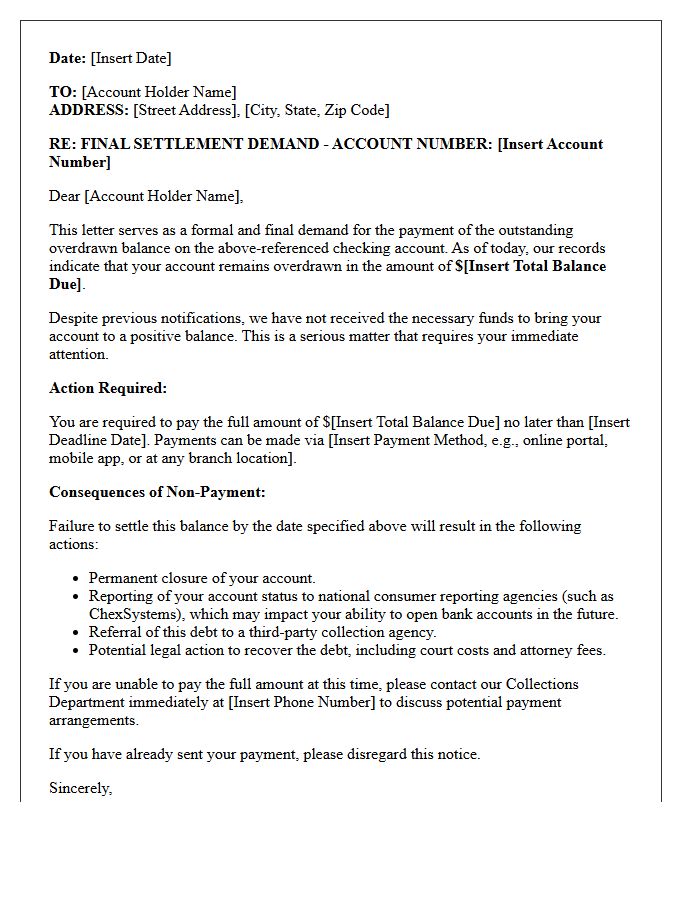
A final settlement demand letter is a formal notice from a bank or collection agency regarding an overdrawn checking balance. This document serves as a last opportunity to resolve the outstanding debt before the account faces legal action or is reported to credit bureaus. It outlines the total amount owed, including overdraft fees, and sets a strict deadline for payment. Promptly negotiating a settlement or paying the balance is crucial to protect your financial reputation and prevent long-term damage to your ChexSystems report and credit score.
What is a demand letter for an overdrawn checking account?
A demand letter for an overdrawn checking account is a formal written notice sent by a financial institution or a legal representative requesting that a customer deposit funds to cover a negative balance, including any applicable non-sufficient funds (NSF) or overdraft fees.
What information should be included in an overdraft demand letter?
The letter should include the account holder's name, the specific account number, the total outstanding negative balance, a detailed breakdown of overdraft fees, a deadline for payment, and the potential consequences of failing to resolve the debt.
How long do I have to pay an overdrawn balance after receiving a demand letter?
Most banks provide a specific grace period, typically ranging from 10 to 30 days from the date of the letter, to bring the account back to a positive balance before they escalate the matter to a collection agency or report it to ChexSystems.
What happens if I ignore a demand letter for an overdrawn account?
If you ignore the demand letter, the bank may close your account, report the delinquency to consumer reporting agencies like ChexSystems or Early Warning Services, sell the debt to a third-party collection agency, or pursue legal action to recover the funds.
Can I negotiate the fees mentioned in an overdraft demand letter?
Yes, many financial institutions are willing to negotiate or waive a portion of the overdraft fees if you agree to pay the principal overdrawn amount immediately or set up a structured repayment plan to resolve the debt.


Comments