
Discover how to report and resolve a Notice of Unauthorized Debit Card Transaction to protect your finances. If you spot suspicious charges, acting quickly is essential to limit liability and recover lost funds. This guide covers legal rights, bank notification procedures, and essential security steps. To help you take immediate action, below are some ready to use template.
Image cover: Formal Notification Templates for Disputing Unauthorized Debit Card Charges
Letter Samples List
- Notice of Unauthorized Debit Card Transaction Letter
- Urgent Letter Regarding Unauthorized Debit Card Activity
- Fraudulent Debit Card Transaction Notification Letter
- Official Letter of Unauthorized Debit Card Charges
- Acknowledgment Letter for Disputed Debit Card Transaction
- Resolution Letter for Unauthorized Debit Card Activity
- Provisional Credit Letter for Unauthorized Debit Transactions
- Investigation Letter for Disputed Debit Card Charges
- Debit Card Fraud Alert and Transaction Notice Letter
- Customer Notification Letter for Unauthorized Account Debit
- Banking Letter Regarding Unrecognized Debit Card Transaction
- Initial Claim Letter for Unauthorized Debit Card Use
Notice of Unauthorized Debit Card Transaction Letter
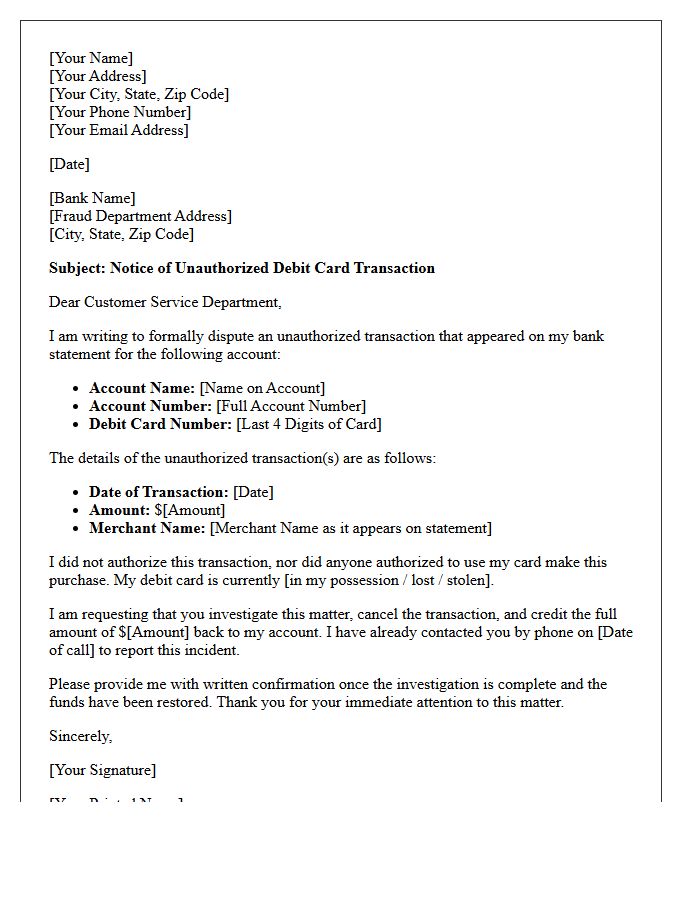
A Notice of Unauthorized Debit Card Transaction Letter is a formal document used to report fraudulent charges to your bank. Under the Electronic Fund Transfer Act, you must act quickly to limit your financial liability. Send this written notice via certified mail to provide a legal paper trail of the dispute. Include the specific transaction date, amount, and merchant details. Promptly notifying your financial institution ensures they investigate the unauthorized activity and helps secure a reimbursement or provisional credit for the missing funds.
Urgent Letter Regarding Unauthorized Debit Card Activity
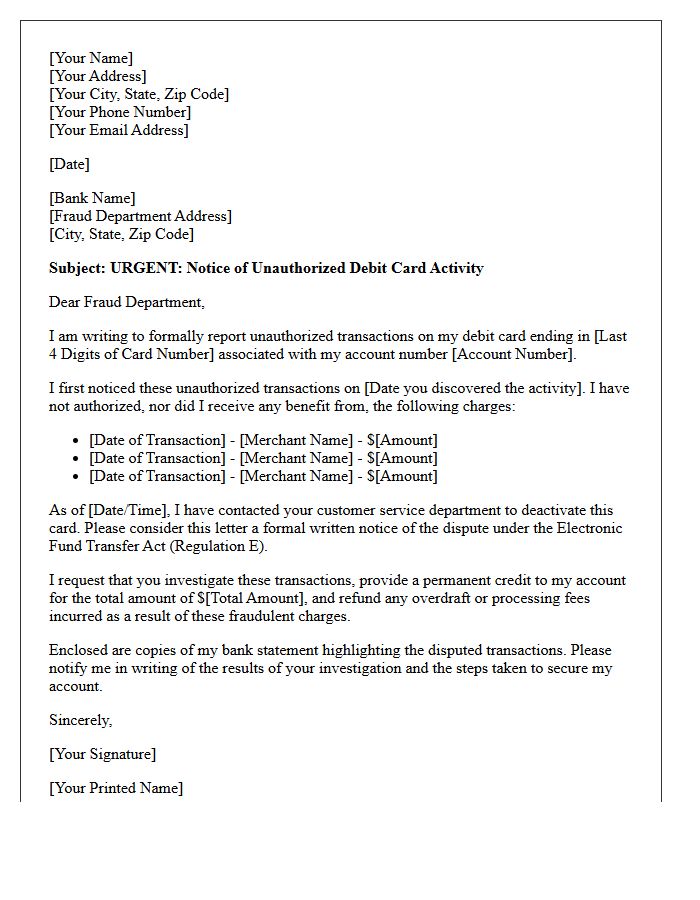
If you receive an urgent letter regarding unauthorized debit card activity, you must act immediately to secure your finances. First, verify the sender's authenticity to avoid phishing scams. Contact your bank using the official number on the back of your card rather than links provided in the letter. Reporting unauthorized transactions quickly limits your liability for losses and allows the institution to freeze the compromised account. Protecting your personal information is essential; update your security credentials and request a replacement card to prevent further fraudulent charges and ensure long-term account safety.
Fraudulent Debit Card Transaction Notification Letter
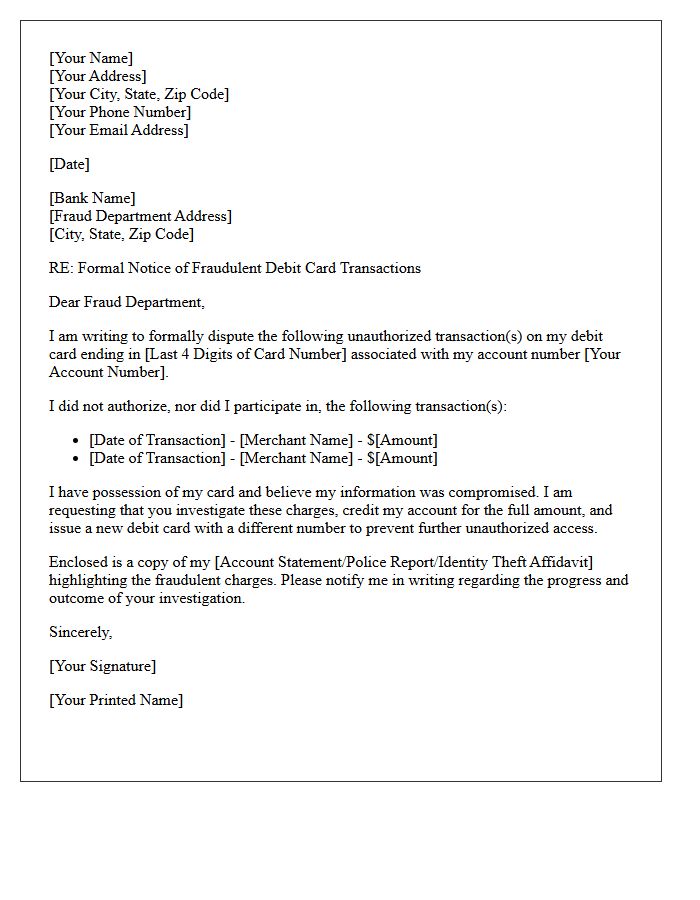
A Fraudulent Debit Card Transaction Notification Letter is a formal document sent by a consumer to their bank to report unauthorized charges. This written notice is critical for legal protection under the Electronic Fund Transfer Act. It must include your account details, specific transaction dates, and the disputed amounts. Promptly sending this letter helps limit your financial liability and initiates a formal investigation. Always use certified mail to ensure proof of delivery, as timely reporting is essential to recover stolen funds and secure your bank account from further identity theft.
Official Letter of Unauthorized Debit Card Charges
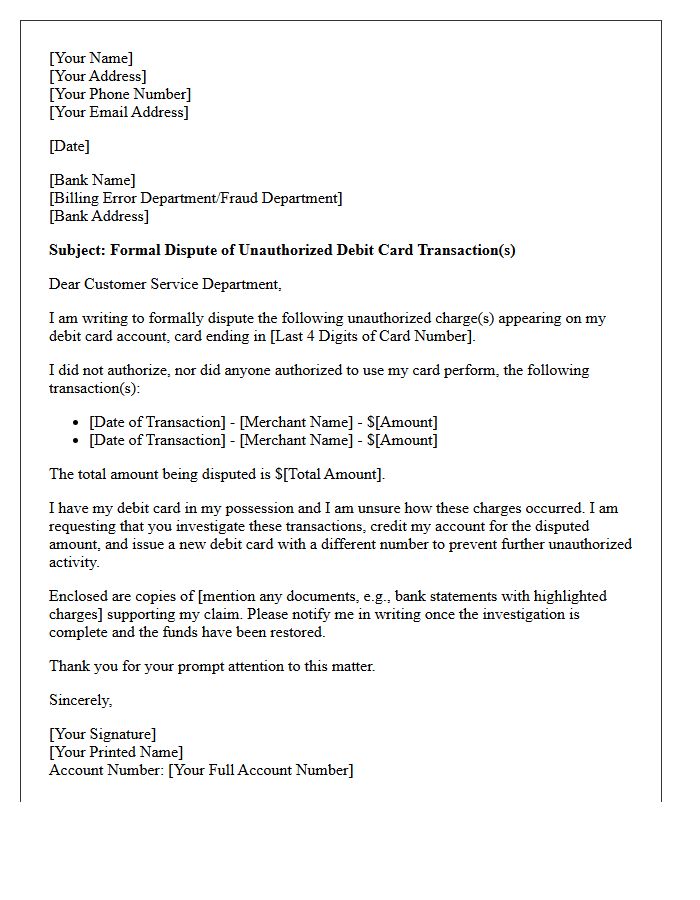
An official letter of unauthorized debit card charges is a formal written notice sent to your financial institution to dispute fraudulent transactions. Under the Electronic Fund Transfer Act, you must act quickly to limit your financial liability. Clearly state your account details, the specific date of the incident, and the exact dollar amount being contested. Sending this letter via certified mail provides essential proof of notification. This legal step ensures the bank initiates a formal investigation to recover your missing funds and secure your compromised account against further unauthorized access.
Acknowledgment Letter for Disputed Debit Card Transaction
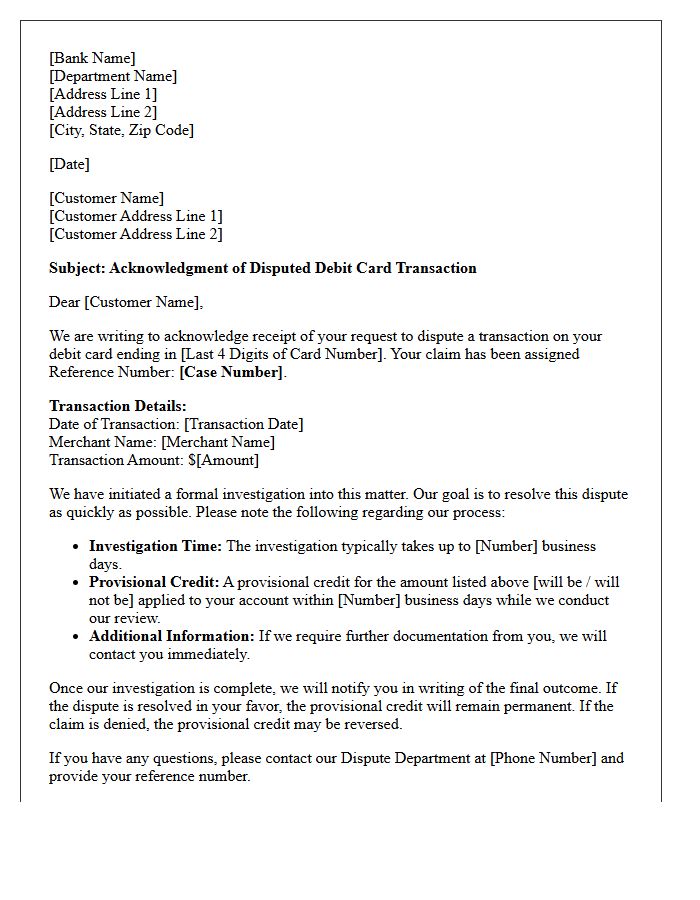
An acknowledgment letter for a disputed debit card transaction serves as formal proof that your financial institution has received your claim. Under the Electronic Fund Transfer Act, banks must investigate reported errors within specific timeframes. This document confirms the start of the investigation process and often outlines your right to provisional credit if the review takes longer than ten business days. Retain this letter as vital documentation to track your case status and ensure your consumer protections are fully enforced during the recovery of lost funds.
Resolution Letter for Unauthorized Debit Card Activity
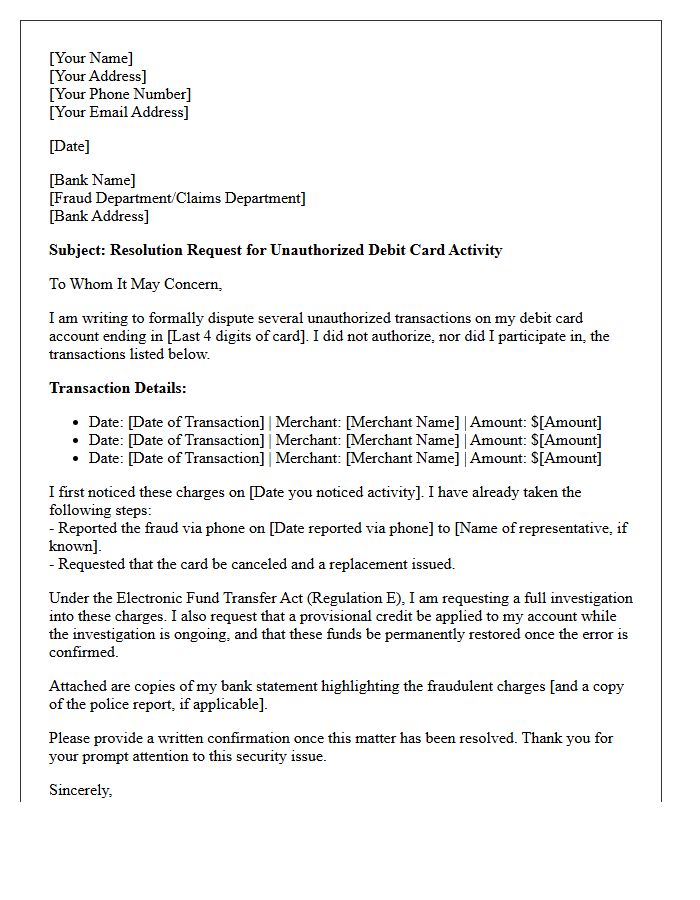
A Resolution Letter is a formal document issued by a financial institution confirming the outcome of an investigation into unauthorized debit card activity. It details whether the disputed transactions were deemed fraudulent and if a permanent credit will be issued to your account. This letter serves as legal proof of your claim's status under the Electronic Fund Transfer Act. If the claim is denied, the letter must explain the bank's reasoning and outline your right to request the evidence used during their review process to ensure consumer protection.
Provisional Credit Letter for Unauthorized Debit Transactions
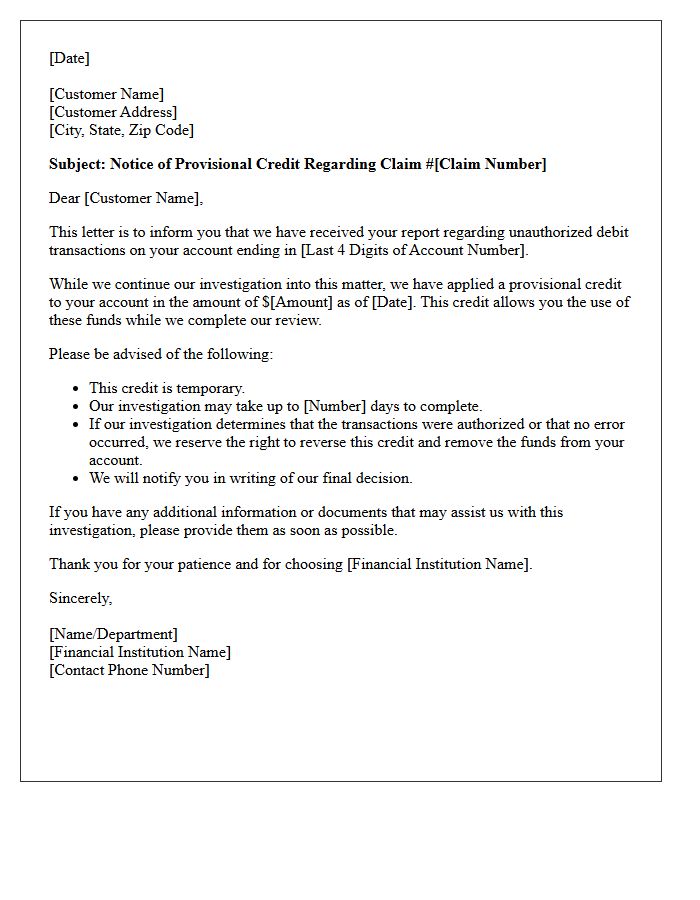
A provisional credit letter is a formal notice from your bank confirming a temporary refund issued during a fraud investigation. When you report unauthorized debit transactions, federal law requires institutions to credit the disputed amount within ten business days. This credit allows you to access missing funds while the bank verifies your claim. However, this is not permanent; if the investigation concludes the charges were authorized, the bank will revoke the credit and withdraw the funds from your account. Always retain this letter as legal documentation of your reported dispute.
Investigation Letter for Disputed Debit Card Charges
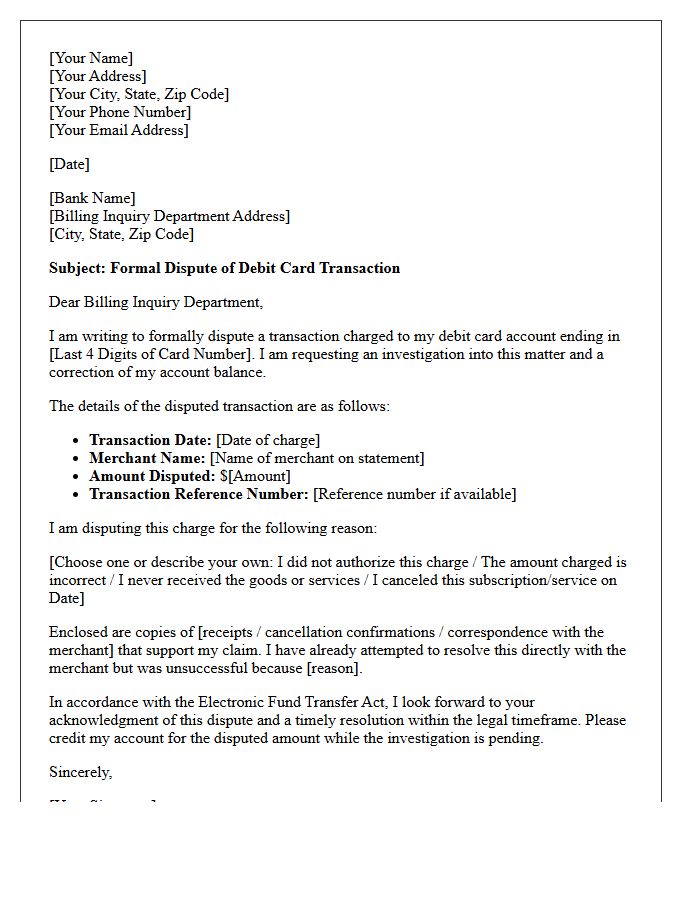
Receiving an investigation letter is a critical step in resolving disputed debit card charges. Under the Electronic Fund Transfer Act (Regulation E), banks must investigate reported errors or unauthorized transactions. This formal document outlines the bank's findings and whether they have granted a permanent credit or denied the claim. Review the letter carefully to confirm if provisional credits have been reversed. If your claim is denied, the letter must explain the reasoning and provide instructions on how to appeal the decision or request the evidence used during the bank's internal review.
Debit Card Fraud Alert and Transaction Notice Letter
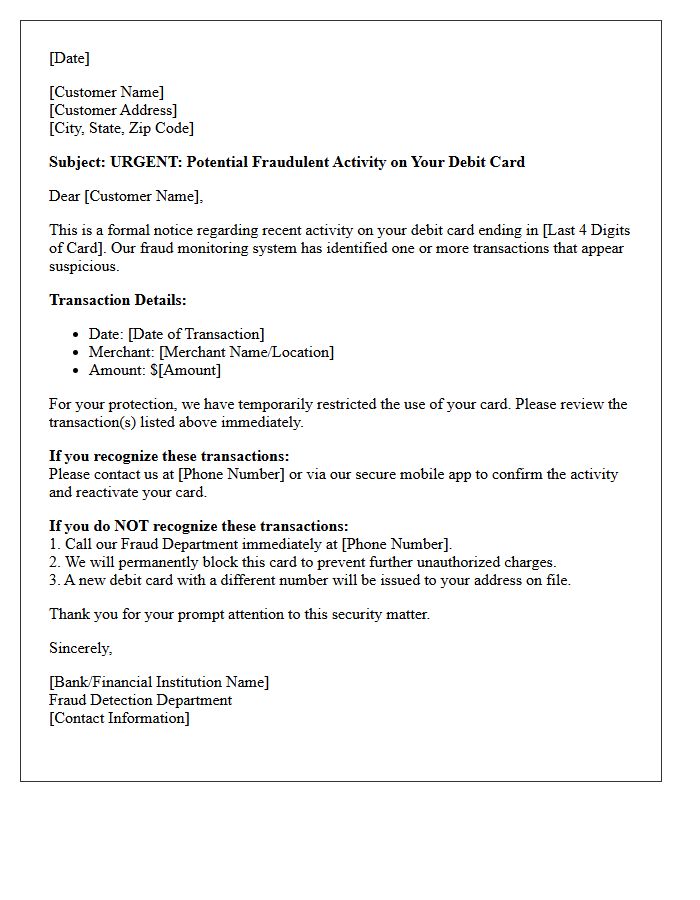
Receiving a Debit Card Fraud Alert or transaction notice is a critical security measure used to protect your funds. Banks send these notifications via text, email, or mail when suspicious activity occurs on your account. If you receive a notice, immediately verify the transaction's legitimacy. If unauthorized, contact your financial institution instantly to freeze the card and prevent further theft. Always ensure your contact information is updated with your bank to receive these real-time alerts, which are essential for minimizing financial loss and initiating formal dispute processes quickly.
Customer Notification Letter for Unauthorized Account Debit
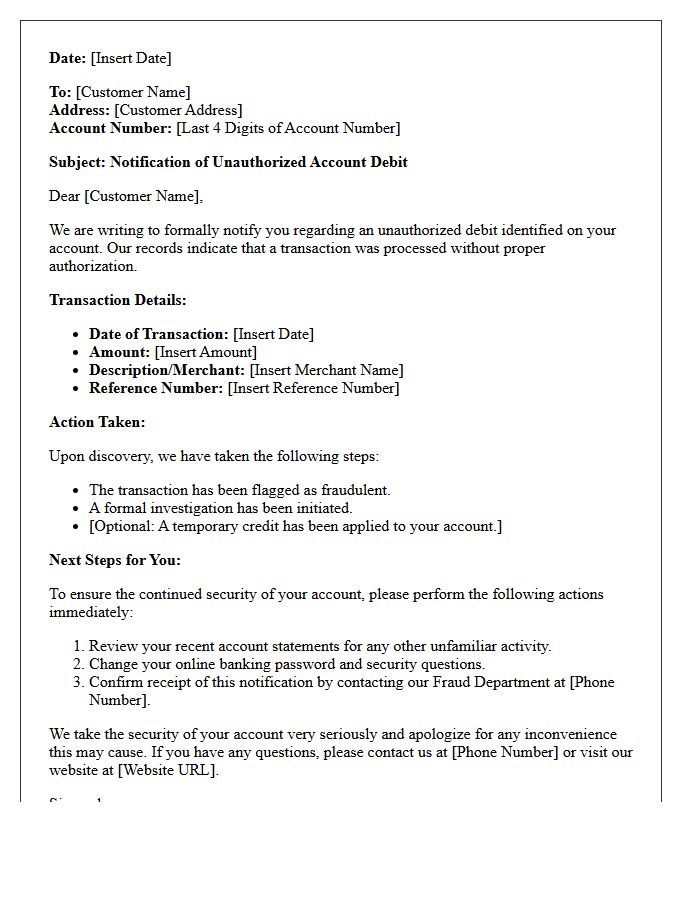
Receiving a Customer Notification Letter regarding an unauthorized account debit is a critical alert indicating potential fraud or processing errors. Upon receipt, you must immediately verify your bank statements to identify the specific transaction. Contact your financial institution instantly to dispute the charge and protect your funds. These letters are formal notices required by banking regulations to ensure consumer protection and transparency. Timely action is essential to meet legal deadlines for fraud reporting, ensuring you remain eligible for a full reimbursement of the unauthorized amount and preventing further security breaches.
Banking Letter Regarding Unrecognized Debit Card Transaction
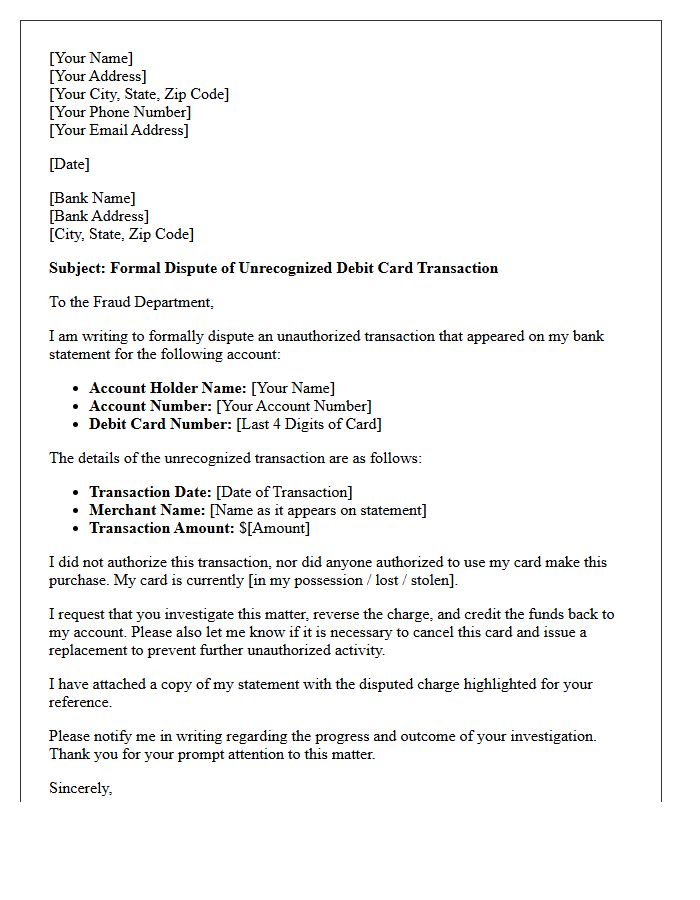
When you discover an unrecognized debit card transaction, you must act immediately to protect your funds. Send a formal letter to your bank to dispute the unauthorized charge and trigger a fraud investigation. Clearly state your account details, the specific date, and the exact amount of the suspicious activity. According to federal regulations, notifying your financial institution promptly limits your liability for potential losses. Always request a temporary credit while the bank reviews your claim and ensure you receive a tracking number for your records to guarantee consumer protection.
Initial Claim Letter for Unauthorized Debit Card Use
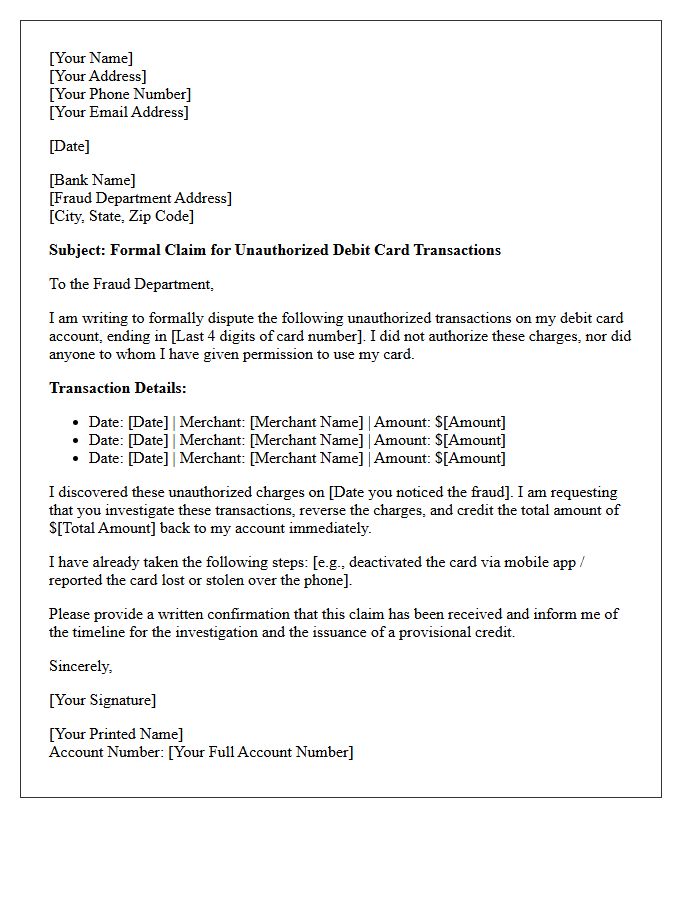
An initial claim letter for unauthorized debit card use is a formal notice to your bank disputing fraudulent transactions. Under Regulation E, you must report the loss within two business days to limit your liability to $50. The letter should clearly list the transaction dates, amounts, and merchant names. Sending this document via certified mail provides legal proof of your timely notification. Acting quickly ensures the bank initiates a mandatory investigation and provides a provisional credit while they review the security breach to recover your funds.
What is a Notice of Unauthorized Debit Card Transaction?
A Notice of Unauthorized Debit Card Transaction is a formal report filed by a cardholder to inform their financial institution that a charge was made without their permission. This notice initiates the legal process for investigating the fraudulent activity and recovering the missing funds.
How long do I have to report an unauthorized debit card transaction?
Under the Electronic Fund Transfer Act (Regulation E), you should report unauthorized transactions immediately. To limit your liability to $50, you must notify your bank within two business days of discovering the loss. If reported after two days but within 60 days of your statement being sent, your liability may increase to $500.
What information should be included in an unauthorized transaction notice?
Your notice should include your full name, account number, the specific date and dollar amount of the suspicious transaction, and a clear statement explaining why the charge is unauthorized. It is recommended to provide this information both via telephone and in a written follow-up letter.
Can I get a refund for an unauthorized debit card charge?
Yes, if you report the unauthorized transaction within the timeframe required by federal law and your bank's policy, the financial institution is generally required to reimburse the lost funds following an investigation. Banks often provide "provisional credit" while the investigation is ongoing.
What happens after I submit a Notice of Unauthorized Debit Card Transaction?
Once the notice is submitted, the bank typically has 10 business days to investigate the claim. If the investigation takes longer, the bank must usually provide a provisional credit to your account for the disputed amount while they continue to verify the fraudulent activity.

Comments