
A Final Notice Before Commencement of Legal Action is a formal warning issued to a debtor, demanding immediate payment to avoid litigation. This crucial document serves as a last opportunity to settle disputes out of court and fulfills legal pre-action protocols. Understanding its requirements ensures your rights are protected during the recovery process. To help you begin, below are some ready to use templates.
Image cover: Final Notice Before Legal Action: Formal Templates and Letter Samples
Letter Samples List
- Final Demand Letter Before Legal Action for Mortgage Default
- Letter of Final Notice Prior to Auto Loan Repossession Litigation
- Unsecured Personal Loan Default Final Legal Action Letter
- Commercial Line of Credit Breach and Final Litigation Letter
- Final Notice Letter Before Commencement of Foreclosure Proceedings
- Credit Card Account Charge-Off and Final Legal Action Letter
- Guarantor Final Demand Letter Before Commencement of Lawsuit
- Small Business Loan Default Final Notice Letter Prior to Litigation
- Overdrawn Checking Account Debt Recovery Final Notice Letter
- Equipment Financing Final Demand Letter Before Legal Action
- Breach of Commercial Loan Covenant Final Legal Notice Letter
- Asset Seizure and Legal Action Final Notice Letter
Final Demand Letter Before Legal Action for Mortgage Default
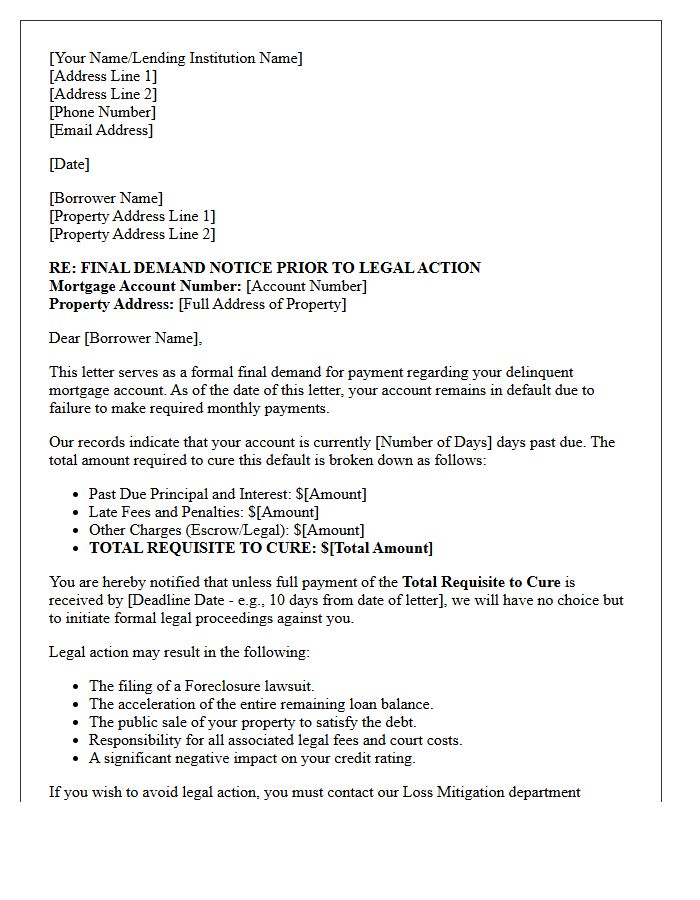
A final demand letter is the last formal warning issued by a lender before initiating foreclosure proceedings. This critical document notifies the borrower that they have breached their mortgage contract due to non-payment. It specifies the total arrears owed and provides a strict deadline to cure the default. Failure to respond or settle the debt immediately grants the lender the legal right to accelerate the loan and seize the property. Receiving this letter indicates that legal action is imminent, making it the final opportunity to negotiate a repayment plan or avoid home loss.
Letter of Final Notice Prior to Auto Loan Repossession Litigation
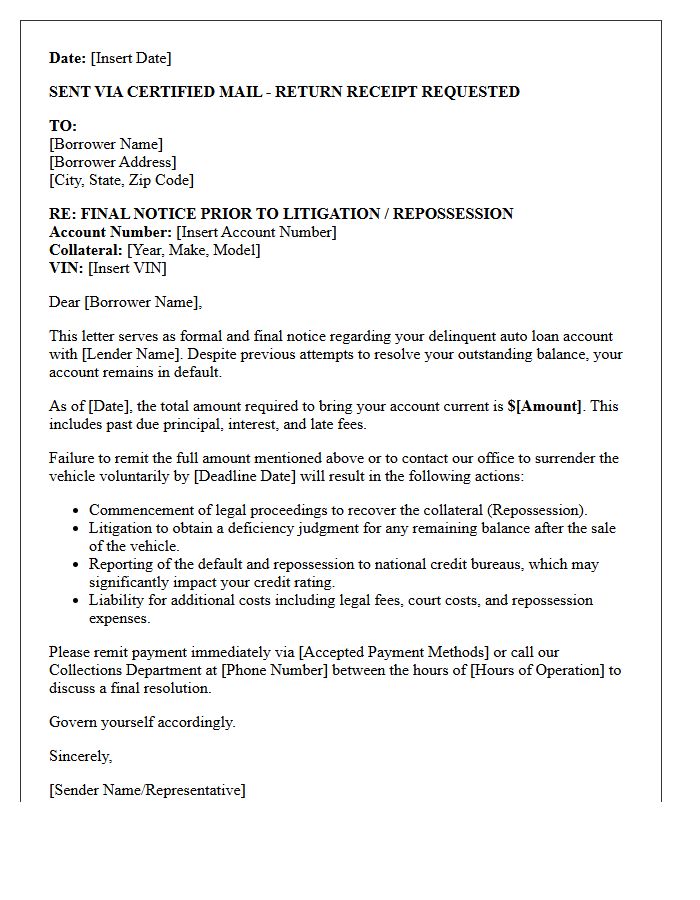
A Letter of Final Notice Prior to Auto Loan Repossession Litigation is a critical legal warning sent by lenders when a borrower defaults on payments. It serves as the final opportunity to cure the debt before the creditor initiates a lawsuit or seizes the vehicle. This document outlines the total amount owed, including late fees, and provides a strict deadline for payment. Ignoring this notice often leads to deficiency judgments and severe credit damage. To avoid litigation, borrowers should immediately contact their lender to negotiate a reinstatement or alternative repayment plan.
Unsecured Personal Loan Default Final Legal Action Letter
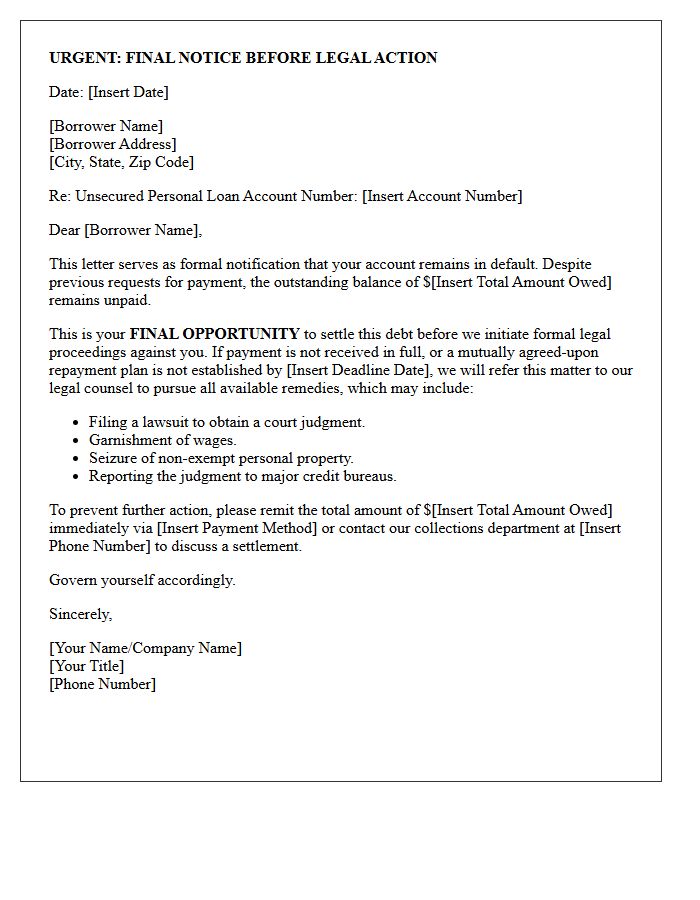
An Unsecured Personal Loan Default Final Legal Action Letter is a formal notice indicating that your creditor is initiating litigation to recover outstanding debt. Since no collateral secures the loan, lenders seek a court judgment to authorize wage garnishment or bank levies. Receiving this document signifies the end of internal collections and the start of judicial proceedings. It is critical to respond immediately or seek legal counsel to explore settlement options, as ignoring this letter can lead to a default judgment and severe long-term damage to your credit profile.
Commercial Line of Credit Breach and Final Litigation Letter
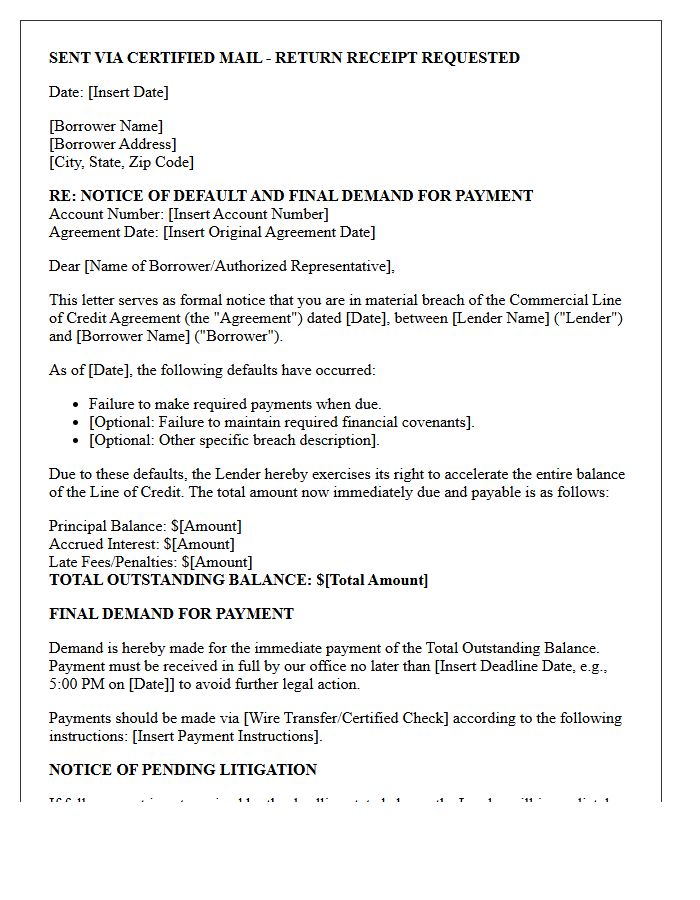
A Commercial Line of Credit Breach occurs when a borrower violates loan covenants, fails to make payments, or exceeds credit limits. Receiving a Final Litigation Letter signifies the lender's formal intent to initiate legal action to recover the outstanding debt. This document serves as the last warning before a lawsuit, potentially leading to asset seizure or judgment liens. To protect your business, you must immediately review the default notice, assess repayment options, or negotiate a settlement to avoid costly courtroom proceedings and permanent damage to your corporate credit profile.
Final Notice Letter Before Commencement of Foreclosure Proceedings
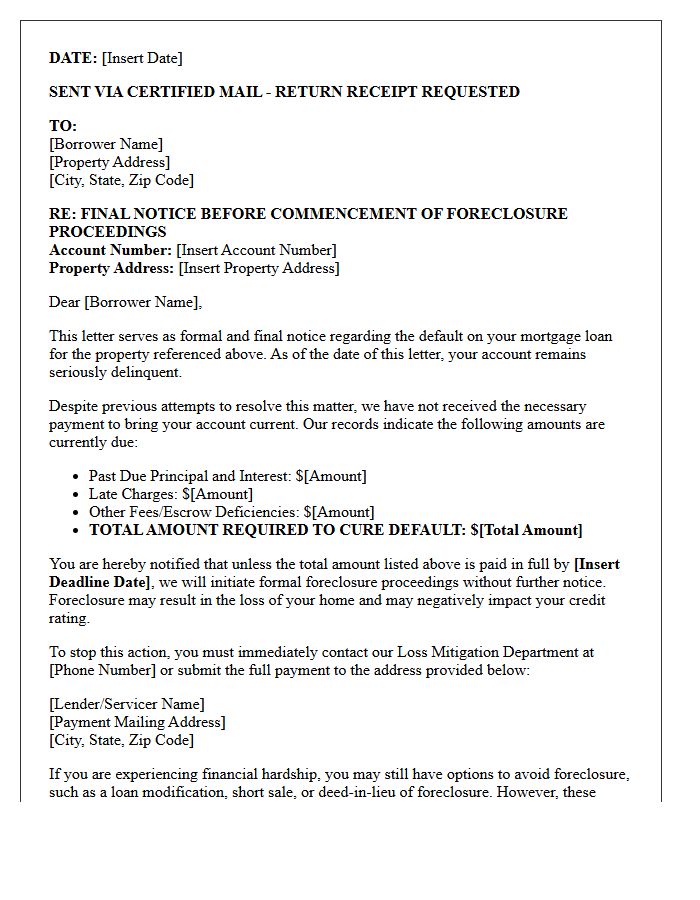
A Final Notice Letter Before Commencement of Foreclosure Proceedings is a critical legal document informing borrowers that their mortgage is in default. It serves as the last opportunity to resolve delinquent payments before a lender initiates formal legal action to seize the property. This notice typically outlines the total amount owed, provides a specific deadline for cure, and details potential loss mitigation options. Receiving this letter indicates that foreclosure is imminent, making it essential for homeowners to seek immediate legal counsel or contact their loan servicer to prevent losing their home.
Credit Card Account Charge-Off and Final Legal Action Letter
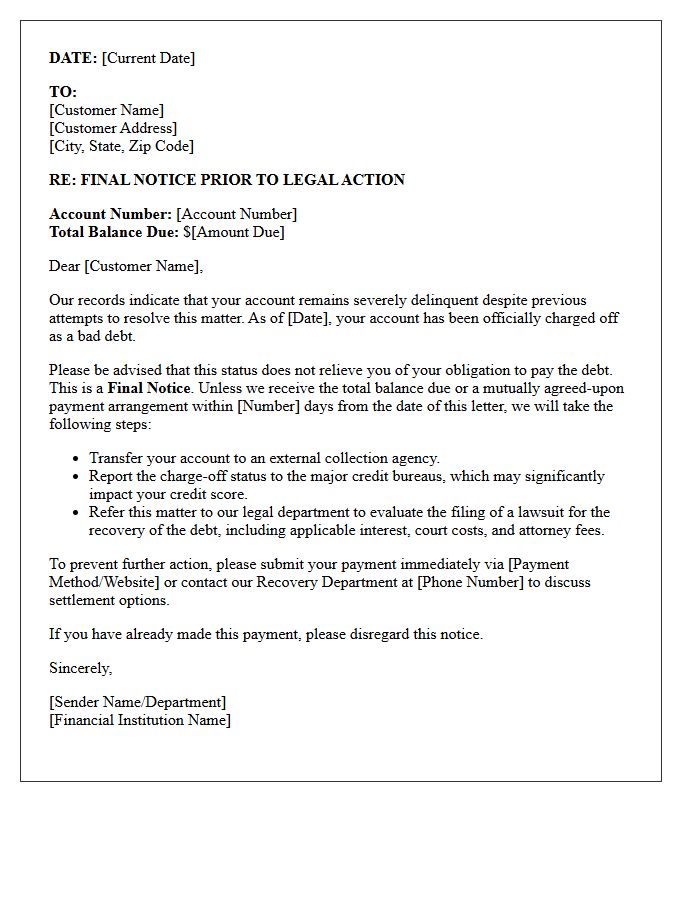
A credit card charge-off occurs when a creditor deems a debt uncollectible after six months of non-payment. This status severely damages your credit score but does not erase the debt. Receiving a final legal action letter indicates the creditor or a collection agency is preparing to file a lawsuit to recoup funds. Legal action can lead to court judgments, wage garnishment, or bank levies. To avoid litigation, it is critical to contact the sender immediately to negotiate a settlement or structured repayment plan before the specified deadline expires.
Guarantor Final Demand Letter Before Commencement of Lawsuit
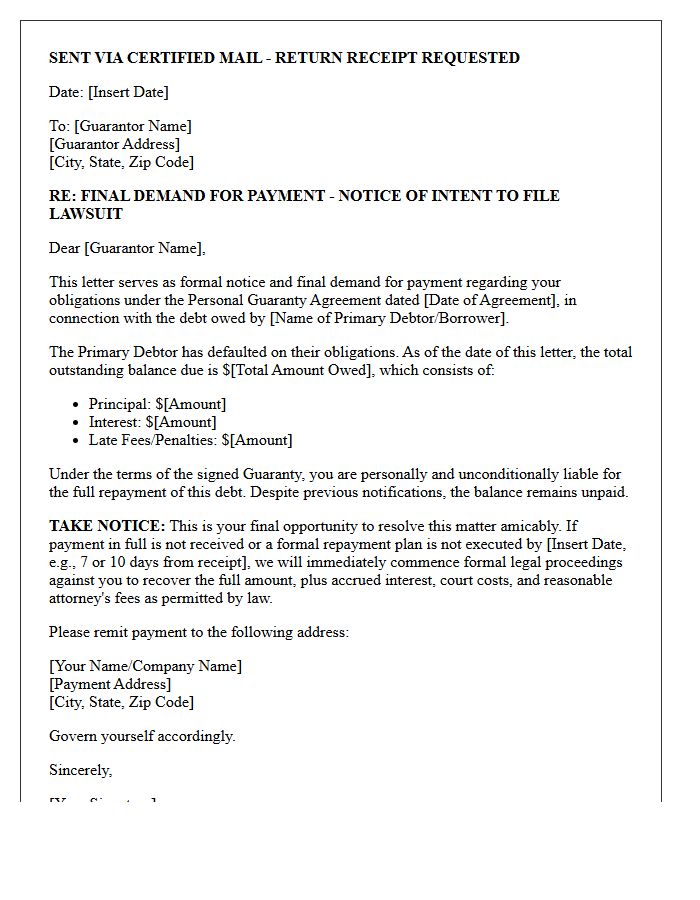
A Guarantor Final Demand Letter serves as the ultimate formal notice before initiating a lawsuit. It informs the guarantor that the primary borrower has defaulted and demands immediate repayment of the outstanding debt. This document is a critical legal prerequisite, providing evidence that the creditor attempted to resolve the matter out of court. Failure to comply typically results in litigation, potentially leading to asset seizure or wage garnishment. Receiving this letter indicates that the window for negotiation is closing, making it the final opportunity to settle the balance before incurring legal fees.
Small Business Loan Default Final Notice Letter Prior to Litigation
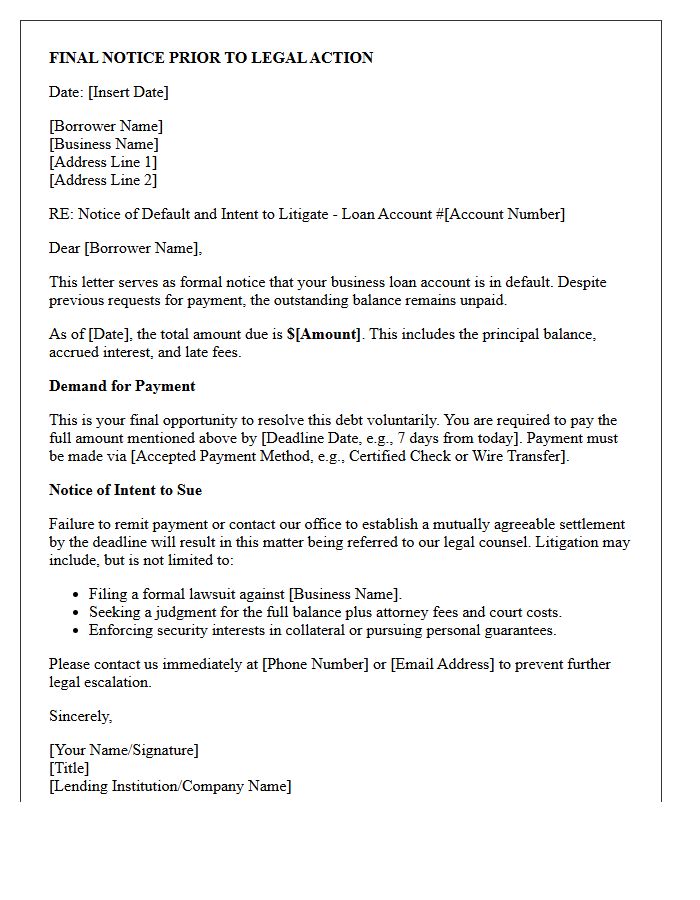
A Final Notice Letter is the formal ultimatum issued before a lender initiates litigation for a defaulted small business loan. This document serves as a critical legal warning that voluntary resolution periods have expired. It outlines the total outstanding balance, including interest and penalties, while demanding immediate payment to avoid a lawsuit. Receiving this notice means the lender may soon pursue debt collection through court orders, asset seizure, or personal guarantee enforcement. Business owners should immediately consult counsel to negotiate a settlement or restructuring to prevent costly legal action and permanent credit damage.
Overdrawn Checking Account Debt Recovery Final Notice Letter
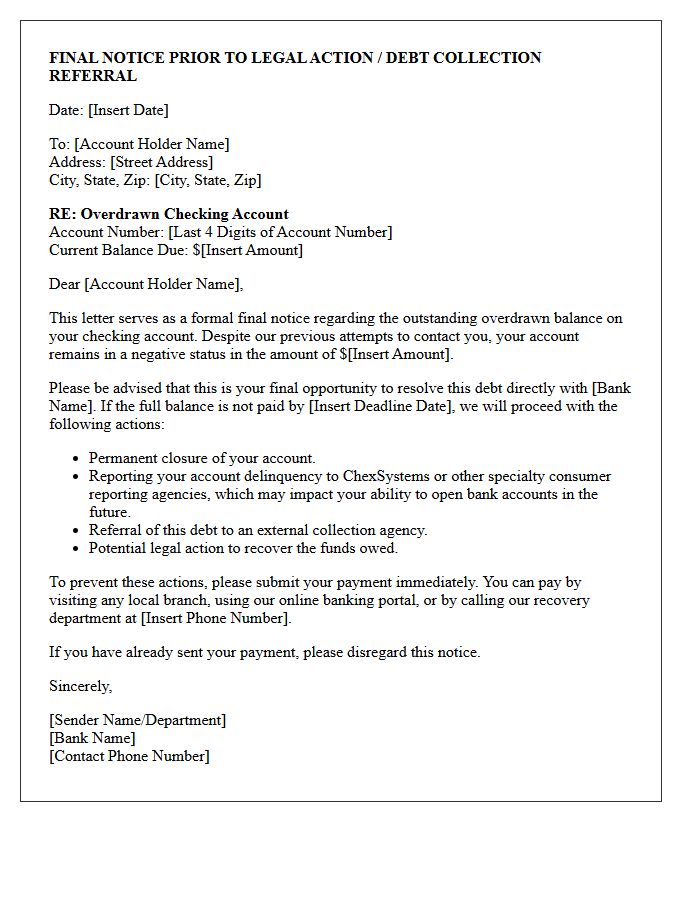
Receiving an Overdrawn Checking Account Debt Recovery Final Notice Letter is a critical warning that your financial institution is about to escalate collection efforts. This document signifies the final opportunity to settle a negative balance before the bank closes your account and reports the default to ChexSystems. Failure to respond promptly can result in your debt being sold to a third-party collection agency, severely damaging your credit score and your ability to open future bank accounts. Immediate payment or arrangement of a settlement is essential to avoid legal action and long-term financial consequences.
Equipment Financing Final Demand Letter Before Legal Action
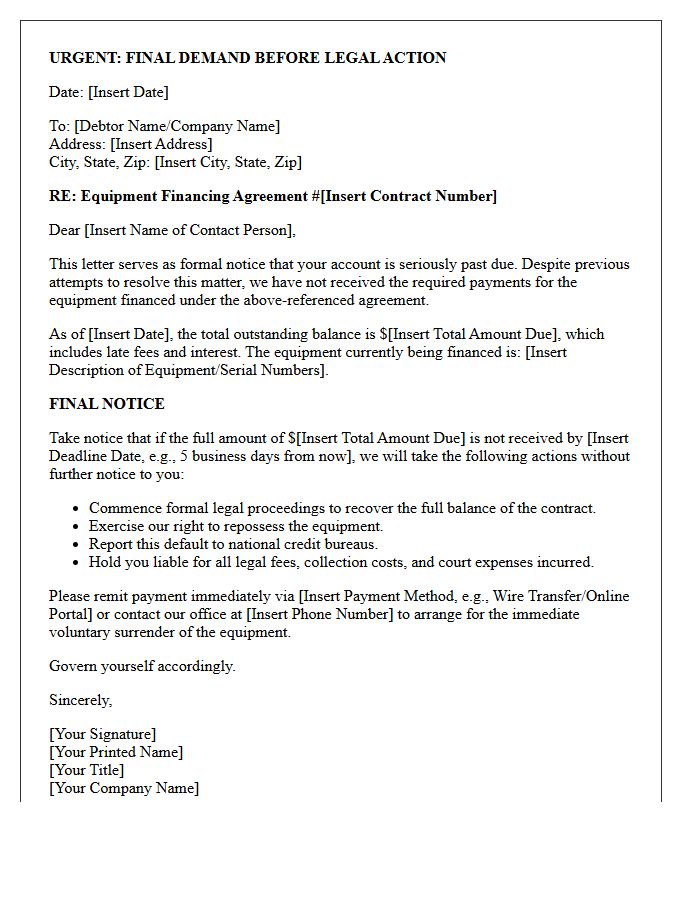
An Equipment Financing Final Demand Letter is the ultimate formal notice sent to a borrower before initiating litigation or asset repossession. This critical document outlines the total outstanding balance, including late fees and interest, while providing a strict deadline for payment. It serves as vital legal evidence that the lender attempted to resolve the default amicably. Receiving this letter indicates that the grace period has ended; failure to respond immediately typically results in a lawsuit, damaging credit scores and the potential seizure of the financed machinery to satisfy the debt.
Breach of Commercial Loan Covenant Final Legal Notice Letter
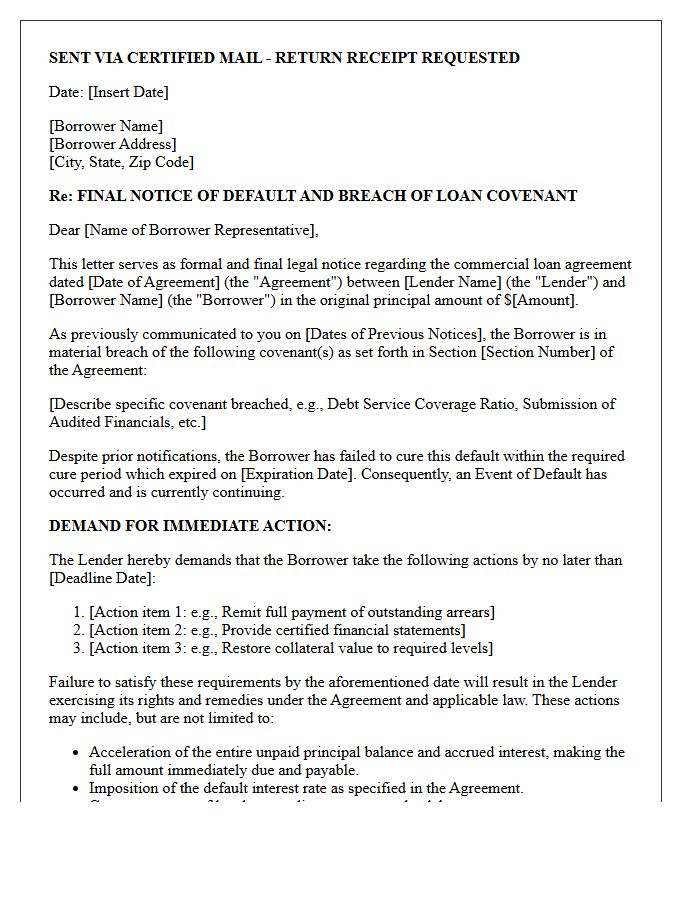
A Breach of Commercial Loan Covenant Final Legal Notice Letter is a critical formal demand issued by a lender when a borrower fails to meet specific financial or operational obligations. This document serves as the final warning before the lender initiates legal remedies, such as acceleration of the total debt or foreclosure on collateral. It outlines the specific default, provides a strictly limited period to cure the breach, and preserves the creditor's right to pursue litigation. Receiving this notice signifies an immediate risk of insolvency or loss of business assets.
Asset Seizure and Legal Action Final Notice Letter
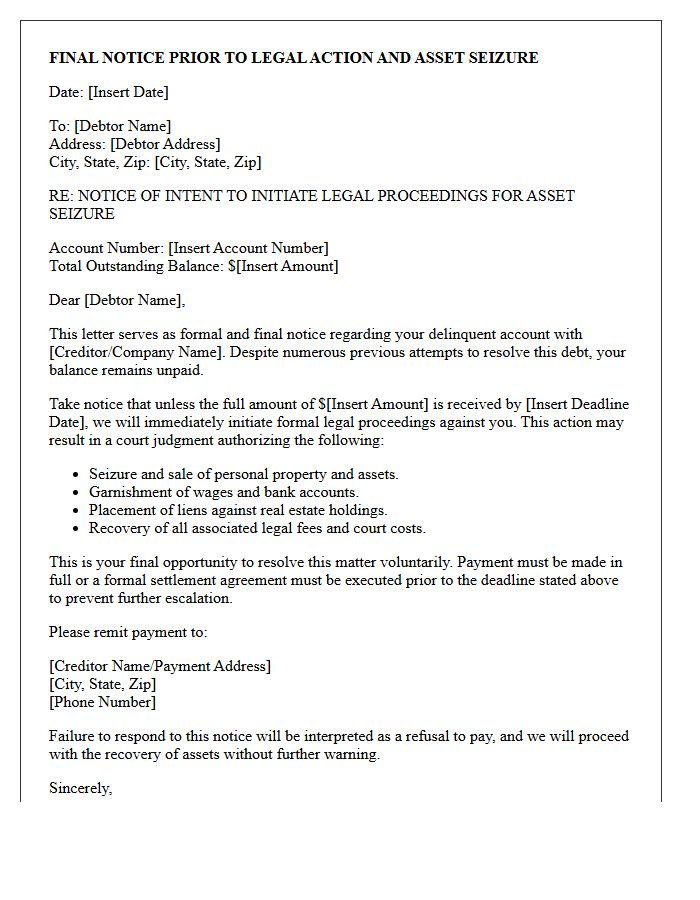
An Asset Seizure and Legal Action Final Notice is a critical formal warning indicating that a creditor or government entity intends to confiscate property to satisfy an outstanding debt. This letter serves as the final step before litigation or enforcement begins. It typically outlines the total amount owed, specific assets at risk, and a strict deadline for payment. Receiving this document means legal due process is nearing its end. Immediate action, such as seeking legal counsel or negotiating a settlement, is essential to prevent the forced loss of bank accounts, vehicles, or real estate.
What is a Final Notice Before Commencement of Legal Action?
A Final Notice Before Commencement of Legal Action is a formal letter sent by a creditor or claimant to a debtor, serving as a last warning that legal proceedings will be initiated if the outstanding debt or obligation is not settled by a specific deadline.
What information must be included in a Final Notice?
The notice must clearly state the total amount owed, the nature of the claim, a specific deadline for payment (usually 7 to 14 days), and a clear statement that failure to comply will result in a lawsuit filed in a court of law.
Is a Final Notice legally required before filing a lawsuit?
In many jurisdictions, courts require a "Letter Before Action" or "Notice of Intent to Sue" to demonstrate that the claimant attempted to resolve the dispute through alternative means before utilizing judicial resources.
What should I do if I receive a Final Notice Before Legal Action?
Upon receiving a final notice, you should immediately verify the debt, respond in writing to avoid a default judgment, and either arrange for payment or seek legal counsel to dispute the claim if it is inaccurate.
Can a Final Notice be used as evidence in court?
Yes, a Final Notice is often used as evidence to prove that the defendant was properly notified of the debt and given a reasonable opportunity to settle the matter before the claimant incurred legal fees and court costs.


Comments