
Facing persistent harassment from debt collectors is illegal and distressing. If you are being intimidated or threatened, filing a formal Grievance Letter for Harassment by Loan Recovery Agents is your primary legal defense. This guide outlines how to report misconduct to banks and regulatory authorities to protect your rights. To help you take immediate action, below are some ready to use template.
Image cover: Stop Harassment: Sample Letters and Templates to Report Loan Recovery Misconduct
Letter Samples List
- Grievance Letter for Verbal Harassment by Bank Loan Recovery Agents
- Official Grievance Letter Regarding Physical Threats by Recovery Agents
- Formal Complaint Letter Against Debt Collection Agency Harassment
- Letter of Grievance for Unauthorized Communication by Loan Recovery Staff
- Urgent Grievance Letter Concerning Workplace Harassment by Bank Agents
- Grievance Letter for Abusive Language Used by Loan Collection Agents
- Legal Notice and Grievance Letter Against Bank Loan Recovery Harassment
- Grievance Letter for Third-Party Disclosure by Loan Recovery Agents
- Banking Ombudsman Grievance Letter for Debt Recovery Harassment
- Escalated Grievance Letter to Nodal Officer Regarding Recovery Misconduct
- Grievance Letter for Frequent and Untimely Calls by Loan Recovery Agents
- Formal Grievance Letter for Psychological Harassment by Bank Collection Agents
- Notice and Grievance Letter for Coercive Debt Collection Practices
Grievance Letter for Verbal Harassment by Bank Loan Recovery Agents
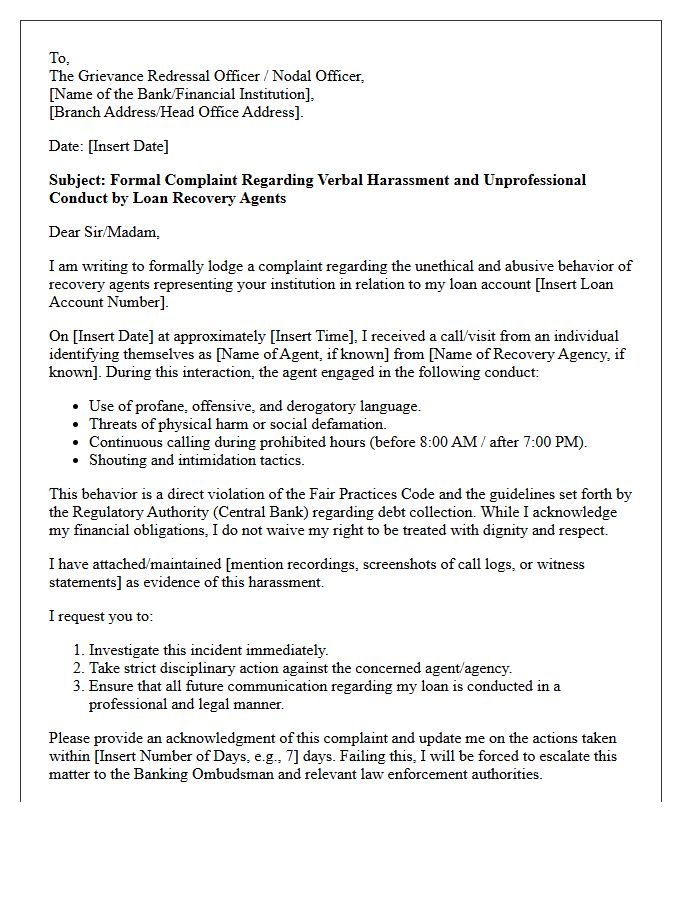
A formal grievance letter is essential when facing verbal harassment from bank loan recovery agents. This document should clearly state the dates, times, and specific abusive language used, highlighting violations of central bank debt collection guidelines. Explicitly mention that such intimidation breaches your right to privacy and dignity. By submitting this written complaint to the bank's nodal officer, you create a legal trail necessary for escalating the matter to a banking ombudsman if the harassment persists. Always demand an immediate cease of unprofessional conduct while expressing your intent to resolve dues through lawful channels.
Official Grievance Letter Regarding Physical Threats by Recovery Agents
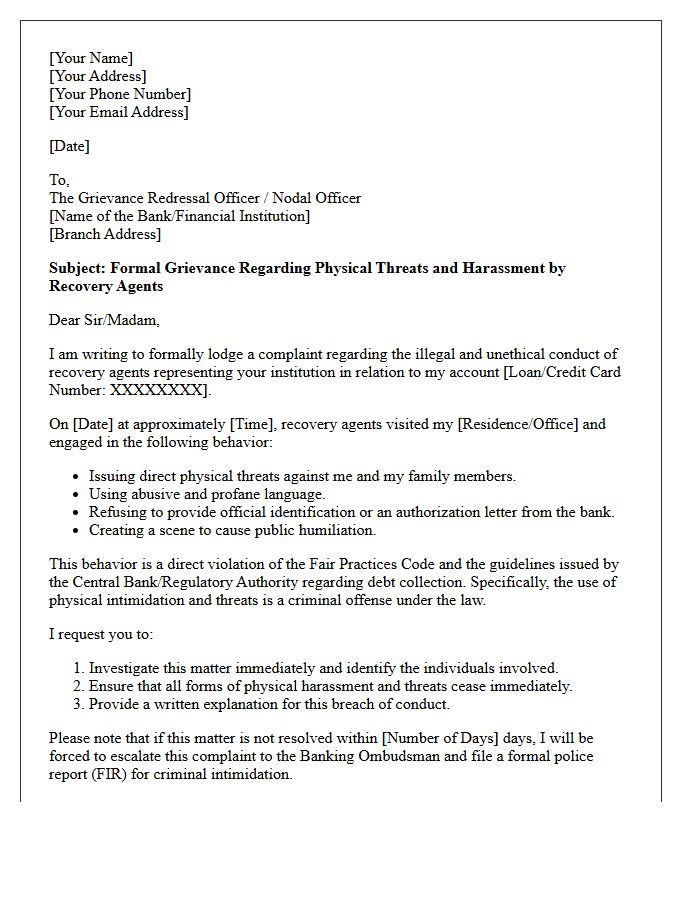
Submitting an Official Grievance Letter is the most critical step when facing physical threats from recovery agents. This document formally records harassment, violating debt collection guidelines. You must clearly detail the date, time, and specific nature of the intimidation. Sending this legal notice to the financial institution's grievance redressal officer and the banking ombudsman ensures regulatory oversight. Protecting your personal safety and legal rights is paramount; a well-drafted letter serves as vital evidence if police intervention or judicial action becomes necessary to stop unauthorized coercion tactics and ensure consumer protection.
Formal Complaint Letter Against Debt Collection Agency Harassment
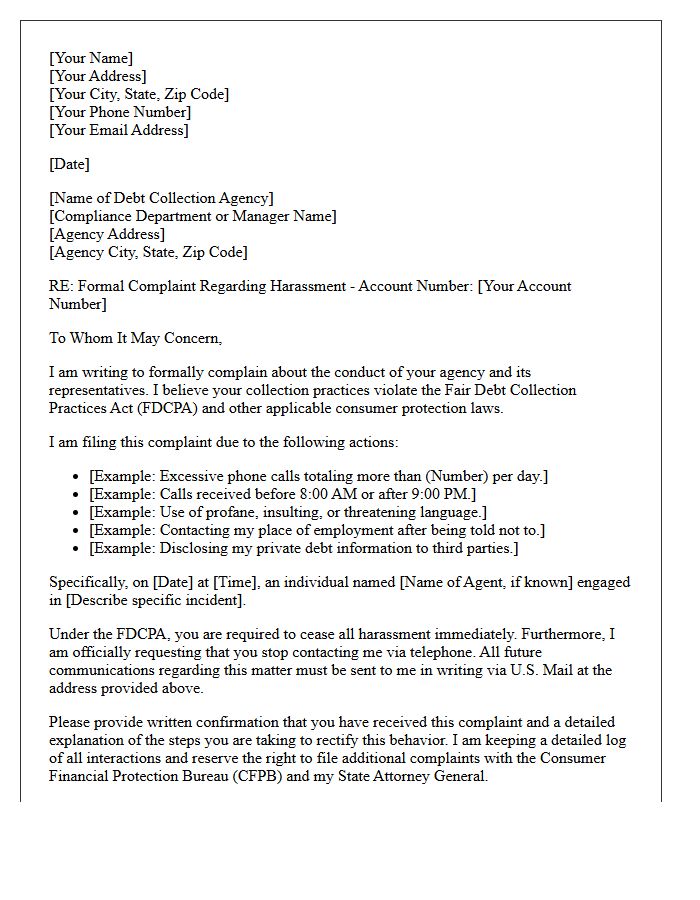
A formal complaint letter against debt collection agency harassment must clearly document FDCPA violations, such as excessive calling or illegal threats. Start by providing your account details and a chronological log of the abusive behavior. Explicitly demand that the agency cease and desist all unauthorized contact immediately. Send the letter via certified mail with a return receipt to create a legal paper trail. This document serves as vital evidence if you pursue further action with the Consumer Financial Protection Bureau or legal counsel to protect your consumer rights.
Letter of Grievance for Unauthorized Communication by Loan Recovery Staff
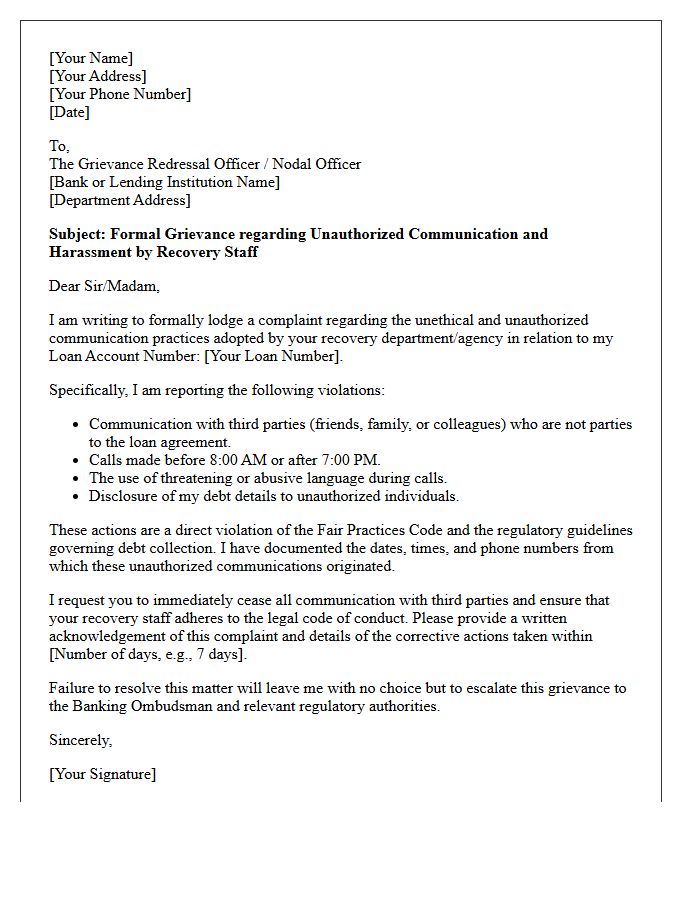
A Letter of Grievance is a formal complaint issued when recovery agents violate debt collection guidelines. It is essential to document unauthorized communication, such as harassment, contacting third parties, or calling during restricted hours. By citing legal protections and consumer rights, this document serves as official evidence against abusive tactics. Sending this letter helps enforce fair practices and provides a necessary paper trail for potential legal action or escalation to financial regulatory authorities to stop invasive behavior immediately.
Urgent Grievance Letter Concerning Workplace Harassment by Bank Agents
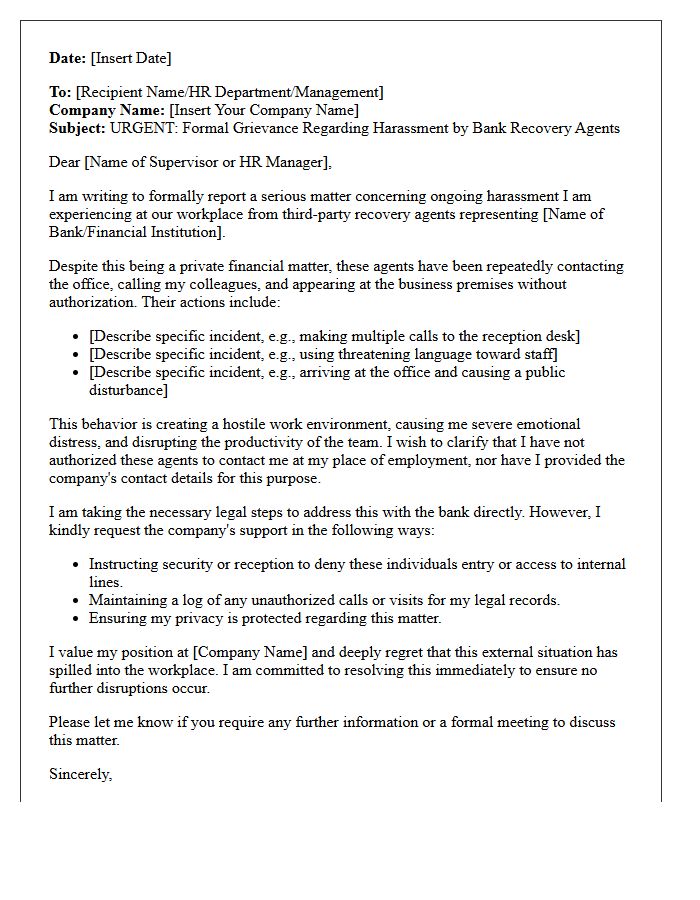
An urgent grievance letter is a formal legal tool used to address persistent workplace harassment by bank agents. It must clearly document specific incidents of intimidation, unauthorized contact, or verbal abuse. This communication establishes a written record, compelling financial institutions to initiate an internal investigation and adhere to fair collection practices. By citing regulatory violations and demanding immediate cessation, victims protect their legal rights and psychological well-being. Promptly filing this document ensures the bank is held accountable for the conduct of its representatives while seeking a formal resolution to the hostile environment.
Grievance Letter for Abusive Language Used by Loan Collection Agents
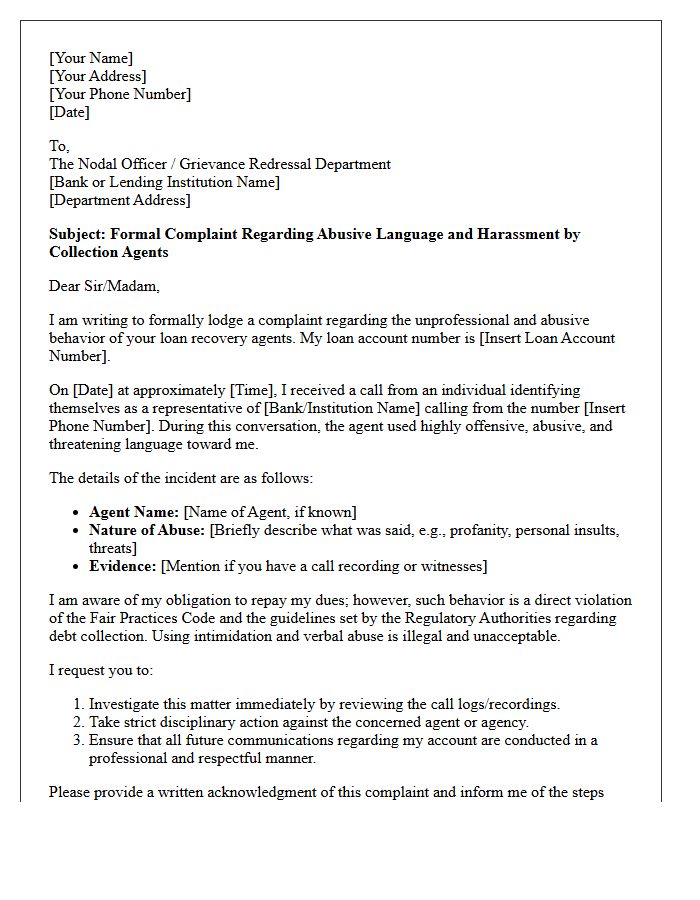
A formal grievance letter is essential when loan collection agents use abusive language or harassment. You must document specific details, including the date, time, and exact words used during the communication. Explicitly state that such behavior violates consumer protection laws and fair debt collection practices. Addressing this letter to the bank's nodal officer or the ombudsman creates an official paper trail, forcing the institution to investigate the misconduct. Clearly demand an immediate cessation of harassment and a professional resolution to protect your legal rights and personal dignity.
Legal Notice and Grievance Letter Against Bank Loan Recovery Harassment
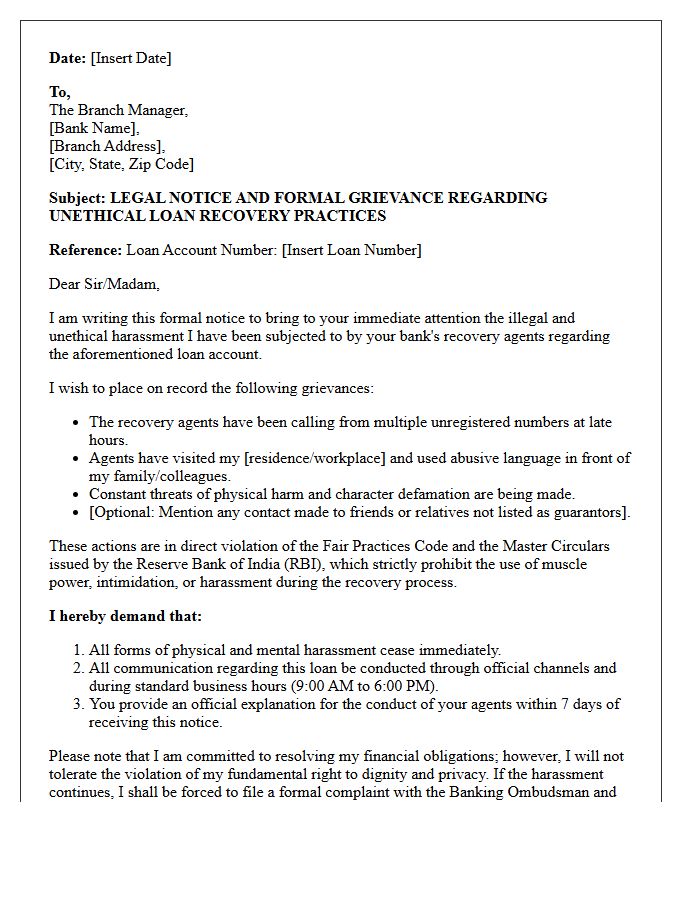
When facing loan recovery harassment, issuing a formal legal notice is your primary defense against unethical collection practices. This document serves as a protective barrier, demanding that lenders adhere strictly to RBI guidelines regarding debtor dignity. If intimidation persists, filing a grievance letter with the bank's nodal officer or the Banking Ombudsman ensures official intervention. Clearly documenting instances of verbal abuse or privacy breaches strengthens your case, compelling the institution to stop aggressive tactics and pursue only lawful recovery methods through mediation or authorized courts.
Grievance Letter for Third-Party Disclosure by Loan Recovery Agents
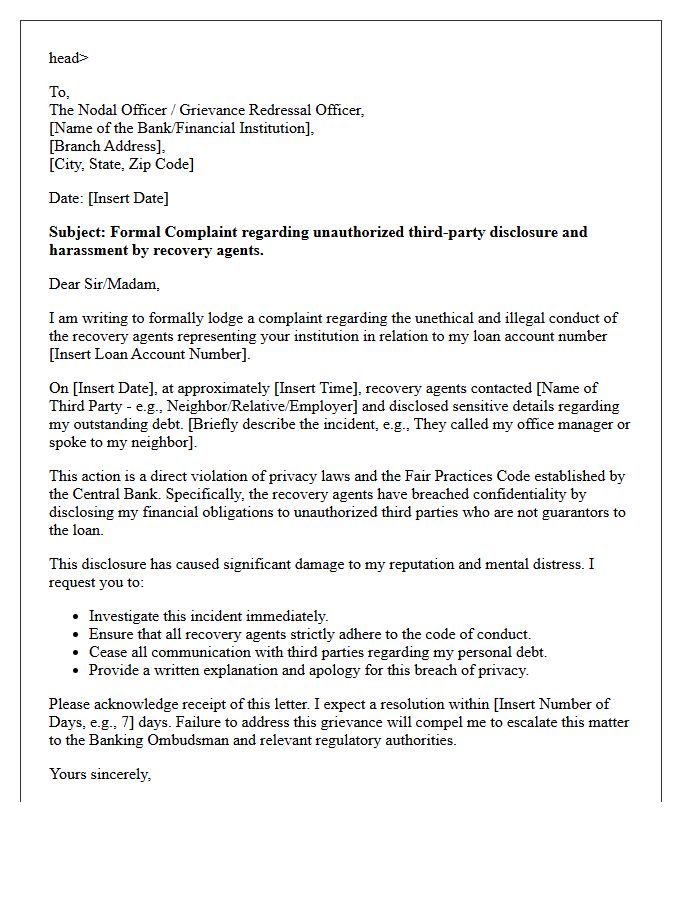
A grievance letter regarding third-party disclosure is essential when loan recovery agents breach confidentiality by contacting your friends, family, or employers. This formal complaint must document specific instances where your privacy was violated, citing violations of central bank regulations. Clearly state that sharing sensitive loan details with unauthorized individuals constitutes harassment and illegal data exposure. Send this letter to the bank's nodal officer to demand an immediate halt to these invasive practices and ensure your legal rights are protected against unethical collection tactics.
Banking Ombudsman Grievance Letter for Debt Recovery Harassment
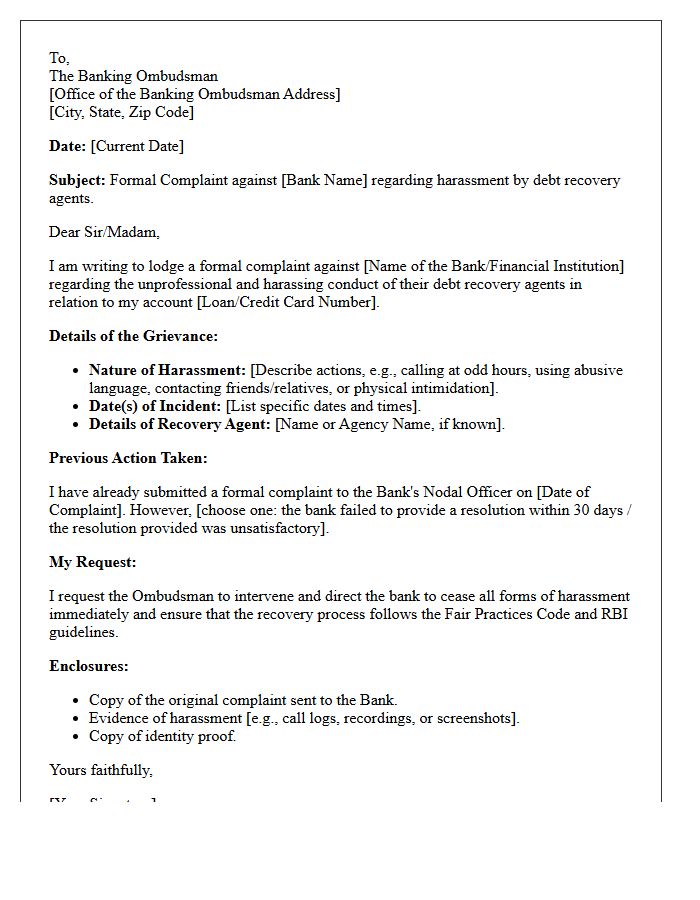
A Banking Ombudsman Grievance Letter is your formal legal recourse against debt recovery harassment. If a bank or recovery agent uses intimidation, non-stop calling, or privacy breaches, you must first file a written complaint with the bank. If they fail to resolve it within 30 days, escalate the matter to the Ombudsman. Clearly document dates, times, and evidence of unethical collection practices. This process ensures regulatory compliance and protects your consumer rights under fair practice codes, potentially leading to compensation or disciplinary action against the offending financial institution.
Escalated Grievance Letter to Nodal Officer Regarding Recovery Misconduct
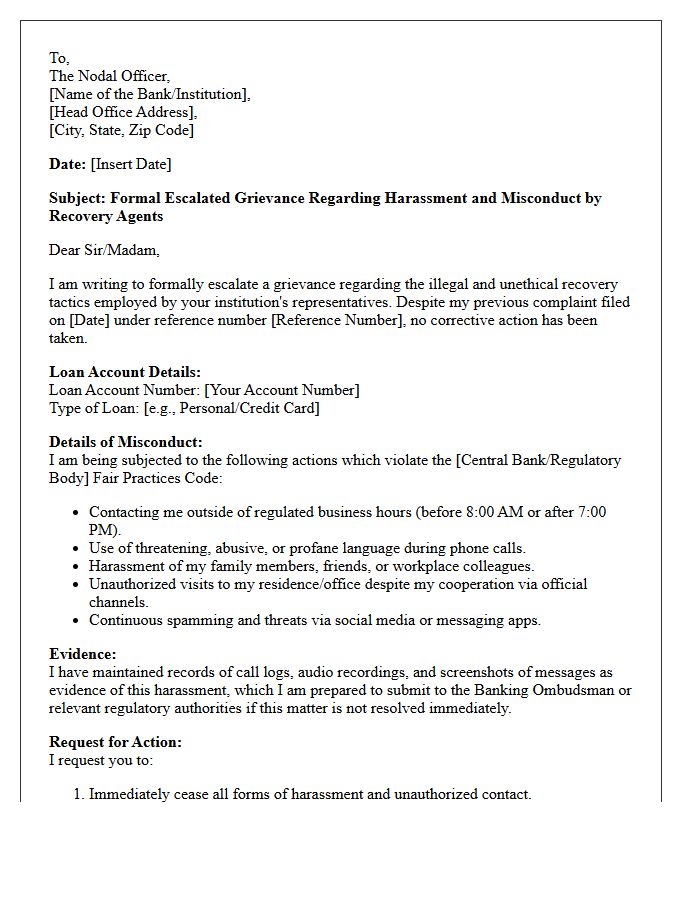
An escalated grievance letter to a Nodal Officer is a formal complaint addressing unethical debt recovery misconduct. It serves as a vital legal record when collection agents violate fair practice codes through harassment or intimidation. Clearly document specific instances of harassment, including dates and proof of policy violations. This professional escalation demands a definitive resolution and ensures your consumer rights are protected under regulatory guidelines. If the Nodal Officer fails to provide a satisfactory remedy within the stipulated timeframe, this document becomes essential evidence for filing a further complaint with the Banking Ombudsman.
Grievance Letter for Frequent and Untimely Calls by Loan Recovery Agents
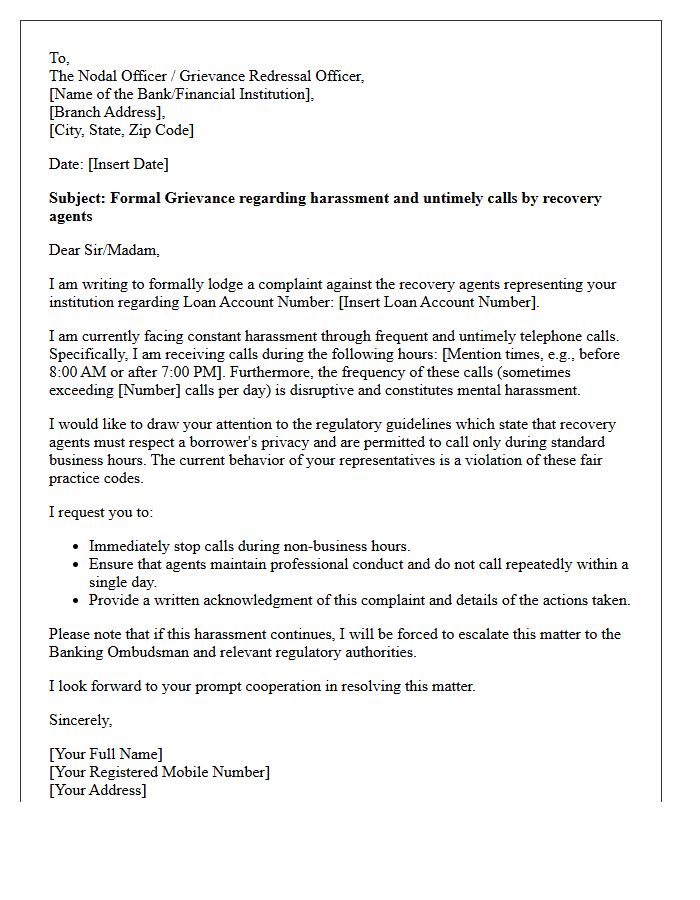
A formal grievance letter is essential to stop harassment from debt collection agencies. Clearly document specific dates, times, and the frequency of intrusive contacts that violate regulatory guidelines. Expressly state your demand for a cease and desist regarding untimely or excessive calls. Mentioning a formal complaint to the Banking Ombudsman or relevant financial authorities often compels lenders to ensure their agents adhere to fair practice codes. Providing evidence of communication policy violations protects your consumer rights and ensures all future correspondence remains professional and legally compliant.
Formal Grievance Letter for Psychological Harassment by Bank Collection Agents
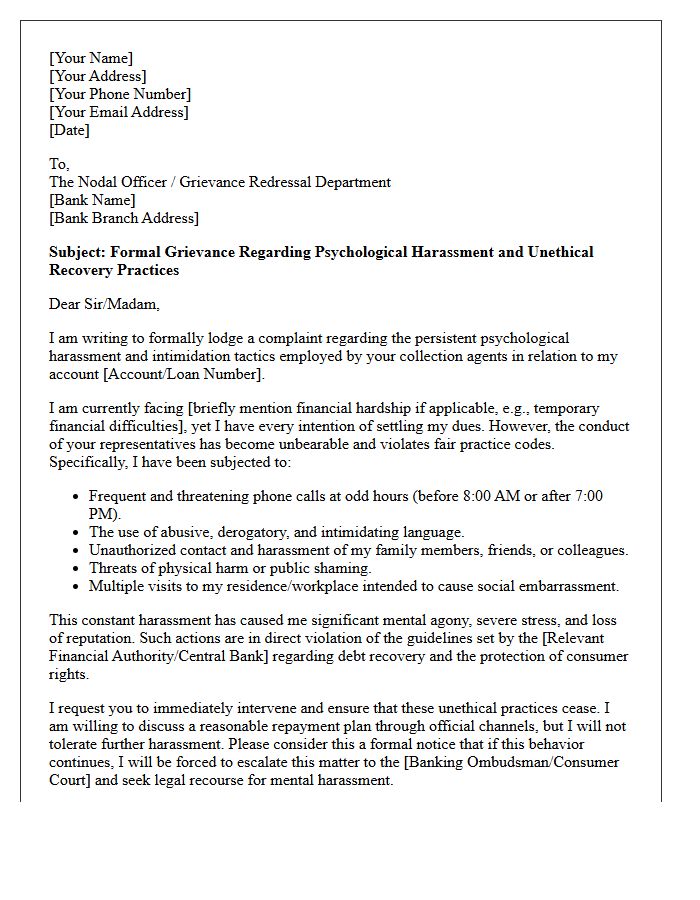
A formal grievance letter is a critical legal tool to stop psychological harassment by bank collection agents. This document must clearly outline specific instances of intimidation, unethical coercion, and constant verbal abuse that violate fair debt collection practices. By documenting these violations, you create an official record that compels the bank's compliance department to intervene. Clearly state the emotional distress caused and demand an immediate cease and desist of all non-procedural communication. Submitting this letter via registered mail ensures accountability and provides essential evidence for potential regulatory complaints or legal action.
Notice and Grievance Letter for Coercive Debt Collection Practices
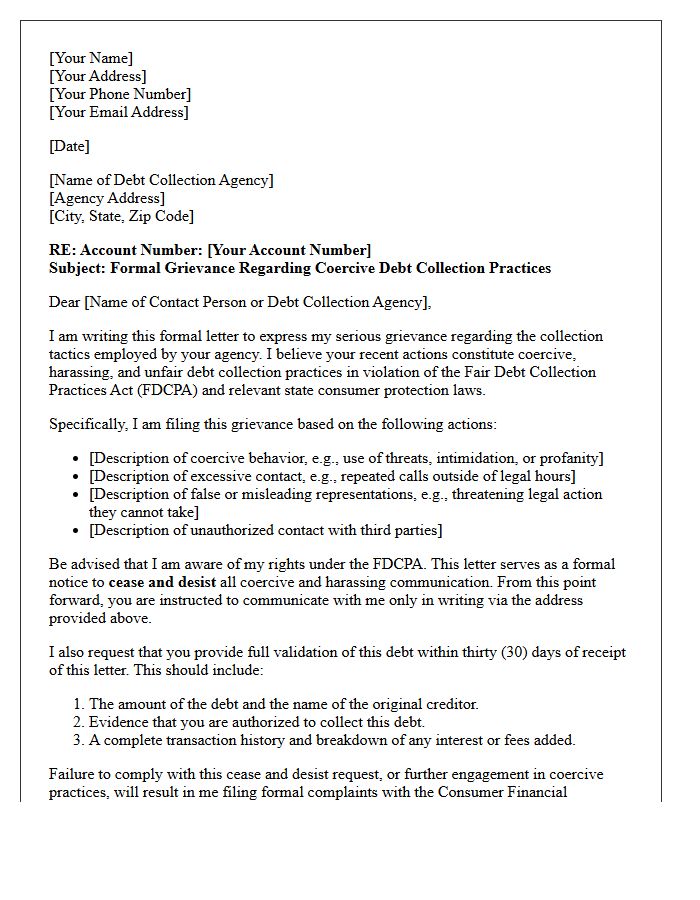
A Notice and Grievance Letter is a formal legal tool used to stop coercive debt collection practices. This document notifies collectors that their harassment, threats, or deceptive tactics violate consumer protection laws like the FDCPA. By submitting this written notice, you create a legal record of the dispute and demand that all abusive communication cease immediately. Sending this letter is the most important step to protect your rights, prevent further intimidation, and potentially provide grounds for legal action against unethical agencies targeting your financial stability.
What should be included in a grievance letter for harassment by loan recovery agents?
A formal grievance letter should include your loan account details, a chronological record of the harassment incidents (dates, times, and phone numbers), evidence of abusive language or threats, and a specific reference to the RBI's Fair Practices Code violations.
To whom should I address a complaint regarding illegal recovery tactics?
Initially, the complaint must be addressed to the Nodal Officer or the Grievance Redressal Cell of the concerned Bank or Non-Banking Financial Company (NBFC). If the issue remains unresolved after 30 days, you should escalate the matter to the RBI Ombudsman.
Can loan recovery agents contact me at any time of the day?
No, according to RBI guidelines, recovery agents are strictly prohibited from contacting borrowers before 8:00 AM or after 7:00 PM. Any communication outside these hours constitutes harassment and should be documented in your grievance letter.
What legal protections do I have against harassment by collection agents?
Borrowers are protected under the RBI Guidelines on Recovery Agents and the Fair Practices Code. These regulations prohibit physical intimidation, public shaming, persistent calling, and the use of muscle power. You have the right to privacy and respectful treatment regardless of your debt status.
What evidence is necessary to support a harassment complaint against a lender?
Effective evidence includes call recordings of abusive conversations, screenshots of threatening WhatsApp messages or SMS, CCTV footage of unauthorized home visits, and logs showing repeated calls during prohibited hours or to your friends and family.

Comments