
Efficiently managing an Account Garnishment Order Inquiry Response Letter is essential for legal compliance and protecting financial interests. This formal document confirms receipt of a legal notice and provides necessary details regarding the debtor's status. Accurate communication prevents penalties and ensures procedural clarity for both banks and employers. To help you streamline this process, below are some ready to use templates.
Image cover: Professional Response Templates for Account Garnishment Order Inquiries
Letter Samples List
- Account Garnishment Order Customer Notification Letter
- Court Issued Garnishment Order Confirmation Response Letter
- Federal Tax Garnishment Order Agency Response Letter
- Account Holder Garnishment Freeze Inquiry Response Letter
- Insufficient Funds Garnishment Order Inquiry Response Letter
- Invalid Account Garnishment Order Inquiry Response Letter
- Protected Funds Garnishment Exemption Inquiry Response Letter
- Creditor Counsel Garnishment Order Status Response Letter
- Garnishment Order Release Processing Acknowledgment Letter
- Incomplete Garnishment Order Information Request Letter
- Joint Account Garnishment Apportionment Inquiry Response Letter
- Commercial Entity Garnishment Order Inquiry Response Letter
Account Garnishment Order Customer Notification Letter
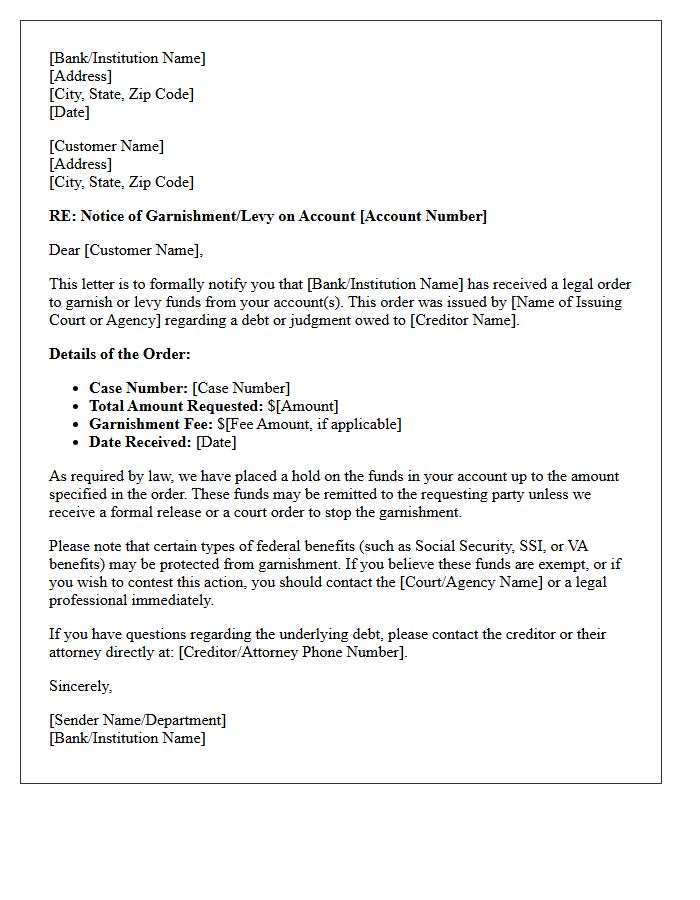
An Account Garnishment Order Customer Notification Letter is a formal notice informing a legal seizure of funds. When a court orders a bank to withhold money for unpaid debts, the institution must send this legal disclosure to the account holder. It details the judgment amount, the creditor involved, and any exempt funds protected by law. Upon receipt, customers should immediately review the document to understand their rights, identify potential errors, and seek legal counsel to resolve the claim or challenge the freeze on their financial assets.
Court Issued Garnishment Order Confirmation Response Letter
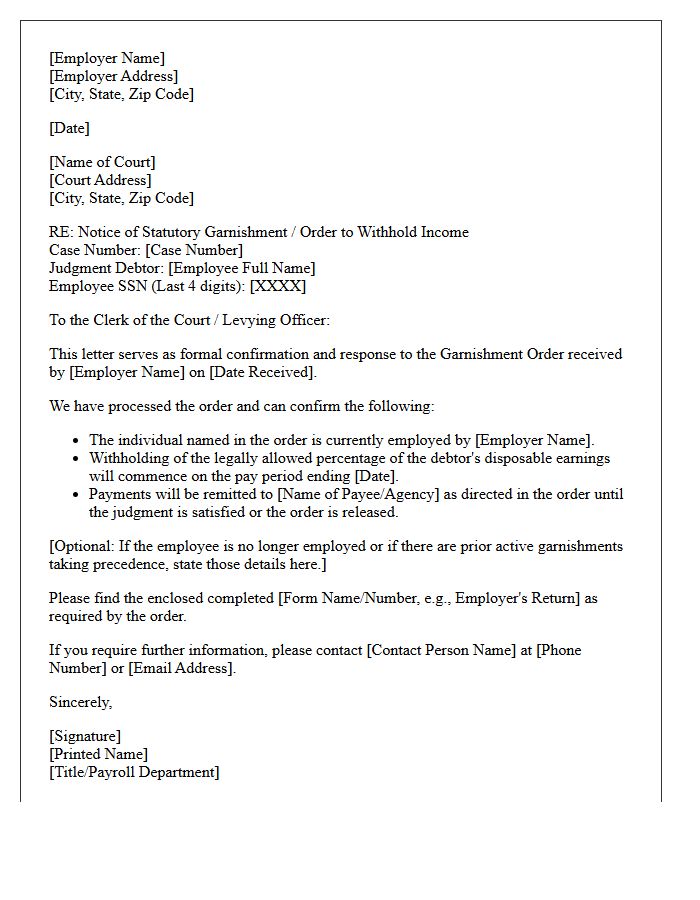
A Court Issued Garnishment Order Confirmation Response Letter is a mandatory legal document sent by an employer to the court or levying officer. It confirms receipt of the order and details the debtor's employment status and disposable earnings. Failing to submit this response within the statutory deadline can result in the employer becoming personally liable for the employee's debt. Accurate calculation of withholding limits is essential to ensure compliance with federal and state laws, protecting both the business from litigation and the employee from excessive deductions.
Federal Tax Garnishment Order Agency Response Letter
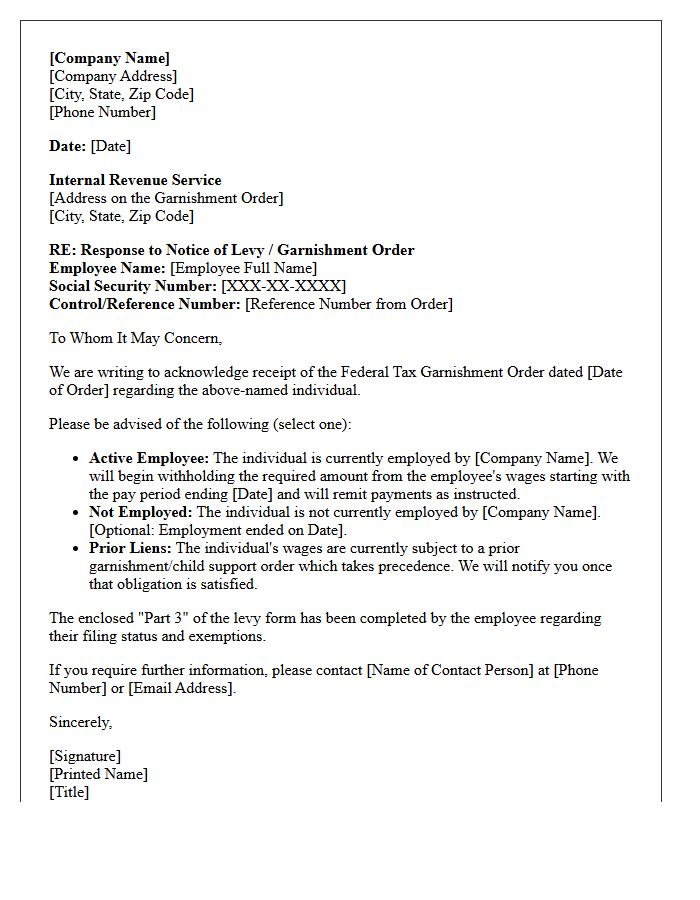
An employer must prioritize a Federal Tax Garnishment Order by submitting a formal agency response letter within the specified deadline. This document confirms the receipt of the levy and details the employee's disposable income available for withholding. Failure to respond accurately or timely can result in the employer becoming personally liable for the employee's unpaid tax debt. The letter serves as a critical compliance record, ensuring that the Internal Revenue Service receives the legally mandated payments while protecting the company from potential legal penalties and financial interest charges.
Account Holder Garnishment Freeze Inquiry Response Letter
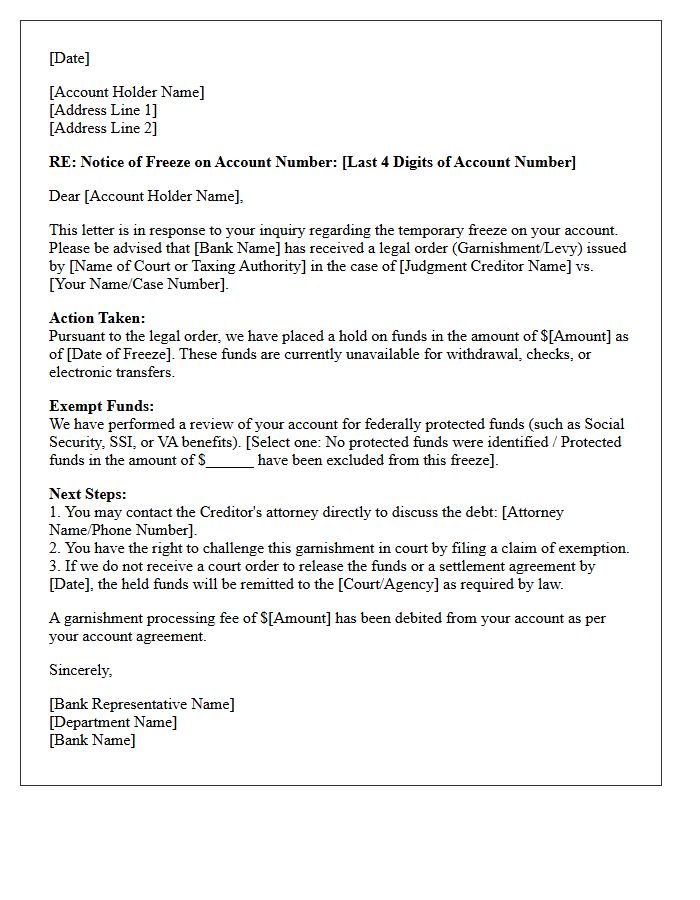
An Account Holder Garnishment Freeze Inquiry Response Letter is a formal notification from a financial institution explaining that funds are restricted due to a legal order. This document outlines the legal authority behind the freeze, the specific amount withheld, and the debtor's rights to claim exemptions. Understanding this response is crucial for verifying if specific deposits, such as Social Security or disability benefits, are legally protected from seizure. It serves as an essential communication tool for resolving account access issues during a garnishment proceeding.
Insufficient Funds Garnishment Order Inquiry Response Letter
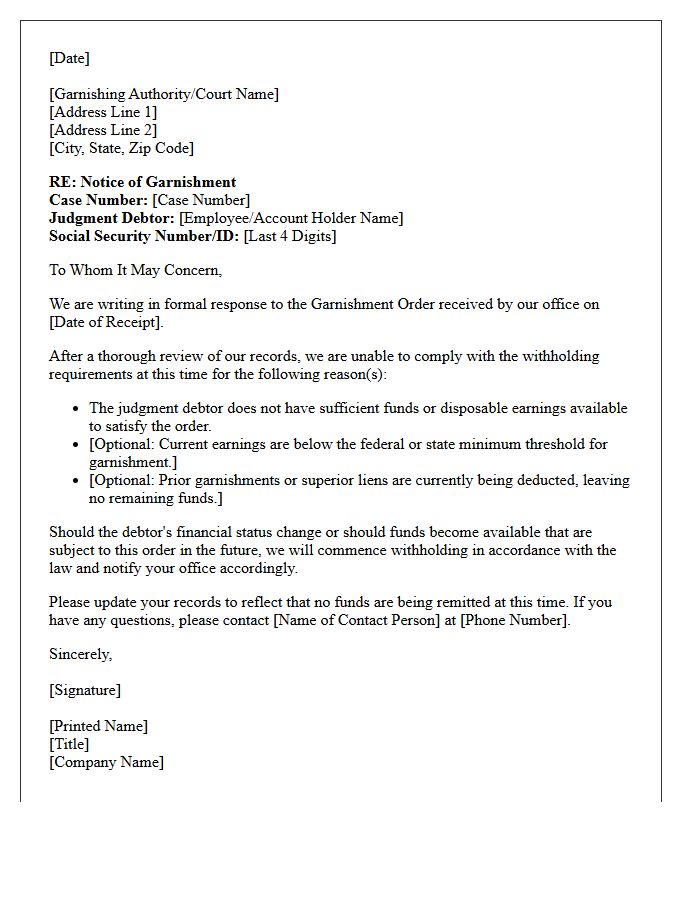
An Insufficient Funds Garnishment Order Inquiry Response Letter is a formal legal notification sent by a garnishee to a court or creditor. It confirms that a debtor's account balance is lower than the required amount to satisfy the judgment. This document is time-sensitive and serves as a legal certification that no funds were withheld during the attachment period. Promptly filing this response is essential to avoid legal liability or being held in contempt of court for non-compliance with the original garnishment summons.
Invalid Account Garnishment Order Inquiry Response Letter
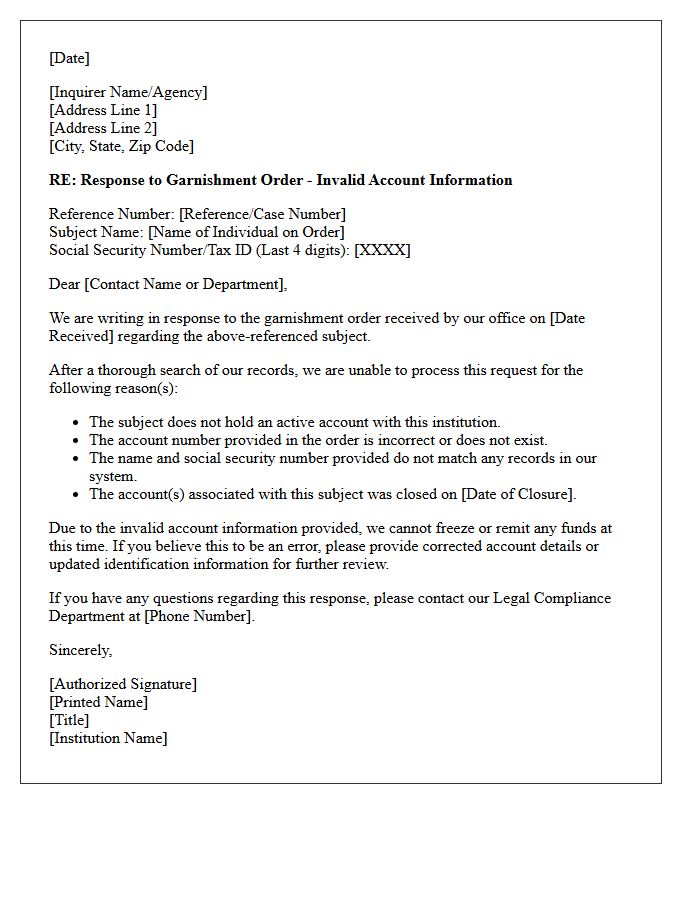
An Invalid Account Garnishment Order Inquiry Response Letter is a formal legal notification sent by a financial institution to a court or creditor. It clarifies that a garnishment cannot be processed because the account holder's information does not match the order or the account contains exempt funds, such as Social Security. Providing a timely response is essential to maintain legal compliance and avoid institutional liability. This document protects consumer rights by ensuring that wrongful debt collection actions are halted due to technical errors or protected asset status.
Protected Funds Garnishment Exemption Inquiry Response Letter
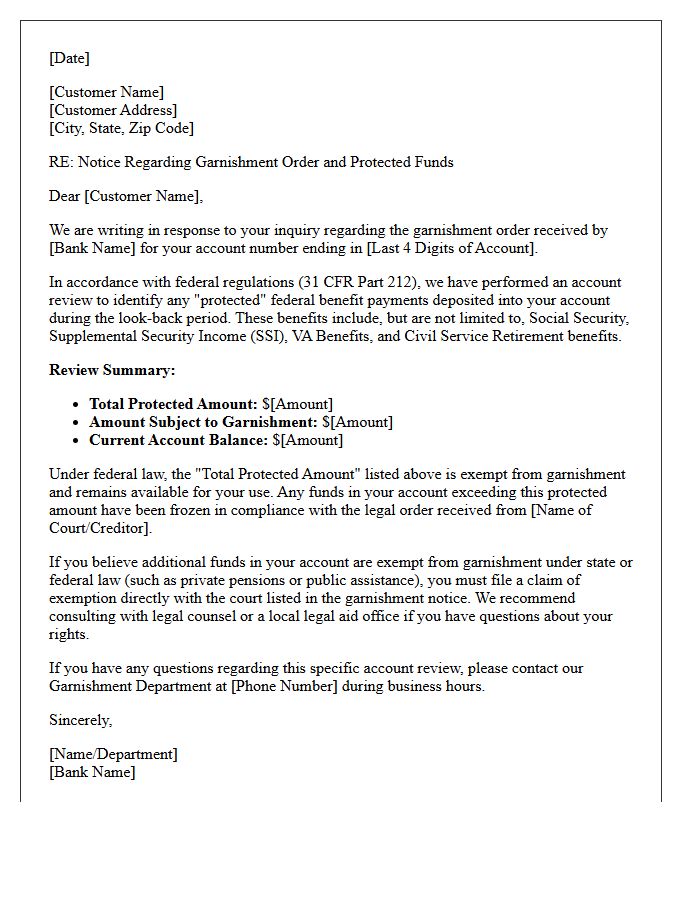
A Protected Funds Garnishment Exemption Inquiry Response Letter is a formal document used to notify creditors or courts that certain assets are legally shielded from collection. The federal law mandates that specific benefits, such as Social Security or veterans' payments, remain accessible to the account holder. This response prevents unlawful freezing of essential financial resources by providing documented proof of exempt status. Timely submission is critical to maintaining financial stability and ensuring that legally protected income remains available for basic living expenses during a legal judgment or garnishment proceeding.
Creditor Counsel Garnishment Order Status Response Letter
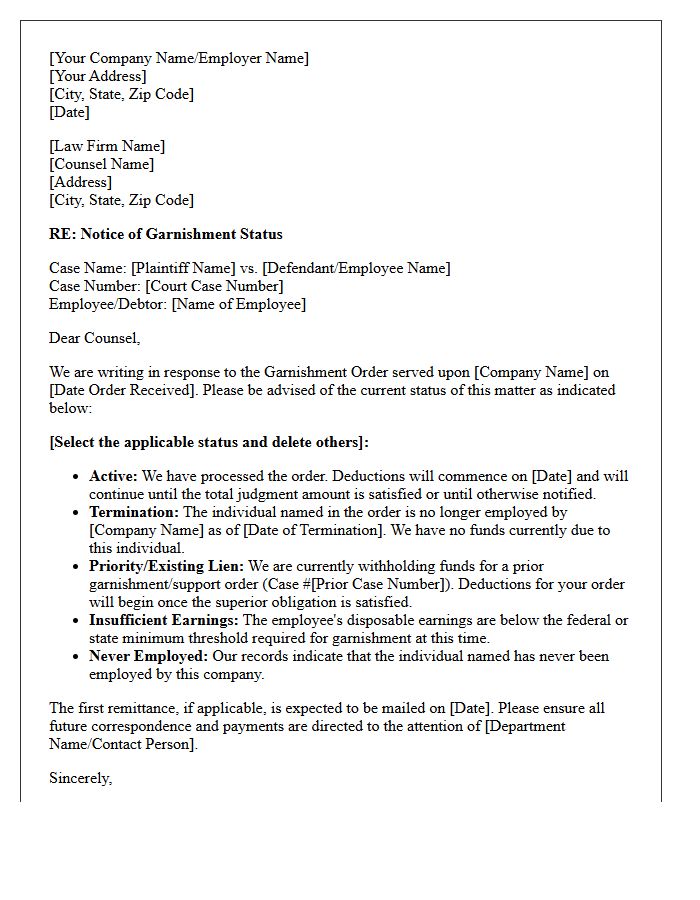
A Creditor Counsel Garnishment Order Status Response Letter is a formal legal communication sent by an attorney representing a creditor to an employer or financial institution. This document demands an update on the status of a wage or bank account attachment. It ensures compliance with the writ of garnishment and verifies that funds are being correctly withheld. Receiving this letter indicates that the legal counsel is monitoring the collection process closely and requires immediate confirmation regarding the calculation and disbursement of any seized assets to satisfy the outstanding judgment debt.
Garnishment Order Release Processing Acknowledgment Letter
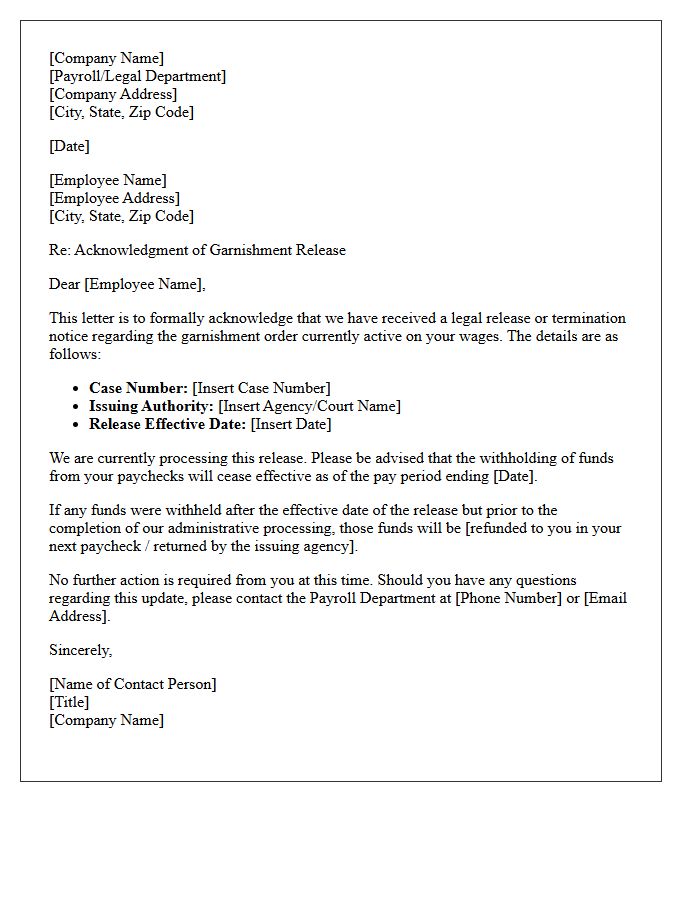
A Garnishment Order Release Processing Acknowledgment Letter is a formal document confirming that an employer or financial institution has received instructions to stop withholding funds from an individual's earnings. This letter serves as legal verification that the release order is being processed, ensuring the cessation of debt collection activities. It is essential for maintaining accurate payroll records and protecting the employee's financial rights. This acknowledgment provides a clear audit trail, confirming that the legal obligation to garnish wages has been officially terminated and the processing is underway.
Incomplete Garnishment Order Information Request Letter
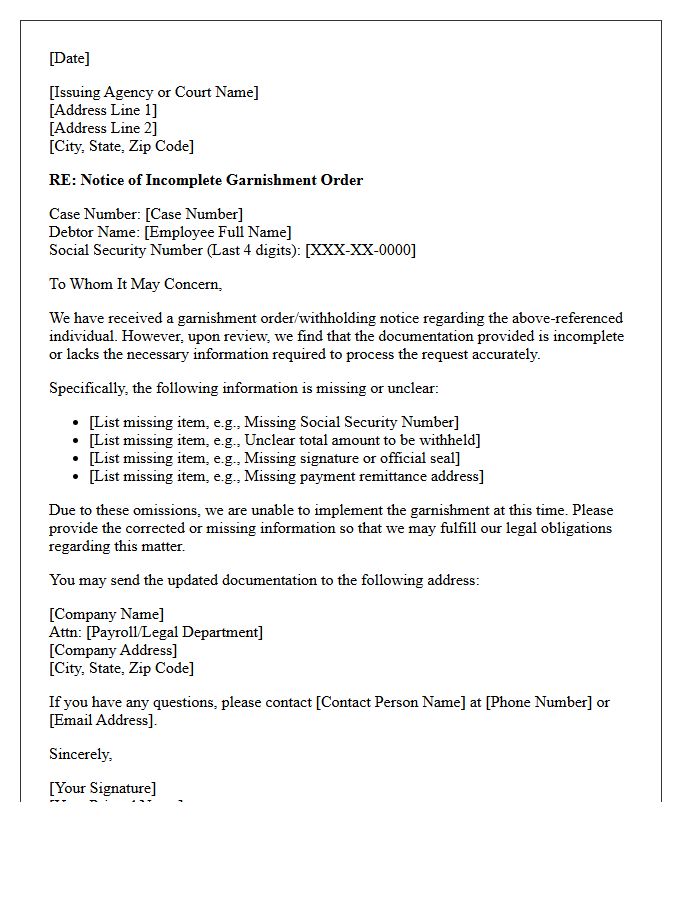
An Incomplete Garnishment Order Information Request Letter is a formal notice sent by an employer to a court or creditor. It serves to pause processing when legal documents lack critical details like the debtor's full Social Security number, account identifiers, or precise withholding amounts. Promptly sending this letter is essential to ensure legal compliance and avoid administrative errors. By documenting the missing data, businesses protect themselves from liability while requesting the necessary clarification required to accurately execute the wage attachment and fulfill their statutory obligations.
Joint Account Garnishment Apportionment Inquiry Response Letter
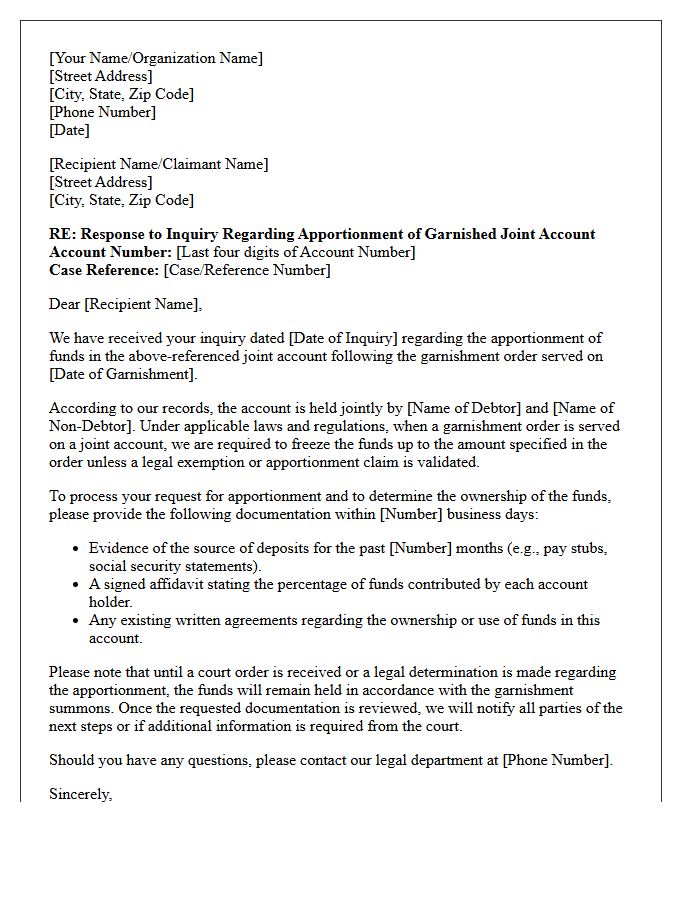
A Joint Account Garnishment Apportionment Inquiry Response Letter is a formal legal document used to protect non-debtor funds from being seized. When a bank freezes a shared account due to one owner's debt, the other owner must submit this response to dispute the allocation of assets. The primary goal is to prove which portion of the balance belongs to the innocent party, typically through deposit records or income verification. Providing clear evidence is essential to ensure the court or creditor performs a fair apportionment of the remaining funds.
Commercial Entity Garnishment Order Inquiry Response Letter
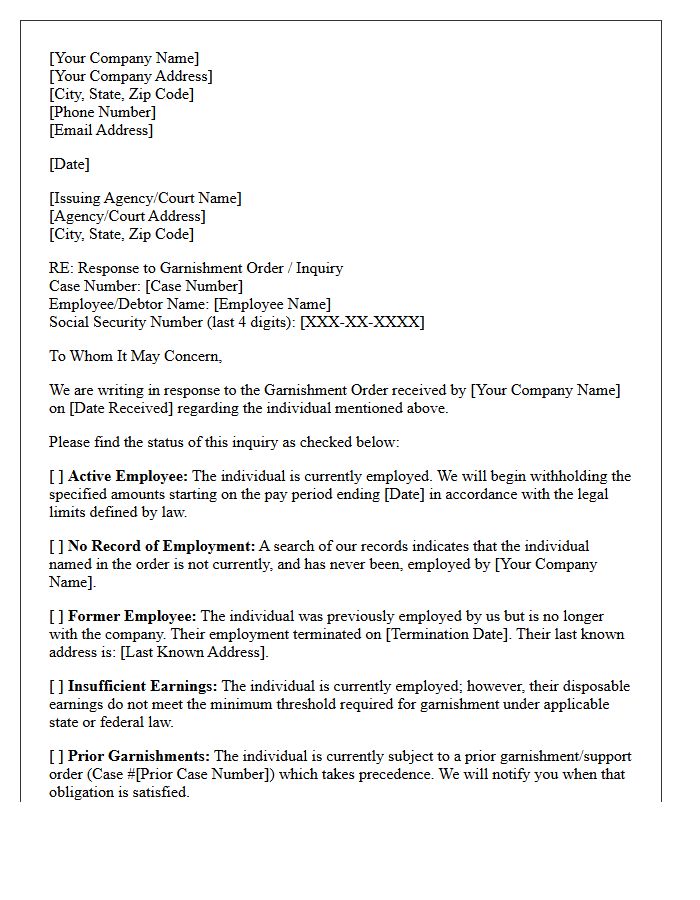
When a business receives a Commercial Entity Garnishment Order, a formal Inquiry Response Letter is mandatory. This legal document confirms whether the named debtor is an employee or contractor. You must accurately disclose their earnings and existing liens to determine the withholdable amount. Failure to respond within the statutory deadline can result in the employer becoming personally liable for the full debt. Ensure the response is filed with the court or issuing agency promptly to maintain legal compliance and avoid unnecessary corporate litigation or financial penalties.
What is an Account Garnishment Order Inquiry Response Letter?
An Account Garnishment Order Inquiry Response Letter is a formal written communication sent by a financial institution or employer to a court or levying officer. It confirms whether the debtor holds an active account or receives wages and details the amount of funds being withheld to satisfy a legal judgment.
What information must be included in a garnishment inquiry response?
The response must typically include the garnishee's legal name, the account holder's identity verification, the total balance available at the time the order was served, any protected or exempt funds (such as Social Security), and the specific amount frozen or remitted to the court.
How long do I have to respond to a garnishment inquiry?
The deadline for responding to a garnishment inquiry varies by jurisdiction but generally ranges from 7 to 20 days. Failure to provide a timely response letter can result in the garnishee being held liable for the entire debt amount through a default judgment.
Can funds be released after a garnishment response letter has been sent?
Funds generally remain frozen until the court issues a release of garnishment or a final order to pay. The responding party cannot release withheld funds back to the account holder unless they receive an official notice of dismissal or the judgment is satisfied in full.
Are certain types of income exempt from the garnishment response?
Yes, federal and state laws protect specific funds from garnishment, such as Social Security benefits, disability payments, and a portion of disposable weekly earnings. The response letter should clearly identify these exempt amounts to ensure they are not illegally seized from the account holder.

Comments