
Receiving a Notification of Missed Loan Payment is a critical warning that requires immediate attention to avoid late fees and credit score damage. Lenders send these notices to help you rectify defaults before legal action or collections begin. Proactive communication is essential for protecting your financial reputation. To assist your response, below are some ready to use template options.
Image cover: Late Payment Notices: Professional Templates and Examples for Lenders
Letter Samples List
- First Missed Loan Payment Notification Letter
- Second Missed Loan Payment Warning Letter
- Final Notice of Missed Loan Payment Letter
- Mortgage Loan Missed Payment Alert Letter
- Auto Loan Missed Payment Reminder Letter
- Personal Loan Missed Payment Notification Letter
- Commercial Loan Missed Payment Notice Letter
- Grace Period Expiration Missed Loan Payment Letter
- Pre-Default Missed Loan Payment Warning Letter
- Missed Loan Payment and Late Fee Assessment Letter
- Notice of Intent to Accelerate Loan Letter
- Student Loan Missed Payment Notification Letter
- Secured Loan Missed Payment Warning Letter
First Missed Loan Payment Notification Letter
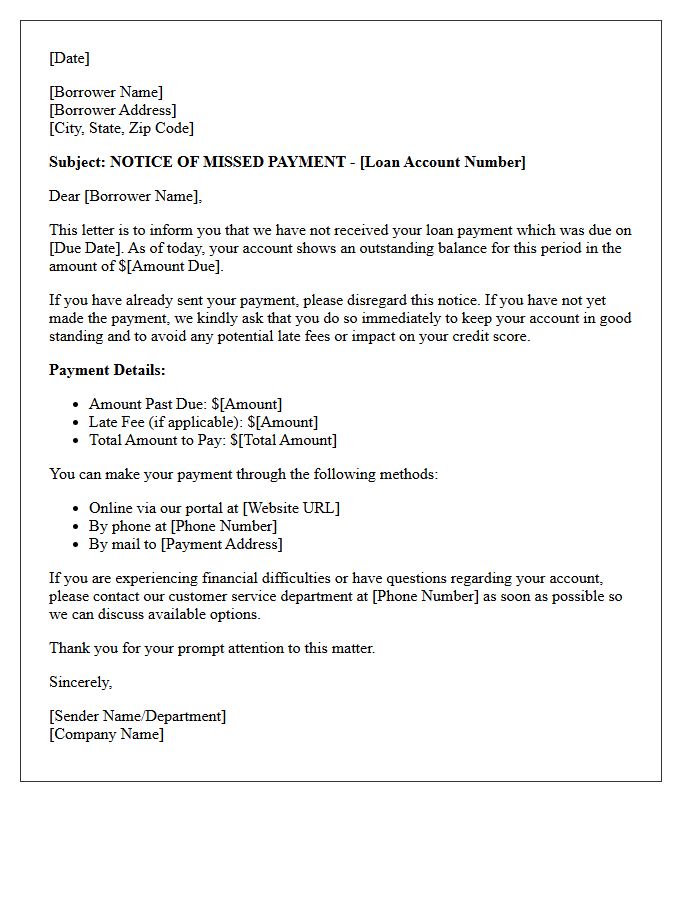
A First Missed Loan Payment Notification Letter is a formal alert sent by lenders when a borrower misses their initial deadline. Its primary purpose is to inform you of the overdue balance and any applicable late fees. Receiving this notice is a critical warning to rectify the account before it negatively impacts your credit score. Promptly contacting the lender can help you negotiate a repayment plan, prevent further penalties, and avoid the risk of loan default or formal debt collection proceedings.
Second Missed Loan Payment Warning Letter
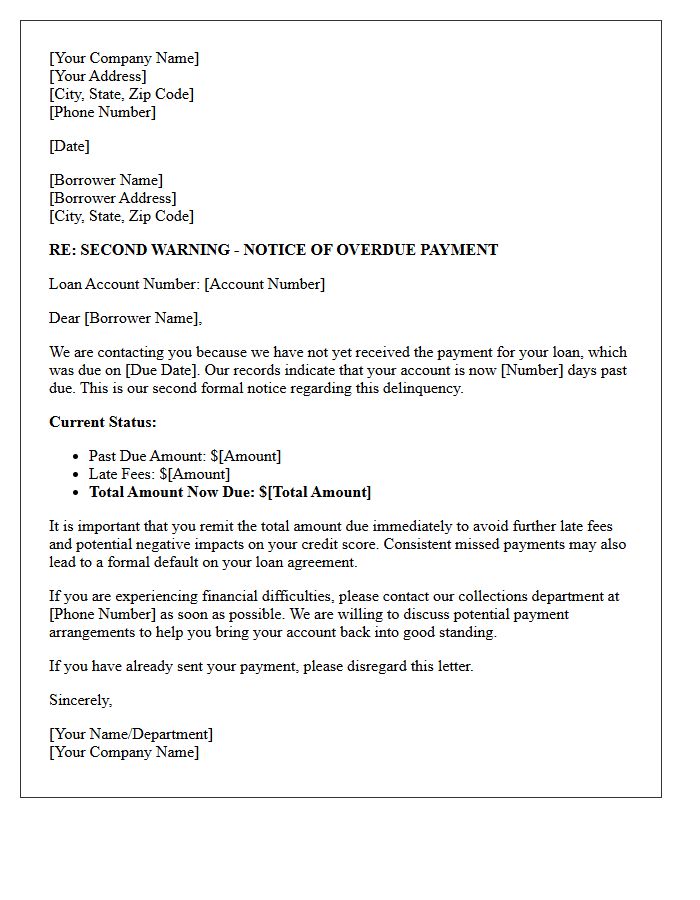
Receiving a second missed loan payment warning letter indicates a critical stage in delinquency. This formal notice serves as a final reminder before your account may be referred to collections or legal action. It typically outlines the total overdue balance, late fees, and the urgent deadline for repayment to avoid severe credit score damage. Proactive communication with your lender is essential at this point to discuss repayment options or financial hardship programs, as ignoring this correspondence often leads to default and potential loss of collateral or legal judgments.
Final Notice of Missed Loan Payment Letter
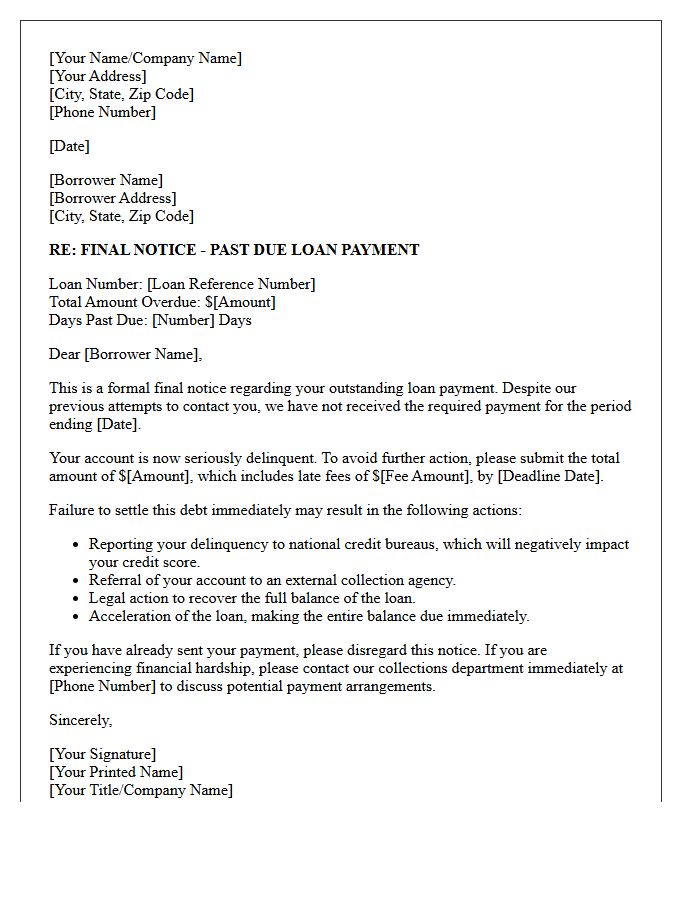
A Final Notice of Missed Loan Payment is a critical legal document warning that your account is approaching default. This letter serves as a final opportunity to resolve delinquency before the lender initiates aggressive collection actions, such as foreclosure, vehicle repossession, or legal litigation. It typically outlines the total overdue balance, late fees, and a strict deadline for payment. Ignoring this notice will severely damage your credit score and may result in the loss of collateral. Immediate communication with your lender is essential to explore repayment options or deferment.
Mortgage Loan Missed Payment Alert Letter
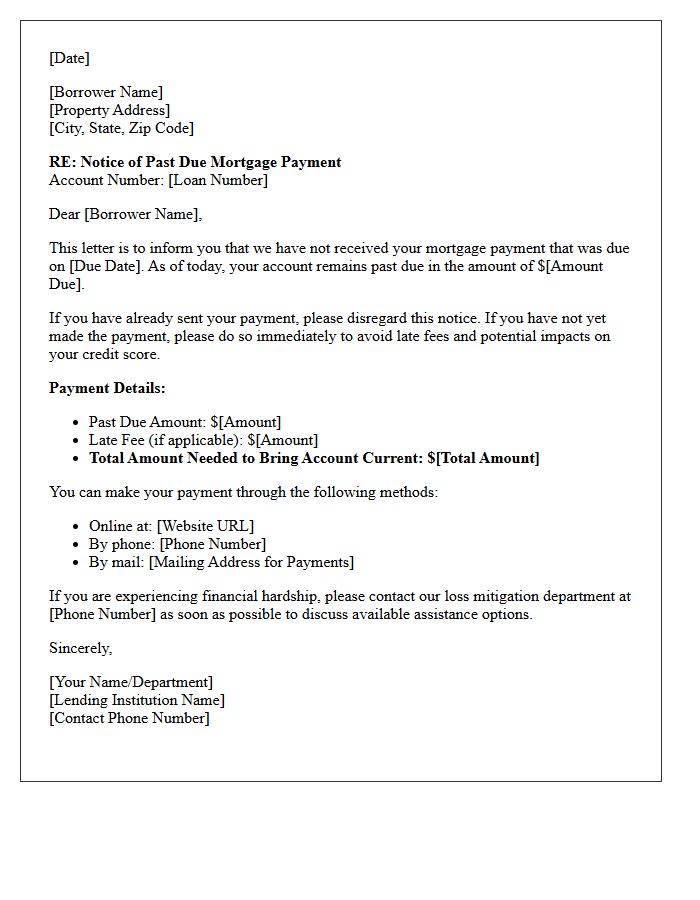
A Mortgage Loan Missed Payment Alert Letter is a formal notice sent by lenders when a borrower fails to meet their repayment obligation. This document serves as a critical warning, detailing the overdue amount, applicable late fees, and the deadline to cure the default. Ignoring this letter can lead to negative credit reporting and eventual foreclosure proceedings. It is essential to contact your loan servicer immediately upon receipt to discuss loss mitigation options, such as loan modification or a repayment plan, to protect your home and credit score.
Auto Loan Missed Payment Reminder Letter
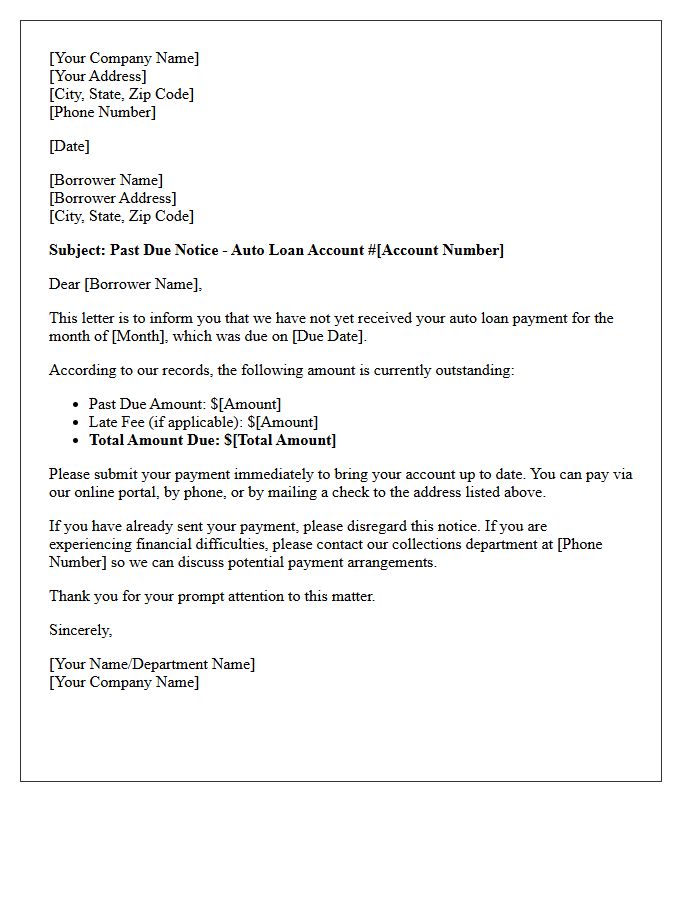
An auto loan missed payment reminder letter serves as a critical formal notice from your lender. It informs you that a scheduled installment is overdue, helping you avoid default or potential repossession. This document typically outlines the outstanding balance, applicable late fees, and the deadline to rectify the delinquency. Promptly addressing this notice is essential to protect your credit score and maintain vehicle ownership. Open communication with your financial institution can often lead to temporary payment arrangements or extensions to resolve the debt effectively.
Personal Loan Missed Payment Notification Letter
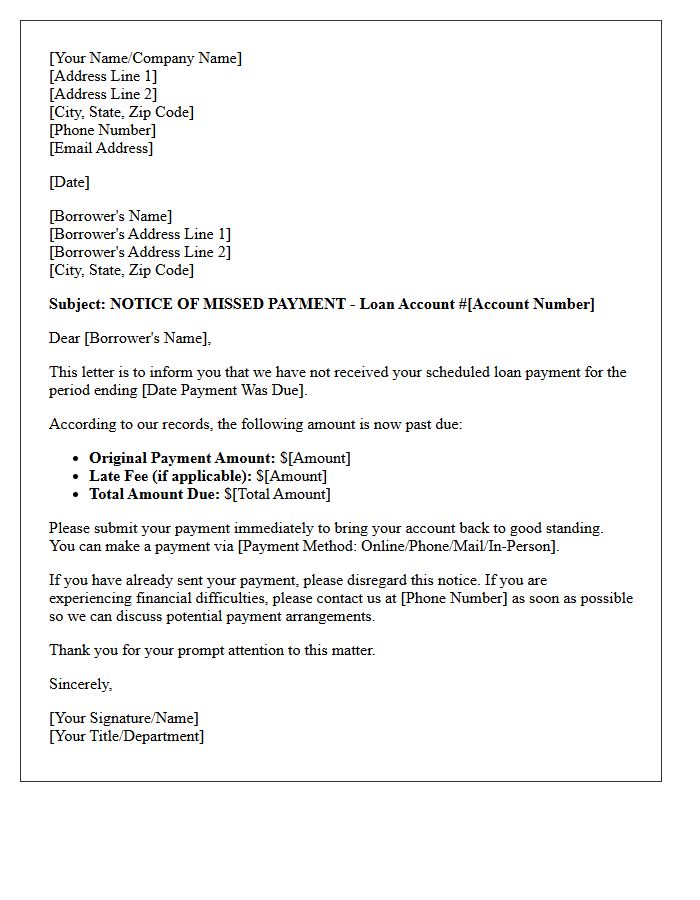
A Personal Loan Missed Payment Notification Letter is a formal notice sent by lenders when a borrower fails to meet a scheduled deadline. This document serves as a legal record of delinquency, detailing the overdue balance, late fees, and updated payment instructions. Receiving this letter is critical because it warns of potential credit score damage and internal collection actions. To prevent further escalation or default, borrowers should contact their creditor immediately to discuss repayment options or hardship assistance programs to protect their financial standing.
Commercial Loan Missed Payment Notice Letter
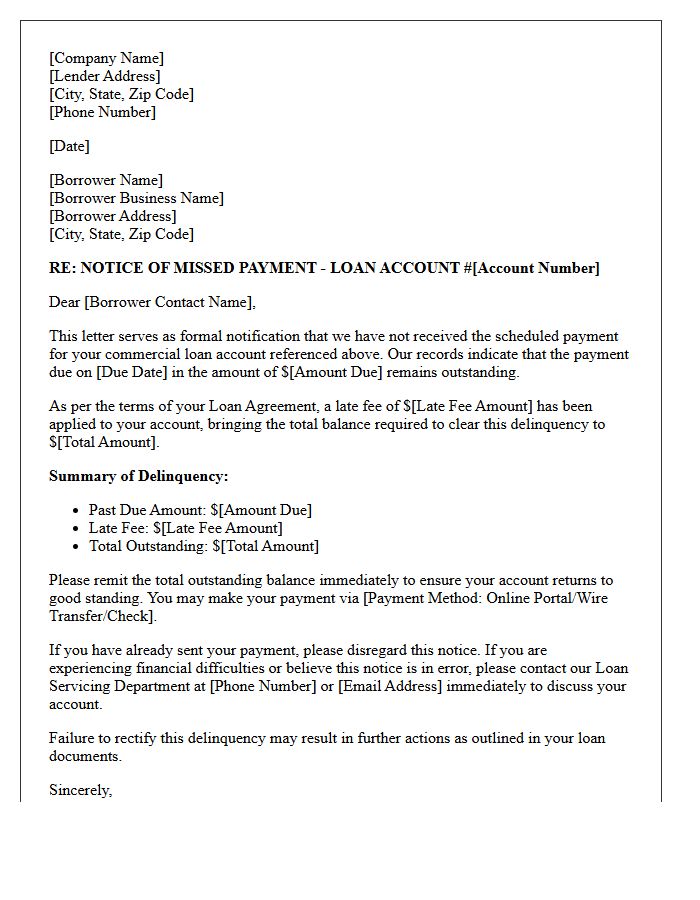
A Commercial Loan Missed Payment Notice Letter is a formal notification issued by lenders when a business fails to meet its debt obligations. Receiving this document signifies a default event, which can trigger late fees, penalty interest rates, and negative reporting to credit bureaus. It is crucial to respond immediately to discuss forbearance or restructuring options. Ignoring this notice may lead to accelerated foreclosure or legal action against the business assets and personal guarantors. Prompt communication is the most effective way to protect your company's financial standing and operational stability.
Grace Period Expiration Missed Loan Payment Letter
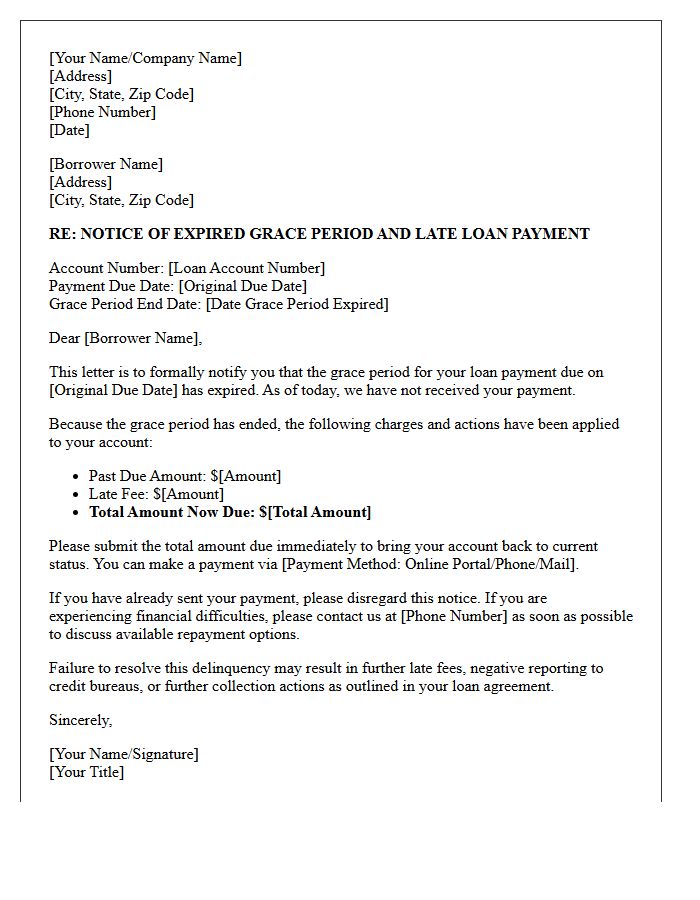
Receiving a notice regarding a Grace Period Expiration signifies that the additional time allowed to submit your funds without penalty has ended. This letter serves as a formal alert that your missed loan payment is now officially delinquent, potentially triggering late fees and impacting your credit score. To protect your financial standing, it is crucial to contact your lender immediately to discuss repayment options or reinstatement terms. Addressing this notice promptly can prevent further default actions and mitigate long-term damage to your creditworthiness and borrowing potential.
Pre-Default Missed Loan Payment Warning Letter
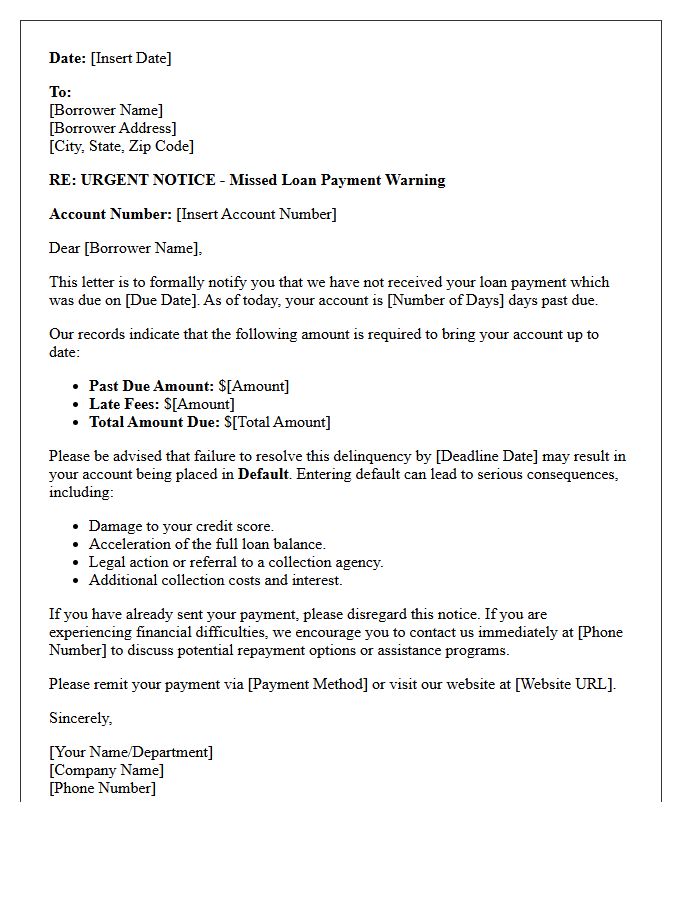
Receiving a Pre-Default Missed Loan Payment Warning Letter is a critical notice indicating your account is past due. This formal communication outlines the outstanding balance, late fees, and a specific deadline to rectify the arrears. Ignoring this document often leads to a formal default, which severely damages your credit score and may trigger legal recovery actions or asset repossession. It is essential to contact your lender immediately to discuss repayment options or hardship programs to prevent further escalation and protect your financial standing before the default is officially recorded.
Missed Loan Payment and Late Fee Assessment Letter
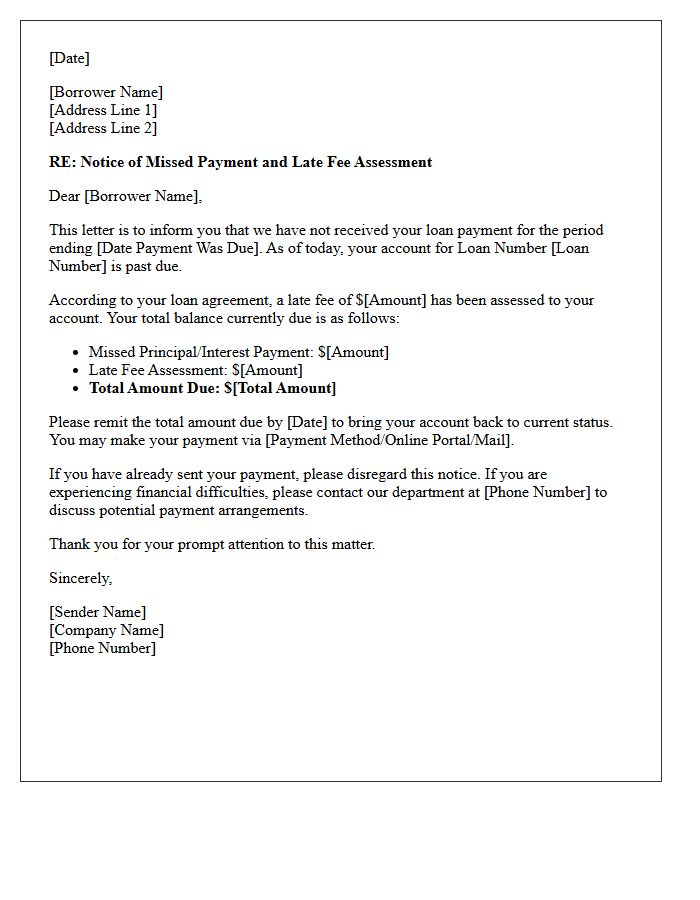
Receiving a Missed Loan Payment and Late Fee Assessment Letter serves as a formal notification that your account is past due. It outlines the specific overdue balance, the penalty charges applied, and the deadline for immediate resolution. Timely action is critical to prevent negative impacts on your credit score and to avoid further collection efforts. Always review the letter for accuracy regarding the payment date and contact your lender promptly to discuss potential repayment options or financial hardship assistance to maintain account standing.
Notice of Intent to Accelerate Loan Letter
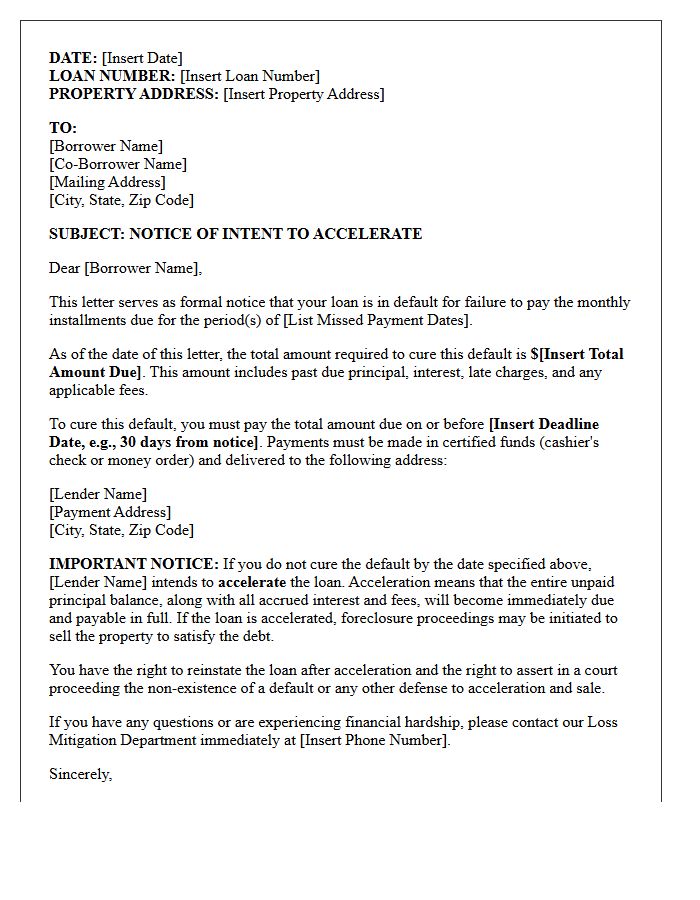
A Notice of Intent to Accelerate Loan is a formal warning from a lender indicating that your mortgage is in default. Receiving this letter means the bank plans to demand immediate payment of the entire loan balance unless the arrears are paid by a specific deadline. This document is a critical legal prerequisite before the foreclosure process officially begins. To prevent acceleration, borrowers must pay the full reinstatement amount, including late fees. Ignoring this notice often leads to the loss of property rights and legal action.
Student Loan Missed Payment Notification Letter
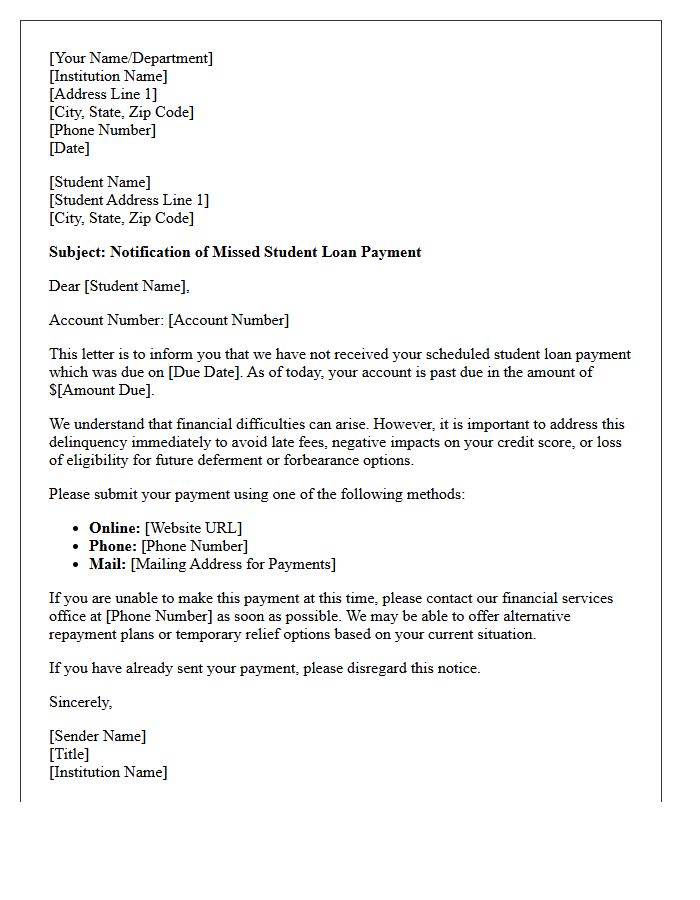
A Student Loan Missed Payment Notification Letter is a critical alert from your loan servicer indicating that a scheduled installment was not received. Receiving this notice means your account is officially delinquent, which can trigger late fees and negatively impact your credit score if unresolved. It is essential to contact your lender immediately to discuss repayment options, such as deferment or forbearance, to avoid default. Addressing this letter promptly helps protect your financial future and prevents aggressive collection actions or wage garnishment.
Secured Loan Missed Payment Warning Letter
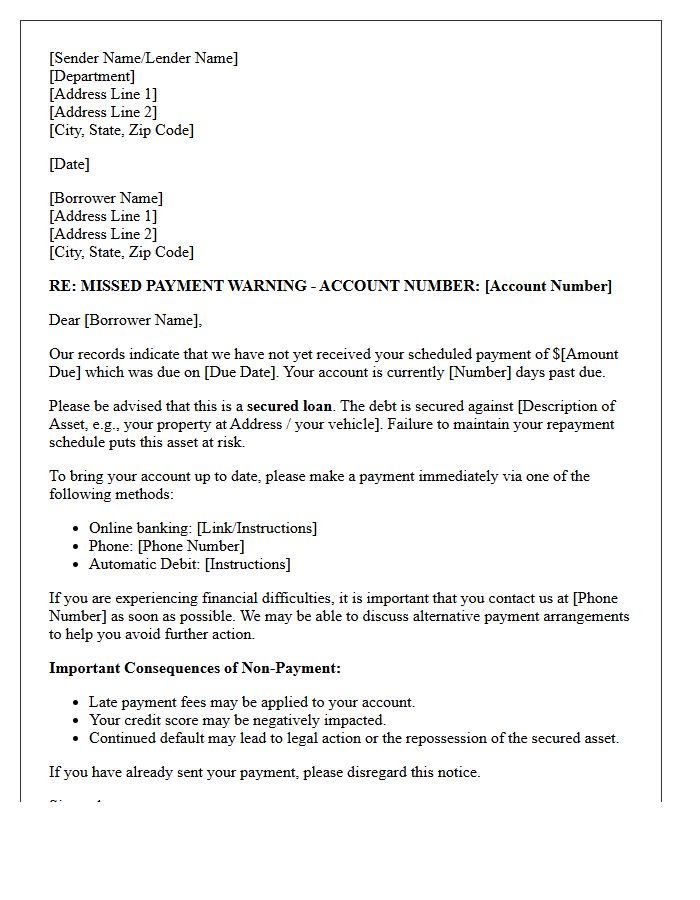
A Secured Loan Missed Payment Warning Letter is a formal notice issued by lenders when a borrower fails to meet a repayment deadline. This document serves as a critical legal alert, informing you that your account is in arrears. It outlines the specific amount overdue, potential late fees, and the deadline for rectification. Ignoring this warning can severely damage your credit score and lead to repossession of the collateral, such as your home or car. It is essential to contact your creditor immediately to discuss repayment options and avoid further legal action.
What should I do if I receive a notification of a missed loan payment?
If you receive a missed payment notification, you should log in to your account immediately to verify the status and make the payment to avoid further late fees or impacts on your credit score. If you believe the notice is an error, contact your lender's customer service department with proof of payment.
Will a single missed loan payment affect my credit score?
Most lenders report payments to credit bureaus once they are 30 days past due. While a notification serves as a warning, failing to settle the balance within this 30-day window can result in a significant drop in your credit score and remain on your report for up to seven years.
Are there late fees associated with a missed loan payment?
Yes, most loan agreements include a late fee penalty that is triggered if the payment is not received by the end of the specified grace period. The exact fee amount is typically outlined in your original promissory note or digital loan dashboard.
Can I request a fee waiver for my first missed payment?
Many lenders are willing to offer a one-time courtesy fee waiver if you have a history of on-time payments. It is recommended to call your lender as soon as you receive the notification to explain your situation and request a manual adjustment to the late charge.
What options are available if I cannot afford to make my loan payment this month?
If you cannot make a payment due to financial hardship, contact your lender immediately to discuss loss mitigation options. You may be eligible for a payment deferral, loan modification, or a temporary forbearance plan to prevent the account from going into default.


Comments