
A Paid Item Overdraft Notification Letter is a formal document sent by banks to inform customers that a transaction was processed despite insufficient funds, resulting in a negative balance. This letter details the specific transaction, any applicable fees, and the required repayment steps to maintain account standing. To help you draft this essential communication, below are some ready to use template.
Image cover: Professional Paid Item Overdraft Notification Templates and Communication Samples
Letter Samples List
- Paid Item Overdraft Notification Letter
- Courtesy Pay Overdraft Approval Letter
- Checking Account Paid Item Overdraft Letter
- Overdraft Privilege Paid Item Letter
- Standard Overdraft Coverage Notification Letter
- Negative Balance Paid Transaction Letter
- Overdraft Item Payment Confirmation Letter
- Account Overdraft Fee Paid Item Letter
- Insufficient Funds Paid Item Notice Letter
- Overdrawn Account Paid Item Letter
- Retail Banking Paid Item Overdraft Letter
- Commercial Account Paid Item Overdraft Letter
Paid Item Overdraft Notification Letter
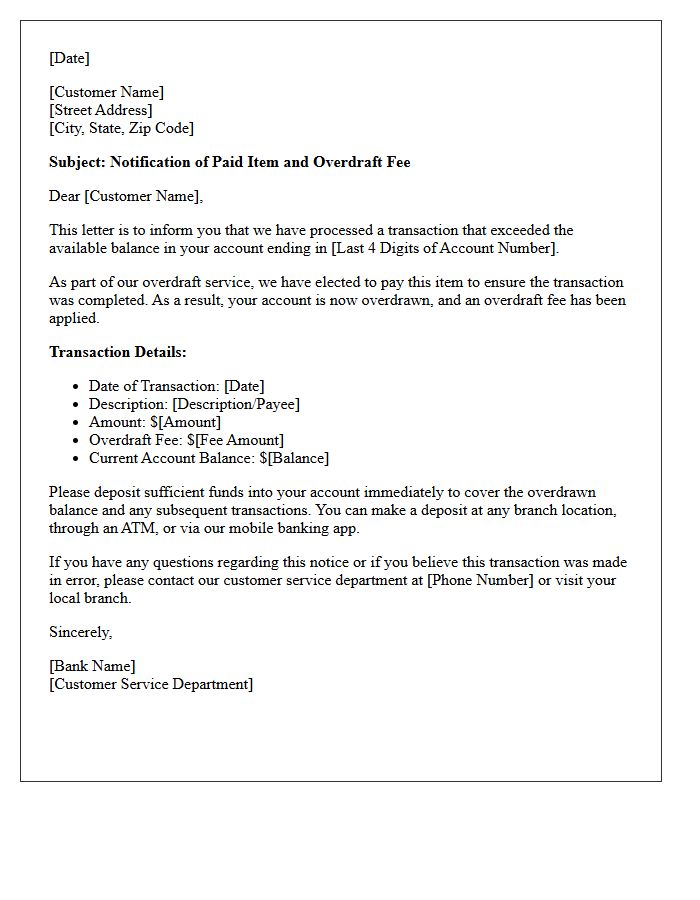
A Paid Item Overdraft Notification Letter is a formal notice from your bank confirming they covered a transaction despite insufficient funds. This document details the specific overdraft fees applied to your account and the resulting negative balance. It is crucial to review these letters immediately to understand your repayment obligations and avoid further penalties. Timely action helps maintain your financial standing and prevents potential account closure. Always verify the transaction details to ensure accuracy and monitor your spending to mitigate future high-cost borrowing charges.
Courtesy Pay Overdraft Approval Letter
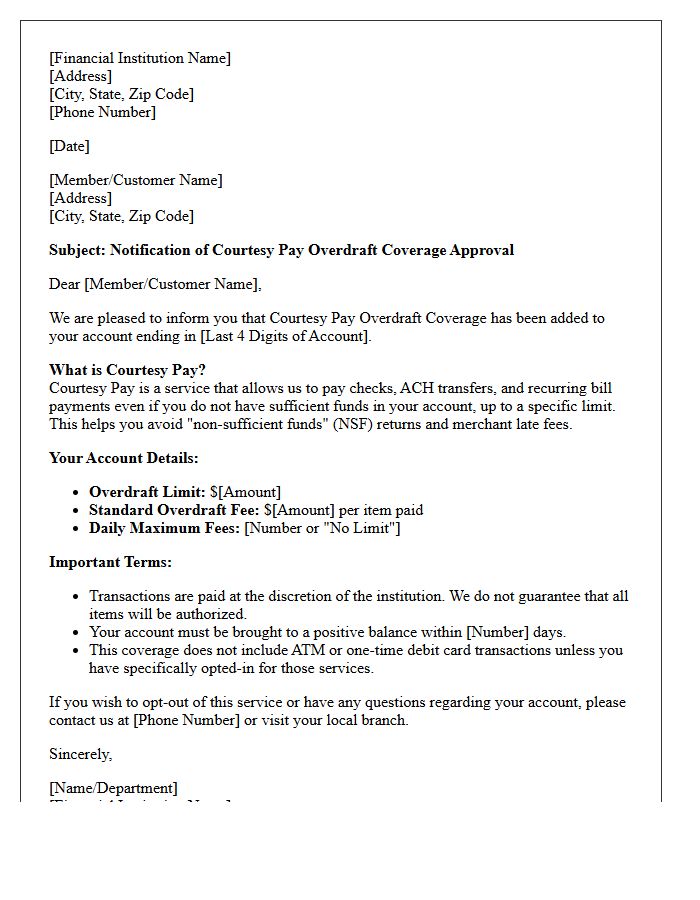
A Courtesy Pay Overdraft Approval Letter confirms that your financial institution may cover transactions when your account balance is low. This discretionary service prevents payment rejections but typically incurs a fixed fee per occurrence. It is vital to understand that this is not a line of credit; it is a temporary safety net that must be repaid promptly. Reviewing your letter helps you manage overdraft limits and opt-out preferences to avoid unexpected costs while ensuring essential payments, like utilities or rent, are processed successfully during financial gaps.
Checking Account Paid Item Overdraft Letter
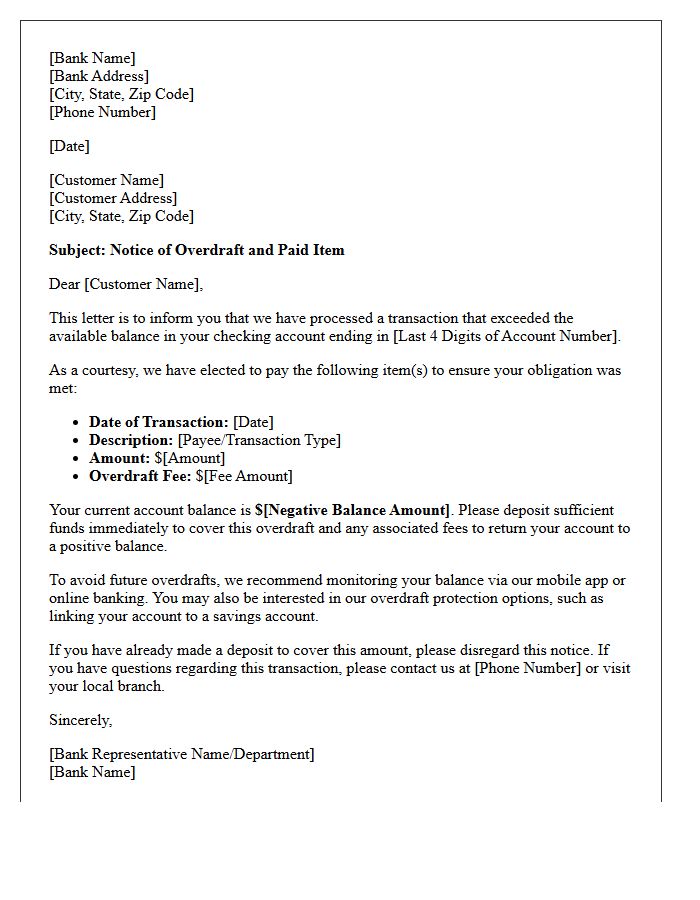
A Checking Account Paid Item Overdraft Letter is a formal notification from your bank confirming they covered a transaction despite insufficient funds. This document specifies the transaction amount and the mandatory overdraft fee charged for the service. It serves as a critical warning to promptly deposit funds and restore a positive balance to avoid additional penalties. Reviewing these letters helps track your spending habits and ensures you maintain financial stability while preventing potential account closure due to repeated negative balances.
Overdraft Privilege Paid Item Letter
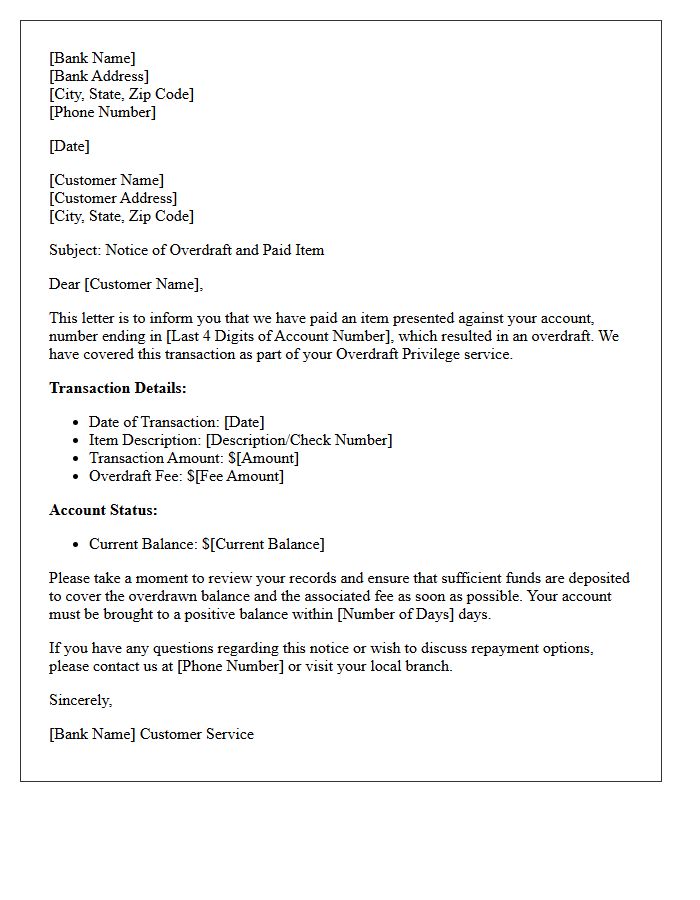
An Overdraft Privilege Paid Item Letter is a formal notification sent by a bank when they cover a transaction despite insufficient funds. This document confirms the institution paid the item on your behalf, preventing a merchant rejection while incurring an overdraft fee. It is crucial to review these letters to track your account balance and understand the costs of discretionary overdraft coverage. Monitoring these notices helps you manage liquidity and avoid recurring penalties that impact your overall financial health.
Standard Overdraft Coverage Notification Letter
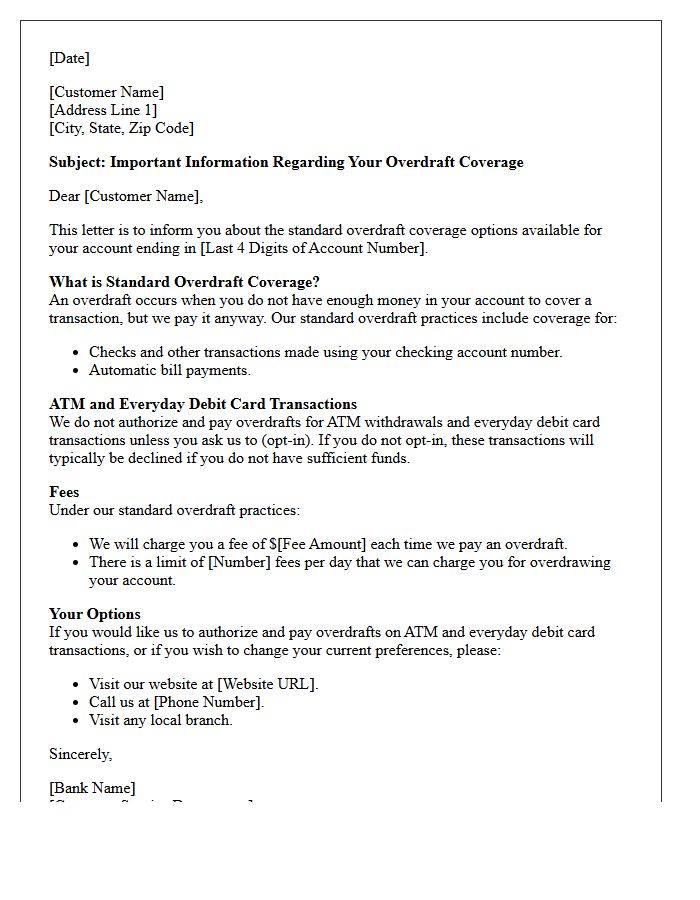
A Standard Overdraft Coverage Notification Letter is a mandatory disclosure informing bank customers about overdraft services for ATM and one-time debit card transactions. Under federal regulations, financial institutions must obtain your affirmative consent, or "opt-in," before charging fees for covering transactions that exceed your account balance. This letter details applicable fees, consumer rights, and alternative options. Reviewing this document is essential for financial management, as it allows you to decide whether to prioritize transaction completion or avoid potential service charges by declining the optional coverage.
Negative Balance Paid Transaction Letter
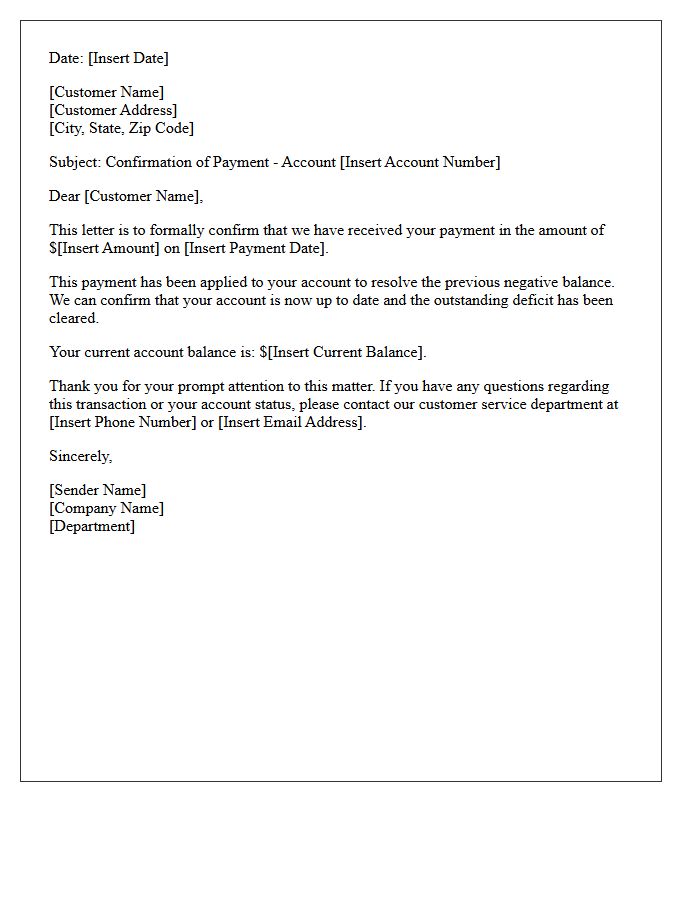
A Negative Balance Paid Transaction Letter is a formal notification confirming that a customer has successfully repaid an overdrawn account. This document serves as official proof that the outstanding debt is settled and the account is no longer in arrears. It is essential for personal records and can be used to resolve credit reporting inaccuracies. Receiving this letter ensures that the financial institution acknowledges the rectification of the deficit, providing peace of mind and protecting the consumer's future financial standing and eligibility for banking services.
Overdraft Item Payment Confirmation Letter
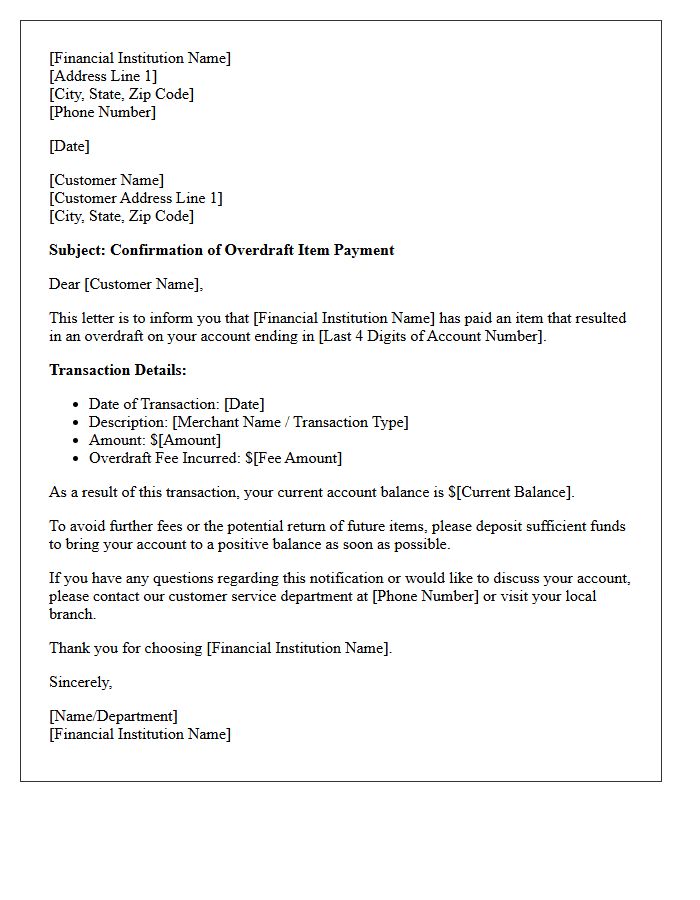
An Overdraft Item Payment Confirmation Letter is a formal notice sent by a bank after they cover a transaction exceeding your available balance. This document details the overdraft fee charged and the specific amount paid to the merchant. It serves as an essential record for tracking account activity and understanding your current financial obligations. Reviewing this letter promptly helps you monitor account standing and adjust your spending habits to avoid recurring penalties or potential account suspension due to a negative balance.
Account Overdraft Fee Paid Item Letter
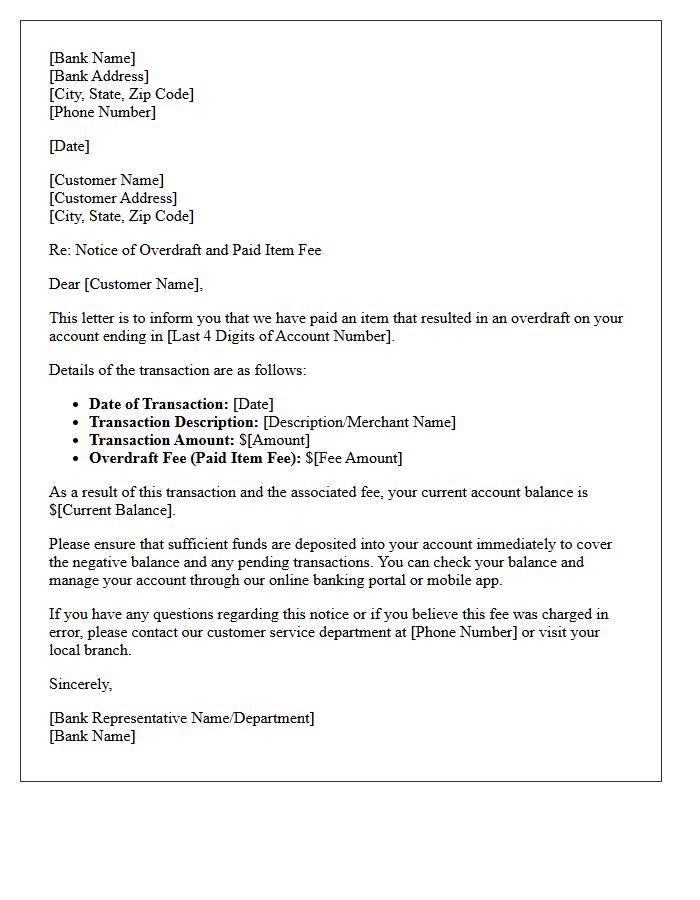
An Account Overdraft Fee Paid Item Letter is a formal notification from your bank confirming they covered a transaction despite insufficient funds. This document details the specific overdraft fee charged for the service. It is crucial to review this letter to track your account balance and understand your bank's repayment terms. Receiving this notice serves as a warning to deposit funds immediately to avoid further penalties or extended overdraft fees. Monitoring these letters helps maintain financial health and prevents recurring costly charges on your banking profile.
Insufficient Funds Paid Item Notice Letter
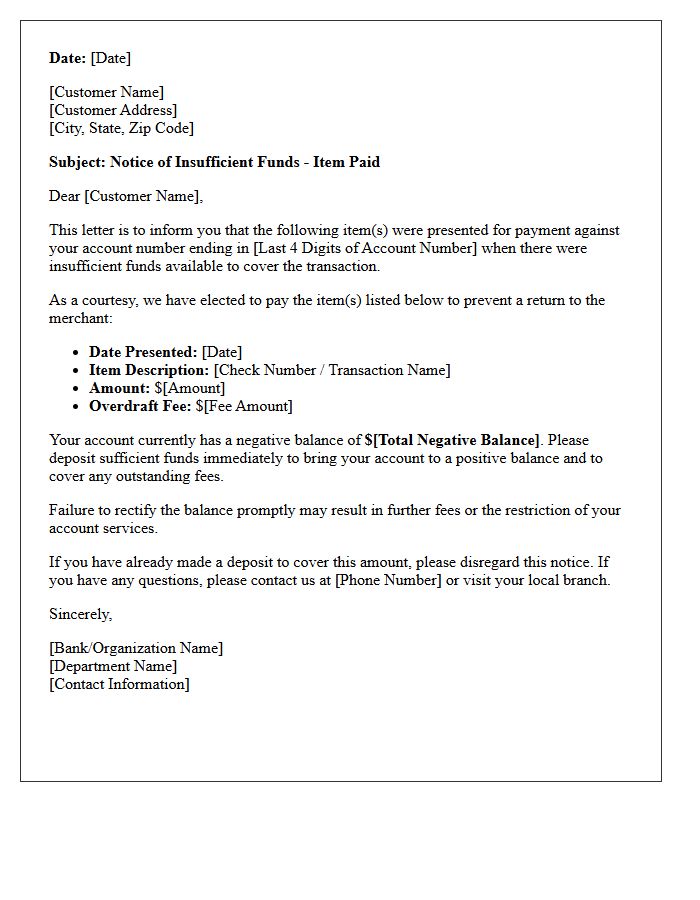
An Insufficient Funds Paid Item Notice Letter informs an account holder that their bank covered a transaction despite inadequate capital. Unlike a rejected payment, the bank pays the merchant on your behalf, typically triggering an overdraft fee. It is crucial to deposit funds immediately to rectify a negative balance and avoid additional penalties. This notice serves as a formal record of the automated credit extension provided by your financial institution. Monitoring these alerts helps maintain financial health and prevents long-term banking history complications.
Overdrawn Account Paid Item Letter
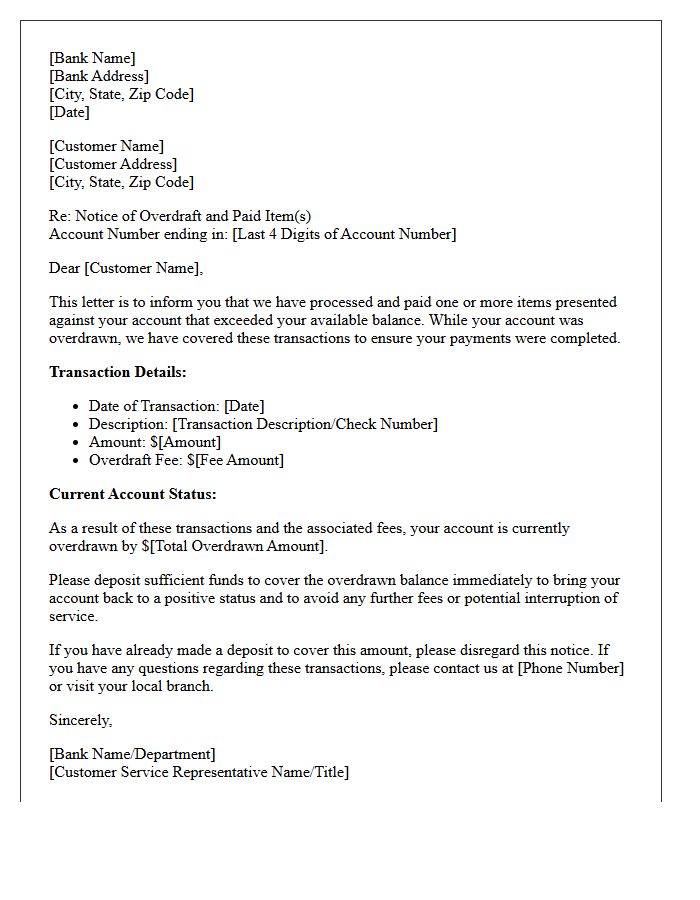
An Overdrawn Account Paid Item Letter is a formal notification from your bank confirming they covered a transaction despite insufficient funds. This service, often called overdraft protection, prevents payment rejection but typically incurs a specific fee per item. It is essential to review the transaction date and fee amount to reconcile your balance immediately. Frequent occurrences can lead to high costs or account closure, so monitoring your available balance is the most effective way to avoid these penalties and maintain a healthy financial standing.
Retail Banking Paid Item Overdraft Letter
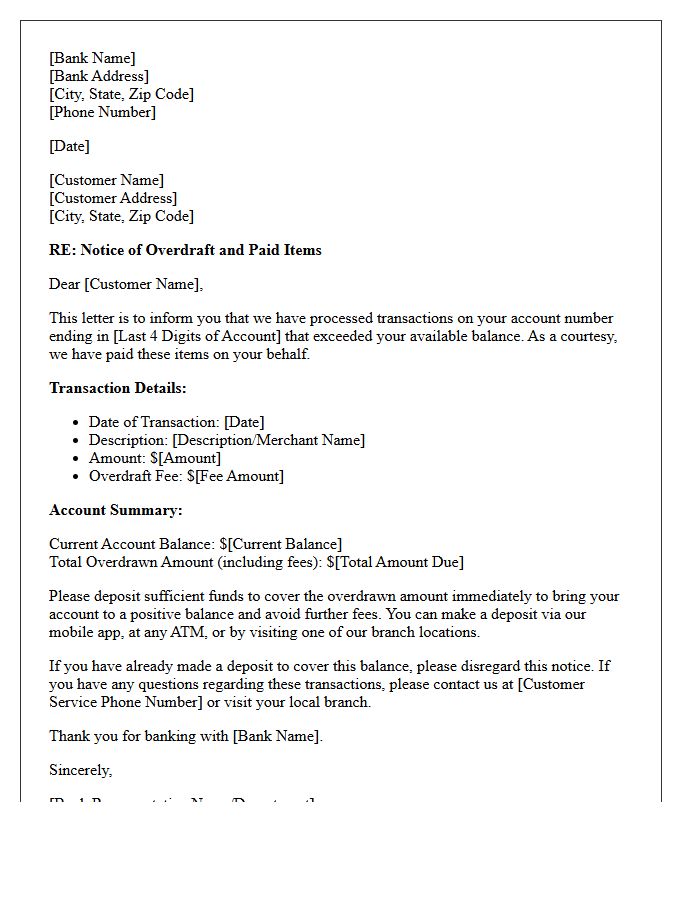
A Retail Banking Paid Item Overdraft Letter is a formal notification sent when a bank covers a transaction despite insufficient funds in your account. This document confirms the bank paid the item on your behalf, resulting in a negative balance. It highlights the mandatory overdraft fee charged for this service. You must promptly deposit funds to restore a positive balance and avoid further penalties. Reviewing these letters is essential for financial management and helps you track automated payments or checks that exceeded your available spending limit.
Commercial Account Paid Item Overdraft Letter
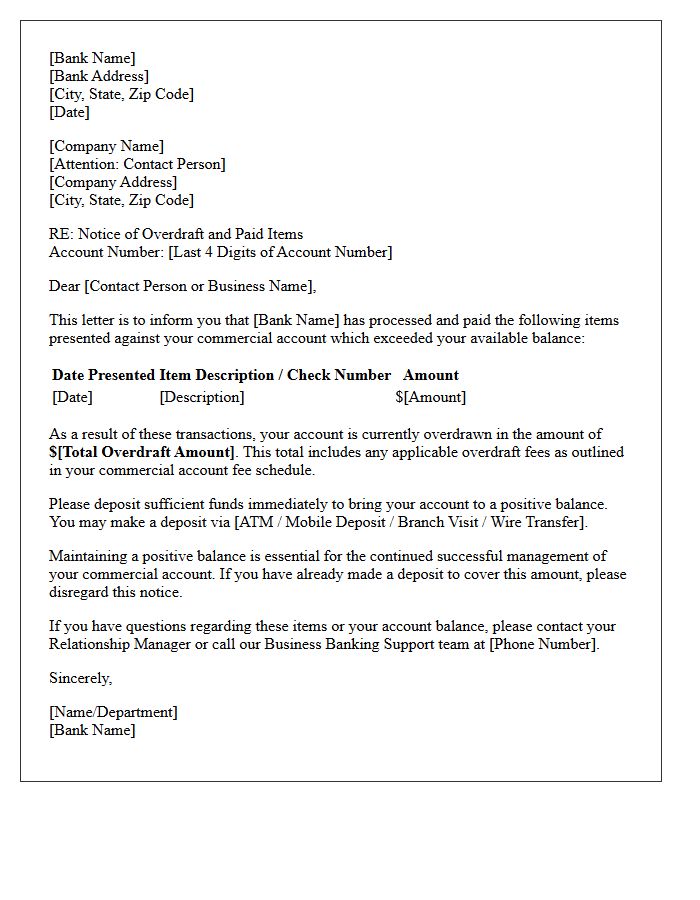
A Commercial Account Paid Item Overdraft Letter is a formal notification from a bank stating they have covered a transaction despite insufficient funds. This document outlines specific overdraft fees and the negative balance incurred. It is crucial for businesses to resolve this debt immediately to maintain a positive credit standing and avoid account suspension. Monitoring these letters helps managers track cash flow discrepancies and adjust internal financial controls to prevent recurring penalties. Prompt action ensures uninterrupted banking services and protects the professional relationship between the business and the financial institution.
What is a Paid Item Overdraft Notification Letter?
A Paid Item Overdraft Notification Letter is a formal notice sent by a financial institution to inform an account holder that a transaction was processed despite insufficient funds, resulting in a negative balance and applicable service fees.
Why did I receive a notification for a paid overdraft item?
You received this letter because your bank elected to cover a transaction-such as a check, ACH transfer, or recurring debit-that exceeded your available balance as a courtesy or part of an overdraft protection plan.
What fees are associated with a Paid Item Overdraft Letter?
Most banks charge a standard overdraft fee (often ranging from $25 to $35) for each item paid into the negative. The specific fee amount and any additional daily overdraft interest will be detailed within the notification letter.
How long do I have to resolve a negative balance after receiving this notice?
While specific policies vary by bank, you are typically required to deposit funds to cover the overdraft and fees immediately. Failure to bring the account to a positive balance within 30 days may result in account closure or reporting to credit bureaus.
Can I dispute an overdraft fee mentioned in the notification letter?
Yes, you can contact your bank's customer service department to request a fee waiver. Banks may occasionally waive overdraft fees as a one-time courtesy if you have a positive account history and promptly rectify the negative balance.


Comments