
Financial compliance is critical for legal and real estate professionals. Receiving a Trust Account Overdraft Warning Notice requires immediate action to rectify shortages and prevent regulatory penalties. This guide explains how to identify causes, document corrections, and maintain professional standards to protect your license and reputation. To simplify your response process, below are some ready to use template.

Image cover: Professional Trust Account Overdraft Warning Notice Templates and Best Practices
Letter Samples List
- First Warning Letter for Trust Account Overdraft
- Urgent Letter of Notice Regarding Trust Account Overdraft
- Attorney Trust Account Overdraft Warning Letter
- Letter of Overdraft Warning for Fiduciary Trust Account
- Final Warning Letter for Trust Account Overdraft Action
- Real Estate Trust Account Overdraft Notification Letter
- Escrow Trust Account Overdraft Warning Letter
- Pre-Closure Warning Letter for Trust Account Overdraft
- Letter of Impending Action for Trust Account Overdraft
- Compliance Warning Letter for Trust Account Overdraft
- Fiduciary Duty Breach Warning Letter for Trust Account Overdraft
- Initial Warning Letter for Minor Trust Account Overdraft
First Warning Letter for Trust Account Overdraft
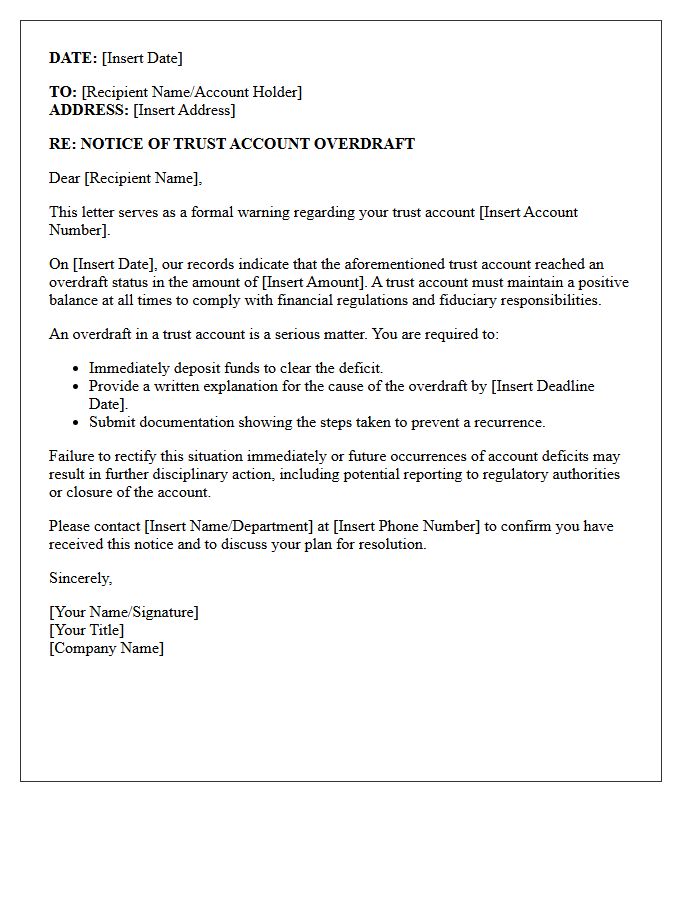
Receiving a First Warning Letter for a trust account overdraft is a critical regulatory matter that requires immediate action. This formal notice indicates that your financial institution reported a shortfall to the state bar or licensing authority. To protect your professional license, you must provide a detailed written explanation and accounting records proving the error was rectified. Failure to address this compliance breach promptly can lead to audits, fines, or disciplinary proceedings. Maintaining strict fiduciary oversight and accurate bookkeeping is essential to prevent future trust accounting violations and ensure legal accountability.
Urgent Letter of Notice Regarding Trust Account Overdraft
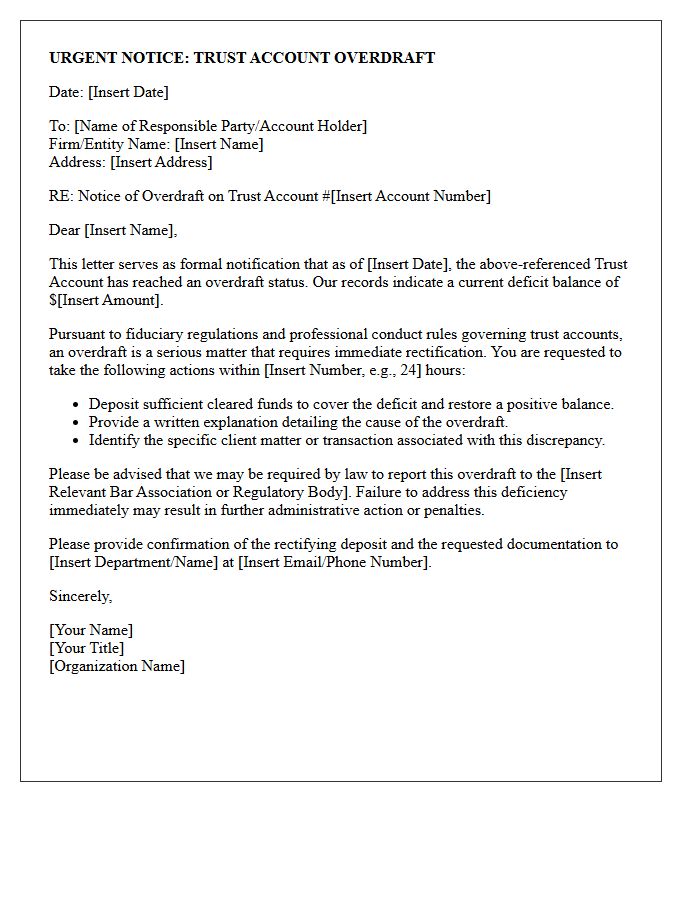
An Urgent Letter of Notice Regarding Trust Account Overdraft signifies a critical compliance failure where professional funds fall below required balances. This legal alert typically demands immediate restitution to cover the deficit and prevent further financial liability. Recipients must act swiftly to rectify the shortage, as an overdraft often triggers mandatory reporting to regulatory authorities or bar associations. Failure to resolve this issue promptly can lead to severe disciplinary action, loss of licensure, or audits. Always verify the transaction history and deposit necessary funds instantly to maintain fiduciary integrity and protect client assets.
Attorney Trust Account Overdraft Warning Letter
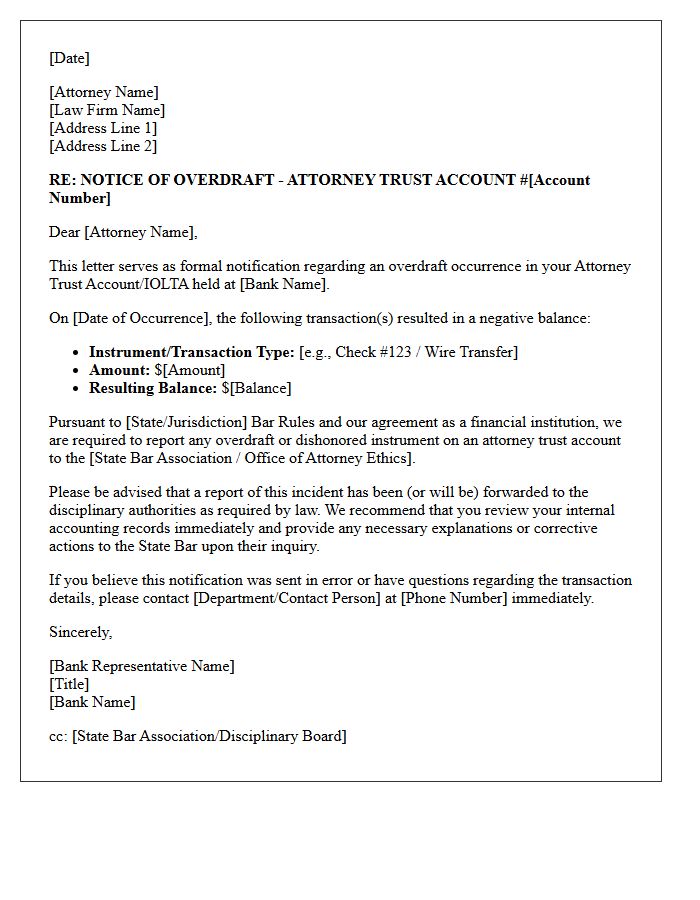
An Attorney Trust Account Overdraft Warning Letter is a formal notice issued by a financial institution to a state bar association or licensing authority. This occurs when a fiduciary account lacks sufficient funds to cover a presented check or electronic transfer. It triggers an immediate investigation into the lawyer's financial management practices. To protect your license, you must provide a detailed written explanation and proof of reconciled records. Professional misconduct investigations often stem from these alerts, making accurate bookkeeping and strict adherence to escrow rules essential for every legal practitioner.
Letter of Overdraft Warning for Fiduciary Trust Account
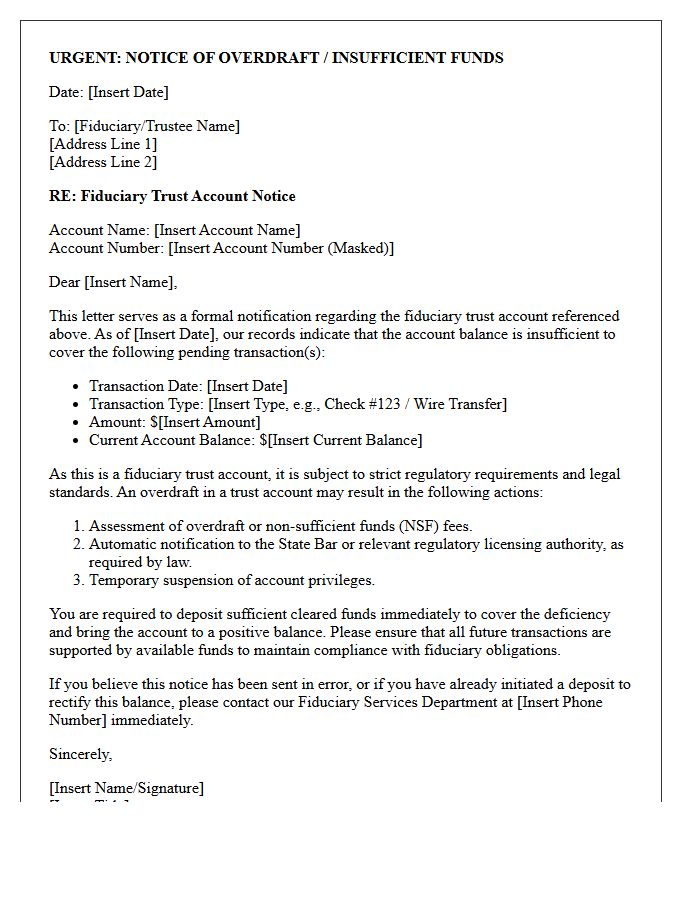
A Letter of Overdraft Warning for a fiduciary trust account is a critical notice indicating that a transaction exceeded the available balance. Legal and ethical standards require fiduciary duty to maintain strict account integrity to protect client funds. Receiving this warning often triggers mandatory reporting to state bar associations or regulatory bodies, as it may suggest commingling or mismanagement. It is essential to rectify the shortage immediately and provide detailed documentation to prove the error was administrative rather than a misappropriation of assets, ensuring continued professional compliance.
Final Warning Letter for Trust Account Overdraft Action
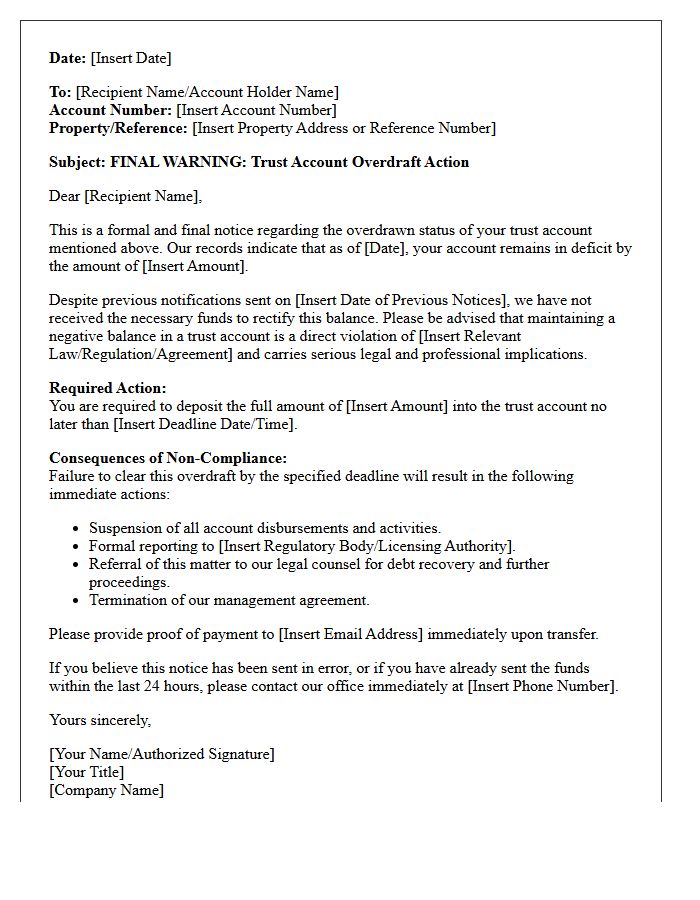
A final warning letter for a trust account overdraft is a critical regulatory notice indicating severe fiduciary non-compliance. It serves as a formal notification that your account has a negative balance, which is strictly prohibited in legal and real estate sectors. Recipients must provide an immediate written explanation and restoration of funds to avoid disciplinary measures. Failure to rectify this shortfall promptly often leads to mandatory audits, license suspension, or permanent disbarment. Always maintain meticulous accounting records to prevent technical errors from escalating into serious professional misconduct allegations.
Real Estate Trust Account Overdraft Notification Letter
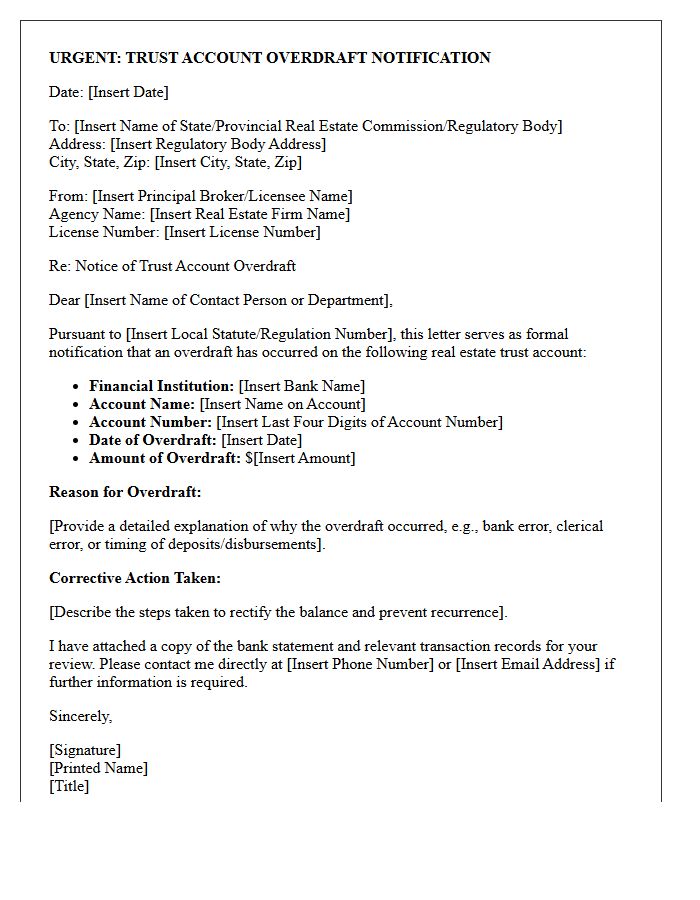
A Real Estate Trust Account Overdraft Notification Letter is a critical compliance document issued by financial institutions to state regulatory authorities when a client trust account falls below a zero balance. This mandatory report triggers an immediate audit or investigation into the brokerage's financial practices. To maintain licensing, principal brokers must ensure sufficient funds and prevent commingling. Receiving this notice signifies potential mismanagement of escrow funds, requiring swift corrective action and detailed documentation to avoid severe legal penalties or the loss of professional credentials.
Escrow Trust Account Overdraft Warning Letter
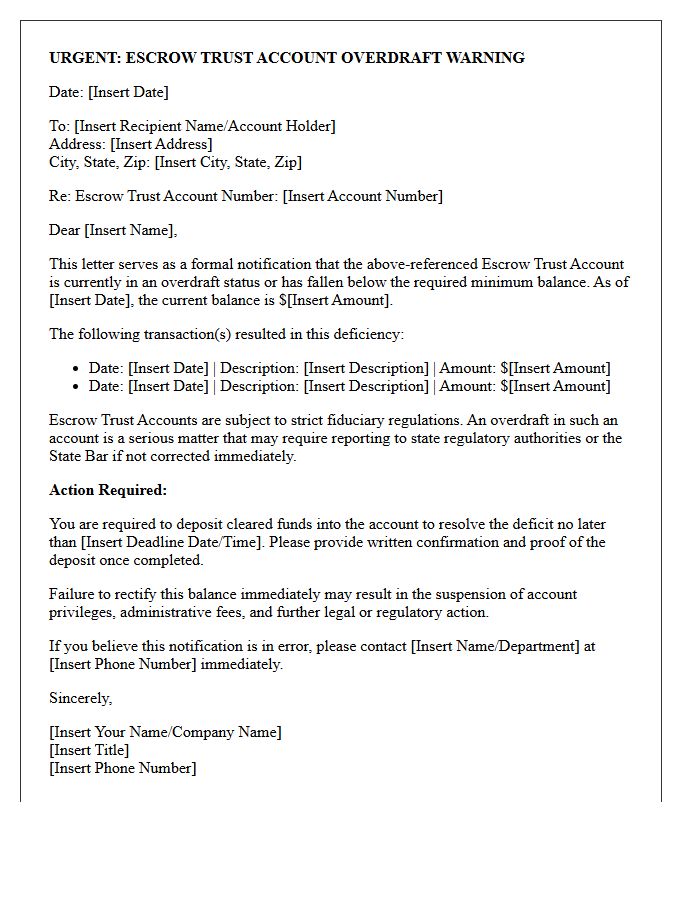
An Escrow Trust Account Overdraft Warning Letter is a formal notice issued by a bank or regulatory body when a fiduciary account lacks sufficient funds to cover a transaction. Receiving this letter is critical because it signals a potential compliance violation or bookkeeping error. Legal professionals and real estate brokers must respond immediately to rectify the deficit, as unresolved overdrafts often trigger mandatory reports to state licensing boards, potentially leading to audits or disciplinary action against your professional license. Maintaining accurate ledgers is essential to avoid these serious legal consequences.
Pre-Closure Warning Letter for Trust Account Overdraft
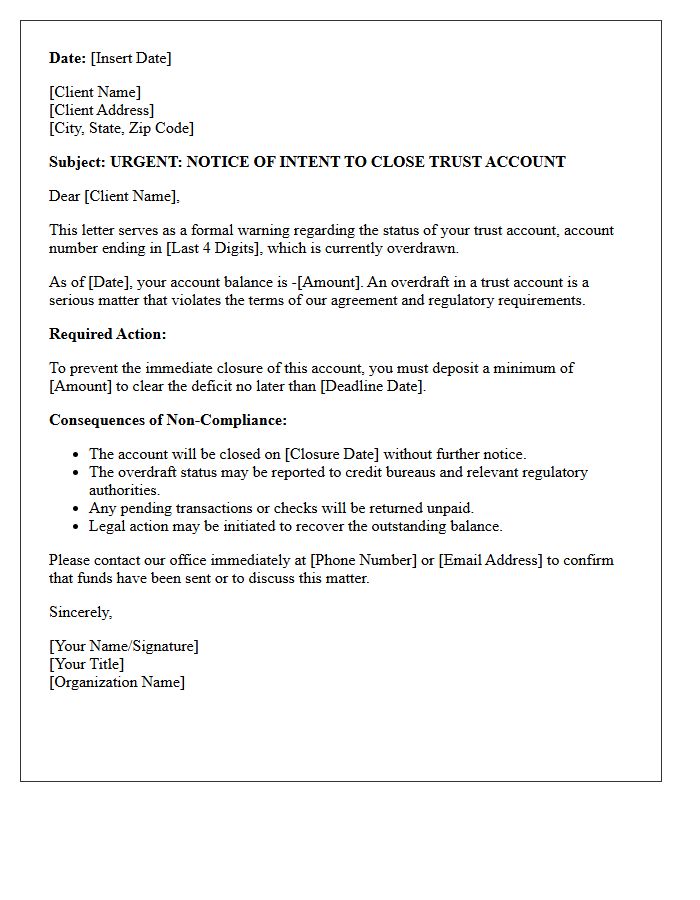
A Pre-Closure Warning Letter for a Trust Account Overdraft is a critical legal notice issued by financial institutions. It serves as a formal alert that a fiduciary account has a negative balance, violating strict banking regulations. You must rectify the deficit immediately to prevent permanent account termination. Failure to resolve the overdraft can lead to severe consequences, including reports to regulatory authorities and potential legal action. Maintaining a positive balance is essential for legal compliance and preserving the integrity of funds held for third-party beneficiaries.
Letter of Impending Action for Trust Account Overdraft
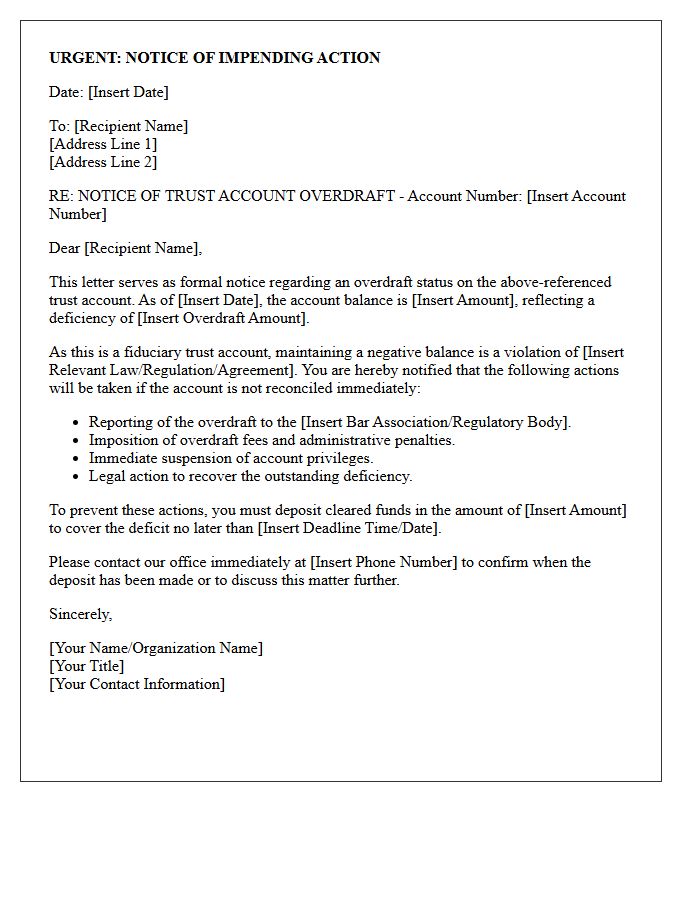
A Letter of Impending Action for Trust Account Overdraft is a formal notice issued by a bank or regulatory body when a fiduciary account balance falls below zero. This critical document warns of potential disciplinary measures, including audits or license suspension. It signifies a breach of financial compliance, often triggering an immediate investigation into the handling of client funds. To prevent legal consequences or sanctions, the recipient must provide a detailed explanation and proof of rectification within a strict timeframe to demonstrate proper fiduciary responsibility and account management.
Compliance Warning Letter for Trust Account Overdraft
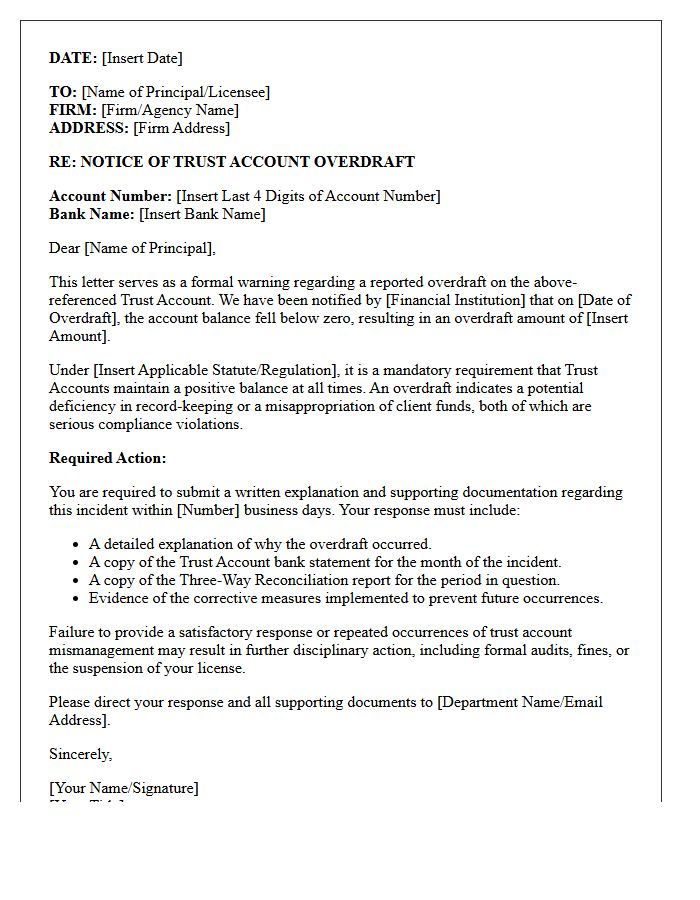
A Compliance Warning Letter for a trust account overdraft is a formal notice issued by regulatory bodies or financial institutions. It signifies a serious fiduciary breach, indicating that client funds have been compromised due to insufficient balances. Immediate action is required to rectify the deficit and provide a detailed written explanation. Failure to resolve the overdraft promptly can lead to severe penalties, including audits, fines, or the suspension of your professional license. Maintaining precise accounting records is essential to demonstrate compliance and avoid further disciplinary measures or legal repercussions.
Fiduciary Duty Breach Warning Letter for Trust Account Overdraft
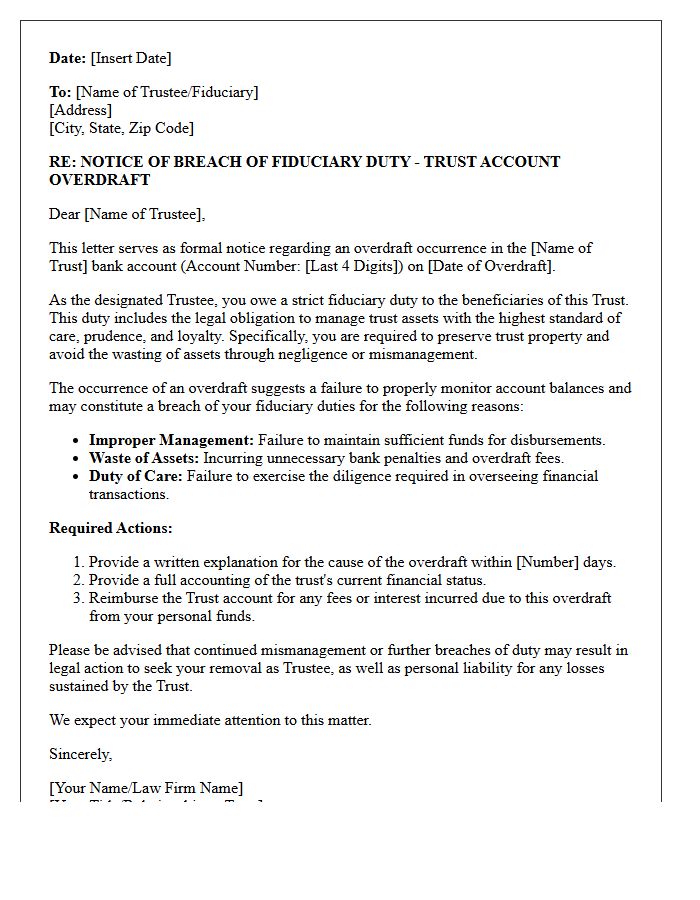
A fiduciary duty breach warning letter for a trust account overdraft serves as a formal notification that a trustee has failed to maintain sufficient funds. The fiduciary duty requires managing assets with absolute care and loyalty. An overdraft suggests mismanagement or potential commingling of funds, which are serious legal violations. This document demands immediate restitution and a detailed accounting to avoid litigation or removal. Addressing an overdraft promptly is essential to demonstrate transparency and fulfill the legal obligation to protect the beneficiaries' financial interests from further loss or negligence.
Initial Warning Letter for Minor Trust Account Overdraft
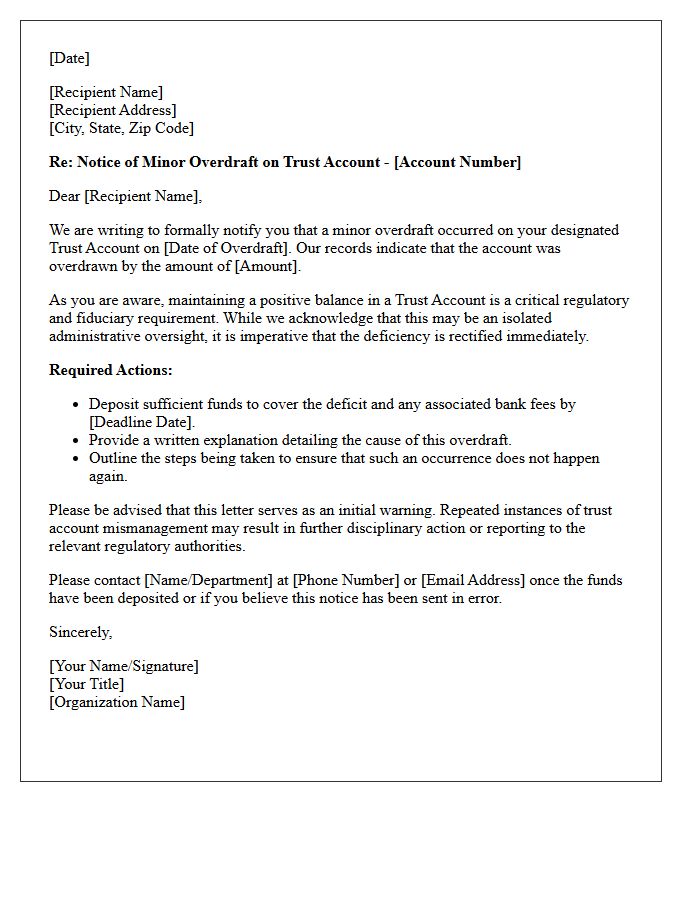
Receiving an Initial Warning Letter regarding a minor trust account overdraft is a serious regulatory matter. Most jurisdictions require immediate notification to the state bar or licensing authority when a shortfall occurs. You must promptly provide a written explanation detailing the clerical error or timing issue that caused the deficit. Demonstrating restitution and implementing improved internal accounting controls is essential to resolve the inquiry. While often resulting in no further action for first-time minor offenses, ignoring this notice can lead to disciplinary audits or formal sanctions against your license.
What is a Trust Account Overdraft Warning Notice?
A Trust Account Overdraft Warning Notice is a formal notification issued by a financial institution or regulatory body when a transaction attempts to exceed the available funds in a client trust or escrow account. It serves as a critical alert to prevent commingling of funds and to ensure compliance with legal accounting standards.
What causes a Trust Account Overdraft Warning?
Common causes include clerical errors, recording transactions against uncleared deposits, bank service fees being deducted from the wrong account, or timing discrepancies between disbursements and incoming wire transfers. Any instance where the ledger balance drops below zero will trigger this automated alert.
What are the legal implications of a trust account overdraft?
In most jurisdictions, banks are legally required to report trust account overdrafts to the State Bar or relevant licensing board. This can trigger an immediate audit or disciplinary investigation, as maintaining a positive balance is a non-negotiable fiduciary duty for legal and real estate professionals.
How should I respond to a Trust Account Overdraft Notice?
You should immediately identify the source of the shortfall, deposit personal or firm funds to cover any bank fees (if applicable), and document the correction in your ledger. It is highly recommended to provide a written explanation to your regulatory body detailing the error and the steps taken to prevent recurrence.
How can I prevent future trust account overdrafts?
To prevent overdrafts, implement a three-way reconciliation process monthly, utilize "Overdraft Protection" from a linked business operating account solely for bank fees, and never issue disbursements until funds are confirmed as "cleared" rather than just "available."


Comments