
Managing debt effectively requires clear communication with your financial provider. A Loan Equated Monthly Installment (EMI) Modification Letter is a formal request to adjust your repayment schedule, interest rates, or tenure due to financial changes. This document helps secure better terms and ensures long-term stability. To help you draft a professional request, below are some ready to use templates.
Image cover: Official Request Templates for Modifying Your Loan EMI Payments
Letter Samples List
- Loan Equated Monthly Installment Reduction Request Letter
- Loan Equated Monthly Installment Due Date Modification Letter
- Bank Loan Equated Monthly Installment Restructuring Agreement Letter
- Temporary Loan Equated Monthly Installment Deferment Application Letter
- Loan Equated Monthly Installment Tenure Extension Request Letter
- Revised Loan Equated Monthly Installment Confirmation Letter
- Loan Equated Monthly Installment Increase Authorization Letter
- Financial Hardship Loan Equated Monthly Installment Relief Letter
- Loan Equated Monthly Installment Debit Account Change Letter
- Loan Equated Monthly Installment Moratorium Request Letter
- Adjusted Loan Equated Monthly Installment Approval Letter
- Loan Equated Monthly Installment Amortization Modification Letter
Loan Equated Monthly Installment Reduction Request Letter
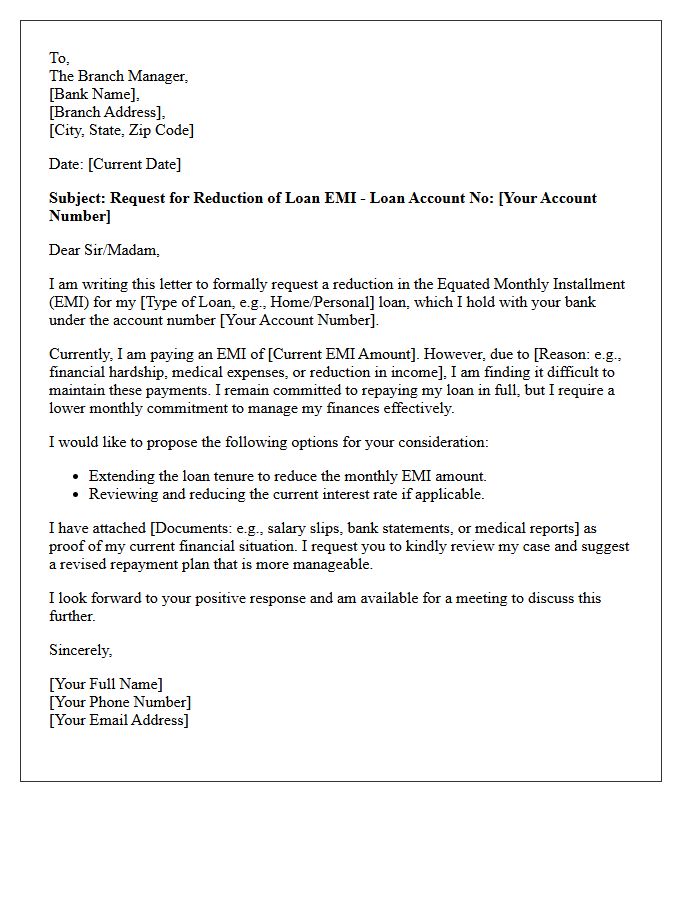
A Loan Equated Monthly Installment Reduction Request Letter is a formal document sent to financial institutions to negotiate lower monthly payments. It is essential to clearly explain your financial hardship, such as job loss or medical emergencies, while proposing a feasible repayment plan. Including supporting documents like salary slips or bank statements increases approval chances. This letter demonstrates your commitment to debt settlement despite temporary constraints, helping you avoid defaults and protect your credit score. Always maintain a professional tone and request a written acknowledgment for your records.
Loan Equated Monthly Installment Due Date Modification Letter
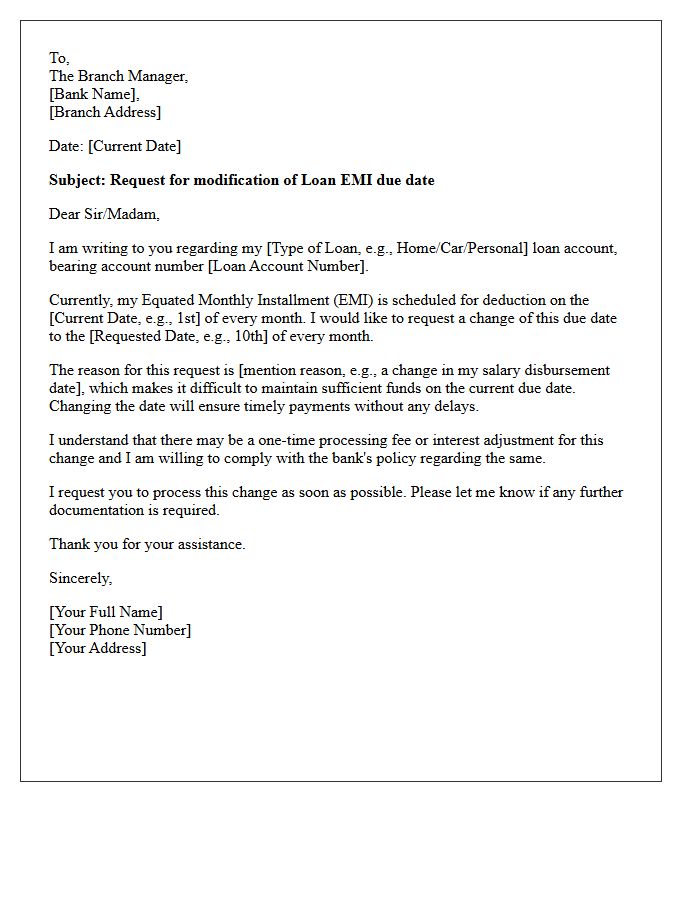
A Loan Equated Monthly Installment Due Date Modification Letter is a formal request sent to a financial institution to adjust your payment schedule. This document is essential when aligning your repayment cycle with your monthly income flow. Clearly state your current loan details, the preferred new date, and a valid reason for the change, such as a shift in salary disbursement. Once approved, this written amendment ensures you avoid late payment penalties and helps maintain a healthy credit score by ensuring timely debt settlement.
Bank Loan Equated Monthly Installment Restructuring Agreement Letter
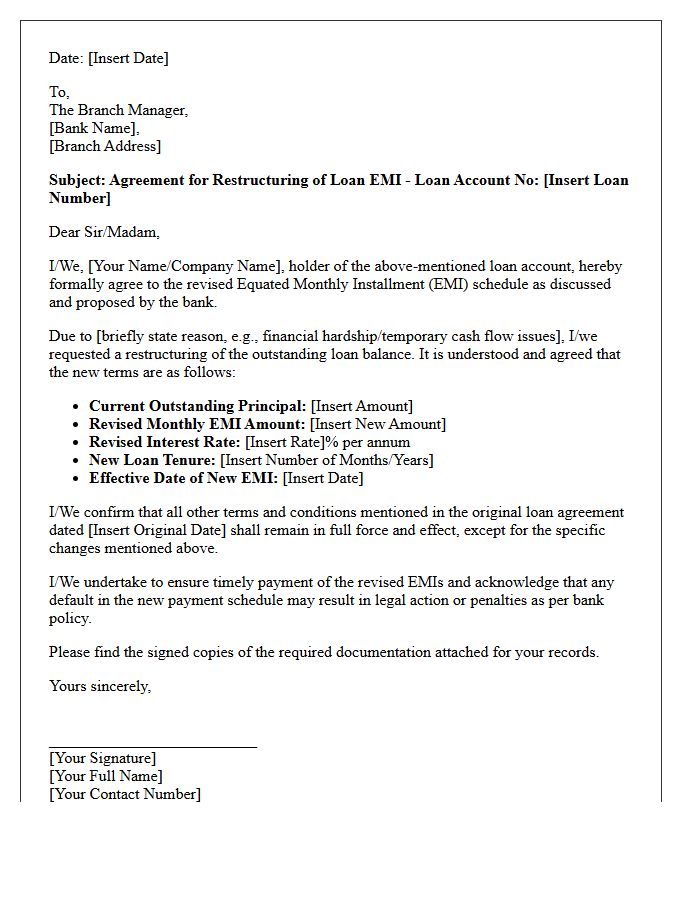
A Bank Loan Equated Monthly Installment Restructuring Agreement Letter is a formal document used to modify repayment terms when a borrower faces financial hardship. This letter legally outlines new conditions, such as extending the loan tenure or adjusting interest rates to reduce the monthly burden. It is essential to ensure all revised payment schedules and potential processing fees are clearly stated. Signing this agreement helps prevent default, protecting your credit score while providing a sustainable path to clearing outstanding debt through mutually agreed debt restructuring parameters.
Temporary Loan Equated Monthly Installment Deferment Application Letter
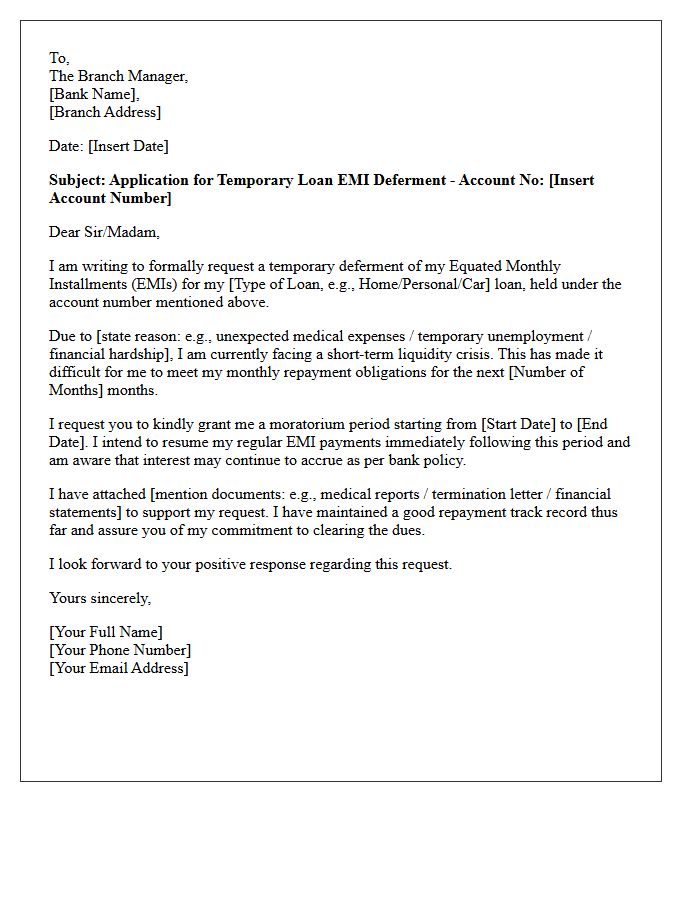
A Temporary Loan EMI Deferment Application Letter is a formal request sent to a financial institution to postpone monthly repayments due to unforeseen financial hardship. It is essential to clearly state the reason for distress, such as medical emergencies or job loss, and specify the requested grace period. Providing supporting documentation strengthens your case. Since approval is at the lender's discretion, submitting the letter early helps maintain a positive credit score and prevents loan default during temporary liquidity crises.
Loan Equated Monthly Installment Tenure Extension Request Letter
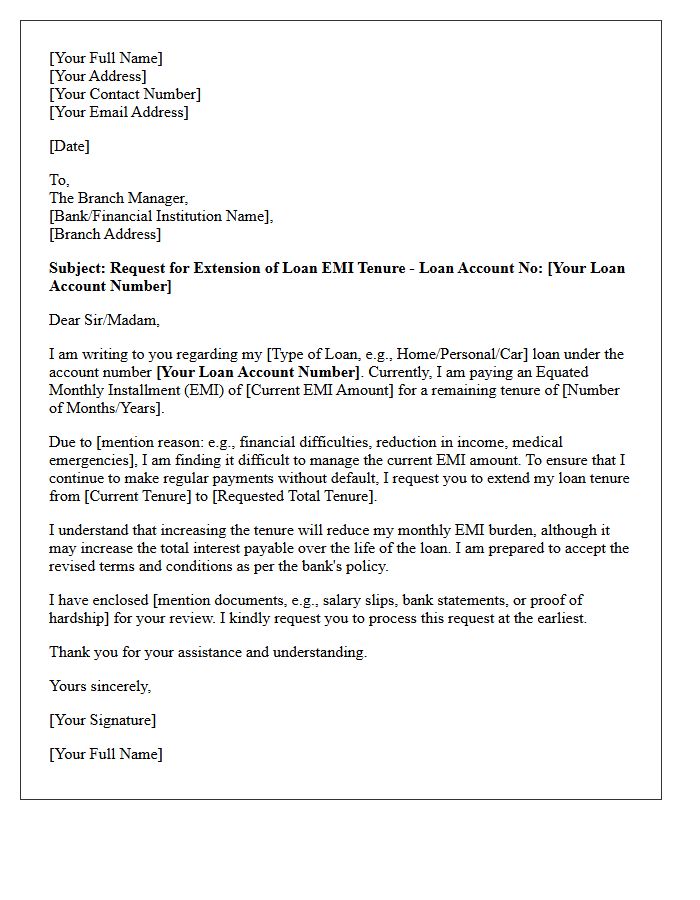
A Loan EMI Tenure Extension Request Letter is a formal document sent to a financial institution to request a longer repayment period. This restructuring strategy aims to reduce the monthly financial burden by spreading the principal over more installments. When drafting, clearly state your loan account number, the reason for financial hardship, and the proposed new duration. While this improves immediate cash flow, it is essential to remember that extending the term typically increases the total interest payable over the life of the loan.
Revised Loan Equated Monthly Installment Confirmation Letter
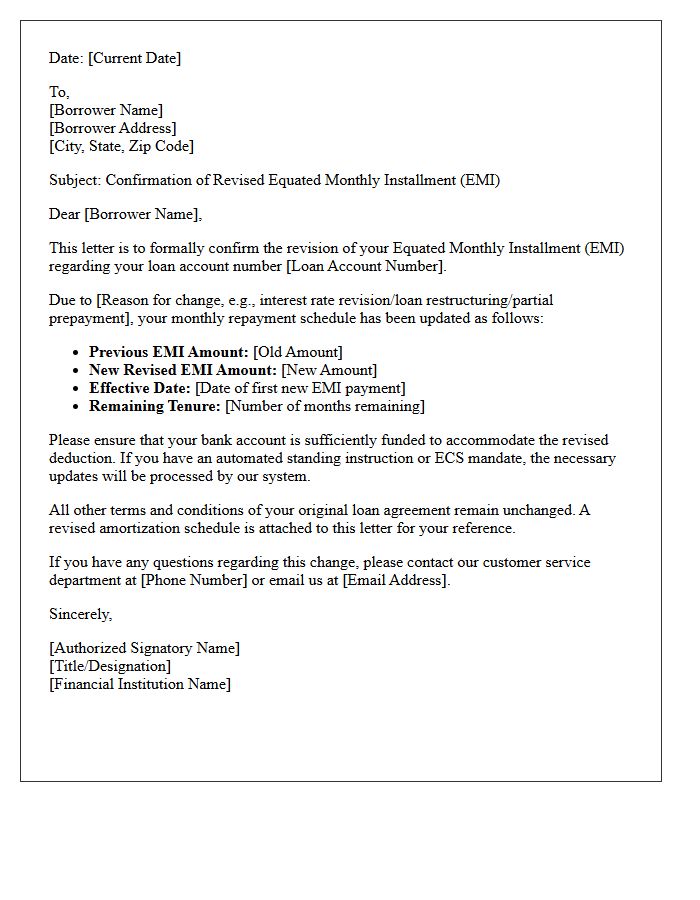
A Revised Loan Equated Monthly Installment Confirmation Letter is a formal document notifying borrowers of changes to their repayment schedule. This occurs due to interest rate fluctuations, tenure adjustments, or partial prepayments. It is essential to verify the new EMI amount, effective date, and remaining balance to maintain financial accuracy. Carefully reviewing this legal record ensures your bank records align with your personal budget, preventing payment defaults or processing errors during the updated loan term.
Loan Equated Monthly Installment Increase Authorization Letter
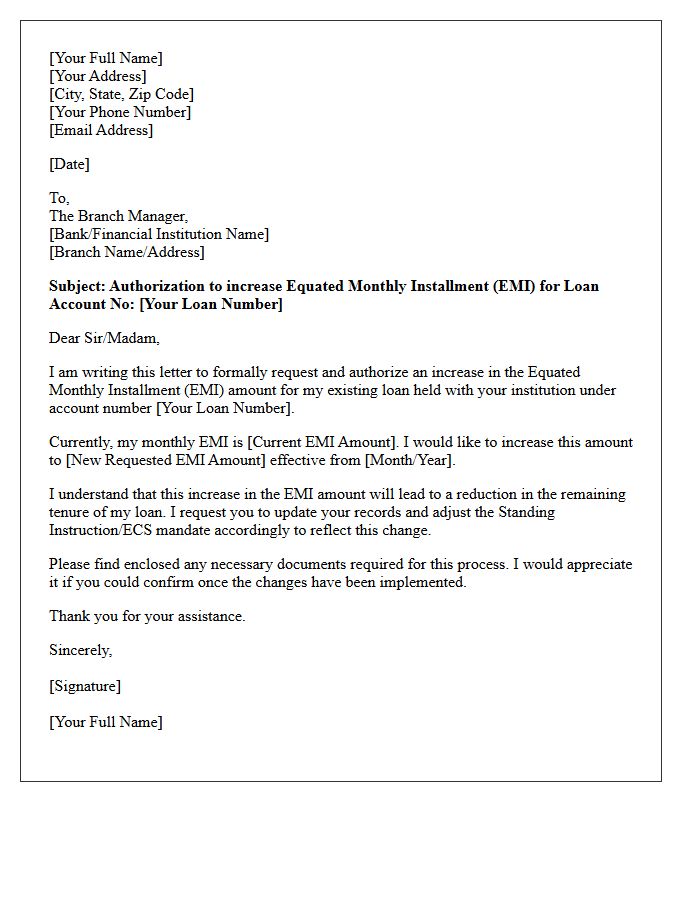
A Loan Equated Monthly Installment Increase Authorization Letter is a formal document used by borrowers to request a higher monthly payment amount. This voluntary adjustment helps reduce the principal balance faster, significantly lowering the total interest accrued over time. By submitting this letter, you authorize the lender to modify the standing instruction on your account. It is a strategic tool for debt acceleration, allowing you to shorten the overall loan tenure and achieve financial freedom sooner through disciplined, increased contributions toward your outstanding liability.
Financial Hardship Loan Equated Monthly Installment Relief Letter
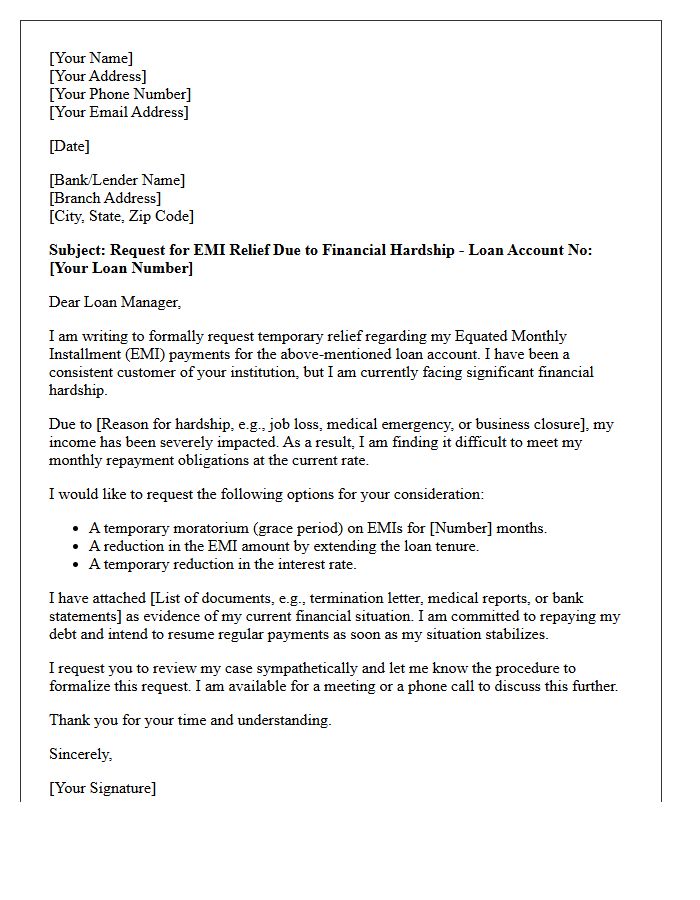
A financial hardship letter for EMI relief is a formal request to your lender for temporary payment modifications. This document must clearly outline unforeseen circumstances, such as job loss or medical emergencies, that impact your ability to pay. To improve approval odds, attach supporting evidence like termination notices or bank statements. The letter should propose a specific solution, such as a loan moratorium, reduced interest rates, or extended tenure. Proactive communication demonstrates your commitment to debt settlement while protecting your credit score from the long-term impact of missed payments.
Loan Equated Monthly Installment Debit Account Change Letter
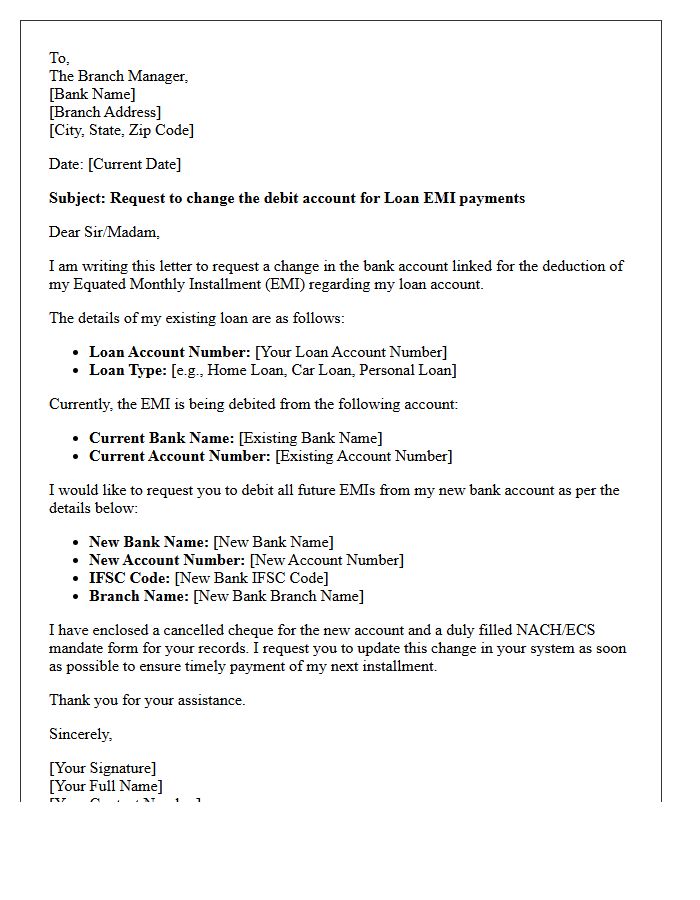
A Loan Equated Monthly Installment Debit Account Change Letter is a formal notification sent to a financial institution to update banking details for automated loan repayments. This document ensures that future EMI deductions occur from a new specified bank account, preventing payment defaults or late fees. It is essential to include the loan account number, new bank details, and an authorization for the mandate shift. Submitting this instruction letter promptly maintains your credit score and ensures seamless debt servicing without manual intervention or technical processing delays.
Loan Equated Monthly Installment Moratorium Request Letter
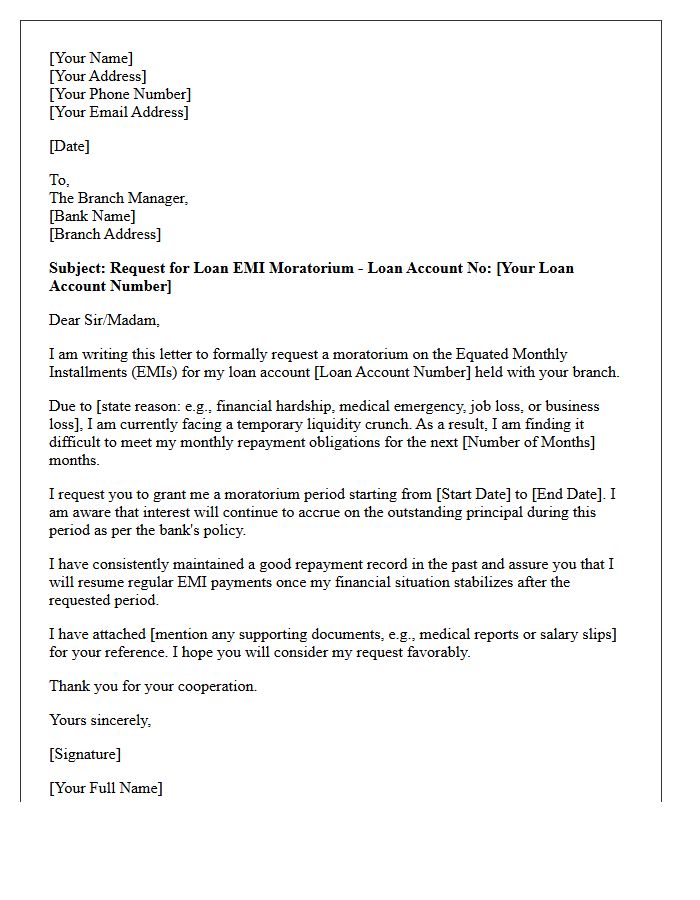
A Loan EMI Moratorium Request Letter is a formal application submitted to a financial institution to temporarily suspend repayments. It is essential to clearly state the financial hardship causing the inability to pay, such as job loss or medical emergencies. The letter must include your loan account number, the specific moratorium period requested, and supporting documentation. While a moratorium provides short-term relief, it is vital to remember that interest continues to accrue on the outstanding balance, potentially increasing your total debt burden and extending the overall loan tenure.
Adjusted Loan Equated Monthly Installment Approval Letter
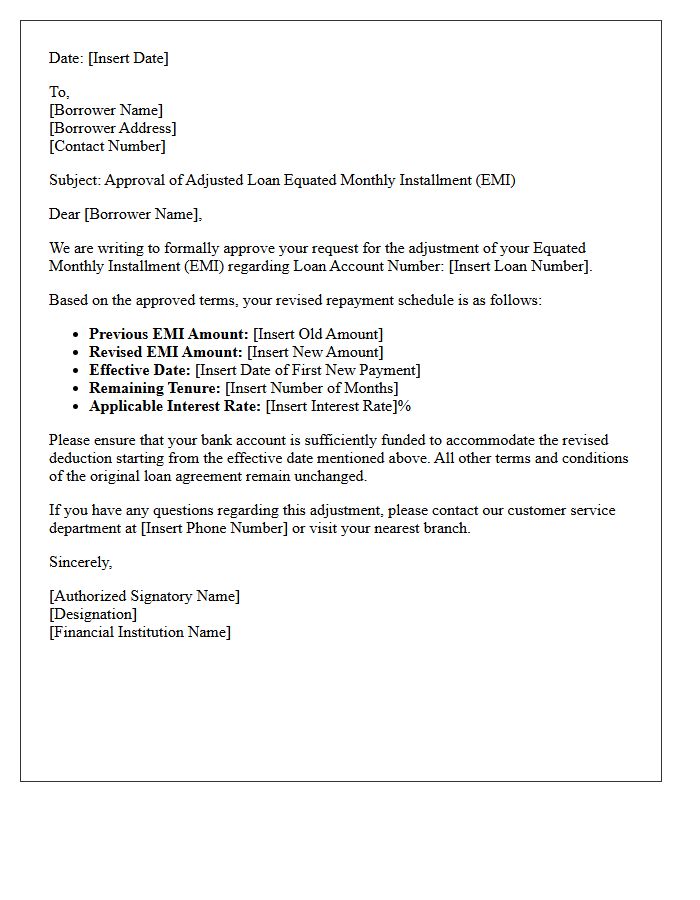
An Adjusted Loan Equated Monthly Installment (EMI) Approval Letter is a formal document issued by lenders confirming a revision to your repayment schedule. This notification typically follows a change in interest rates or a requested loan restructuring. It outlines the new monthly commitment, the effective start date, and any changes to the overall loan tenure. Retaining this letter is crucial for financial planning, as it serves as legal proof of the modified agreement and ensures your credit score remains protected through accurate, updated repayment records.
Loan Equated Monthly Installment Amortization Modification Letter
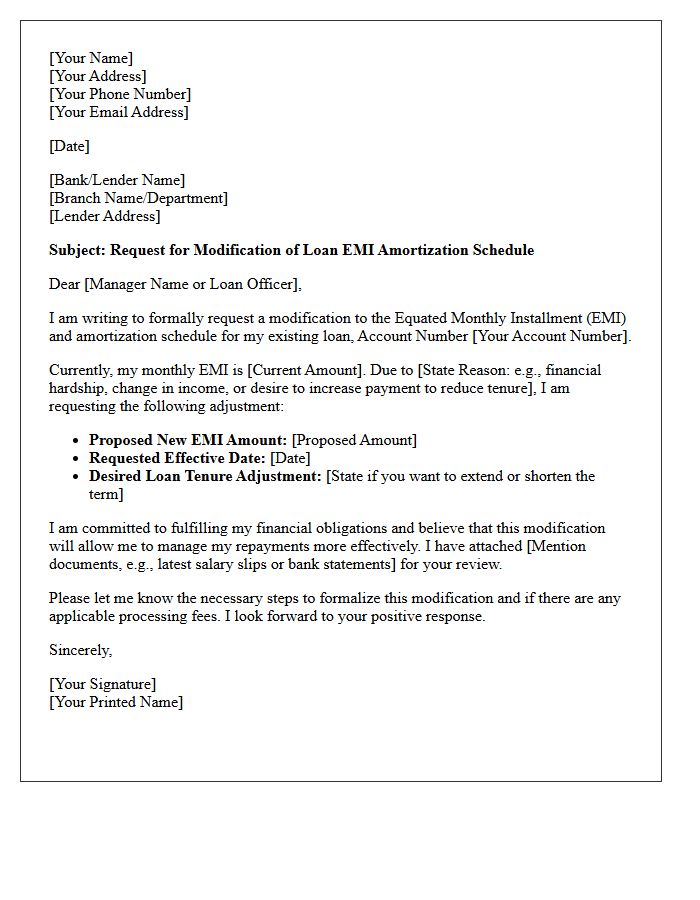
A Loan Equated Monthly Installment (EMI) Amortization Modification Letter is a formal request sent to a financial institution to adjust repayment terms. Borrowers use this document to seek a lower monthly payment or an extended loan tenure during financial hardship. It acts as a critical legal record of the negotiation process. To be effective, the letter must clearly state the requested restructuring plan and provide supporting evidence of why the current schedule is unsustainable. Successfully modifying the amortization schedule can prevent default and protect your credit score.
What is a Loan EMI Modification Letter?
A Loan EMI Modification Letter is a formal written request submitted by a borrower to a financial institution or bank asking to alter the existing Equated Monthly Installment (EMI) structure due to financial hardship, income changes, or interest rate fluctuations.
What details should be included in an EMI reduction request letter?
The letter must include the borrower's full name, loan account number, current EMI amount, the specific reason for the modification request, supporting financial documents, and the proposed new EMI amount or repayment tenure.
Can I request a lower EMI by extending my loan tenure?
Yes, you can request an EMI modification by asking for a loan tenure extension. While this reduces the monthly financial burden, it typically results in a higher total interest payout over the life of the loan.
What are valid reasons to submit a Loan EMI Modification Letter?
Valid reasons for requesting an EMI restructuring include a significant reduction in monthly income, medical emergencies, job loss, an unexpected increase in floating interest rates, or the need to consolidate debts.
Will modifying my loan EMI affect my credit score?
Requesting an EMI modification through a formal letter does not directly impact your credit score. However, if the modification is classified as a "restructured loan" by the bank, it may be reported to credit bureaus and could influence your future borrowing capacity.

Comments