
Repeatedly overdrawing your bank balance can lead to severe financial penalties or account closure. Banks typically issue a Warning Letter for Consecutive Account Overdrafts to notify customers of persistent negative balances and required corrective actions. Understanding these notices is essential for maintaining a healthy banking relationship. To help you draft a professional response or notice, below are some ready to use template.

Image cover: Professional Templates for Consecutive Account Overdraft Warning Letters
Letter Samples List
- Official Warning Letter For Consecutive Account Overdrafts
- First Warning Letter Regarding Repeated Account Overdrafts
- Final Warning Letter For Continuous Account Overdrafts
- Bank Advisory Letter For Consecutive Overdrawn Account Status
- Urgent Notification Letter Addressing Successive Overdrafts
- Account Management Letter Regarding Multiple Overdraft Occurrences
- Formal Notice Letter For Habitual Account Overdrafts
- Compliance Warning Letter Addressing Consecutive Overdraft Violations
- Customer Alert Letter For Repeated Bank Account Overdrafts
- Financial Policy Letter Regarding Ongoing Overdraft Instances
- Account Restriction Warning Letter For Successive Overdrafts
- Overdraft Penalty Warning Letter For Banking Customers
Official Warning Letter For Consecutive Account Overdrafts
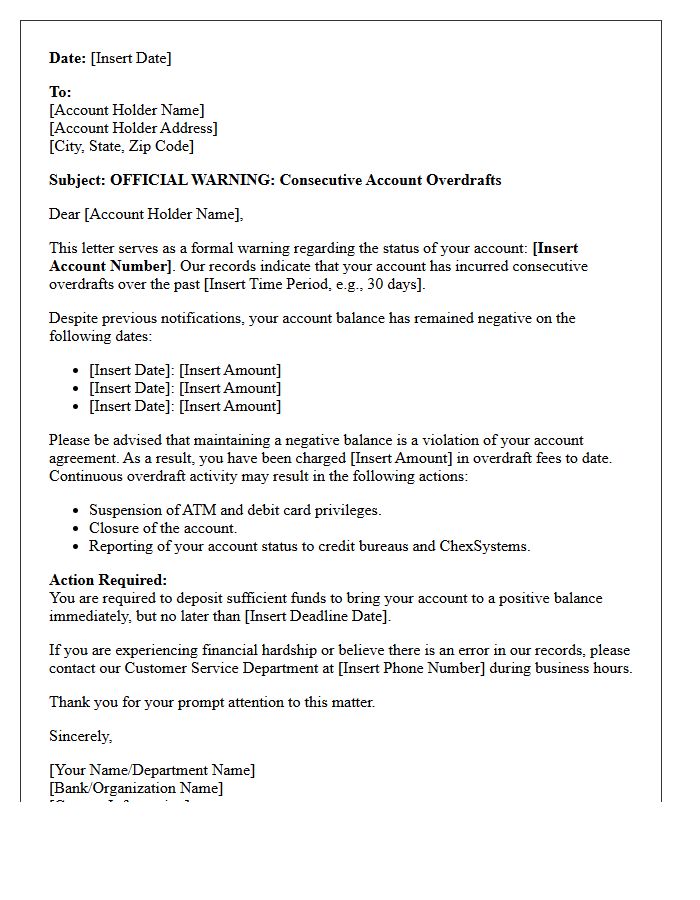
Receiving an official warning letter for consecutive account overdrafts is a critical notification from your bank regarding persistent negative balances. This document serves as a formal notice that your financial behavior violates terms of service. Continuous reliance on credit without repayment can lead to high penalty fees, the immediate suspension of banking privileges, or permanent account closure. To protect your credit score and maintain a healthy standing, it is essential to deposit funds immediately and contact your branch to discuss repayment strategies and avoid further escalations.
First Warning Letter Regarding Repeated Account Overdrafts
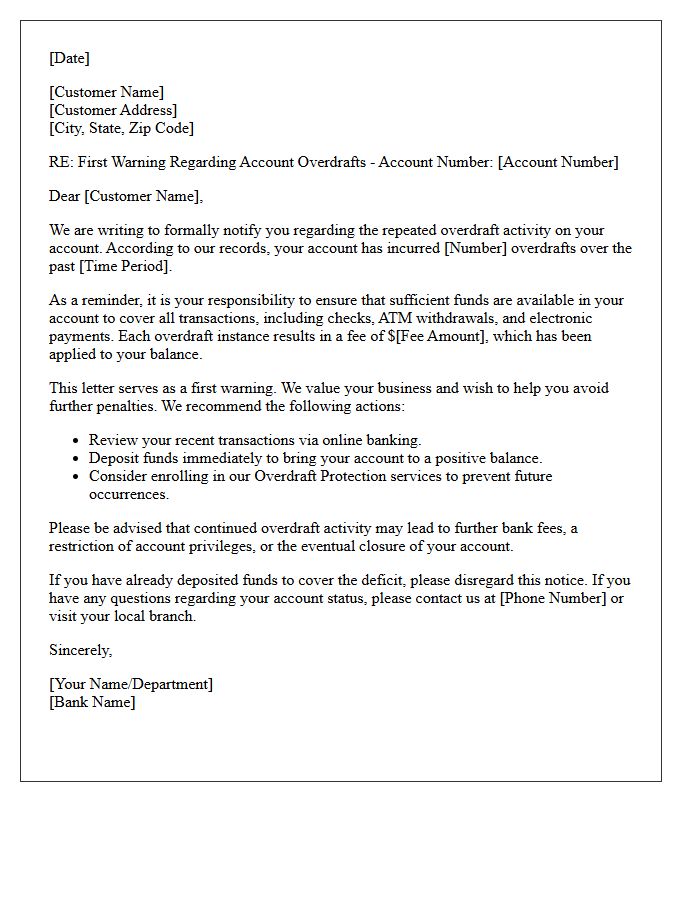
Receiving a First Warning Letter regarding repeated account overdrafts is a critical notification that your spending has exceeded your available balance. This formal notice serves as an alert to correct your financial management immediately to avoid escalating penalties. To prevent further issues, you must ensure sufficient funds are available before making transactions. Ignoring this warning may lead to hefty fees, the suspension of banking privileges, or permanent account closure. Proactive communication with your bank is essential to resolve outstanding balances and maintain a healthy credit standing.
Final Warning Letter For Continuous Account Overdrafts
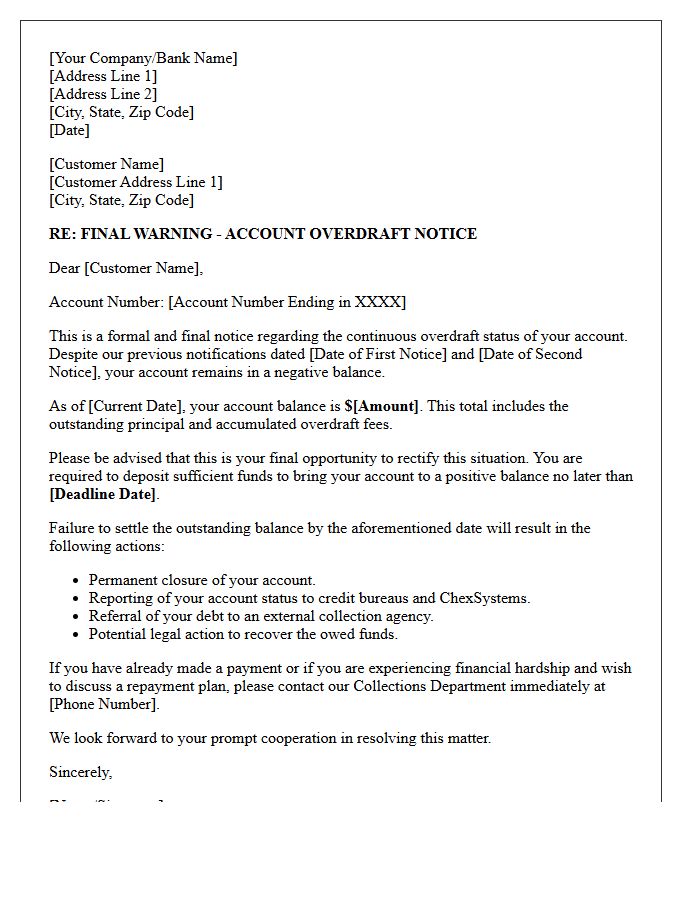
A final warning letter for continuous account overdrafts serves as a formal notification that your banking privileges are at risk. This document signals the end of grace periods, demanding immediate repayment of the negative balance to avoid account closure. Failure to resolve the debt promptly can lead to severe consequences, including reports to credit bureaus and legal action. It is essential to contact your financial institution immediately to arrange a settlement or payment plan to preserve your financial standing and prevent further penalties or long-term damage to your credit history.
Bank Advisory Letter For Consecutive Overdrawn Account Status
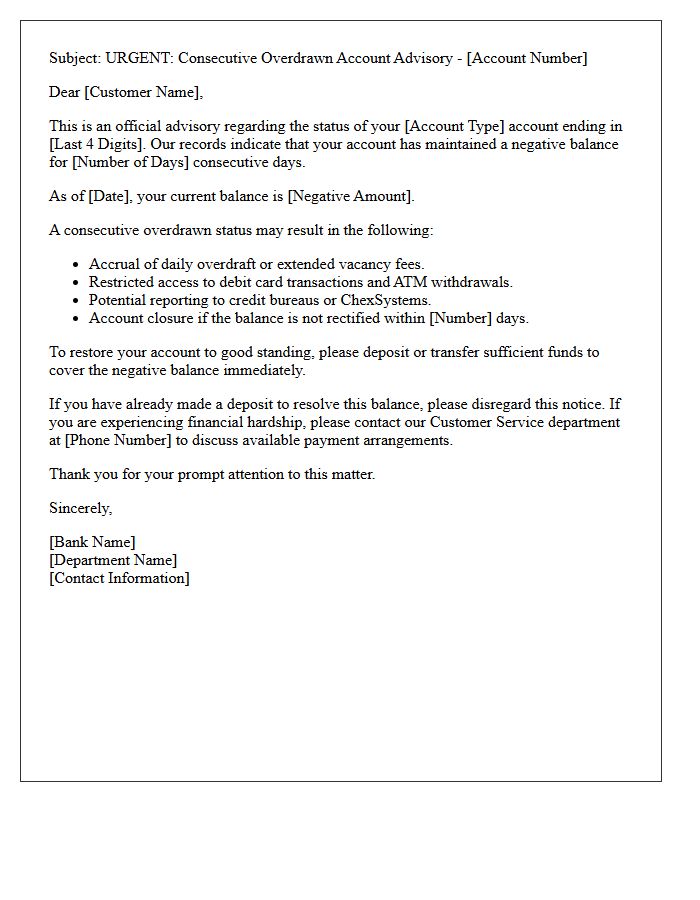
A bank advisory letter for consecutive overdrawn account status serves as a critical formal notice that your balance has remained negative for an extended period. This communication warns of potential account closure and reporting to credit bureaus like ChexSystems, which can restrict your future banking access. To resolve this, you must immediately deposit funds to cover the deficit and any accumulated overdraft fees. Addressing this promptly prevents legal collections and protects your long-term financial reputation from severe damage caused by prolonged delinquency.
Urgent Notification Letter Addressing Successive Overdrafts
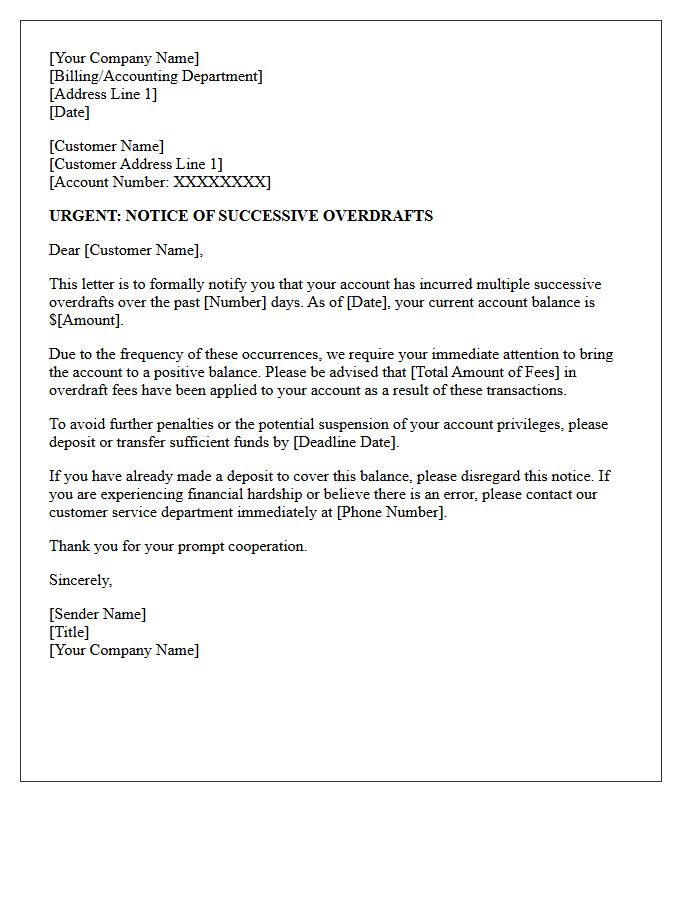
An Urgent Notification Letter Addressing Successive Overdrafts serves as a critical formal warning from a financial institution. It informs account holders that repeated spending beyond their available balance has triggered consecutive penalties. To prevent account closure or negative reporting to credit agencies, you must immediately deposit funds to cover the negative balance. Ignoring this notice may lead to restricted banking access and long-term damage to your financial standing. Prioritize reviewing your transaction history to resolve these recurring discrepancies and avoid further high-cost overdraft fees.
Account Management Letter Regarding Multiple Overdraft Occurrences
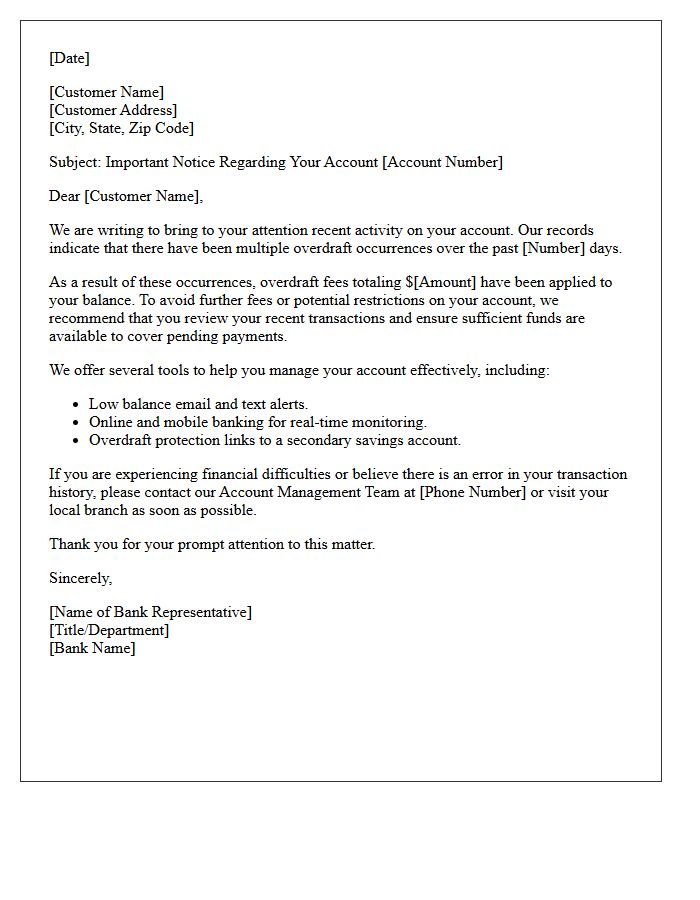
An Account Management Letter serves as a formal notification regarding multiple overdraft occurrences on your bank account. This document outlines frequent balance deficiencies and the associated overdraft fees incurred. It is crucial to review this notice immediately to understand your financial standing and avoid potential account suspension or closure. Banks often use these letters to suggest repayment plans or overdraft protection services to help stabilize your finances. Timely communication with your branch can prevent negative reports to credit bureaus and protect your banking reputation and future credit eligibility.
Formal Notice Letter For Habitual Account Overdrafts
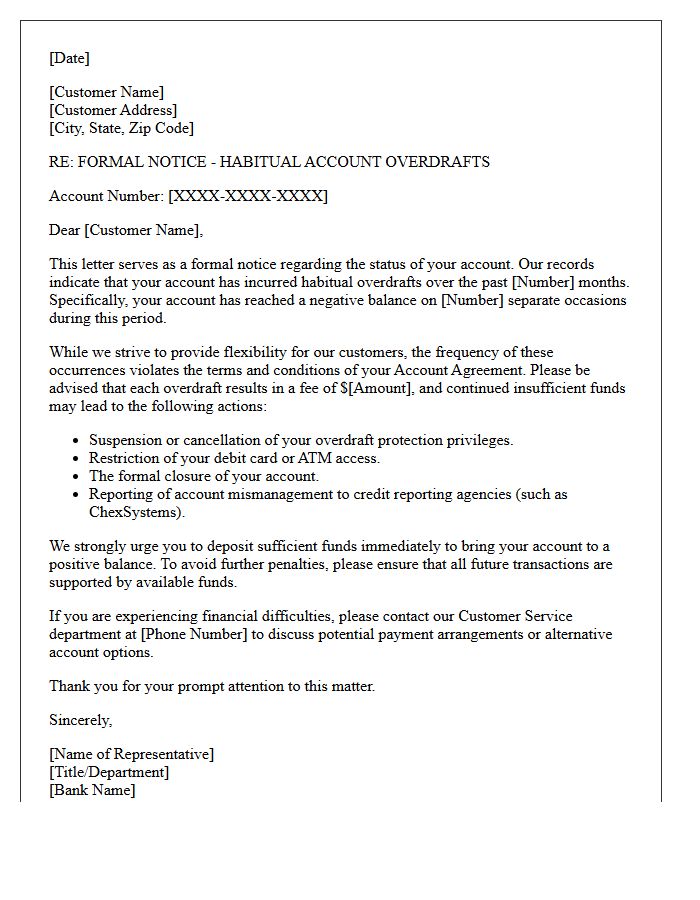
A formal notice for habitual account overdrafts is a critical warning letter issued by financial institutions when a customer consistently exceeds their available balance. This document serves as legal notification that repeated non-sufficient funds (NSF) activity violates banking terms. It typically outlines outstanding debts, applicable penalties, and potential consequences, such as account closure or reports to credit bureaus. Addressing this notice immediately is essential to protect your financial reputation and prevent the loss of banking privileges through proactive debt resolution or formal repayment arrangements.
Compliance Warning Letter Addressing Consecutive Overdraft Violations
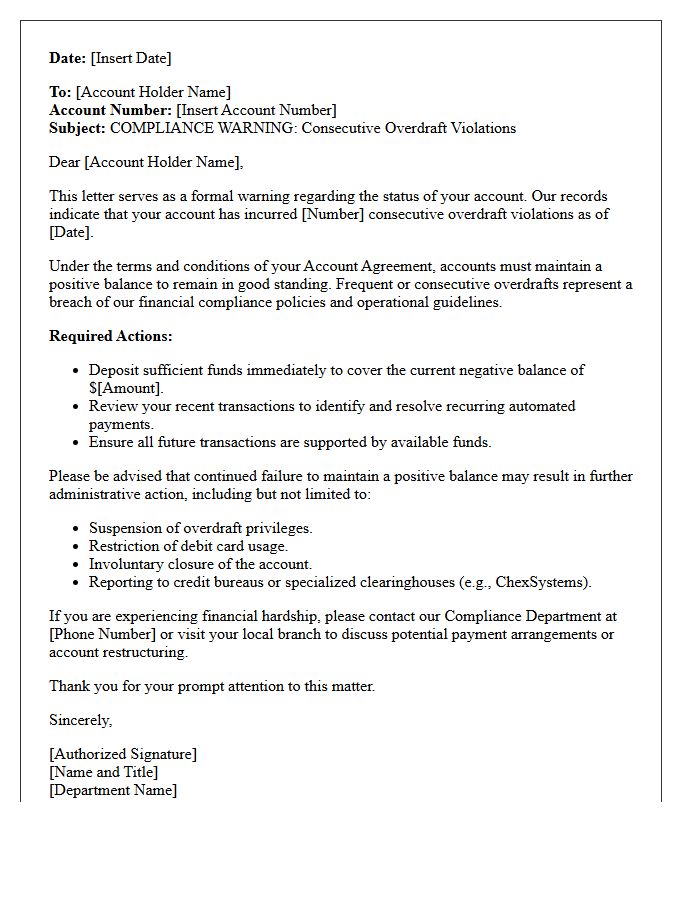
Receiving a compliance warning letter regarding consecutive overdraft violations is a serious regulatory matter. It signifies that your financial institution has identified a repetitive pattern of account deficits, triggering a formal review of your banking practices. This communication often serves as a final notice before account closure or legal escalation. To mitigate risk, you must immediately rectify negative balances and implement stricter cash flow management. Addressing these notices promptly is essential to protect your credit standing and maintain access to essential banking services within the financial system.
Customer Alert Letter For Repeated Bank Account Overdrafts
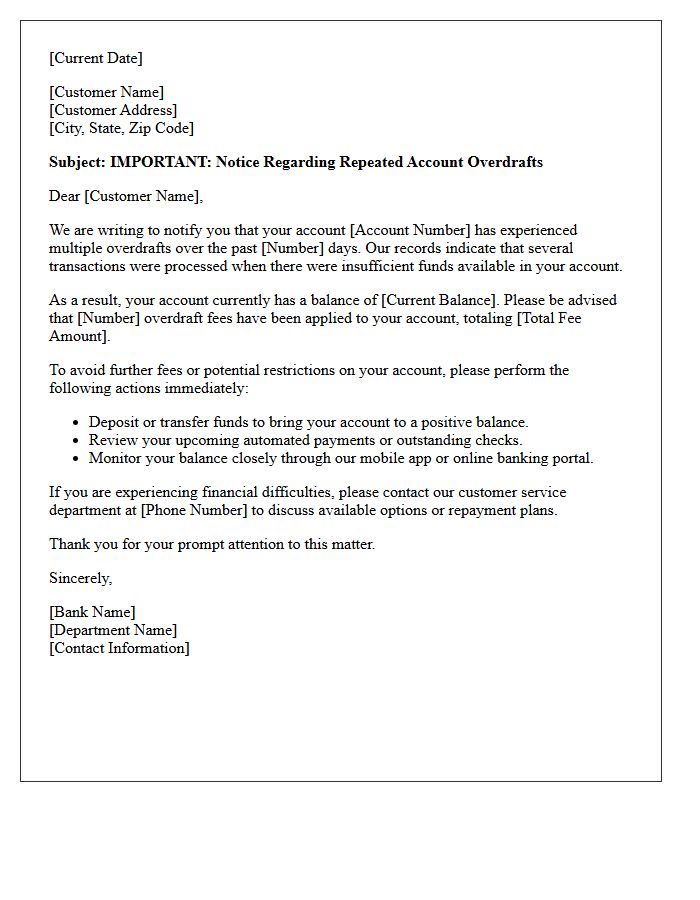
A Customer Alert Letter for repeated overdrafts serves as a formal notification regarding chronic account deficits. It informs the client that their spending has exceeded the available balance multiple times, incurring consecutive penalties. This document outlines the total overdraft fees charged and warns of potential consequences, such as account closure or negative reporting to credit agencies. Banks use these letters to encourage better financial management and to suggest tools like overdraft protection or balance alerts to prevent future fiscal mismanagement and maintain a positive banking relationship.
Financial Policy Letter Regarding Ongoing Overdraft Instances
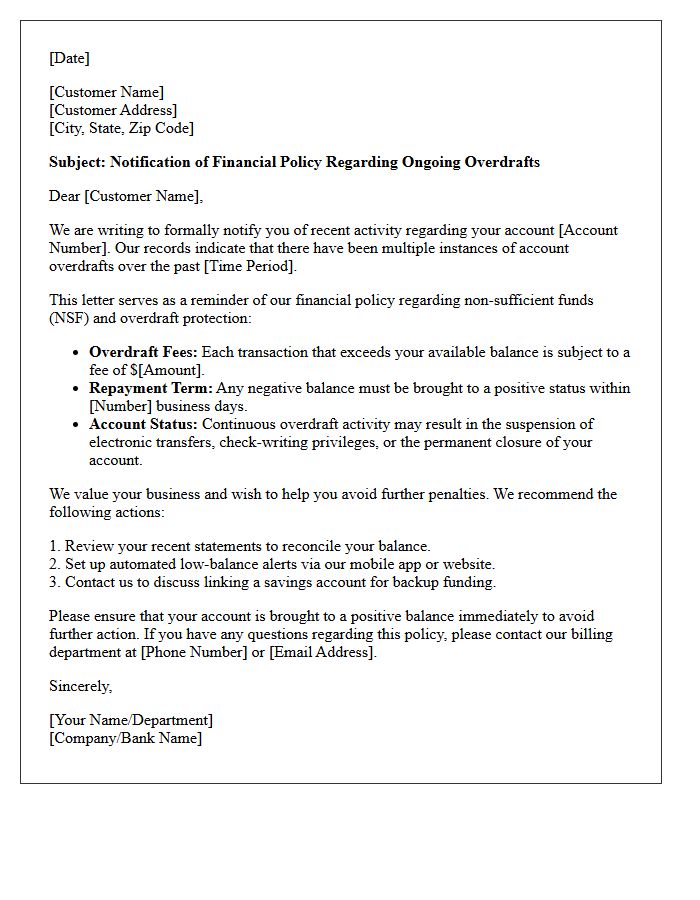
A financial policy letter regarding persistent overdrafts serves as a formal notice to resolve chronic account deficits. It outlines specific repayment deadlines, potential penalties, and the risk of account closure. Understanding this document is crucial for maintaining your banking relationship and avoiding negative reports to credit bureaus. The primary objective is to establish a clear restitution plan while providing guidance on budgeting to prevent future insolvency. Proactive communication with your bank after receiving this letter is essential to negotiate terms and ensure continued access to essential financial services.
Account Restriction Warning Letter For Successive Overdrafts
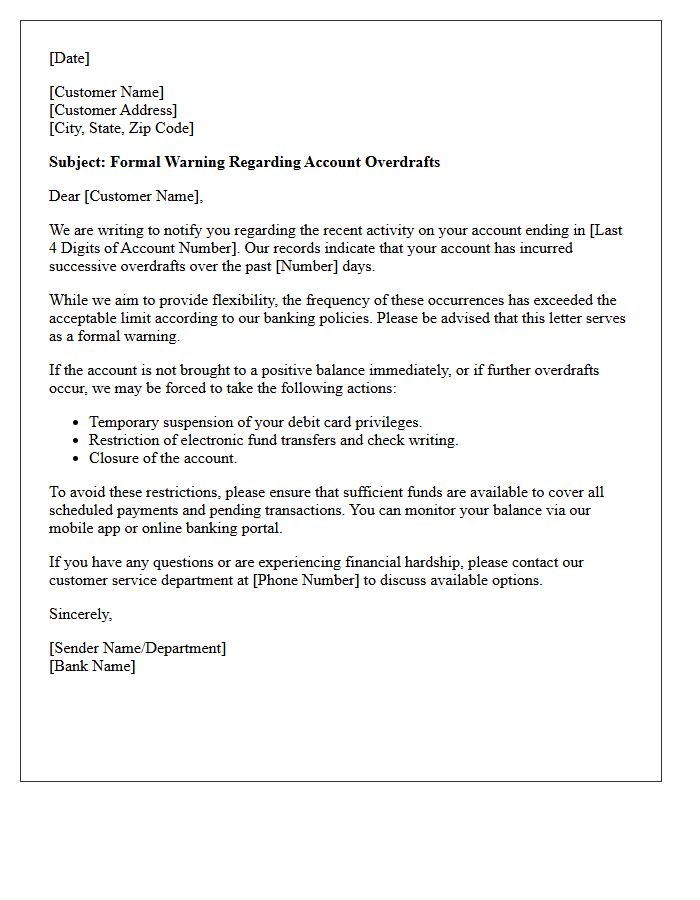
Receiving an Account Restriction Warning Letter indicates that frequent successive overdrafts have triggered a formal review of your banking behavior. Financial institutions issue these notices to mitigate risk when spending exceeds available balances repeatedly. To protect your financial standing, you must immediately deposit funds to cover the deficit and resolve the negative balance. Failure to rectify the situation promptly may lead to permanent account closure, reporting to credit bureaus, and restricted access to future banking services. Always monitor your transactions closely to maintain account compliance and prevent service interruptions.
Overdraft Penalty Warning Letter For Banking Customers
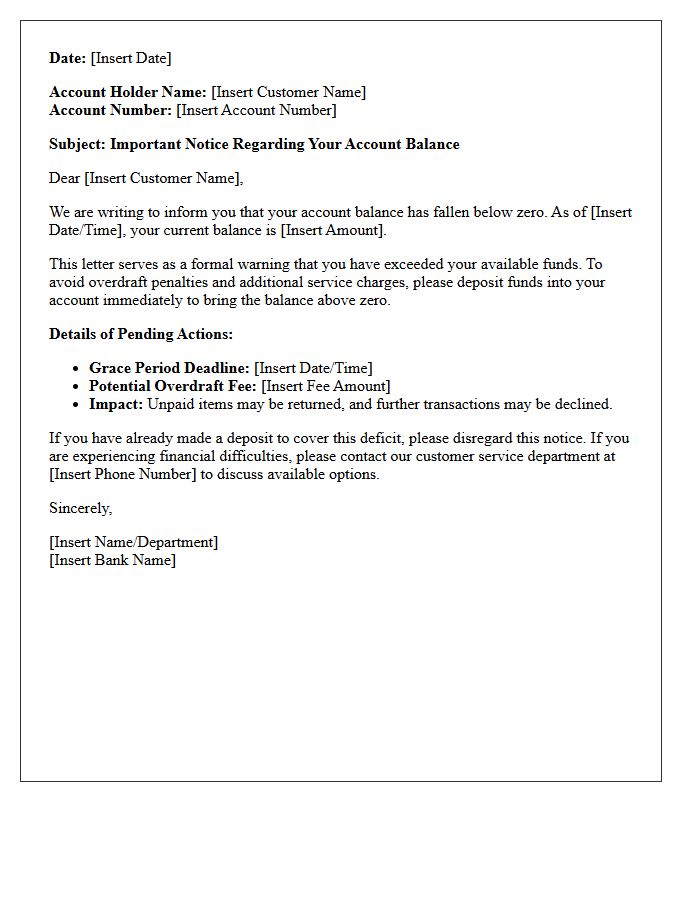
An overdraft penalty warning letter is a formal notice from your bank regarding insufficient funds. It serves as a crucial alert that your account balance has dipped below zero, potentially triggering high fees. To avoid escalating financial penalties, you must deposit funds immediately to cover the deficit. This document often outlines the specific grace period available before additional charges apply. Ignoring this warning can negatively impact your credit score and lead to account restrictions. Always review these letters to understand your bank's specific repayment terms and fee structures.
What is a Warning Letter for Consecutive Account Overdrafts?
A Warning Letter for Consecutive Account Overdrafts is a formal notification from a financial institution informing an account holder that their balance has fallen below zero multiple times within a specific period. It serves as an official notice to rectify the balance and adjust spending habits to avoid further penalties or account closure.
What are the consequences of ignoring a consecutive overdraft warning?
Failure to address consecutive overdrafts can lead to severe consequences, including high overdraft fees, the suspension of debit card privileges, a negative impact on your banking history (ChexSystems), and the eventual involuntary closure of the account by the bank.
How long do I have to clear my negative balance after receiving a warning?
Most banks require you to bring your account to a positive balance immediately, typically within 24 to 48 hours of receiving the notice. Specific deadlines vary by institution and are usually outlined within the text of the warning letter to prevent further escalation.
Will consecutive account overdrafts affect my credit score?
Standard overdrafts do not typically affect your credit score directly; however, if the account is closed and the debt is sent to a collection agency, it will be reported to credit bureaus and significantly lower your credit rating. Additionally, banking history reports may prevent you from opening new accounts elsewhere.
How can I prevent receiving future overdraft warning letters?
To avoid overdraft warnings, you should set up low-balance mobile alerts, link your checking account to a savings account for automatic transfers, or opt-out of overdraft protection so that transactions are simply declined instead of processed into the negative.

Comments