
Financial institutions must strictly adhere to anti-money laundering regulations to avoid regulatory penalties. This article explores the legal implications of receiving a Warning Letter for Failure to Report Suspicious Activity, highlighting the critical importance of timely SAR filings and compliance oversight. To help you maintain professional standards, below are some ready to use template options for your compliance needs.
Image cover: Official Warning Notice: Failure to Report Suspicious Activity Templates
Letter Samples List
- Initial Warning Letter for Failure to Report Suspicious Activity
- Final Warning Letter Regarding Undisclosed Suspicious Banking Activity
- Official Reprimand Letter for Delayed Suspicious Activity Reporting
- Compliance Violation Letter for Unreported Suspicious Financial Transactions
- Disciplinary Letter for Neglecting Suspicious Activity Report Protocols
- First Written Warning Letter for Omission of Suspicious Activity Reporting
- Branch Manager Warning Letter for Overlooking Suspicious Account Activity
- Severe Warning Letter for Non-Compliance in Suspicious Activity Escalation
- Employee Sanction Letter for Failure to Identify and Report Suspicious Activity
- Bank Teller Warning Letter for Ignoring Suspicious Cash Transactions
- Escalated Warning Letter for Repeated Failure to File Suspicious Activity Reports
- Internal Audit Warning Letter for Missed Suspicious Activity Detection
- Regulatory Breach Warning Letter for Unreported Suspicious Wire Transfers
Initial Warning Letter for Failure to Report Suspicious Activity
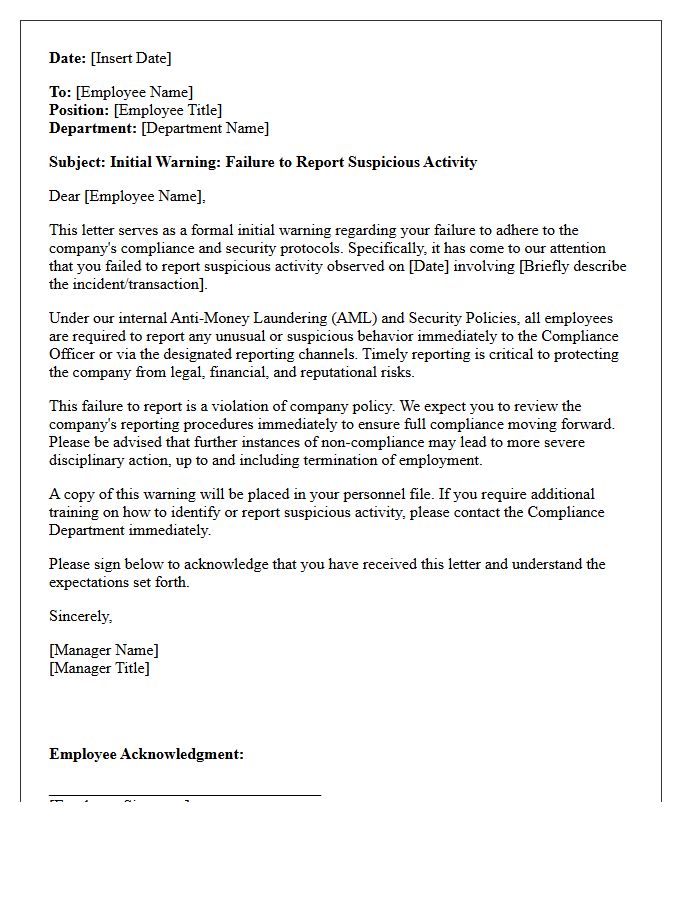
An Initial Warning Letter is a formal notice issued by regulators like FinCEN to financial institutions for failing to report suspicious transactions. This document signals significant gaps in your Anti-Money Laundering (AML) compliance framework. It serves as a final opportunity to remediate internal controls and filing procedures before facing severe civil money penalties or legal enforcement. Recipients must prioritize a comprehensive audit of their Suspicious Activity Report (SAR) protocols to demonstrate immediate corrective action and ensure ongoing regulatory adherence to avoid escalating supervisory sanctions.
Final Warning Letter Regarding Undisclosed Suspicious Banking Activity
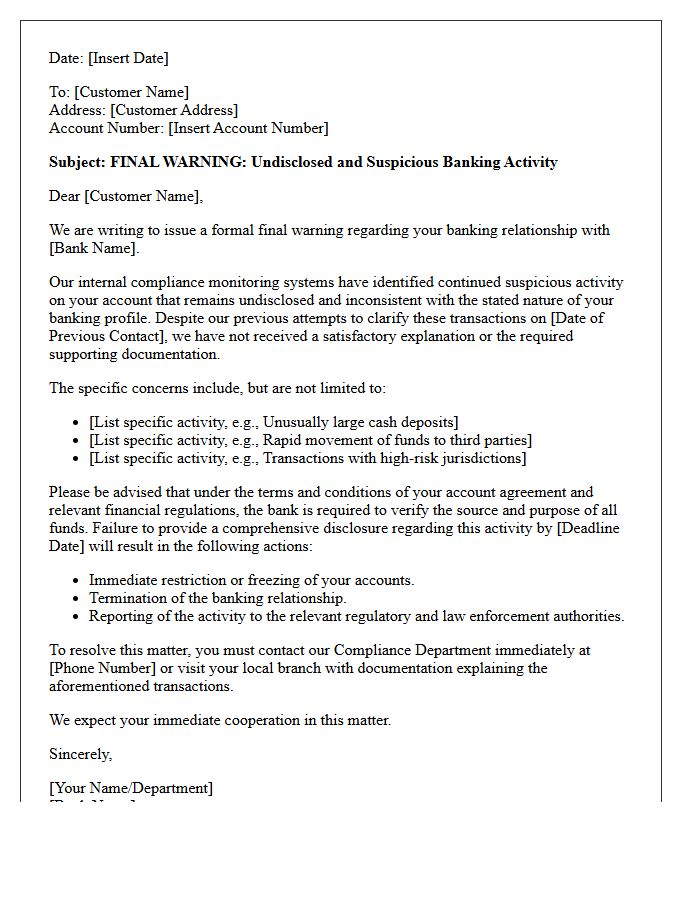
A final warning letter regarding undisclosed suspicious banking activity serves as a critical notice before account termination. Financial institutions issue these documents when transactions deviate from normal patterns or suggest potential money laundering or fraud. Recipient failure to provide valid documentation or clarify source of funds usually results in immediate account closure and reporting to regulatory authorities. To protect your financial standing, you must respond urgently with comprehensive evidence to resolve these compliance concerns and prevent being blacklisted by the banking system.
Official Reprimand Letter for Delayed Suspicious Activity Reporting
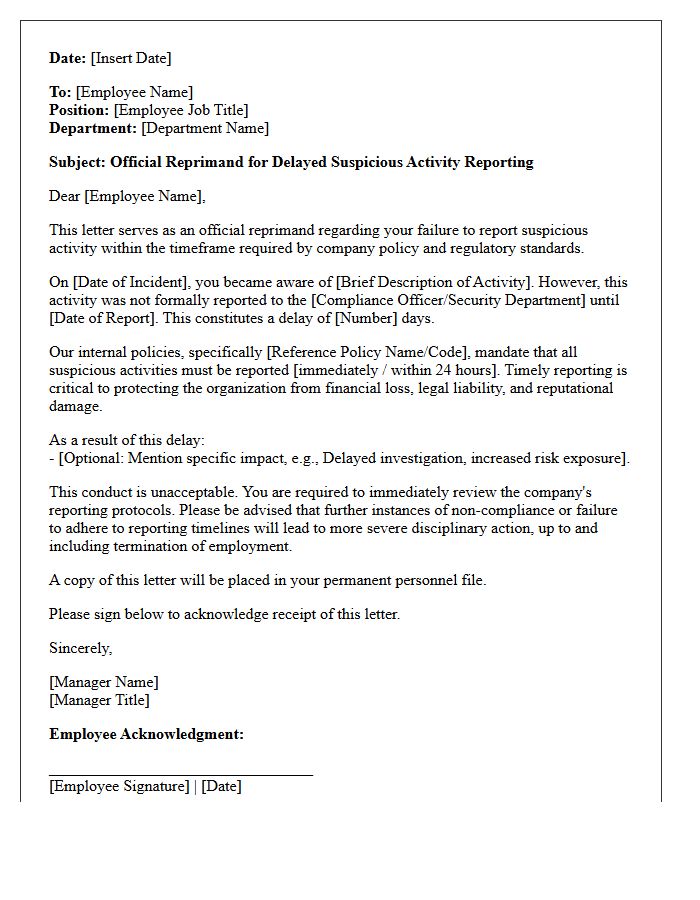
An official reprimand letter serves as a formal disciplinary record when an employee fails to meet regulatory compliance deadlines. Timely Suspicious Activity Reporting is critical to preventing financial crimes like money laundering. This document highlights the specific procedural failure, the potential legal risks to the institution, and the necessary corrective actions. Receiving this letter signifies a serious breach of protocol, emphasizing that failure to report suspicious behavior promptly can lead to severe regulatory penalties and compromises the integrity of the financial system's monitoring framework.
Compliance Violation Letter for Unreported Suspicious Financial Transactions
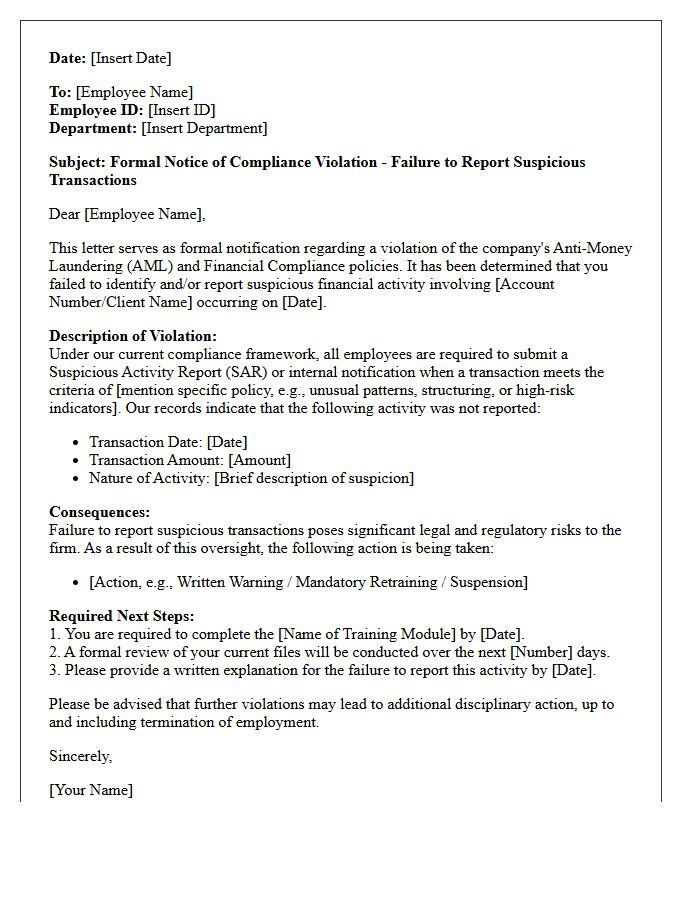
A compliance violation letter for unreported suspicious financial transactions serves as a formal notice that a business failed to meet Anti-Money Laundering (AML) reporting standards. Regulatory bodies issue these warnings when an entity neglects to file a Suspicious Activity Report (SAR) regarding questionable client behavior. Receiving this letter indicates a significant breakdown in internal monitoring systems. Failure to address these deficiencies immediately can lead to severe legal consequences, including hefty financial penalties, loss of operating licenses, and potential criminal prosecution for non-compliance with global financial transparency laws.
Disciplinary Letter for Neglecting Suspicious Activity Report Protocols
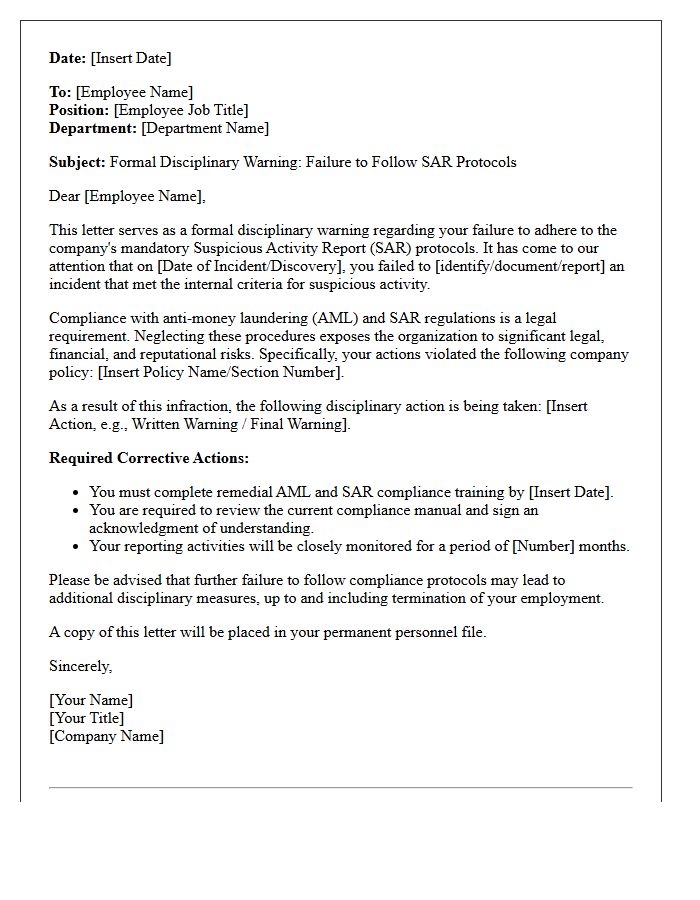
A disciplinary letter for neglecting Suspicious Activity Report (SAR) protocols serves as a formal warning regarding anti-money laundering compliance failures. Employees must strictly adhere to reporting timelines and confidentiality requirements to prevent legal penalties for the institution. Failure to document or escalate red flags compromises financial security and regulatory standing. Such documentation often outlines the specific breach, required corrective training, and potential consequences for future non-compliance. Maintaining regulatory integrity is essential, as systemic oversight failures can lead to severe personal and corporate liability under financial crime legislation.
First Written Warning Letter for Omission of Suspicious Activity Reporting
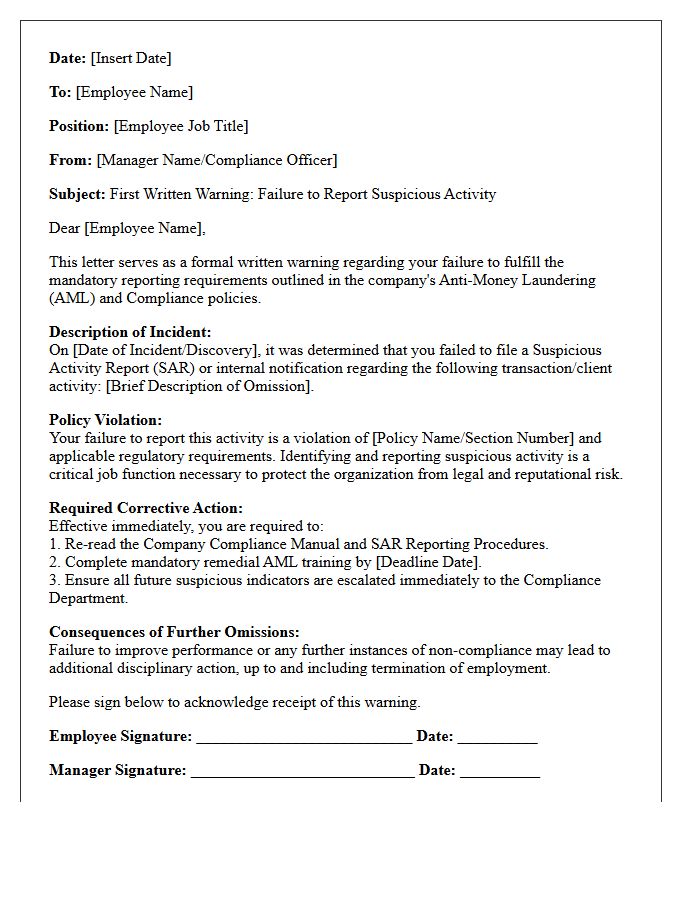
A first written warning letter for an omission of Suspicious Activity Reporting is a formal disciplinary action taken when an employee fails to file mandated reports. Under AML compliance protocols, timely reporting is a legal obligation to prevent money laundering. This document serves as a critical compliance record, highlighting the specific failure, the potential legal risks to the institution, and mandatory corrective actions. It establishes a performance baseline, ensuring the staff member understands that future reporting negligence may lead to immediate termination or personal regulatory penalties.
Branch Manager Warning Letter for Overlooking Suspicious Account Activity
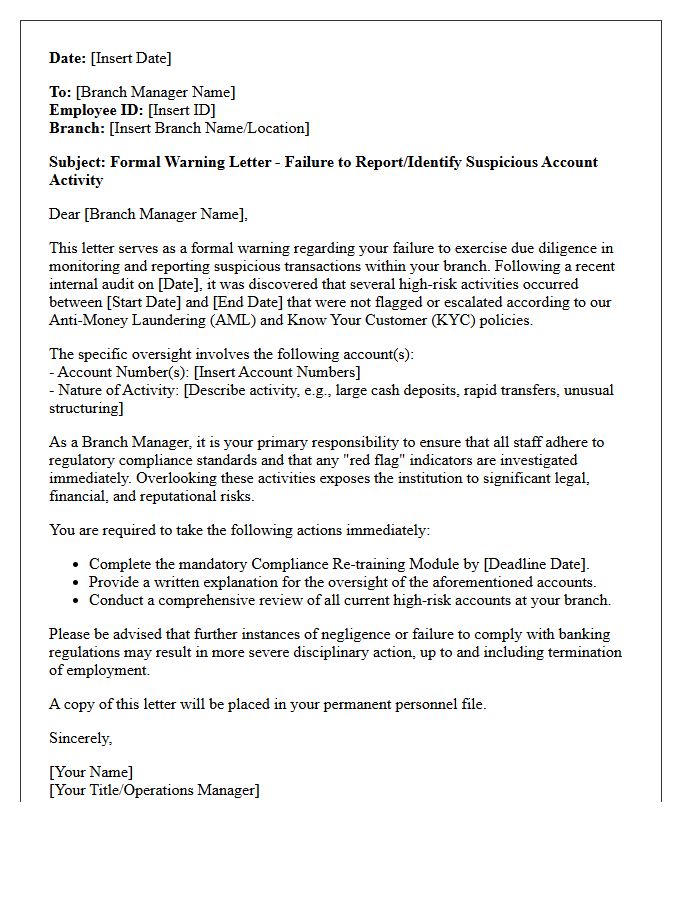
A branch manager receives a formal warning letter for failing to monitor and report suspicious account activity, which constitutes a serious breach of Anti-Money Laundering (AML) protocols. This disciplinary action highlights negligence in oversight and failure to enforce internal controls. It serves as a final notice that continued oversight lapses may lead to termination. To maintain compliance, managers must ensure rigorous due diligence and immediate escalation of red flags. Protecting the institution from financial crime and regulatory penalties is a core responsibility that requires proactive surveillance and strict adherence to banking regulations.
Severe Warning Letter for Non-Compliance in Suspicious Activity Escalation
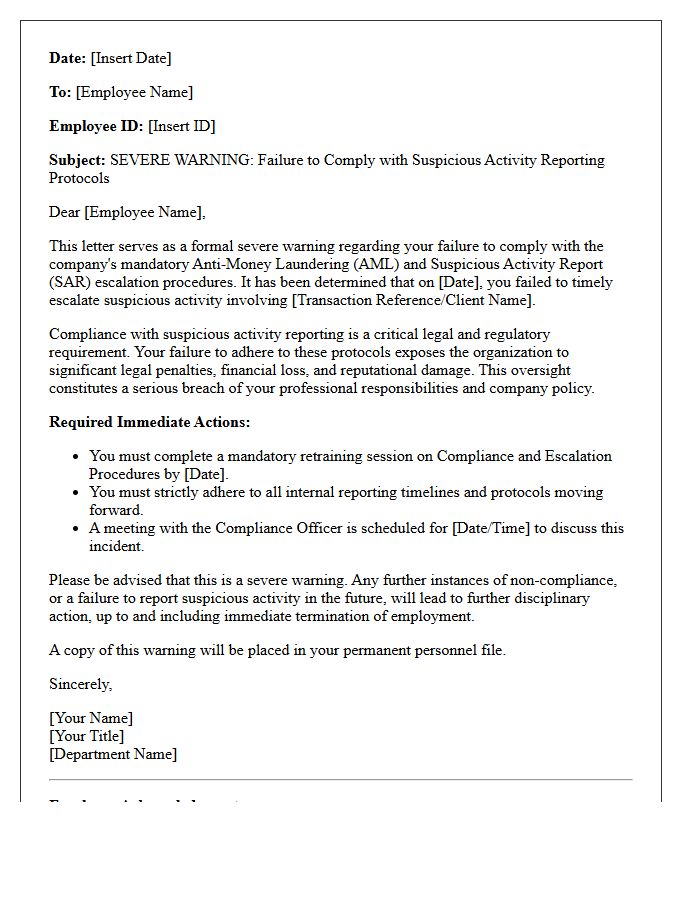
A severe warning letter for non-compliance in suspicious activity escalation signifies a critical failure in an organization's Anti-Money Laundering (AML) protocols. Regulatory bodies issue these notices when internal reporting delays or missed red flags jeopardize financial integrity. Immediate remediation is mandatory to prevent heavy fines, operational sanctions, or license revocation. Organizations must prioritize staff training and robust monitoring systems to ensure all potential threats are reported to authorities within legal timeframes. Neglecting these warnings often leads to severe legal consequences and irreparable reputational damage.
Employee Sanction Letter for Failure to Identify and Report Suspicious Activity
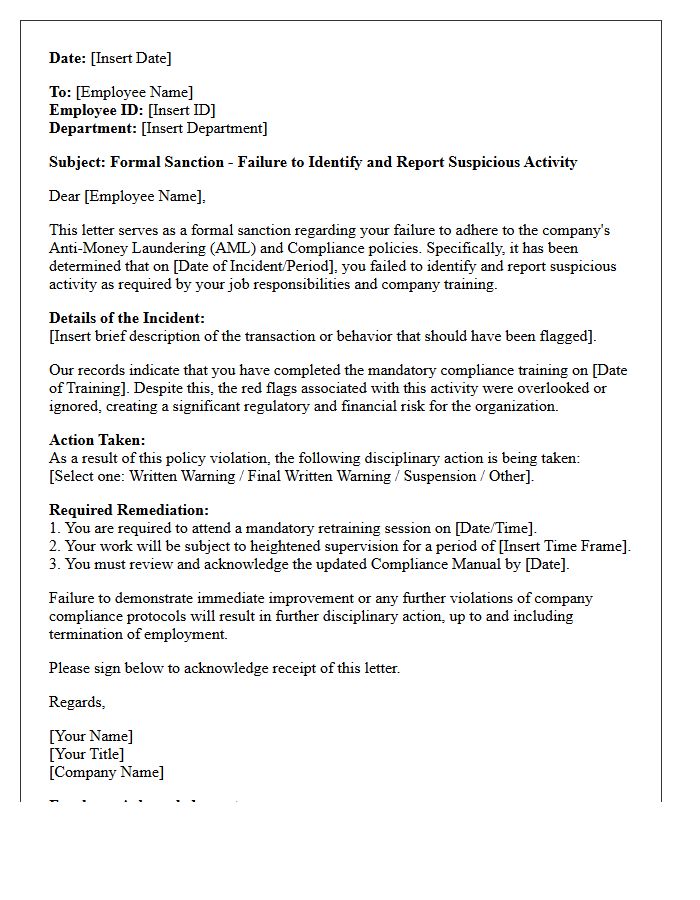
An Employee Sanction Letter for failing to report suspicious activity serves as a formal disciplinary record. It highlights a critical breach of compliance protocols and anti-money laundering (AML) duties. This document outlines the specific oversight, references internal policies violated, and specifies disciplinary actions taken. Maintaining a transparent reporting culture is essential for risk mitigation and regulatory adherence. Such letters ensure employees understand the gravity of their responsibilities in protecting the organization from financial crime and legal liabilities, while establishing a clear paper trail for future performance reviews or legal audits.
Bank Teller Warning Letter for Ignoring Suspicious Cash Transactions
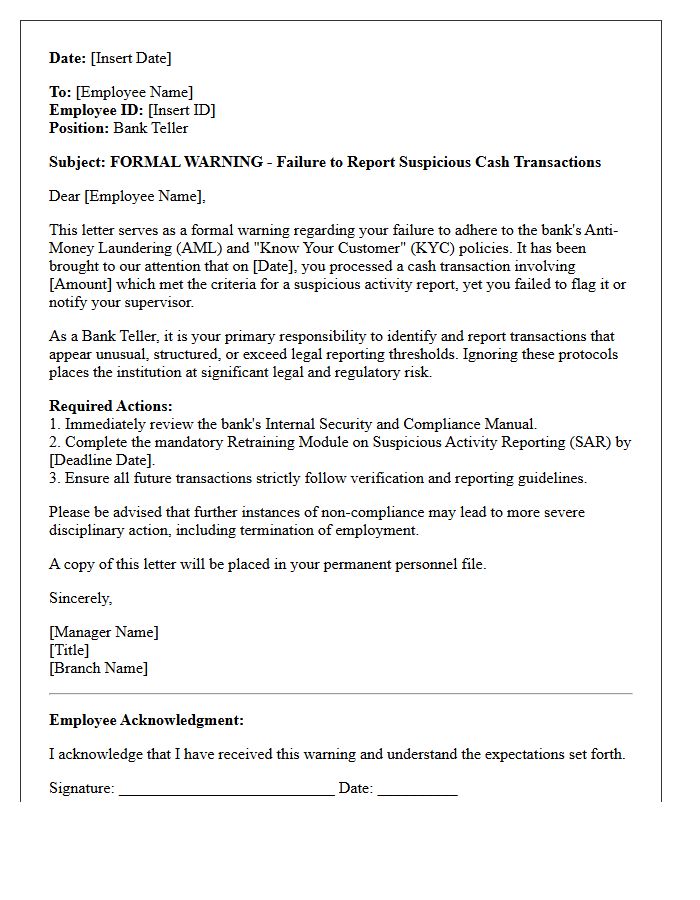
A bank teller warning letter addresses the failure to report suspicious cash transactions, which is a critical breach of anti-money laundering (AML) protocols. These formal notices document negligence in identifying red flags, such as structuring or unusual deposits, that could signal financial crimes. Ignoring these mandates risks severe legal penalties and compromises the institution's integrity. Employees must strictly follow KYC guidelines and reporting procedures to avoid further disciplinary action or termination. Maintaining compliance is essential for protecting the bank and ensuring professional accountability in high-risk financial environments.
Escalated Warning Letter for Repeated Failure to File Suspicious Activity Reports
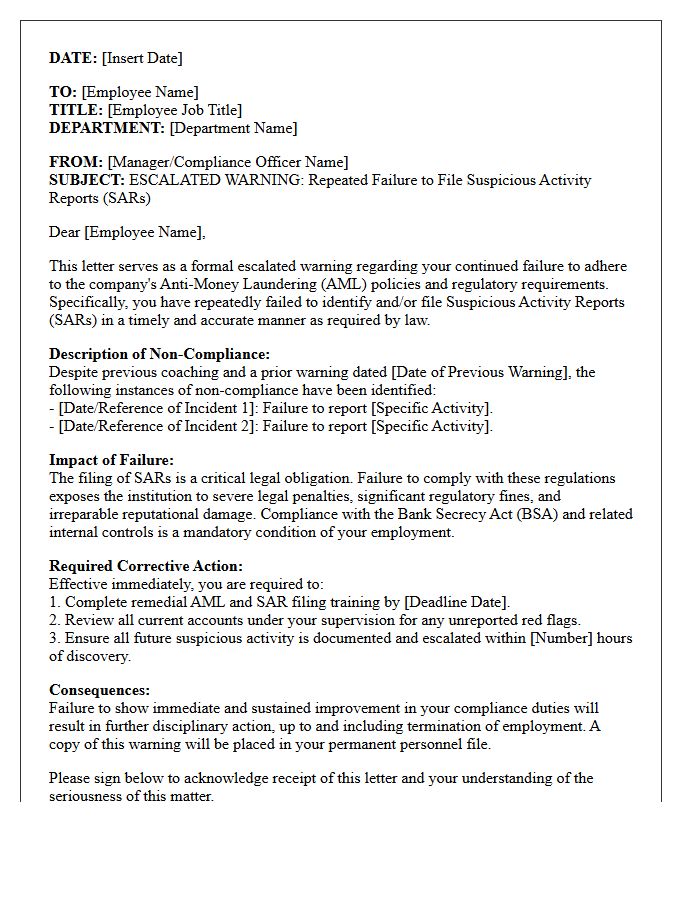
Financial institutions facing an Escalated Warning Letter must address systemic deficiencies in their anti-money laundering programs immediately. This formal notification signifies repeated failure to file Suspicious Activity Reports (SARs) despite previous regulatory feedback. Continued non-compliance demonstrates a lack of effective internal controls and oversight. Regulators view persistent reporting gaps as a high-risk vulnerability to the financial system. Failure to remediate these issues often leads to severe enforcement actions, substantial monetary penalties, and heightened legal scrutiny. Prompt corrective action and robust transaction monitoring are essential to mitigate further supervisory escalation.
Internal Audit Warning Letter for Missed Suspicious Activity Detection
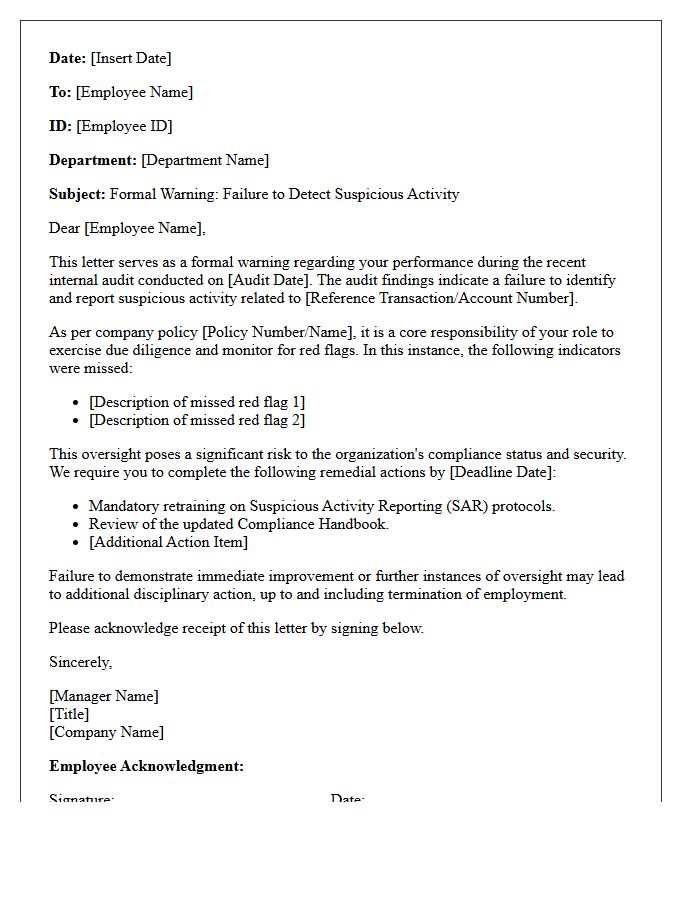
An internal audit warning letter for missed suspicious activity detection signifies a critical failure in Anti-Money Laundering (AML) compliance. This formal notice alerts employees that their oversight regarding red flag indicators could expose the financial institution to severe regulatory penalties and reputational damage. It serves as a documented corrective action, necessitating immediate remedial training and stricter adherence to monitoring protocols. Ensuring timely reporting of unusual transactions is essential to maintain operational integrity and satisfy legal requirements mandated by governing financial authorities.
Regulatory Breach Warning Letter for Unreported Suspicious Wire Transfers
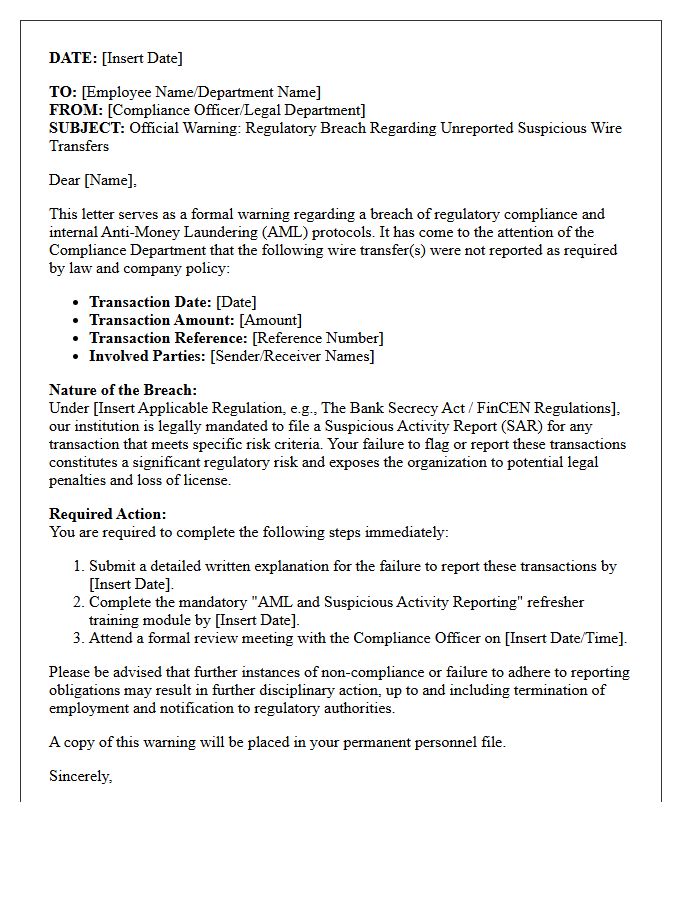
Receiving a regulatory breach warning letter indicates a serious failure in Anti-Money Laundering (AML) compliance. Financial institutions must identify and flag unreported suspicious wire transfers to authorities like FinCEN. Neglecting to file a Suspicious Activity Report (SAR) for high-risk transactions suggests inadequate internal controls. This formal notice serves as a final opportunity to remediate monitoring systems before facing severe civil money penalties, legal action, or license revocation. Promptly addressing these gaps through enhanced transaction monitoring and staff training is essential to demonstrate regulatory cooperation and ensure institutional integrity.
What is a Warning Letter for Failure to Report Suspicious Activity?
A Warning Letter for Failure to Report Suspicious Activity is a formal notification issued by regulatory bodies, such as FinCEN or the FDA, informing an organization that they have failed to comply with mandatory reporting requirements regarding suspicious transactions or incidents. This letter serves as a final notice to implement corrective actions before formal enforcement or legal penalties are applied.
What are the consequences of ignoring a warning letter regarding suspicious activity?
Failure to respond to a warning letter can lead to severe consequences, including substantial civil money penalties, the suspension of operating licenses, increased regulatory oversight, and potential criminal prosecution for willful negligence. Organizations may also suffer significant reputational damage and loss of trust from stakeholders and financial partners.
How should a company respond to a warning letter for reporting failures?
A company should respond by providing a comprehensive written explanation within the specified timeframe, usually 15 business days. The response must detail the specific steps taken to correct the violation, an evaluation of why the suspicious activity was missed, and a timeline for implementing new internal controls to prevent future reporting omissions.
What common triggers lead to a warning letter for suspicious activity reporting?
Common triggers include inadequate anti-money laundering (AML) monitoring systems, failure to file a Suspicious Activity Report (SAR) on time, incomplete documentation of internal investigations, and lack of employee training regarding the identification of "red flag" behaviors defined by regulatory standards.
How can an organization prevent receiving a warning letter for non-compliance?
Prevention requires establishing a robust compliance program that includes automated monitoring software, regular independent audits, and ongoing staff training. Maintaining clear internal protocols for escalating unusual activity and ensuring that the Compliance Officer has sufficient authority and resources are critical steps in maintaining regulatory standing.

Comments