
Issuing a Warning Letter for Inappropriate Use of Teller Credentials is essential for maintaining bank security and accountability. Sharing login details or processing transactions under another employee's profile compromises financial integrity and violates internal controls. This guide outlines the disciplinary process for credential misuse and provides professional communication standards. To assist your management team, below are some ready to use template.
Image cover: Official Warning Templates for Misuse of Teller Access Credentials
Letter Samples List
- Warning Letter for Sharing Teller System Passwords
- First Warning Letter for Leaving Teller Terminal Unattended
- Official Warning Letter for Unauthorized Transaction Overrides
- Disciplinary Letter for Accessing Family Accounts with Teller Credentials
- Written Warning Letter for Processing Personal Banking Transactions
- Warning Letter for Utilizing Colleague Teller Identification
- Final Warning Letter for Unauthorized Access of Dormant Accounts
- Warning Letter for Bypassing Dual Control Security Measures
- Formal Warning Letter for Accessing Customer Data Without Business Need
- Reprimand Letter for Operating Teller System Outside Business Hours
- Warning Letter for Inappropriate Use of Cash Drawer Credentials
- Notice Letter for Unauthorized Reversal of Teller Transactions
Warning Letter for Sharing Teller System Passwords
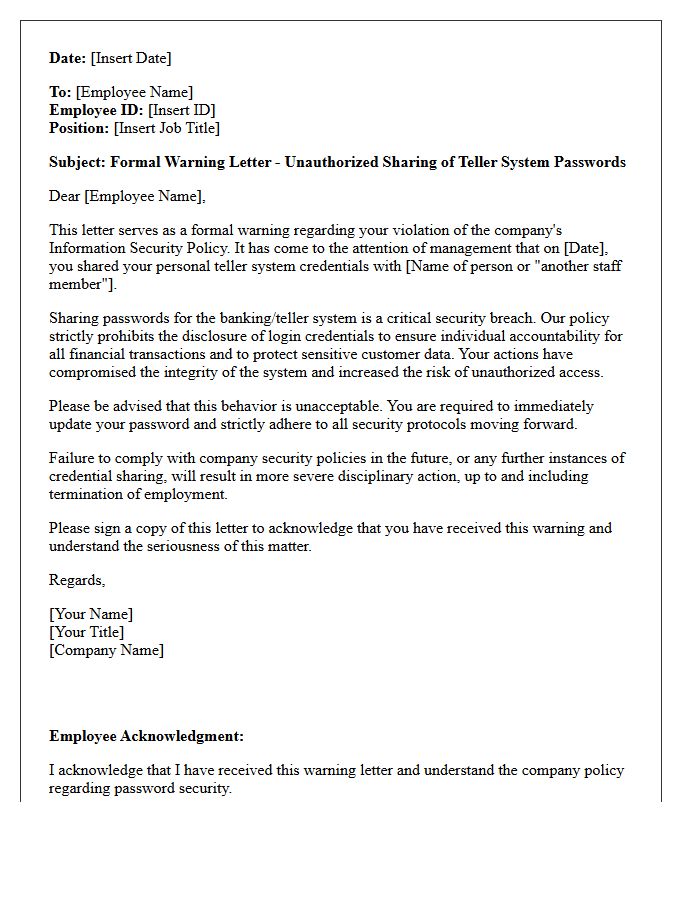
Sharing teller system credentials is a severe security breach that triggers a formal Warning Letter. Your password acts as a digital signature; sharing it compromises financial integrity and accountability. This violation puts sensitive customer data and bank assets at risk, often leading to immediate disciplinary action or termination. To protect your career, never disclose login details to colleagues or supervisors. Maintaining strict confidentiality is a non-negotiable requirement for operational security and regulatory compliance within any financial institution.
First Warning Letter for Leaving Teller Terminal Unattended
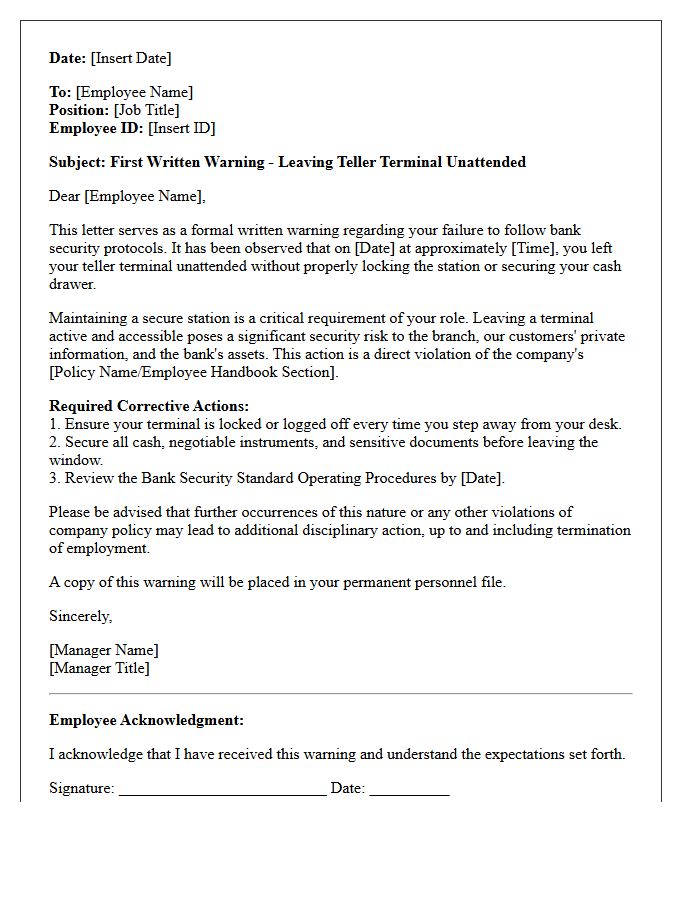
Receiving a first warning letter for leaving your teller terminal unattended is a serious disciplinary action regarding bank security protocols. This document serves as a formal notice that you failed to log out or lock your workstation, creating a significant risk of unauthorized access or financial loss. To maintain operational integrity, you must strictly adhere to the clean desk policy and dual control standards. Immediate improvement in accountability is required, as repeated negligence concerning terminal security may lead to further escalation or termination of employment.
Official Warning Letter for Unauthorized Transaction Overrides
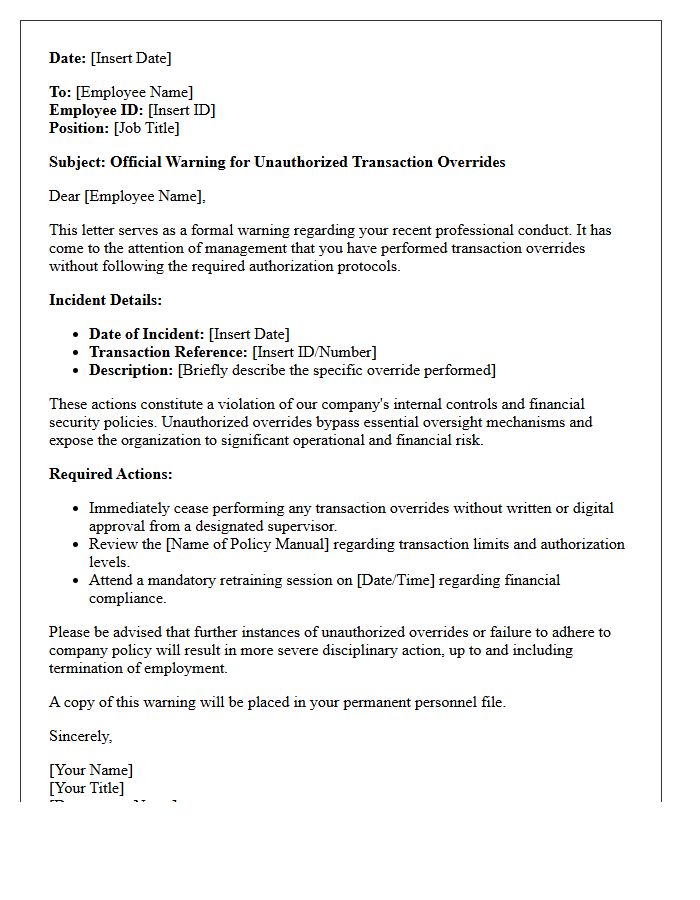
An Official Warning Letter for Unauthorized Transaction Overrides is a formal disciplinary document issued to employees who bypass security protocols without approval. This notice highlights a critical breach of internal controls and financial compliance. Receiving this letter signifies that an individual manually forced a transaction through the system, violating risk management policies. It serves as a legal record for the human resources department, often leading to restricted system access or termination if the behavior persists. Maintaining transactional integrity is essential to prevent fraud and ensure organizational accountability.
Disciplinary Letter for Accessing Family Accounts with Teller Credentials
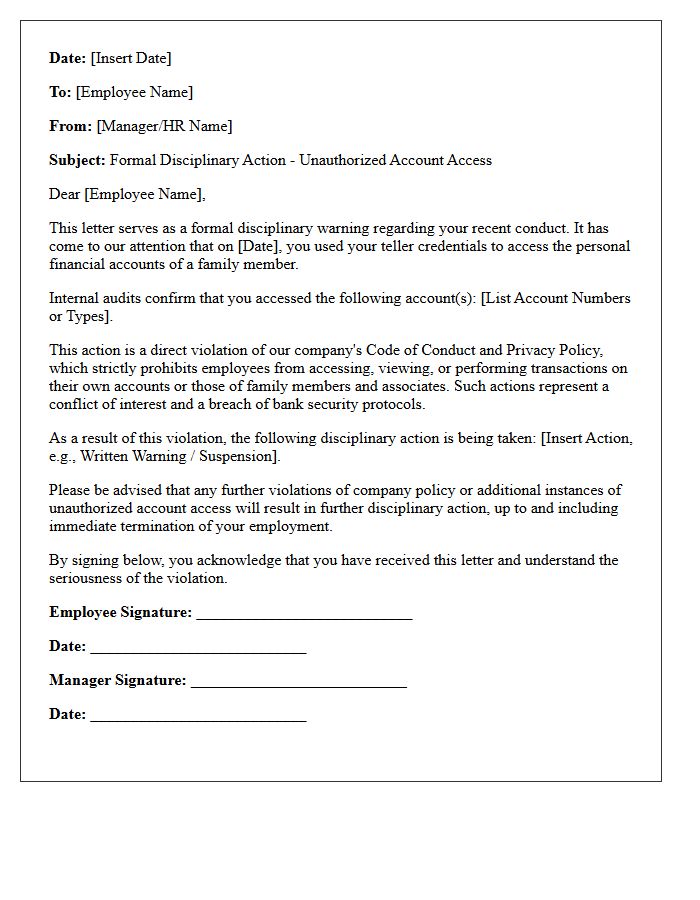
A disciplinary letter for accessing family accounts with teller credentials addresses a critical security breach and conflict of interest. Financial institutions strictly prohibit employees from using internal systems to view or process personal data of relatives to ensure confidentiality and regulatory compliance. Such actions violate privacy policies, regardless of intent or permission. This formal warning emphasizes that maintaining professional boundaries is mandatory. Failure to adhere to these ethical standards often results in severe consequences, including termination of employment, to protect the integrity of the bank's internal controls and customer trust.
Written Warning Letter for Processing Personal Banking Transactions
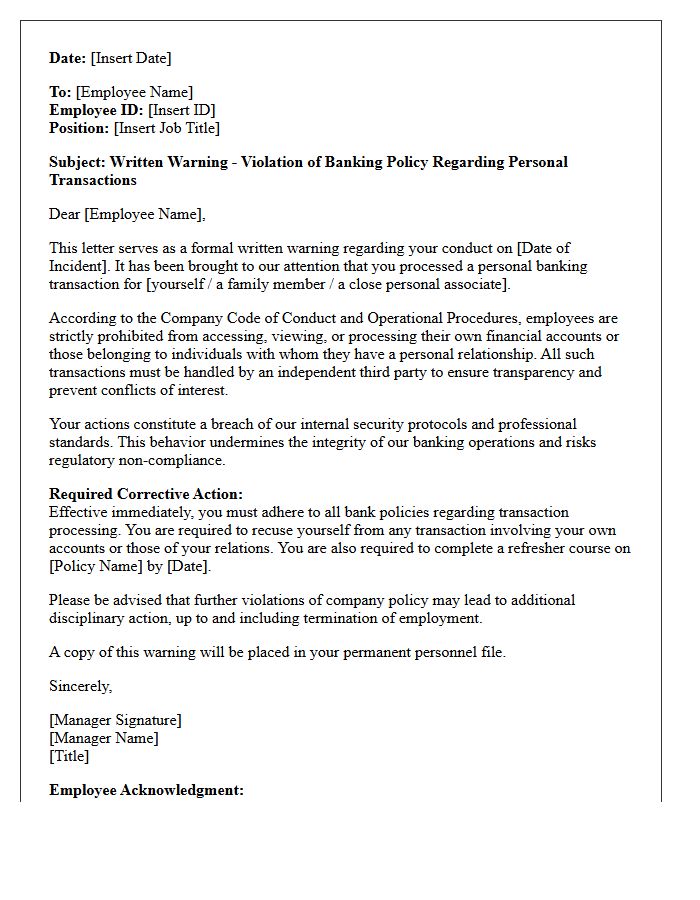
A written warning letter for processing personal banking transactions is a formal disciplinary document issued when an employee handles their own accounts or those of family members. This action violates strict conflict of interest policies and internal security protocols designed to prevent fraud. Maintaining operational integrity is essential in the financial sector to ensure transparency. Such warnings serve as a final notice, emphasizing that all banking activities must remain professional and impartial. Failure to adhere to these compliance standards typically leads to severe consequences, including immediate termination of employment.
Warning Letter for Utilizing Colleague Teller Identification
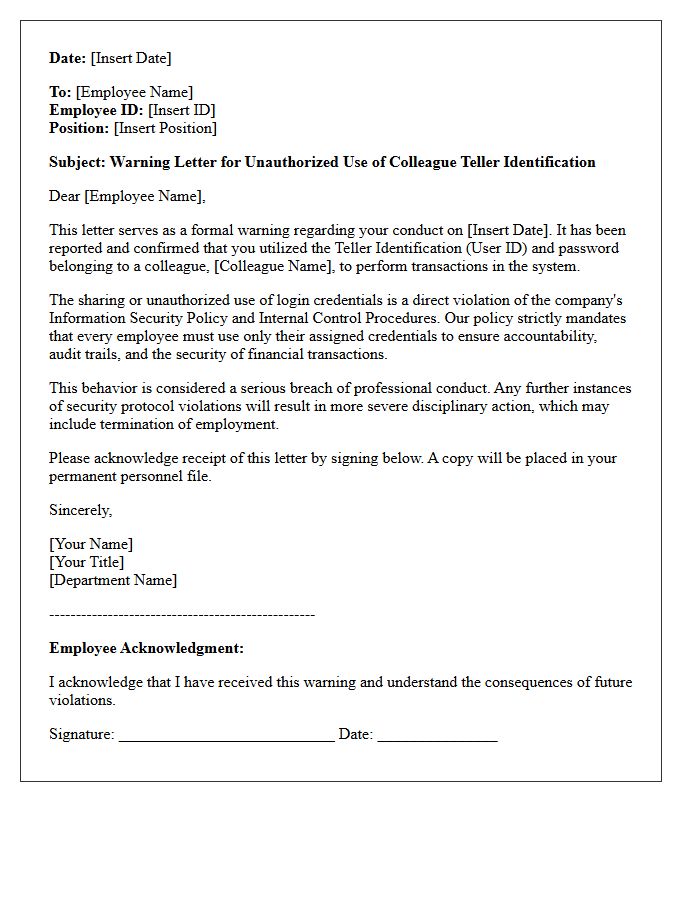
Receiving a Warning Letter for utilizing a colleague's teller identification is a serious disciplinary matter. Sharing credentials compromises internal security and violates strict financial auditing protocols. In the banking industry, accountability is paramount; using another person's ID creates untraceable transactions and potential fraud risks. This action typically constitutes a policy violation that can lead to immediate suspension or termination. Maintaining individual integrity by using only your assigned credentials is essential to protecting your professional reputation and ensuring accurate operational oversight within the institution.
Final Warning Letter for Unauthorized Access of Dormant Accounts
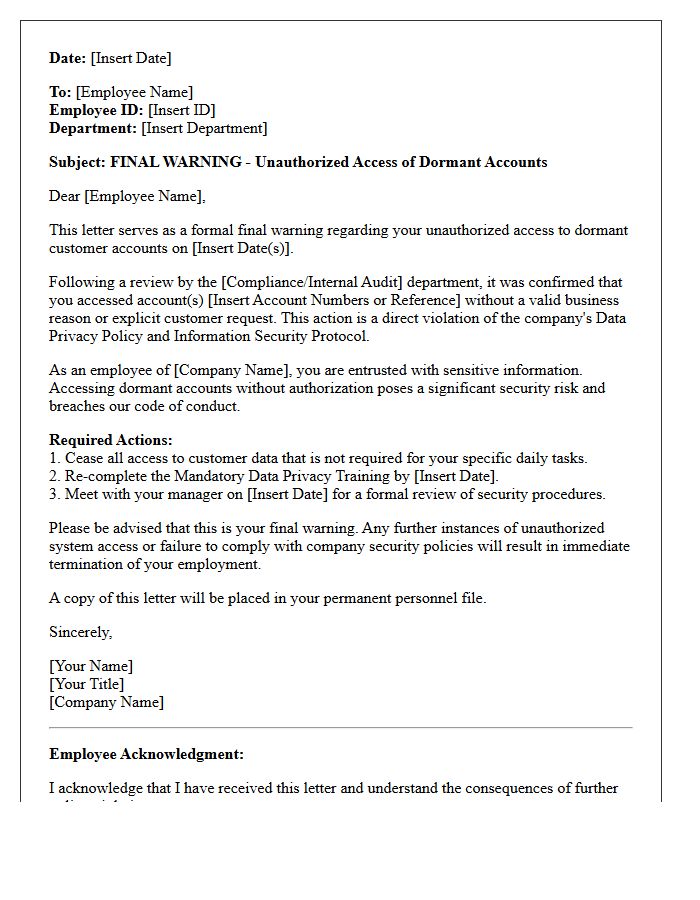
A Final Warning Letter for unauthorized access to dormant accounts serves as a critical disciplinary notice. It signifies a severe breach of data privacy protocols and internal security policies. This formal document warns that any further misconduct or illicit monitoring of inactive customer profiles will result in immediate termination of employment. It emphasizes that maintaining confidentiality is a non-negotiable legal obligation, and unauthorized viewing of sensitive information is often classified as a serious security violation under regulatory compliance standards.
Warning Letter for Bypassing Dual Control Security Measures
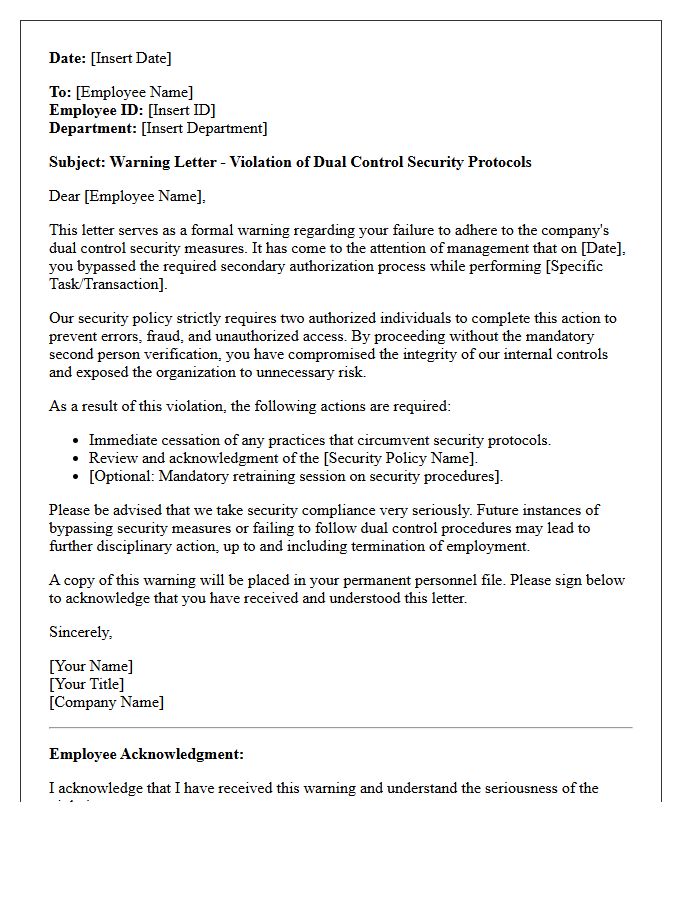
Receiving a warning letter for bypassing dual control security measures is a serious disciplinary matter. These protocols require two authorized individuals to complete a sensitive task, preventing unauthorized access and internal fraud. Circumventing these controls compromises organizational integrity and violates strict safety policies. Employees must understand that such actions often lead to immediate termination or legal consequences. Maintaining accountability and following established security frameworks is essential to protect institutional assets and ensure operational compliance within the workplace.
Formal Warning Letter for Accessing Customer Data Without Business Need
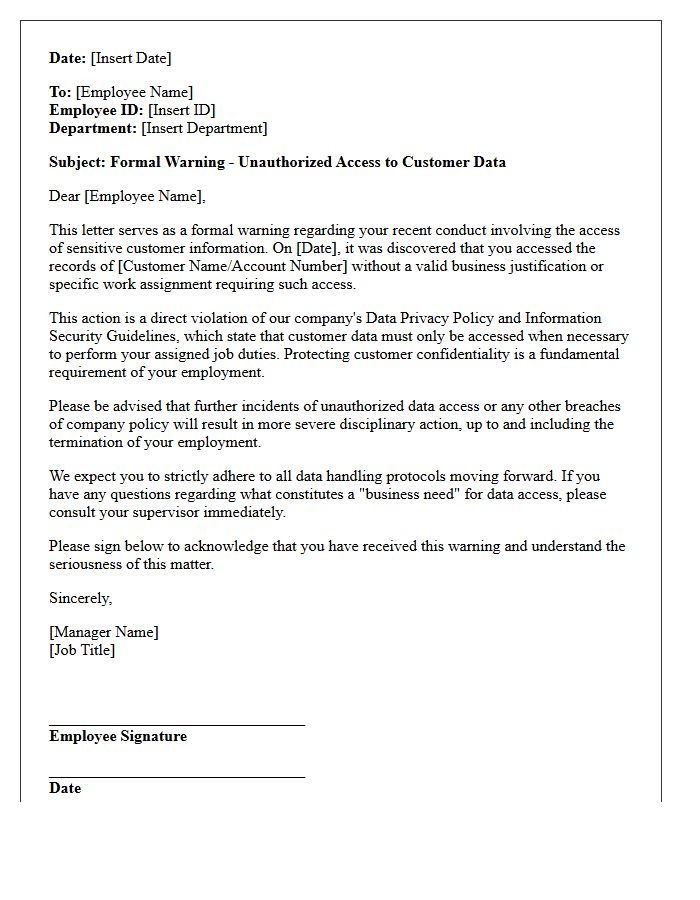
Receiving a Formal Warning Letter for accessing customer data without a legitimate business need is a serious disciplinary action. This document serves as an official record of a security policy violation and breach of data privacy protocols. Such unauthorized access compromises confidentiality and may lead to legal consequences under regulations like GDPR. Employees must understand that data usage is strictly monitored; accessing sensitive information for personal curiosity or non-work reasons is grounds for immediate termination and impacts future professional credibility within the organization.
Reprimand Letter for Operating Teller System Outside Business Hours
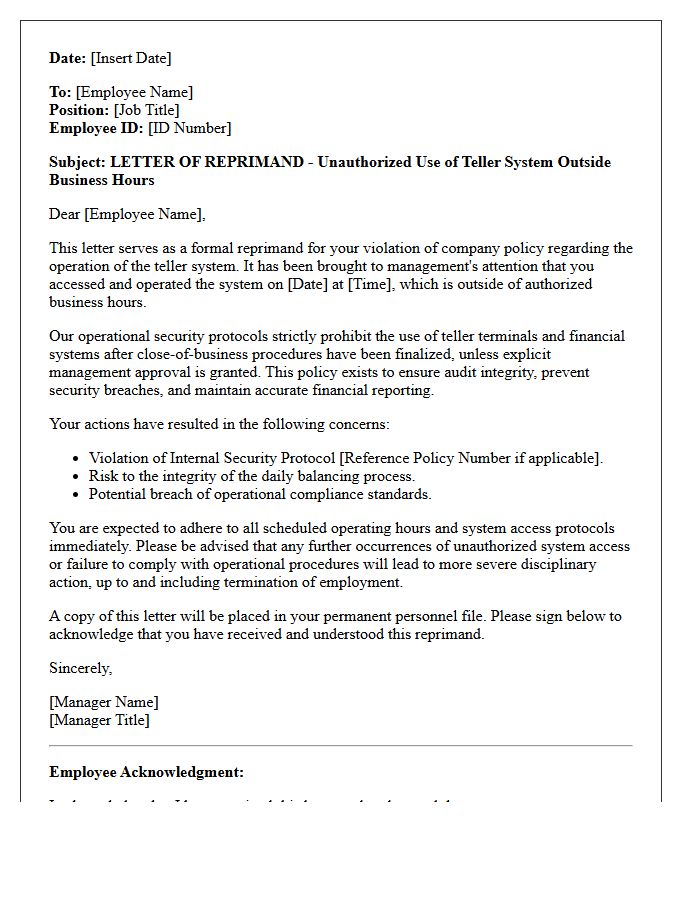
A Reprimand Letter for operating a teller system outside business hours serves as a formal disciplinary notice regarding unauthorized system access. This document emphasizes that accessing financial software after hours violates security protocols and operational compliance policies. It highlights potential risks, such as auditing discrepancies and increased vulnerability to fraud. Employees must understand that maintaining strict adherence to designated schedules is mandatory to ensure internal controls. Failure to comply with these professional standards can lead to further disciplinary action, including termination, as it undermines the institution's security integrity.
Warning Letter for Inappropriate Use of Cash Drawer Credentials
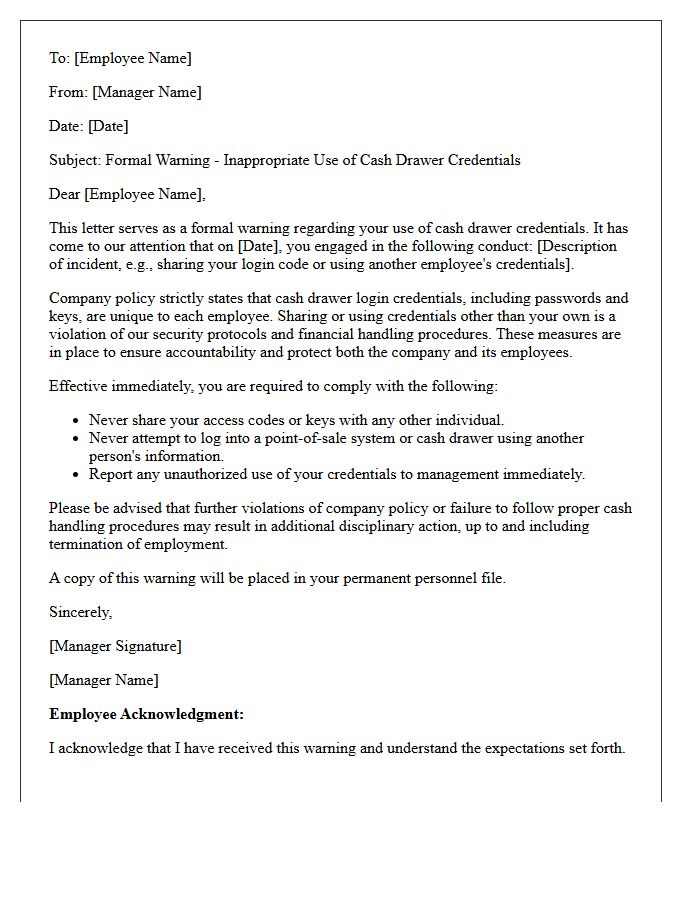
Receiving a Warning Letter for Inappropriate Use of Cash Drawer Credentials is a serious disciplinary action regarding financial security. This document formally addresses the unauthorized sharing of passwords or misuse of login identification, which compromises audit trails and creates accountability risks. Employees must maintain strictly individual access to prevent internal theft or reporting discrepancies. To protect your professional standing, ensure you never disclose your unique access codes to colleagues. Failure to comply with these strictly enforced cash handling protocols can lead to immediate termination of employment and legal liability.
Notice Letter for Unauthorized Reversal of Teller Transactions
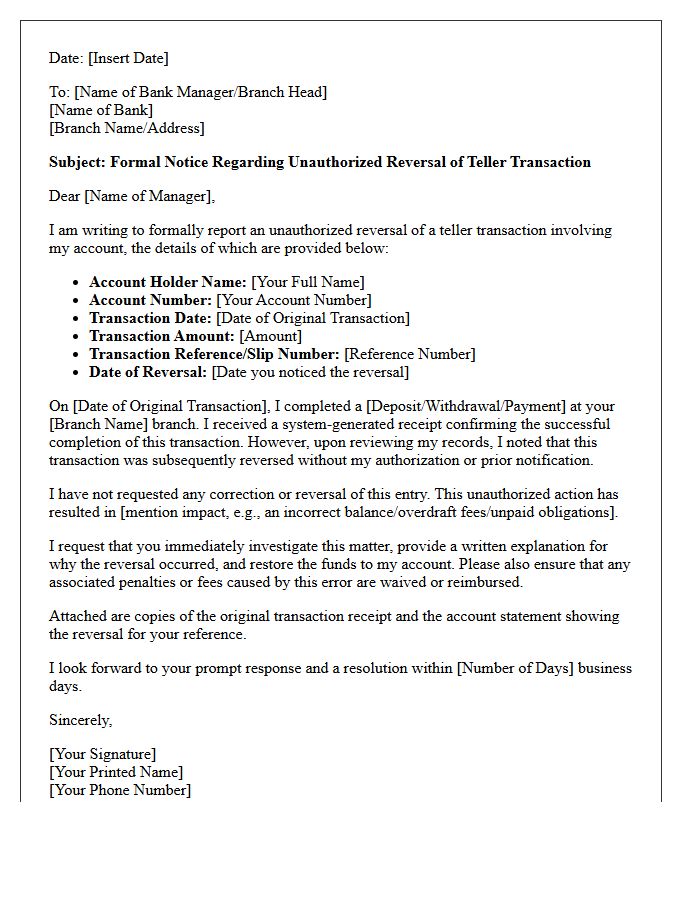
A Notice Letter for Unauthorized Reversal of Teller Transactions is a formal document notifying a financial institution of an erroneous debit or credit correction made without consent. It serves as a legal record to initiate a claims investigation under regulatory frameworks like Regulation E. To protect your account, you must detail the specific transaction date, amount, and teller location. Timely submission is critical to limit your liability and ensure the bank restores missing funds promptly. Always retain a copy of this written dispute for your personal financial records and potential legal follow-up.
What is a warning letter for inappropriate use of teller credentials?
A warning letter for inappropriate use of teller credentials is a formal disciplinary document issued to a bank employee for violating security protocols, such as sharing login IDs, passwords, or leaving a terminal unattended while logged in.
Can sharing my teller login credentials lead to termination?
Yes, sharing teller credentials is considered a major security breach in the banking industry. Depending on the severity of the incident and the institution's policy, it can result in immediate termination or a final written warning.
What are the common reasons for receiving a disciplinary notice regarding teller IDs?
Common reasons include "dual control" violations, processing transactions under someone else's username, sharing passwords with supervisors or peers, and failing to lock a workstation during breaks.
How should I respond to a warning letter about credential misuse?
You should review the specific policy cited, provide a written explanation if there were extenuating circumstances, and sign the document to acknowledge you understand the corrective actions required to maintain bank security.
What are the risks of using another teller's credentials to process transactions?
The primary risks include compromising the audit trail, increasing the potential for internal fraud, and violating federal banking regulations, which can lead to legal liability for both the employee and the financial institution.

Comments