
When a payment arrangement is terminated, a Notice of Canceled Electronic Funds Transfer Agreement serves as formal documentation. This notice ensures both parties are informed that recurring automatic withdrawals or deposits will cease immediately, preventing unauthorized transactions and maintaining financial clarity. Use these professional formats to notify your bank or service provider. Below are some ready to use template.
Image cover: Terminating Your Electronic Funds Transfer Authorization: Notice Templates and Guide
Letter Samples List
- Notice of Canceled Electronic Funds Transfer Agreement Letter
- Debtor Requested Electronic Funds Transfer Cancellation Letter
- Insufficient Funds Electronic Funds Transfer Termination Letter
- Agency Initiated Electronic Funds Transfer Revocation Letter
- Closed Account Electronic Funds Transfer Cancellation Letter
- Settlement Completed Electronic Funds Transfer Notice Letter
- Default Status Electronic Funds Transfer Cancellation Letter
- Mutual Consent Electronic Funds Transfer Termination Letter
- Bank Rejected Transaction Electronic Funds Transfer Letter
- Breach of Contract Electronic Funds Transfer Cancellation Letter
- Expired Payment Plan Electronic Funds Transfer Notice Letter
- Delinquent Account Electronic Funds Transfer Cancellation Letter
Notice of Canceled Electronic Funds Transfer Agreement Letter
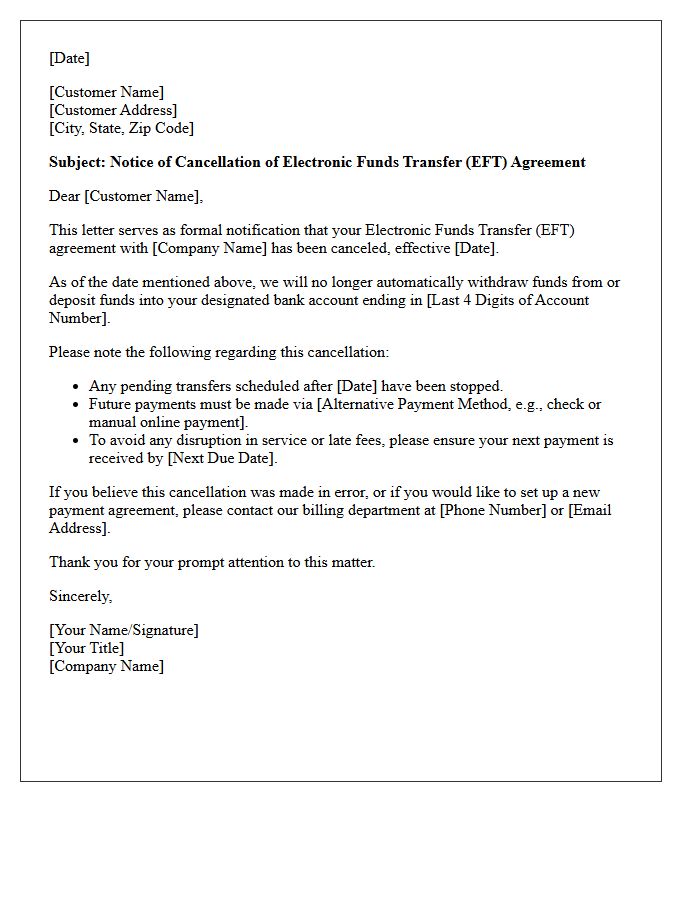
A Notice of Canceled Electronic Funds Transfer Agreement Letter is a formal notification that an electronic payment authorization has been terminated. It serves as legal confirmation that future automatic withdrawals or deposits will no longer occur. Recipients should verify alternative payment methods immediately to prevent service disruptions or late fees. This document is essential for maintaining accurate financial records and ensuring that automated clearing house (ACH) transactions are officially stopped by the financial institution or service provider as requested.
Debtor Requested Electronic Funds Transfer Cancellation Letter
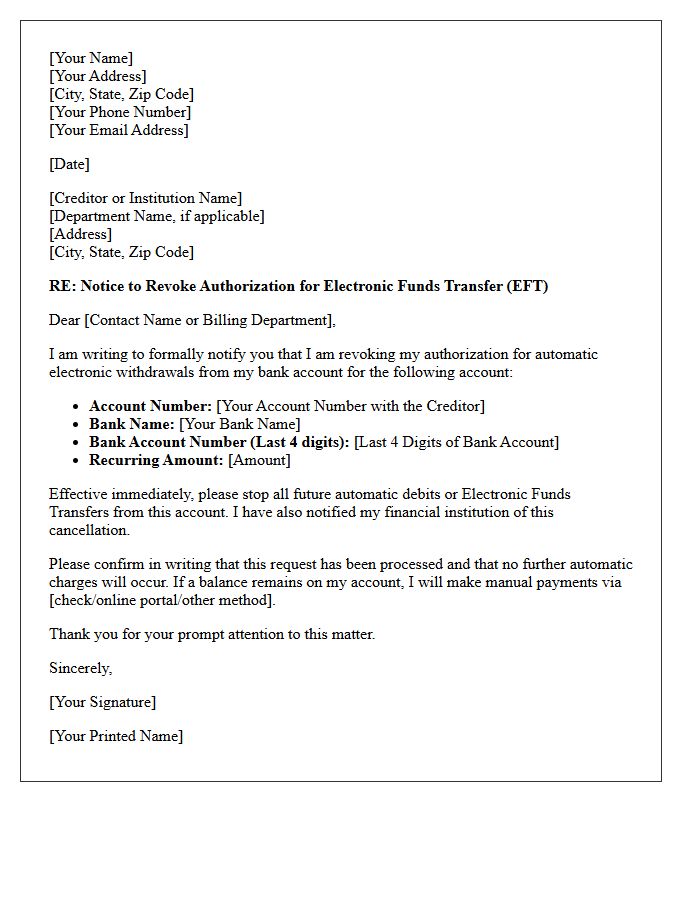
A Debtor Requested Electronic Funds Transfer (EFT) Cancellation Letter is a formal document used to revoke authorization for automated bank withdrawals. To ensure legal compliance, the debtor must provide clear account details and a specific effective date for the termination. Under the Electronic Fund Transfer Act, providing written notice to the merchant and the financial institution protects the consumer from unauthorized future charges. Sending this request via certified mail provides essential proof of delivery, ensuring the payment processor stops the recurring debit cycle immediately to prevent overdraft fees or unwanted transactions.
Insufficient Funds Electronic Funds Transfer Termination Letter
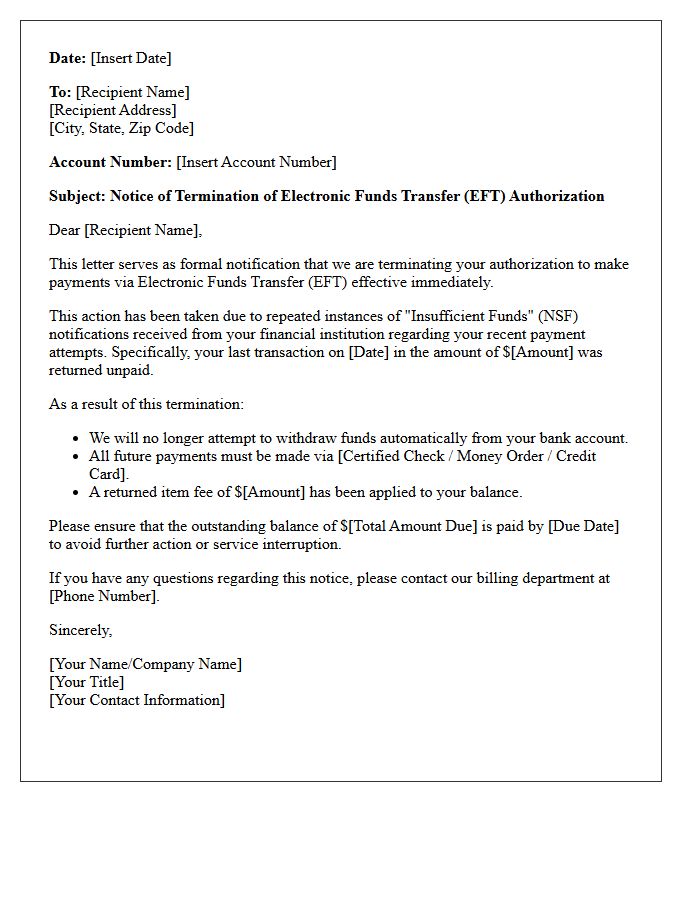
An Insufficient Funds Electronic Funds Transfer Termination Letter is a formal notice sent by a service provider to a customer. It confirms the permanent cancellation of automated payment authorizations due to repeated bank failures. This document serves as legal evidence that the EFT agreement is void, protecting the business from further bank fees. Recipients must immediately arrange an alternative payment method to prevent service outages or negative credit reporting. Understanding this notice is vital for maintaining account standing and managing financial compliance effectively.
Agency Initiated Electronic Funds Transfer Revocation Letter
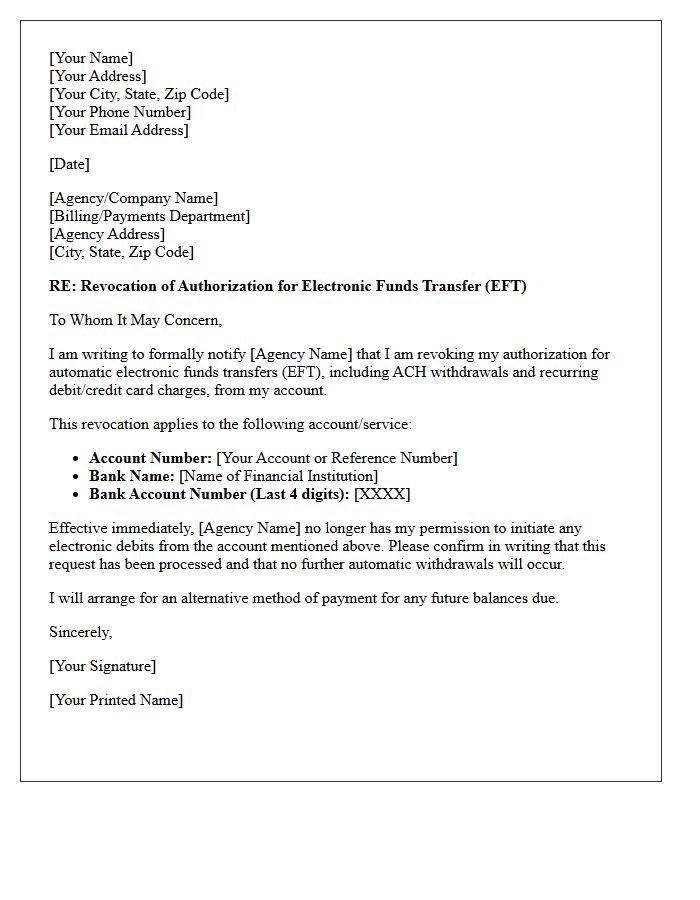
An Agency Initiated Electronic Funds Transfer Revocation Letter is a formal legal notification used to cancel preauthorized recurring payments directly with a merchant or service provider. Under the Electronic Fund Transfer Act, you have the right to stop automatic withdrawals by providing written notice at least three business days before the scheduled transfer. Sending this letter ensures a documented paper trail, protecting your consumer rights if an unauthorized debit occurs. Always notify your financial institution simultaneously to effectively block future payment attempts and safeguard your bank account balance.
Closed Account Electronic Funds Transfer Cancellation Letter
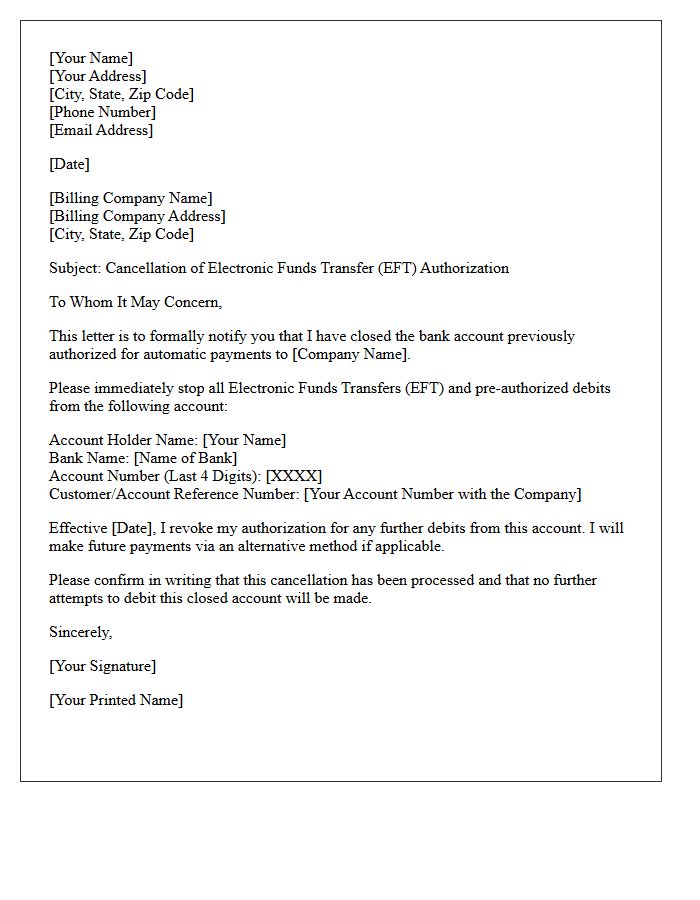
A Closed Account Electronic Funds Transfer Cancellation Letter is a formal notice sent to billing companies to terminate recurring automatic withdrawals from a deactivated bank account. Providing this written instruction is crucial to prevent failed payment fees, overdraft charges, or legal complications arising from attempted debits. Ensure the letter includes your account details, the specific service being canceled, and a request for written confirmation. Sending this document via certified mail provides legal proof that you revoked authorization, protecting your financial standing after closing an account.
Settlement Completed Electronic Funds Transfer Notice Letter
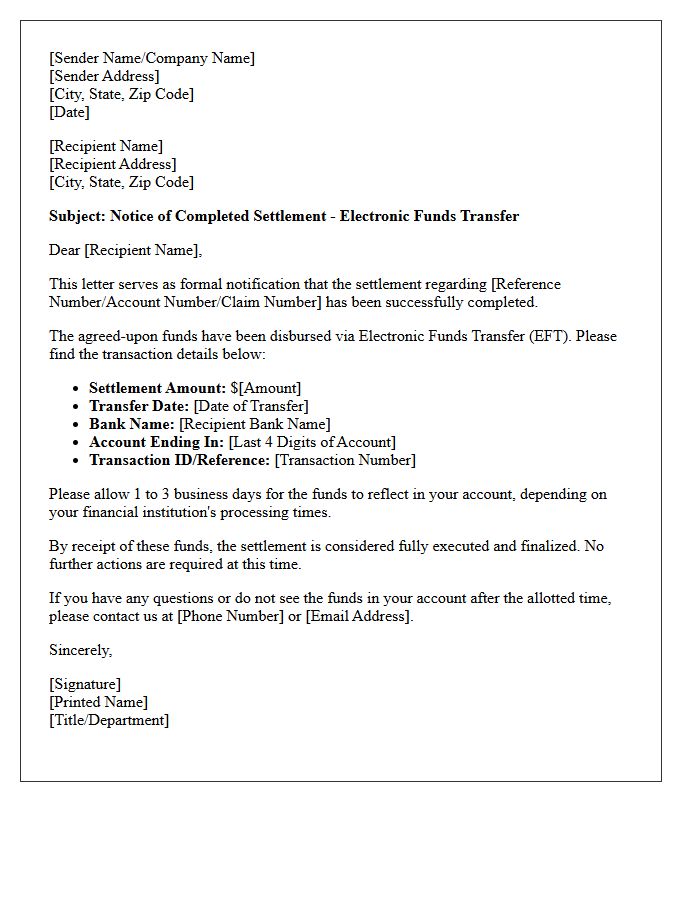
A Settlement Completed Electronic Funds Transfer Notice Letter confirms that a financial transaction has been finalized. This official document serves as a legal record, verifying that funds have been successfully moved from the sender to the recipient. It typically includes the settlement date, transaction amount, and bank details. Recipients should verify these figures against their records to ensure accuracy. Retaining this notice is essential for audit trails and resolving future billing disputes, as it provides definitive proof that the payment obligation is fulfilled.
Default Status Electronic Funds Transfer Cancellation Letter
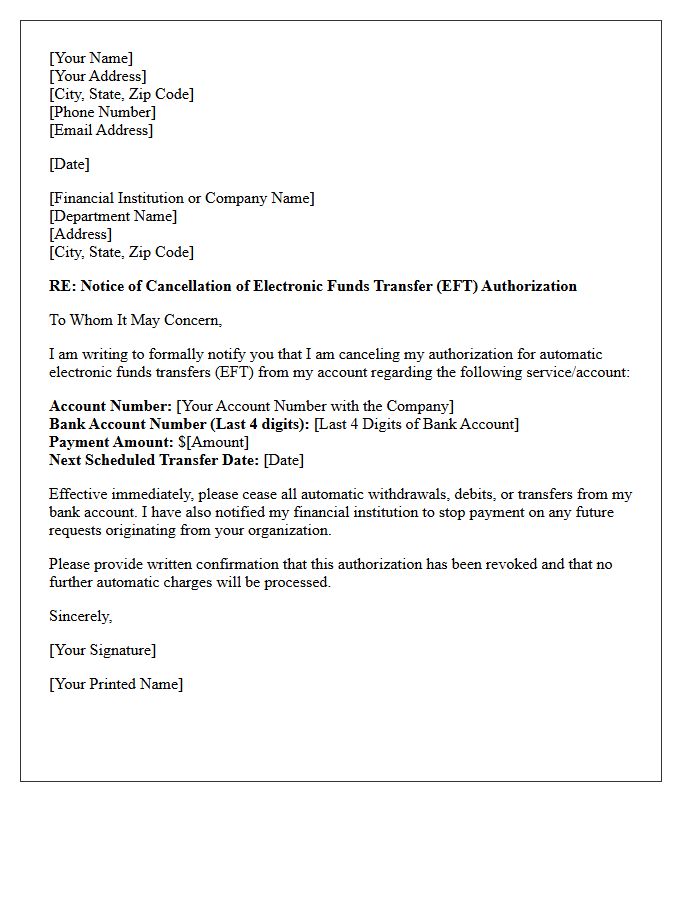
A Default Status Electronic Funds Transfer Cancellation Letter is a formal notice sent to a lending institution or service provider to terminate automatic payment authorizations. This document is crucial when a loan enters default or when you wish to regain control over your bank account access. By submitting this written revocation, you legally withdraw the Electronic Funds Transfer (EFT) mandate, preventing unauthorized future withdrawals. It is essential to send this via certified mail to ensure a documented record of your request, protecting your financial assets during debt restructuring or dispute resolution processes.
Mutual Consent Electronic Funds Transfer Termination Letter
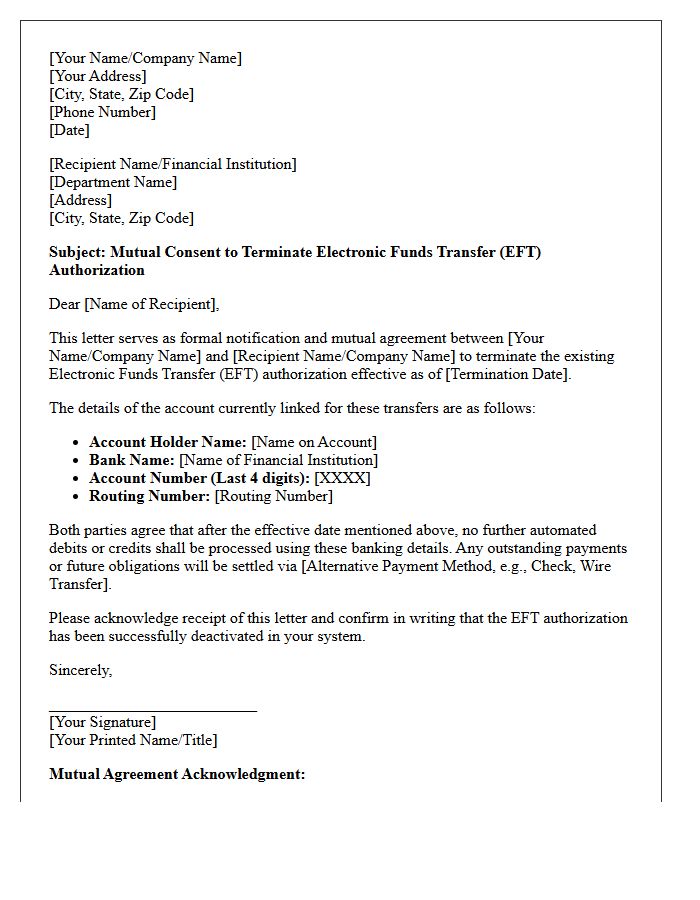
A Mutual Consent Electronic Funds Transfer Termination Letter is a formal document used to cancel recurring automated payments by mutual agreement between a payer and a payee. It ensures that both parties acknowledge the revocation of authorization for direct debits or credits. This written record protects consumers from unauthorized charges and helps financial institutions process the stop-payment request accurately. To remain legally compliant, the letter should specify the effective termination date and account details, preventing future disputes and ensuring a smooth transition to alternative payment methods.
Bank Rejected Transaction Electronic Funds Transfer Letter
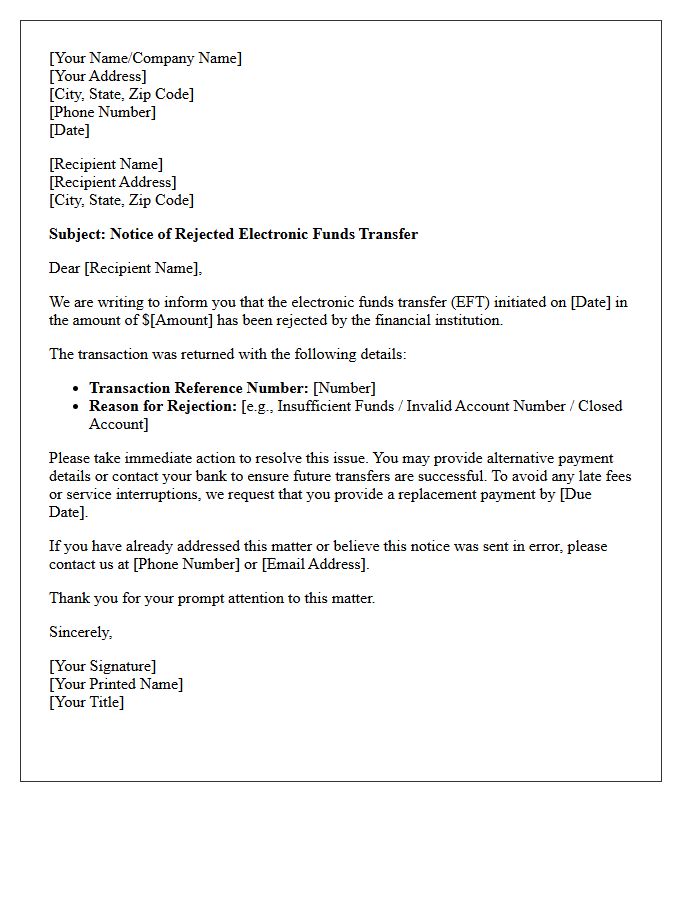
Receiving a Bank Rejected Transaction notice indicates that your Electronic Funds Transfer (EFT) failed to process. Common causes include insufficient funds, incorrect account details, or closed bank accounts. It is crucial to act quickly to avoid late payment fees or service interruptions. Review the specific rejection code provided in the letter to identify the error. Once corrected, contact the merchant or billing department immediately to arrange a replacement payment and ensure your banking information is updated for future automated cycles to maintain a healthy credit standing.
Breach of Contract Electronic Funds Transfer Cancellation Letter
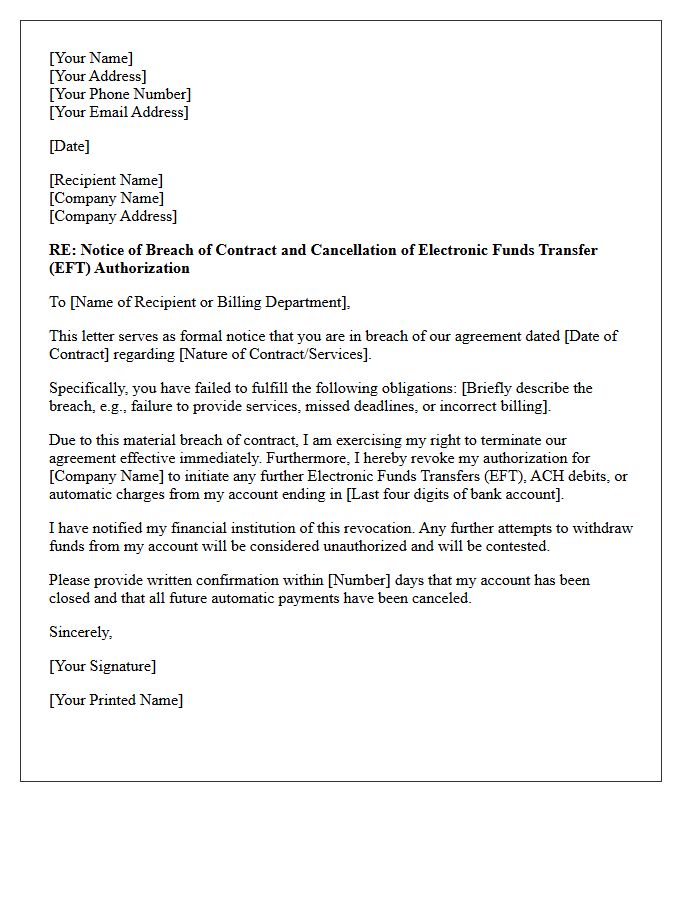
A Breach of Contract Electronic Funds Transfer Cancellation Letter is a formal notice used to stop automated payments when a service provider fails to meet their obligations. It serves as legal documentation that you are revoking authorization due to a specific contract violation. To ensure effectiveness, clearly state the breach details, account information, and the effective date of termination. Sending this via certified mail provides proof of delivery, protecting your consumer rights under Regulation E and preventing unauthorized future withdrawals from your bank account after the agreement has been legally terminated.
Expired Payment Plan Electronic Funds Transfer Notice Letter
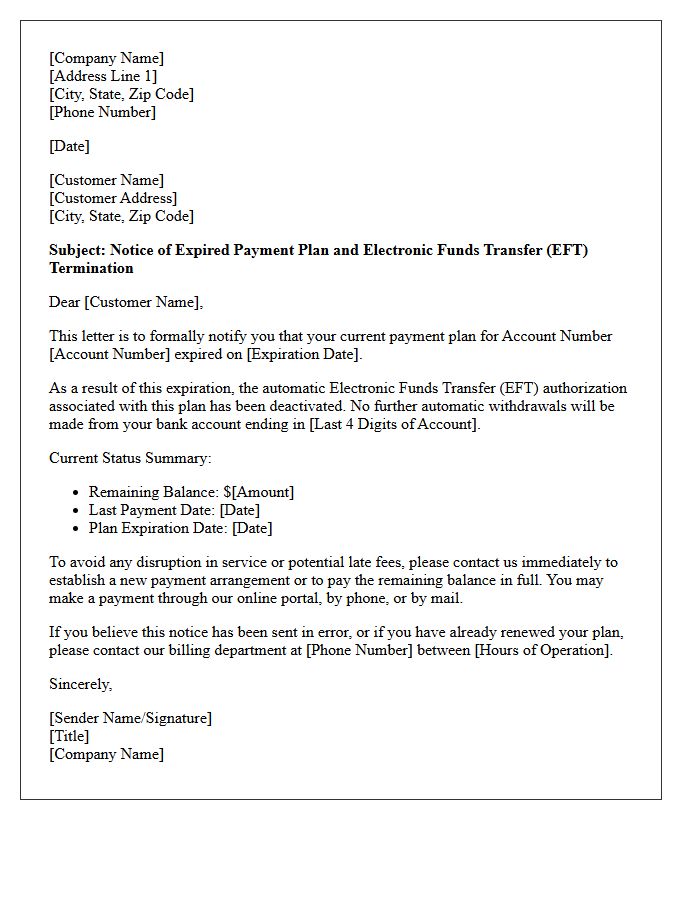
An Expired Payment Plan Electronic Funds Transfer (EFT) Notice Letter informs taxpayers that their pre-authorized installment agreement has terminated. This official notification typically triggers when the statute of limitations expires or the agreed terms conclude. Once received, automatic withdrawals will stop immediately. To avoid accrued penalties or aggressive collection actions like levies, you must contact the tax agency to settle the remaining balance or establish a new repayment agreement. Reviewing this document is critical for maintaining financial compliance and preventing unexpected tax liens on your assets.
Delinquent Account Electronic Funds Transfer Cancellation Letter
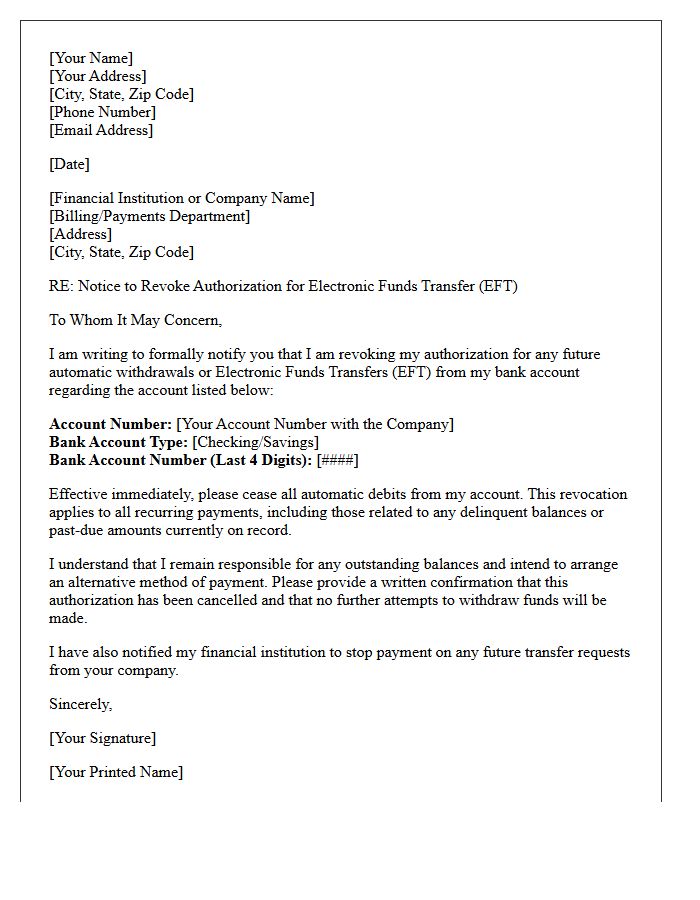
A Delinquent Account Electronic Funds Transfer Cancellation Letter is a formal notification used to terminate automated withdrawals from a bank account. This document serves as legal proof that you have revoked authorization for a service provider to debit funds. It is a critical step for debt management and preventing unauthorized overdraft fees when an account is in arrears. To ensure effectiveness, send this letter via certified mail to both the creditor and your financial institution to legally halt recurring payments and protect your remaining liquid assets during financial disputes.
What is a Notice of Canceled Electronic Funds Transfer Agreement?
A Notice of Canceled Electronic Funds Transfer Agreement is a formal document notifying a user that their authorization to transfer funds electronically between bank accounts has been terminated or revoked.
Why did I receive a cancellation notice for my EFT agreement?
Cancellations typically occur due to insufficient funds, closed bank accounts, suspected fraudulent activity, or a request by either the account holder or the service provider to end the automated payment arrangement.
Can I reactivate an Electronic Funds Transfer agreement once it is canceled?
Reactivation requirements depend on the reason for cancellation; generally, you must resolve any outstanding balances and submit a new authorization form with updated banking information to restore EFT services.
How does a canceled EFT agreement affect my scheduled payments?
Once the agreement is canceled, all pending and future automated transfers will stop immediately. You must arrange an alternative payment method, such as a credit card or manual check, to avoid late fees or service interruptions.
What should I do if my EFT agreement was canceled in error?
If you believe the cancellation was a mistake, contact your financial institution or the billing company's customer service department immediately to verify your account status and provide proof of valid banking credentials.


Comments