
Managing old collections requires understanding your legal rights regarding expired statutes of limitations. A Cease and Desist Acknowledgment for Time-Barred Debt formally notifies collectors that the debt is legally uncollectible due to age, effectively halting further harassment and protecting your financial standing. Learn how to draft this essential legal notice properly. Below are some ready to use templates.
Image cover: Proven Templates for Acknowledging Time-Barred Debt and Enforcing Cease and Desist Requests
Letter Samples List
- Time-Barred Debt Cease and Desist Acknowledgment Letter
- Acknowledgment Letter for Time-Barred Debt Cease and Desist
- Debt Collection Cease and Desist Acknowledgment Letter
- Letter of Acknowledgment for Time-Barred Debt Cease and Desist
- Statute of Limitations Cease and Desist Acknowledgment Letter
- Time-Barred Account Cease and Desist Confirmation Letter
- Cease and Desist Acknowledgment Letter for Outdated Debt
- Expired Debt Cease and Desist Acknowledgment Letter
- Letter Confirming Cease and Desist for Time-Barred Debt
- Debt Collection Closure and Cease and Desist Acknowledgment Letter
- Uncollectible Time-Barred Debt Cease and Desist Letter
- Consumer Cease and Desist Acknowledgment Letter
Time-Barred Debt Cease and Desist Acknowledgment Letter
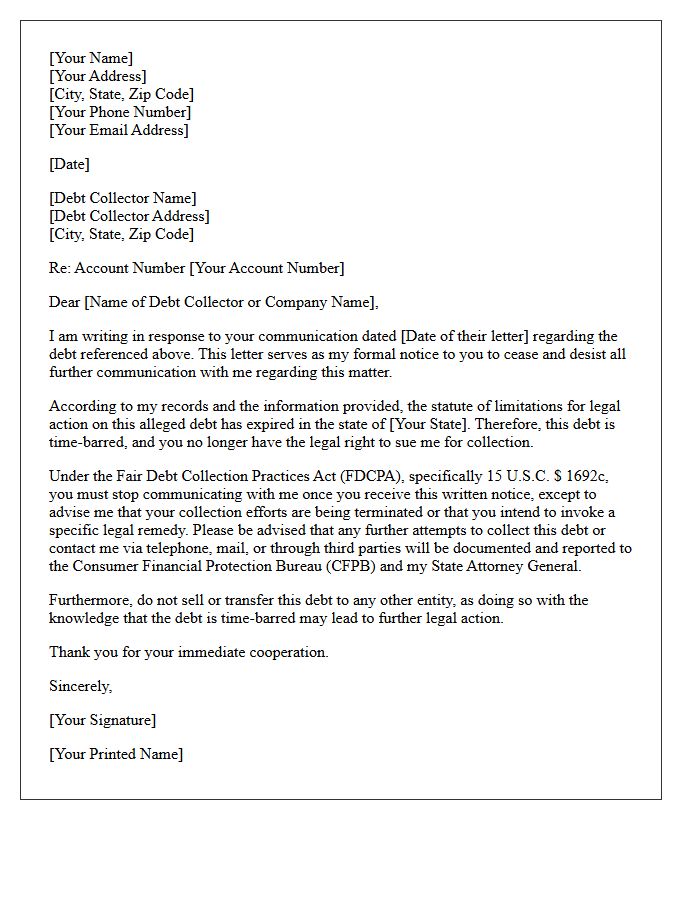
A Time-Barred Debt Cease and Desist Acknowledgment Letter is a formal notice sent to collectors regarding statute-barred liabilities. It asserts that the legal timeframe for suing has expired, making the debt legally uncollectible through courts. By sending this letter, you formally request that the agency cease all communication. Importantly, acknowledging the debt can sometimes restart the clock on the statute of limitations in certain jurisdictions. Always verify local laws before sending, as this document protects your consumer rights under the Fair Debt Collection Practices Act by stopping further harassment.
Acknowledgment Letter for Time-Barred Debt Cease and Desist
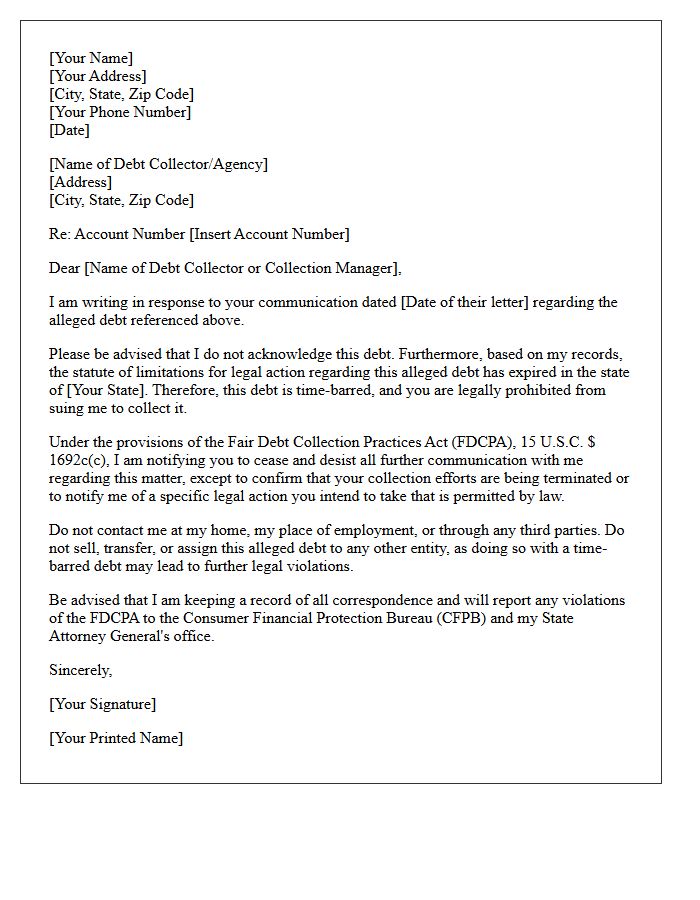
When sending an Acknowledgment Letter for Time-Barred Debt, you must explicitly state that the statute of limitations has expired. This formal notice serves as a cease and desist demand, legally prohibiting collectors from contacting you further regarding the expired obligation. Crucially, avoid making any partial payments or promises to pay, as these actions can restart the clock on the debt's legal enforceability. Clearly asserting your rights protects your financial standing and ensures that collectors can no longer pursue legal action or harassment for outdated liabilities.
Debt Collection Cease and Desist Acknowledgment Letter
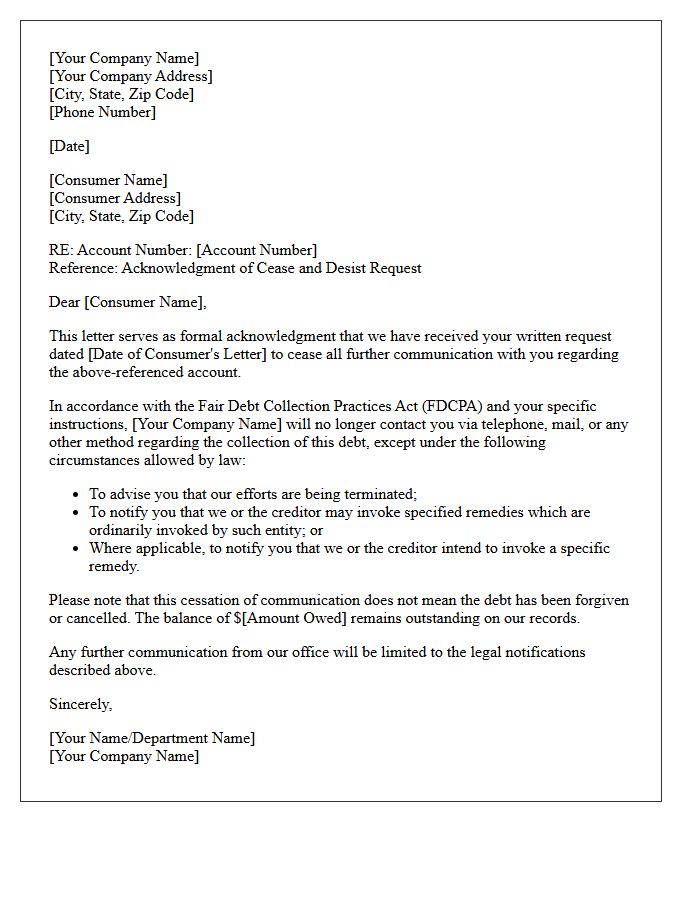
A Debt Collection Cease and Desist Acknowledgment Letter is a formal document sent by a creditor or agency confirming they received your request to stop communication. This letter serves as legal proof that the collector must halt all non-essential contact regarding the debt. Under the Fair Debt Collection Practices Act (FDCPA), they may only contact you to verify that collection efforts are ending or to notify you of specific legal actions. Retain this acknowledgment carefully, as it protects your rights against future harassment and ensures your privacy is respected during the resolution process.
Letter of Acknowledgment for Time-Barred Debt Cease and Desist
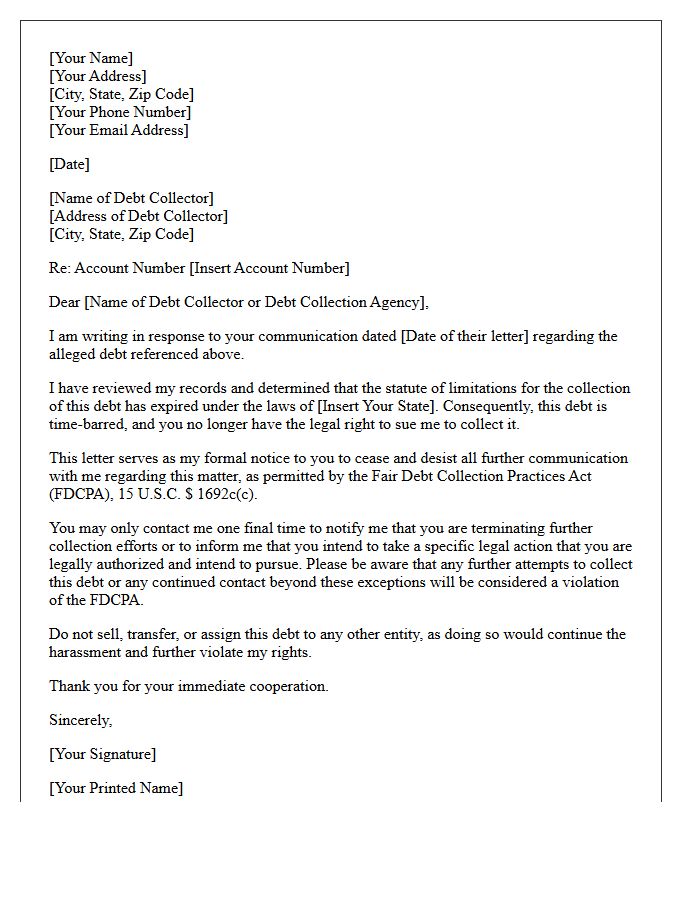
A Letter of Acknowledgment for Time-Barred Debt serves as a formal response to collectors pursuing expired claims. Sending a cease and desist notice prevents further harassment regarding debts past the statute of limitations. It is crucial to state that you do not recognize the debt; never make a payment or promise to pay, as this can restart the legal clock. Explicitly demand that the agency stop all communication. This document protects your consumer rights under the Fair Debt Collection Practices Act while ensuring you maintain a paper trail of your refusal to pay expired obligations.
Statute of Limitations Cease and Desist Acknowledgment Letter
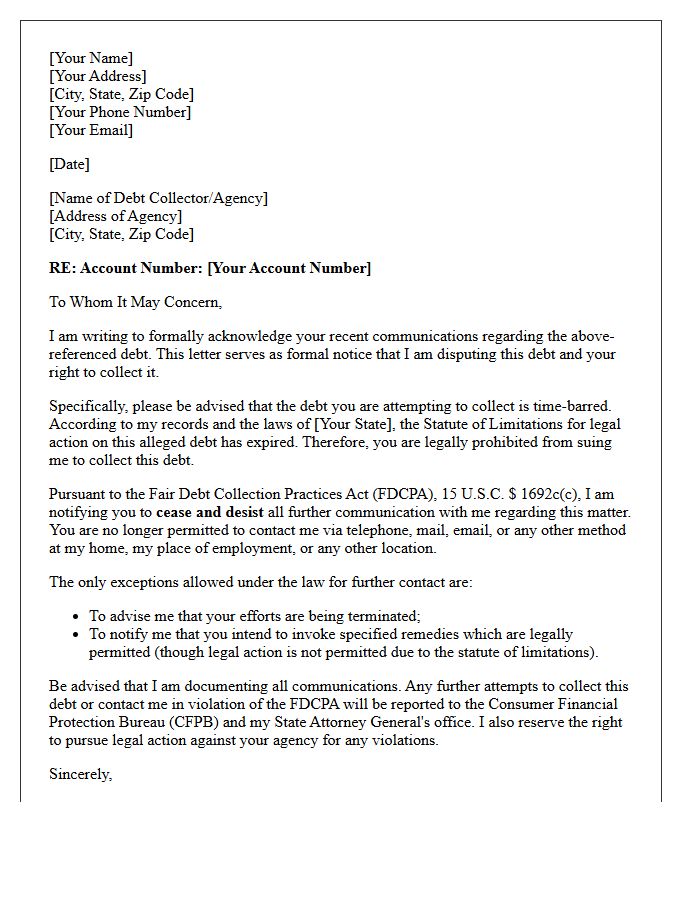
A Statute of Limitations Cease and Desist Acknowledgment Letter is a vital legal document used to stop debt collectors from pursuing time-barred debts. By sending this, you formally notify collectors that the statute of limitations has expired, making the debt legally uncollectible through the courts. It is crucial to avoid making a payment or promising to pay, as these actions can reset the legal clock. Use this letter to protect your rights, demand the cessation of all communication, and prevent further harassment regarding expired financial obligations.
Time-Barred Account Cease and Desist Confirmation Letter
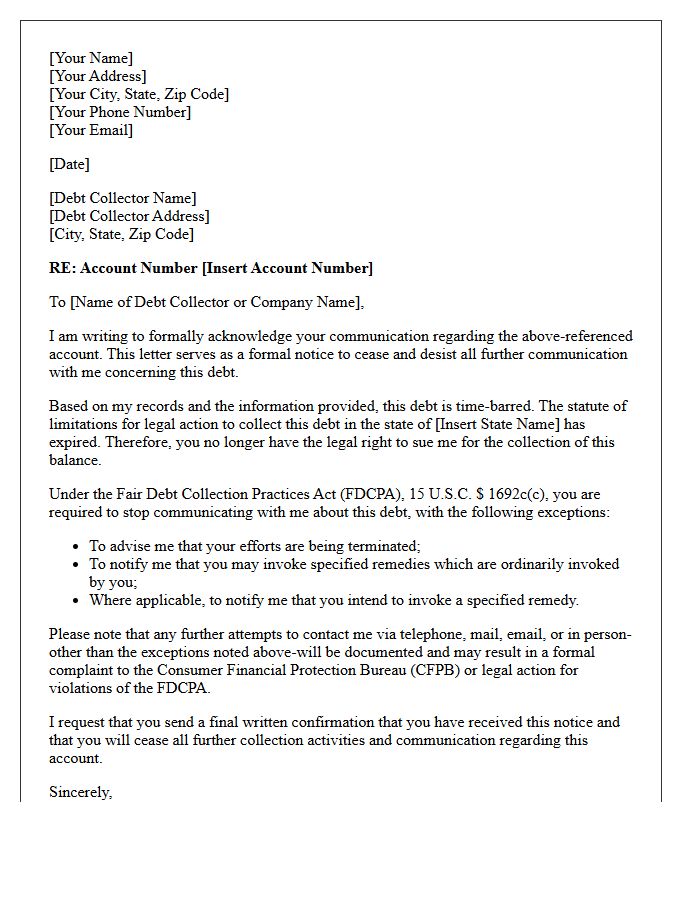
A Time-Barred Account Cease and Desist Confirmation Letter is a formal legal document sent to debt collectors to stop communication regarding expired debts. Once a debt passes the statute of limitations, collectors lose the legal right to sue for payment. Sending this letter confirms you are exercising your rights under the Fair Debt Collection Practices Act (FDCPA). It protects consumers from harassment and ensures the agency acknowledges that the debt is legally uncollectible. Always keep a copy of the signed delivery receipt as proof that the collection agency must stop all further contact.
Cease and Desist Acknowledgment Letter for Outdated Debt
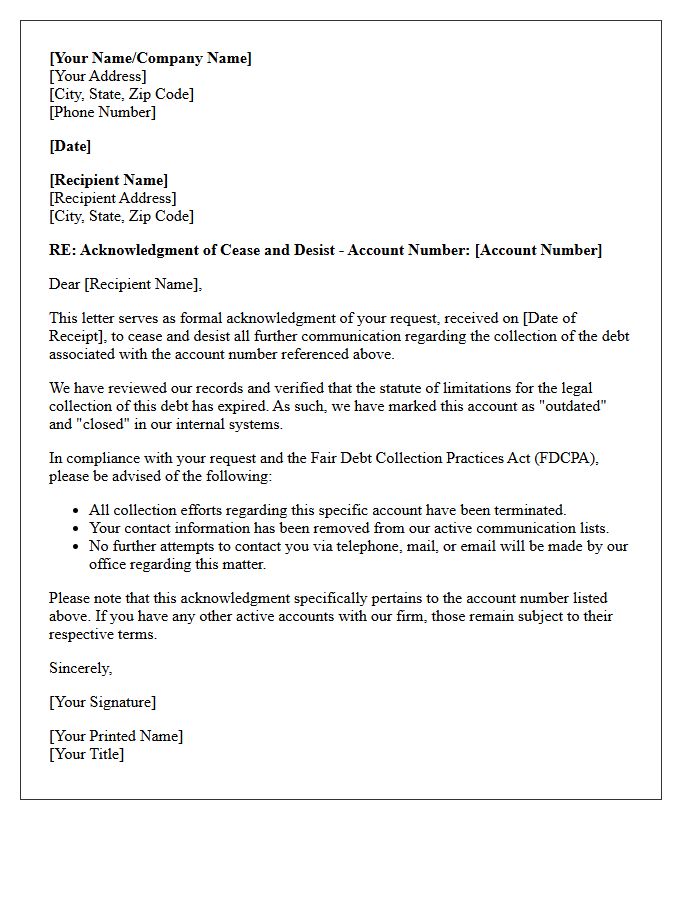
A cease and desist acknowledgment letter for outdated debt confirms you have received a collection notice for a time-barred debt. Sending this document officially notifies creditors that the statute of limitations has expired, legally preventing them from suing to collect. It is essential to explicitly state that you do not acknowledge the debt as valid to avoid resetting the clock. This letter serves as a formal demand to stop all communication, protecting you from harassment while asserting your legal rights under the Fair Debt Collection Practices Act.
Expired Debt Cease and Desist Acknowledgment Letter
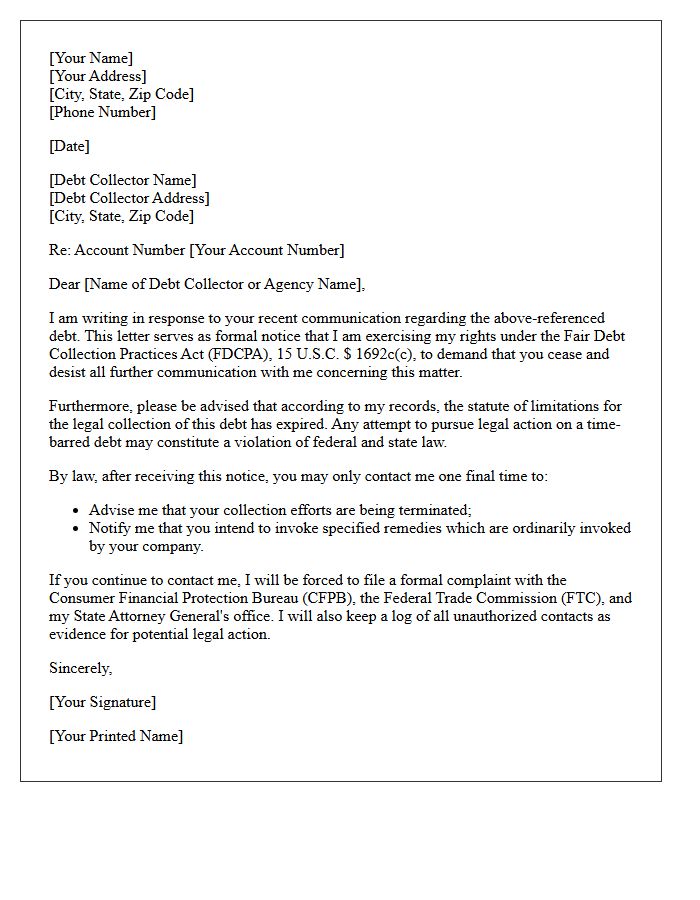
An Expired Debt Cease and Desist Acknowledgment Letter is a formal document sent to collectors to stop communication regarding time-barred debt. Under the Fair Debt Collection Practices Act (FDCPA), once you notify a collector in writing to stop contacting you, they must comply. This letter serves as legal proof that you acknowledge the debt is past the statute of limitations and explicitly revoke their right to pursue further collection efforts. Sending this via certified mail ensures consumer protection and prevents ongoing harassment for debts that are no longer legally enforceable in court.
Letter Confirming Cease and Desist for Time-Barred Debt
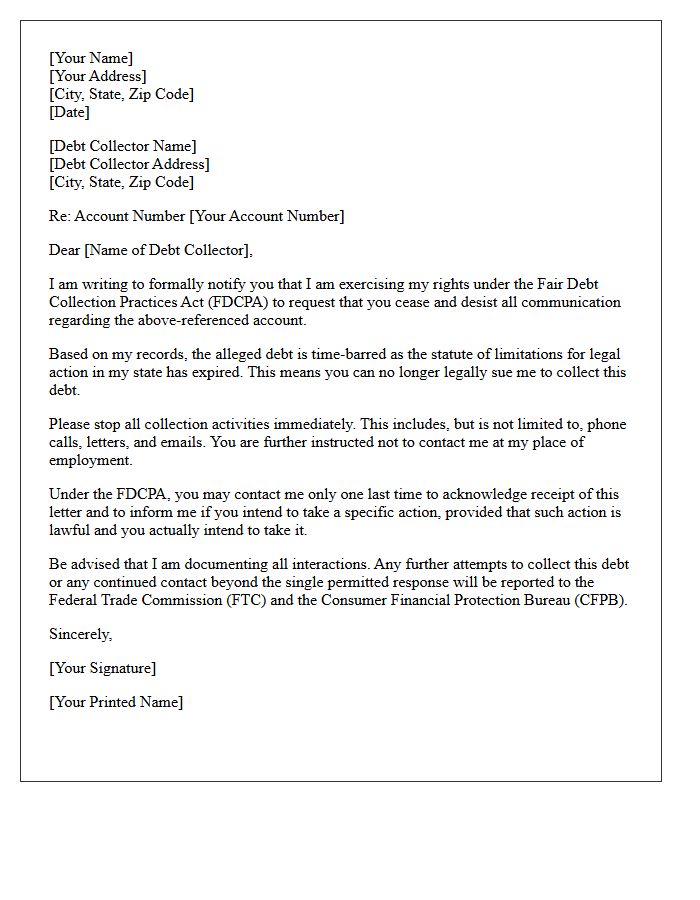
A letter confirming a cease and desist for time-barred debt formally notifies collectors to stop all communication regarding an expired obligation. Under the Fair Debt Collection Practices Act, once a debt surpasses the statute of limitations, you are no longer legally required to pay. Sending this written notice prevents further harassment and serves as vital evidence if a collector continues to pursue the debt illegally. Clearly state that the debt is time-barred and demand an immediate end to all contact to protect your consumer rights and maintain your financial peace of mind.
Debt Collection Closure and Cease and Desist Acknowledgment Letter
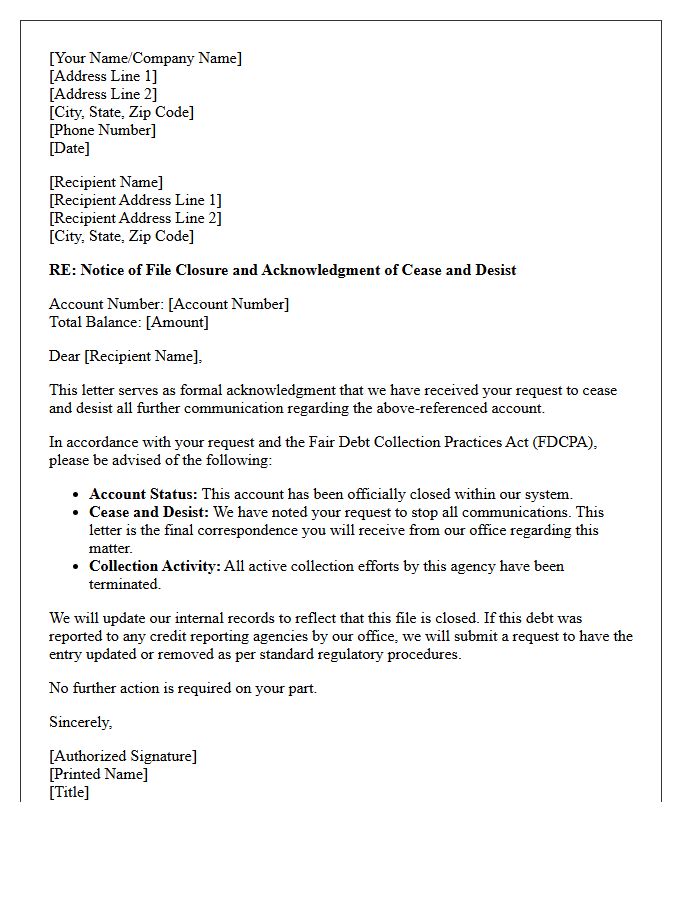
A Debt Collection Closure and Cease and Desist Acknowledgment Letter is a vital document confirming that a collection agency has permanently closed your account. It serves as formal evidence that the debt collector has received your request to stop communication and acknowledges that no further legal or collection actions will be pursued. Retaining this written confirmation protects your consumer rights under the FDCPA, ensuring your credit report remains accurate and preventing future harassment or the resale of disputed or settled debts to other third-party agencies.
Uncollectible Time-Barred Debt Cease and Desist Letter
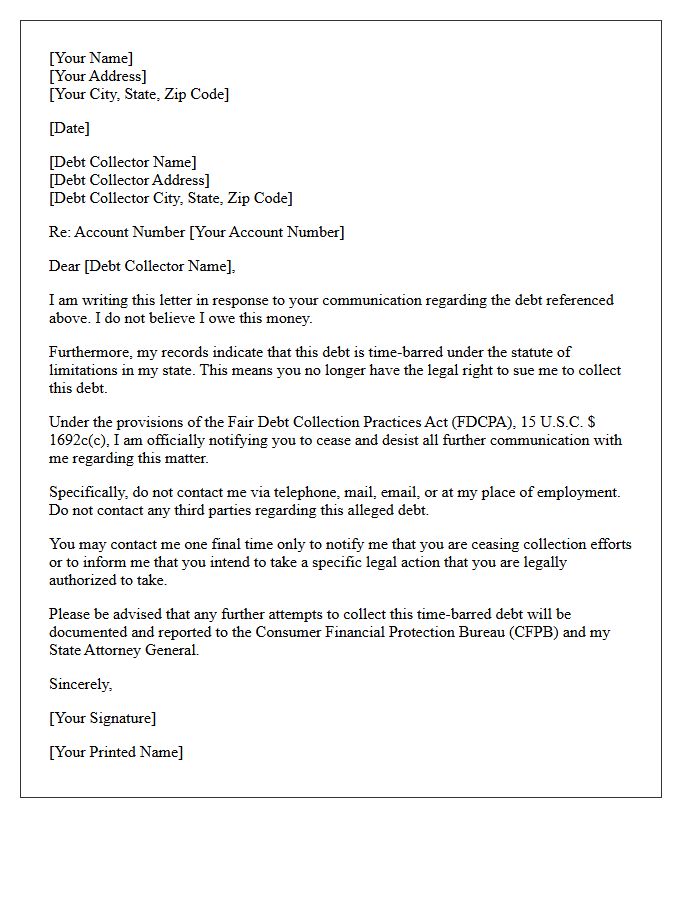
A Time-Barred Debt Cease and Desist Letter is a critical legal tool used to stop collection efforts on debts past the statute of limitations. While creditors can no longer successfully sue you for these expired balances, they may still attempt to contact you. Sending this formal written notice legally mandates that collectors stop all communication. It is vital to avoid making payments or acknowledging the debt in writing, as doing so can restart the clock on the limitation period, making the old debt legally enforceable once again.
Consumer Cease and Desist Acknowledgment Letter
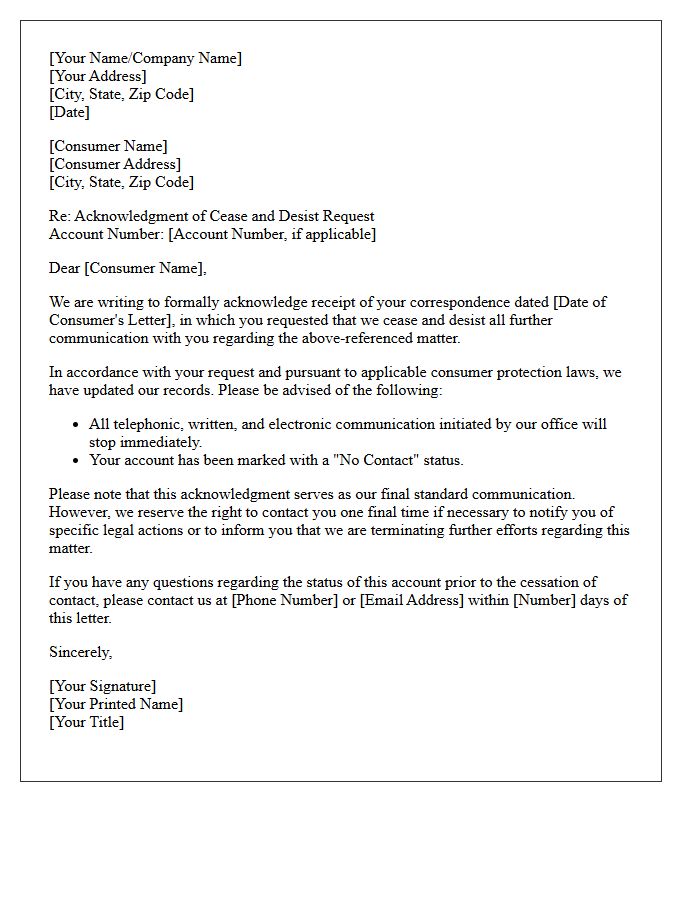
A Consumer Cease and Desist Acknowledgment Letter is a formal response sent by a debt collector to confirm they have received your request to stop communication. Legally required under the Fair Debt Collection Practices Act (FDCPA), this document verifies that the agency will cease contacting you, except to notify you of specific legal actions or the termination of their efforts. Receiving this letter provides essential legal protection and written proof that your privacy rights are being respected, ensuring that unwanted harassment regarding a debt officially concludes.
What is a Cease and Desist Acknowledgment for a time-barred debt?
A Cease and Desist Acknowledgment is a formal notification sent to a debt collector stating that you are aware the debt is past the legal statute of limitations and officially requesting that they stop all further communication regarding the account.
Does acknowledging a time-barred debt restart the statute of limitations?
Generally, simply acknowledging the existence of a debt in a cease and desist letter does not restart the clock; however, making a partial payment or promising to pay can "revive" the debt. It is crucial to state that you are not waiving your rights or admitting liability when sending the notice.
Can a debt collector still sue me after receiving a Cease and Desist for time-barred debt?
While a collector can technically file a lawsuit, the fact that the debt is time-barred provides you with a complete legal defense. If they sue or threaten to sue on a debt they know is past the statute of limitations, they may be in violation of the Fair Debt Collection Practices Act (FDCPA).
What should I include in a Cease and Desist letter for expired debt?
The letter should include your account number, a clear statement that the debt is time-barred under state law, and an explicit instruction for the collector to cease all contact. It should be sent via certified mail with a return receipt requested to provide proof of delivery.
What happens if a collector contacts me after I send a Cease and Desist Acknowledgment?
If a debt collector continues to contact you after receiving a written cease and desist regarding time-barred debt, they are likely violating the FDCPA. You may be entitled to statutory damages and should document every contact to provide evidence for a potential legal claim.

Comments