
This article explores the legal process of responding to a Cease and Desist Acknowledgment combined with a formal Notification of Garnishment Intent. Understanding your rights and responsibilities is essential when facing potential wage redirection or debt collection escalations. Learn how to address these notices effectively to protect your financial interests. To assist you, below are some ready to use template.
Image cover: Formal Response to Cease and Desist with Notice of Wage Garnishment Action
Letter Samples List
- Official Date and Issuance of the Notification Letter
- Creditor and Debtor Account Reference Information
- Formal Acknowledgment of Your Cease and Desist Letter
- Confirmation of the Termination of Standard Communications
- Statement of the Unresolved and Outstanding Debt Balance
- Notification of the Intent to Initiate Civil Litigation
- Warning of Potential Wage Garnishment Proceedings
- Notice of Possible Bank Levy and Asset Seizure Actions
- Final Deadline for Voluntary Account Settlement
- Instructions for Submitting Payment to the Legal Department
- Mandatory Fair Debt Collection Practices Act Disclosures
- Official Signature of the Authorized Collection Representative
Official Date and Issuance of the Notification Letter
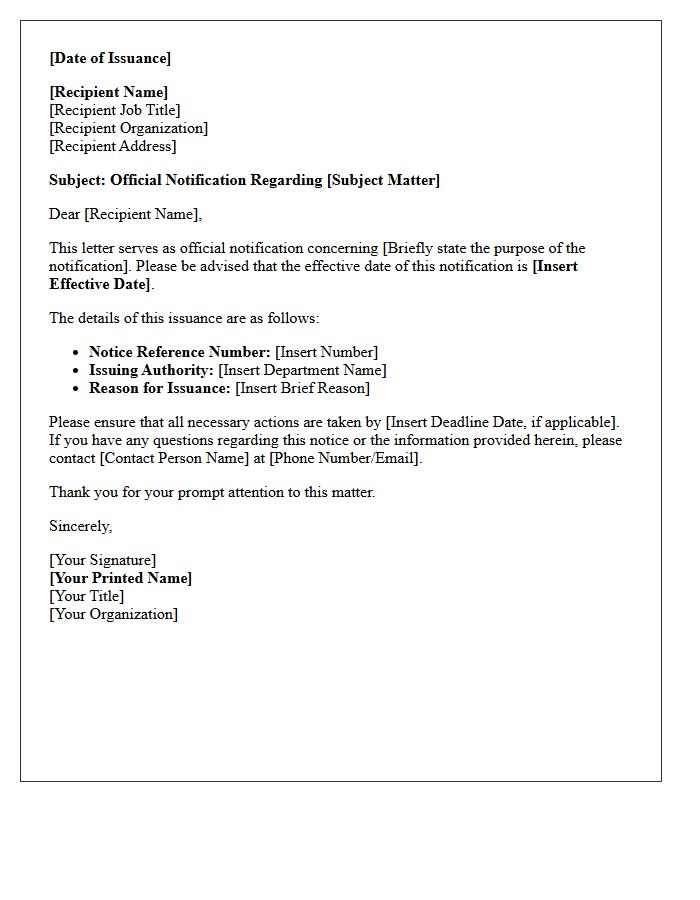
The official notification letter is a legal document confirming your status or approval. The most critical element is the date of issuance, as it determines your legal deadlines and response windows. Always retain the original letter and the postmarked envelope to verify the official date of receipt. Timely action is required because missing a deadline stated in the issuance letter can result in the loss of rights or benefits. Ensure you cross-reference this date with the tracking information provided by the issuing authority for accurate record-keeping.
Creditor and Debtor Account Reference Information
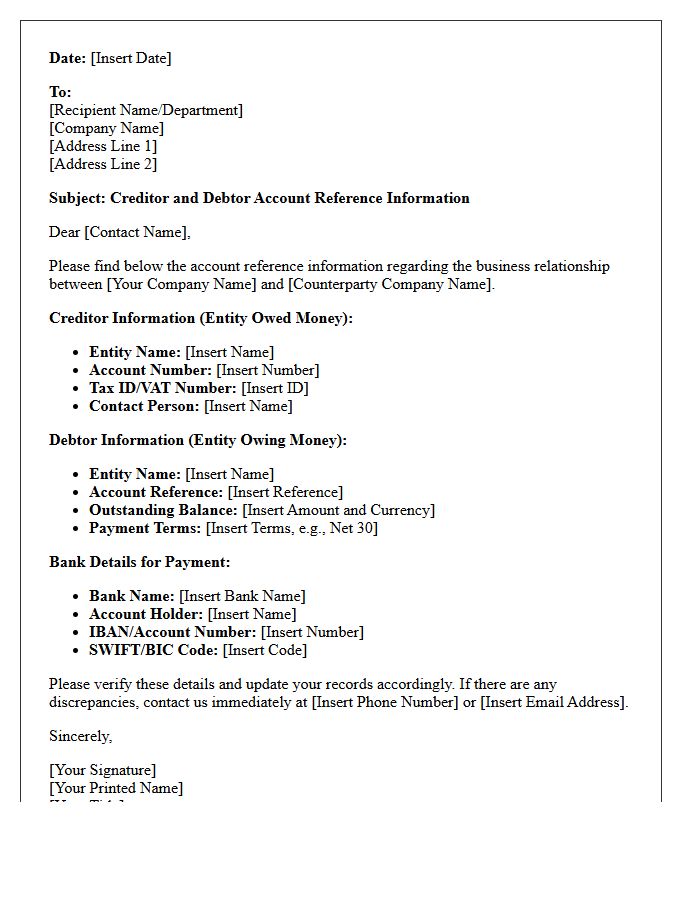
Accurate Creditor and Debtor Account Reference Information is essential for precise financial tracking. A Debtor represents a customer who owes money to the business, while a Creditor is an entity to whom the business owes payment. Each account must include unique identifiers, contact details, and payment terms to ensure seamless reconciliation. Maintaining updated reference data prevents billing errors, improves cash flow management, and strengthens professional relationships. Clear documentation of these balances allows for transparent financial reporting and effective debt collection or liability settlement within any accounting system.
Formal Acknowledgment of Your Cease and Desist Letter
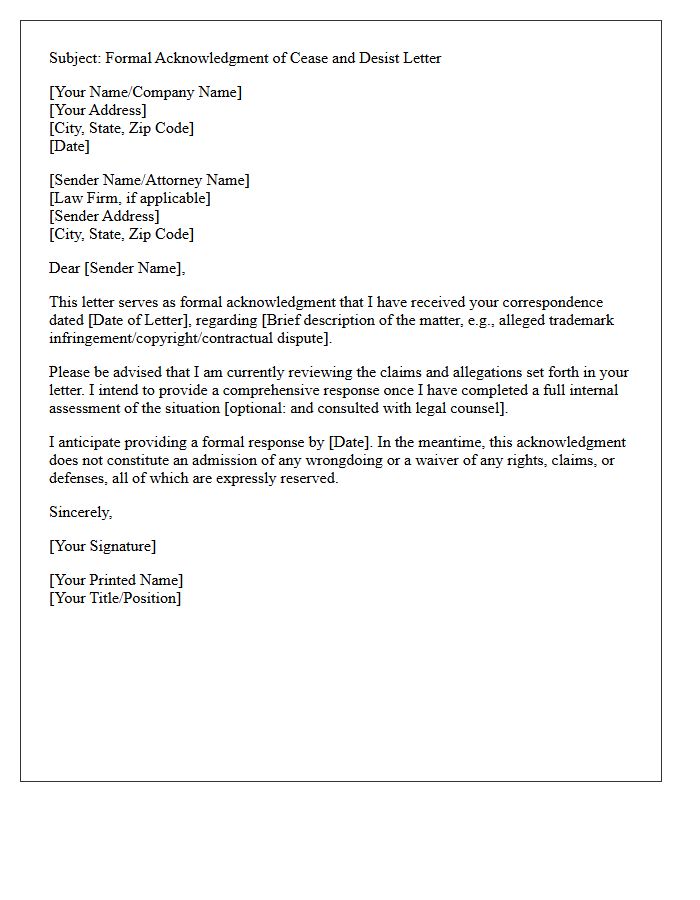
A formal acknowledgment confirms receipt of your Cease and Desist notice, establishing a legal paper trail. This document proves the recipient is aware of the alleged infringement or misconduct. While it does not signify agreement with your claims, it indicates they are reviewing the demands with counsel. Timely acknowledgment is critical for maintaining professional communication and setting a timeline for a substantive response. Ensuring you have this confirmation is a vital step before escalating to litigation or seeking further judicial intervention to protect your legal rights.
Confirmation of the Termination of Standard Communications
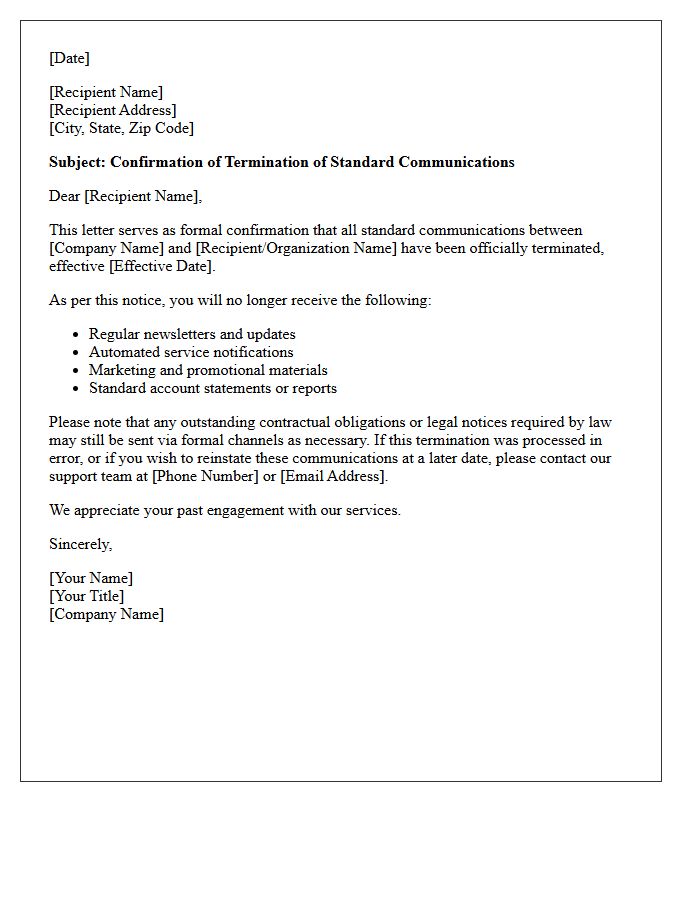
The Confirmation of the Termination of Standard Communications is a formal document verifying the end of established messaging protocols between parties. It ensures all stakeholders recognize that regular data exchanges have ceased, preventing further billing cycles or automated interactions. Reviewing this notice is critical to confirm that no residual obligations remain active. It serves as final legal proof that a service agreement is concluded, protecting you from future liabilities or unauthorized access attempts within the network infrastructure.
Statement of the Unresolved and Outstanding Debt Balance
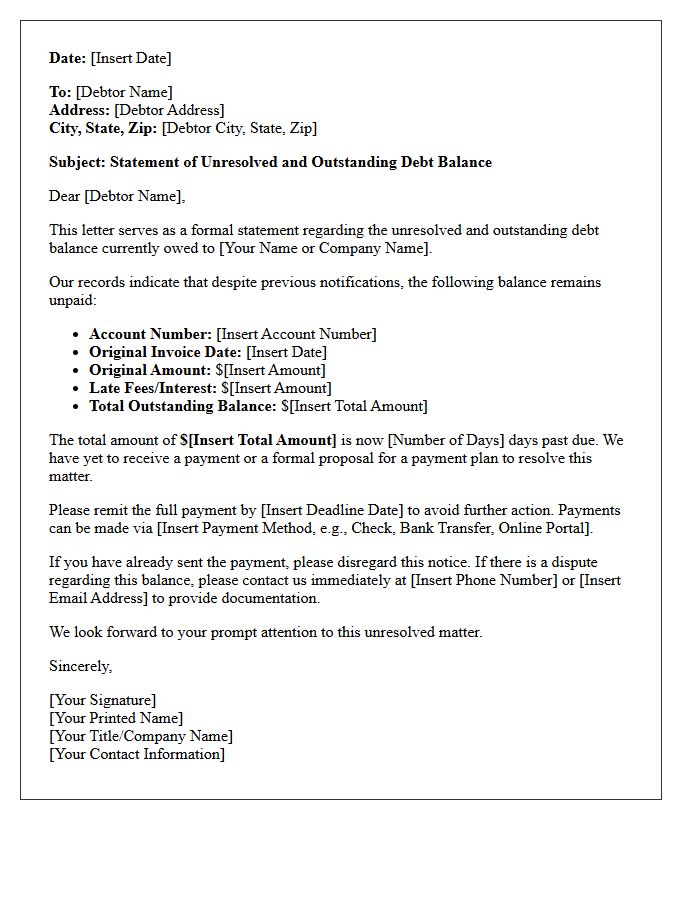
A Statement of the Unresolved and Outstanding Debt Balance is a formal document detailing unpaid financial obligations. It serves as a legal record of the principal amount, accrued interest, and late fees owed to a creditor. This statement is essential for debt verification, ensuring accuracy in personal accounting or collection proceedings. Reviewing this document helps identify discrepancies, manage repayment schedules, and provides clear evidence of total liabilities. Understanding your balance is the first step toward achieving debt resolution and maintaining long-term financial stability.
Notification of the Intent to Initiate Civil Litigation
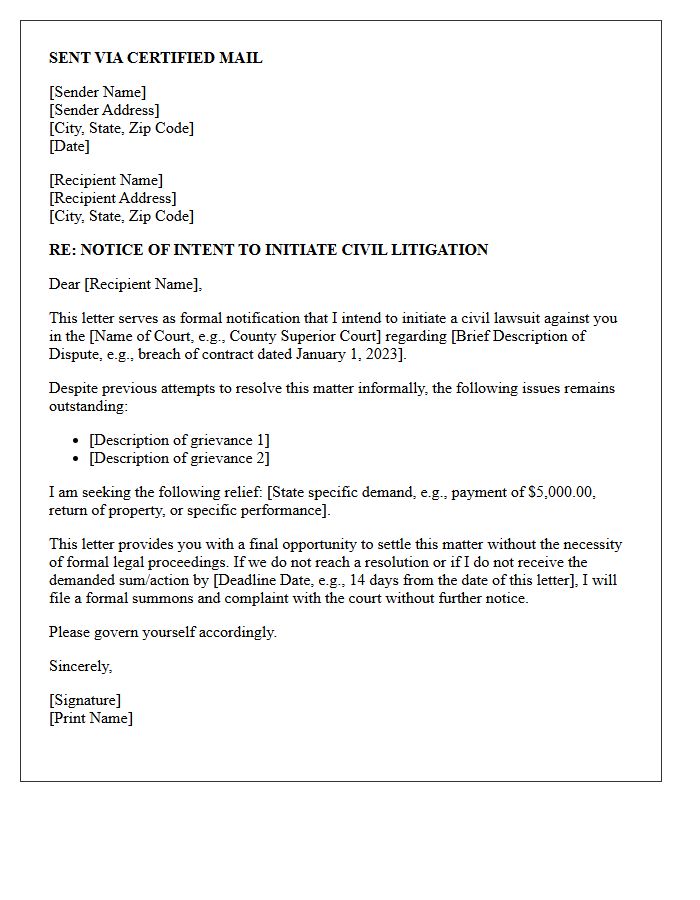
A Notification of the Intent to Initiate Civil Litigation is a formal legal notice sent to a potential defendant before a lawsuit is officially filed. It serves as a pre-suit demand, outlining the legal basis for the claim and providing a final opportunity to resolve the dispute through a settlement. This document is crucial because it often fulfills statutory requirements, establishes timelines, and demonstrates a good-faith effort to avoid unnecessary court proceedings. Receiving or sending this notice signifies that legal action is imminent if the specified demands remain unaddressed.
Warning of Potential Wage Garnishment Proceedings
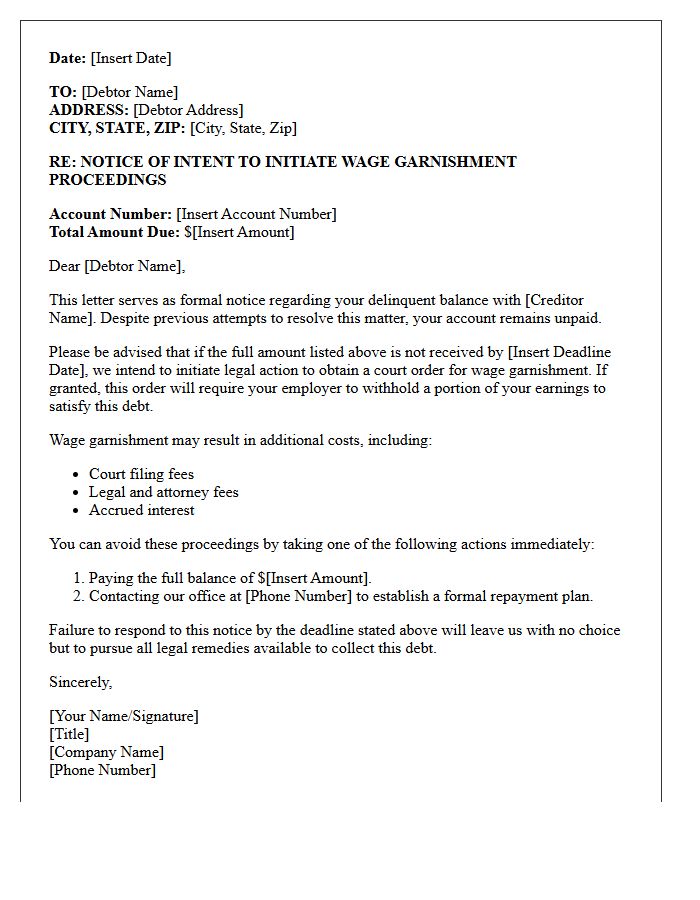
A wage garnishment occurs when a court orders your employer to withhold earnings for unpaid debt. Receiving a legal notice is the most critical warning, as it precedes formal collection actions. Under federal law, creditors must typically obtain a judgment before seizing income. You have specific legal rights to challenge the amount or claim exemptions based on financial hardship. Act quickly to negotiate a payment plan or seek legal counsel to prevent immediate loss of income and ensure your financial stability remains intact during proceedings.
Notice of Possible Bank Levy and Asset Seizure Actions
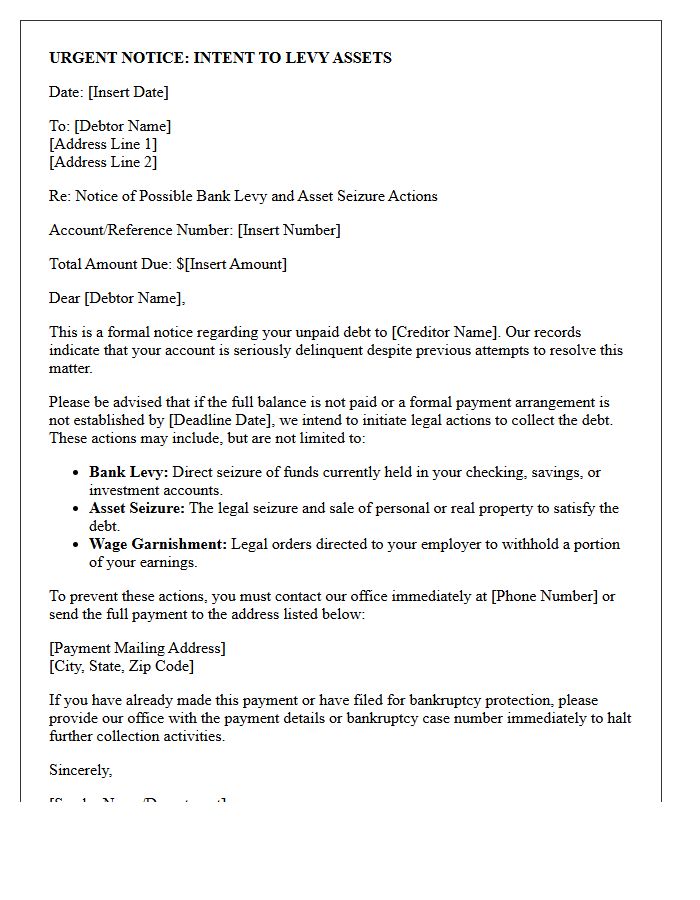
A Notice of Possible Bank Levy and Asset Seizure Actions is a legal warning issued by creditors or tax authorities, such as the IRS, indicating intent to freeze accounts or confiscate property to satisfy unpaid debts. Receiving this document means your financial assets are at immediate risk. You typically have a limited window to request a due process hearing or settle the balance to prevent the seizure. Ignoring this notice allows the claimant to legally withdraw funds directly from your bank without further consent, making prompt legal or financial action essential.
Final Deadline for Voluntary Account Settlement
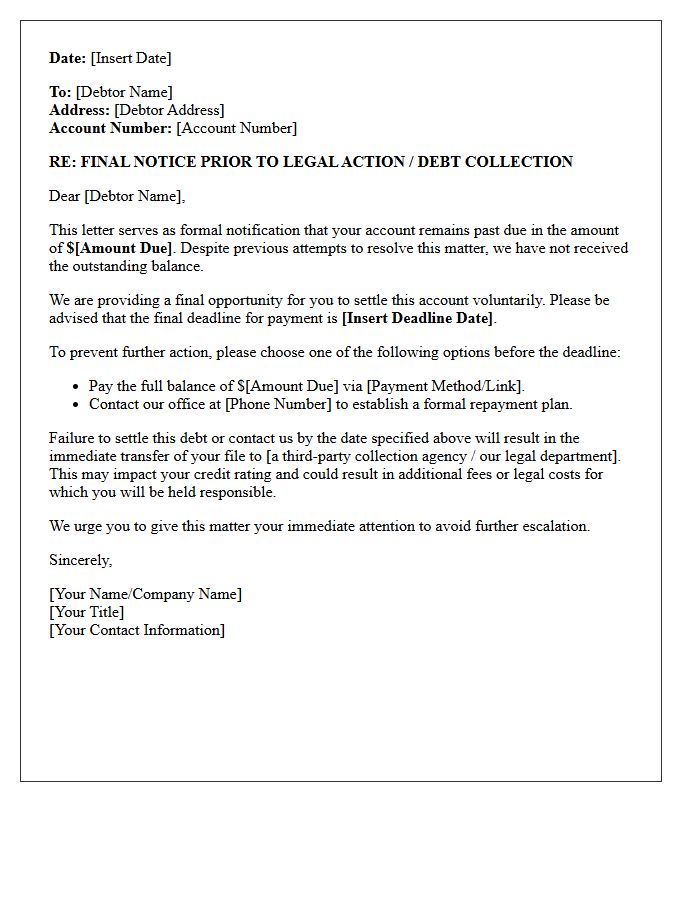
The Final Deadline for Voluntary Account Settlement represents the absolute cutoff date for resolving outstanding balances without penalties. It is essential to ensure full payment is processed before this window closes to avoid legal action or credit impairment. This non-extendable date is the last opportunity for users to finalize agreements under preferential terms. Missing this critical timeframe may result in the forfeiture of settlement benefits and the initiation of formal collection procedures. Always verify the specific timezone and submission requirements to guarantee your settlement is successfully recorded before the expiration.
Instructions for Submitting Payment to the Legal Department
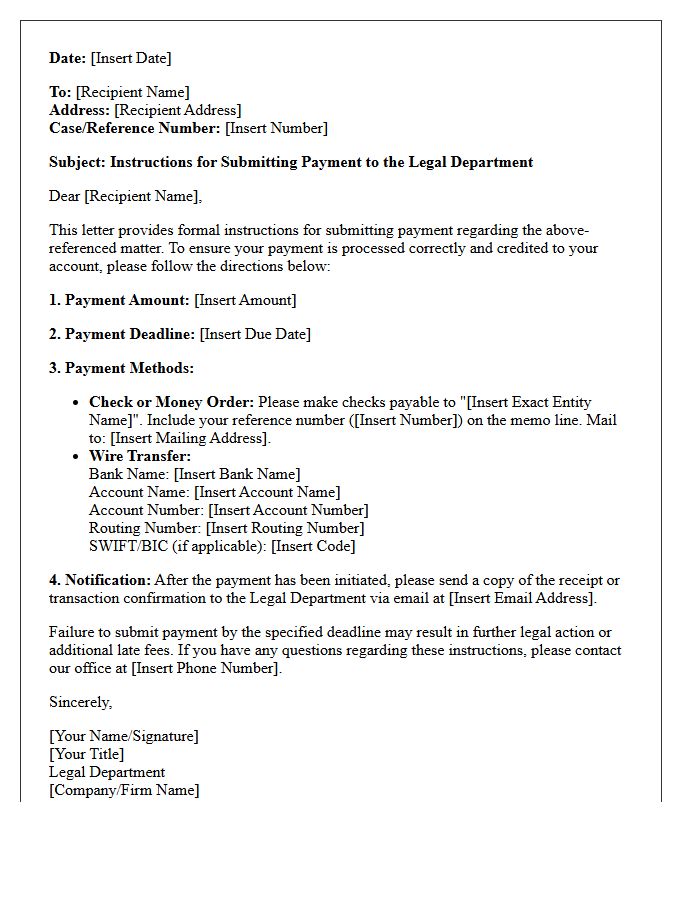
To ensure timely processing, please submit all legal fees directly through our secure online portal. Always include your case reference number on the payment confirmation to avoid reconciliation errors. Ensure that all wire transfers or checks are addressed specifically to the Legal Department. For international transactions, confirm the current SWIFT code before finalizing. All invoices must be cleared within thirty days of receipt. Contact our billing coordinator immediately if you encounter any issues during the submission process to maintain your account standing.
Mandatory Fair Debt Collection Practices Act Disclosures
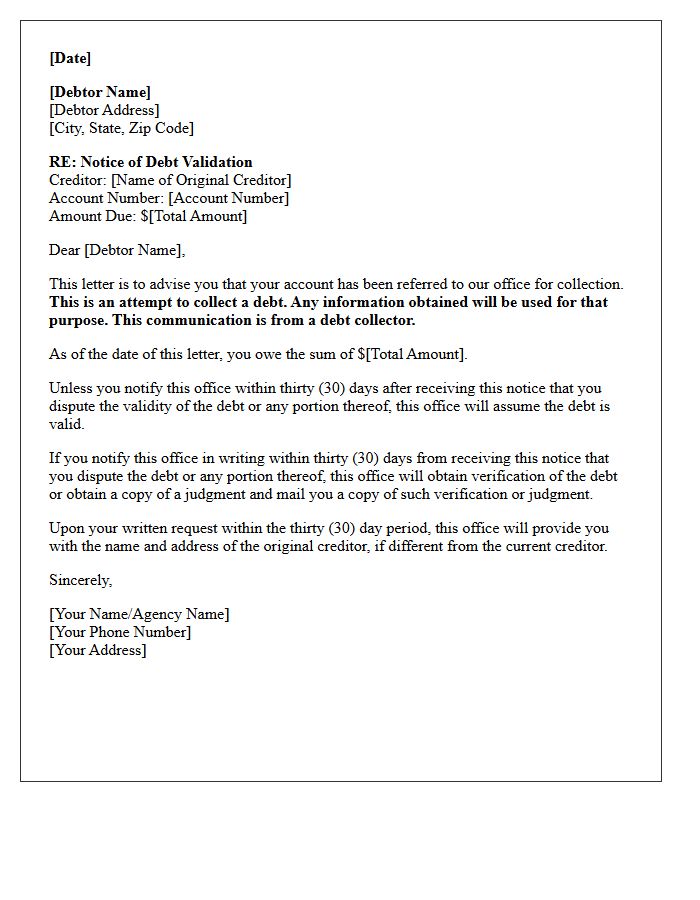
Under the Fair Debt Collection Practices Act, collectors must provide specific disclosures to ensure consumer protection. The most critical requirement is the Mini-Miranda, which states that the communication is from a debt collector and any information obtained will be used for that purpose. Additionally, collectors must send a written validation notice within five days of initial contact. This notice must detail the amount owed, the creditor's name, and the consumer's right to dispute the debt within thirty days. These mandatory disclosures prevent deceptive practices and protect your financial rights during the collection process.
Official Signature of the Authorized Collection Representative
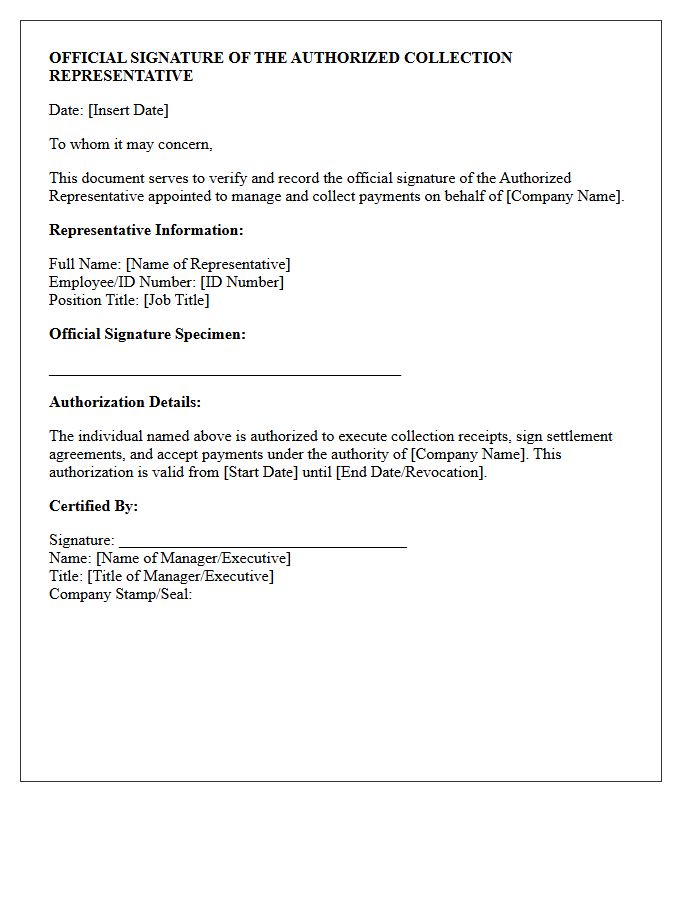
The Official Signature of the Authorized Collection Representative serves as a legally binding validation for financial transactions and sensitive document intake. This signature confirms that the designated agent has been formally empowered by an organization to collect payments or private information. It ensures accountability, reduces the risk of fraud, and provides a clear audit trail for compliance purposes. Always verify that the representative's credentials match the provided signature to guarantee the authenticity and security of the exchange within official administrative frameworks.
What is a Cease and Desist Acknowledgment with Notification of Garnishment Intent?
This is a formal legal communication where a creditor or debt collector acknowledges your request to stop contact but simultaneously provides official notice that they intend to pursue a court-ordered wage garnishment to recover the outstanding debt.
Does a cease and desist request prevent a creditor from garnishing my wages?
No. While a cease and desist letter stops general collection calls and letters, it does not prevent a creditor from taking legal action. If the creditor has a valid judgment against you, they may legally proceed with garnishment despite your request for no further contact.
What should I do after receiving a notice of intent to garnish?
Upon receiving this notice, you should immediately verify the validity of the debt, review any existing court judgments, and consider consulting with a legal professional or seeking a settlement agreement to prevent the garnishment from being executed against your employer.
Can a creditor garnish my wages without a court order?
In most consumer debt cases, a creditor must first obtain a court judgment before they can issue a garnishment intent notice. However, certain debts such as federal student loans, back taxes, or child support may be subject to administrative garnishment without a specific lawsuit.
How does this notice affect my rights under the Fair Debt Collection Practices Act (FDCPA)?
Under the FDCPA, debt collectors must honor a written cease and desist request regarding communication. However, the law allows for a final communication to notify the consumer that the collector or creditor intends to invoke a specific legal remedy, such as filing for or executing a wage garnishment.

Comments