
Effectively managing professional boundaries requires formal documentation when boundaries are crossed. A Workplace Communication Cease and Desist Acknowledgment confirms that a request to stop specific interactions has been received and will be honored. This ensures compliance with corporate policies and helps maintain a respectful environment while mitigating legal risks. To assist in drafting your formal response, below are some ready to use template.
Image cover: Official Response Templates for Workplace Communication Cease and Desist Notices
Letter Samples List
- Workplace Communication Cease and Desist Acknowledgment Letter
- Place of Employment Contact Cessation Confirmation Letter
- Debt Collection Workplace Communication Cease and Desist Response Letter
- Employer Telephone Cease and Desist Acknowledgment Letter
- Workplace Correspondence Restriction Agreement Letter
- Job Site Communication Cease and Desist Notice Acknowledgment Letter
- Business Phone Call Cessation Confirmation Letter
- Workplace Contact Prohibition Acknowledgment Letter
- Debtor Employment Contact Cease and Desist Acceptance Letter
- Employer Communication Cease and Desist Acknowledgment Letter
- Professional Environment Contact Cessation Approval Letter
- Workplace Outreach Cease and Desist Acknowledgment Letter
Workplace Communication Cease and Desist Acknowledgment Letter
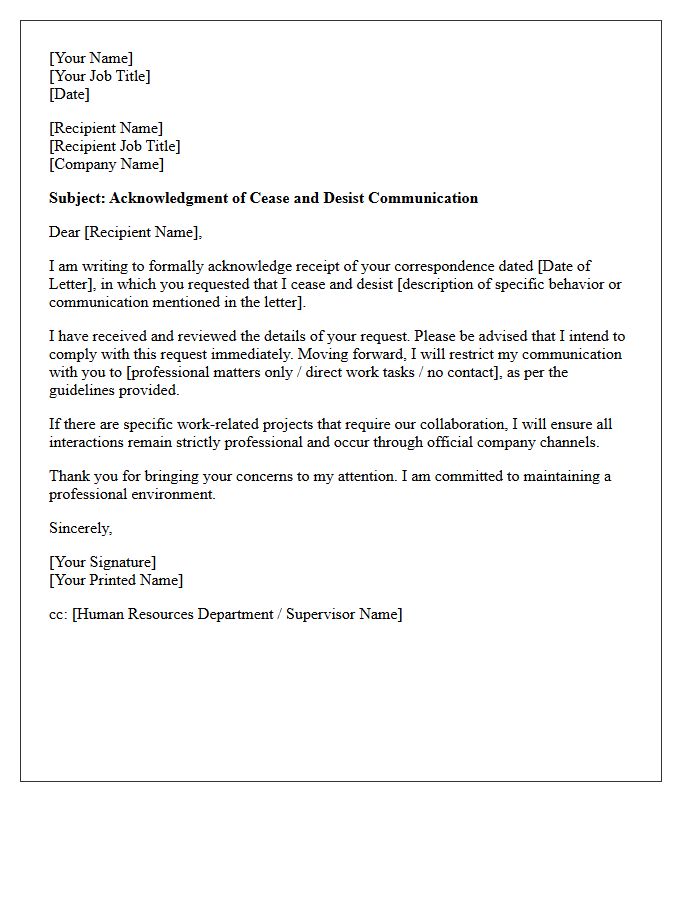
A workplace communication cease and desist acknowledgment letter is a formal document confirming that an individual or entity has received a legal notice to stop specific behaviors. This letter serves as written verification of receipt and outlines the recipient's intent to comply with the demands. It is a critical tool for dispute resolution, helping to establish a clear boundary and prevent further harassment or retaliation. Maintaining a professional tone is essential, as this correspondence may be used as evidence in future legal proceedings or human resources investigations regarding professional conduct.
Place of Employment Contact Cessation Confirmation Letter
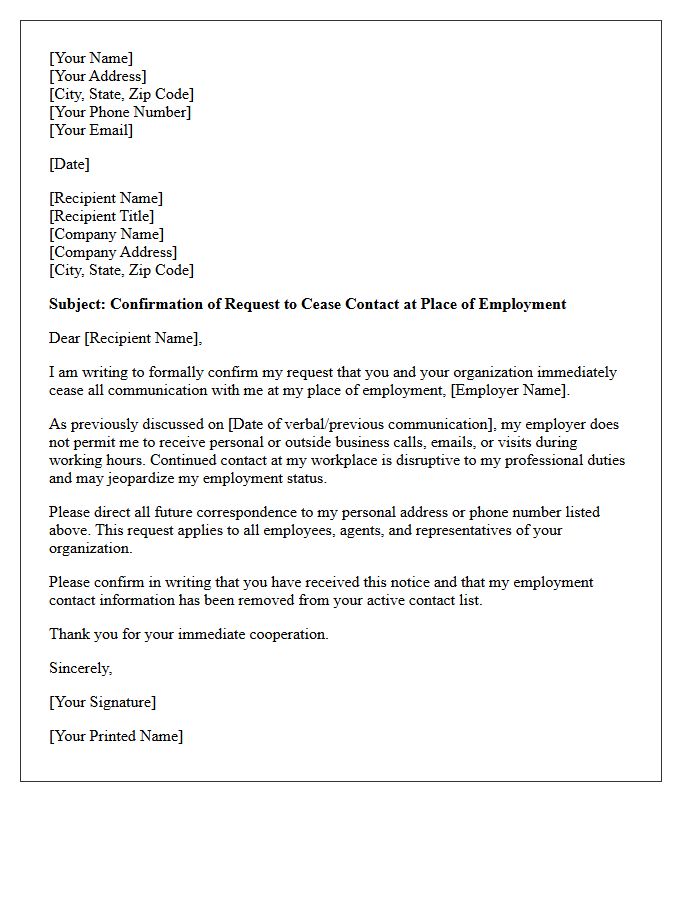
A Place of Employment Contact Cessation Confirmation Letter is a formal document sent to creditors or collectors to stop them from contacting you at work. Under the Fair Debt Collection Practices Act (FDCPA), collectors must cease workplace communication once notified that your employer prohibits such calls. This written notice protects your professional reputation and job security. It should clearly state your refusal of consent for workplace contact. Keep a copy for your records and send it via certified mail to ensure legal compliance and verified delivery.
Debt Collection Workplace Communication Cease and Desist Response Letter
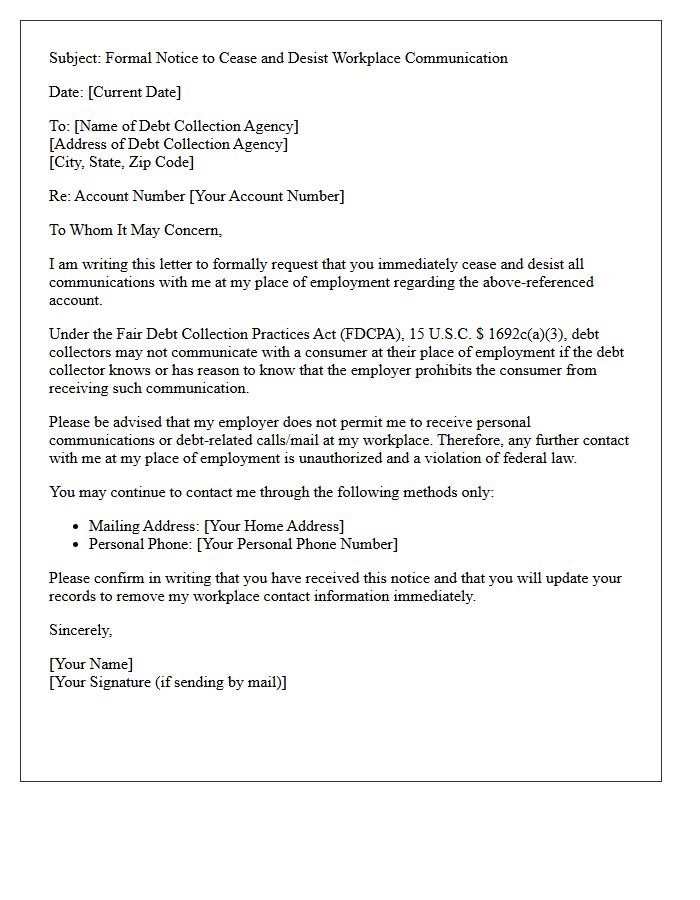
A Cease and Desist Response Letter is a formal legal tool used to stop aggressive or unwanted contact from creditors. Under the Fair Debt Collection Practices Act (FDCPA), you have the right to demand that agencies stop contacting you at your workplace specifically. Sending this written notice legally mandates that collectors halt all office-based communication, protecting your professional reputation and privacy. Always send this letter via certified mail with a return receipt to ensure you have proof of delivery should you need to report harassment to federal authorities.
Employer Telephone Cease and Desist Acknowledgment Letter
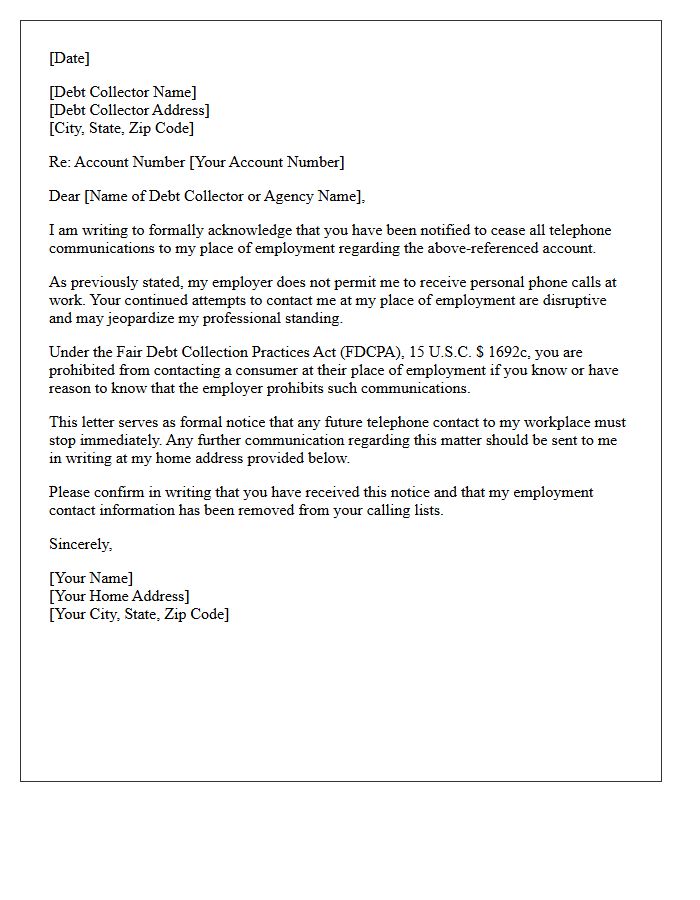
An Employer Telephone Cease and Desist Acknowledgment Letter is a formal document used to confirm that a company has received and will honor a request to stop calling an employee at their place of business. Under the Fair Debt Collection Practices Act (FDCPA), once an employer or third-party collector is notified that such calls are prohibited or inconvenient, they must stop immediately. This letter serves as written proof of compliance, protecting the individual's privacy and job security by documenting the official termination of workplace telephonic contact.
Workplace Correspondence Restriction Agreement Letter
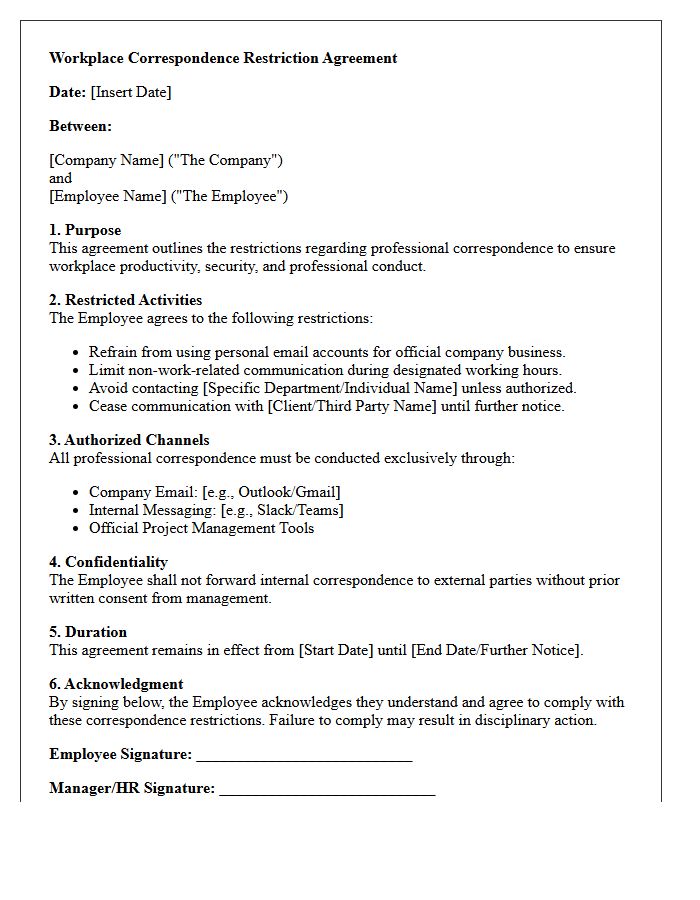
A Workplace Correspondence Restriction Agreement Letter is a formal document used to limit communication channels between specific parties. This legal notice often arises during disciplinary actions or harassment investigations to ensure a professional environment. It strictly outlines which methods, such as email or internal messaging, are prohibited to prevent further conflict. Employees must adhere to these boundaries to maintain compliance with company policies. Violating this agreement can lead to severe administrative penalties or termination, making it a critical tool for conflict resolution and workplace safety.
Job Site Communication Cease and Desist Notice Acknowledgment Letter
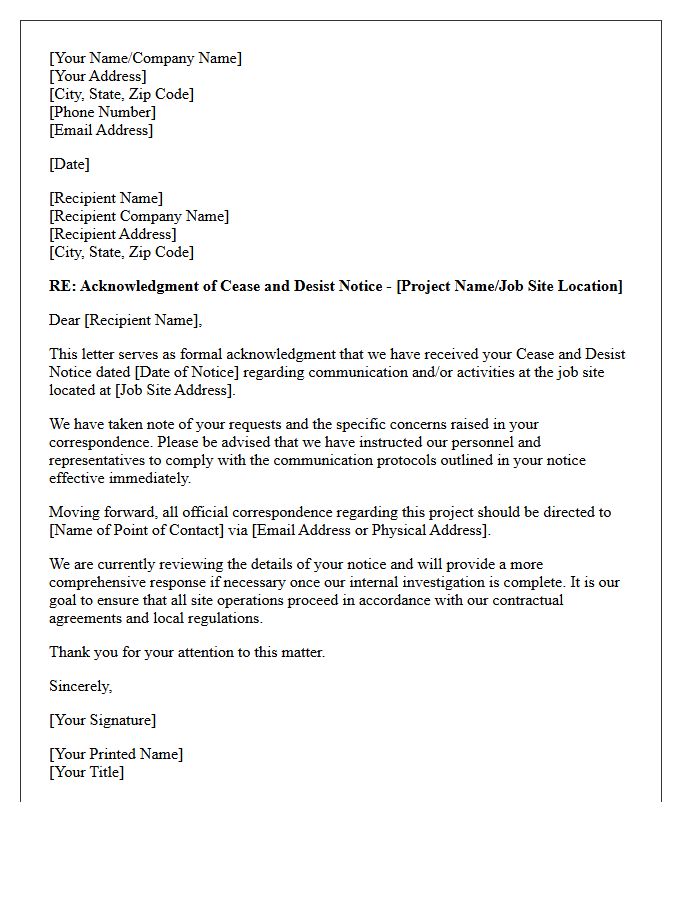
A Job Site Communication Cease and Desist Notice Acknowledgment Letter is a formal document confirming receipt of a request to stop direct contact. It ensures legal compliance by acknowledging that all future correspondence must go through designated legal counsel or management. This letter is a protective measure that prevents harassment claims and maintains a professional boundary during labor disputes or contract conflicts. Sending this acknowledgment helps mitigate risks, preserves evidence of cooperation, and ensures that workplace communication remains documented and strictly follows established legal protocols to avoid further liability.
Business Phone Call Cessation Confirmation Letter
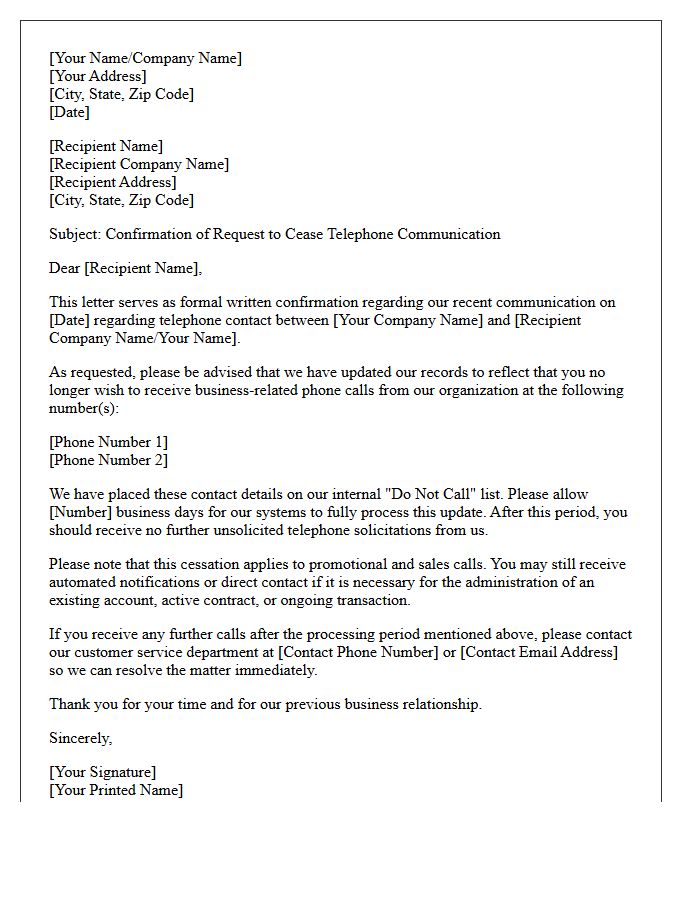
A Business Phone Call Cessation Confirmation Letter is a formal document used to terminate telemarketing communications. Sending this written notice ensures a legal record of your request to be removed from a specific calling list. Under consumer protection laws, companies must honor this request to avoid penalties. Key details should include your account number, the specific phone number to be excluded, and a request for written verification of the action taken. This letter serves as essential evidence if further unsolicited calls persist, protecting your privacy and business boundaries effectively.
Workplace Contact Prohibition Acknowledgment Letter
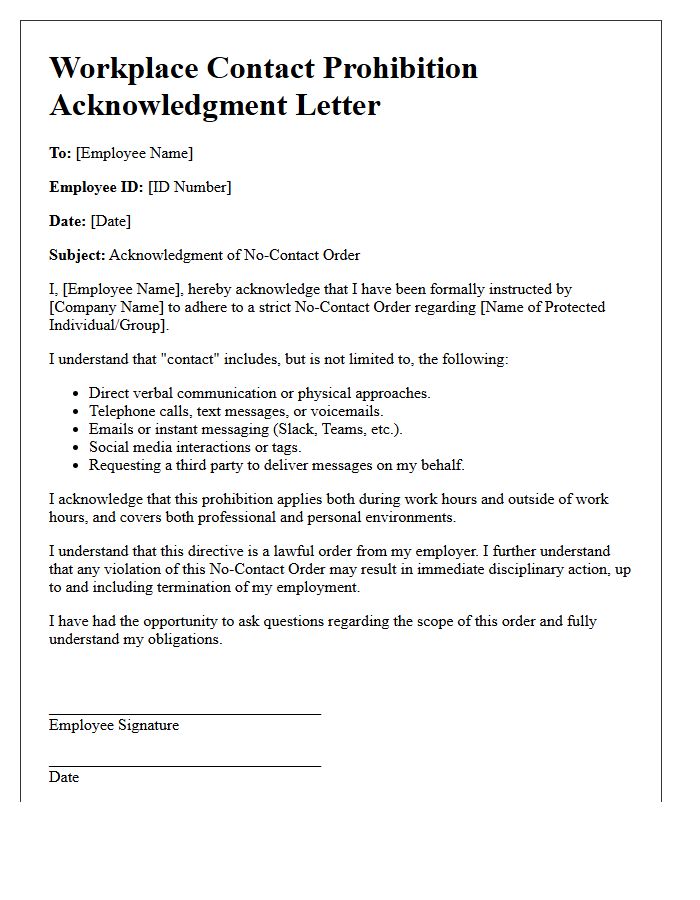
A Workplace Contact Prohibition Acknowledgment Letter is a formal document confirming an employee has been notified of a No-Contact Order. It serves as legal proof that an individual understands they must cease all communication with a specific colleague, often following harassment or disciplinary investigations. This signed acknowledgment protects the organization by establishing clear boundaries and documenting compliance requirements. Violating this agreement typically leads to immediate termination. It is a critical tool for maintaining professional standards and ensuring workplace safety during sensitive personnel disputes or legal proceedings.
Debtor Employment Contact Cease and Desist Acceptance Letter
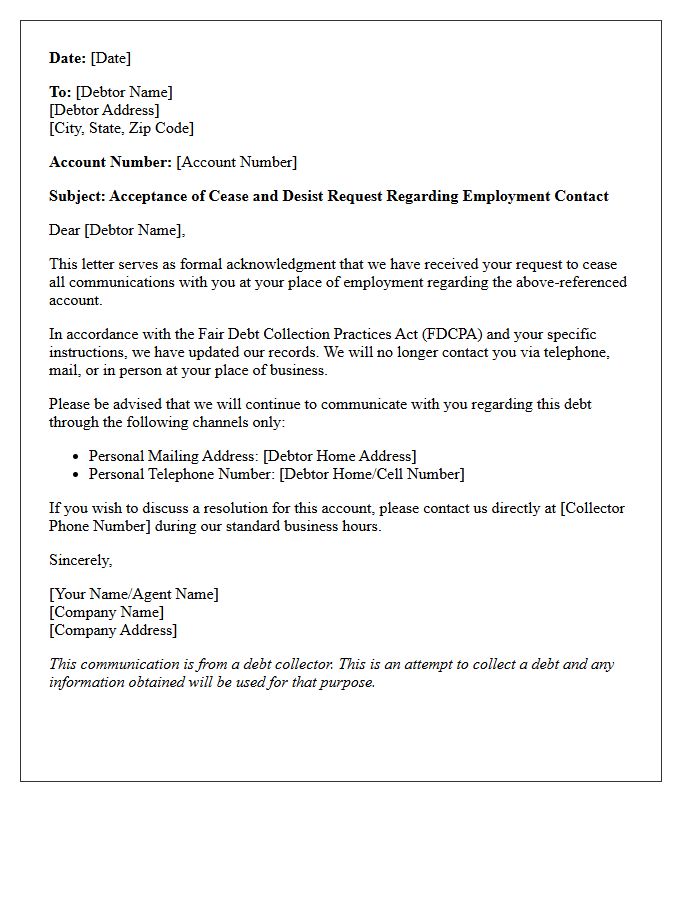
A Debtor Employment Contact Cease and Desist Acceptance Letter is a formal confirmation from a creditor or collection agency acknowledging a consumer's legal demand to stop workplace communications. Under the Fair Debt Collection Practices Act (FDCPA), once notified that an employer prohibits such calls, collectors must comply. Receiving this written acceptance provides essential legal protection and evidence that the agency has ceased intrusive contact. This document ensures your professional reputation remains intact while moving all future debt discussions to private, residential channels or written correspondence only.
Employer Communication Cease and Desist Acknowledgment Letter
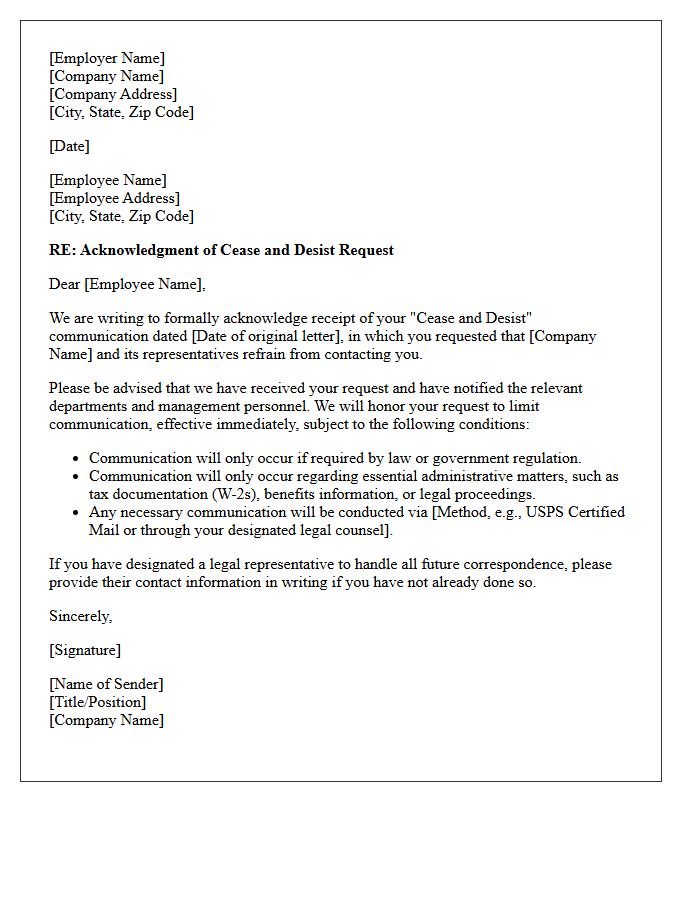
An Employer Communication Cease and Desist Acknowledgment Letter is a formal document confirming that a business has received and will honor a request to stop contacting a former employee. This letter is crucial for maintaining legal compliance and preventing harassment claims. It serves as a written record that the employer agrees to terminate all direct outreach, except for legally mandated disclosures. Issuing this acknowledgment helps mitigate liability and ensures both parties adhere to established boundaries during post-employment transitions or ongoing legal disputes.
Professional Environment Contact Cessation Approval Letter
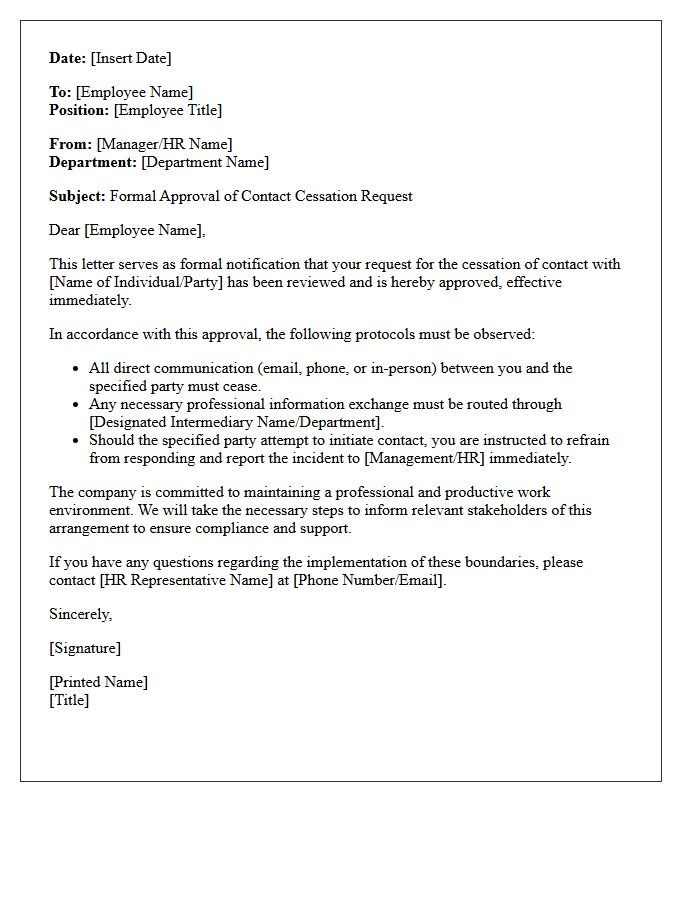
A Professional Environment Contact Cessation Approval Letter is a formal document authorizing the termination of communication between specific parties in a workplace. It serves as an official directive to prevent harassment, ensure employee safety, and maintain organizational boundaries. This letter legally validates the cessation request, outlining prohibited behaviors and potential consequences for non-compliance. It is a critical tool for human resources to document protective measures and provide a clear framework for professional conduct, ensuring a secure and focused work environment for all individuals involved.
Workplace Outreach Cease and Desist Acknowledgment Letter
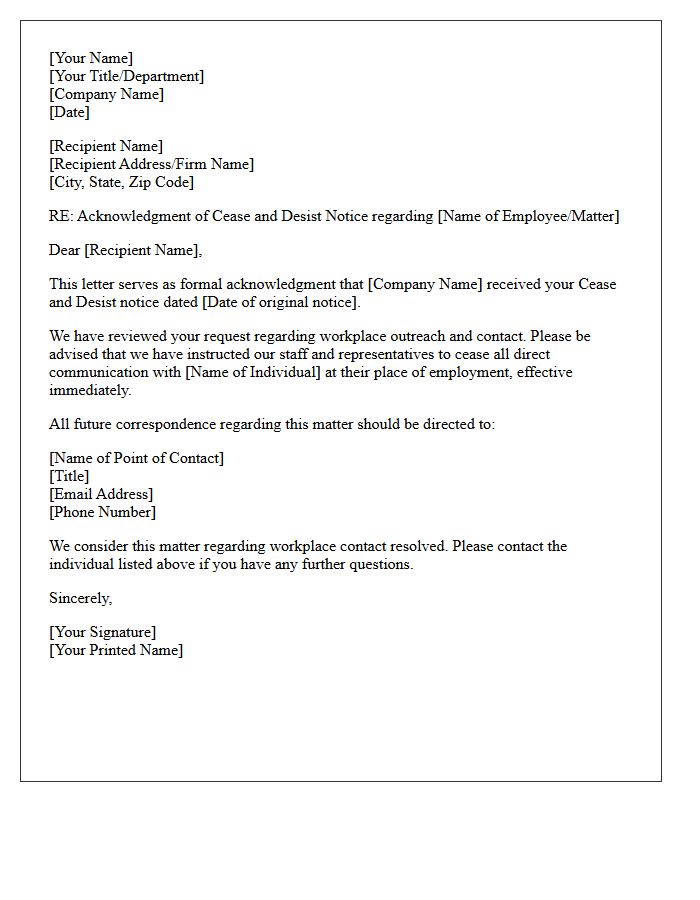
A Workplace Outreach Cease and Desist Acknowledgment Letter is a formal response confirming that an organization will stop unsolicited contact with a specific party. This document serves as legal verification that the recipient has received and intends to comply with a formal demand to halt harassment or unwanted recruitment. By issuing this letter, a business mitigates liability risks and demonstrates professional adherence to privacy requests. It is a critical step in conflict resolution, ensuring all parties understand the boundaries established to maintain a respectful and legally compliant professional environment.
What is a Workplace Communication Cease and Desist Acknowledgment?
This document is a formal confirmation that an individual has received and understood a directive to stop specific forms of communication or behavior toward a colleague or supervisor. It serves as a professional commitment to comply with established workplace boundaries and company policies.
What should be included in a formal acknowledgment of a cease and desist request?
A professional acknowledgment should include the recipient's name, the date of receipt, a clear statement confirming the intent to comply with the communication restrictions, and a signature. It should remain objective and avoid defensive language or counter-accusations.
Does acknowledging a cease and desist letter count as an admission of guilt?
No, acknowledging receipt of the notice primarily confirms that you are aware of the requested boundaries. However, it is a legally significant document that demonstrates your commitment to following HR protocols and avoiding further workplace conflict or potential litigation.
What happens after I sign a workplace communication acknowledgment?
Once signed, you are expected to immediately halt the specific communication methods or topics outlined in the notice. The document is typically kept in your personnel file to document that the issue was addressed and that you were given clear instructions on future conduct.
Can I be fired if I refuse to sign a communication cease and desist acknowledgment?
Refusing to sign may be viewed as insubordination or a refusal to comply with company policy. Since most workplaces operate under "at-will" employment, failing to acknowledge a direct order to modify communication behavior can lead to disciplinary action, including suspension or termination.

Comments