
Promptly addressing overdue obligations is essential for maintaining financial compliance. Sending a Polite First Notice for Delinquent Tax Payment serves as a professional reminder to taxpayers while encouraging immediate resolution before penalties escalate. This initial communication balances firmness with courtesy to preserve positive relations. To help you draft an effective message, below are some ready to use templates.
Image cover: Friendly Reminder: Upcoming Tax Payment Deadline and Helpful Templates
Letter Samples List
- First Polite Notice of Delinquent Tax Payment Letter
- Friendly Reminder Letter for Outstanding Tax Balance
- Initial Debt Collection Letter for Delinquent Taxes
- Polite First Notice Letter Regarding Past Due Taxes
- Tax Account Overdue First Notice Letter
- Gentle Reminder Letter for Unpaid Tax Obligations
- First Courtesy Letter for Delinquent Tax Recovery
- Initial Notification Letter of Outstanding Tax Debt
- Polite First Request Letter for Delinquent Tax Payment
- Introductory Tax Debt Collection Notice Letter
- First Amicable Letter for Past Due Tax Accounts
- Courtesy Reminder Letter for Delinquent Tax Balances
- Initial Tax Arrears Notice Letter
First Polite Notice of Delinquent Tax Payment Letter
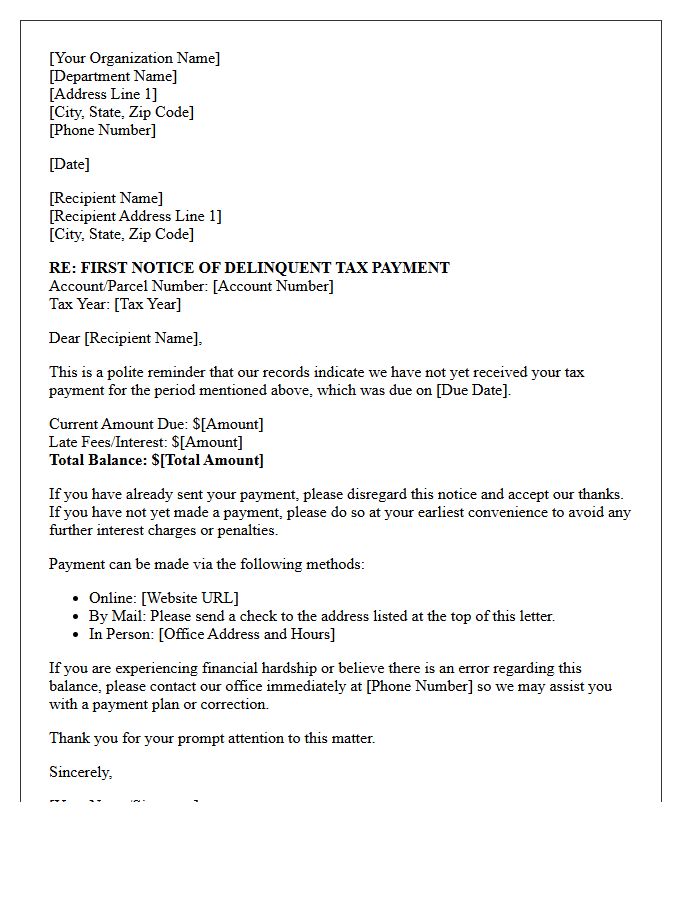
A First Polite Notice of Delinquent Tax Payment Letter serves as a formal reminder regarding an overdue balance. It is a compliance notification designed to alert taxpayers of a missed deadline before penalties or interest accrue further. This initial correspondence provides clear instructions for payment and offers a window to resolve discrepancies. Receiving this letter is a critical opportunity to settle your tax liability promptly to maintain a good standing with the revenue authority and avoid aggressive collection actions or legal enforcement measures in the future.
Friendly Reminder Letter for Outstanding Tax Balance
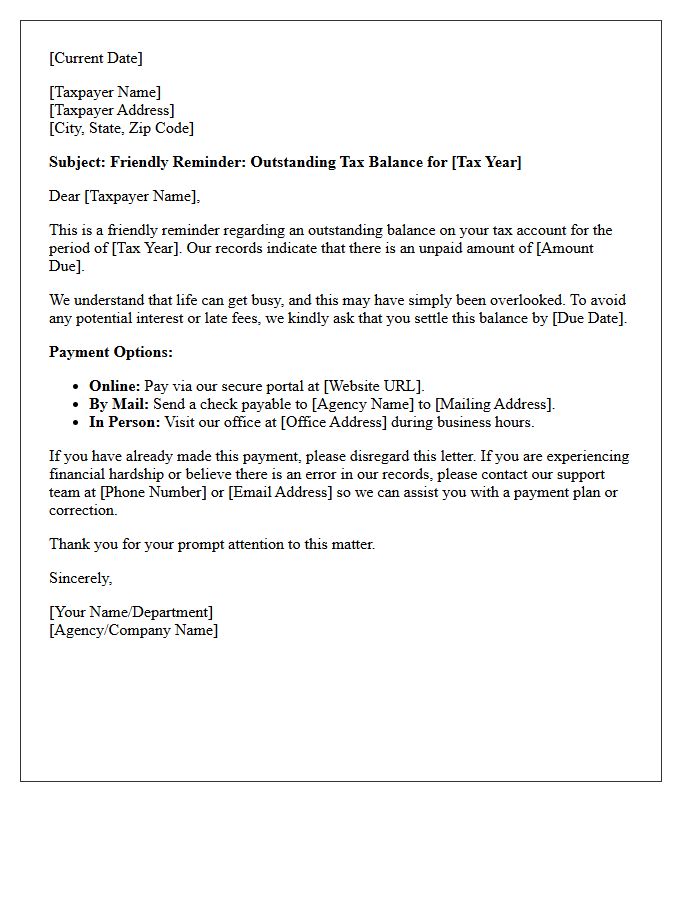
A friendly reminder letter for an outstanding tax balance serves as a formal notification to resolve unpaid liabilities before further action. It is essential to verify the total amount and the specified due date to avoid additional penalties or interest. If you cannot pay in full, most tax authorities offer flexible installment plans to manage your debt. Prompt communication is the most effective way to prevent legal collection actions or tax liens. Always review the letter for accuracy and use the provided reference numbers when making your payment or inquiry.
Initial Debt Collection Letter for Delinquent Taxes
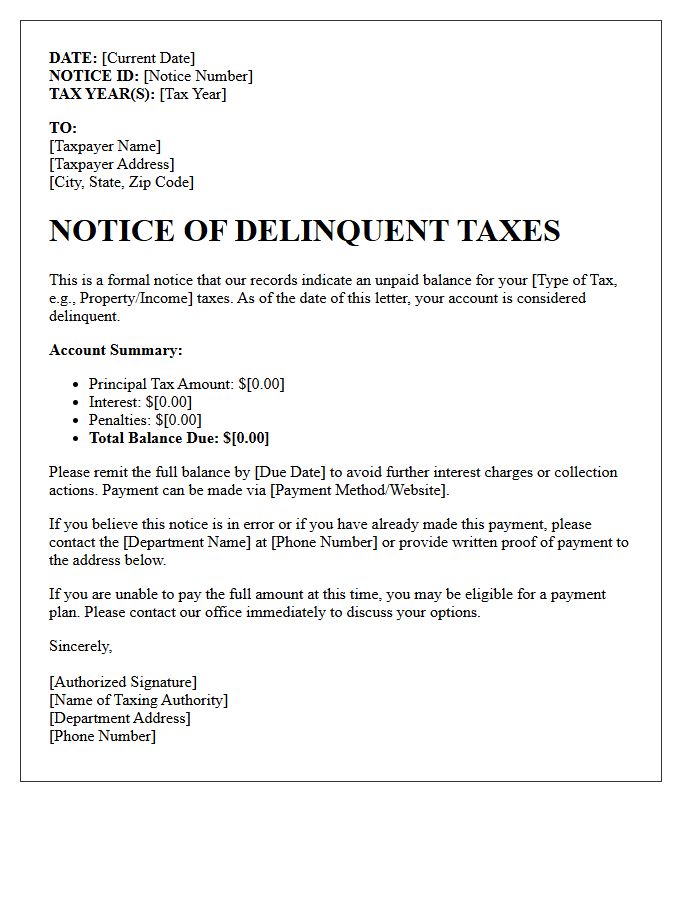
An Initial Debt Collection Letter for delinquent taxes serves as a formal notification that you have an outstanding balance with a taxing authority. This critical document outlines the specific amount owed, including accrued interest and penalties. It is essential to verify the accuracy of the figures immediately to avoid further legal action or wage garnishment. Most notices include instructions for payment plans or appeals. Promptly addressing this correspondence is the most effective way to prevent tax liens and protect your financial standing from escalating collection efforts.
Polite First Notice Letter Regarding Past Due Taxes
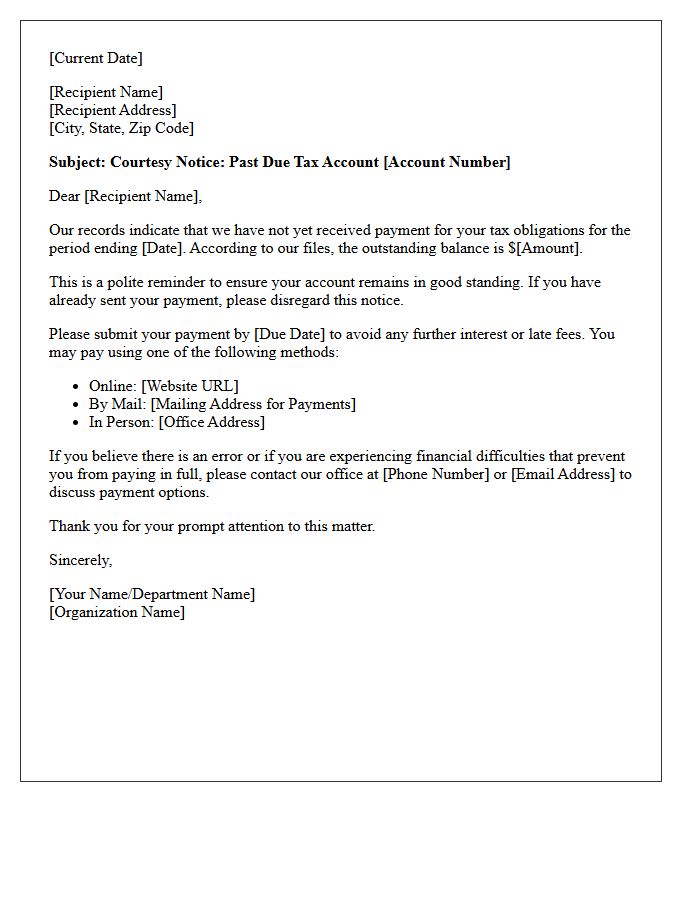
A Polite First Notice Letter serves as a formal reminder that your tax obligations are now past due. This initial communication is typically non-threatening, aiming to resolve the delinquency before penalties escalate. It provides essential details regarding the outstanding balance, applicable deadlines, and available payment methods. Promptly addressing this notice is crucial to maintain a positive compliance history and avoid further collection actions or interest charges. Reviewing the statement for accuracy ensures you can resolve potential discrepancies immediately through official channels.
Tax Account Overdue First Notice Letter
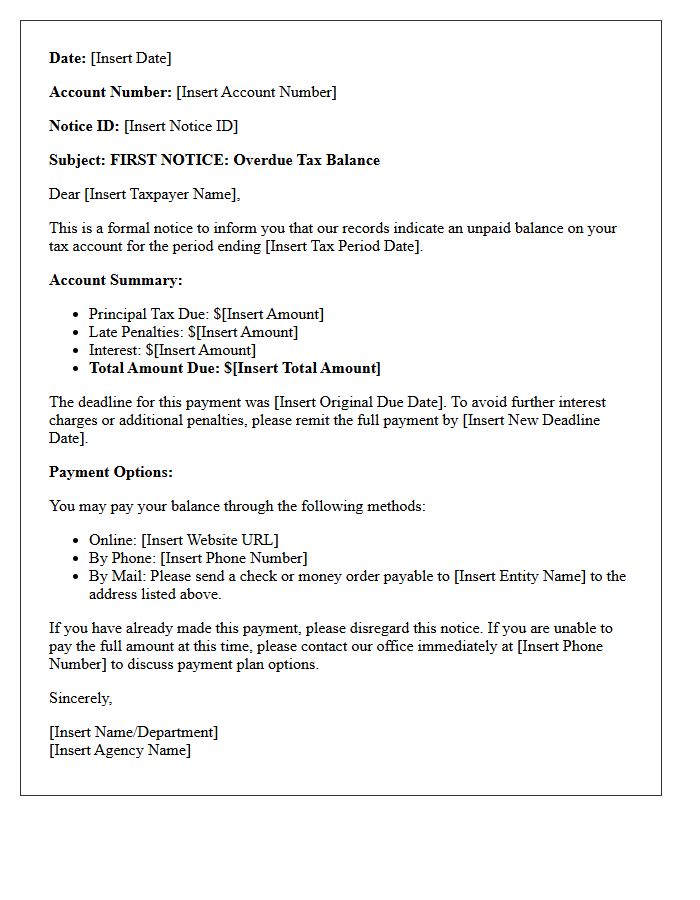
Receiving a Tax Account Overdue First Notice is a formal reminder that an outstanding balance exists. It is crucial to respond promptly to avoid escalating penalties and interest charges. This letter typically outlines the total amount owed, the specific tax period, and instructions for payment. If you cannot pay in full, contact the tax authority immediately to discuss payment arrangements or dispute errors. Ignoring this initial notification can lead to aggressive collection actions, including liens or levies. Always verify the notice's authenticity to protect against potential identity theft and phishing scams.
Gentle Reminder Letter for Unpaid Tax Obligations
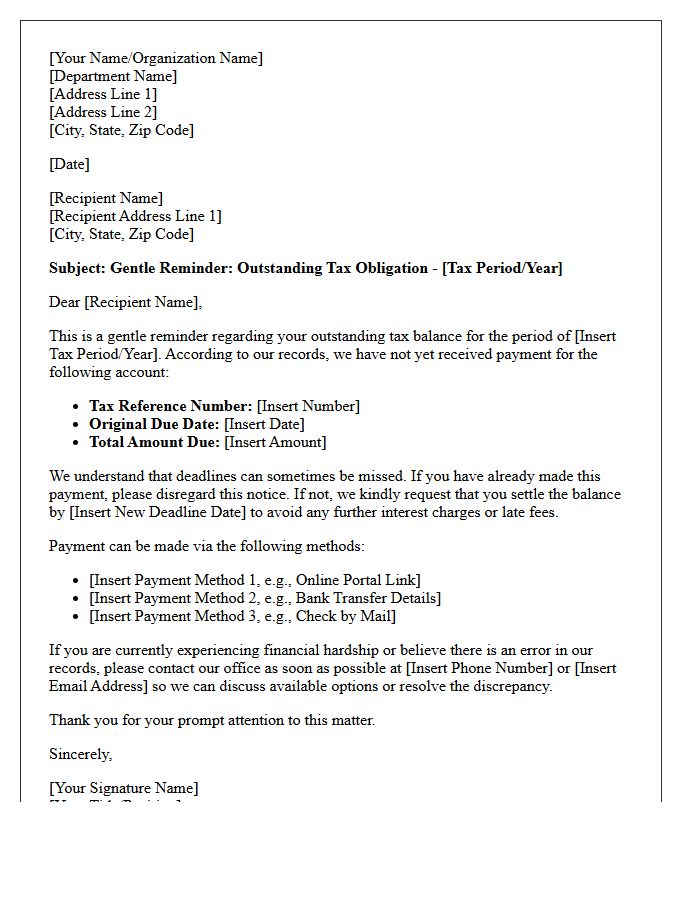
A gentle reminder letter serves as a formal notification regarding unpaid tax obligations that may have been overlooked. It is a crucial step to avoid financial penalties and mounting interest charges. This communication provides clear details on the outstanding balance, payment deadlines, and available settlement options. Addressing these notices promptly ensures compliance with tax laws and maintains a positive record with authorities. If you receive one, verify the figures immediately and contact the relevant department to arrange a payment or discuss a potential repayment plan to resolve the debt efficiently.
First Courtesy Letter for Delinquent Tax Recovery
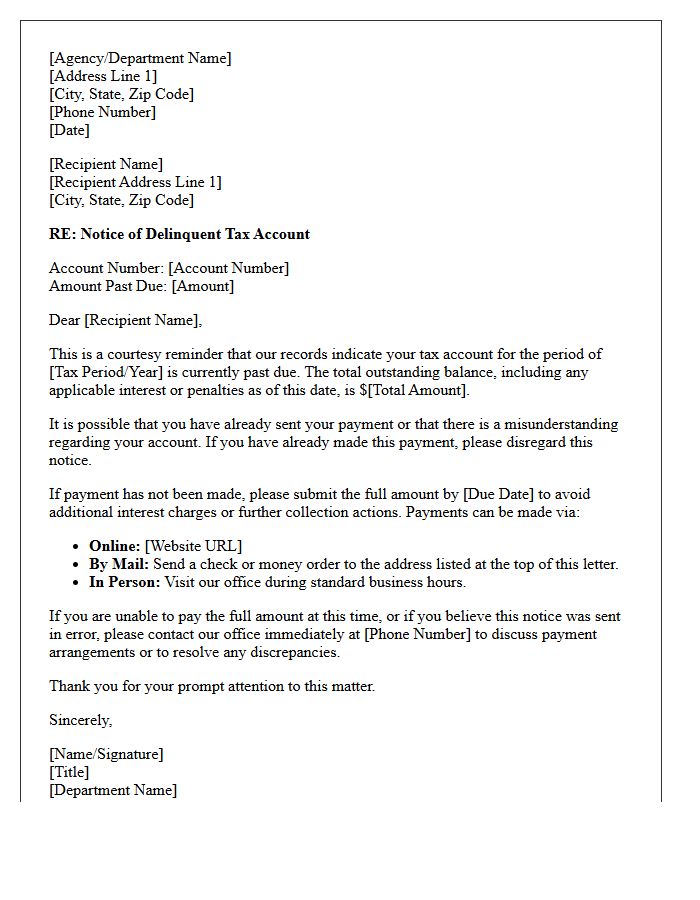
A First Courtesy Letter serves as a formal notification regarding delinquent tax recovery. This initial notice informs taxpayers of outstanding balances before escalating to aggressive collection actions. It is a critical window to resolve debts, verify records, or establish a payment plan to avoid penalties and interest accrual. Receiving this letter is an opportunity to rectify non-compliance voluntarily, ensuring you maintain a positive standing with tax authorities and prevent legal complications such as liens or levies on your assets.
Initial Notification Letter of Outstanding Tax Debt
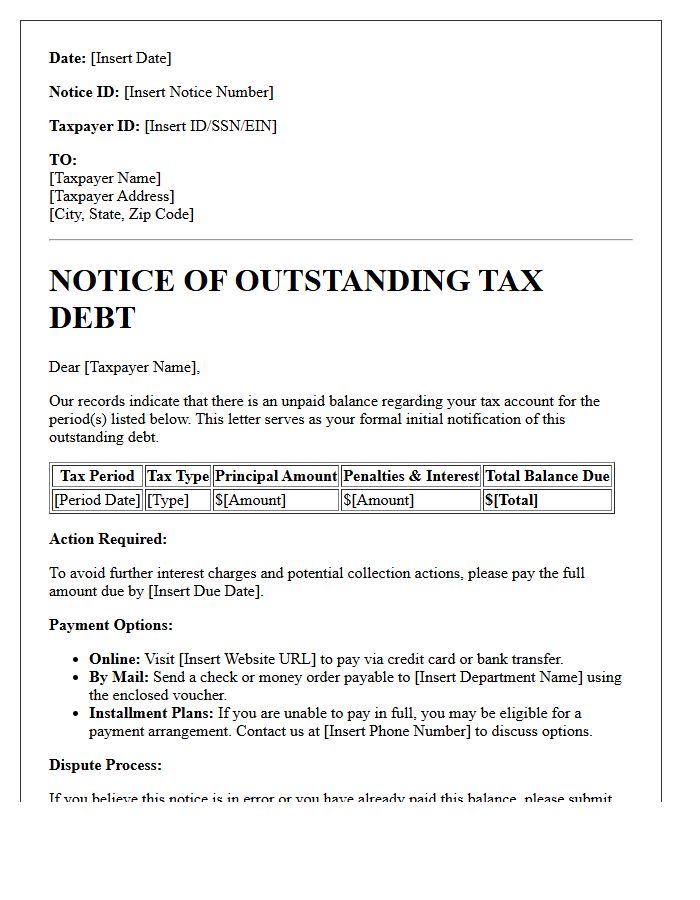
An Initial Notification Letter is a formal notice issued by tax authorities to inform taxpayers of an outstanding tax debt. This critical document specifies the exact amount owed, including any accrued penalties and interest. Receiving this letter serves as a final opportunity to settle the balance or establish a payment plan before enforcement actions, such as wage garnishments or property liens, begin. It is essential to review the details for accuracy and respond promptly to avoid further legal complications and increasing financial liabilities through mandatory compliance.
Polite First Request Letter for Delinquent Tax Payment
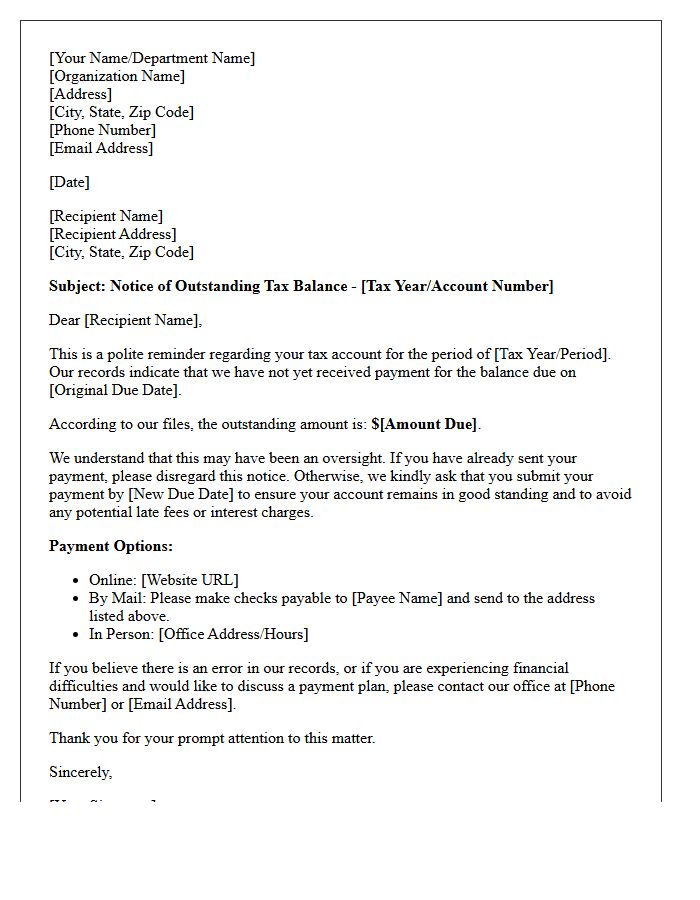
A Polite First Request Letter serves as a professional reminder for an outstanding debt. It is essential to maintain a courteous tone while clearly stating the tax amount due and the original deadline. Providing convenient payment methods and contact information for inquiries encourages a quick resolution. This initial communication aims to resolve delinquent tax payments without escalating to legal action or penalties, preserving a positive relationship between the tax authority and the taxpayer through clear, transparent communication regarding financial obligations.
Introductory Tax Debt Collection Notice Letter
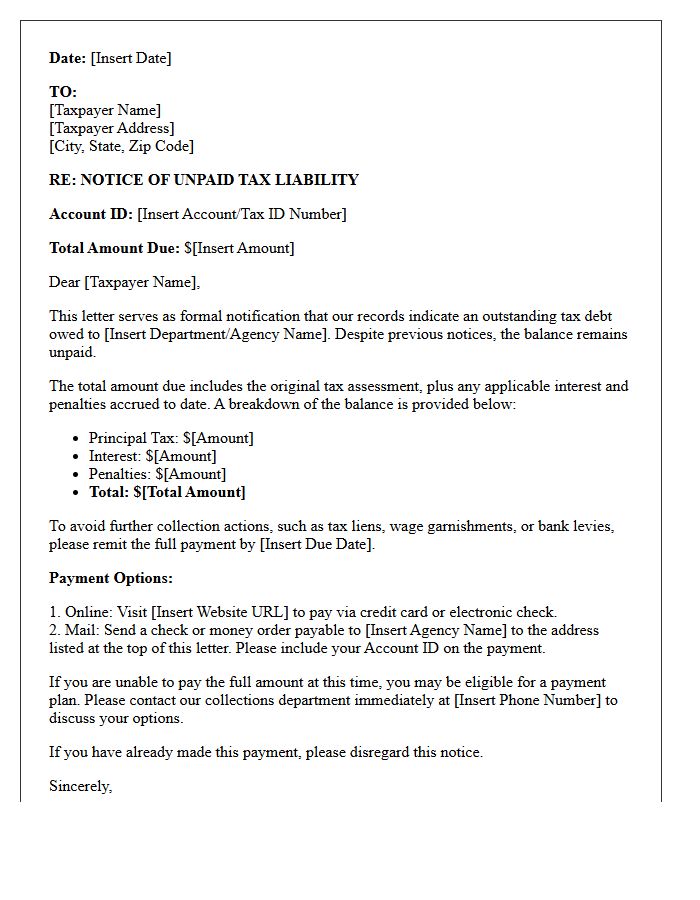
An introductory tax debt collection notice is a formal legal document signaling that your account has been transferred to a Private Collection Agency. This letter serves as your official validation notice, confirming the amount owed and your taxpayer rights. It is essential to verify the letter's authenticity against IRS records to avoid potential scams. Upon receipt, you should immediately review payment options or dispute inaccuracies to prevent further escalation. This initial communication is a critical opportunity to resolve outstanding tax liabilities before more aggressive enforcement actions are taken by the government.
First Amicable Letter for Past Due Tax Accounts
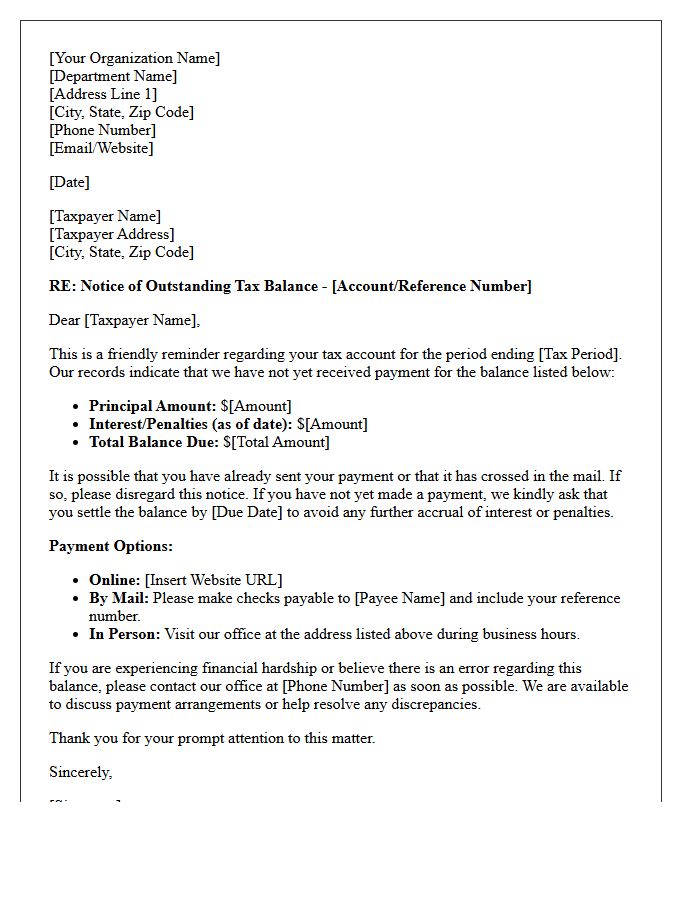
A First Amicable Letter serves as a professional reminder for taxpayers with past due tax accounts. This initial notice aims to resolve outstanding balances politely before escalating to formal collection actions. It provides a clear summary of the amount owed, applicable penalties, and available payment methods. Receiving this letter is a critical opportunity to address delinquency through voluntary compliance or by establishing a payment plan. Timely intervention helps avoid further interest charges, legal complications, and potential damage to your financial standing with tax authorities.
Courtesy Reminder Letter for Delinquent Tax Balances
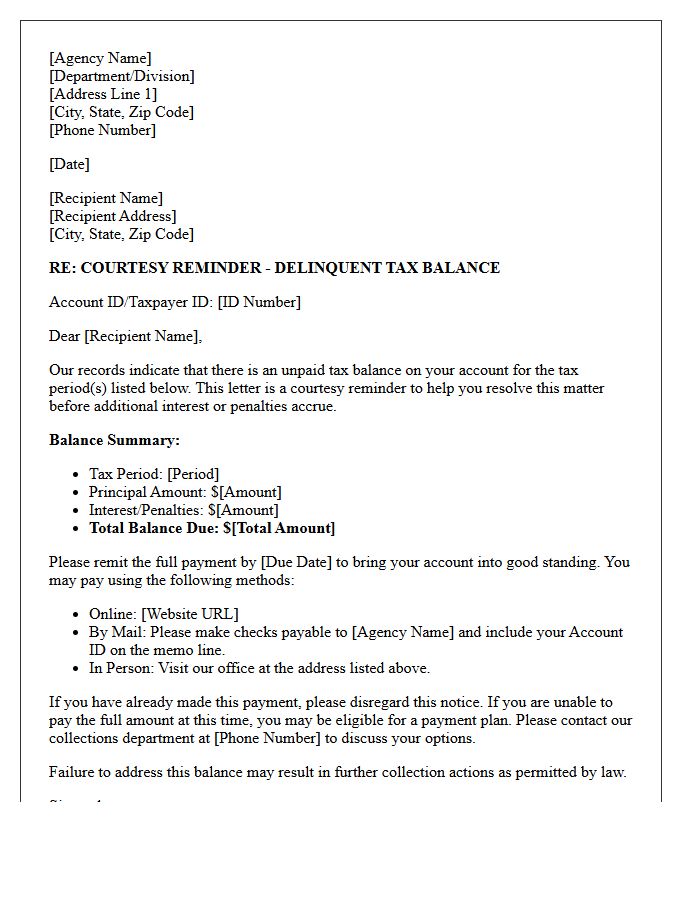
A courtesy reminder letter is a formal notification sent to taxpayers regarding delinquent tax balances. Its primary purpose is to inform you of an outstanding debt before the tax authority initiates more aggressive collection actions. Receiving this notice serves as a final opportunity to settle your obligations or establish a payment plan. Ignoring this communication can lead to additional accrued interest, financial penalties, or legal consequences like liens. Always verify the balance details and respond promptly to maintain your tax compliance and avoid further escalation.
Initial Tax Arrears Notice Letter
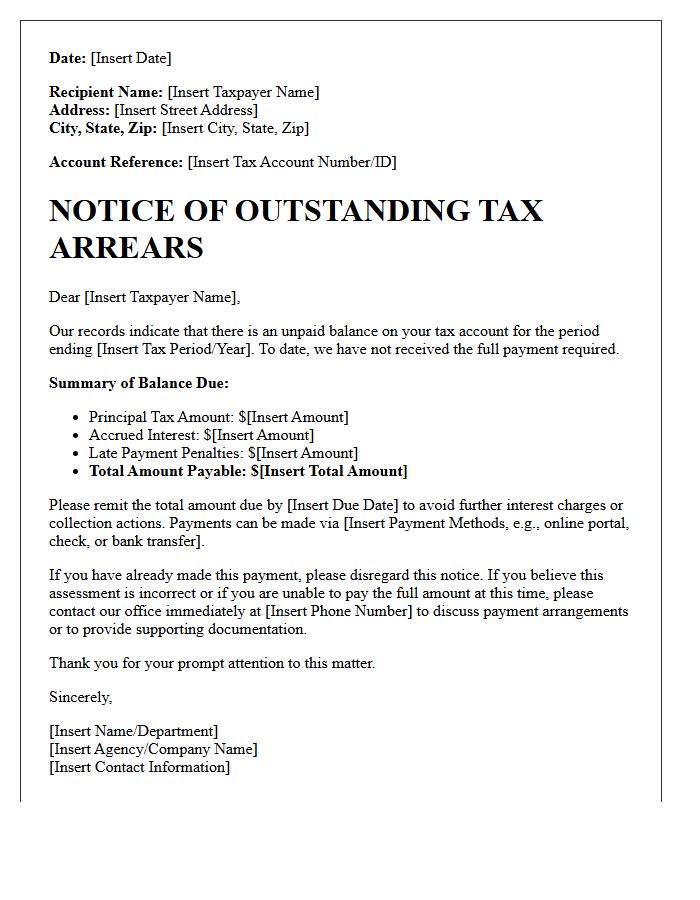
An Initial Tax Arrears Notice Letter is an official notification issued by tax authorities when a payment is missed. It serves as a formal reminder that a debt exists and must be settled promptly to avoid further action. This document details the outstanding balance, applicable deadlines, and potential interest charges or penalties. Receiving this letter is a critical opportunity to resolve discrepancies or arrange a payment plan. Ignoring this notice can lead to aggressive collection measures, including legal action or asset seizure, making immediate communication with the tax office essential.
What is a Polite First Notice for a delinquent tax payment?
A Polite First Notice is a courtesy reminder sent to taxpayers who have missed a payment deadline. It serves as a gentle prompt to settle an outstanding balance before late fees, interest penalties, or formal collection actions are initiated.
How should I respond if I receive a first notice for unpaid taxes?
You should review your records immediately to verify the balance. If the payment is outstanding, you can resolve the notice by paying the full amount through the official payment portal or by contacting the tax office to discuss available payment arrangements.
Will I be charged penalties if I pay immediately after the first notice?
In many cases, a Polite First Notice is sent during a brief grace period. If you submit your payment by the date specified in the notice, you may be able to avoid additional late payment penalties and mounting interest charges.
What should I do if I have already paid the tax mentioned in the notice?
If you have already made the payment, it may have been in transit when the notice was generated. You should keep your receipt as proof of payment and contact the tax department's billing office to ensure your account balance has been updated to zero.
Can I request a payment plan after receiving a delinquent tax reminder?
Yes, most tax authorities offer installment agreements or payment plans for individuals who cannot pay the full delinquent amount at once. It is recommended to reach out to the tax office early to formalize an agreement and prevent further escalation.


Comments