
Managing accounts receivable requires a balance of professionalism and courtesy. Sending a polite inquiry regarding outstanding balance helps maintain positive client relationships while ensuring your business stays cash-flow positive. This guide explores effective communication strategies to prompt timely payments without causing offense. To help you get started immediately, below are some ready to use template.
Image cover: Professional Payment Reminders: Sample Templates for Courteous Balance Inquiries
Letter Samples List
- Initial Polite Inquiry Letter Regarding Outstanding Balance
- Courtesy Reminder Letter for Overdue Account Balance
- Friendly Payment Status Inquiry Letter
- Gentle Check-In Letter for Pending Invoices
- First Notice Letter for Outstanding Debt
- Account Review Inquiry Letter for Unpaid Balance
- Amicable Resolution Letter for Outstanding Payments
- Statement Clarification Letter for Past Due Accounts
- Payment Assistance Inquiry Letter for Outstanding Balance
- Soft Collection Letter Regarding Unpaid Balance
- Invoice Follow-Up Letter for Outstanding Accounts
- Polite Notification Letter for Overdue Balance
Initial Polite Inquiry Letter Regarding Outstanding Balance
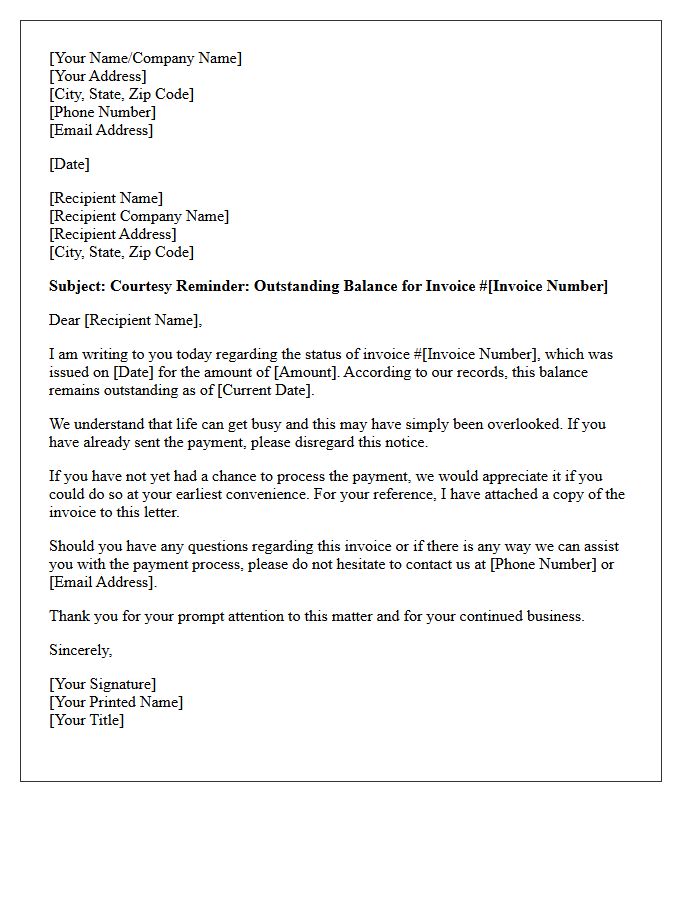
An initial polite inquiry letter regarding an outstanding balance serves as a professional reminder to a client about an overdue invoice. The primary goal is to maintain a positive business relationship while requesting a status update on the payment. This communication should clearly state the invoice number, amount due, and original deadline. By assuming the delay is a simple oversight, you encourage prompt resolution without appearing confrontational. Keeping the tone helpful and courteous ensures effective debt collection while preserving long-term customer goodwill and professional trust.
Courtesy Reminder Letter for Overdue Account Balance
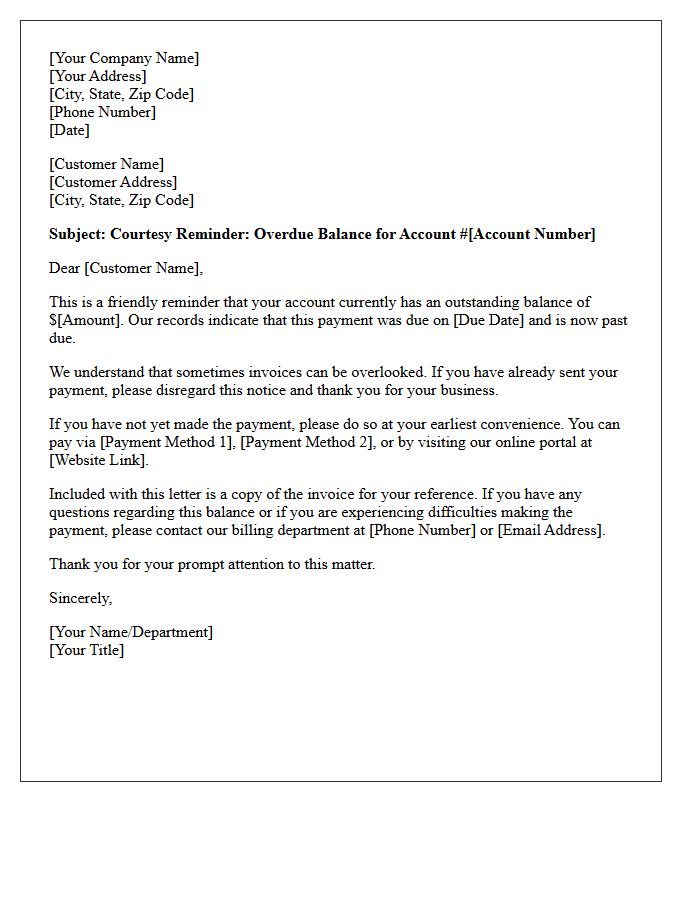
A courtesy reminder letter is a professional notification sent to clients regarding an overdue account balance. This soft-collection approach serves as a friendly nudge to resolve outstanding invoices before late fees apply. It maintains positive customer relationships while improving cash flow. Key elements include the total amount due, original invoice date, and convenient payment methods. Providing clear contact information encourages open communication to address potential billing disputes or financial hardships promptly, ensuring both parties reach a timely settlement without escalating to formal collection agencies.
Friendly Payment Status Inquiry Letter
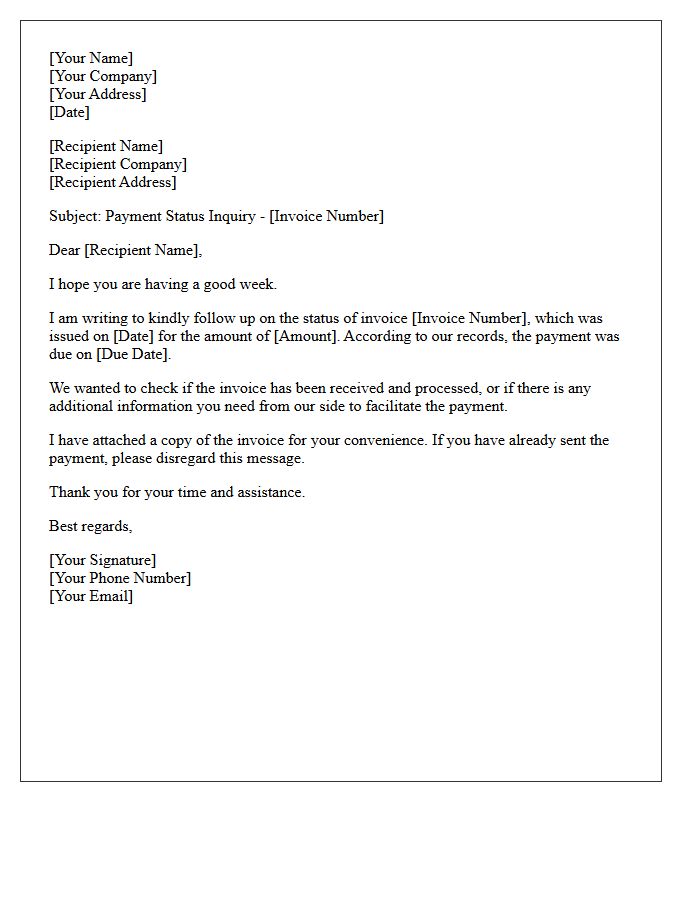
A friendly payment status inquiry letter is a professional follow-up communication designed to check the status of an outstanding invoice without damaging client relationships. The primary goal is to provide a gentle reminder while requesting a payment update or confirmation of receipt. It should include essential details like the invoice number, amount due, and original due date. By maintaining a polite tone and assuming a potential oversight, you encourage prompt action while preserving mutual trust and long-term business cooperation.
Gentle Check-In Letter for Pending Invoices
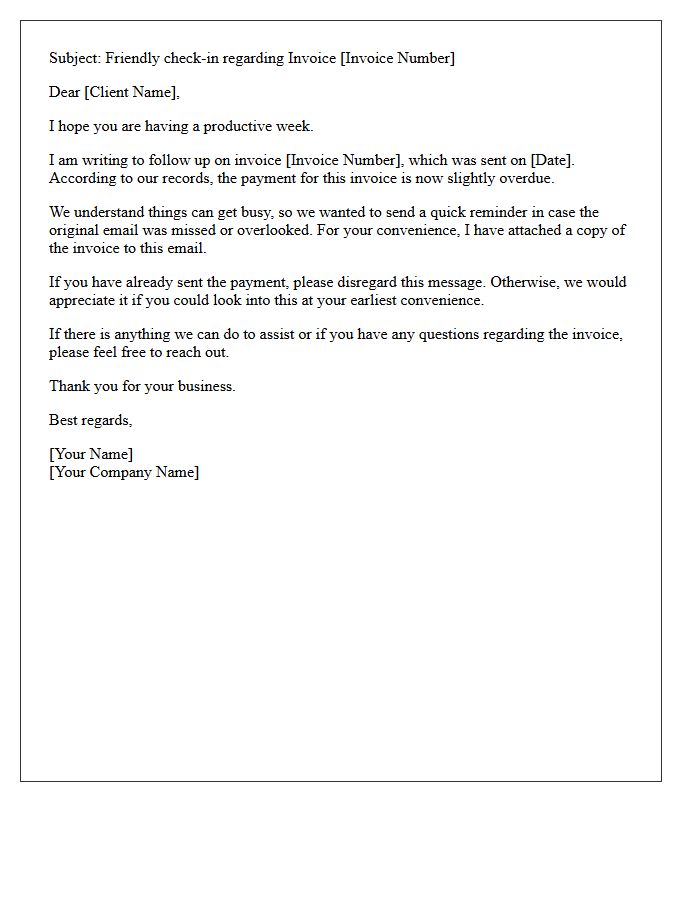
A gentle check-in letter for pending invoices serves as a professional reminder to ensure timely cash flow without damaging client relationships. The primary goal is to provide a polite nudge regarding an overdue payment, assuming the delay is an oversight. Always include the invoice number, total amount due, and a direct payment link to simplify the process. Maintaining a supportive tone helps resolve outstanding balances quickly while reinforcing business rapport. This proactive communication minimizes financial friction and keeps your accounts receivable organized and up to date.
First Notice Letter for Outstanding Debt
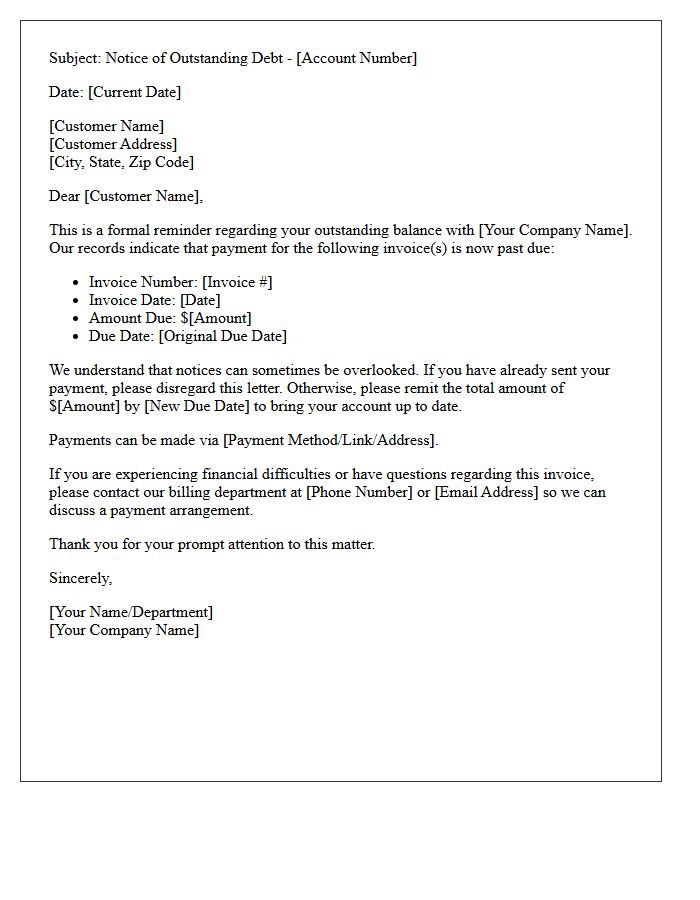
A First Notice Letter serves as the initial formal communication regarding an outstanding debt. It notifies the debtor of an unpaid balance, providing essential details such as the amount owed, original due date, and payment instructions. Receiving this document is a critical grace period to resolve discrepancies or settle the account before facing late fees or credit score impacts. It is vital to verify the debt immediately and respond promptly to avoid further collection actions or legal escalation, ensuring your financial reputation remains protected through proactive communication.
Account Review Inquiry Letter for Unpaid Balance
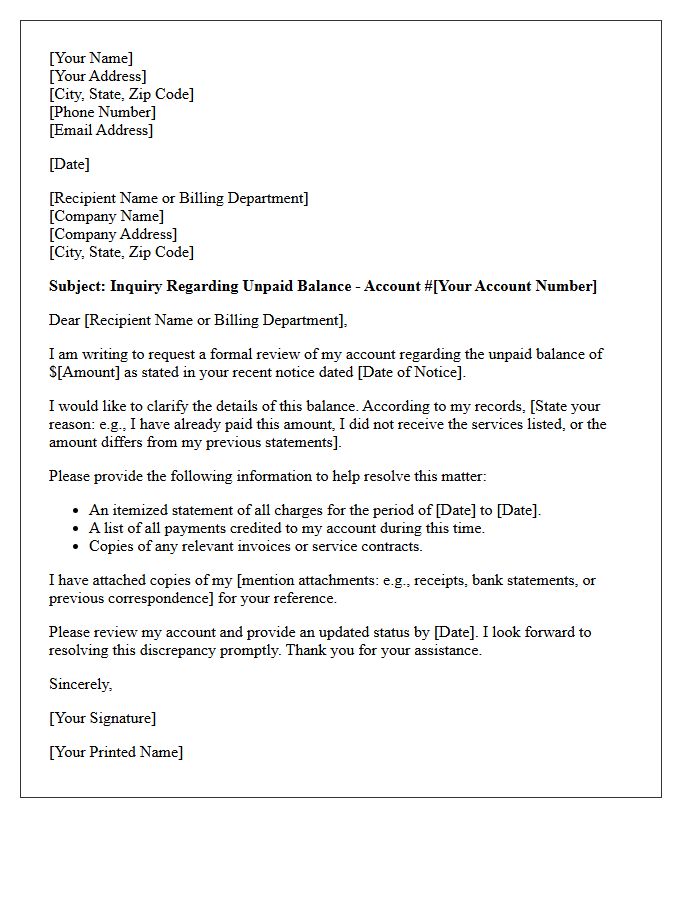
An Account Review Inquiry Letter is a formal request sent to creditors to verify the accuracy of an unpaid balance. It ensures that all recorded transactions, late fees, and interest charges align with your personal financial records. Sending this letter helps identify billing errors or potential identity theft before the debt escalates to collections. By demanding a detailed ledger statement, you establish a paper trail that protects your consumer rights and provides a foundation for resolving payment discrepancies or negotiating a settlement effectively.
Amicable Resolution Letter for Outstanding Payments
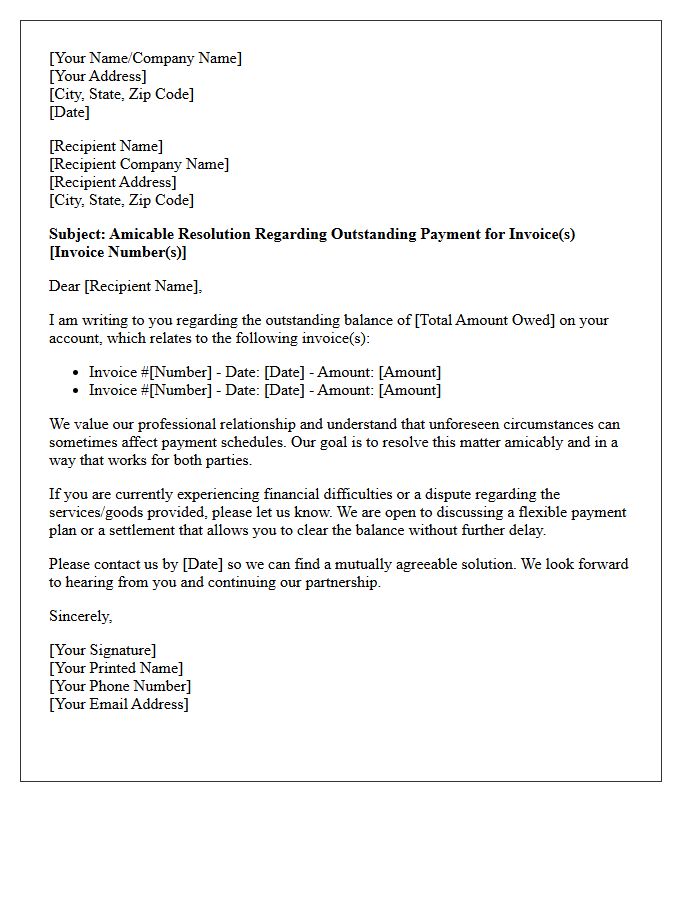
An Amicable Resolution Letter is a formal yet professional communication designed to recover outstanding payments while preserving business relationships. This document serves as a pre-legal notification, offering the debtor a final opportunity to settle arrears through flexible repayment plans or settlements. By emphasizing cooperation over litigation, it minimizes collection costs and ensures clear documentation of debt acknowledgment. Using this conciliatory approach is the most effective first step in dispute resolution before escalating to formal legal action or third-party collection agencies.
Statement Clarification Letter for Past Due Accounts
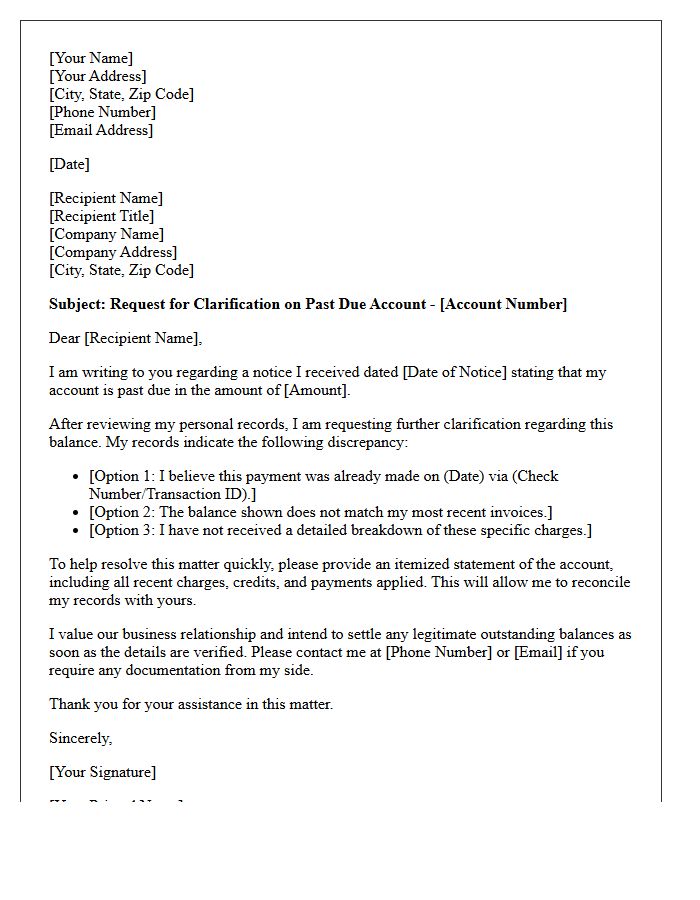
A Statement Clarification Letter is a vital communication tool used to resolve discrepancies in past due accounts. It provides a detailed breakdown of outstanding balances, helping to identify billing errors or unapplied payments. Sending this document facilitates debt recovery by offering transparency and clear documentation for both creditors and debtors. It serves as a formal request for account reconciliation, ensuring that all financial records align before pursuing further collection actions. Using this letter maintains professional relationships while effectively addressing delinquent statuses and securing necessary payment confirmations.
Payment Assistance Inquiry Letter for Outstanding Balance
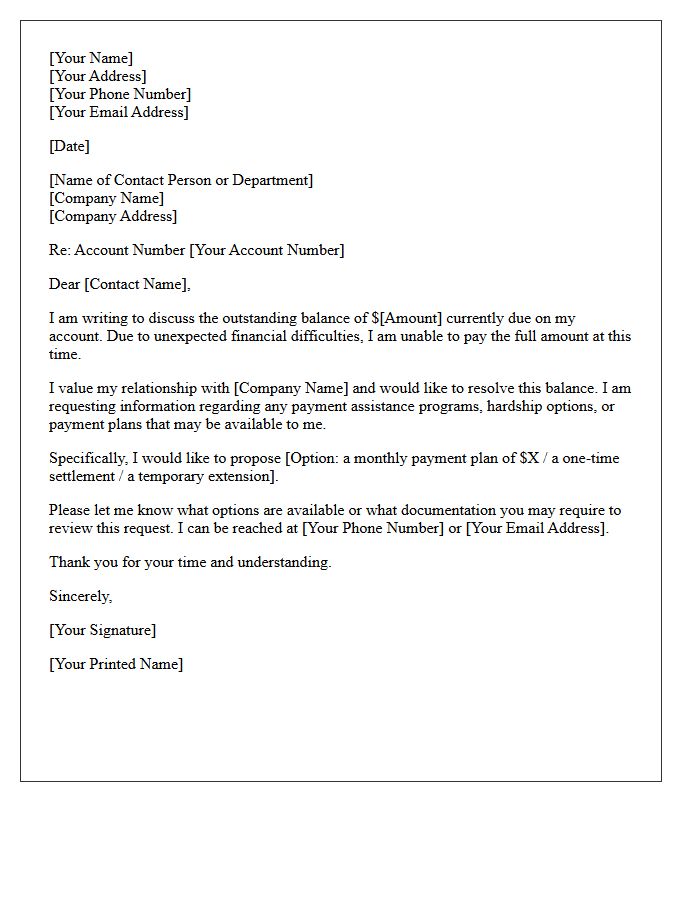
A Payment Assistance Inquiry Letter is a formal request sent to creditors when you face financial hardship. The most critical element is proposing a mutually agreeable repayment plan to prevent account delinquency. Clearly state your current situation, reference your account number, and highlight your commitment to resolving the debt. This proactive communication can help secure lower interest rates or temporary payment pauses. Always keep a copy of the correspondence for your records to ensure consumer protection and maintain a transparent relationship with your service provider or lender.
Soft Collection Letter Regarding Unpaid Balance
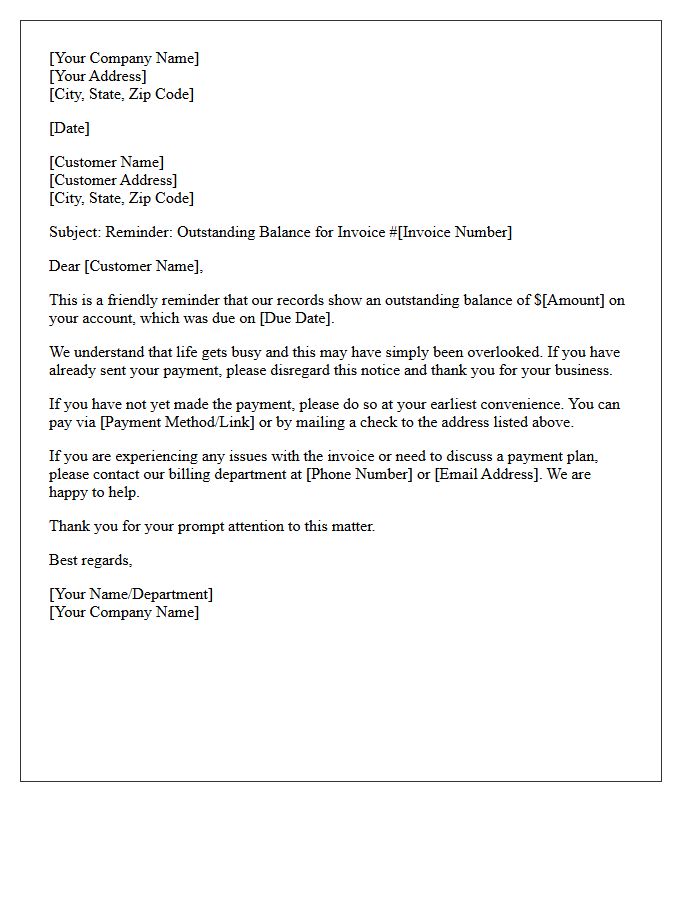
A soft collection letter serves as a courteous reminder designed to maintain positive customer relations while addressing an unpaid balance. This initial communication focuses on transparency, clearly stating the amount due and the original invoice date. It assumes the missed payment was an oversight rather than a deliberate act. By offering flexible payment options and providing contact details for support, businesses encourage prompt resolution without using aggressive language. Professionalism at this stage helps preserve long-term loyalty while effectively managing cash flow and reducing the need for formal debt recovery actions.
Invoice Follow-Up Letter for Outstanding Accounts
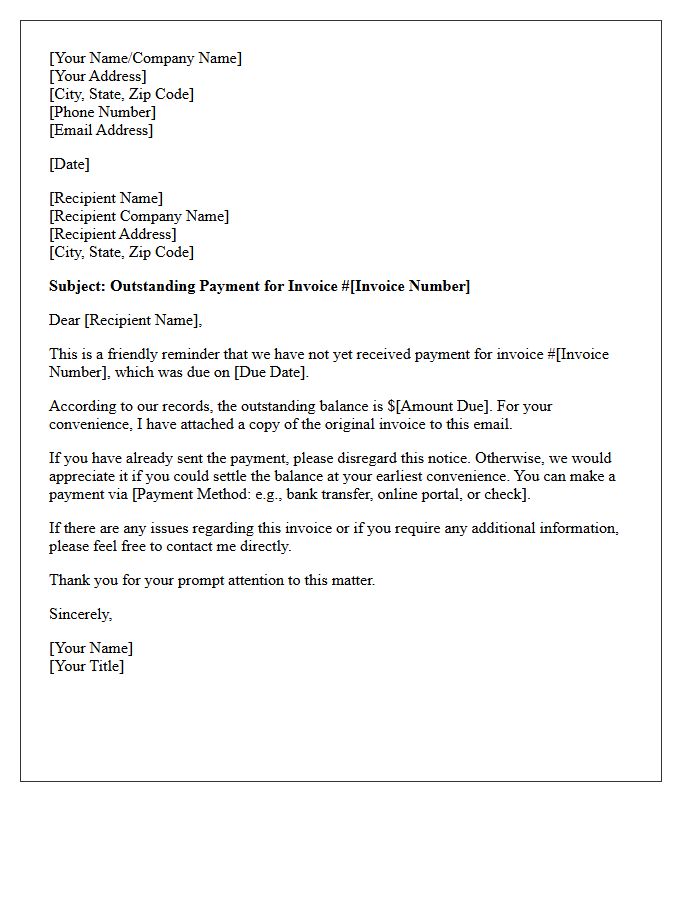
Sending a professional Invoice Follow-Up Letter is essential for maintaining healthy cash flow and managing outstanding accounts. These reminders should be polite yet firm, clearly stating the original invoice number, total amount due, and the payment deadline. Automating this process ensures consistency, while including a direct link to payment methods reduces friction. Timely communication helps resolve potential billing disputes early, protecting your business relationship while ensuring you receive timely compensation for your services. Consistent tracking of overdue balances is the most effective way to minimize bad debt and improve financial stability.
Polite Notification Letter for Overdue Balance
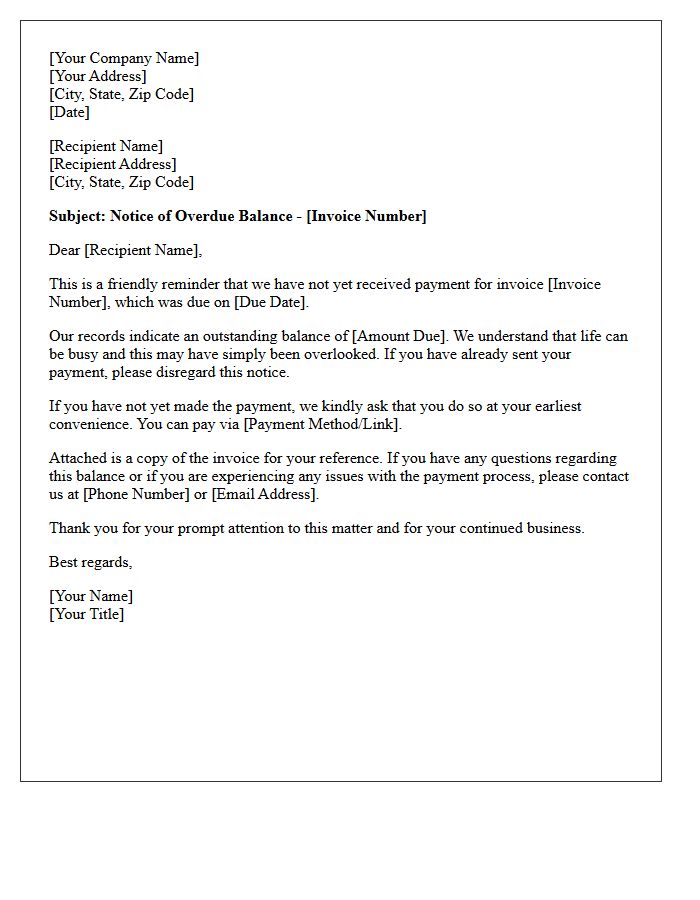
A polite notification letter serves as a professional reminder to clients regarding an outstanding debt. The most important goal is to maintain a positive business relationship while ensuring payment collection. It should clearly state the overdue amount, original invoice date, and specific payment instructions. By using a courteous tone rather than aggressive demands, you encourage cooperation and reduce potential friction. Providing direct contact information allows the debtor to resolve discrepancies or discuss financial hardships immediately, facilitating a faster settlement of the account balance without legal escalation.
1. How can I politely request an update on an outstanding balance?
You can send a courtesy follow-up email or letter stating that you are checking on the status of a specific invoice. Using phrases like "Just a friendly reminder" or "In case this was overlooked" helps maintain a professional and positive tone.
2. What information should be included in a balance inquiry?
To ensure clarity, include the invoice number, the total amount due, the original due date, and a copy of the invoice as an attachment. This provides the recipient with all the necessary details to resolve the payment quickly.
3. How do I ask about a late payment without sounding confrontational?
Focus on the possibility of a clerical error or a communication gap. Phrases such as "We wanted to ensure you received our previous statement" or "Is there any additional information you need to process this payment?" shift the focus toward assistance rather than accusation.
4. What is the best timeframe to send a polite payment reminder?
A polite inquiry is typically sent 1 to 5 days after the due date has passed. If the balance remains unpaid, subsequent reminders can be sent at 15-day or 30-day intervals, gradually increasing in formality.
5. Can I inquire about an outstanding balance if I am unsure if it was paid?
Yes, you can send a reconciliation inquiry. Frame the message by saying, "We are currently updating our records and wanted to confirm the status of invoice #123 to ensure our accounts match yours."

Comments