
Maintaining positive cash flow requires prompt action on unpaid accounts. A commercial B2B first notice serves as a professional courtesy reminder to clients regarding a past due invoice. This initial communication focuses on resolving oversight while preserving the business relationship through clear, polite notification. To help you streamline your collection process, below are some ready to use templates.

Image cover: Professional B2B First Notice Templates for Past Due Invoices
Letter Samples List
- First Notice Past Due Invoice Reminder Letter
- Commercial Account Outstanding Balance Notice Letter
- Business to Business Initial Overdue Payment Request Letter
- Friendly Reminder Past Due Commercial Account Letter
- First Collection Notice Business Invoice Letter
- Commercial Past Due Balance Inquiry Letter
- Initial Debt Collection First Notice Letter
- Business to Business Unpaid Invoice Reminder Letter
- First Notice of Delinquent Commercial Account Letter
- Outstanding Commercial Invoice Initial Request Letter
- Commercial Past Due Payment Reminder Letter
- Initial Notice of Overdue Business Invoice Letter
First Notice Past Due Invoice Reminder Letter
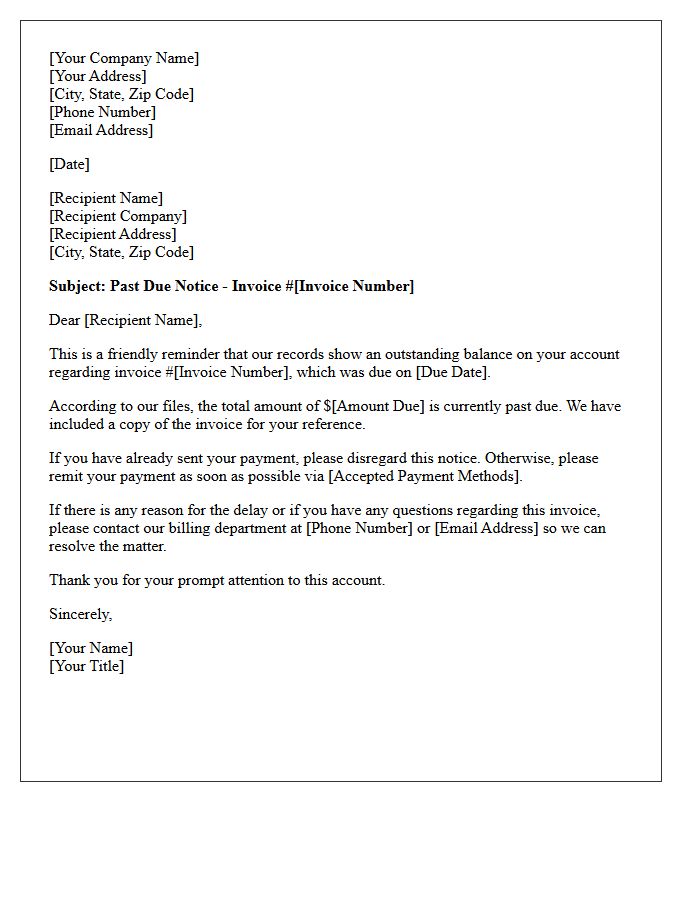
A First Notice Past Due Invoice Reminder serves as a professional follow-up for an unpaid balance. Its primary purpose is to remind clients of an overdue payment while maintaining a positive business relationship. The letter should clearly state the invoice number, the total amount due, and the original deadline. Including multiple payment methods and a copy of the invoice can expedite the collection process. This initial communication assumes the delay is a simple oversight, using a polite tone to encourage immediate action before escalating to further collection stages.
Commercial Account Outstanding Balance Notice Letter
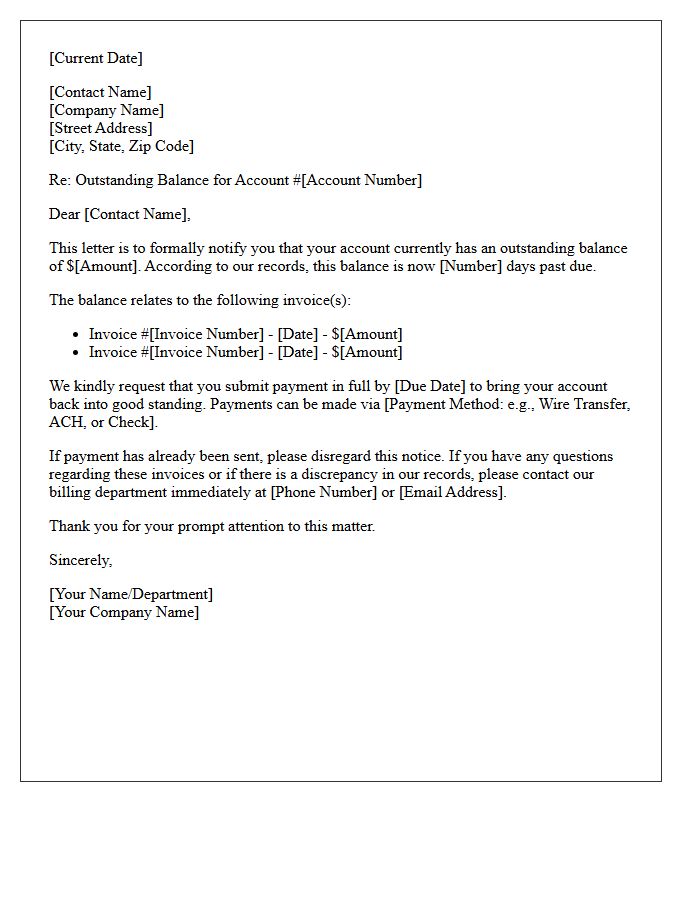
A Commercial Account Outstanding Balance Notice is a formal request for payment sent to a business client with overdue invoices. It serves as a vital debt collection tool to maintain healthy cash flow while preserving professional relationships. The letter must clearly state the total overdue amount, original invoice dates, and the final payment deadline. Including specific payment methods and contact details for disputes helps expedite resolution. Timely communication prevents bad debt and provides a necessary paper trail should the account require escalation to legal action or a collection agency.
Business to Business Initial Overdue Payment Request Letter
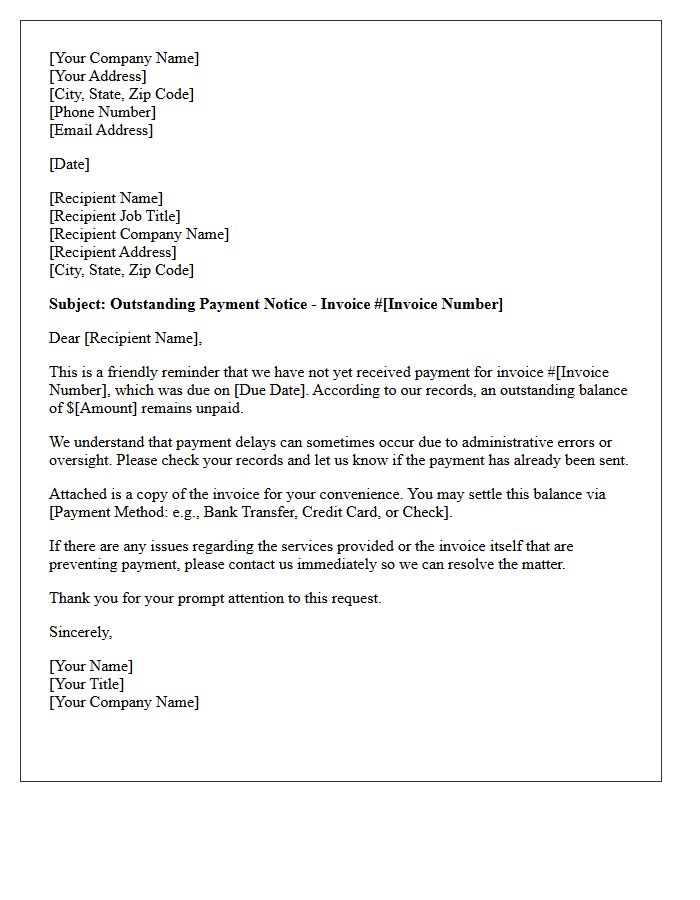
A Business to Business Initial Overdue Payment Request Letter serves as a professional formal reminder to notify a client about an outstanding invoice past its due date. It is crucial to maintain a polite, firm tone to preserve the commercial relationship while ensuring cash flow. The letter should clearly state the invoice number, total amount due, and original deadline. Providing multiple payment options and a direct contact point encourages a prompt resolution before the account escalates to late fees or formal debt collection processes.
Friendly Reminder Past Due Commercial Account Letter
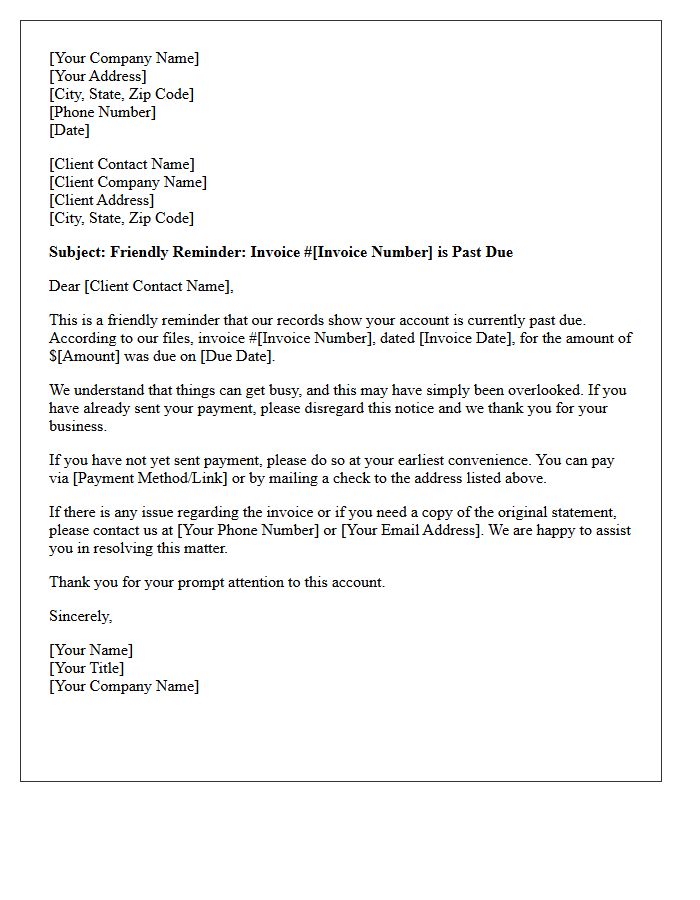
A friendly reminder for a past due commercial account serves as a professional nudge to maintain healthy B2B relationships. The letter should clearly state the outstanding balance, invoice number, and original due date. To ensure prompt reconciliation, include convenient payment links or banking details. Maintaining a polite yet firm tone helps secure cash flow without alienating clients. Always attach a copy of the original invoice to eliminate excuses for delay. Early communication is the most effective strategy to prevent delinquency and resolve potential billing disputes amicably.
First Collection Notice Business Invoice Letter
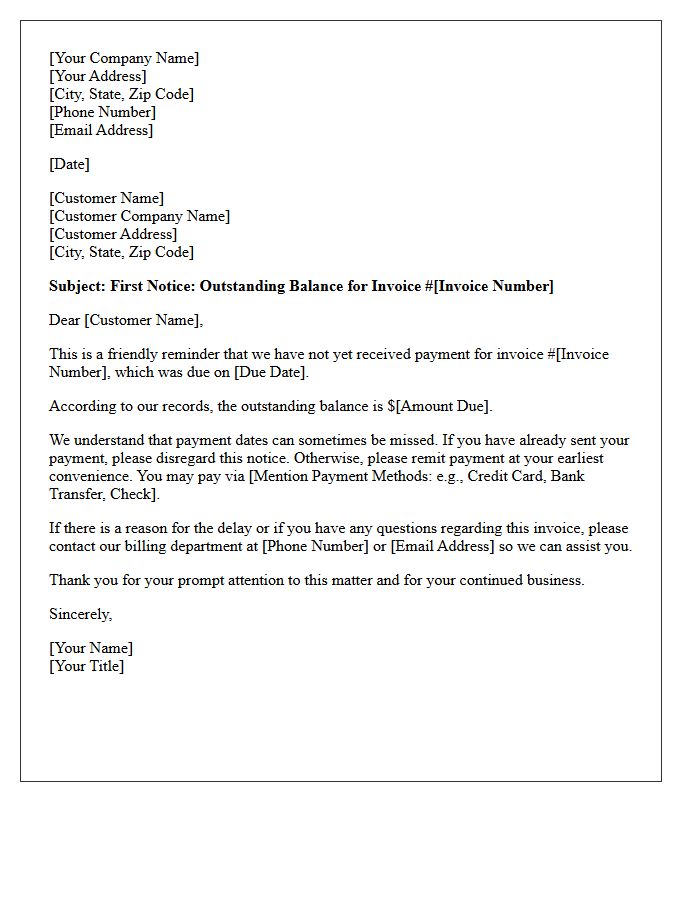
A First Collection Notice is a professional reminder sent to clients with overdue accounts. This initial business invoice letter maintains a polite tone to preserve the customer relationship while clearly stating the outstanding balance and original due date. It should include a copy of the invoice, accepted payment methods, and a firm deadline for resolution. Treating this document as a courtesy follow-up encourages immediate payment and helps identify potential billing disputes early, ensuring healthy cash flow and effective accounts receivable management for your company.
Commercial Past Due Balance Inquiry Letter
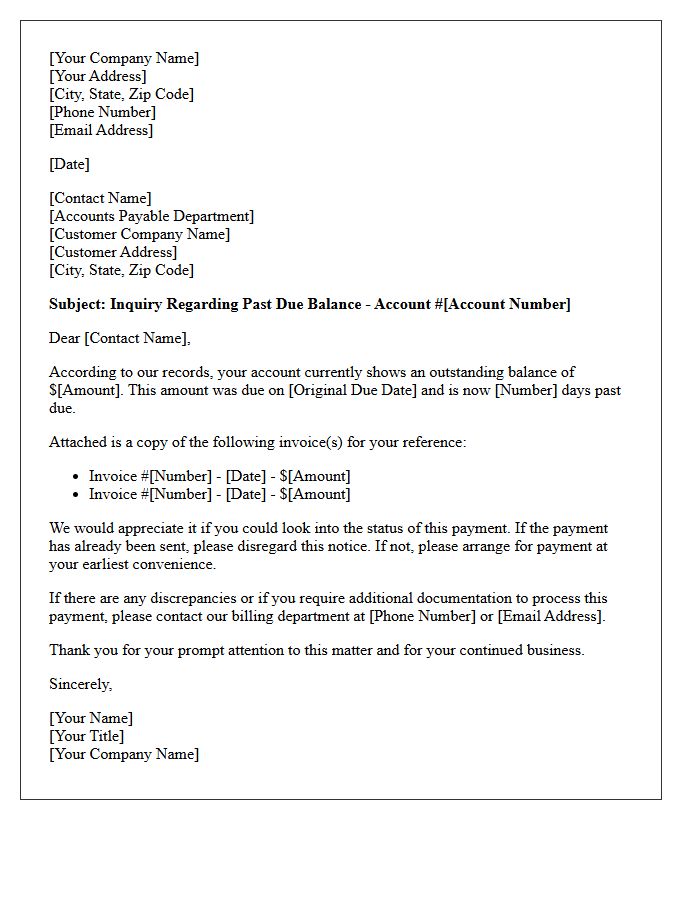
A Commercial Past Due Balance Inquiry Letter serves as a formal communication to resolve outstanding B2B debts. Its primary goal is to verify account accuracy while encouraging prompt payment without damaging professional relationships. Key elements include the exact amount owed, invoice numbers, and clear payment instructions. Using a firm yet polite tone helps identify potential billing disputes or cash flow issues early. Clear documentation ensures legal compliance and provides a paper trail if the account requires further collection actions or formal credit reporting adjustments.
Initial Debt Collection First Notice Letter
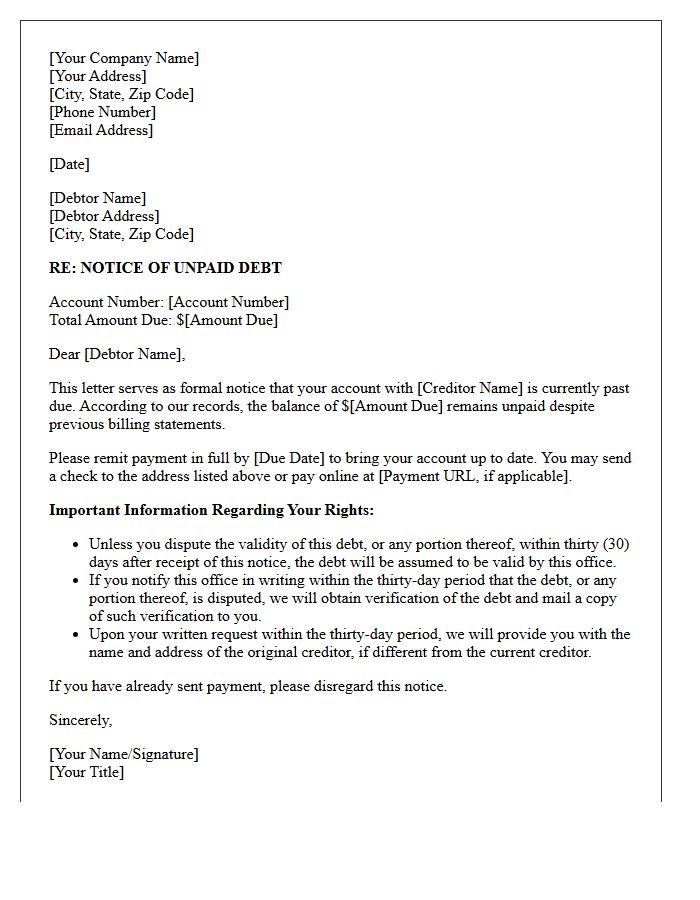
An Initial Debt Collection First Notice Letter is a formal document triggered when a payment becomes overdue. It serves as a legal requirement to notify consumers of their outstanding balance and creditor information. This notice must include a validation notice, granting you thirty days to dispute the debt's accuracy in writing. Understanding your rights under the Fair Debt Collection Practices Act is essential to ensure the collector's claims are legitimate. Always verify the debt amount and the original creditor before making payments to protect your financial standing and prevent potential identity theft or errors.
Business to Business Unpaid Invoice Reminder Letter
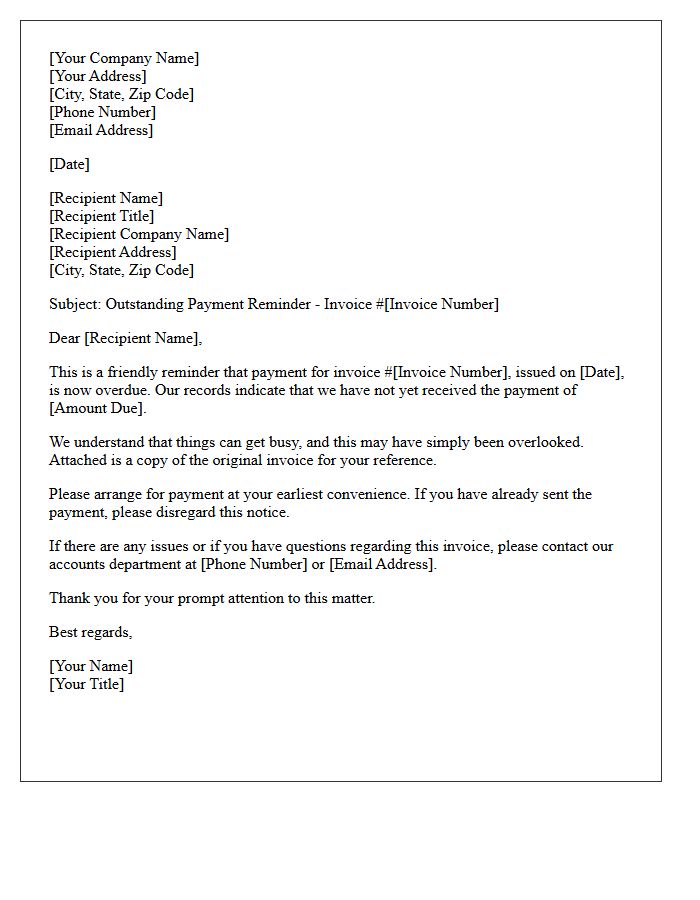
A Business to Business Unpaid Invoice Reminder Letter is a professional communication designed to recover outstanding debts while maintaining positive commercial relationships. It is essential to include clear details such as the invoice number, total amount due, and original payment deadline. Effective letters maintain a polite yet firm tone, outlining the next steps or potential late fees. Sending timely notifications ensures healthy cash flow and reduces the risk of bad debt. Professionalism in these reminders encourages prompt settlements without necessitating legal escalation or damaging long-term corporate partnerships.
First Notice of Delinquent Commercial Account Letter
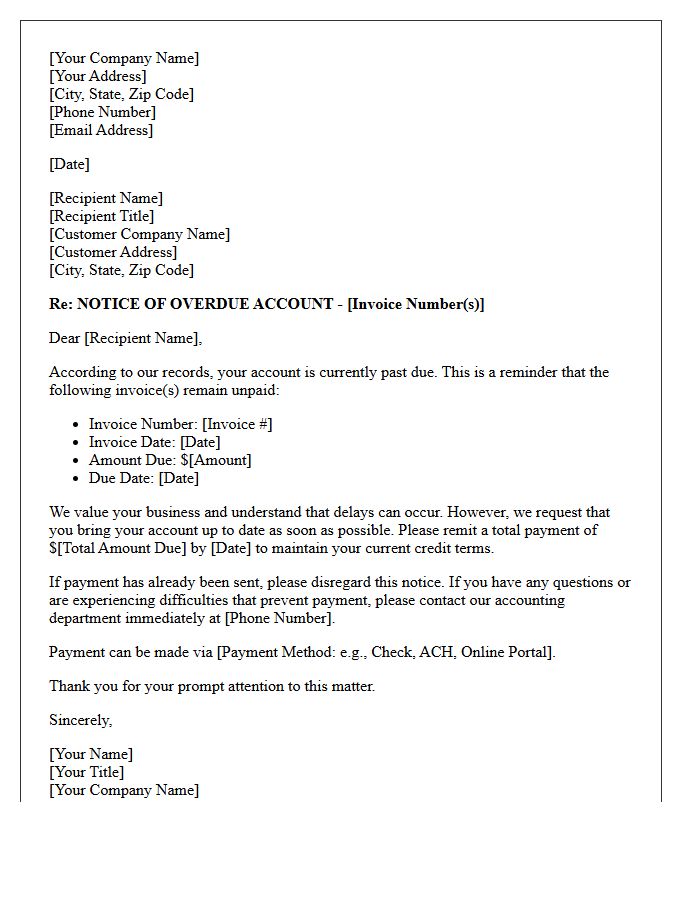
A First Notice of Delinquent Commercial Account Letter serves as a formal demand for payment regarding an overdue B2B invoice. This initial communication aims to resolve the debt amicably while maintaining the professional relationship. It must clearly state the outstanding balance, invoice number, and original due date. By documenting the delinquency early, businesses establish a legal paper trail necessary for potential escalation. Sending this notice promptly encourages immediate remittance and helps prevent minor payment delays from turning into significant bad debt losses for your company's cash flow.
Outstanding Commercial Invoice Initial Request Letter
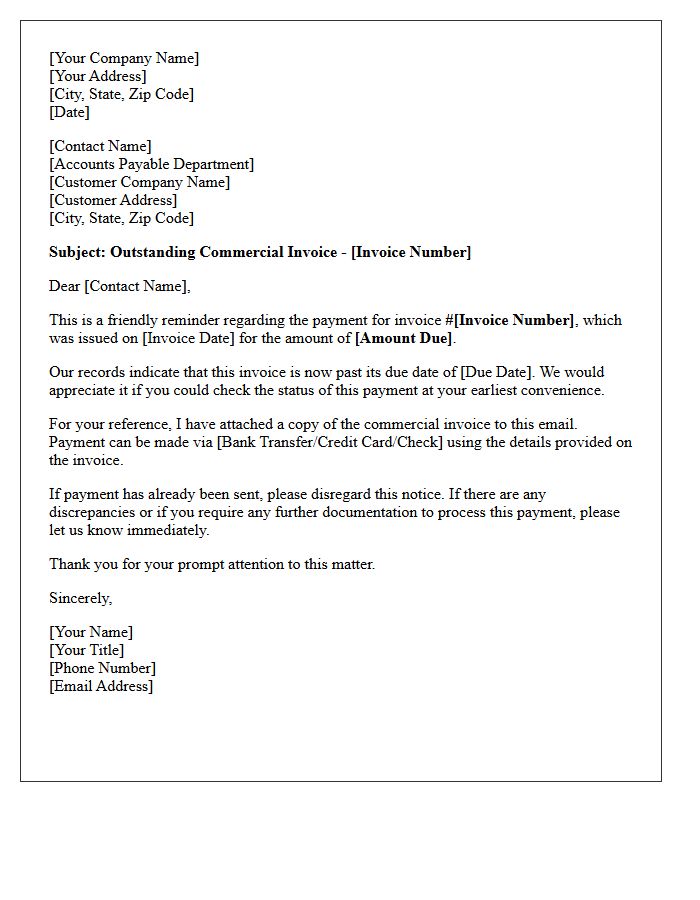
An Outstanding Commercial Invoice Initial Request Letter serves as a professional payment reminder to resolve overdue accounts. This formal document should clearly state the invoice number, the total amount due, and the original due date. Maintaining a polite tone is essential to preserve the business relationship while ensuring cash flow. Providing multiple payment methods and a copy of the original invoice helps eliminate excuses for delay. Timely communication via this letter minimizes the risk of bad debt and encourages prompt financial settlement from the client.
Commercial Past Due Payment Reminder Letter
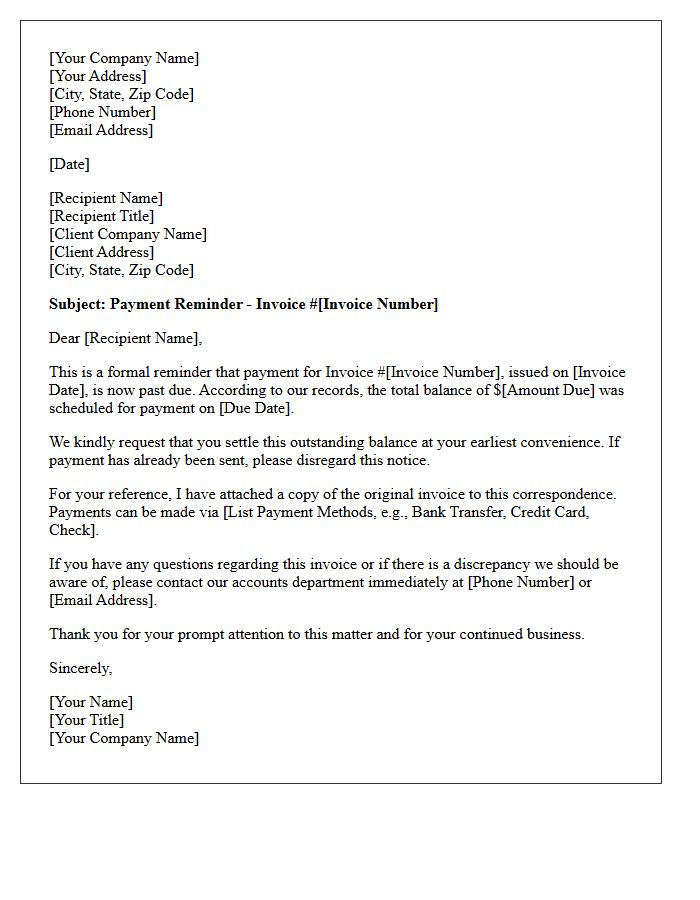
A Commercial Past Due Payment Reminder Letter is a formal notice sent to a business client to recover outstanding debts. It is essential for maintaining positive cash flow and serves as a professional nudge before escalating to collections. The letter should clearly state the original invoice number, total amount owed, and the specific due date. By using a polite yet firm tone, businesses can preserve professional relationships while ensuring legal documentation exists if further action is required to resolve the delinquency and secure payment.
Initial Notice of Overdue Business Invoice Letter
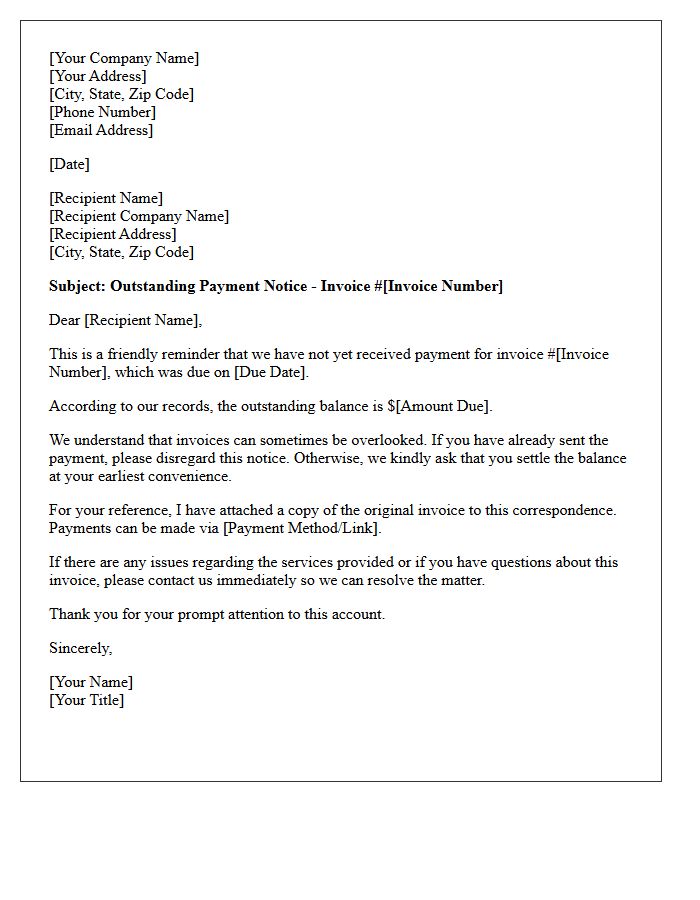
An Initial Notice of Overdue Business Invoice is a professional reminder sent immediately after a payment deadline passes. Its primary purpose is to maintain cash flow while preserving positive client relationships. This formal communication should clearly state the invoice number, total amount due, and original due date to eliminate confusion. Keeping the tone polite yet firm helps resolve potential clerical errors or banking delays quickly. Promptly sending this notice demonstrates organized accounts receivable management and encourages clients to prioritize your outstanding payment before late fees or further collection actions are required.
What should be included in a first notice for a past-due B2B invoice?
A professional first notice should include the invoice number, the original due date, the total outstanding balance, and a copy of the original invoice. It is essential to maintain a polite tone, as the oversight is often a simple administrative error or a timing issue with the payment cycle.
When is the best time to send a first payment reminder to a business client?
The ideal time to send a first notice is typically 1 to 7 days after the invoice has officially become past due. Sending it promptly ensures the debt stays top-of-mind for the client's accounts payable department while remaining professional and non-aggressive.
How does a B2B late payment notice differ from a consumer collection letter?
B2B notices focus on maintaining the long-term professional relationship and often assume a "friendly reminder" tone. Unlike consumer collections, B2B communication usually references specific purchase orders (POs) and account terms established in the commercial contract between the two entities.
Should I charge late fees on the first notice of a past-due invoice?
While your contract may allow for late fees, it is often best practice to mention the potential for fees in the first notice rather than applying them immediately. This provides a "grace period" that builds goodwill, though you should clearly state that future notices may include accrued interest or penalties.
What are the most common reasons for B2B invoice payment delays?
Common reasons include the client missing the original email, internal approval delays, discrepancies in the invoice details, or the client's specific "net-pay" cycle not aligning with your due date. A first notice helps identify if there is a dispute or if the delay is purely administrative.


Comments