
A Standard Initial Debt Collection Notice is the first formal communication sent to a consumer regarding an outstanding balance. This legally required document outlines the debt amount, the creditor's identity, and your right to dispute the claim under fair practice laws. Understanding its components ensures legal compliance and effective recovery. To help you get started, below are some ready to use templates.
Image cover: Professional Debt Collection Letter Templates and Initial Notice Samples
Letter Samples List
- Standard Initial Debt Collection Letter
- First Notice of Overdue Payment Letter
- Initial Debt Validation Notice Letter
- First Contact Debt Recovery Letter
- Outstanding Balance Initial Demand Letter
- Notice of Account Assignment Letter
- Initial Consumer Debt Notification Letter
- First Request for Payment Letter
- Preliminary Debt Collection Notice Letter
- Initial Fair Debt Collection Practices Letter
- First Notice of Account Delinquency Letter
- Standard First Attempt Debt Recovery Letter
Standard Initial Debt Collection Letter
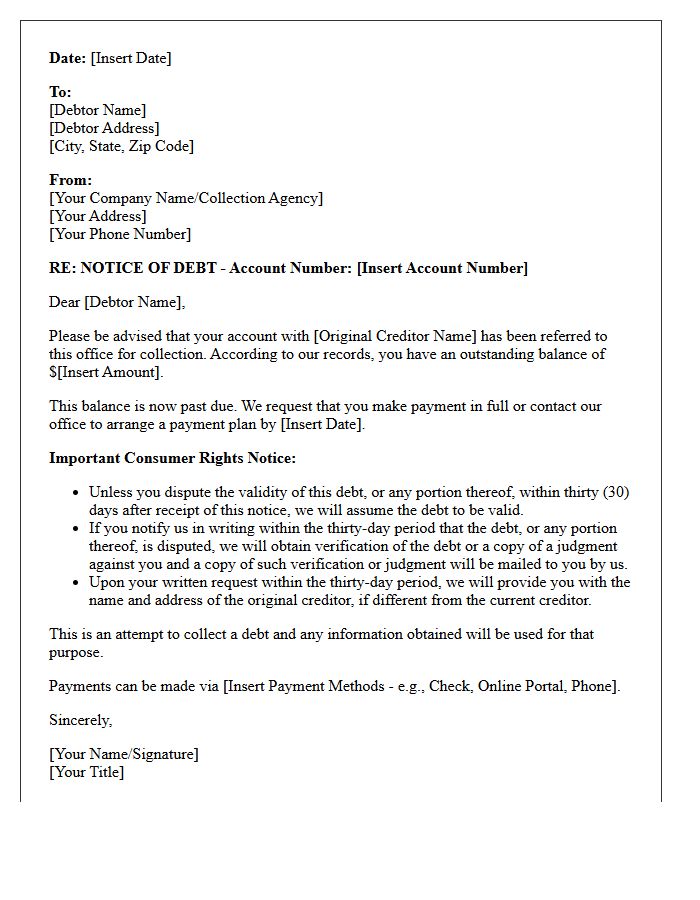
A standard initial debt collection letter serves as the validation notice, a legal requirement under the FDCPA. This document must clearly state the amount owed and the creditor's name. Crucially, it informs you of your right to dispute the debt within thirty days of receipt. If you request verification in writing during this period, the collector must halt activities until proof is provided. Always keep a copy for your records, as this letter establishes the legal timeline for your consumer protections and ensures transparency in the recovery process.
First Notice of Overdue Payment Letter
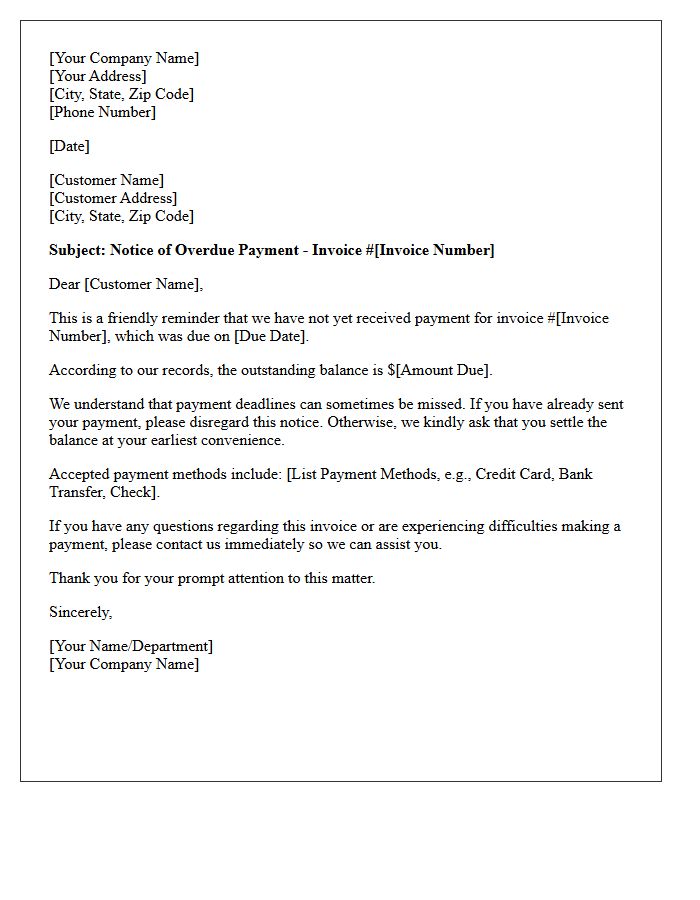
A First Notice of Overdue Payment serves as a formal, professional reminder that an invoice has missed its due date. This initial communication aims to maintain positive client relationships while securing necessary cash flow. It should clearly state the outstanding balance, invoice number, and original deadline. Providing convenient payment methods within the letter encourages immediate resolution. Sending this notice promptly prevents minor delays from becoming chronic delinquencies. Consistency in your accounts receivable process ensures financial stability and signals that your business takes its credit terms seriously.
Initial Debt Validation Notice Letter
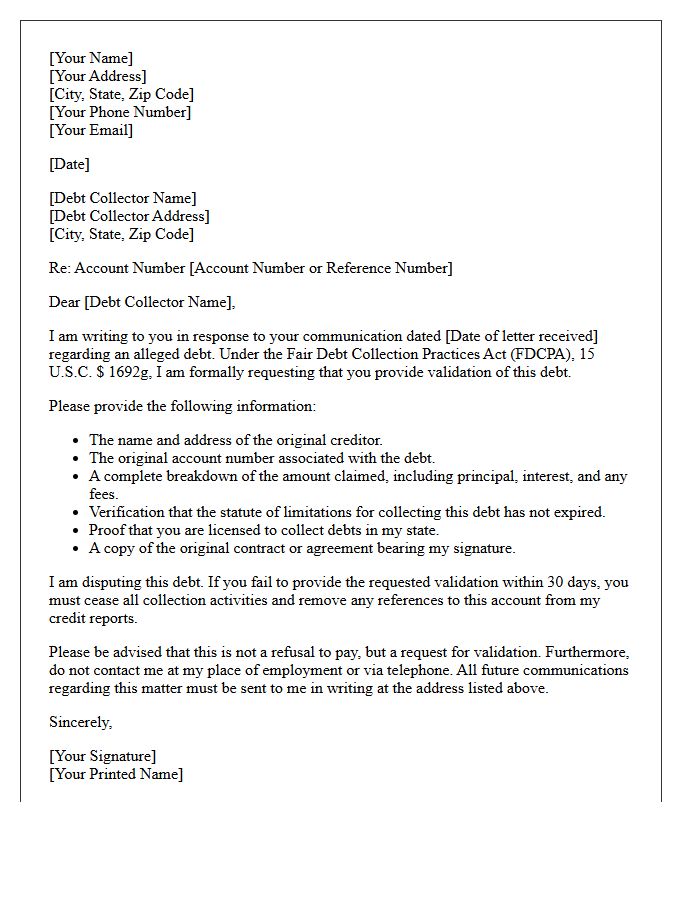
An Initial Debt Validation Notice Letter is a critical consumer protection document required by the Fair Debt Collection Practices Act (FDCPA). When a collection agency contacts you, they must provide this notice within five days, detailing the amount owed and the creditor's identity. You have a legal right to dispute the debt within thirty days of receipt. Once a written dispute is submitted, the collector must cease all communication until they provide official verification, ensuring you are not held liable for inaccurate, expired, or fraudulent financial claims.
First Contact Debt Recovery Letter
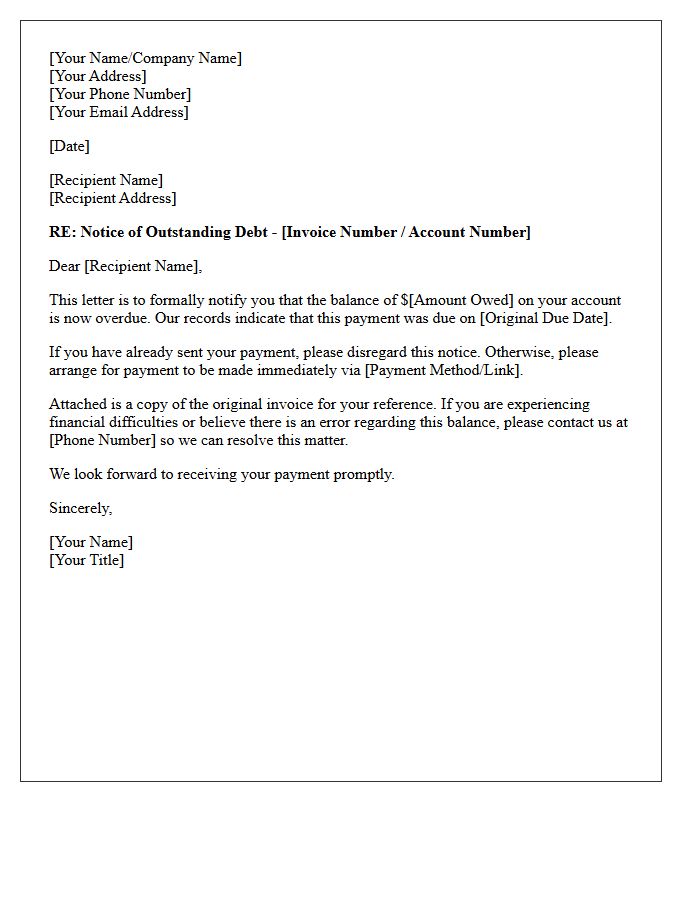
Receiving a First Contact Debt Recovery Letter is a formal notification that a debt has been assigned to a collection agency. Upon receipt, you must immediately verify the debt to ensure the amount and creditor are accurate. Under consumer protection laws, you have a legal right to request a debt validation within thirty days. Do not ignore this document; instead, respond in writing to dispute errors or negotiate a settlement. Maintaining clear documentation of all communication is the most effective way to protect your financial rights and credit score during this process.
Outstanding Balance Initial Demand Letter
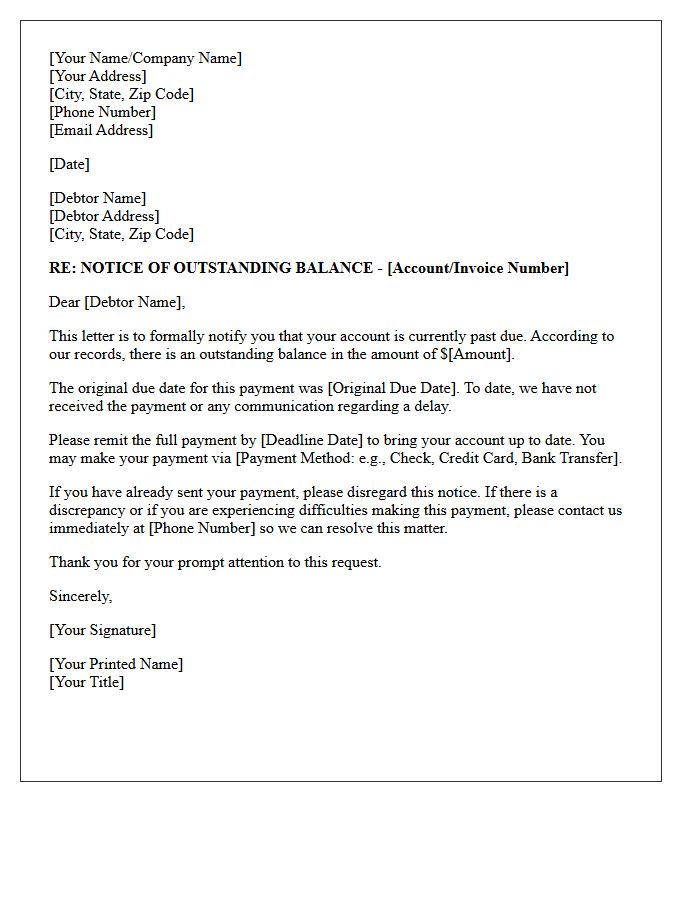
An Outstanding Balance Initial Demand Letter serves as a formal notification to a debtor regarding an unpaid invoice. This essential document establishes a clear legal record of the debt, detailing the exact amount owed and the original due date. It acts as a professional final attempt to secure payment before escalating to collection agencies or litigation. By providing a specific deadline for resolution, the letter encourages immediate action while protecting the creditor's rights. Clear communication at this stage often resolves disputes efficiently without the need for costly legal intervention.
Notice of Account Assignment Letter
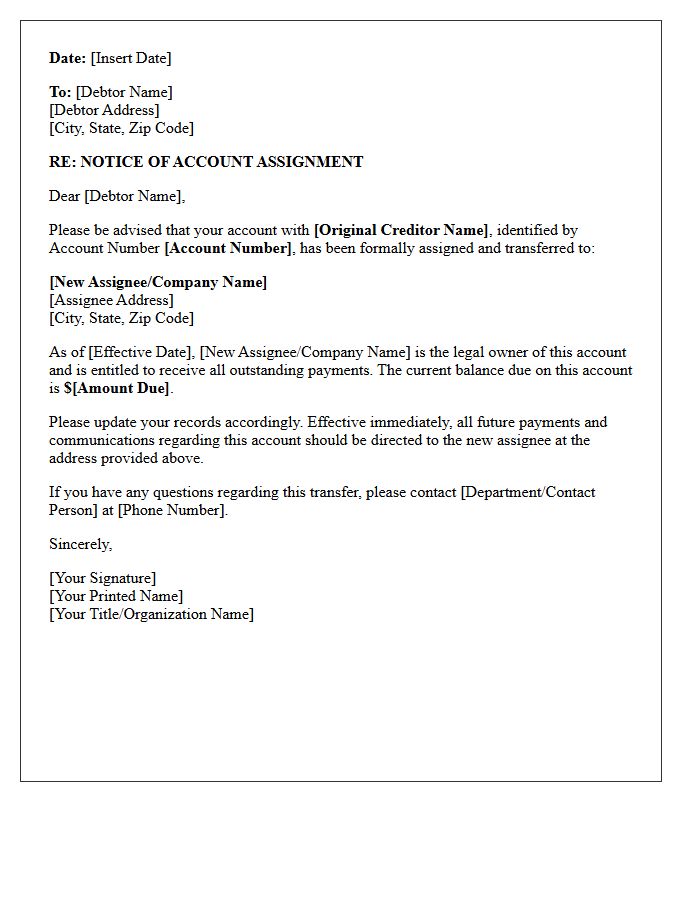
A Notice of Account Assignment is a formal legal document informing you that a creditor has transferred your debt ownership to a third party. This process, often called factoring, means your payment obligations shift from the original provider to a new assignee. It is crucial to verify the authenticity of this letter to avoid fraud and ensure all future payments are directed to the correct entity. Once received, the legal title of the debt changes, making the new owner responsible for collections and account management.
Initial Consumer Debt Notification Letter
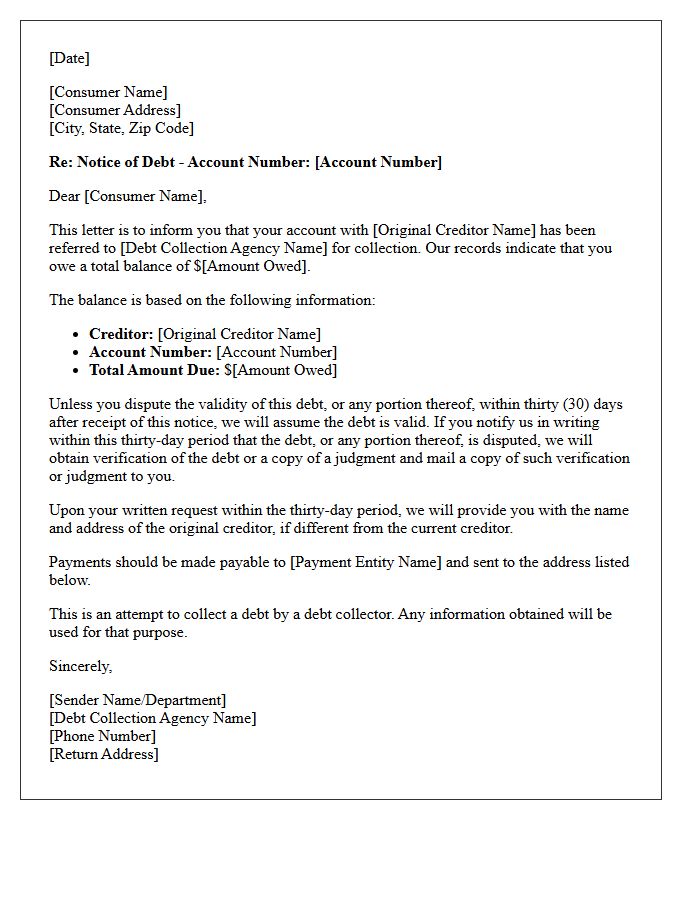
An Initial Consumer Debt Notification Letter is a mandatory document debt collectors must provide under federal law. It serves as the validation notice, detailing the exact amount owed, the creditor's name, and your legal right to dispute the claim. You have a 30-day window to request written verification or contest the debt's accuracy. Reviewing this letter is critical to preventing identity theft or errors, as failure to respond may result in the collector assuming the debt is valid, potentially impacting your credit score and financial standing.
First Request for Payment Letter
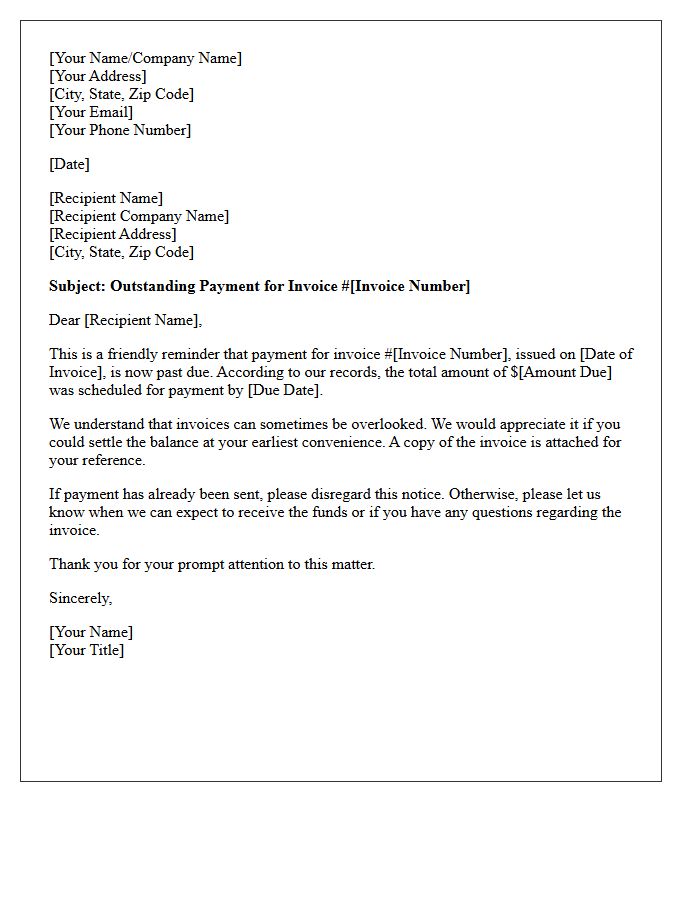
A First Request for Payment Letter serves as a professional formal reminder sent to a client regarding an outstanding invoice. It is essential to maintain a polite tone while clearly stating the due date, invoice number, and total amount owed. This initial communication aims to resolve potential oversights without damaging the business relationship. Providing multiple payment options and attached documentation ensures clarity, helping to facilitate a prompt settlement of the debt before escalating to further collection actions.
Preliminary Debt Collection Notice Letter
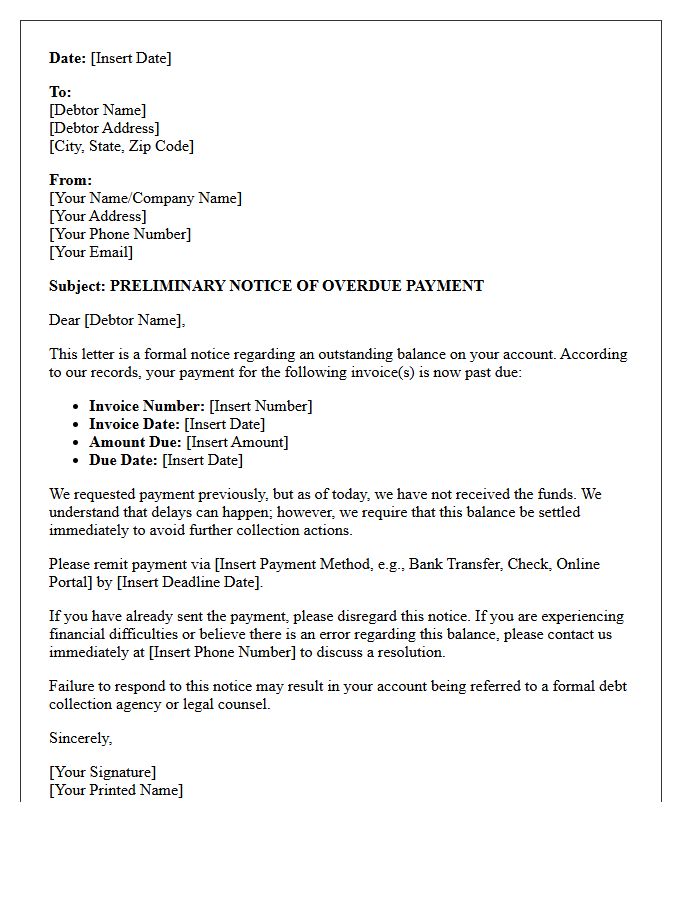
A Preliminary Debt Collection Notice Letter is a formal document sent to a debtor before legal action begins. It serves as a final opportunity to settle an outstanding balance and avoid litigation or credit damage. This notice must clearly state the total amount owed, the original creditor's details, and a specific deadline for payment. It also outlines the debtor's right to dispute the claim within thirty days under legal guidelines. Receiving this letter indicates that the collection process is escalating, making immediate communication essential to prevent further financial penalties or court involvement.
Initial Fair Debt Collection Practices Letter
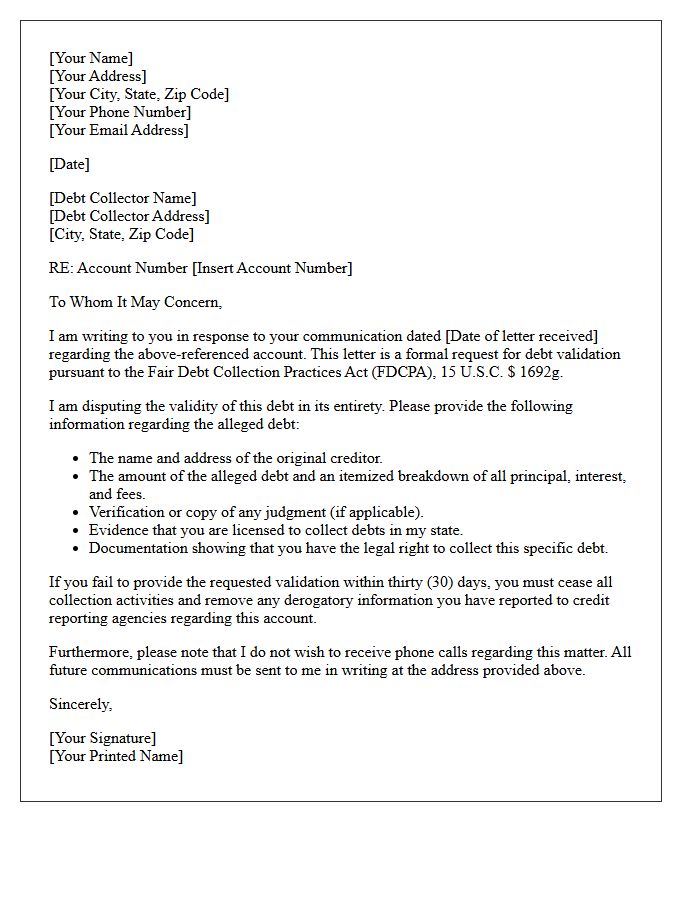
Under the Fair Debt Collection Practices Act, collectors must send a written validation notice within five days of their first contact. This initial letter is crucial because it outlines your legal right to dispute the debt. You have exactly thirty days from receipt to request verification in writing. If you challenge the claim during this window, the collector must pause all activities until they provide proof of the debt. Reviewing this document ensures accuracy and protects you against unlawful collection tactics or mistaken identity.
First Notice of Account Delinquency Letter
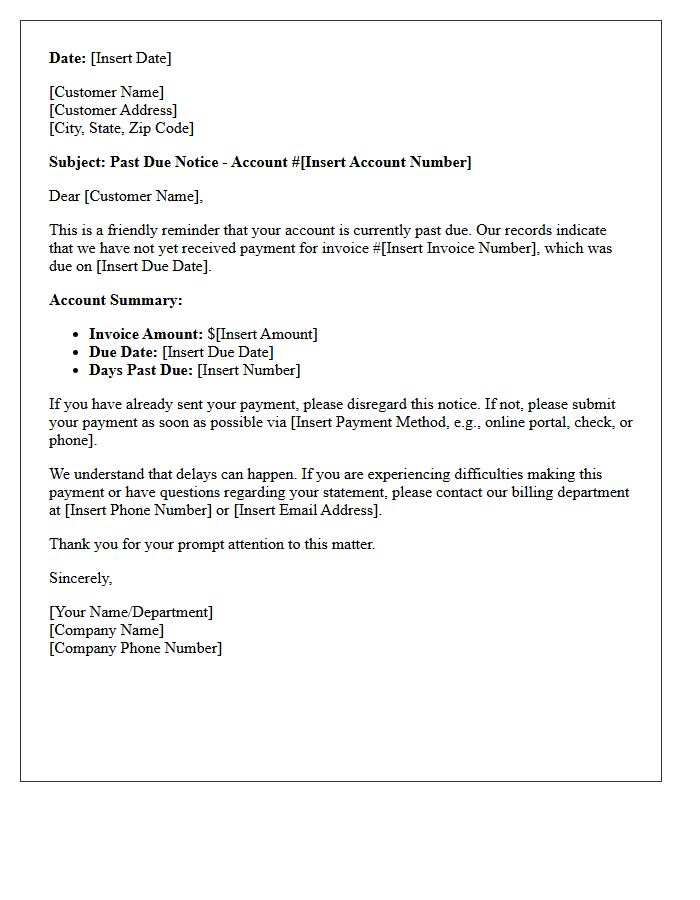
A First Notice of Account Delinquency Letter serves as a formal reminder that a payment deadline has been missed. Its primary purpose is to notify the debtor of the outstanding balance before late fees or credit reporting occur. This professional communication typically includes the overdue amount, the original due date, and instructions for immediate payment. Receiving this notice is a critical opportunity to resolve the debt early and maintain a positive credit standing. Addressing the delinquency promptly helps prevent further collection actions and potential long-term financial consequences.
Standard First Attempt Debt Recovery Letter
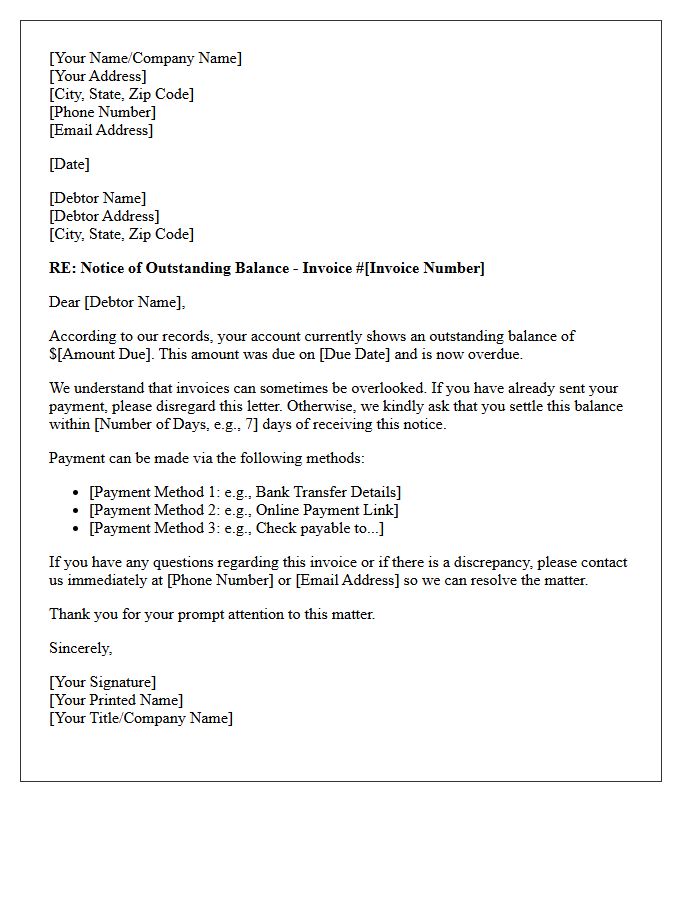
A Standard First Attempt Debt Recovery Letter serves as a formal notice to inform a debtor of an outstanding balance. It is essential to include the exact amount owed, the original invoice date, and clear payment instructions. By using a professional tone, this initial communication aims to resolve the delinquency amicably while establishing a written audit trail. Providing a specific deadline for payment encourages prompt action. This document is a critical first step in credit control, ensuring transparency and legal compliance before escalating to further collection actions or litigation.
What is a Standard Initial Debt Collection Notice?
A Standard Initial Debt Collection Notice, also known as a validation notice, is a formal written communication sent by a debt collector to a consumer within five days of first contact. It serves as legal notification that a debt is being pursued and outlines the consumer's rights under the Fair Debt Collection Practices Act (FDCPA).
What information must be included in a debt validation notice?
By law, the notice must include the total amount of debt owed, the name of the original creditor, and a statement explaining that the consumer has 30 days to dispute the debt in writing. It must also confirm that if the debt is not disputed within that timeframe, the collector will assume the debt is valid.
How long do I have to respond to an initial debt collection letter?
You have 30 days from the date you receive the initial notice to send a debt validation request. If you dispute the debt or request verification in writing within this period, the debt collector must stop collection activities until they provide proof of the debt.
Can a debt collector contact me before sending a written notice?
Yes, a debt collector may contact you via phone or email first, but they are legally required to send a written validation notice within five days of that initial communication. This notice ensures you have the necessary details to verify the claim and understand your legal protections.
What should I do if I receive a notice for a debt I don't recognize?
If you do not recognize the debt, you should immediately send a "Debt Validation Letter" to the agency. Do not ignore the notice; disputing it in writing requires the collector to provide documentation, such as the original contract or billing statement, to prove you are the responsible party.


Comments