
Facing unpaid self-storage fees requires prompt action to avoid late penalties or lien proceedings. This Storage Unit Past Due Rent Initial Notice serves as a formal professional reminder to tenants regarding their outstanding balance and payment deadlines. Clear communication helps maintain positive landlord-tenant relationships while ensuring timely debt recovery. To simplify your administrative tasks, below are some ready to use template.
Image cover: Essential Storage Unit Past Due Rent Notices and Templates
Letter Samples List
- Initial Notice of Past Due Storage Rent Letter
- Storage Unit Delinquent Account First Warning Letter
- Debt Collection Initial Demand for Storage Rent Letter
- First Notice of Outstanding Storage Facility Balance Letter
- Storage Unit Rent Arrears Initial Notification Letter
- Unpaid Storage Rent First Collection Attempt Letter
- Initial Debt Recovery Notice for Storage Unit Letter
- Storage Rental Agreement Past Due Breach Letter
- First Notice of Default on Storage Unit Rent Letter
- Initial Storage Locker Overdue Payment Reminder Letter
- Debt Collection First Notice for Storage Rent Letter
- Storage Facility Past Due Account Initial Warning Letter
Initial Notice of Past Due Storage Rent Letter
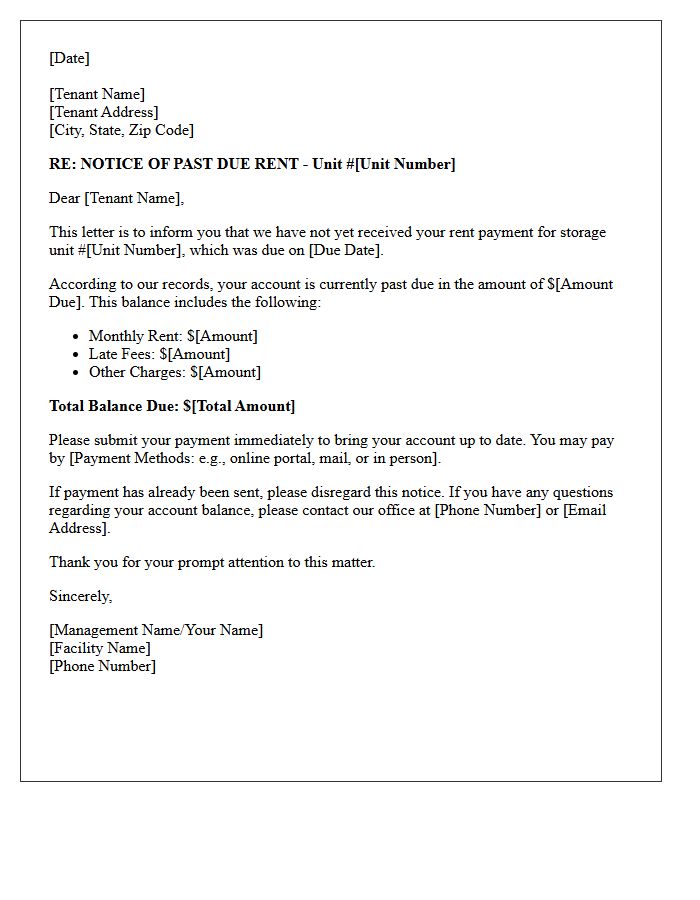
An Initial Notice of Past Due Storage Rent is a formal legal document sent to tenants who have missed a payment. This critical letter serves as the first step in the lien process, outlining the outstanding balance, late fees, and a specific payment deadline. It is essential for facility operators to send this notice promptly to maintain compliance with state self-storage laws. For tenants, receiving this letter is the final opportunity to settle arrears before facing gate lockout, additional penalties, or the eventual public auction of stored belongings.
Storage Unit Delinquent Account First Warning Letter
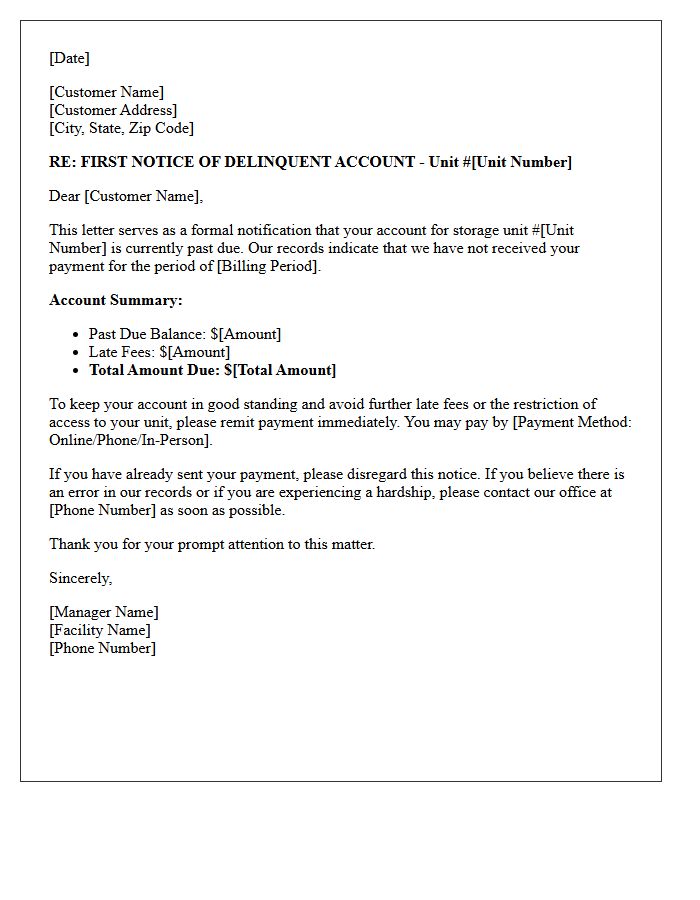
A Storage Unit Delinquent Account First Warning Letter serves as formal notice that your rental payment is past due. This initial communication outlines the outstanding balance, including any late fees, and provides a specific deadline to prevent further escalation. It is critical to respond immediately to maintain unit access and avoid lien proceedings. Ignoring this notification can lead to the foreclosure and public auction of your personal belongings. Proactive communication with the facility manager can often resolve the delinquency through a payment plan before legal action begins.
Debt Collection Initial Demand for Storage Rent Letter
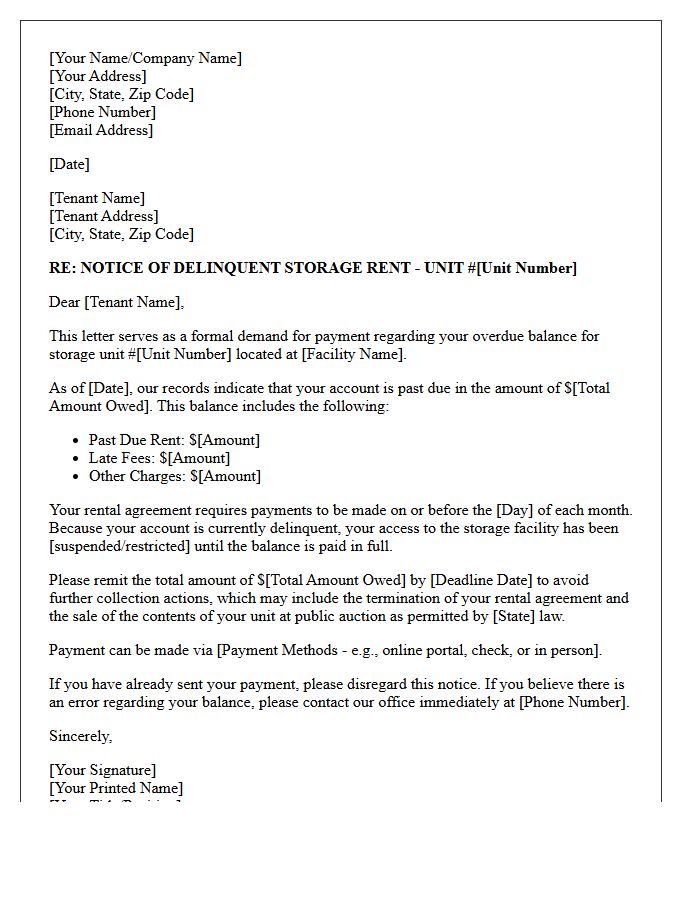
A Debt Collection Initial Demand for Storage Rent Letter serves as a formal notice requiring immediate payment of overdue fees. It is the first step in the statutory lien process, informing the tenant that failure to settle the balance may lead to a public auction of their stored belongings. This document must clearly state the total amount owed, the deadline for payment, and the specific consequences of default as outlined in the rental agreement. Promptly responding to this demand is essential to prevent permanent loss of property and damage to credit scores.
First Notice of Outstanding Storage Facility Balance Letter
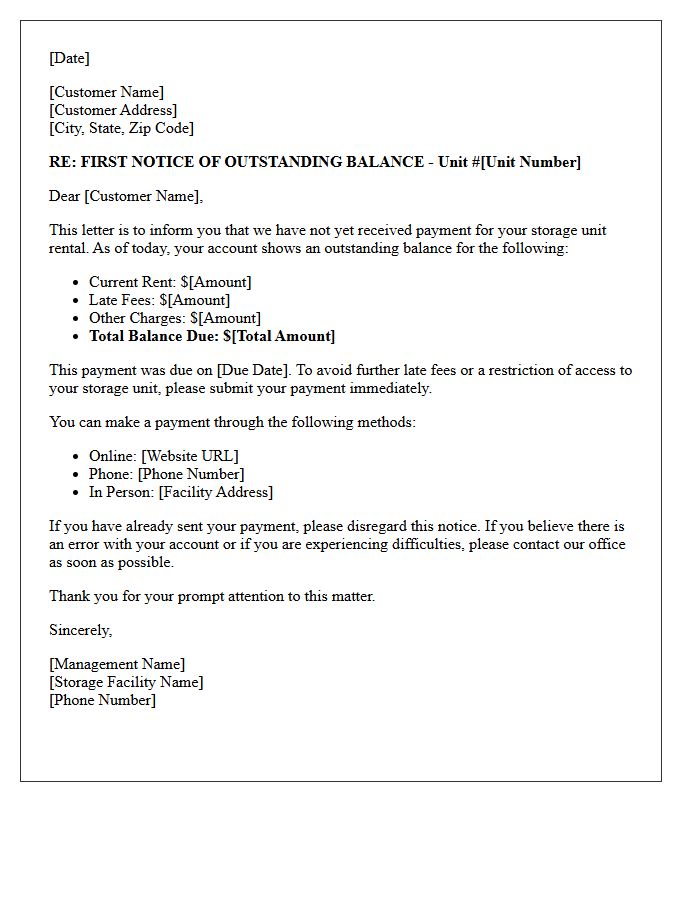
A First Notice of Outstanding Storage Facility Balance is a formal legal alert regarding past-due rent. This essential document notifies the tenant that their account is delinquent and specifies the total amount owed, including late fees. Receiving this letter is critical because it marks the beginning of the lien enforcement process. Failure to provide immediate payment or contact the facility manager may lead to restricted gate access, lien sales, and the eventual public auction of your personal belongings to satisfy the debt.
Storage Unit Rent Arrears Initial Notification Letter
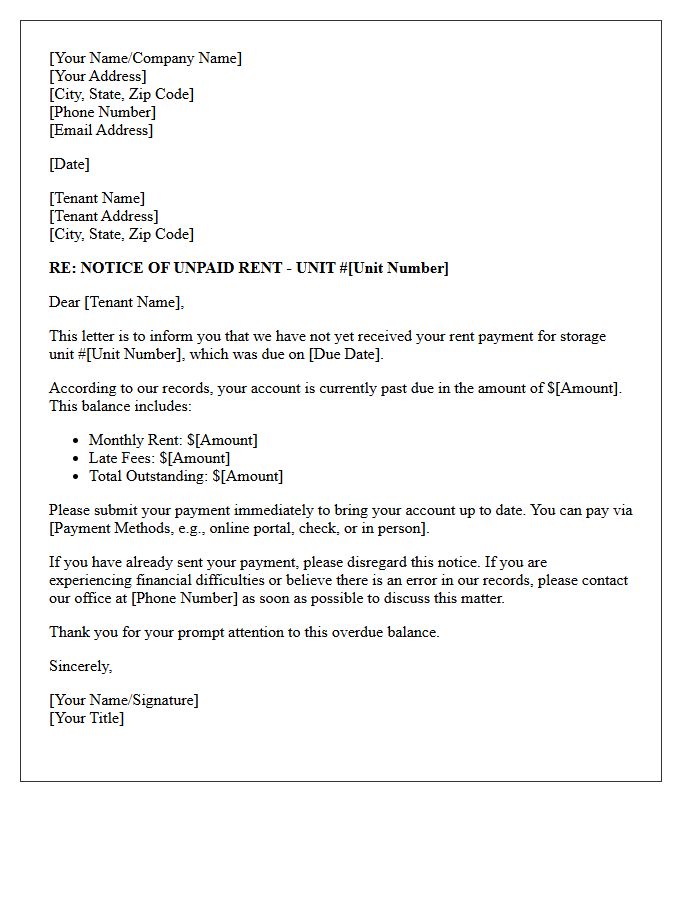
A Storage Unit Rent Arrears Initial Notification Letter serves as a formal notice to tenants regarding overdue payments. It must clearly state the outstanding balance, the original due date, and the required repayment deadline to avoid further action. Providing accurate payment instructions and contact details is essential for dispute resolution. This initial communication is a critical legal step before late fees escalate or the facility initiates a lien process. Clear documentation ensures transparency and helps maintain a professional landlord-tenant relationship while protecting the facility owner's financial interests.
Unpaid Storage Rent First Collection Attempt Letter
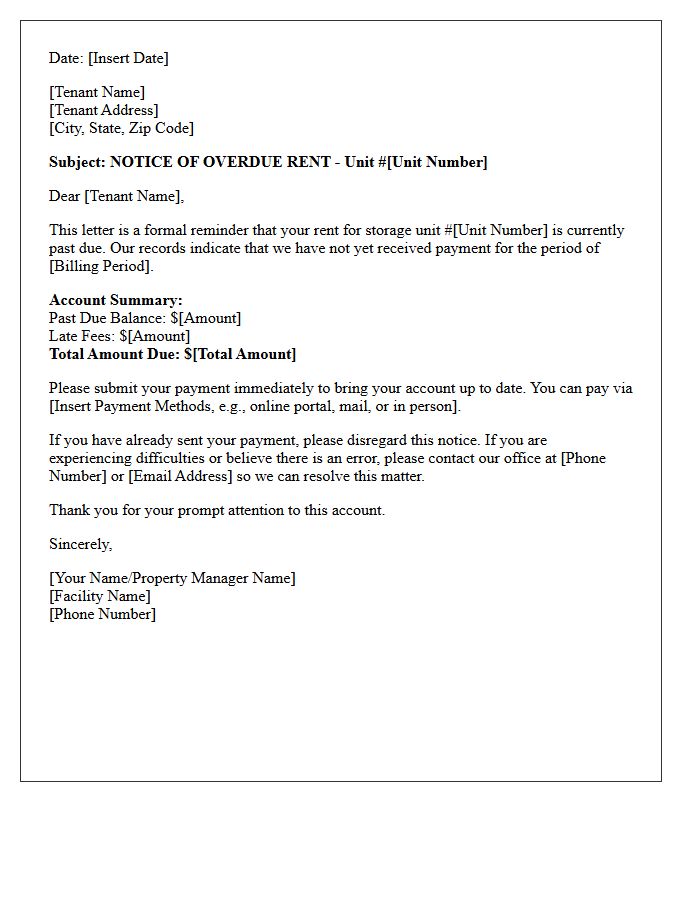
An Unpaid Storage Rent First Collection Attempt Letter serves as a formal notice to tenants regarding overdue payments. This initial communication aims to resolve the delinquency amicably before escalating to lien proceedings. It must clearly state the outstanding balance, late fees, and a specific deadline for payment. Providing multiple payment methods and updated contact information encourages a quick resolution. Maintaining a professional tone is essential, as this document establishes a written record of the debt recovery process and ensures compliance with state self-storage lien laws and rental agreements.
Initial Debt Recovery Notice for Storage Unit Letter
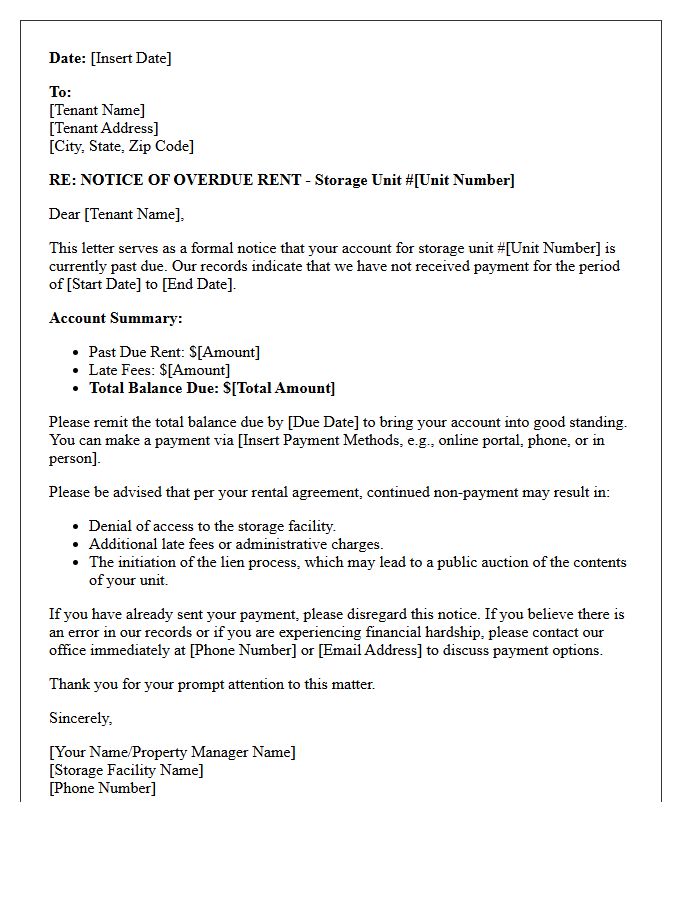
An Initial Debt Recovery Notice for a storage unit is a formal demand for unpaid rent. It serves as a legal warning that your account is delinquent and initiates the lien process. This document specifies the total balance due, late fees, and a strict deadline for payment. Failure to resolve the debt promptly can lead to the termination of access and the eventual public auction of your stored belongings. Reviewing the notice immediately is essential to protect your property and avoid permanent loss of your personal items.
Storage Rental Agreement Past Due Breach Letter
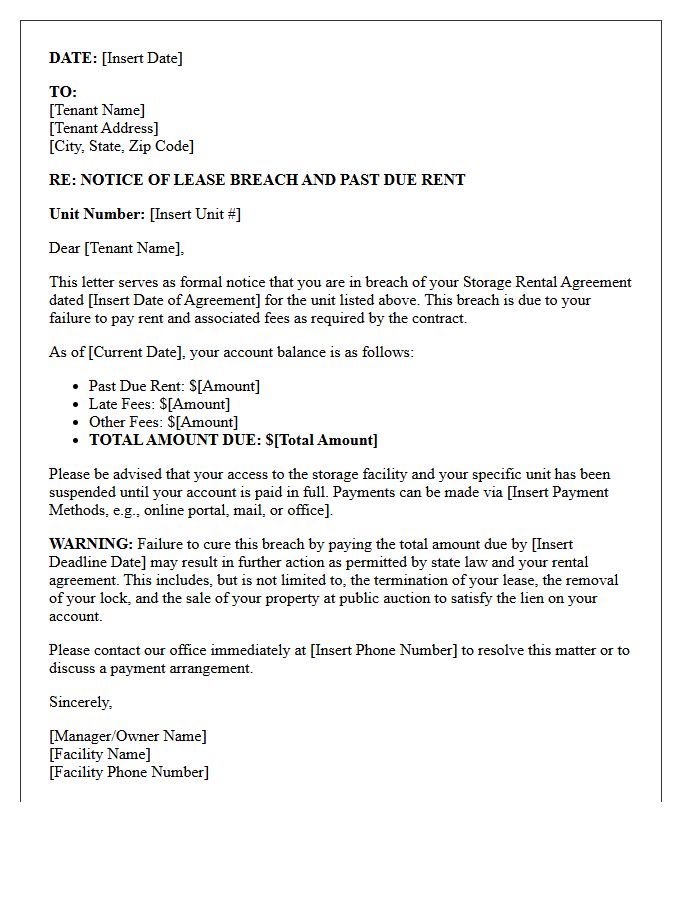
A Storage Rental Agreement Past Due Breach Letter is a formal legal notice sent when a tenant fails to pay rent. It serves as a default notification, outlining the outstanding balance and the deadline for payment. This document is critical because it marks the beginning of the lien enforcement process. If the debt remains unpaid, the facility owner typically gains the right to terminate the lease and auction the stored belongings to recover losses, as specified by state self-storage laws and the original contract terms.
First Notice of Default on Storage Unit Rent Letter
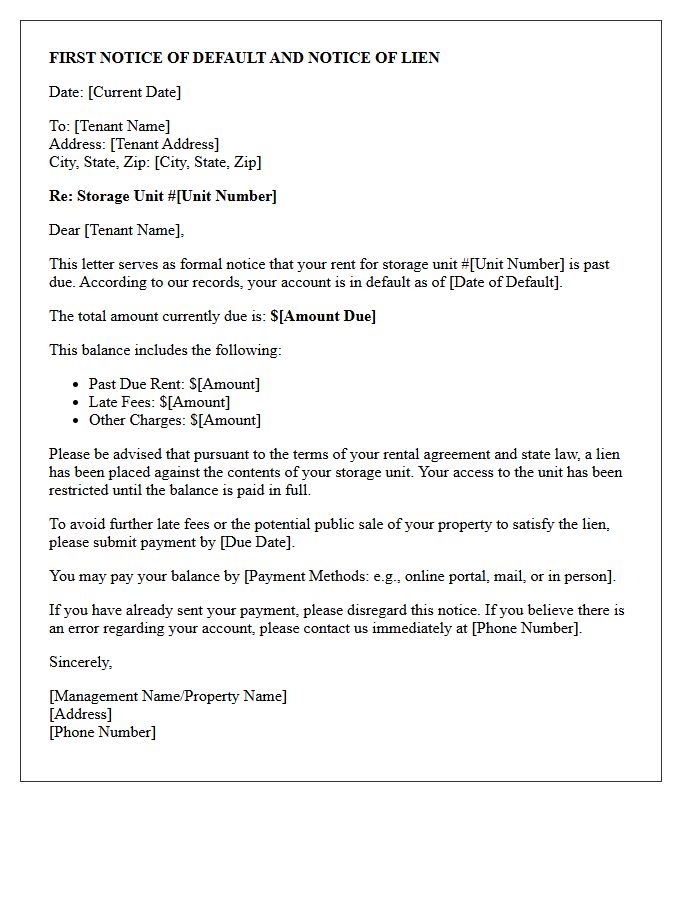
A First Notice of Default is a formal warning issued when storage unit rent becomes overdue. This critical document notifies the tenant that they have breached their lease agreement due to non-payment. It typically outlines the total outstanding balance, including late fees, and provides a specific deadline to settle the debt. Ignoring this letter can lead to restricted facility access, additional penalties, and eventually the lien process. To avoid a public auction of your stored belongings, you must prioritize immediate communication with the facility manager to arrange payment or a settlement.
Initial Storage Locker Overdue Payment Reminder Letter
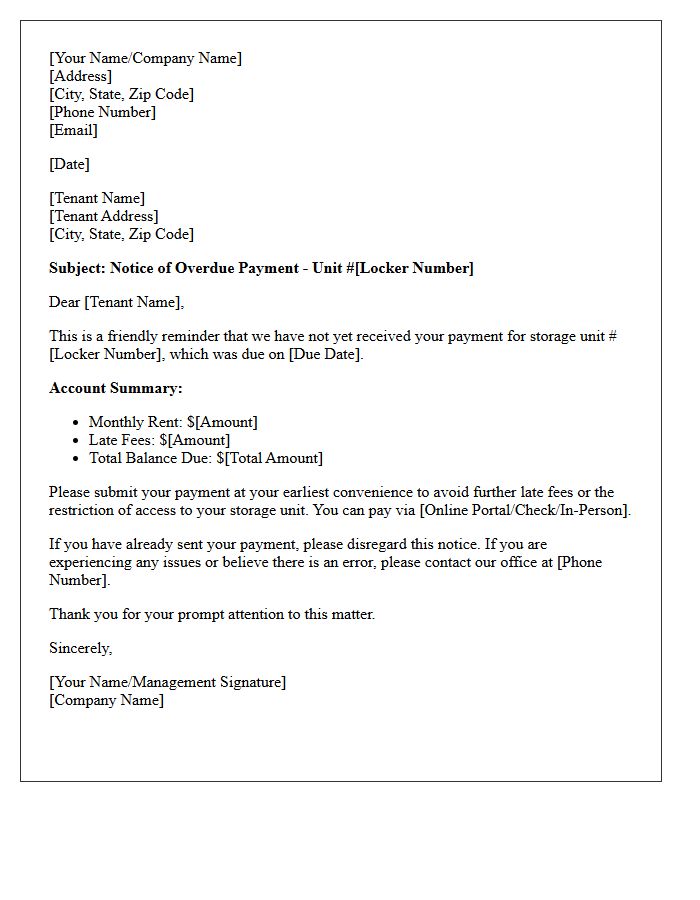
An initial storage locker overdue payment reminder is a formal notice sent to tenants who have missed their billing deadline. This letter serves as a courtesy notification to prevent late fees or lien proceedings. It should clearly state the outstanding balance, the original due date, and acceptable payment methods. Promptly addressing this notice is essential to maintain unit access and avoid the risk of public auction. Clear communication helps resolve billing errors quickly while ensuring the security of stored personal belongings remains intact.
Debt Collection First Notice for Storage Rent Letter
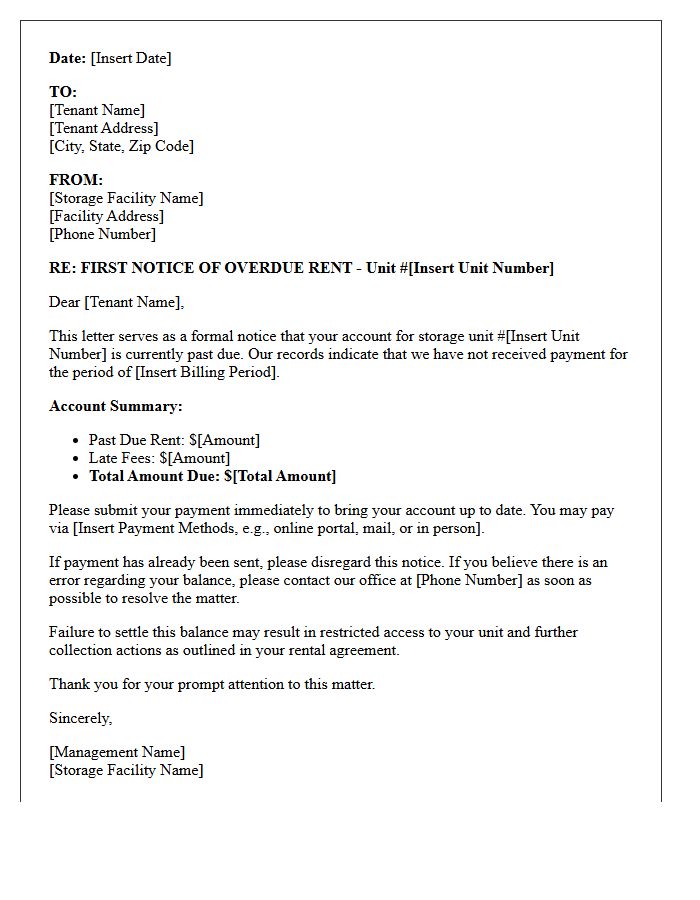
Receiving a Debt Collection First Notice for storage rent is a critical legal warning. This letter signifies that your account is delinquent and initiates the formal collection process. It typically outlines the total balance due, including late fees, and provides a deadline for payment. Failure to resolve the debt promptly can lead to lien enforcement, where the facility may legally sell your personal belongings at auction to recover losses. Always verify the debt amount immediately and communicate with the facility manager to arrange a payment plan and protect your property from foreclosure.
Storage Facility Past Due Account Initial Warning Letter
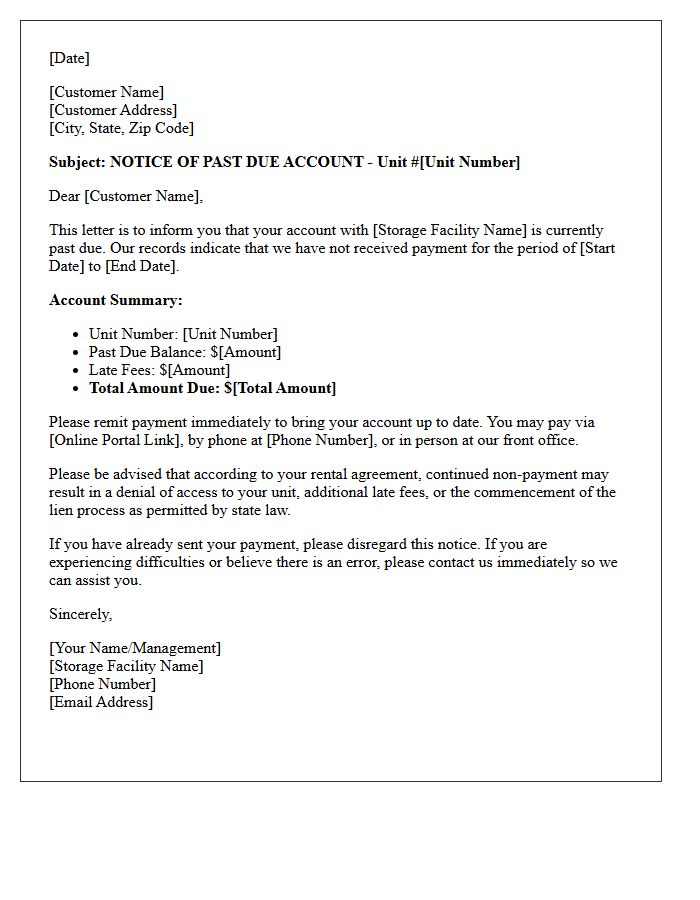
A storage facility past due account initial warning letter serves as a formal notice of delinquency to the tenant. It outlines the outstanding balance, including any late fees, and provides a clear deadline for payment to avoid further penalties. This communication is essential for maintaining a legal paper trail before the facility initiates a lien process or public auction. To protect your belongings, it is vital to contact the manager immediately to discuss repayment options or resolve potential billing discrepancies before the account reaches a critical default status.
What does a "Past Due Rent Initial Notice" for a storage unit mean?
An initial notice is a formal notification informing the tenant that their storage rent is overdue. This document serves as the first step in the facility's lien process, outlining the outstanding balance, any late fees incurred, and the deadline for payment to avoid further action.
How long after a missed payment will I receive an initial late notice?
Most storage facilities issue an initial past due notice within 5 to 10 days after the payment due date. The exact grace period is determined by your specific rental agreement and local state self-storage laws.
Can I still access my storage unit if I received a past due notice?
Typically, storage facilities will suspend your gate code and overlock your unit immediately once the account becomes delinquent. Access is usually restored only after the full past due balance, including late fees, is paid in full.
What happens if I ignore the initial storage rent notice?
Ignoring the notice will lead to additional late penalties, a "Notice of Lien" or "Notice of Sale," and eventually the public auction of your stored belongings to satisfy the debt. Additionally, your account may be sent to a collection agency, affecting your credit score.
How can I resolve a past due balance on my storage unit?
You should contact the facility manager immediately or log into your online account to pay the outstanding balance. If you are experiencing financial hardship, it is best to communicate with the facility early to discuss payment options and prevent the foreclosure process from advancing.

Comments