
A Final Intent to Sue Notice serves as a formal legal warning before initiating litigation. It includes a settlement stipulation, offering a final opportunity to resolve disputes through specific terms and financial agreements without court intervention. This document establishes a clear timeline for compliance and evidence of good faith. Below are some ready to use templates.
Image cover: Final Intent to Sue: Settlement Stipulation Templates and Legal Notice Samples
Letter Samples List
- Final Intent To Sue Letter With Settlement Stipulation
- Pre-Litigation Intent To Sue Letter And Settlement Offer
- Debt Collection Final Notice Letter With Stipulated Settlement
- Final Demand Letter For Payment With Settlement Agreement
- Notice Of Intent To Sue Letter Including Settlement Terms
- Final Legal Action Warning Letter With Settlement Option
- Debt Resolution Letter With Intent To Sue And Settlement Stipulation
- Delinquent Account Final Intent To Sue Letter With Settlement Stipulation
- Final Pre-Suit Demand Letter With Stipulated Settlement Offer
- Pending Litigation Notice Letter With Settlement Stipulation
- Final Debt Collection Letter With Intent To Sue And Settlement Stipulation
- Warning Of Legal Action Letter With Settlement Stipulation
Final Intent To Sue Letter With Settlement Stipulation
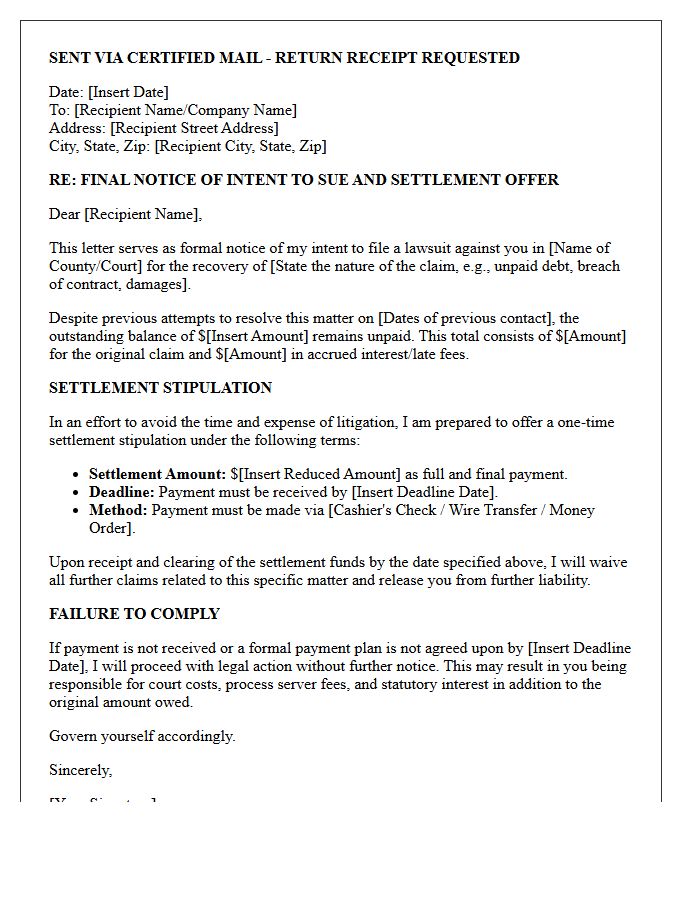
A Final Intent To Sue Letter serves as a formal notice that legal action is imminent unless a debt is resolved. Including a settlement stipulation offers a final opportunity to settle the dispute out of court under specific terms. This document creates a clear legal paper trail, demonstrating a good-faith effort to reach an agreement. For recipients, it represents the last warning to negotiate a payment plan or lump-sum settlement to avoid costly litigation, potential judgment liens, and long-term damage to their credit profile.
Pre-Litigation Intent To Sue Letter And Settlement Offer
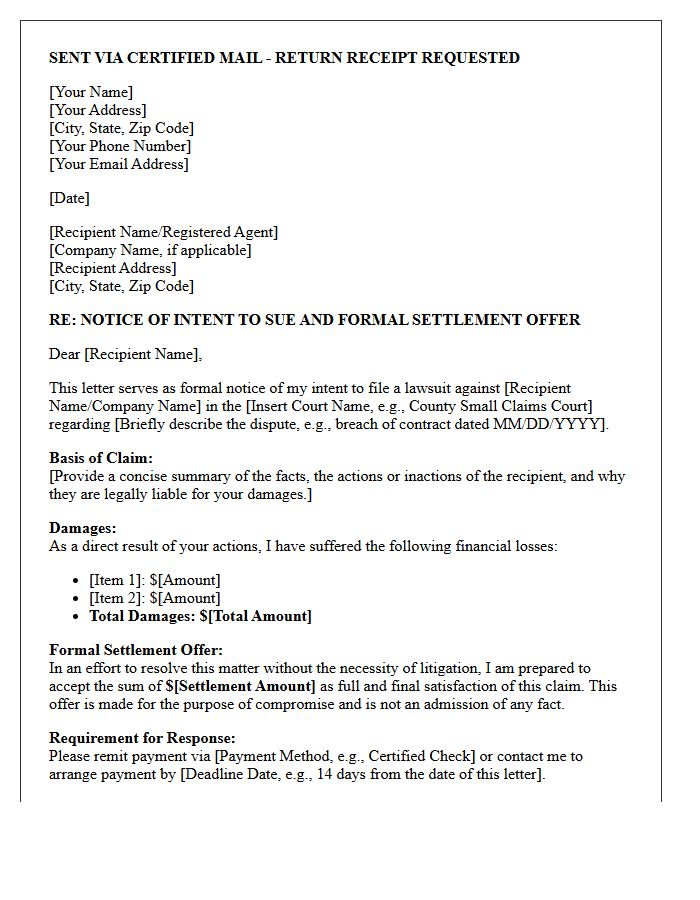
A Pre-Litigation Intent to Sue Letter serves as a formal notice that legal action is imminent unless specific demands are met. This document typically includes a settlement offer, providing a final opportunity to resolve the dispute outside of court. By outlining alleged grievances and requested damages, it aims to save time and legal expenses for both parties. Receiving or sending this letter is a critical procedural step that establishes a timeline for negotiations and demonstrates a serious commitment to pursuing litigation if a fair agreement is not reached promptly.
Debt Collection Final Notice Letter With Stipulated Settlement
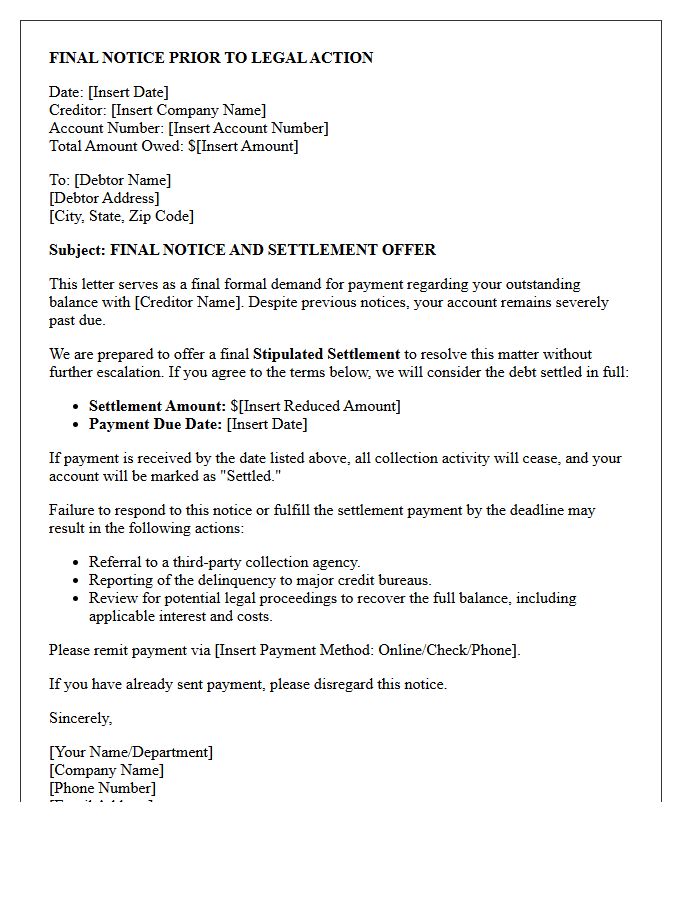
A Debt Collection Final Notice Letter with Stipulated Settlement represents the last opportunity to resolve a delinquency before litigation. This formal document outlines a legally binding agreement where the debtor admits liability in exchange for a structured payment plan or reduced lump sum. It is crucial to understand that signing this stipulation often allows the creditor to obtain an immediate court judgment if any payment is missed. Always verify the total balance and seek legal advice before finalizing terms to ensure your rights are protected during the settlement process.
Final Demand Letter For Payment With Settlement Agreement
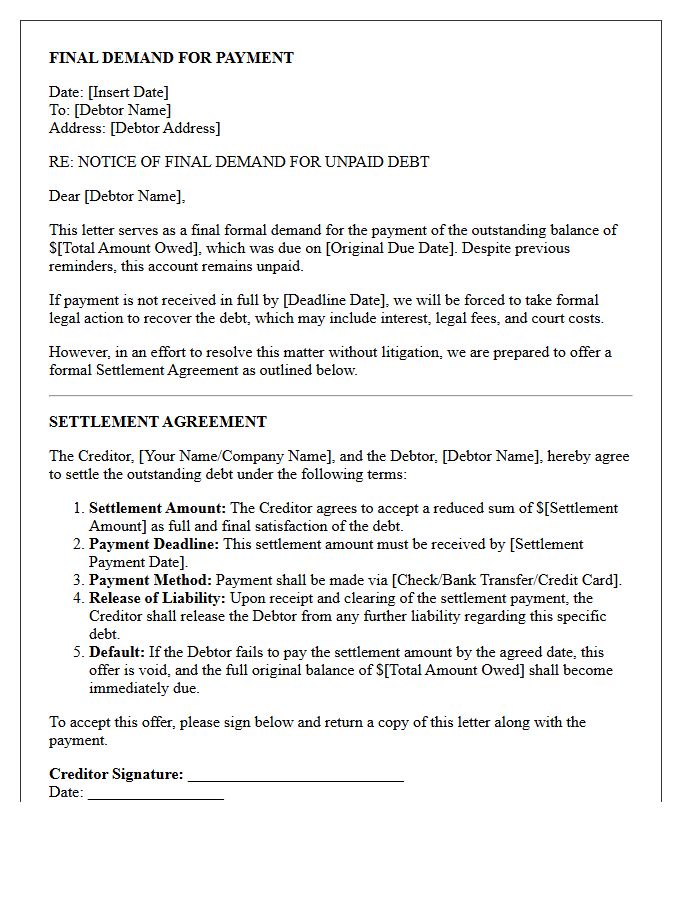
A Final Demand Letter serves as the ultimate formal notice before initiating legal action for unpaid debts. It clearly outlines the outstanding balance, specifies a firm deadline, and warns of impending litigation. To resolve the dispute efficiently, including a settlement agreement offers the debtor a final opportunity to negotiate reduced terms or payment plans. This strategic document professionally documents your recovery efforts, demonstrating to courts that you attempted a voluntary resolution. Finalizing these terms in writing ensures legal clarity and provides a binding framework for debt satisfaction without further conflict.
Notice Of Intent To Sue Letter Including Settlement Terms
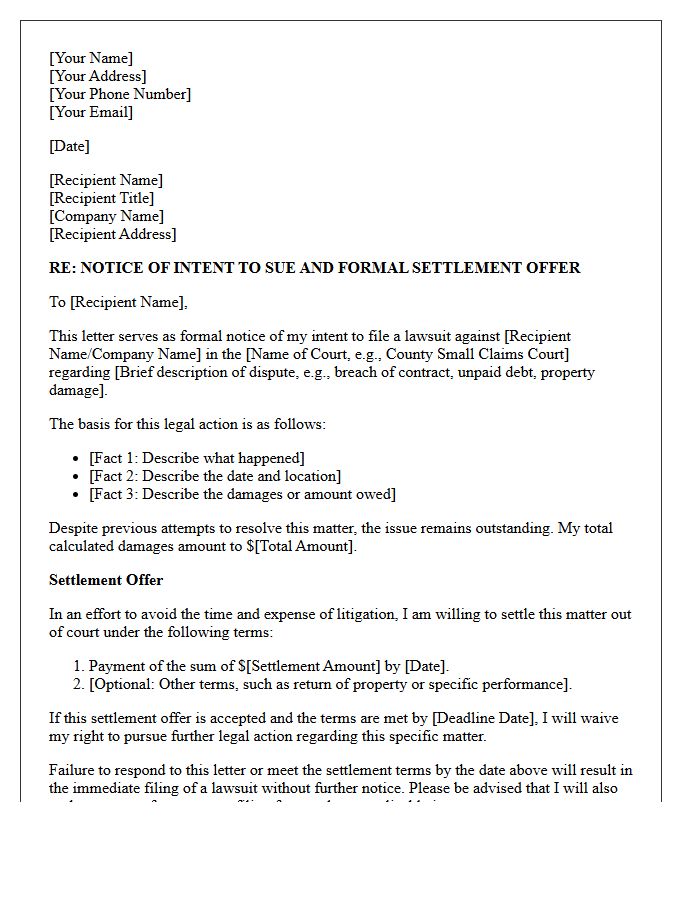
A Notice of Intent to Sue is a formal legal document served before filing a lawsuit. It acts as a final warning, providing the opposing party an opportunity to resolve the dispute through settlement terms. This letter must clearly outline the legal claims, specific damages, and a strict deadline for compliance. Including a settlement offer can expedite a resolution, potentially avoiding costly litigation. Proper delivery ensures the court recognizes your good-faith effort to settle, which is often a procedural requirement in many jurisdictions for specific civil actions.
Final Legal Action Warning Letter With Settlement Option
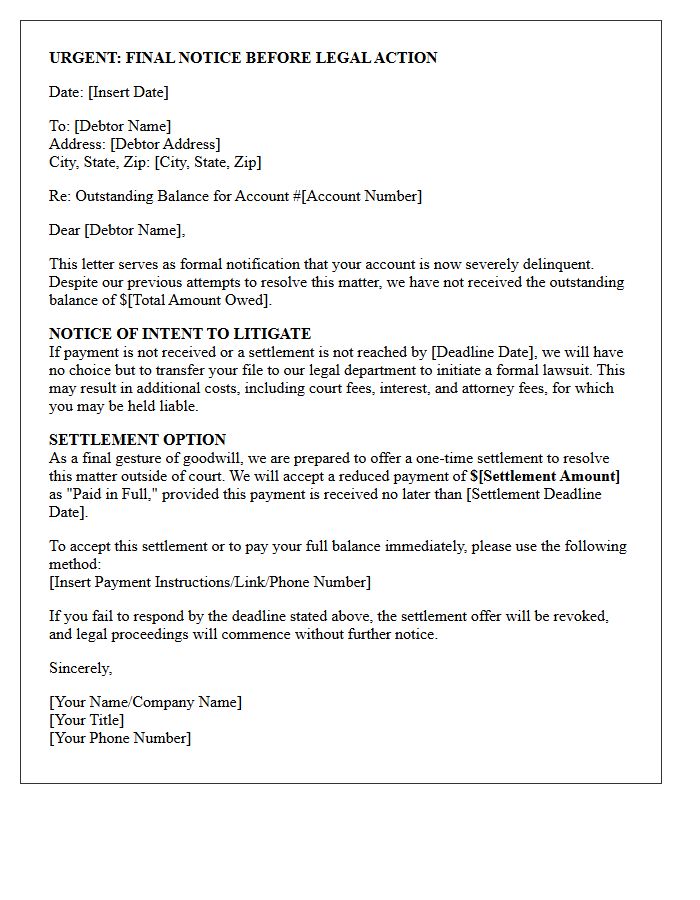
A Final Legal Action Warning Letter is a formal notice indicating that litigation will commence unless immediate action is taken. It serves as a pre-action protocol, providing a final opportunity to resolve a debt or dispute. The included settlement option allows the recipient to pay a reduced amount or agree to specific terms to avoid costly court proceedings. Receiving this document is critical, as failure to respond typically results in a lawsuit, potential judgments, and additional legal fees. Promptly evaluating the settlement offer is the most effective way to mitigate further risk.
Debt Resolution Letter With Intent To Sue And Settlement Stipulation
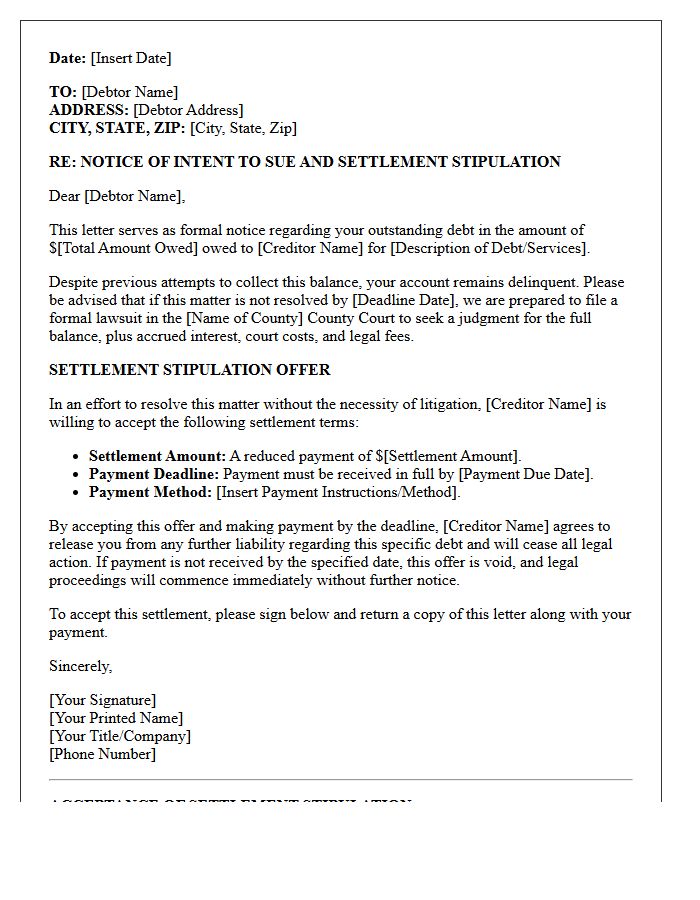
A Debt Resolution Letter is a formal legal document used to settle outstanding balances before litigation. It often includes an Intent to Sue, serving as a final warning that a lawsuit will be filed if the debt remains unpaid. To prevent court action, a Settlement Stipulation is included, outlining specific repayment terms, discount amounts, and deadlines. This structured agreement protects both parties by establishing clear expectations and legal consequences. Understanding these components is essential for effectively negotiating debt settlement and avoiding costly, time-consuming judicial proceedings.
Delinquent Account Final Intent To Sue Letter With Settlement Stipulation
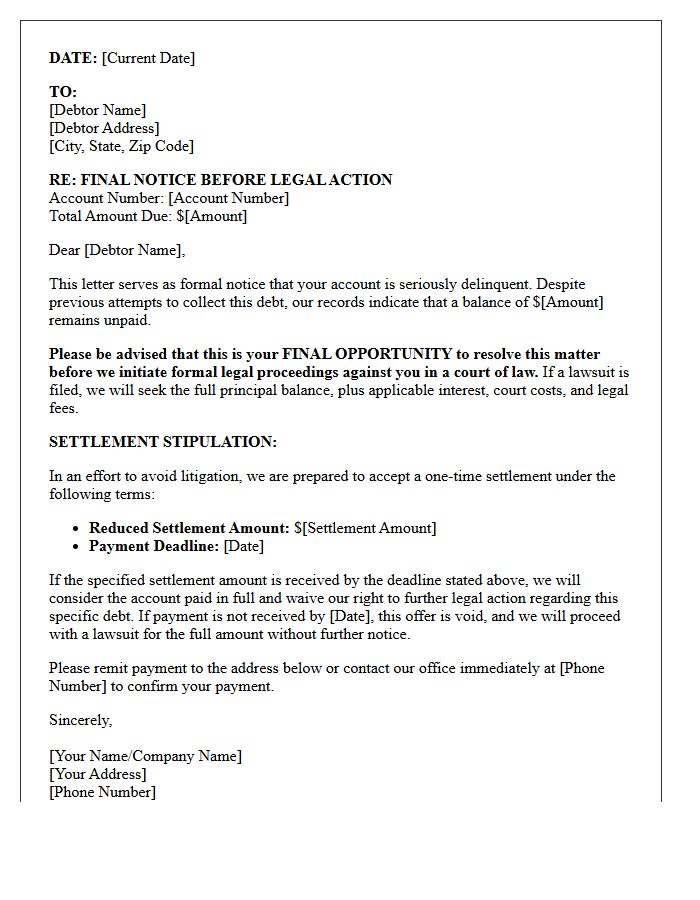
A Final Intent to Sue Letter is a formal notice indicating that a creditor is prepared to initiate legal action to recover unpaid debt. This document serves as a final opportunity to resolve the delinquent account before court proceedings begin. It often includes a settlement stipulation, offering a structured payment plan or a reduced lump-sum agreement to avoid litigation. Recipients should review the terms carefully, as signing acknowledges the debt and creates a legally binding contract. Addressing this letter immediately can prevent wage garnishment, asset seizure, and further legal costs.
Final Pre-Suit Demand Letter With Stipulated Settlement Offer
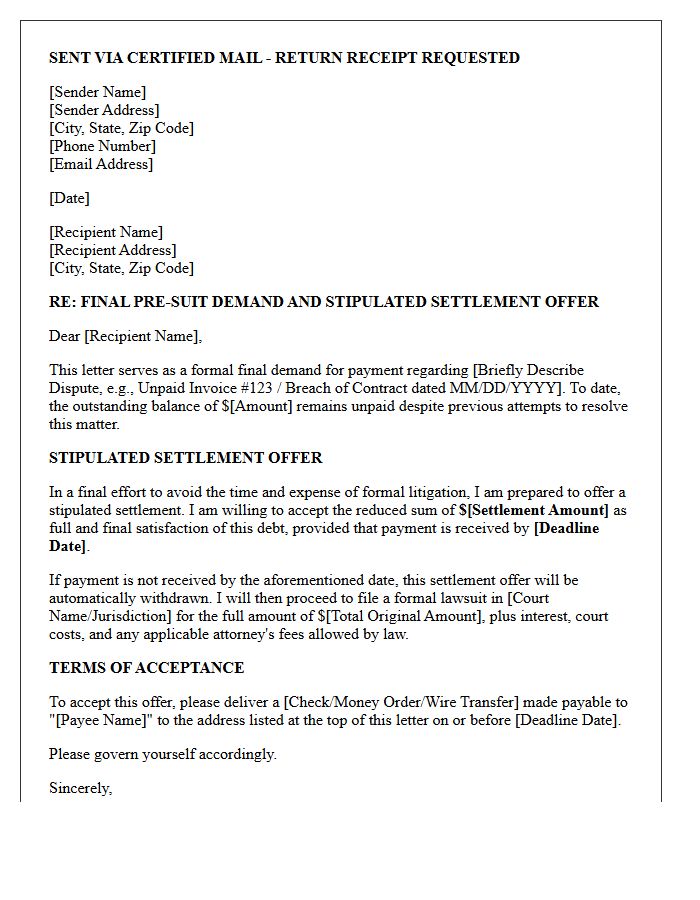
A Final Pre-Suit Demand Letter serves as a formal legal notice before initiating litigation. It outlines the legal claims, damages, and a deadline for response. By including a Stipulated Settlement Offer, the claimant provides a specific, legally binding agreement to resolve the dispute without court intervention. This document is critical for demonstrating a good faith effort to settle, which can influence future court proceedings. Receiving this letter indicates that a lawsuit is imminent unless the recipient accepts the terms or negotiates a resolution immediately.
Pending Litigation Notice Letter With Settlement Stipulation
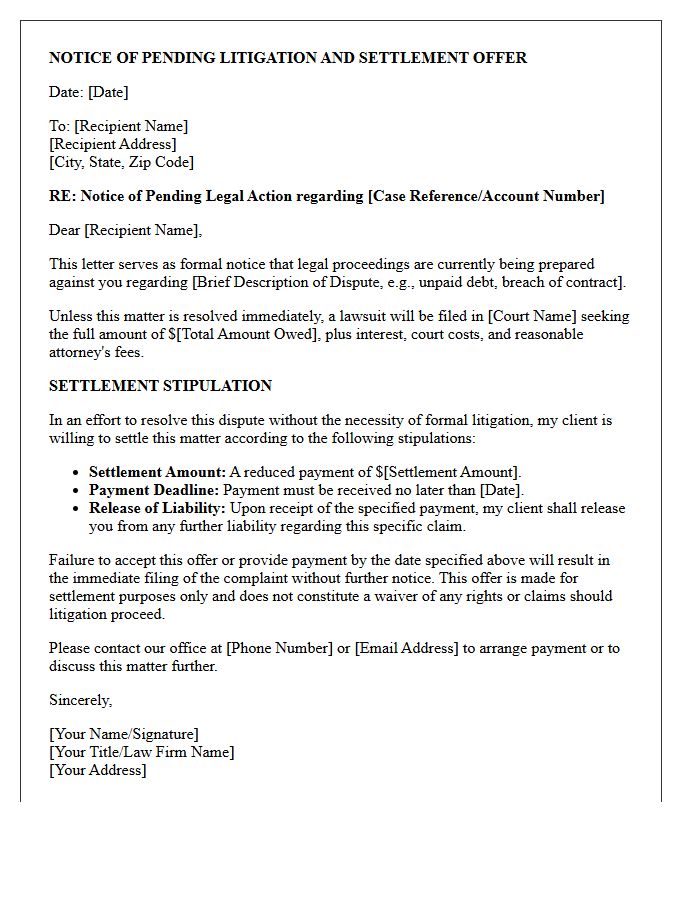
A Pending Litigation Notice informs parties of an active lawsuit and requires legal action. It often includes a Settlement Stipulation, which is a formal agreement to resolve the dispute without further trial. Signing this document typically involves a release of claims, preventing future legal action regarding the same matter. It is critical to review the terms carefully, as these stipulations are legally binding contracts filed with the court. Understanding these documents ensures protection of your rights and provides a structured path toward a final, court-approved dispute resolution.
Final Debt Collection Letter With Intent To Sue And Settlement Stipulation
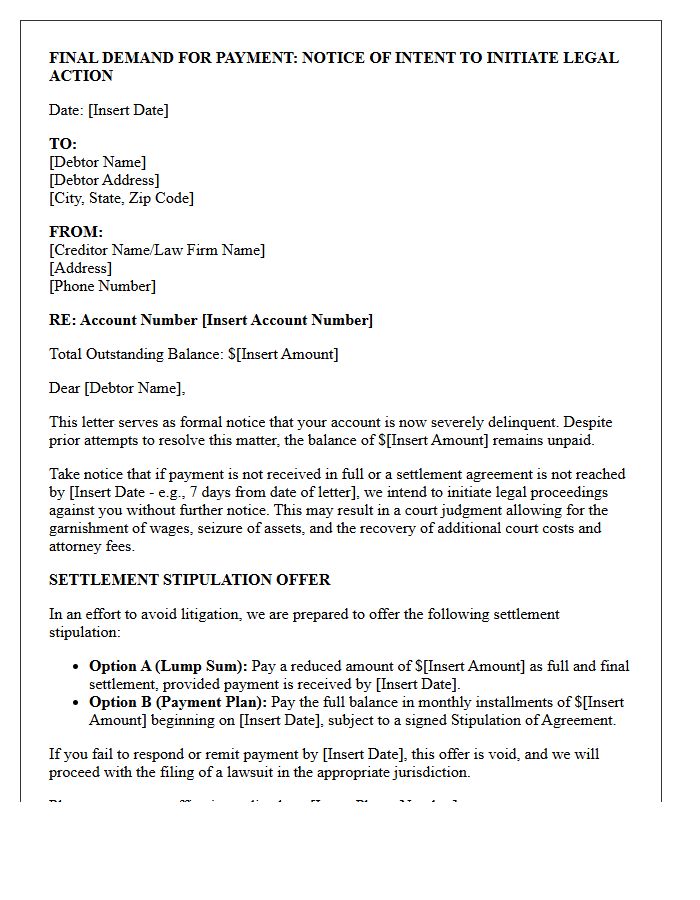
A Final Debt Collection Letter serves as a formal notice that legal action is imminent. It communicates a creditor's intent to sue unless the outstanding balance is resolved immediately. This document often includes a settlement stipulation, providing a final opportunity to negotiate reduced payment terms or a structured plan to avoid a courtroom judgment. Receiving this letter is critical, as failure to respond can lead to wage garnishment or property liens. It is the last administrative step before a process server delivers a formal summons for a civil lawsuit.
Warning Of Legal Action Letter With Settlement Stipulation
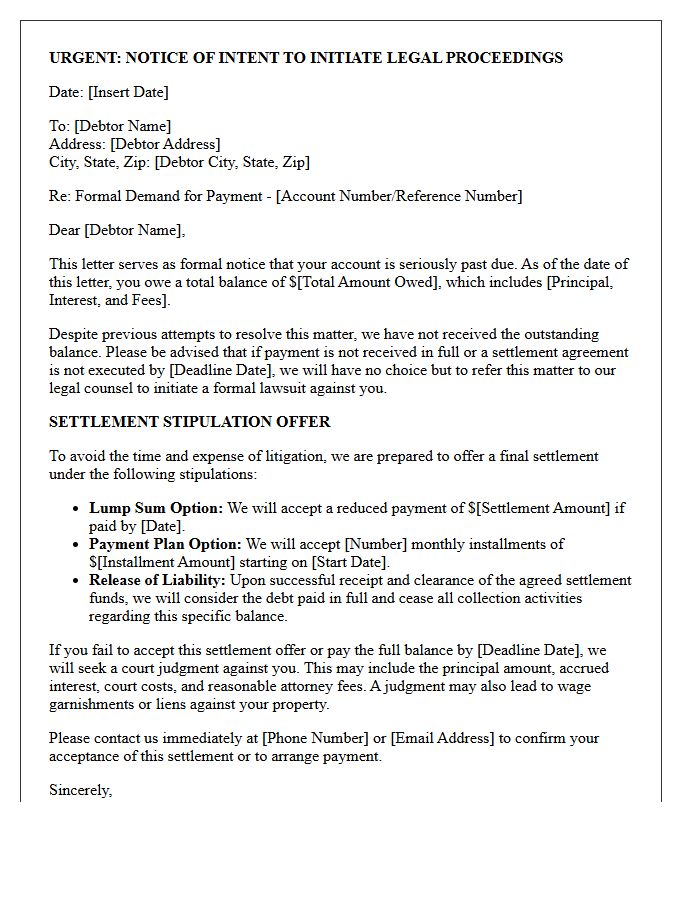
Receiving a Warning of Legal Action Letter signifies that a creditor intends to file a lawsuit to recover a debt. This formal notice often includes a settlement stipulation, which is a legally binding agreement to resolve the dispute outside of court. While it can prevent litigation, signing it typically requires you to admit liability and agree to a strict payment schedule. It is crucial to review all terms carefully, as defaulting on a stipulation often allows the creditor to obtain an immediate judgment against you without further trial or notice.
What is a Final Intent to Sue Notice with Settlement Stipulation?
A Final Intent to Sue Notice is a formal legal document notifying a debtor or defendant of impending litigation, while the attached Settlement Stipulation offers a specific set of terms to resolve the dispute out of court before the filing deadline.
What should be included in a Final Intent to Sue letter?
The notice should clearly state the intent to file a lawsuit, the specific legal claims or unpaid balances, a final deadline for response, and a Settlement Stipulation outlining the payment amount or actions required to waive further legal proceedings.
Is a Settlement Stipulation legally binding?
Yes, once signed by both parties, a Settlement Stipulation acts as a legally enforceable contract that dictates how a dispute will be resolved, often including a "confession of judgment" if the terms of the settlement are breached.
How much time do I have to respond to an Intent to Sue Notice?
The timeframe is typically specified within the notice itself, usually ranging from 10 to 30 days. Failure to accept the Settlement Stipulation or respond within this window generally results in the immediate commencement of a formal lawsuit.
Can I negotiate the terms of a Settlement Stipulation?
Yes, recipients can often negotiate the settlement amount or payment schedule; however, once the "Final" notice is issued, the window for negotiation is limited as the sender is prepared to proceed with litigation if the current terms are rejected.


Comments