
Receiving an Intent to Sue for defaulted credit card obligations is a serious legal escalation. This notice signals that a creditor or debt collector prepares to file a lawsuit to recover outstanding balances. Understanding your rights and potential defenses is crucial to avoiding wage garnishments or bank levies. To help you respond effectively, below are some ready to use template.
Image cover: Formal Notice of Intent to Sue: Credit Card Default Templates and Legal Samples
Letter Samples List
- Final Notice of Intent to Sue Letter
- Pre-Litigation Warning Letter
- Defaulted Credit Card Obligation Demand Letter
- Notice of Legal Action Letter
- Final Demand Before Litigation Letter
- Creditor Intent to File Suit Letter
- Delinquent Account Legal Notice Letter
- Pending Lawsuit Notification Letter
- Credit Card Default Summons Warning Letter
- Attorney Demand and Intent to Sue Letter
- Pre-Suit Settlement Offer Letter
- Legal Proceedings Initiation Notice Letter
- Final Opportunity to Resolve Debt Letter
- Breach of Credit Agreement Warning Letter
Final Notice of Intent to Sue Letter
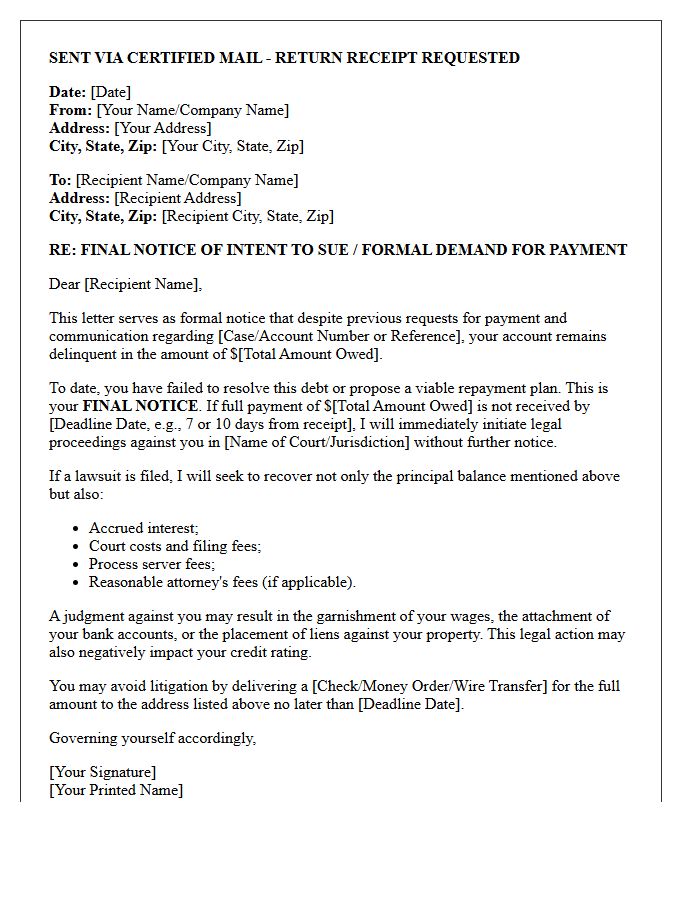
A Final Notice of Intent to Sue is a formal legal document served before initiating a lawsuit. It acts as a mandatory warning, providing the recipient a final opportunity to resolve a dispute through payment or specific action to avoid litigation. This letter outlines the legal claims, facts of the case, and a strict deadline for compliance. Properly delivering this notice is often a procedural requirement that demonstrates a good-faith effort to settle, while preserving the sender's right to seek judicial remedies in court.
Pre-Litigation Warning Letter
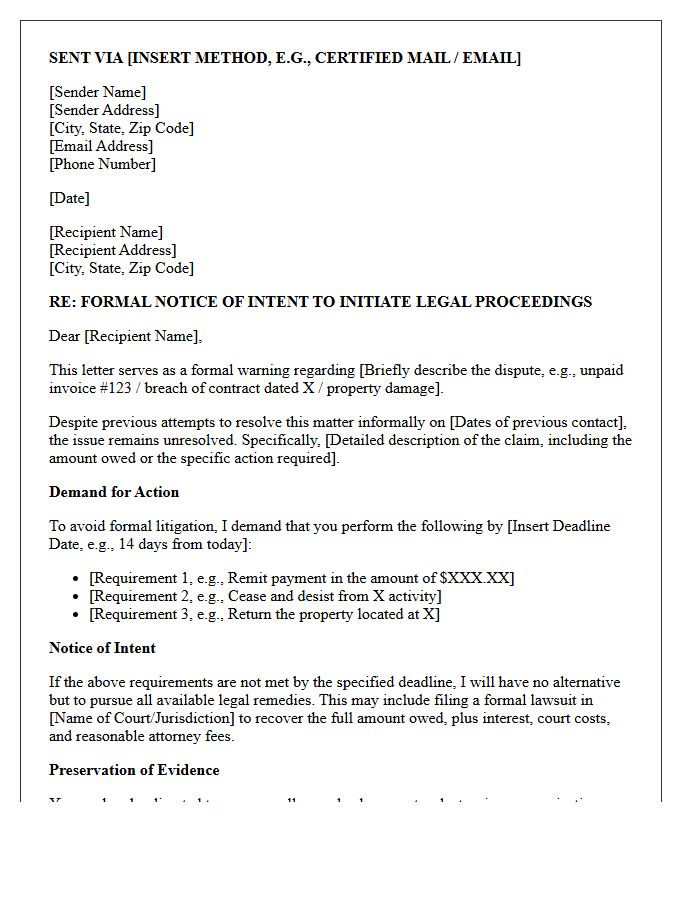
A Pre-Litigation Warning Letter, often called a letter before action, is a formal notice sent to resolve a dispute before filing a lawsuit. This document outlines specific legal claims, demands restitution, and sets a strict deadline for compliance. Its primary purpose is to encourage a settlement and demonstrate to the court that the claimant attempted to act reasonably. Receiving or sending this letter is a critical step in legal proceedings, as it serves as formal evidence and can significantly influence potential litigation costs and outcomes.
Defaulted Credit Card Obligation Demand Letter
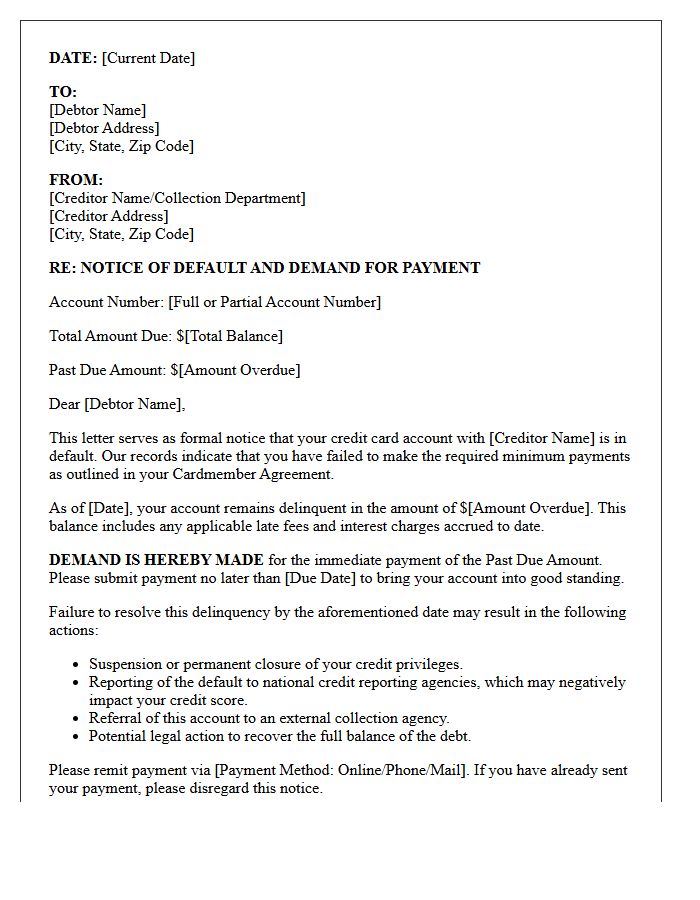
A Defaulted Credit Card Obligation Demand Letter is a formal legal notice sent by a creditor or debt collector to a consumer. This document serves as a final warning, demanding immediate payment of an overdue balance before escalating to legal action or credit reporting. It outlines the total debt owed, including interest and fees, and provides a deadline for resolution. Receiving this letter indicates that your account is in serious default, making it essential to respond promptly to avoid a lawsuit or permanent damage to your financial standing.
Notice of Legal Action Letter
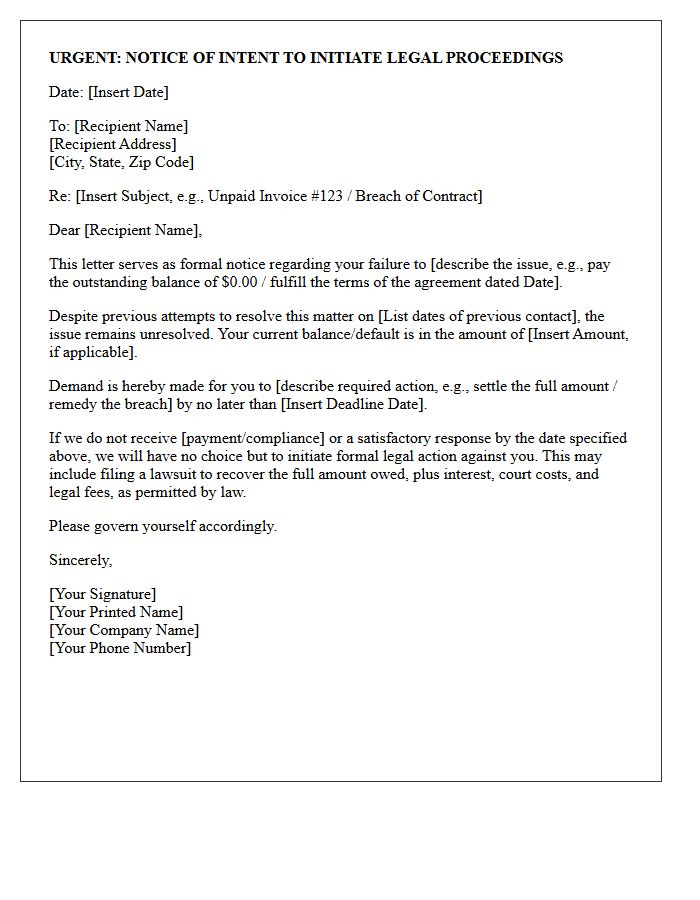
A Notice of Legal Action is a formal warning indicating that a party intends to initiate a lawsuit. Receiving this pre-action letter signifies that a dispute has escalated and legal proceedings are imminent. It typically outlines specific claims, demands for payment or performance, and a strict deadline for compliance to avoid court. It is crucial to respond promptly and seek professional advice, as ignoring this document can lead to a default judgment or increased litigation costs. Always verify the sender's identity to ensure the notice is legitimate and not a scam.
Final Demand Before Litigation Letter
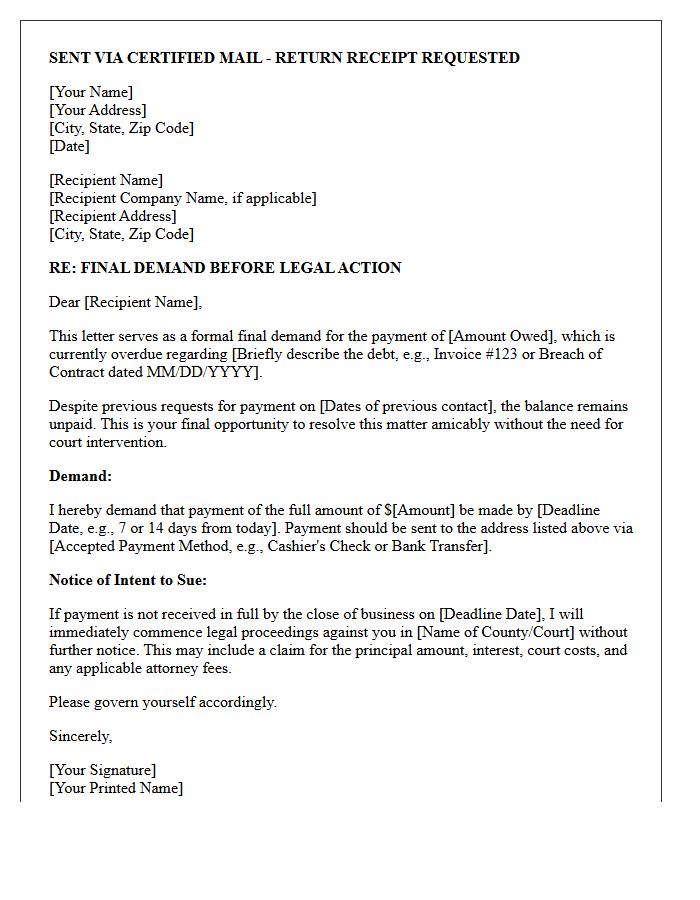
A Final Demand Before Litigation Letter serves as a formal notice, warning a debtor that legal action is imminent unless a debt is paid. This pre-action protocol is crucial for demonstrating to a court that you attempted to resolve the dispute reasonably before filing a lawsuit. It must clearly state the amount owed, the deadline for payment, and the specific consequences of non-compliance. Sending this document can often trigger an immediate settlement, saving both parties the significant time and expense associated with formal court proceedings.
Creditor Intent to File Suit Letter
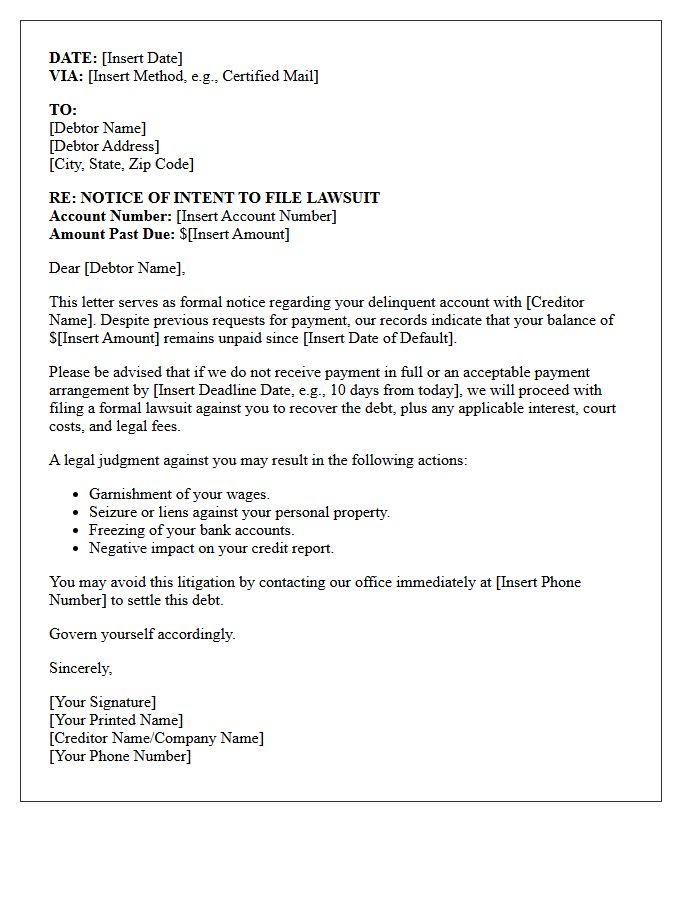
A Creditor Intent to File Suit Letter is a formal notice warning a debtor of imminent legal action to recover outstanding balances. This document serves as a final opportunity to resolve the debt through settlement or payment plans before a formal lawsuit is initiated in court. Receiving this letter indicates that the collection process has escalated, potentially leading to wage garnishment or property liens. It is crucial to verify the debt's accuracy and respond promptly to avoid costly litigation and further damage to your credit score.
Delinquent Account Legal Notice Letter
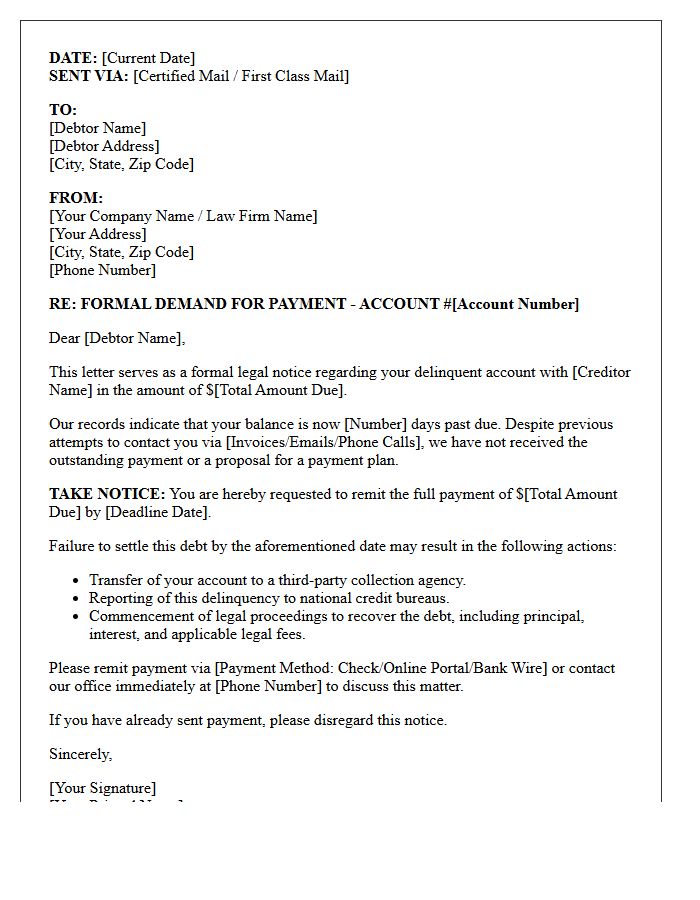
A Delinquent Account Legal Notice Letter serves as a formal final warning before a creditor initiates litigation or collection agency involvement. This document provides official notification of an outstanding debt, detailing the exact balance, original due date, and a specific deadline for payment. Receiving this letter is critical because it signals the transition from standard billing to potential legal action, which can severely impact your credit score. To avoid courtroom proceedings and additional late fees, recipients must respond immediately by settling the balance or arranging a structured repayment plan.
Pending Lawsuit Notification Letter
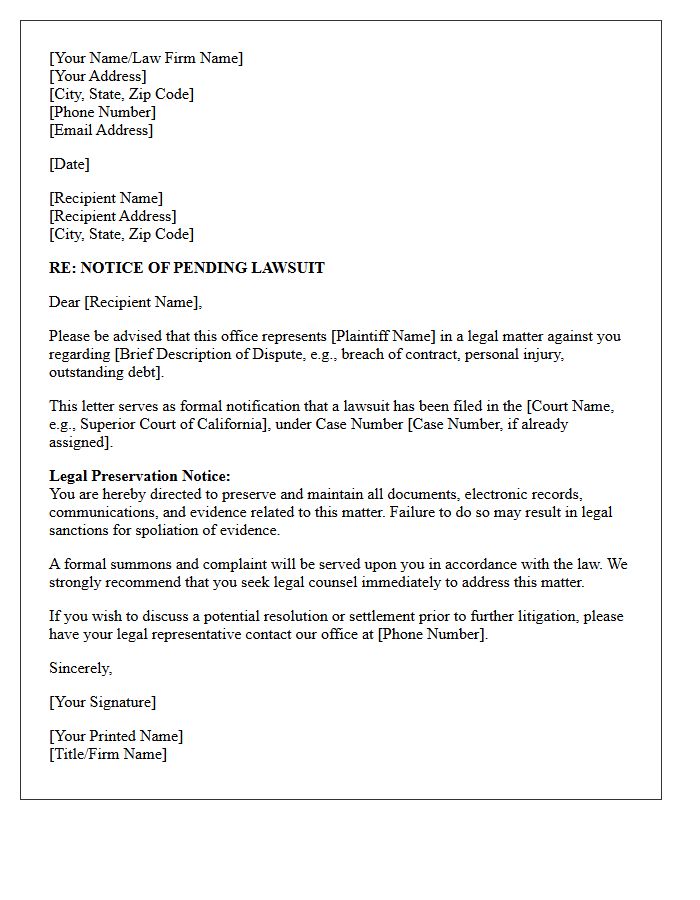
A Pending Lawsuit Notification Letter is a formal legal document informing an individual or entity of a potential or active legal claim against them. This notice serves as a critical warning to initiate legal hold procedures, ensuring all relevant documents and electronic evidence are preserved for discovery. Ignoring this letter can lead to default judgments or sanctions for spoliation of evidence. Upon receipt, it is essential to consult with legal counsel immediately to evaluate the allegations and prepare a timely, strategic defense to protect your interests.
Credit Card Default Summons Warning Letter
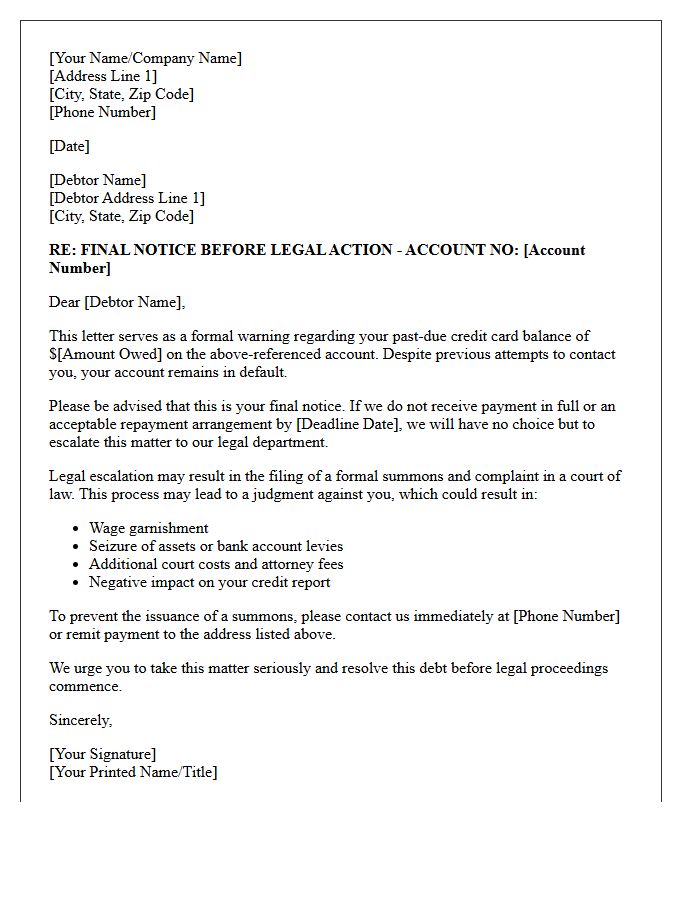
Receiving a Credit Card Default Summons Warning Letter is a critical legal notice indicating your creditor intends to file a lawsuit. This document serves as a final opportunity to resolve outstanding debt before formal litigation begins. Ignoring this warning can lead to a court judgment, resulting in wage garnishment or bank levies. To protect your rights, you must respond immediately by negotiating a settlement or seeking legal counsel. Addressing the default early helps avoid additional court costs and prevents further damage to your credit score and financial future.
Attorney Demand and Intent to Sue Letter
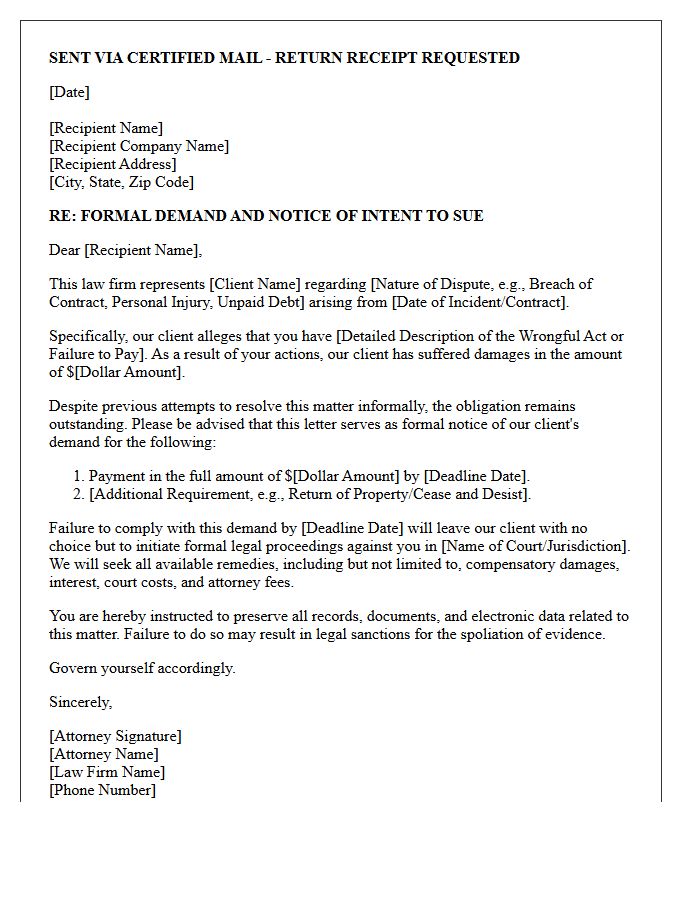
An Attorney Demand Letter is a formal legal notice sent to resolve a dispute before litigation begins. It outlines specific legal claims, damages, and a deadline for performance. The Intent to Sue signifies that the sender is prepared to initiate a formal lawsuit if demands are not met. Receiving this letter is a critical moment for negotiation or settlement. Providing a professional response is essential, as these documents are often used as evidence in court to demonstrate a party's willingness to resolve issues and fulfill legal pre-suit requirements.
Pre-Suit Settlement Offer Letter
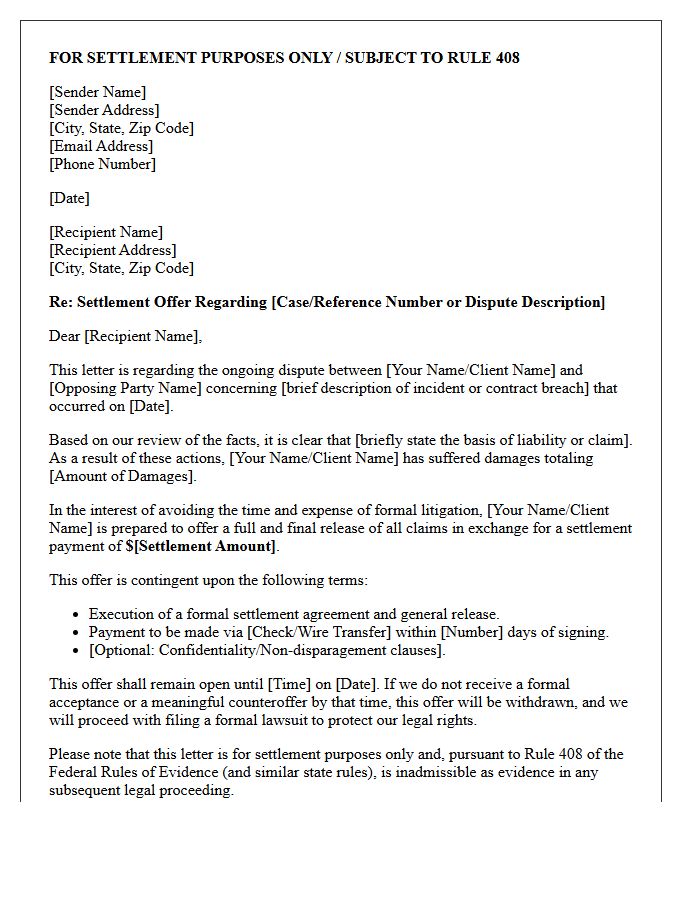
A Pre-Suit Settlement Offer Letter is a formal legal document sent before filing a lawsuit to resolve a dispute efficiently. It outlines the legal basis for a claim, specifies damages sought, and provides a deadline for a response. The primary goal is to reach a compromise, saving both parties the time and expense of litigation. By clearly detailing facts and evidence, this letter serves as a final opportunity for negotiation. If the recipient ignores the offer, the sender typically proceeds with formal legal action in court.
Legal Proceedings Initiation Notice Letter
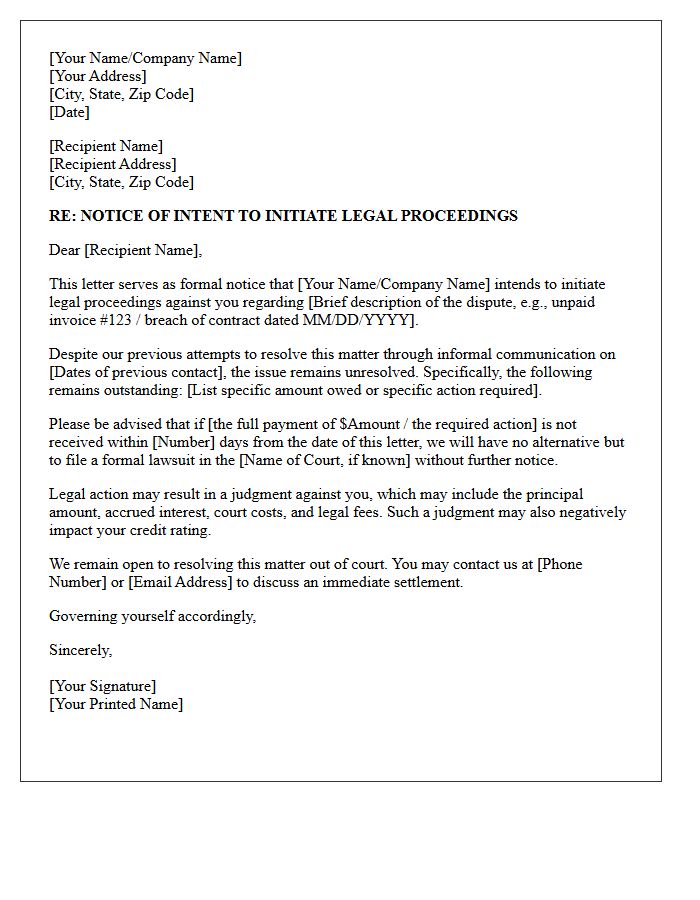
A Legal Proceedings Initiation Notice Letter, often called a Letter Before Action, is a formal document notifying a recipient of intent to sue. It outlines specific legal claims, demands for remedy, and sets a strict deadline for compliance. This letter serves as a final opportunity to resolve disputes through alternative dispute resolution before filing a lawsuit. Ignoring this notice can lead to significant court costs and adverse judgments. It is a critical procedural step designed to encourage settlement and demonstrate a party's readiness to pursue formal litigation if necessary.
Final Opportunity to Resolve Debt Letter
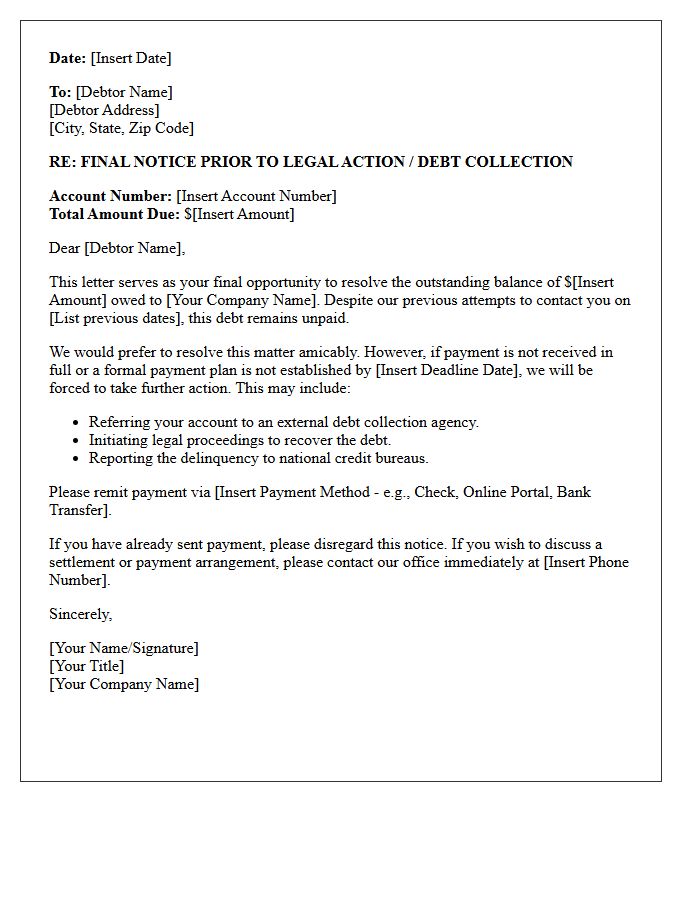
A Final Opportunity to Resolve Debt Letter is a formal, critical notice sent by creditors before initiating legal action or transferring an account to a third-party agency. This document serves as your last chance to settle outstanding balances voluntarily. It typically outlines the total amount owed, payment deadlines, and potential consequences of non-payment. Receiving this letter indicates that the collection process has reached its final stage. Reviewing the details immediately and negotiating a settlement plan can prevent credit score damage and costly litigation fees associated with a formal lawsuit.
Breach of Credit Agreement Warning Letter
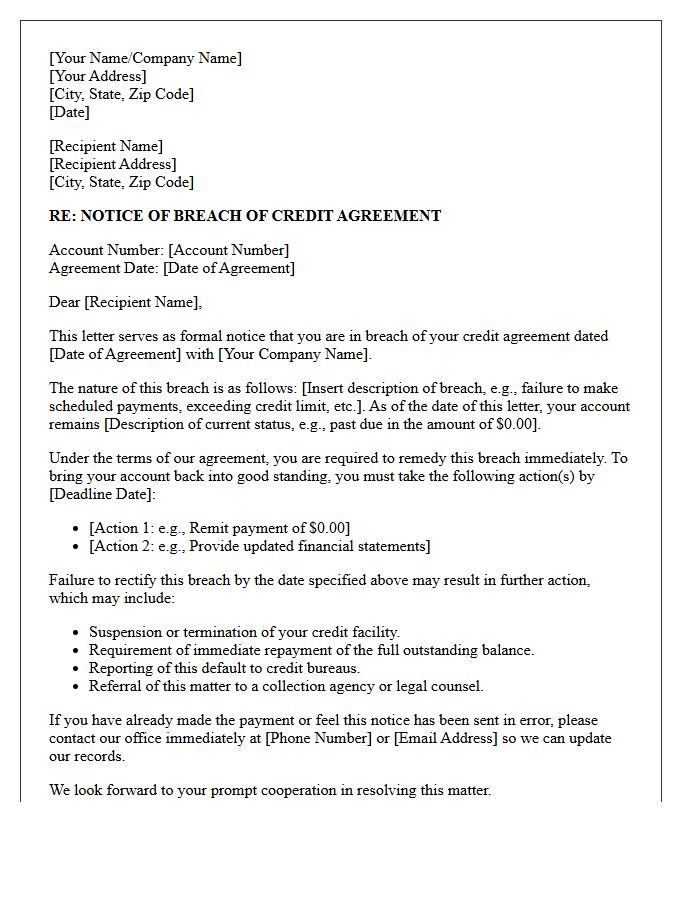
A Breach of Credit Agreement Warning Letter is a formal notification issued when a borrower fails to meet specific contractual obligations. It serves as a legal notice that default has occurred, often due to missed payments or covenant violations. Receiving this letter is critical because it outlines the required remedial actions to avoid severe consequences, such as accelerated repayment, penalty fees, or legal action. Addressing the breach immediately is essential to protect your credit score and maintain your financial standing with the lender before the agreement is permanently terminated.
Can a credit card company sue me for unpaid debt?
Yes, if you default on your credit card obligations, the creditor or a third-party debt buyer has the legal right to file a civil lawsuit to recover the outstanding balance, plus applicable interest and legal fees.
What happens if I ignore a summons for a credit card lawsuit?
If you fail to respond to a court summons, the creditor will likely obtain a default judgment against you. This legal ruling allows them to pursue aggressive collection methods such as wage garnishment, bank account levies, or placing liens on your property.
How long does a creditor have to sue for credit card debt?
The window for filing a lawsuit is determined by the statute of limitations, which varies by state and typically ranges from three to ten years. Once this period expires, the debt is considered "time-barred," and the creditor loses the legal standing to sue for collection.
Can I settle a credit card debt after a lawsuit has been filed?
Yes, most creditors are willing to negotiate a settlement even after litigation has commenced. Resolving the debt through a lump-sum payment or a structured settlement plan can stop the legal process and prevent the entry of a final judgment.
What are the common defenses against a credit card default lawsuit?
Common legal defenses include challenging the plaintiff's standing (demanding proof of debt ownership), asserting that the statute of limitations has passed, disputing the accuracy of the debt amount, or identifying violations of the Fair Debt Collection Practices Act (FDCPA).


Comments