
A Notice of Intent to Sue serves as a final formal warning to tenants regarding outstanding debt or contractual breaches. This legal document outlines specific unpaid rent balances and documented lease violations that must be resolved to avoid litigation. Issuing this notice is a critical step in the eviction process and protecting landlord rights. Below are some ready to use templates.
Image cover: Final Notice Before Legal Action: Demand for Unpaid Rent and Lease Compliance Templates
Letter Samples List
- Notice of Intent to Sue for Unpaid Rent Letter
- Final Demand and Lease Violation Warning Letter
- Pre-Litigation Debt Collection Notice Letter
- Formal Notice of Legal Action for Rent Arrears Letter
- Debt Collection Intent to Litigate Letter
- Lease Breach and Financial Default Demand Letter
- Final Notice of Imminent Lawsuit Letter
- Collection Agency Rent Recovery Warning Letter
- Notice of Default and Intent to Sue Letter
- Unpaid Rent and Lease Termination Demand Letter
- Attorney Drafted Debt Collection Intent Letter
- Commercial Lease Violation and Litigation Notice Letter
Notice of Intent to Sue for Unpaid Rent Letter
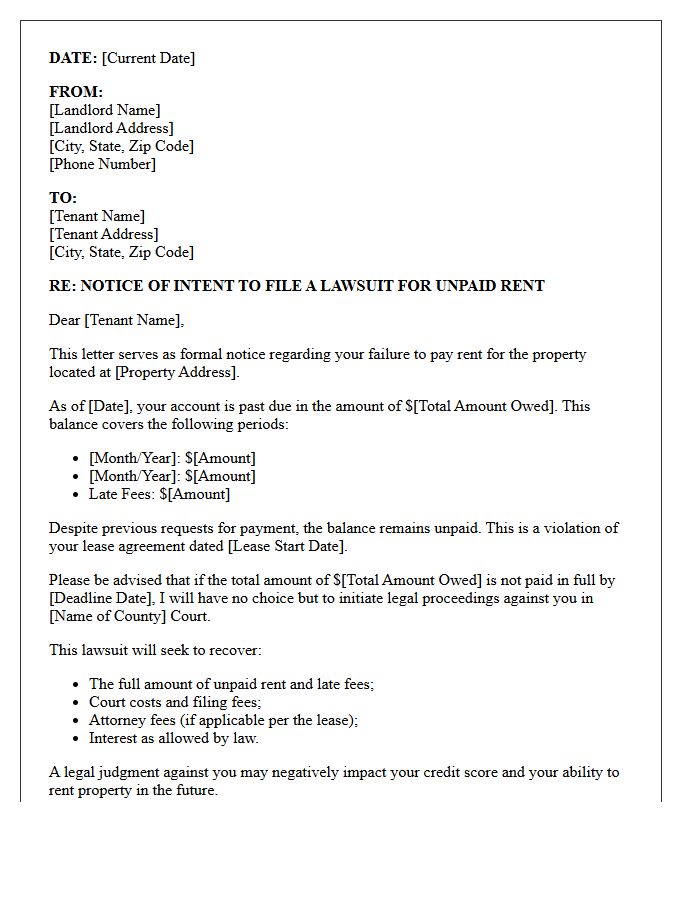
A Notice of Intent to Sue for Unpaid Rent is a formal legal demand sent by a landlord to a tenant before initiating a lawsuit. This document serves as a final warning, detailing the exact amount of outstanding rent and providing a specific deadline for payment. Sending this letter is often a mandatory procedural step to demonstrate to the court that you attempted to resolve the debt amicably. Clearly outlining the consequences of non-payment, such as legal action or credit damage, can effectively encourage settlement without costly litigation.
Final Demand and Lease Violation Warning Letter
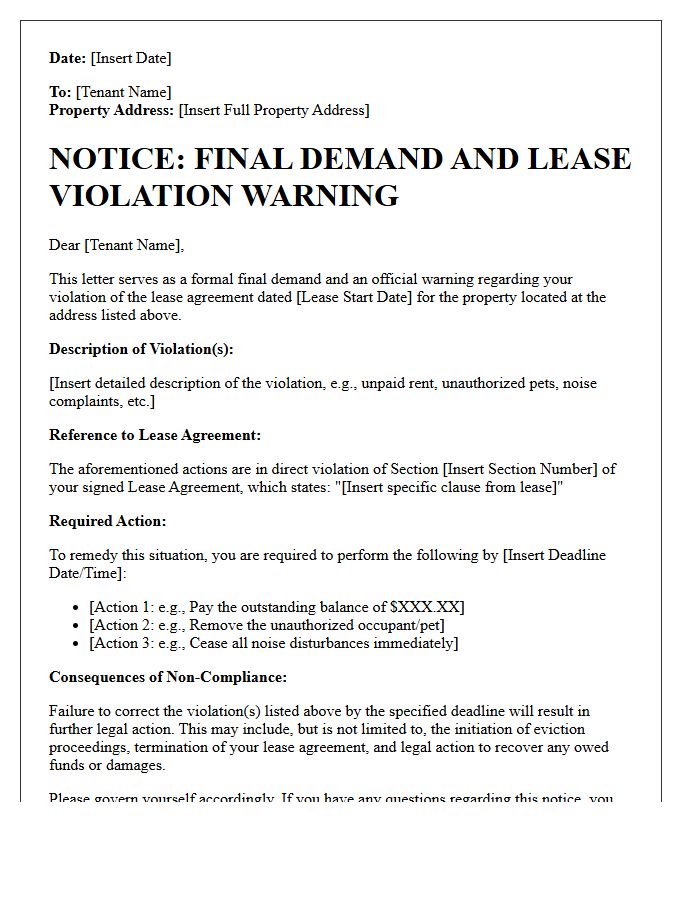
A Final Demand serves as a formal ultimatum requiring immediate resolution of unpaid rent or lease breaches. This legal document acts as a mandatory precursor to eviction proceedings, establishing a clear paper trail for court. A Lease Violation Warning Letter identifies specific contractual infractions, providing the tenant a remedy period to correct behavior before further action. Issuing these notices ensures compliance with local housing laws and protects the landlord's rights. Clear communication through these documents is essential for maintaining property standards and managing legal risk during tenant disputes.
Pre-Litigation Debt Collection Notice Letter
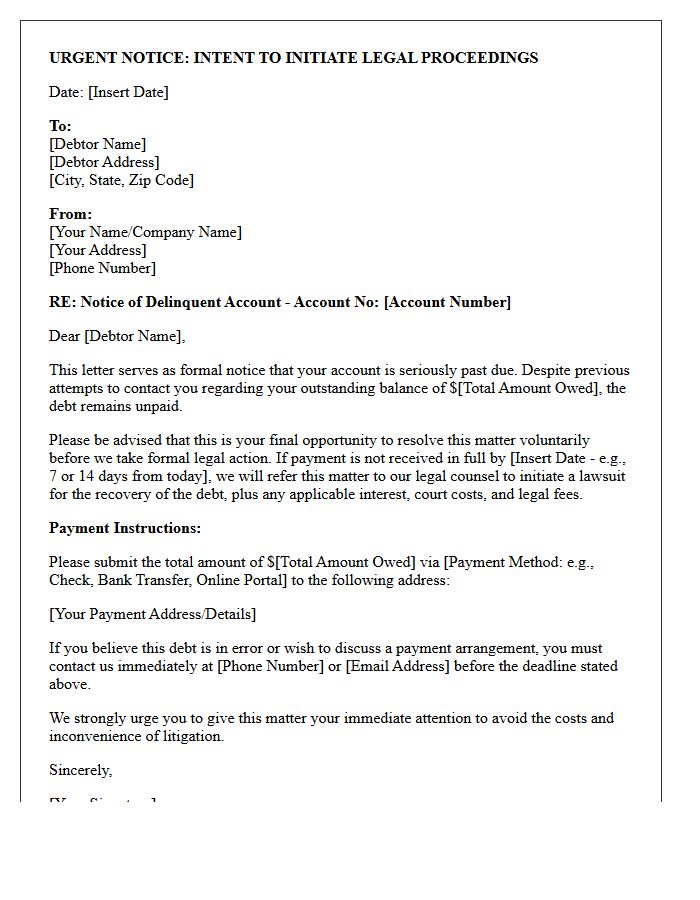
A Pre-Litigation Debt Collection Notice Letter serves as a formal final warning before legal action is initiated. Its primary purpose is to inform a debtor of an outstanding balance and provide a specific timeframe to settle the arrears. This document is crucial for legal compliance, often acting as a mandatory step to demonstrate a good-faith effort to resolve the dispute out of court. Recipients should verify the debt's validity immediately, as responding to this notice can prevent costly litigation, additional legal fees, and potential damage to their credit profile.
Formal Notice of Legal Action for Rent Arrears Letter
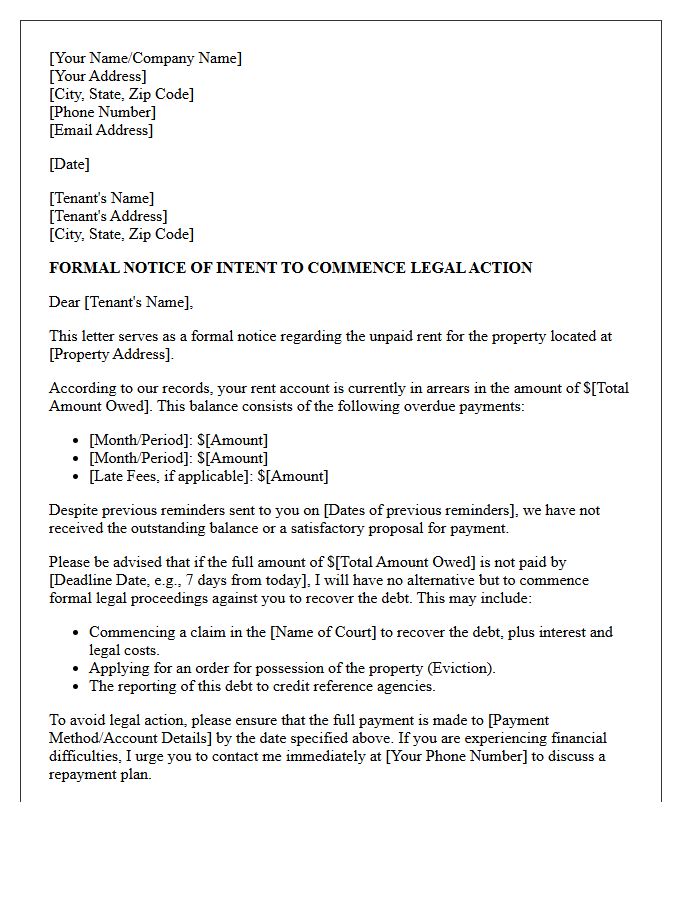
A formal notice of legal action for rent arrears is a critical warning issued by landlords to tenants who have failed to pay rent. This document serves as a Letter Before Action, outlining the specific debt amount and a deadline for payment. It is a mandatory procedural requirement before initiating court proceedings or eviction. To protect your rights, ensure the notice includes a clear breakdown of owed funds and a reasonable timeframe for resolution. Receiving this letter signifies that legal litigation is imminent unless immediate action is taken to settle the outstanding balance.
Debt Collection Intent to Litigate Letter
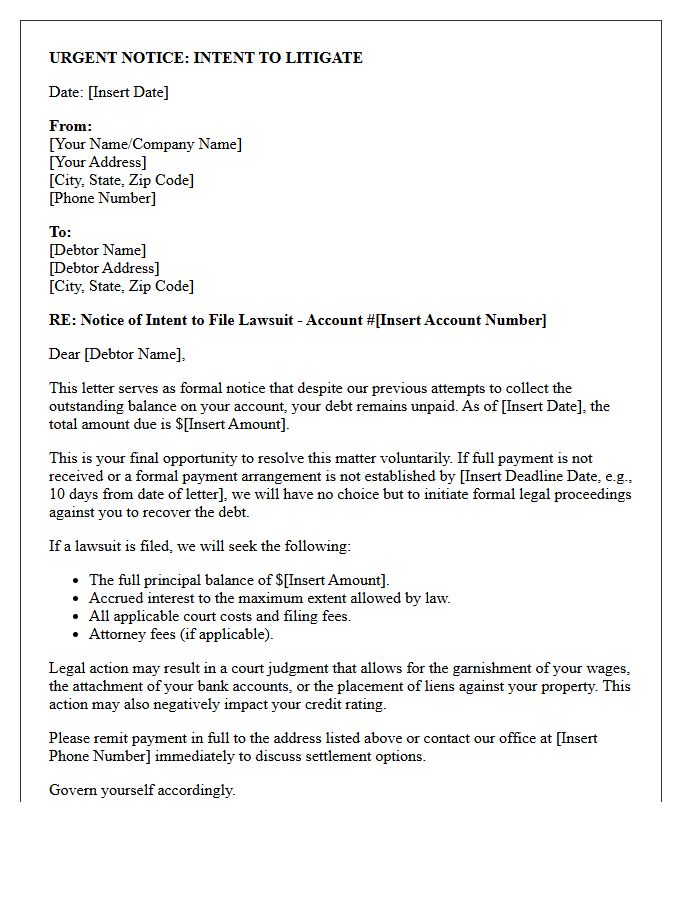
A debt collection intent to litigate notice is a formal warning that a creditor or agency prepares to file a lawsuit to recover unpaid balances. This letter serves as a final opportunity to resolve the delinquent debt before legal proceedings begin. Receiving this document means you may face a court summons, potential wage garnishment, or bank levies if the matter remains ignored. It is critical to verify the debt immediately and seek legal advice to understand your rights under the Fair Debt Collection Practices Act before the litigation process officially starts.
Lease Breach and Financial Default Demand Letter
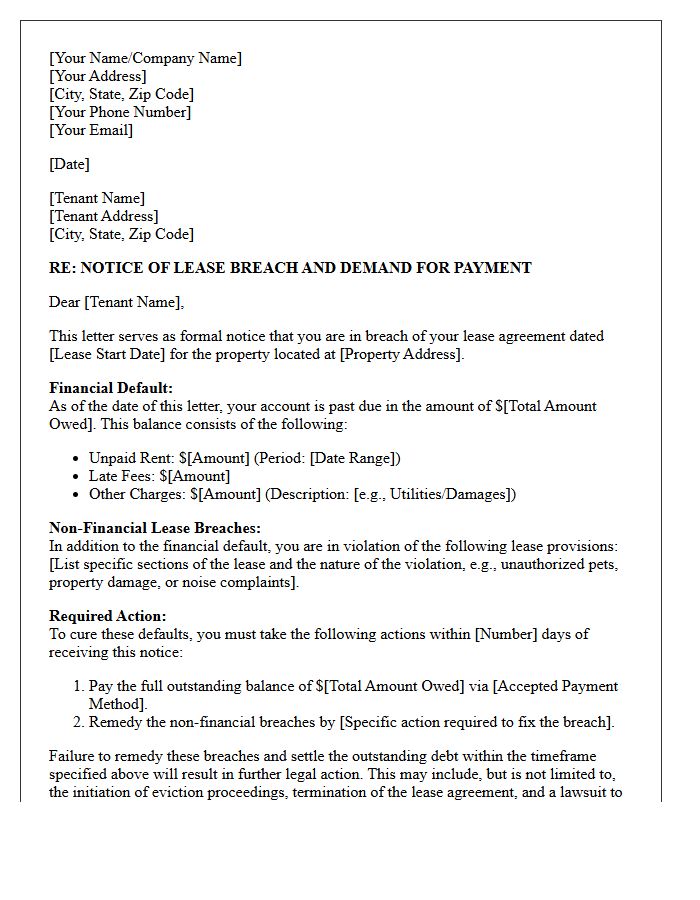
A Lease Breach and Financial Default Demand Letter serves as a formal legal notice to a tenant regarding contract violations. It identifies specific non-payment of rent or failure to uphold lease covenants. This document is essential for legal compliance, acting as a mandatory precursor to eviction proceedings or litigation. It clearly outlines the outstanding balance, the required remedy period, and potential legal consequences. Providing this written warning protects the landlord's rights and establishes a formal timeline for dispute resolution or debt recovery in a court of law.
Final Notice of Imminent Lawsuit Letter
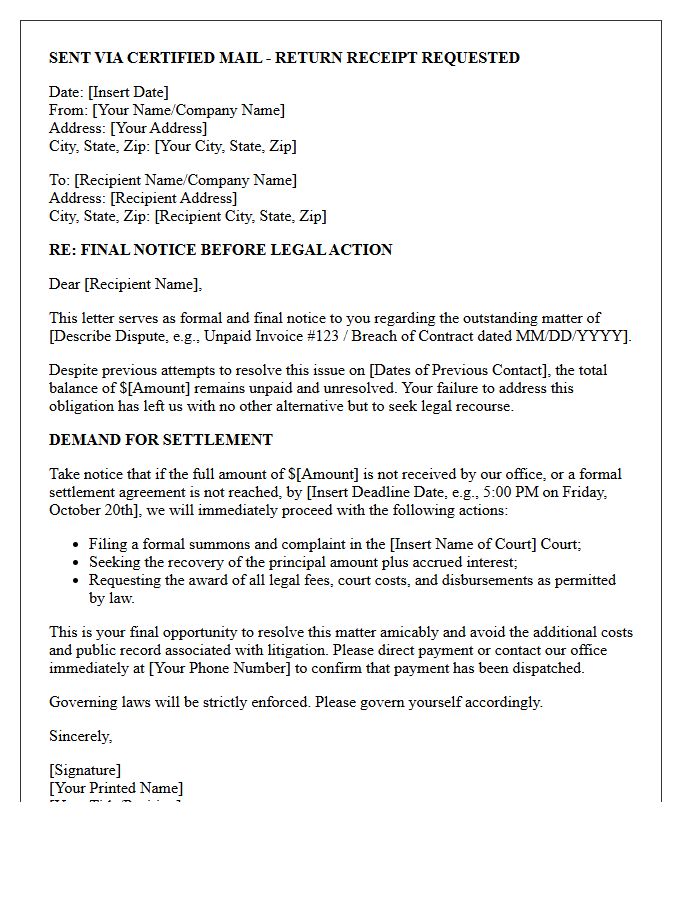
A Final Notice of Imminent Lawsuit is a formal legal warning issued before a plaintiff initiates litigation. This letter serves as a final opportunity to resolve a dispute, typically involving unpaid debts or breach of contract, without court intervention. It outlines the specific claims, the required remedy, and a strict deadline for compliance. Ignoring this document often leads to a summons and formal legal proceedings. Recipients should treat this as a high-priority legal threat and consider seeking professional counsel or negotiating a settlement immediately to avoid costly courtroom expenses and judgments.
Collection Agency Rent Recovery Warning Letter
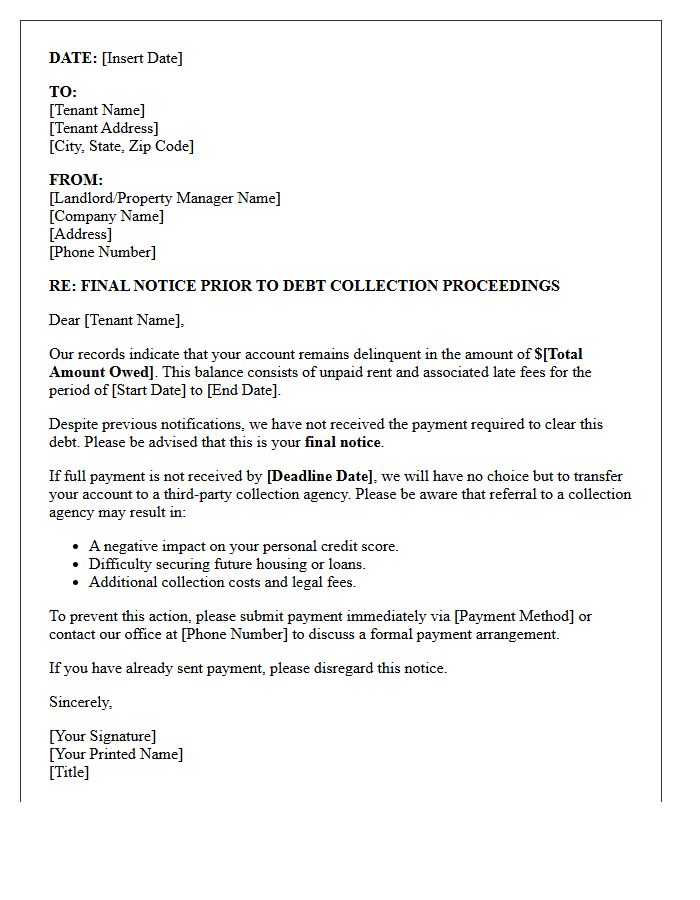
A collection agency rent recovery warning letter serves as a formal notice demanding payment for outstanding lease balances. Receiving this notice indicates that your landlord has engaged a third-party agency to pursue the debt, which can severely damage your credit score. It is critical to verify the debt's accuracy within thirty days to exercise your legal rights under the FDCPA. Promptly addressing this warning through payment or negotiation can prevent legal action and long-term financial consequences. Always maintain written records of all communication to protect your tenancy history and financial reputation.
Notice of Default and Intent to Sue Letter
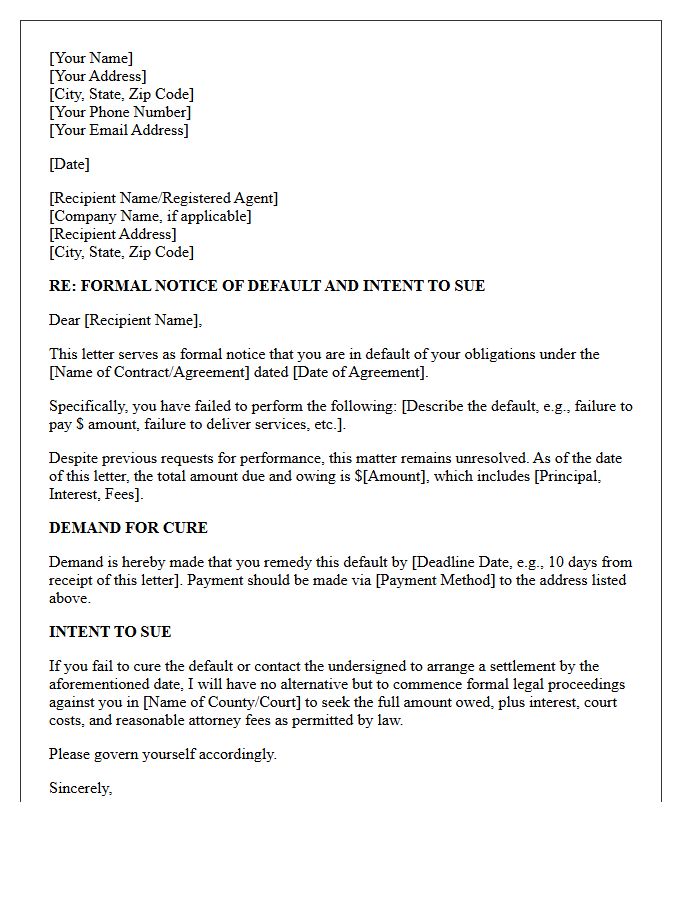
A Notice of Default and Intent to Sue is a formal legal warning issued when a party breaches a contract, typically regarding unpaid debts. This document serves as a final opportunity to resolve the dispute before litigation begins. It outlines the specific default, the amount owed, and a strict deadline for remedial action. Receiving this letter indicates that the sender is prepared to file a lawsuit in court. Promptly addressing the notice through payment or negotiation is essential to avoid costly legal proceedings and potential judgment consequences.
Unpaid Rent and Lease Termination Demand Letter
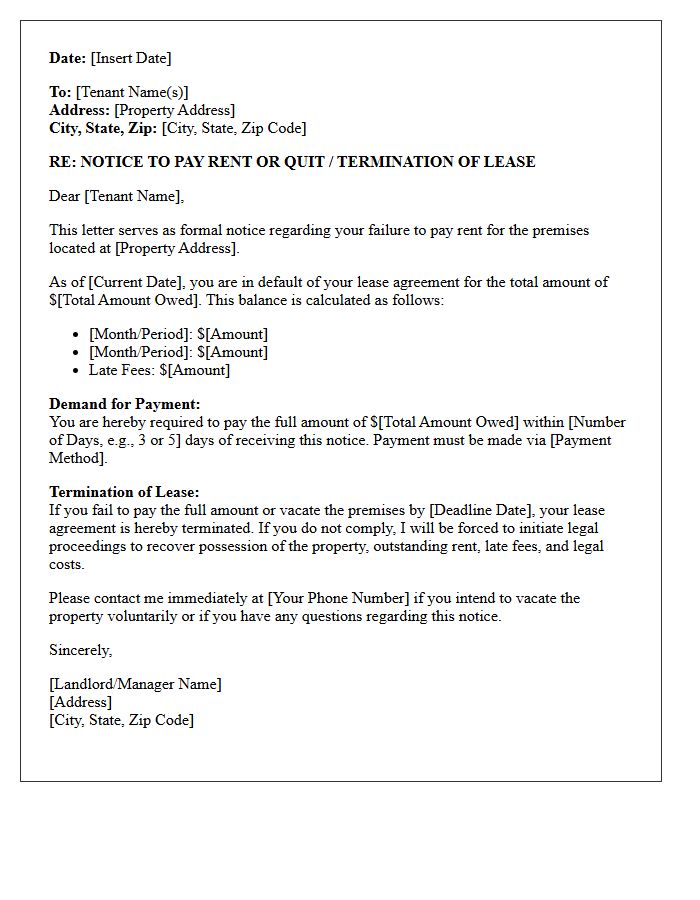
An Unpaid Rent and Lease Termination Demand Letter is a formal legal notice issued by landlords to tenants who have defaulted on payments. This critical document serves as a final warning, detailing the exact amount owed and providing a specific deadline for payment to avoid further action. If the debt remains unpaid, the letter establishes the legal grounds for lease termination and potential eviction proceedings. It is an essential evidentiary requirement in most jurisdictions to prove that the tenant was properly notified before a landlord files a formal lawsuit in court.
Attorney Drafted Debt Collection Intent Letter
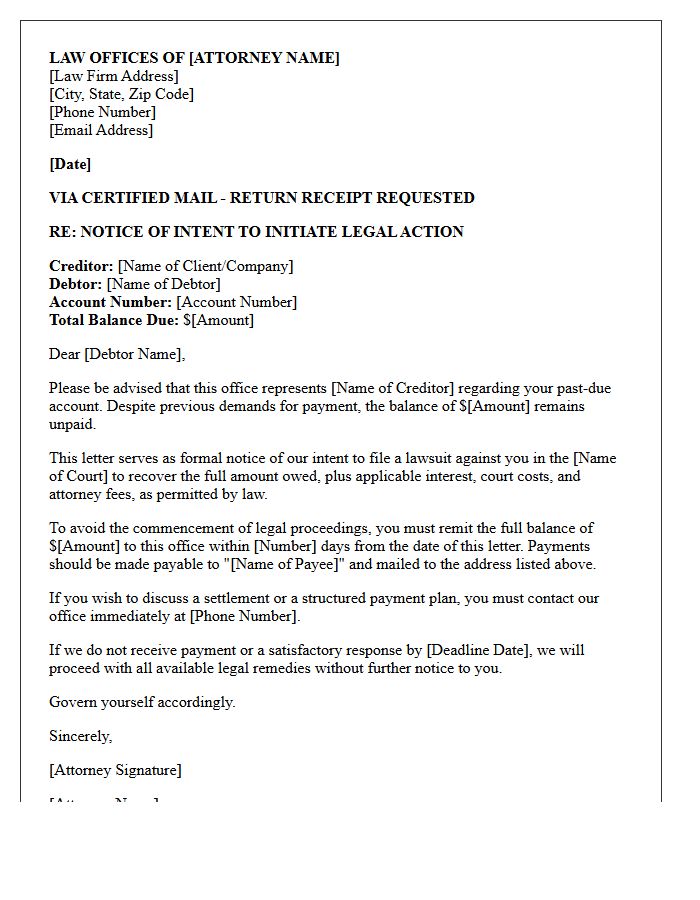
An Attorney Drafted Debt Collection Intent Letter serves as a formal legal notice signaling the final step before litigation. It carries significant authority, proving to debtors that you are prepared to pursue legal action to recover outstanding balances. These letters must strictly comply with the Fair Debt Collection Practices Act (FDCPA) to avoid liability. By leveraging a law firm's letterhead, you maximize the psychological pressure on the debtor, often resulting in immediate payment without the high costs of a full courtroom battle. It is a critical tool for professional debt recovery.
Commercial Lease Violation and Litigation Notice Letter
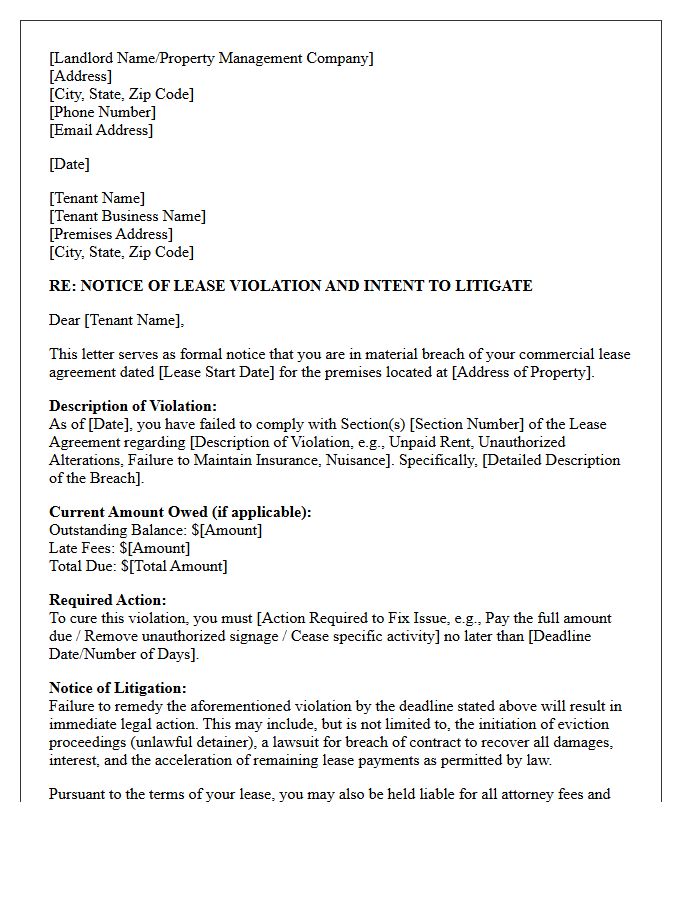
A Commercial Lease Violation and Litigation Notice Letter serves as a formal legal warning regarding a breach of contract. It outlines specific lease violations, such as unpaid rent or unauthorized property use, and provides a strict deadline for remedial action. Receiving this document is a critical step before formal eviction or court proceedings begin. Promptly addressing the cited defaults is essential to mitigate legal liability and prevent the immediate termination of the business tenancy. Consult legal counsel to evaluate your rights and obligations under the specific terms of your commercial agreement.
What is a Notice of Intent to Sue for unpaid rent and lease violations?
A Notice of Intent to Sue is a formal legal document sent by a landlord to a tenant demanding payment for overdue rent or the correction of lease violations. It serves as a final warning that legal action, such as an eviction lawsuit or a small claims case, will be initiated if the debt is not settled or the breach is not cured within a specific timeframe.
How many days notice must a landlord provide before filing a lawsuit?
The notice period varies by state and local jurisdiction, typically ranging from 3 to 14 days. For unpaid rent, many states require a 3-day or 5-day "Pay or Quit" notice, while lease violations often require a 10-day or 30-day "Cure or Quit" notice before a landlord can officially file a summons and complaint in court.
What information must be included in a Notice of Intent to Sue for rent?
To be legally valid, the notice should include the tenant's full name and address, the total amount of past-due rent and late fees, a detailed description of any lease violations, a specific deadline for compliance, and a clear statement that the landlord intends to pursue legal action if the demands are not met.
Can a tenant be evicted immediately after receiving a Notice of Intent to Sue?
No, a tenant cannot be evicted immediately. The notice is the first step in the legal process. If the tenant does not comply by the deadline, the landlord must file a formal eviction (unlawful detainer) lawsuit and obtain a court judgment before a law enforcement officer can physically remove the tenant from the property.
What are the consequences of ignoring a Notice of Intent to Sue for lease violations?
Ignoring the notice can lead to the filing of an eviction lawsuit, which may result in a permanent eviction record, a judgment for the unpaid rent, damage to the tenant's credit score, and the potential garnishment of wages. Additionally, the tenant may be held liable for the landlord's legal fees and court costs as permitted by the lease agreement.

Comments