
Receiving a Notice of Paid Collection Account is a critical step in restoring your financial standing. This document serves as official proof that an outstanding debt has been fully settled with a recovery agency. Understanding how to document this payment ensures your credit report reflects accurate, updated information. To assist your correspondence, below are some ready to use template.
Image cover: Paid Collection Notice: Professional Templates and Samples for Debt Recovery
Letter Samples List
- Notice of Paid in Full Collection Account Letter
- Account Settlement Acknowledgment Letter
- Paid Debt Collection Confirmation Letter
- Zero Balance Collection Account Letter
- Debt Resolution and Closure Letter
- Collection Account Satisfaction Letter
- Paid in Full Credit Bureau Update Letter
- Final Payment Receipt and Closure Letter
- Settled in Full Collection Notice Letter
- Outstanding Debt Resolution Letter
- Paid Collection Account Clearance Letter
- Debt Satisfaction and Account Closure Letter
- Complete Payment Acknowledgment Letter
Notice of Paid in Full Collection Account Letter
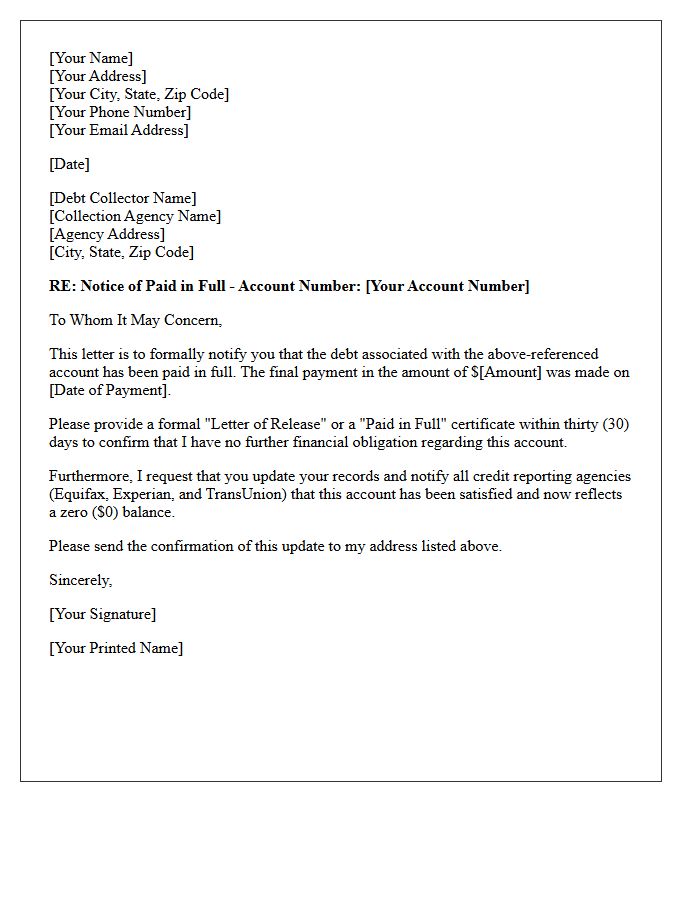
A Notice of Paid in Full Collection Account Letter is a formal document confirming that a debt is completely satisfied. It serves as vital legal proof to resolve disputes with creditors or collection agencies. Once you receive this confirmation, you must verify that your credit report reflects a zero balance. Keeping this record is essential for protecting your financial reputation and ensuring that debt buyers do not attempt to collect the same balance twice. Always request this letter in writing to safeguard your long-term credit health.
Account Settlement Acknowledgment Letter
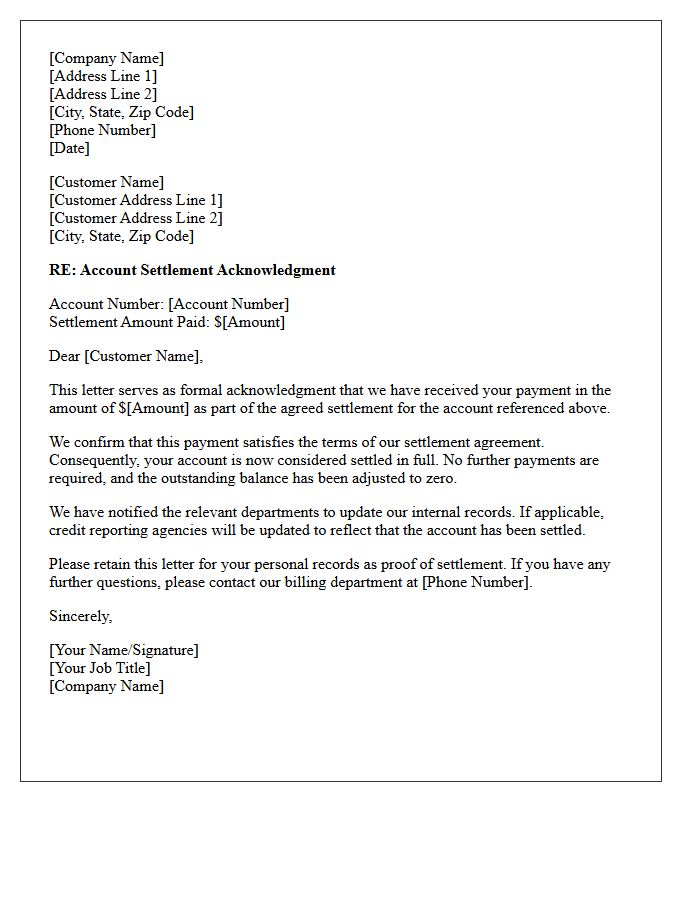
An Account Settlement Acknowledgment Letter serves as formal proof that a debt obligation has been legally fulfilled. This document confirms that the creditor has accepted a specific payment amount to close the account permanently. It is crucial for maintaining accurate credit reports and preventing future collection attempts on the same debt. Always retain this letter as written evidence to protect your financial standing and ensure that the settlement terms are officially recorded by the lending institution, effectively clearing your liability and updating your balance to zero.
Paid Debt Collection Confirmation Letter
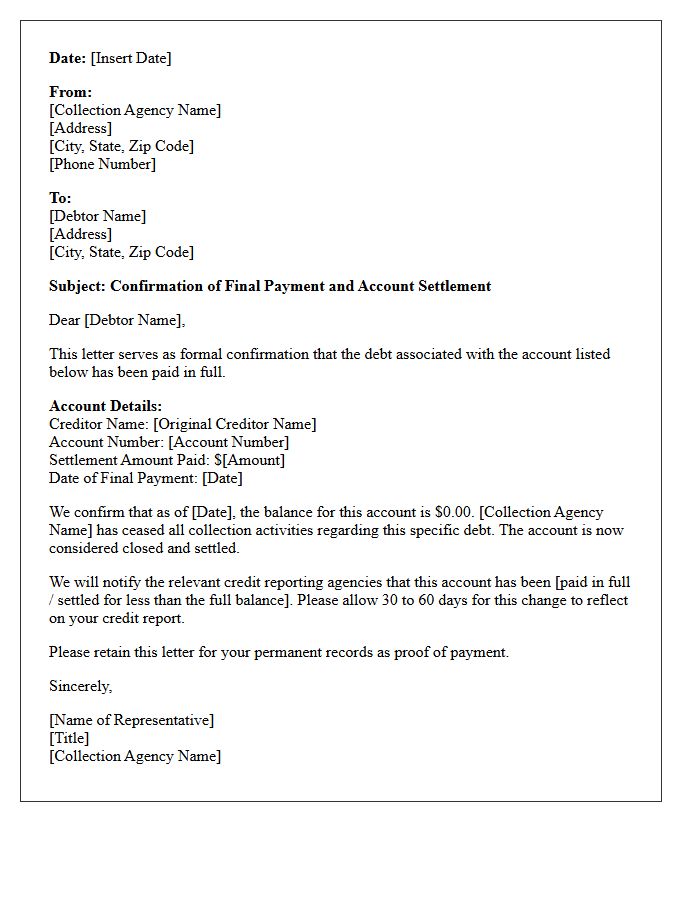
A Paid Debt Collection Confirmation Letter is a vital document providing legal proof that a financial obligation is fully satisfied. It serves as your receipt to prevent future collection attempts on the same debt. Always verify that the letter explicitly states a zero balance and confirms the account is closed. This written validation is essential for disputing inaccuracies on credit reports and ensuring credit bureaus update your status. Retain this confirmation permanently to protect your consumer rights and maintain a clean credit history after resolving past-due accounts.
Zero Balance Collection Account Letter
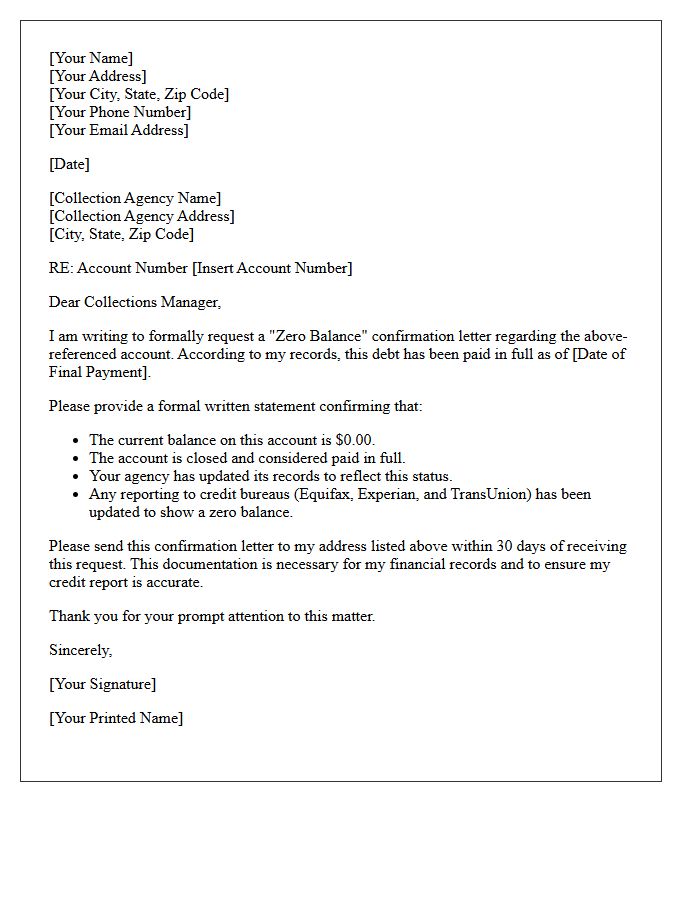
A Zero Balance Collection Account Letter serves as vital documentation proving a debt is fully satisfied. This written confirmation ensures the collection agency recognizes a $0 balance, preventing further credit reporting errors or collection attempts. Always request this letter after a settlement or full payment to protect your financial history. It acts as legal evidence if a debt is incorrectly resold or reappears on your credit profile. Safekeeping this record is essential for maintaining long-term financial stability and verifying your consumer rights have been upheld after debt resolution.
Debt Resolution and Closure Letter
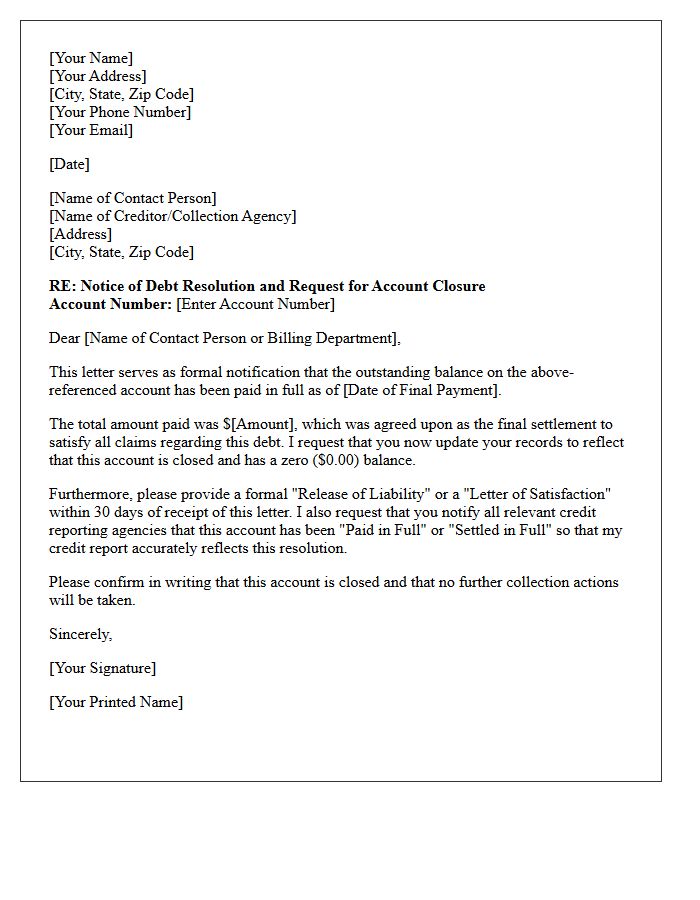
A debt resolution involves negotiating with creditors to settle a balance for less than the total amount owed. Once an agreement is reached and payment is made, obtaining a closure letter is essential. This document serves as legal proof that the account is satisfied and the debt is no longer active. It prevents future collection attempts and provides the necessary evidence to update your credit report. Always retain this letter permanently to protect against administrative errors and ensure your financial record accurately reflects the debt settlement status.
Collection Account Satisfaction Letter
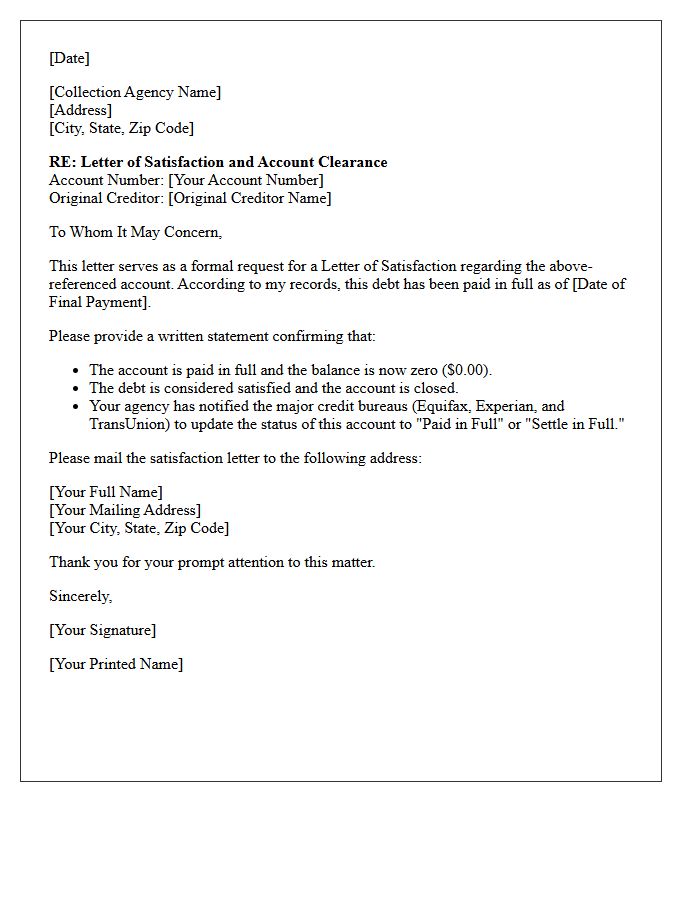
A Collection Account Satisfaction Letter is an official document confirming that a debt has been fully settled or paid. It serves as legal proof that you no longer owe the balance to a collection agency. Obtaining this letter is essential for credit repair, as it allows you to dispute inaccuracies and ensure your credit report reflects the updated status. Always request this written verification to protect against future legal claims and to facilitate the removal of derogatory marks, ultimately helping to improve your overall financial standing.
Paid in Full Credit Bureau Update Letter
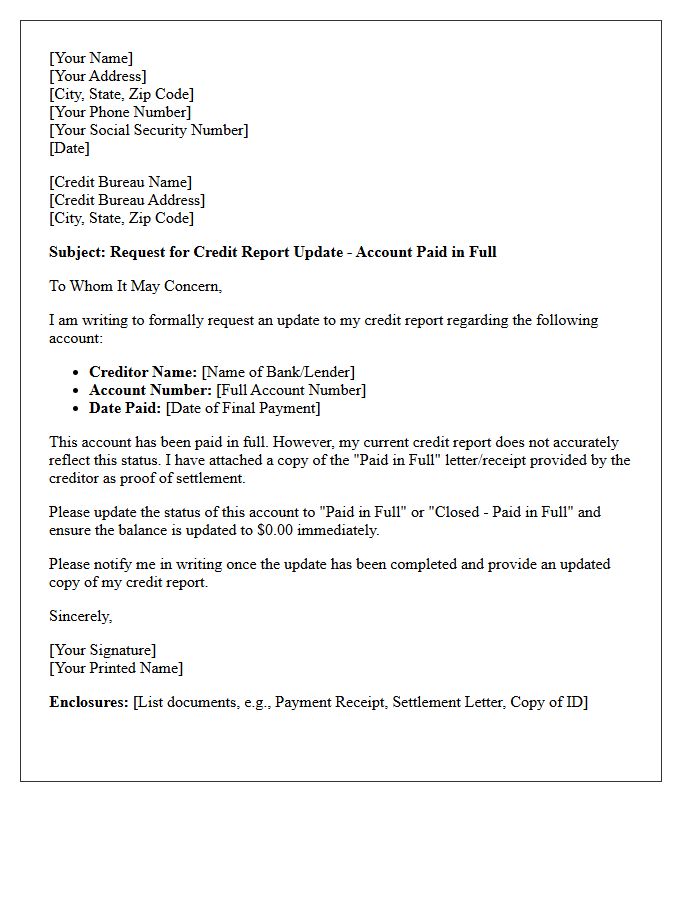
A Paid in Full Credit Bureau Update Letter is a formal request sent to creditors or reporting agencies to ensure your credit report accurately reflects a zero balance. This document is essential for financial recovery because it triggers a manual review to remove "past due" or "collections" markers. By providing proof of payment, you legally compel agencies to rectify outdated data. Maintaining a documented paper trail protects your credit score and ensures that lenders see your accounts as satisfied, which is vital for securing future loans or lower interest rates.
Final Payment Receipt and Closure Letter
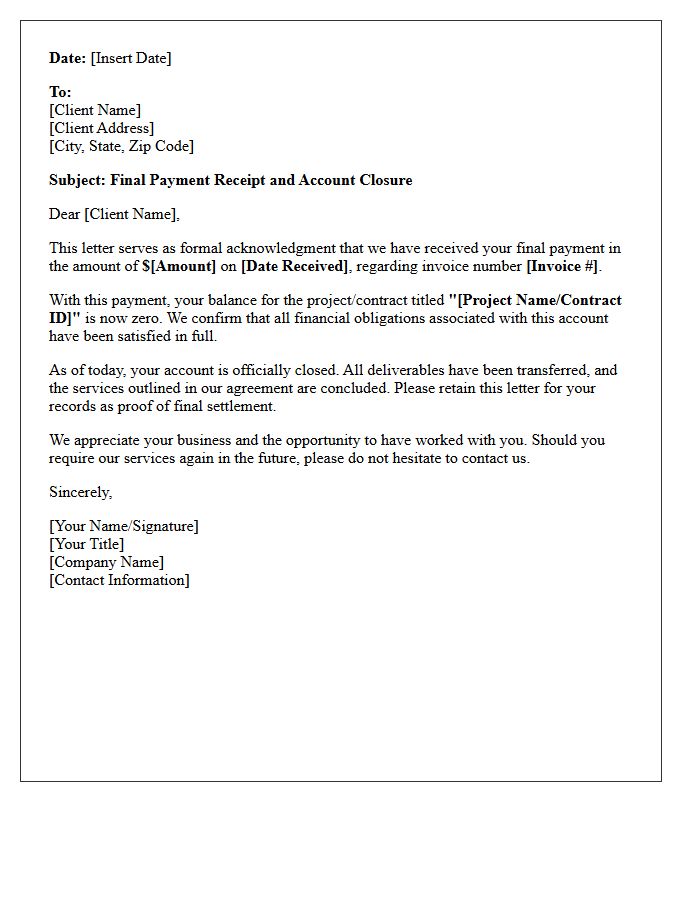
A Final Payment Receipt and Closure Letter serves as formal confirmation that a financial obligation has been fully satisfied. This essential document verifies that the outstanding balance is zero and the account is officially closed. It protects the debtor from future claims, ensures legal discharge of liability, and acts as vital evidence for credit reporting accuracy. Always retain this record to prevent disputes and provide proof of debt settlement to third parties or regulatory bodies when verifying your financial status.
Settled in Full Collection Notice Letter
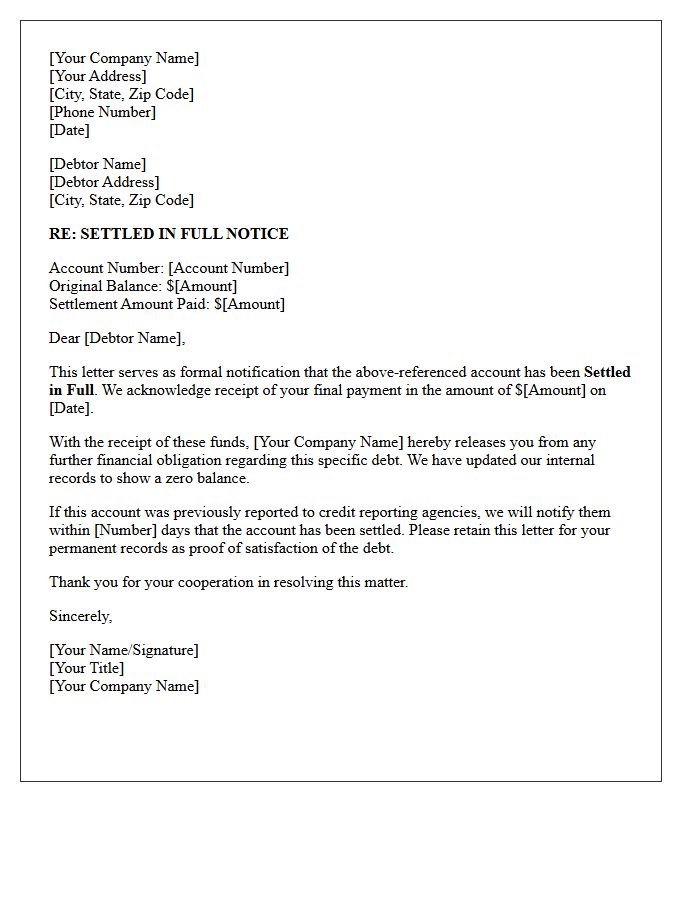
A Settled in Full collection notice is a legal document confirming that a debt has been resolved for an amount lower than the original balance. It serves as written proof that the creditor or agency has waived all remaining claims. Always ensure this letter explicitly states the account is closed and the balance is zero. Retain this document permanently to protect against future collection attempts or to dispute inaccuracies on your credit report, as it validates your financial release from the obligation.
Outstanding Debt Resolution Letter
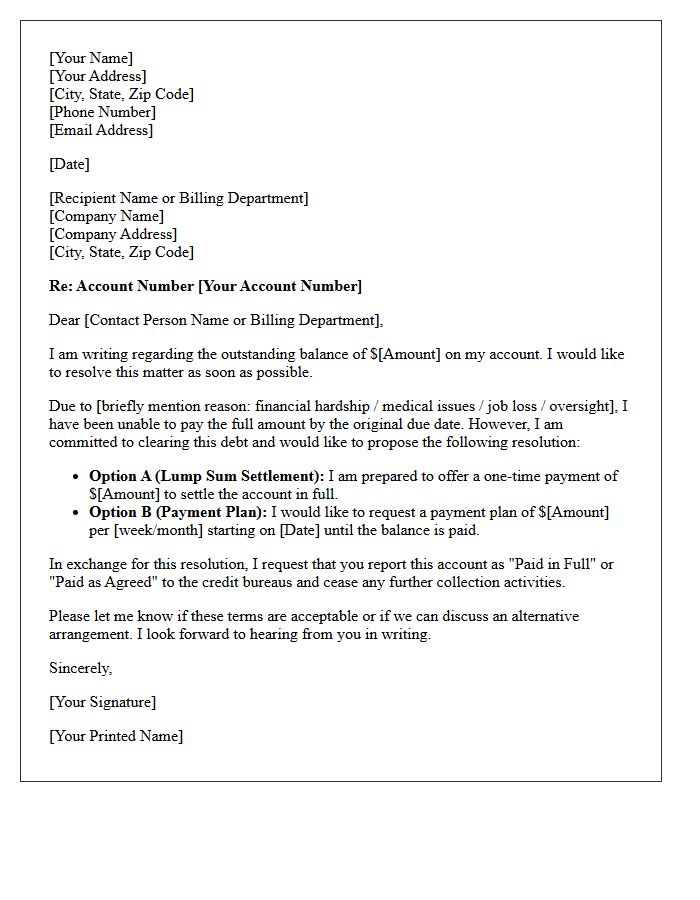
An Outstanding Debt Resolution Letter is a formal document used to propose a settlement agreement between a debtor and creditor. It serves as written evidence of your intent to resolve unpaid balances, often offering a reduced lump-sum payment to close the account. To ensure legal protection, the letter should clearly state that the payment constitutes full satisfaction of the debt. Always request a written acceptance before sending funds and ensure the agreement includes a provision to update your credit report status to prevent further collection actions or legal proceedings.
Paid Collection Account Clearance Letter
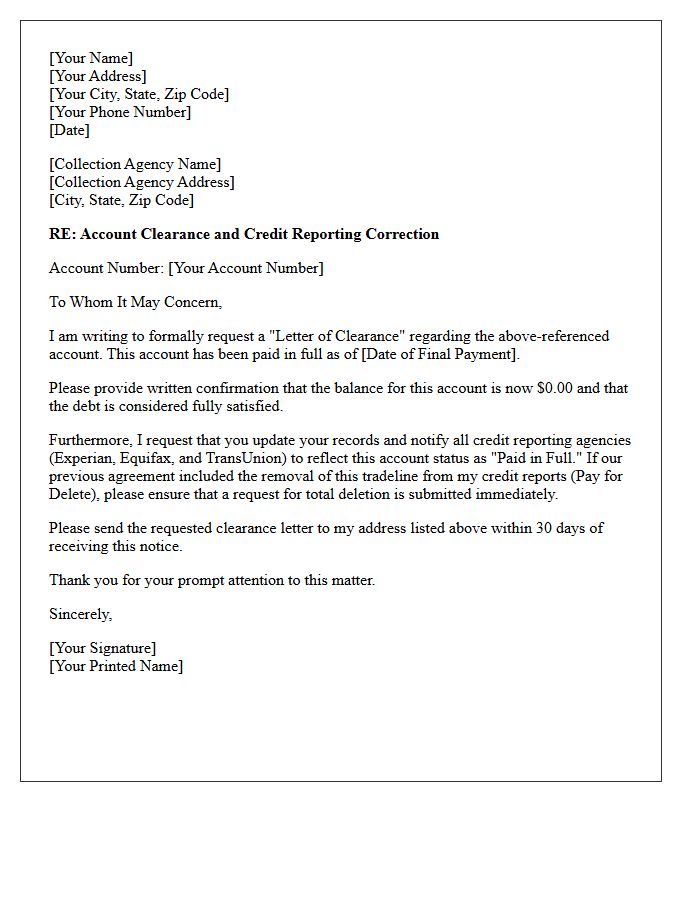
A Paid Collection Account Clearance Letter is a vital document issued by a creditor or collection agency confirming a debt is fully settled. This official statement serves as formal proof to credit bureaus that the obligation no longer exists. Obtaining this letter is essential for disputing inaccuracies on your credit report and improving your financial standing. Always ensure the document explicitly states a zero balance to prevent future legal claims or reporting errors that could hinder loan approvals or mortgage applications.
Debt Satisfaction and Account Closure Letter
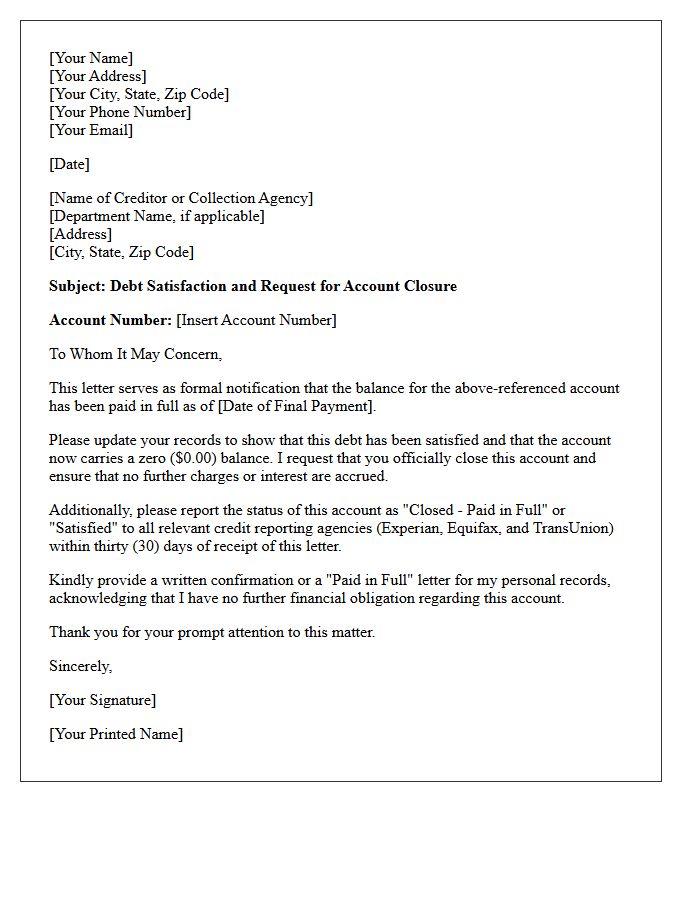
A Debt Satisfaction and Account Closure Letter is a crucial legal document confirming you have fully repaid an outstanding balance. This formal correspondence serves as definitive proof that the financial obligation is officially terminated. Once received, verify that it explicitly states a zero balance and that the account is closed. This letter is vital for credit reporting accuracy, allowing you to dispute lingering errors with bureaus. Always retain a copy in your records to prevent future collections or legal disputes regarding the settled debt.
Complete Payment Acknowledgment Letter
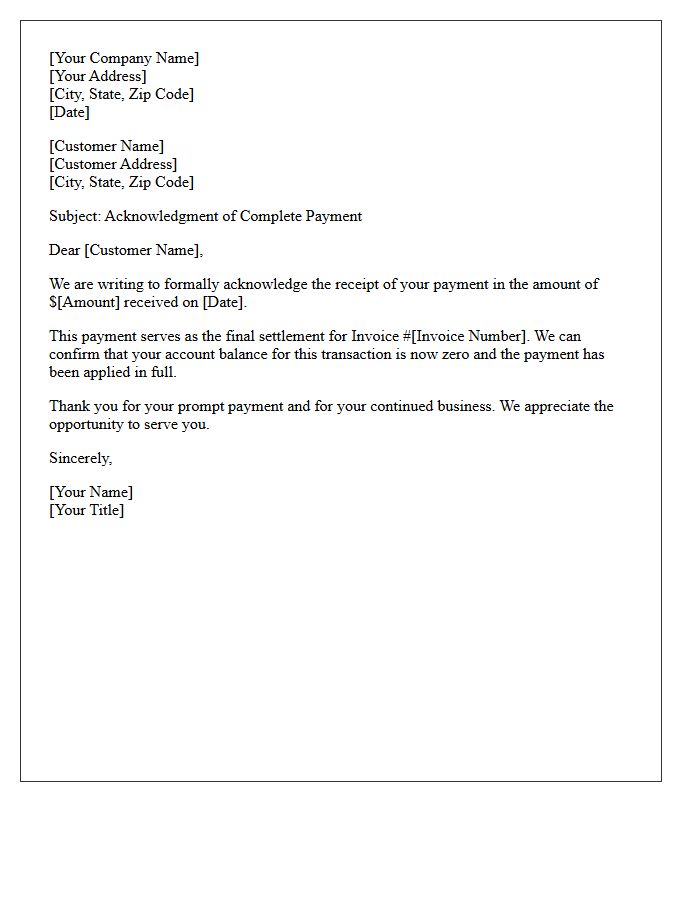
A Payment Acknowledgment Letter serves as a formal receipt, confirming that a financial transaction has been successfully completed. It provides legal protection for both parties by documenting the amount paid, the payment date, and the remaining balance if applicable. Including details like the invoice number and payment method ensures clarity. This document is essential for maintaining accurate financial records and building professional trust between businesses and clients. Always ensure the letter is signed and dated to validate the proof of payment for future audits or disputes.
What is a Notice of Paid Collection Account?
A Notice of Paid Collection Account is a formal communication or status update indicating that a previously delinquent debt has been settled in full. This notice confirms that while the account remains on your credit report, the balance is now zero and the collection agency will no longer pursue active recovery efforts.
Does paying a collection account remove it from my credit report?
No, paying a collection account typically does not remove the entry from your credit report; instead, the status is updated to "Paid Collection." The record generally remains on your credit file for seven years from the date of the original delinquency, though its negative impact on your credit score may decrease over time.
How does a "Paid Collection" status affect my credit score?
A "Paid Collection" is generally viewed more favorably by lenders than an unpaid one, as it shows the debt has been resolved. While older credit scoring models still penalize paid collections, newer models like FICO 9 and VantageScore 3.0/4.0 may ignore collection accounts once they have been paid in full.
Can I dispute a Notice of Paid Collection if the information is incorrect?
Yes, if the Notice of Paid Collection contains errors regarding the payment date, the final amount paid, or the original creditor, you have the right to dispute it. You can file a dispute with the three major credit bureaus (Equifax, Experian, and TransUnion) to ensure your credit report reflects the accurate status of the account.
What is a "Pay for Delete" agreement regarding collection accounts?
A "Pay for Delete" is a negotiation where a debtor agrees to pay the collection amount in exchange for the agency removing the collection entry entirely from their credit report. While some agencies may agree to this, it is not a standard practice and is not required by law, so it is important to get such agreements in writing before making a payment.

Comments