
Effective debt recovery begins with a professional Business to Business Account Past Due Notice Letter. Maintaining positive commercial relationships while securing cash flow requires clear communication regarding outstanding invoices and payment terms. Sending a formal reminder helps minimize payment delays and formalizes the collection process. To help you streamline your accounts receivable, below are some ready to use templates.

Image cover: Professional B2B Past Due Notice Templates for Effective Debt Recovery
Letter Samples List
- Initial Account Past Due Reminder Letter
- Second Notice Commercial Debt Collection Letter
- Third Notice Overdue Account Letter
- Final Demand for Payment Letter
- Urgent Corporate Debt Collection Letter
- Notice of Account Suspension Letter
- Commercial Credit Default Warning Letter
- Escalated B2B Debt Recovery Letter
- Notice of Intent to Pursue Legal Action Letter
- Breach of Payment Terms Notification Letter
- External Collection Agency Transfer Letter
- Pre-Litigation Final Warning Letter
Initial Account Past Due Reminder Letter
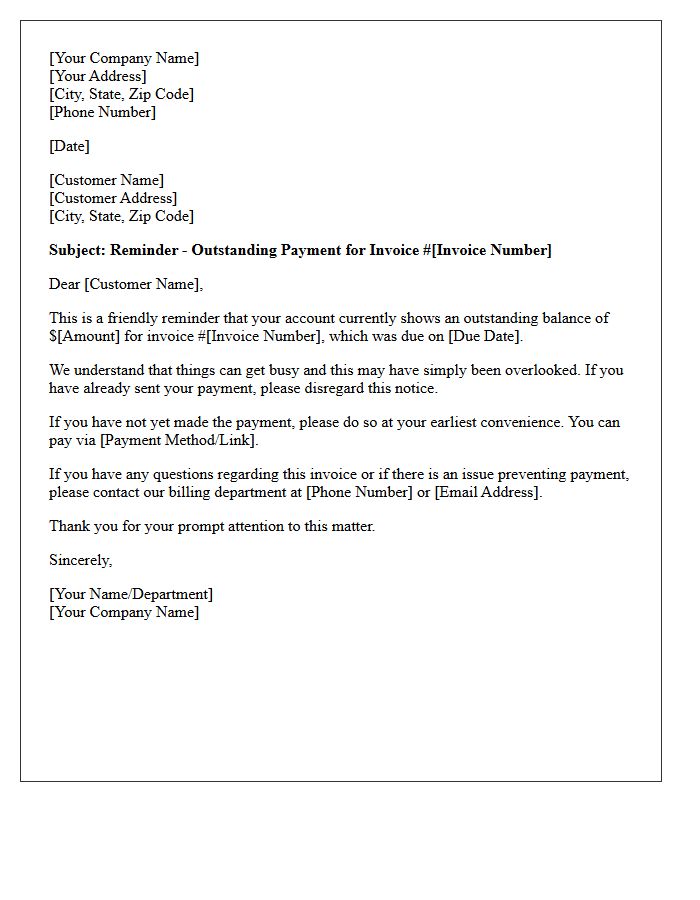
An Initial Account Past Due Reminder Letter serves as a professional notification to inform a customer that their payment is slightly overdue. The primary goal is to maintain a positive business relationship while prompting immediate action. It should clearly state the outstanding balance, the original invoice number, and available payment methods. Keeping the tone polite and helpful prevents unnecessary friction, assuming the oversight was accidental. Promptly sending this friendly reminder improves cash flow and helps identify potential billing discrepancies early in the collection process.
Second Notice Commercial Debt Collection Letter
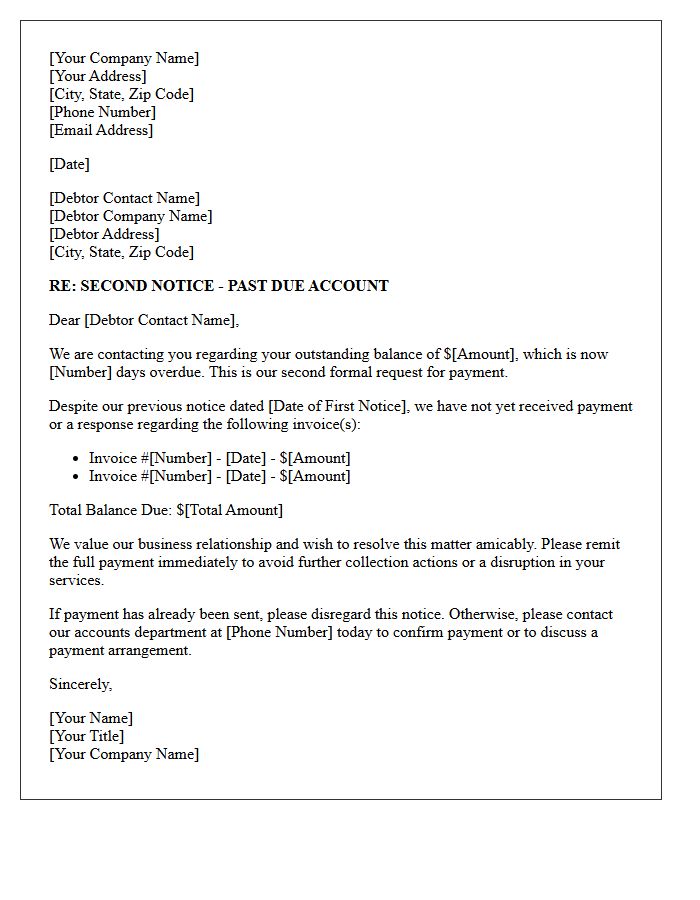
A Second Notice Commercial Debt Collection Letter serves as a formal follow-up to an unpaid business invoice. It maintains a professional yet urgent tone, reminding the debtor of their outstanding obligations before the situation escalates. This document typically includes updated account details, original due dates, and late fees. It acts as a critical piece of evidence for legal proceedings, proving the creditor's persistent effort to resolve the delinquency. Receiving this notice signifies that the grace period has ended, and immediate payment is necessary to avoid potential litigation or credit reporting actions.
Third Notice Overdue Account Letter
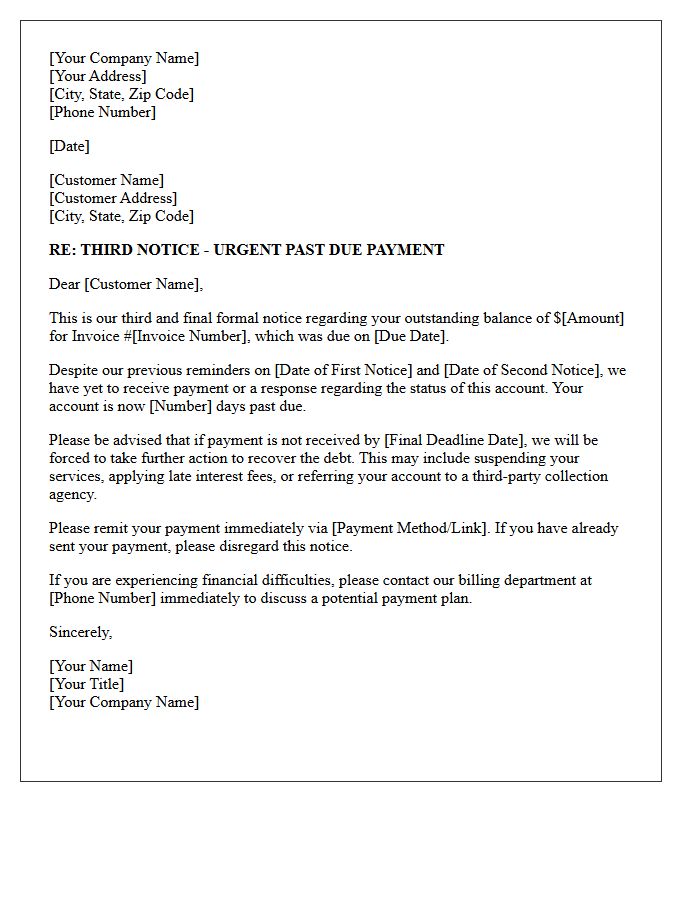
A Third Notice Overdue Account Letter serves as a final formal warning before a debt is escalated to legal action or a collection agency. This document signifies a serious breach of payment terms and typically includes a final deadline for settlement. It is crucial to outline the total balance, previous attempts at contact, and potential consequences of continued non-payment. Receiving this notice indicates that the creditor is prepared to terminate the credit relationship. Immediate communication or full payment is necessary to protect your credit score and avoid further litigation costs.
Final Demand for Payment Letter
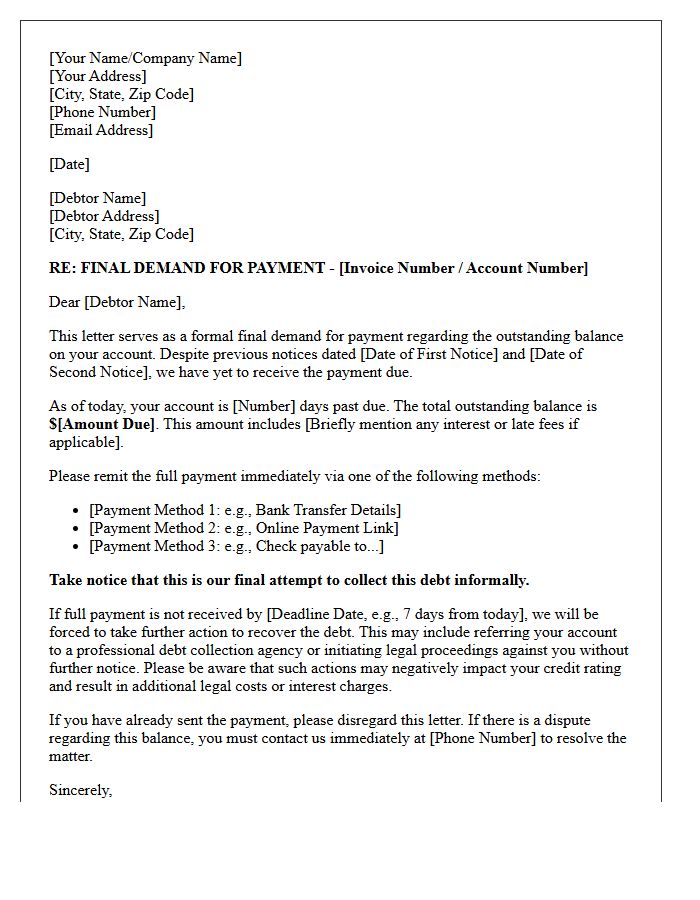
A Final Demand for Payment Letter is the last formal notice sent to a debtor before initiating legal action. It serves as a critical pre-legal requirement to demonstrate a good-faith effort to recover outstanding debt. The document must clearly state the exact balance due, a firm deadline for payment, and the specific consequences of non-compliance, such as litigation or credit reporting. Providing this formal warning often prompts immediate settlement, saving both parties the time and significant expense associated with court proceedings.
Urgent Corporate Debt Collection Letter
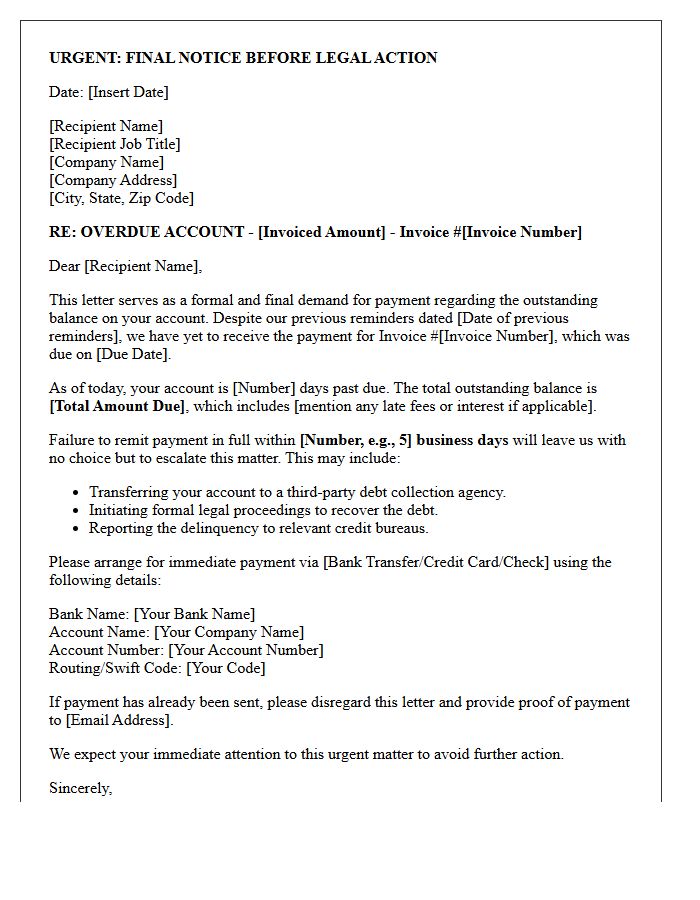
An Urgent Corporate Debt Collection Letter serves as a final formal notice before escalating to legal action. It must clearly state the outstanding balance, invoice numbers, and a strict deadline for payment. Professionalism is key, as the document functions as critical evidence for potential litigation. Effective letters include specific payment instructions and emphasize the consequences of non-compliance, such as credit reporting or court proceedings. Promptly addressing these notices is essential for businesses to maintain their financial reputation and avoid costly attorney fees or interest penalties associated with delinquent commercial accounts.
Notice of Account Suspension Letter
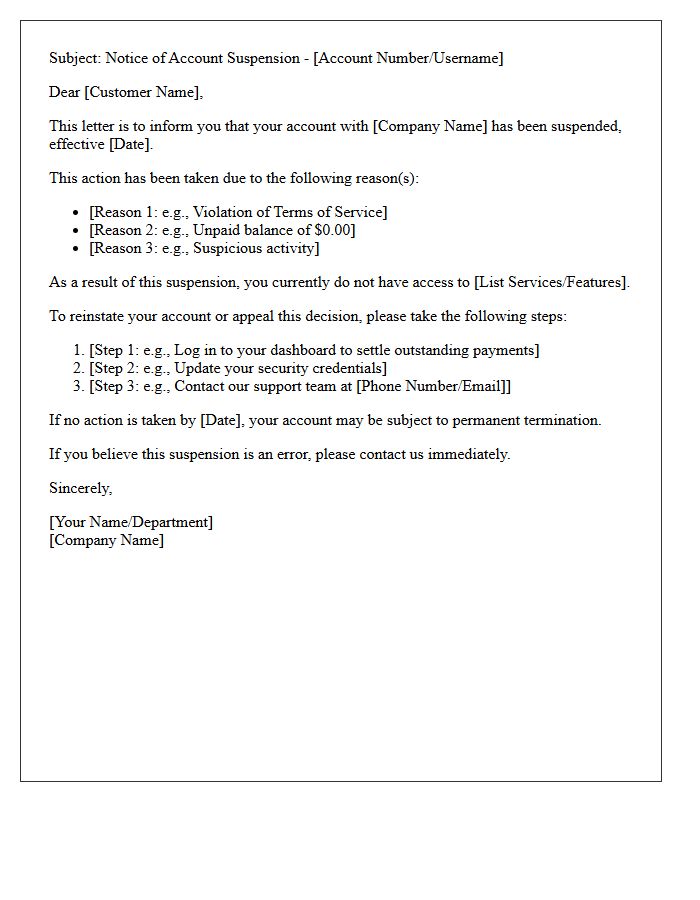
A Notice of Account Suspension Letter is a formal notification informing a user that their access to a service or platform has been temporarily or permanently revoked. It typically outlines the specific policy violations or security concerns that triggered the action. To resolve the issue, recipients should carefully review the provided appeal process and instructions for identity verification. Understanding the exact reason for the suspension is essential to prevent future account termination and to ensure the successful restoration of digital services and data access.
Commercial Credit Default Warning Letter
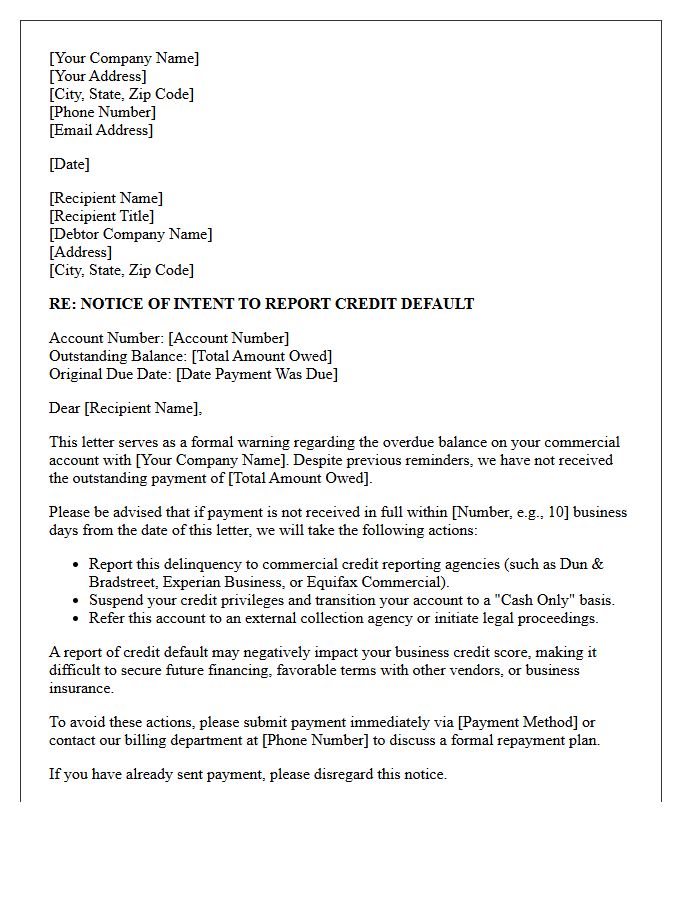
A Commercial Credit Default Warning Letter serves as a formal notification that a business has breached its loan or credit agreement. This critical document alerts the borrower to an overdue balance and outlines the specific actions required to avoid legal consequences or asset repossession. Ignoring this notice can severely damage corporate credit scores and trigger acceleration clauses, making the entire debt due immediately. To mitigate risk, businesses should prioritize a prompt response, legal review, and debt restructuring negotiations to maintain financial stability and preserve professional relationships.
Escalated B2B Debt Recovery Letter
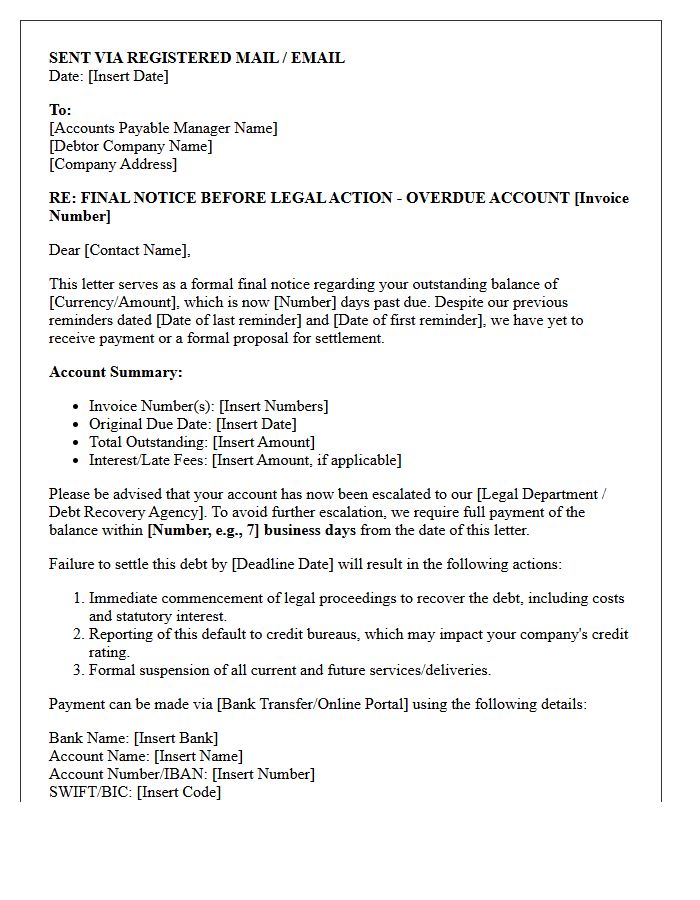
An escalated B2B debt recovery letter serves as a final formal demand before initiating legal action or involving a third-party collection agency. It emphasizes the urgency of unsettled commercial invoices and clearly outlines the impending consequences of non-payment. By professionally highlighting potential litigation, late payment interest, and impacts on credit ratings, this document encourages immediate settlement. It is a critical tool for maintaining cash flow while providing a clear audit trail for court proceedings, ensuring your business demonstrates a fair attempt to resolve the financial dispute amicably.
Notice of Intent to Pursue Legal Action Letter
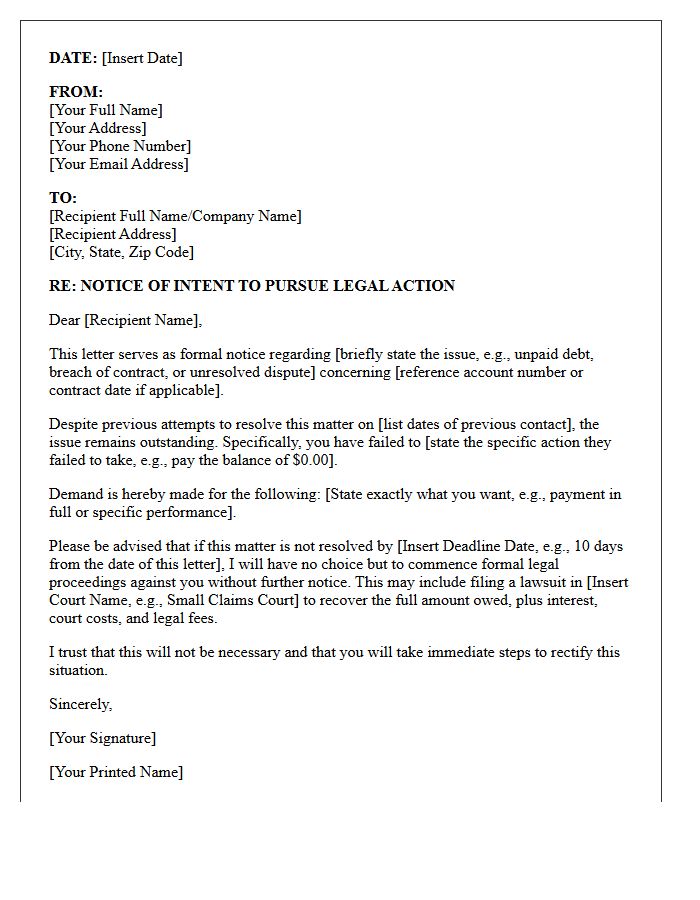
A Notice of Intent to Pursue Legal Action is a formal correspondence serving as a final warning before a lawsuit is filed. It outlines the specific legal grievances, demands a resolution-such as payment or performance-and sets a strict deadline for compliance. This document is essential for dispute resolution and often serves as critical evidence in court to prove that the sender attempted to settle the matter in good faith. Sending this letter is a mandatory procedural step in many jurisdictions to encourage a settlement without litigation.
Breach of Payment Terms Notification Letter
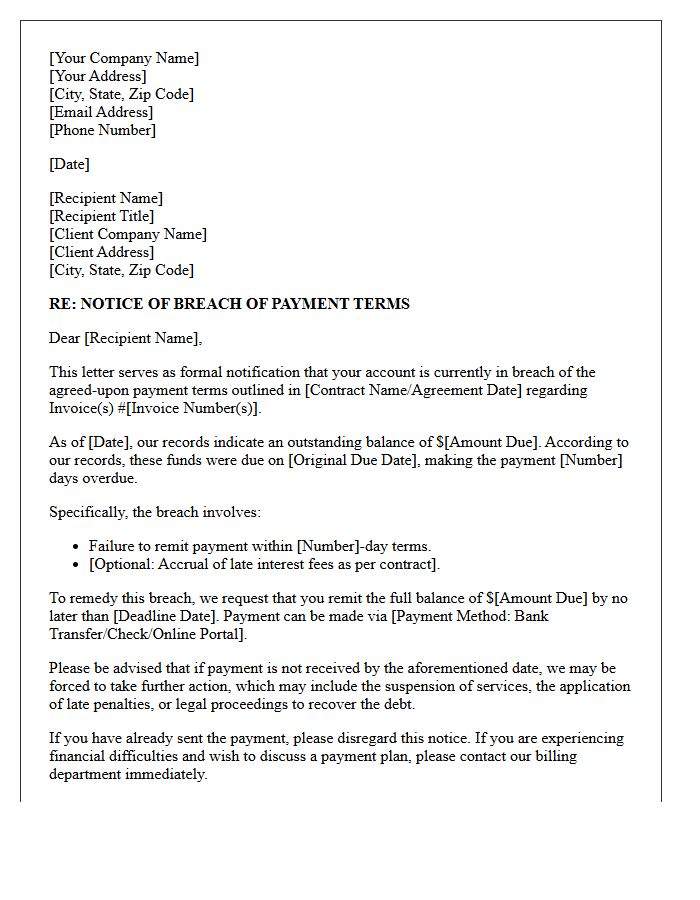
A Breach of Payment Terms Notification Letter is a formal legal document issued when a client fails to meet contractual financial obligations. It serves as an official notice of default, clearly outlining the outstanding balance, original due dates, and applicable late fees. This letter is a critical step in debt recovery, providing evidence of communication for potential litigation. To ensure effectiveness, it must specify a final deadline for payment and the subsequent legal actions intended if the debt remains unpaid. Professionalism is vital to protect the business relationship while demanding compliance.
External Collection Agency Transfer Letter
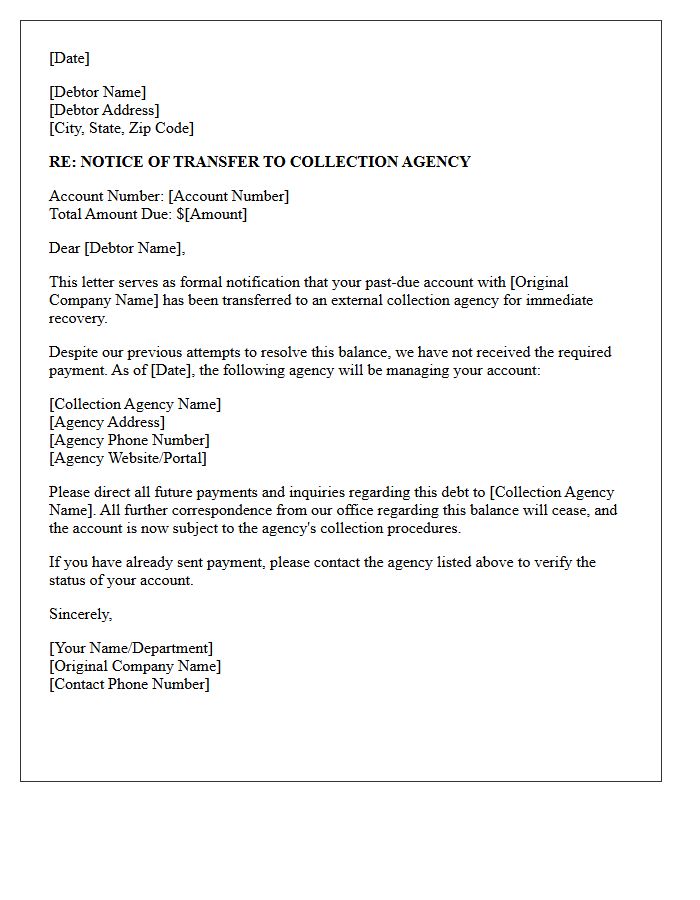
An External Collection Agency Transfer Letter is a formal notice informing a debtor that their delinquent account has been moved to a third-party firm. This final notice serves as a critical legal record, detailing the total balance owed and the new agency's contact information. Receiving this document signifies that the original creditor has ceased direct internal recovery efforts. It is essential to verify the debt immediately upon receipt to protect your credit score and understand your rights under the Fair Debt Collection Practices Act.
Pre-Litigation Final Warning Letter
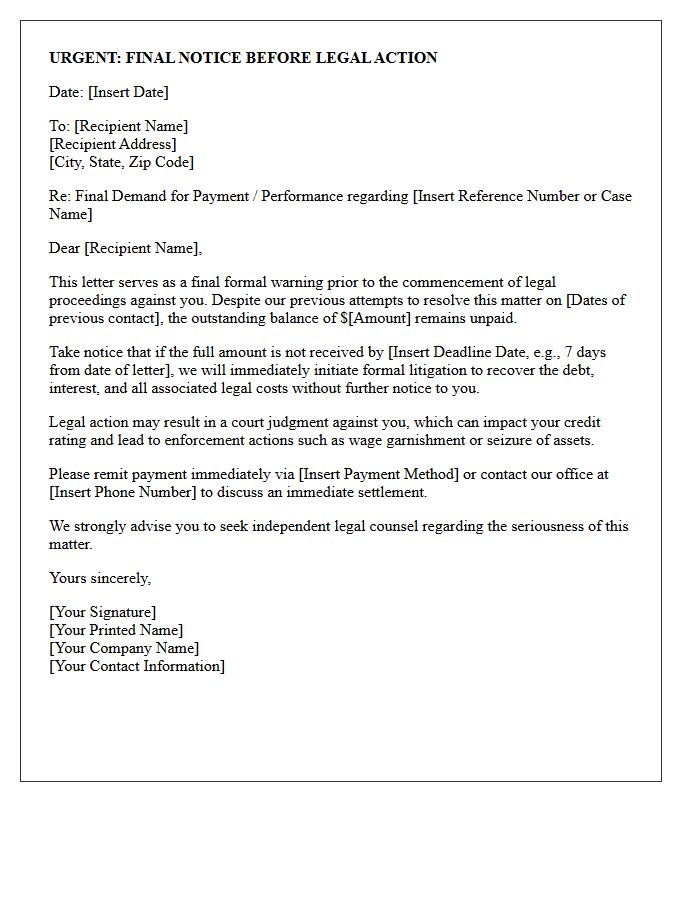
A Pre-Litigation Final Warning Letter serves as a formal notice before initiating a lawsuit. It clearly outlines the legal claim, specifies the required resolution, and sets a strict deadline for compliance. This document is essential for demonstrating to the court that you attempted to resolve the dispute through alternative dispute resolution before seeking judicial intervention. Sending this letter is a critical step to protect your rights, establish a paper trail, and potentially avoid costly litigation by encouraging a settlement.
What should be included in a B2B past due notice letter?
A B2B past due notice should include the invoice number, the total amount owed, the original due date, a clear call to action for payment, and your contact information for billing inquiries.
When is the best time to send a first past due notice to a business client?
The first past due notice should typically be sent 1 to 5 days after the invoice due date has passed, serving as a professional reminder in case the payment was simply overlooked.
How do I handle a business account that ignores multiple past due notices?
If initial notices are ignored, escalate the process by sending a formal "Final Demand" letter via certified mail, placing a phone call to their accounts payable department, and potentially applying pre-disclosed late fees.
Should I include a copy of the original invoice with the past due notice?
Yes, attaching a copy of the original invoice to your past due notice eliminates friction, ensuring the client has all the necessary details to process the payment immediately without searching their records.
Can a past due notice letter impact future B2B relationships?
When written professionally and objectively, a past due notice protects your cash flow without damaging the relationship. Using a tiered approach-starting with a friendly reminder-maintains goodwill while ensuring you get paid.


Comments