
When an account remains unpaid for four months, sending a formal One Hundred Twenty Days Past Due Notice Letter is a critical final step before legal action or debt collection. This formal notification serves as a final demand for payment to protect your cash flow and credit rights. To help you maintain professionalism, below are some ready to use template.

Image cover: 120 Days Past Due: Professional Collection Letter Samples and Templates
Letter Samples List
- One Hundred Twenty Days Past Due Final Demand Letter
- Pre-Legal Action One Hundred Twenty Days Past Due Letter
- Final Notice One Hundred Twenty Days Past Due Letter
- Account Escalation One Hundred Twenty Days Past Due Letter
- Intent to Sue One Hundred Twenty Days Past Due Letter
- Credit Bureau Reporting One Hundred Twenty Days Past Due Letter
- Collection Agency Transfer One Hundred Twenty Days Past Due Letter
- Final Settlement Offer One Hundred Twenty Days Past Due Letter
- Urgent Action Required One Hundred Twenty Days Past Due Letter
- Delinquent Account Closure One Hundred Twenty Days Past Due Letter
- Attorney Review One Hundred Twenty Days Past Due Notice Letter
- Debt Recovery Action One Hundred Twenty Days Past Due Letter
- Charge-Off Warning One Hundred Twenty Days Past Due Letter
One Hundred Twenty Days Past Due Final Demand Letter
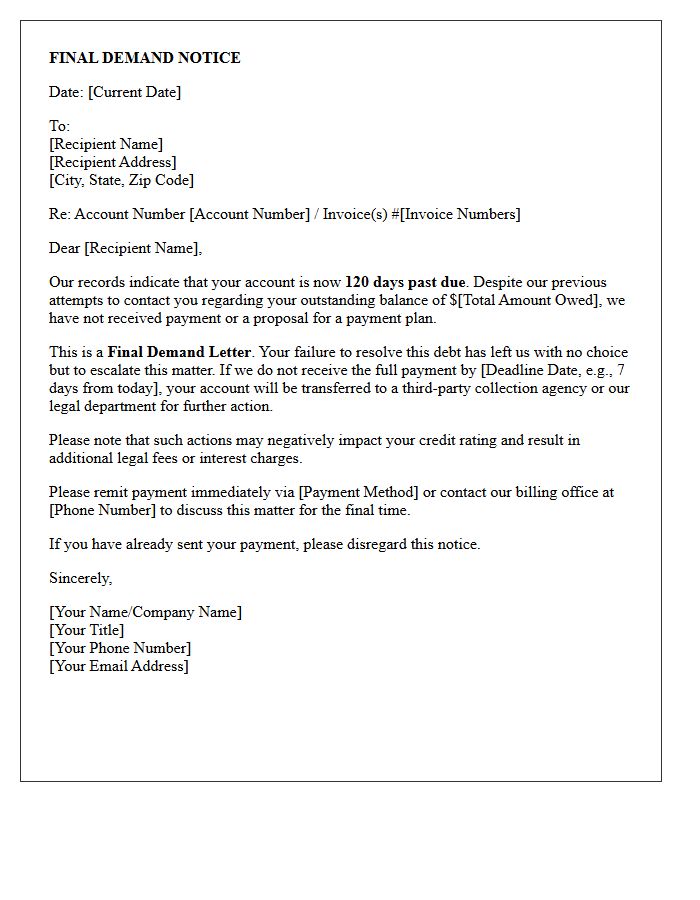
A One Hundred Twenty Days Past Due Final Demand Letter serves as the ultimate notice before a creditor initiates legal action or debt placement with a third-party collection agency. At this 120-day threshold, the account is typically classified as a default, severely impacting the debtor's credit score. This formal document outlines the total balance, including accrued interest and late fees, providing a final opportunity to settle the debt. Failure to respond to this final demand usually results in litigation, wage garnishment, or the reporting of a charge-off to credit bureaus.
Pre-Legal Action One Hundred Twenty Days Past Due Letter
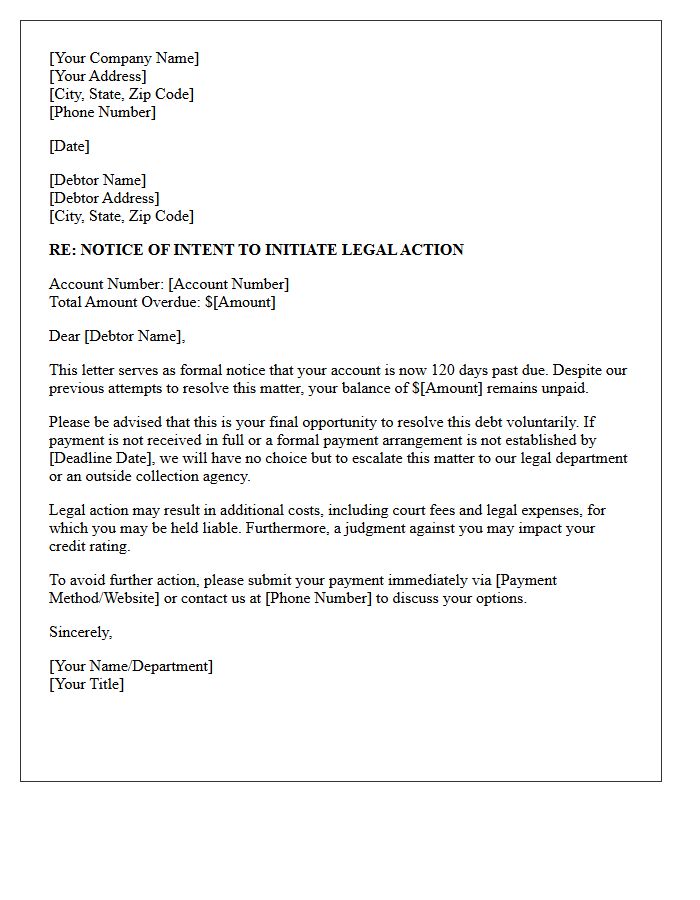
A Pre-Legal Action One Hundred Twenty Days Past Due Letter serves as a final formal notice before a creditor initiates litigation. Reaching the 120-day mark signifies a critical transition from internal collections to potential court proceedings or debt sale. This document outlines the total outstanding balance, interest, and legal fees while providing a specific deadline for payment. Ignoring this notice often leads to a summons, wage garnishment, or property liens. It is the last opportunity for a debtor to negotiate a settlement or payment plan to avoid a permanent negative impact on their credit report.
Final Notice One Hundred Twenty Days Past Due Letter
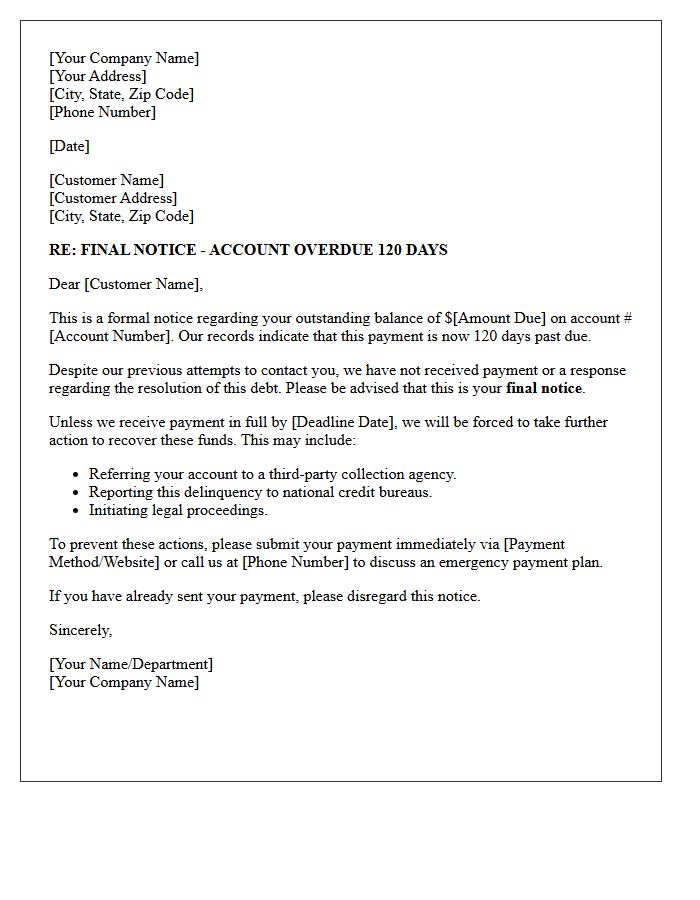
A Final Notice One Hundred Twenty Days Past Due Letter represents a critical escalation in debt collection. Receiving this means your account is severely delinquent and at immediate risk of legal action or being sold to a third-party agency. This document serves as the last warning before a formal default is recorded on your credit report. To prevent long-term financial damage, you must contact the creditor immediately to arrange a payment plan or settlement. Ignoring this final communication often results in litigation, wage garnishment, or permanent loss of service.
Account Escalation One Hundred Twenty Days Past Due Letter
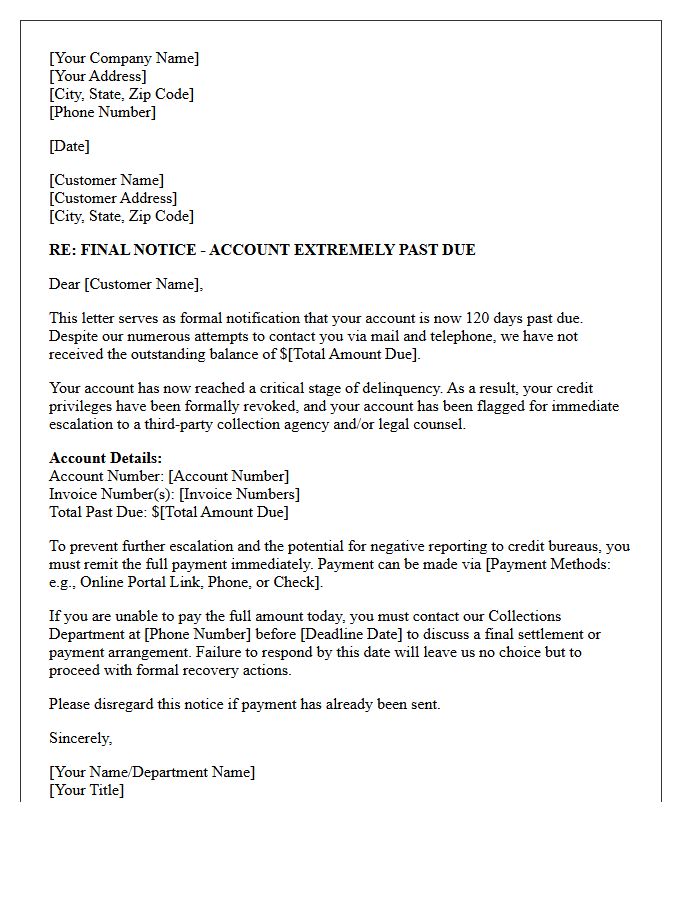
An Account Escalation One Hundred Twenty Days Past Due Letter serves as a final formal notice before debt is transferred to a collections agency. This critical document warns the debtor that their delinquency has reached a severe stage, potentially leading to legal action or a permanent negative impact on their credit score. It typically includes the total balance owed, late fees, and a firm deadline for payment. Receiving this letter indicates that the creditor is prepared to write off the debt as a charge-off, making immediate communication essential to avoid litigation.
Intent to Sue One Hundred Twenty Days Past Due Letter
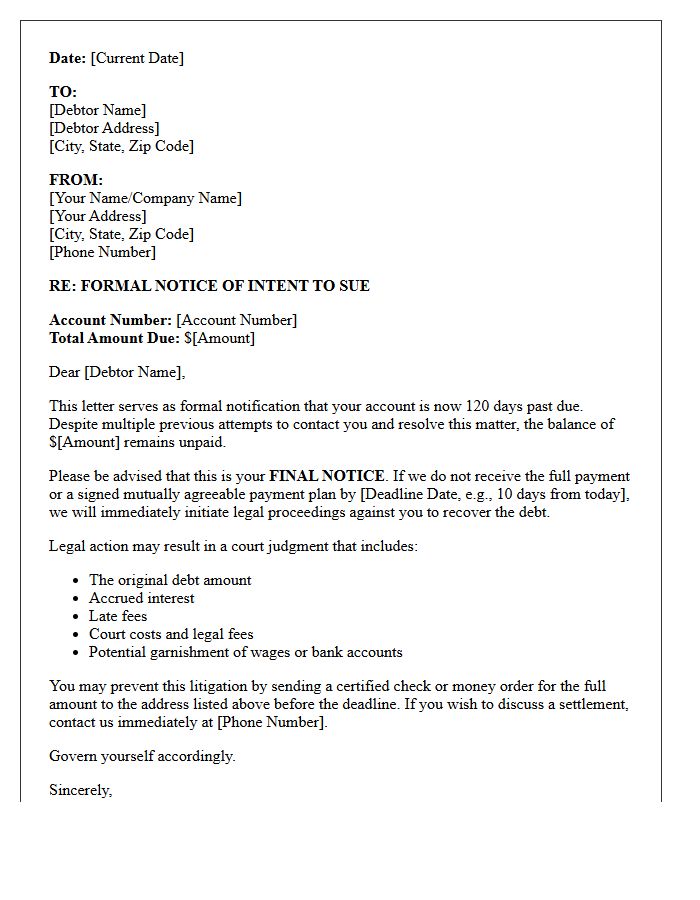
An Intent to Sue letter issued at one hundred twenty days past due serves as a final formal warning before litigation commences. This critical notice informs the debtor that the creditor has exhausted standard collection efforts and is preparing to file a summons and complaint. Receiving this document signifies a shift from negotiation to legal action, which can result in judgments, wage garnishments, or property liens. It provides a final window to resolve the delinquency through payment or settlement to avoid the significant costs and credit damage associated with a court case.
Credit Bureau Reporting One Hundred Twenty Days Past Due Letter
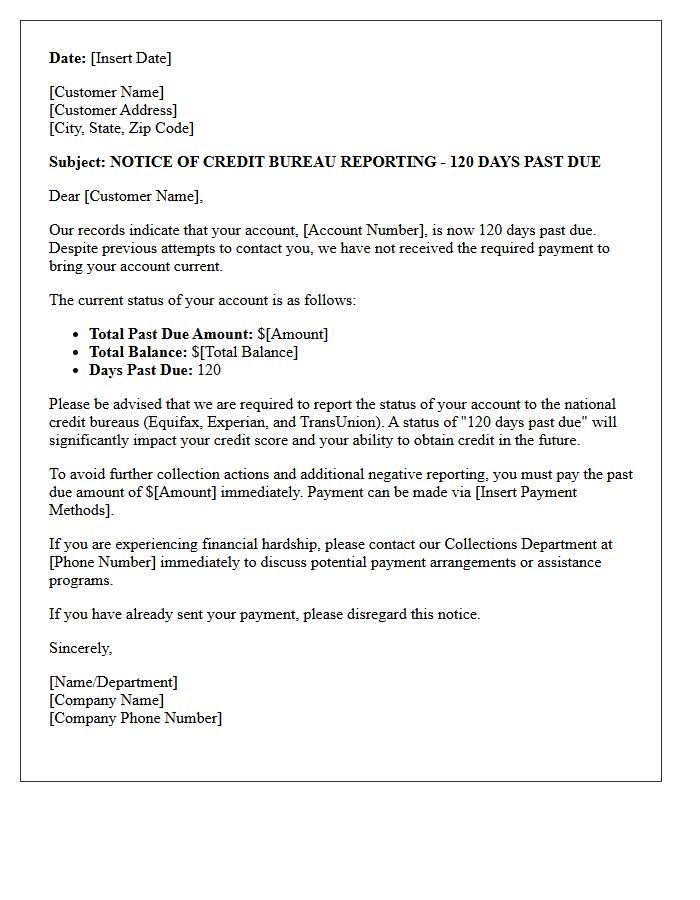
Receiving a 120 days past due letter is a critical warning that your account is approaching charge-off status. At this four-month milestone, creditors typically report the severe delinquency to major bureaus, causing a significant drop in your credit score. This notification serves as a final opportunity to settle the debt or enter a repayment plan before the file is sent to third-party collections or legal action is initiated. Prompt communication with the lender is essential to prevent long-term financial damage and potential litigation regarding the outstanding balance.
Collection Agency Transfer One Hundred Twenty Days Past Due Letter
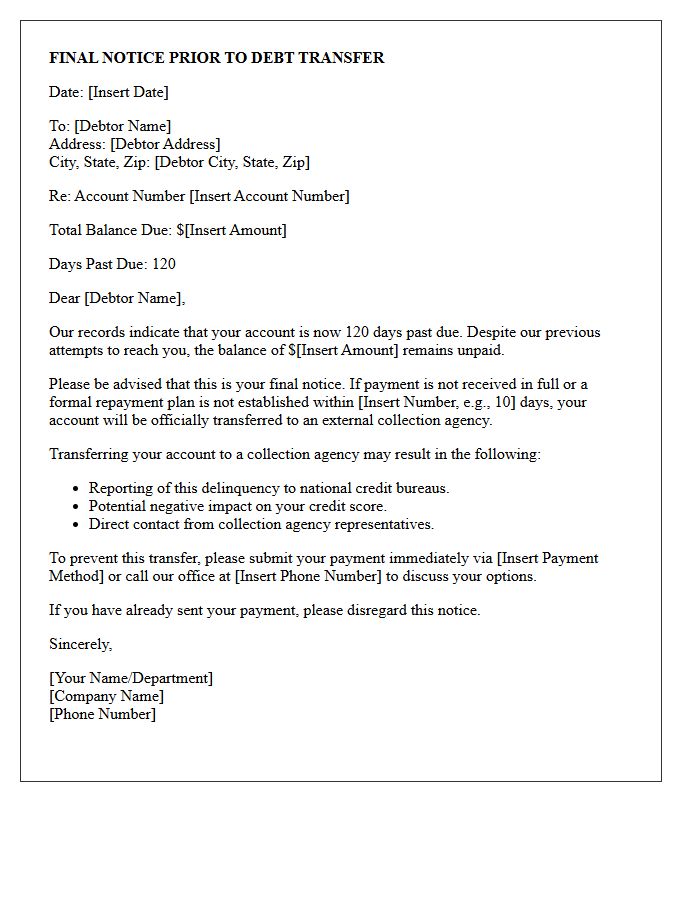
A Collection Agency Transfer notice typically arrives once an account is one hundred twenty days past due. This formal letter signifies that the original creditor has moved your debt to a third-party collector for recovery. At this stage, your credit score is often significantly impacted. It is crucial to verify the debt's accuracy and understand your rights under the Fair Debt Collection Practices Act. Promptly addressing this letter can prevent further legal action, additional interest accrual, or long-term damage to your financial profile. Always request written validation of the debt immediately.
Final Settlement Offer One Hundred Twenty Days Past Due Letter
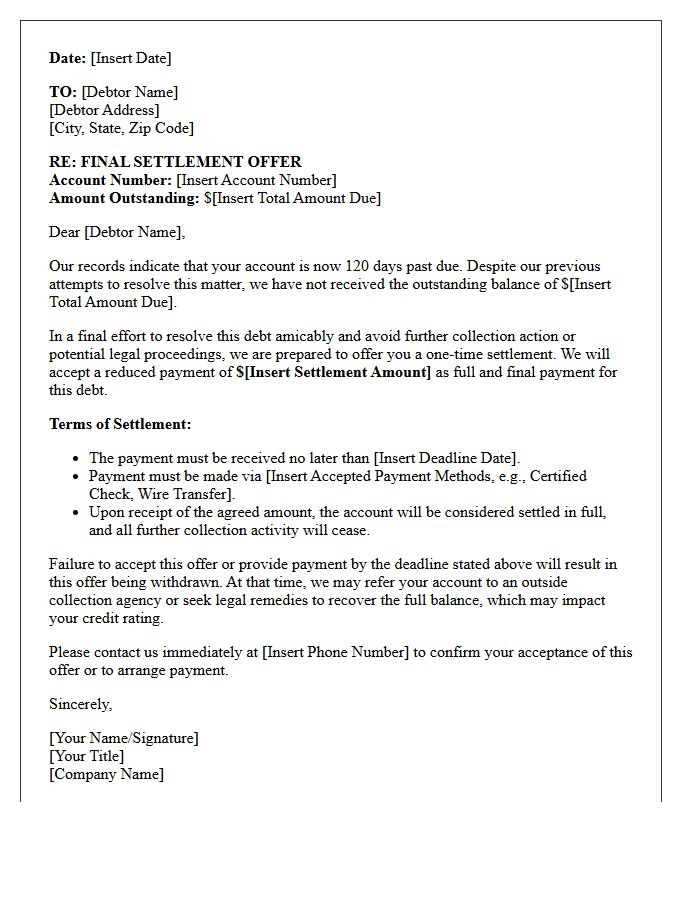
A Final Settlement Offer for accounts one hundred days past due represents a critical last chance to resolve debt before legal action or professional collection begins. This formal notification proposes a reduced lump-sum payment to satisfy the balance. Understanding this letter is vital, as it often includes a strict deadline to prevent further credit damage. Accepting the offer can mitigate financial loss, but you must ensure the agreement is documented in writing to guarantee the debt is legally extinguished and reported accurately to credit bureaus.
Urgent Action Required One Hundred Twenty Days Past Due Letter
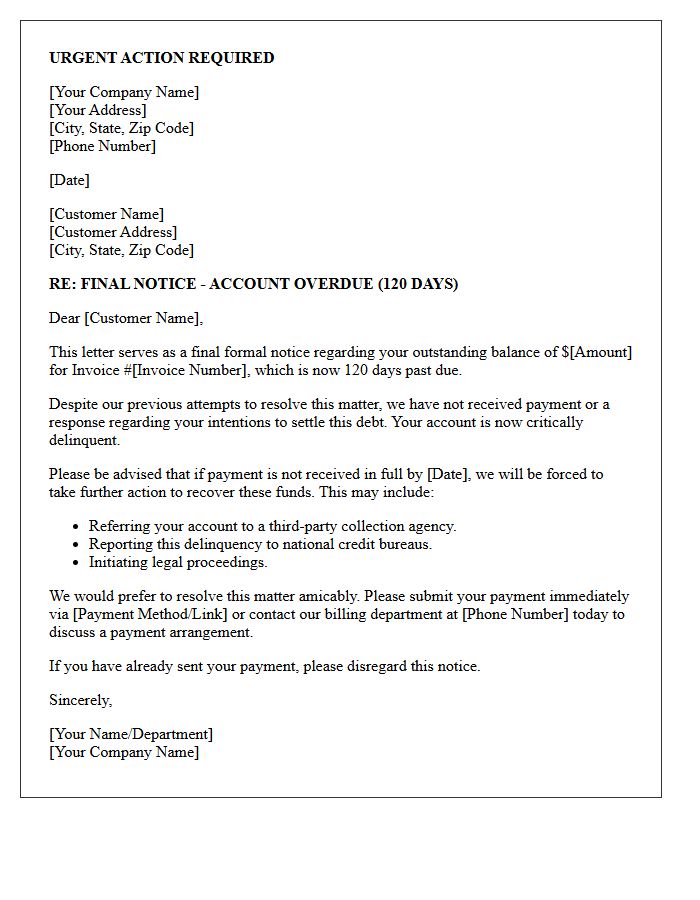
Receiving an Urgent Action Required One Hundred Twenty Days Past Due Letter signifies a critical escalation in the collection process. At this 120-day mark, your account is typically classified as severely delinquent and faces an immediate risk of being charged off or sold to a third-party agency. To prevent permanent credit score damage and potential legal action, you must contact the creditor instantly to negotiate a settlement or repayment plan. Taking proactive steps now is the final opportunity to resolve the debt before it enters formal recovery proceedings.
Delinquent Account Closure One Hundred Twenty Days Past Due Letter
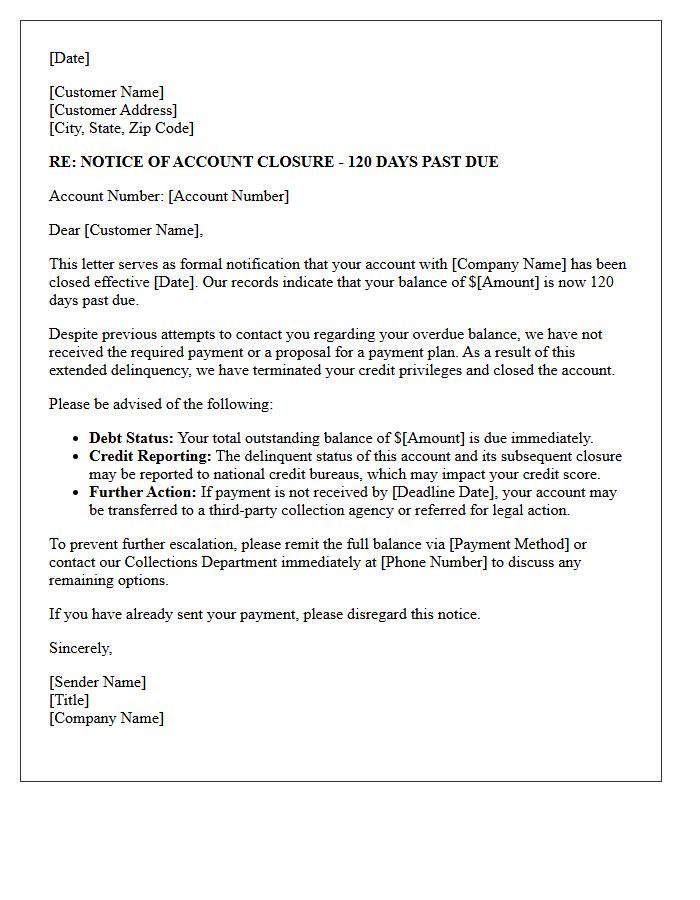
A Delinquent Account Closure letter serves as a final notice before permanent termination of credit privileges. Once a debt reaches one hundred twenty days past due, financial institutions typically transition from collection efforts to charging off the balance. This notification warns that the account will be closed and the default reported to credit bureaus, severely damaging your score. To prevent legal action or the sale of your debt to third-party collectors, immediate payment or settlement is required before the specified deadline expires.
Attorney Review One Hundred Twenty Days Past Due Notice Letter
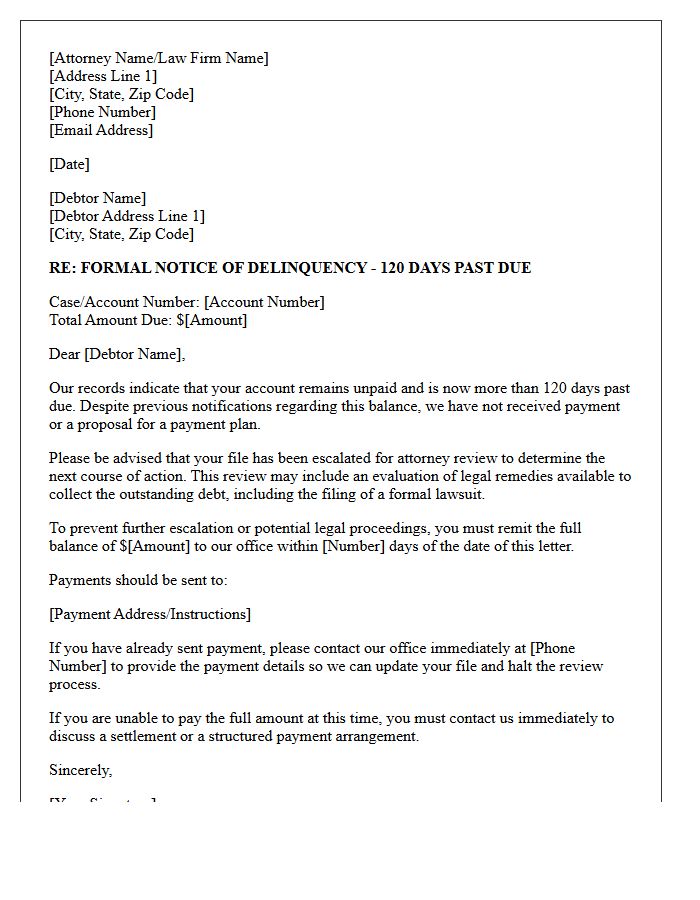
Receiving an Attorney Review One Hundred Twenty Days Past Due Notice Letter indicates a serious escalation in debt collection. At this stage, your account is typically flagged for legal action or litigation. This formal notice serves as a final opportunity to resolve the balance before a law firm initiates a lawsuit to secure a judgment. It is critical to respond immediately to negotiate a settlement or verify the debt, as ignoring this 120-day milestone often leads to wage garnishment or property liens once the court process begins.
Debt Recovery Action One Hundred Twenty Days Past Due Letter
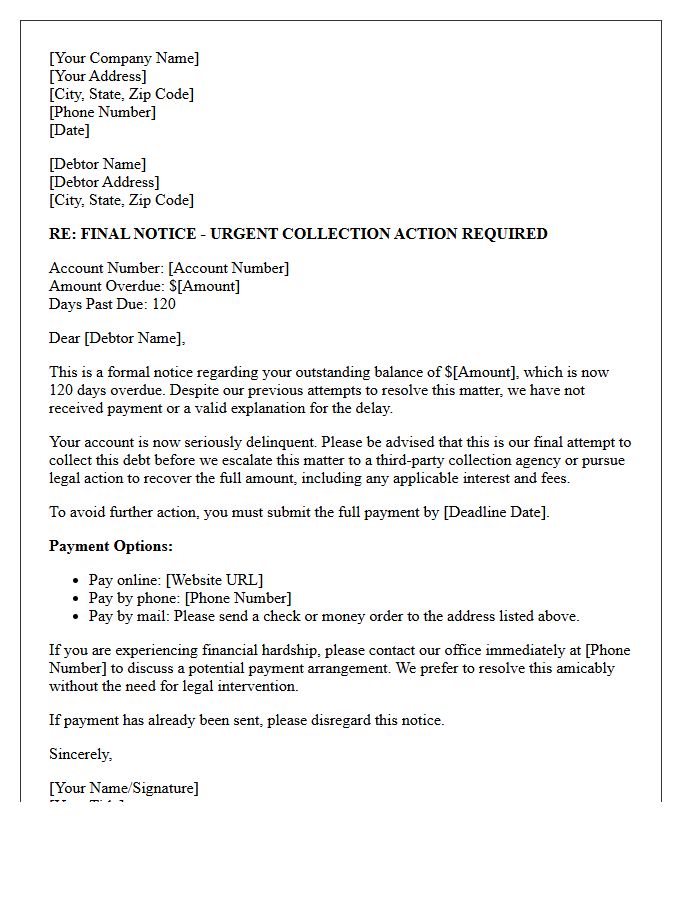
A 120-day past due letter represents a final warning in the debt recovery process before escalating to legal action or third-party collection agencies. At this stage, the account is typically classified as severely delinquent, negatively impacting the debtor's credit score and financial standing. This formal notice serves as a final demand for payment, outlining the outstanding balance, accumulated interest, and the specific deadline to settle the debt. Receiving this document signifies that the creditor is prepared to pursue litigation or write off the debt as a loss for tax purposes.
Charge-Off Warning One Hundred Twenty Days Past Due Letter
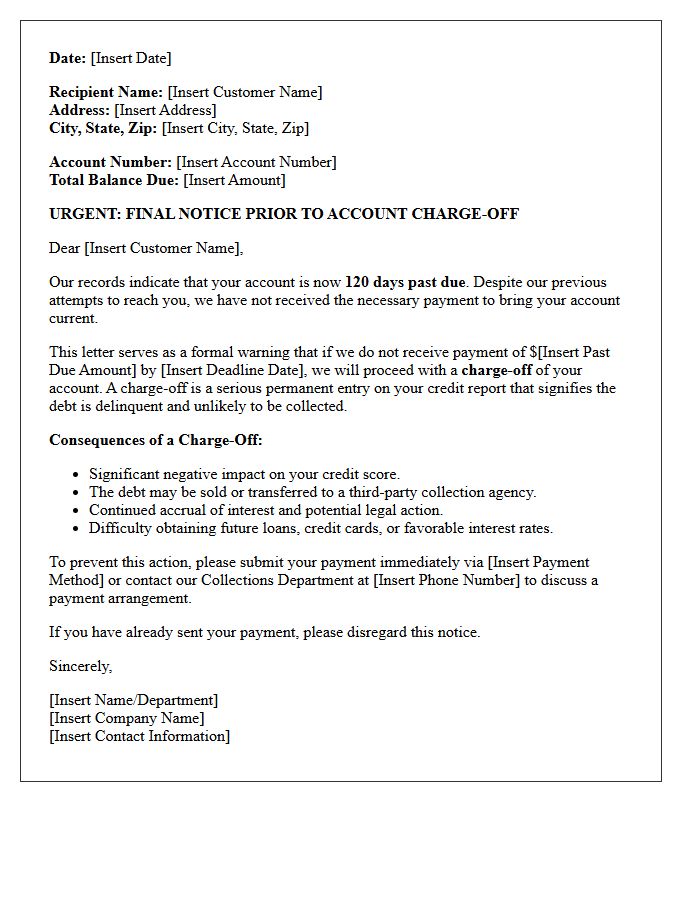
Receiving a charge-off warning indicates your account is one hundred twenty days past due, signaling the final stage before a creditor declares the debt uncollectible. This serious notice serves as a final opportunity to prevent a permanent negative entry on your credit report. A charge-off severely damages your credit score and may lead to third-party collections or legal action. To protect your financial standing, you must settle the balance or arrange a payment plan immediately to stop the formal default process before the reporting deadline expires.
What is a One Hundred Twenty Days Past Due Notice Letter?
A One Hundred Twenty Days Past Due Notice Letter is a formal written notification sent by a creditor to a debtor when a payment is 120 days (four months) late. It serves as a final demand for payment before the account is typically charged off or transferred to a professional debt collection agency.
What happens if I ignore a 120-day past due notice?
Ignoring a 120-day past due notice usually results in severe financial consequences, including a significant drop in your credit score, the permanent closure of your account, and the potential for legal action or the debt being sold to a third-party collection agency.
Can a 120-day past due notice be removed from a credit report?
A 120-day late payment mark generally remains on your credit report for seven years. However, you can attempt to have it removed by negotiating a "pay for delete" agreement, filing a dispute if the information is inaccurate, or submitting a goodwill letter if you have since regained good standing.
What should be included in a formal 120-day past due letter?
A formal 120-day past due letter should include the total balance owed (including late fees and interest), the original due date, clear instructions on how to remit payment immediately, and a final warning regarding the intent to report the delinquency to credit bureaus or initiate legal recovery.
Is a 120-day past due notice the same as a default notice?
While they are related, a 120-day past due notice is often the final step before an account is officially declared in default. Most creditors consider an account "in default" or "charged off" once it reaches the 120 to 180-day window of non-payment, depending on the type of loan or credit agreement.


Comments