
A Telecommunications Past Due Notice Letter is a formal request for payment sent to customers with overdue balances. It outlines the amount owed, the deadline, and potential service suspension to encourage immediate settlement. Maintaining professional communication helps recover debt while preserving client relationships. To simplify your collection process, below are some ready to use templates.

Image cover: Professional Telecommunications Past Due Notice Templates and Samples
Letter Samples List
- First Notice of Overdue Telecommunications Balance Letter
- Second Request for Past Due Telecom Payment Letter
- Urgent Mobile Service Debt Collection Letter
- Final Notice Before Telecommunications Disconnection Letter
- Overdue Internet and Cable Services Reminder Letter
- Telecommunications Account Suspension Warning Letter
- Pre-Legal Telecommunications Debt Recovery Letter
- Unpaid Telecommunications Equipment Return and Balance Letter
- Post-Cancellation Telecommunications Debt Notice Letter
- Telecommunications Outstanding Balance Settlement Offer Letter
- Notice of Defaulted Telecommunications Contract Letter
- Final Demand for Telecommunications Payment Letter
First Notice of Overdue Telecommunications Balance Letter
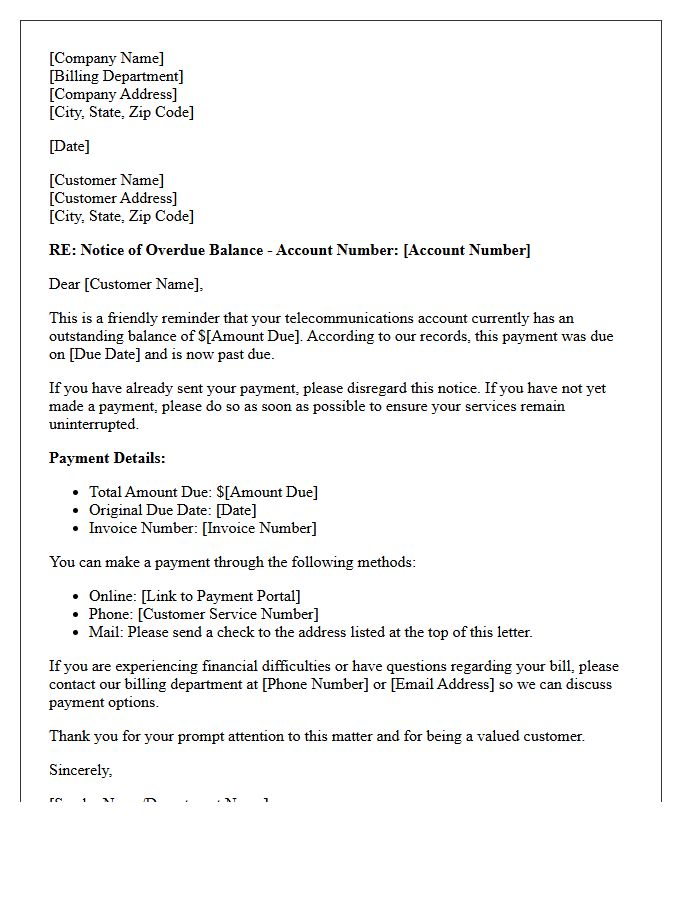
A First Notice of Overdue Telecommunications Balance is a formal alert indicating your account has an unpaid debt. It serves as a preliminary warning before service suspension or late fees are applied. To maintain active connectivity, you must verify the bill details and settle the outstanding amount immediately. Ignoring this document may lead to credit reporting or your account being sent to a collection agency. Contact your provider promptly to discuss payment arrangements or dispute any potential billing errors found in the statement.
Second Request for Past Due Telecom Payment Letter
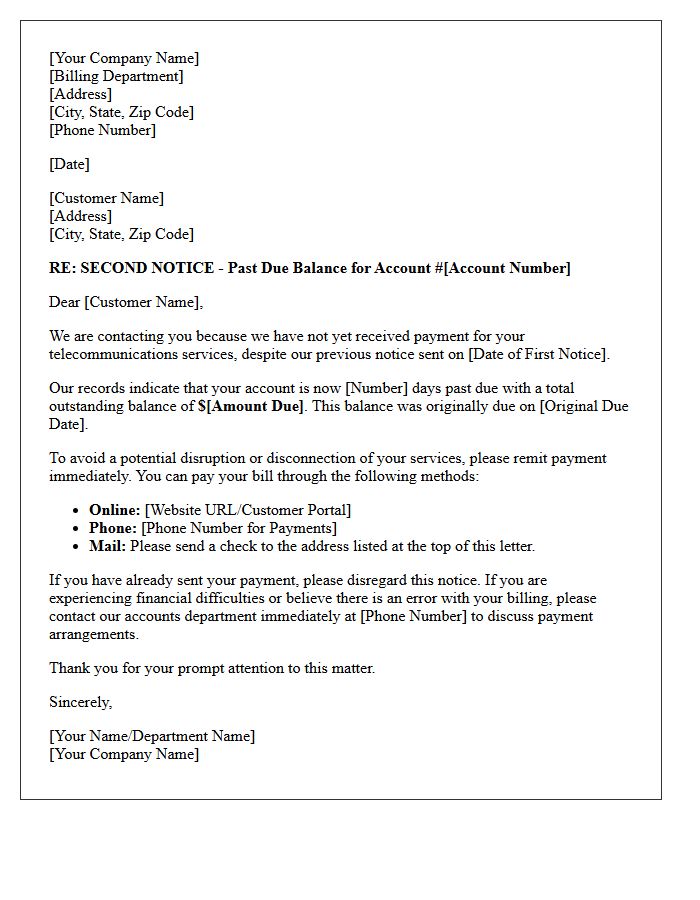
A second request for a past due telecom payment serves as a formal demand to settle outstanding balances before service interruption occurs. This notice emphasizes the urgency of the delinquent account status, often outlining potential late fees or credit reporting consequences. It is essential to provide clear payment instructions and contact details for dispute resolution or financial hardship assistance. Addressing this letter promptly ensures uninterrupted connectivity and prevents the escalation of collection efforts or permanent disconnection of vital communication services.
Urgent Mobile Service Debt Collection Letter
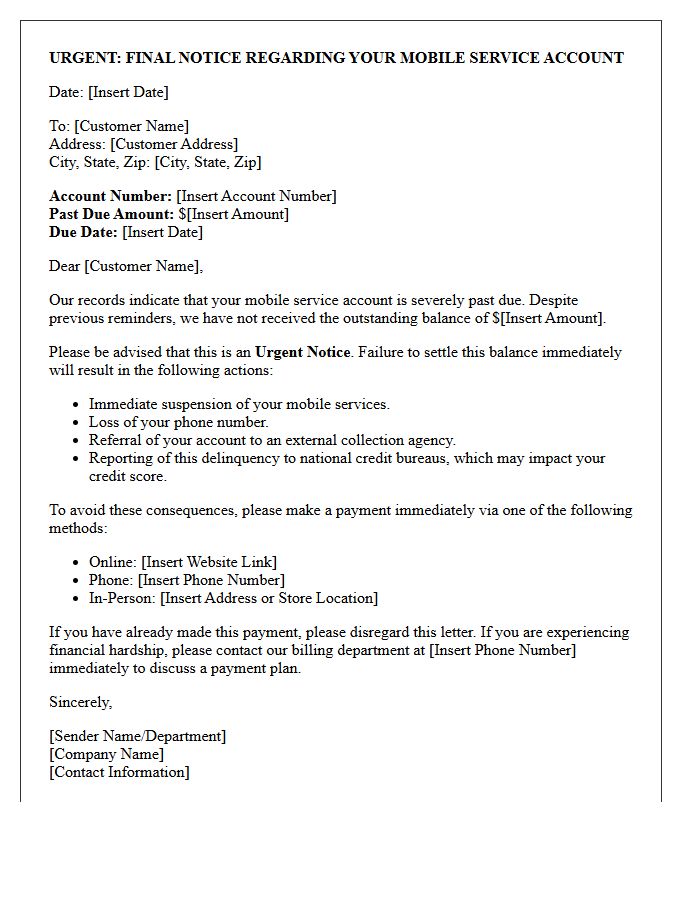
An Urgent Mobile Service Debt Collection Letter is a formal notice demanding immediate payment for outstanding cellular balances. Receiving this legal correspondence indicates your account is past due and may soon be transferred to a third-party agency. To protect your credit score and maintain connectivity, you must verify the debt amount and respond before the stated deadline. Resolving the delinquent balance early prevents additional late fees, service disconnection, and potential long-term damage to your financial history. Always request a written validation of the debt to ensure all charges are accurate.
Final Notice Before Telecommunications Disconnection Letter
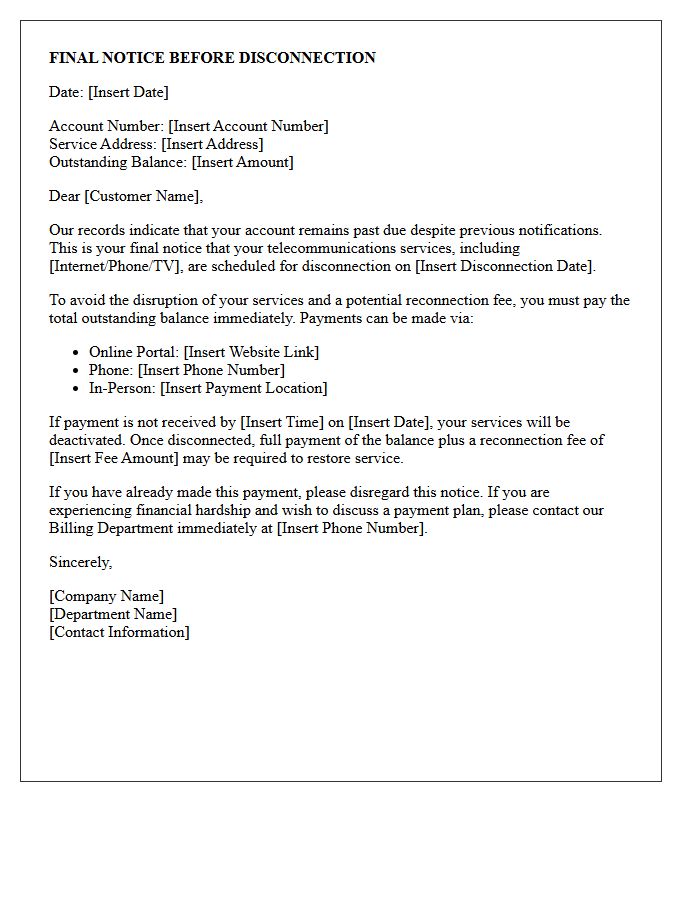
A Final Notice Before Telecommunications Disconnection is a critical legal warning indicating that your service will be terminated due to unpaid balances. This document serves as the last opportunity to settle arrears or establish a payment plan before losing connectivity. It typically outlines the total amount due, the specific disconnection date, and potential reconnection fees. Ignoring this notice can lead to credit score damage and debt collection actions. To prevent an immediate outage, you must contact your provider's billing department instantly to verify your account status and explore available financial hardship options.
Overdue Internet and Cable Services Reminder Letter
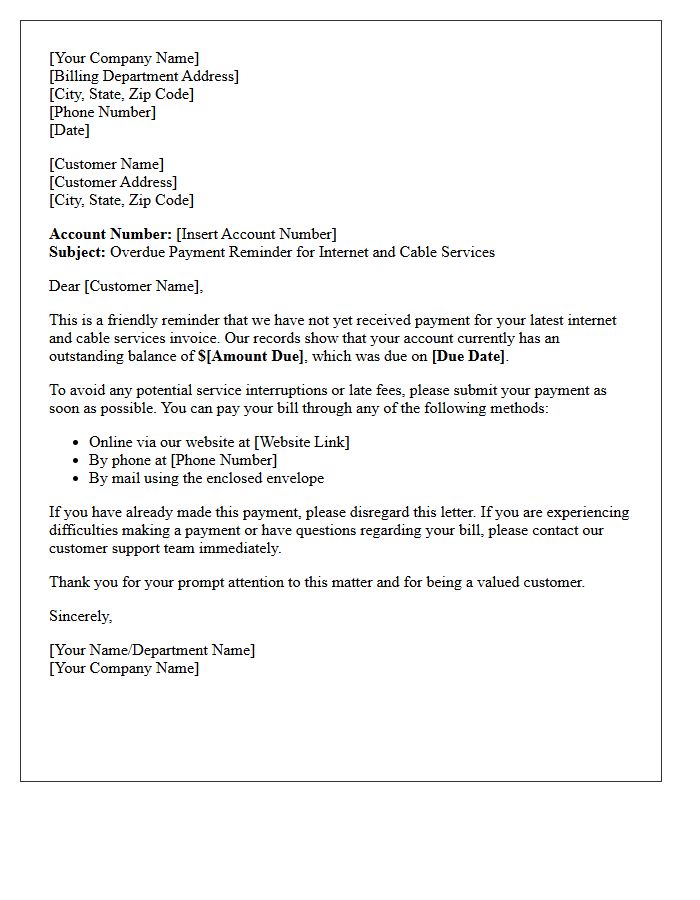
An Overdue Internet and Cable Services Reminder Letter acts as a formal notification to subscribers regarding unpaid balances. This document serves to prevent immediate service disconnection by providing a clear grace period. It must include the exact outstanding amount, the original due date, and available payment methods. Receiving this letter is a critical warning to settle arrears to avoid service interruption, late fees, or negative impacts on your credit score. Clear communication between the provider and customer helps resolve billing discrepancies and ensures continuous digital connectivity.
Telecommunications Account Suspension Warning Letter
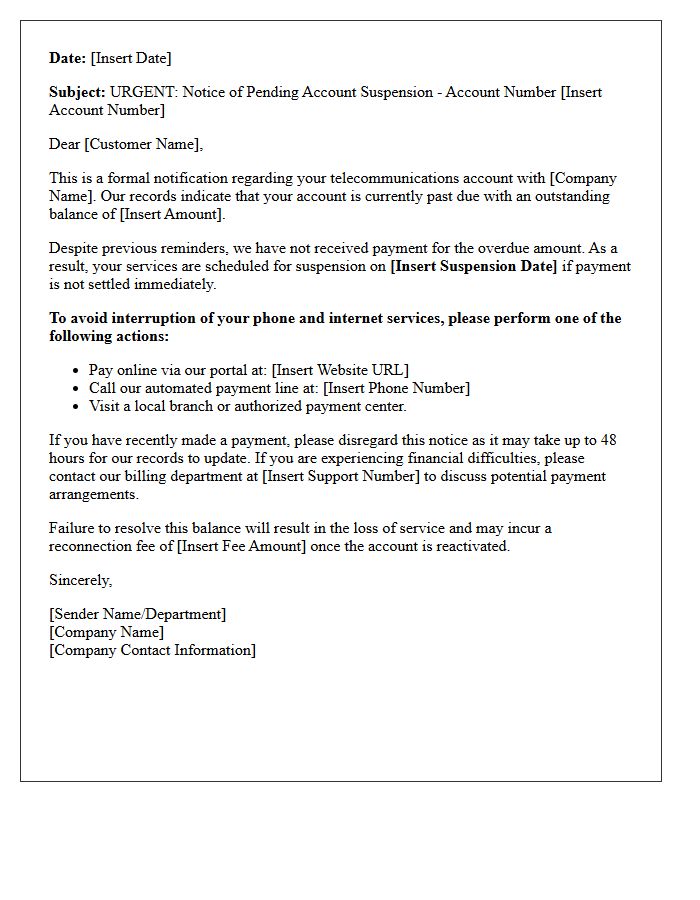
A telecommunications account suspension warning letter is a formal notice indicating that your service will be disconnected due to overdue payments or policy violations. It is crucial to verify the sender immediately to avoid potential phishing scams. To prevent a total loss of connectivity, you must settle the outstanding balance or contact the provider's billing department before the specified deadline. Ignoring this notice may lead to additional reconnection fees, permanent account closure, and negative impacts on your credit score. Prompt communication with your service provider is the most effective way to resolve service interruptions.
Pre-Legal Telecommunications Debt Recovery Letter
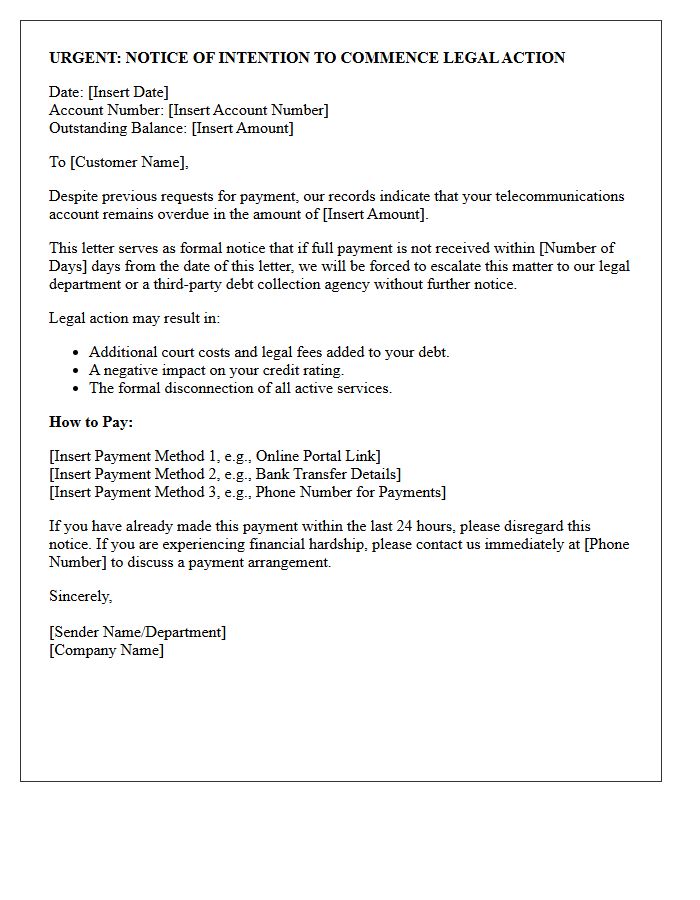
A pre-legal telecommunications debt recovery letter is a formal notice sent to resolve overdue accounts before pursuing court action. This document serves as a final demand, clearly outlining the outstanding balance, payment deadlines, and potential consequences of non-payment. Receiving this Letter of Claim signifies that the service provider may initiate litigation or involve bailiffs if the debt remains unpaid. Addressing this notice immediately is essential to avoid judgment records (CCJs), which can severely damage your credit rating and limit future financial opportunities or service contracts.
Unpaid Telecommunications Equipment Return and Balance Letter
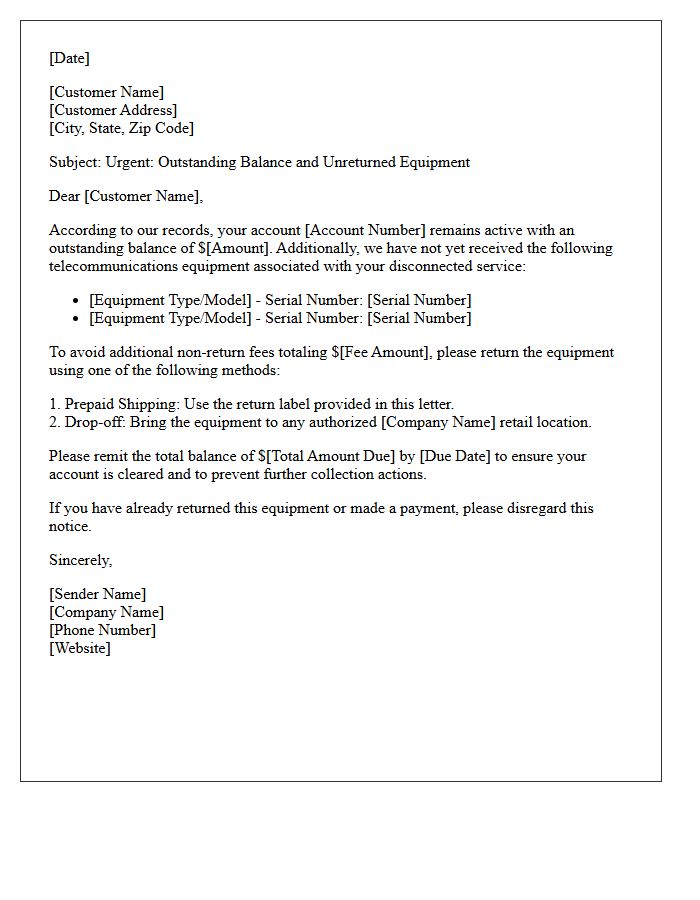
An Unpaid Telecommunications Equipment Return and Balance Letter is a formal notice sent by service providers to former customers. It serves as a final demand to return hardware, such as modems or routers, and settle any outstanding service fees. Failure to comply can negatively impact your credit score and lead to collection agency involvement. To resolve this, verify your return receipts, confirm the final account balance, and contact the provider immediately to prevent further financial penalties or long-term damage to your credit history.
Post-Cancellation Telecommunications Debt Notice Letter
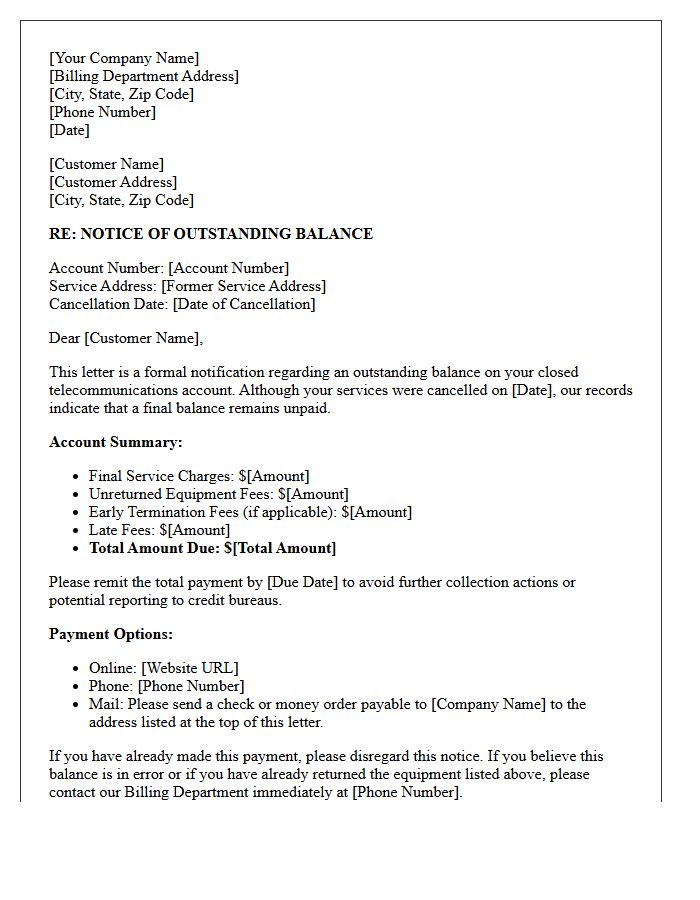
A post-cancellation telecommunications debt notice letter is a formal demand for outstanding balances remaining after a service contract ends. It is crucial to verify the accuracy of the final bill against your records to avoid overpayment. Failure to resolve this debt promptly can lead to credit score damage or referral to third-party collection agencies. Always request a written validation of the debt and keep proof of final payments to ensure your consumer rights are protected under fair debt collection practices.
Telecommunications Outstanding Balance Settlement Offer Letter
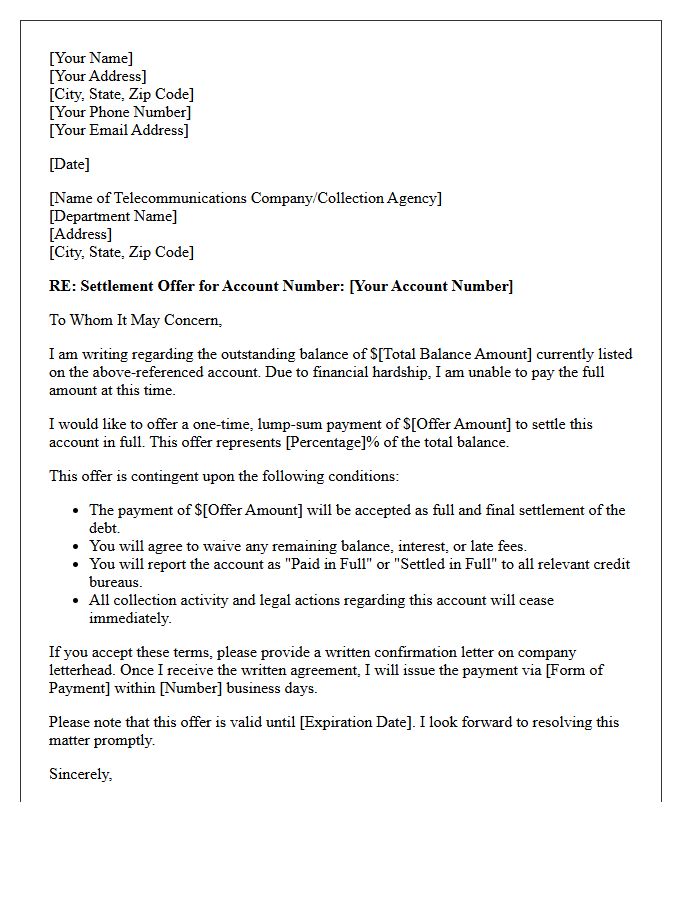
A Telecommunications Outstanding Balance Settlement Offer Letter is a formal proposal to resolve unpaid debt for a lower amount than originally owed. Receiving this notice indicates that the service provider or a collection agency is willing to accept a one-time lump sum payment to close the account permanently. It is crucial to verify the debt's validity and ensure the agreement is documented in writing before paying. Successfully fulfilling this offer prevents further collection actions and helps protect your credit score from long-term negative reporting.
Notice of Defaulted Telecommunications Contract Letter
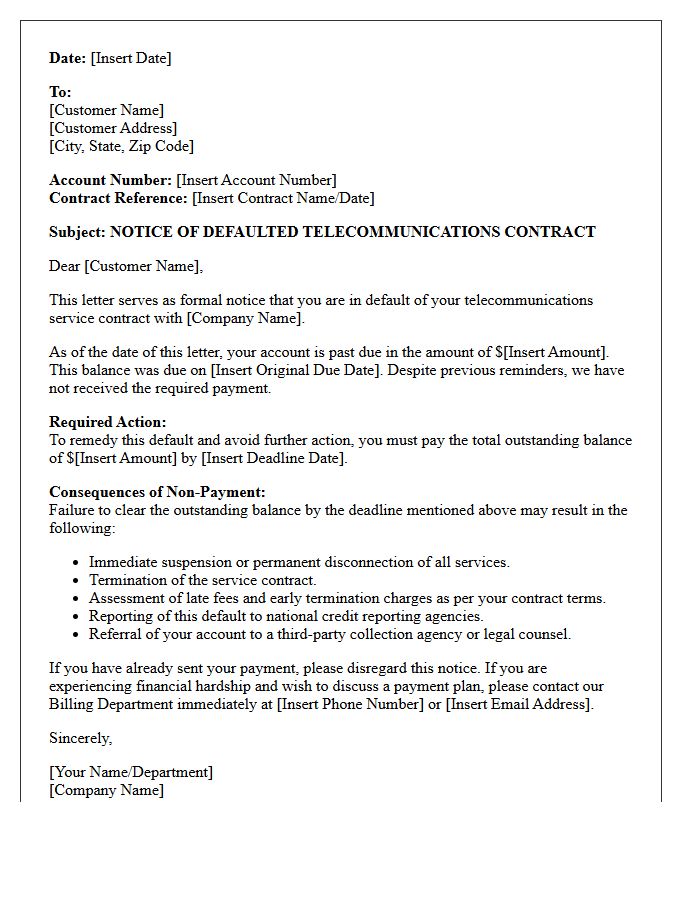
A Notice of Defaulted Telecommunications Contract is a formal legal alert indicating you have breached your service agreement. This document typically signifies overdue payments or unfulfilled terms, warning that your account may be sent to a debt collection agency. Receiving this letter is critical as it impacts your credit score and future service eligibility. You must respond promptly to settle the balance or dispute inaccuracies to prevent legal action or permanent service disconnection. Always verify the debt details and keep a written record of all communications with the provider to protect your consumer rights.
Final Demand for Telecommunications Payment Letter
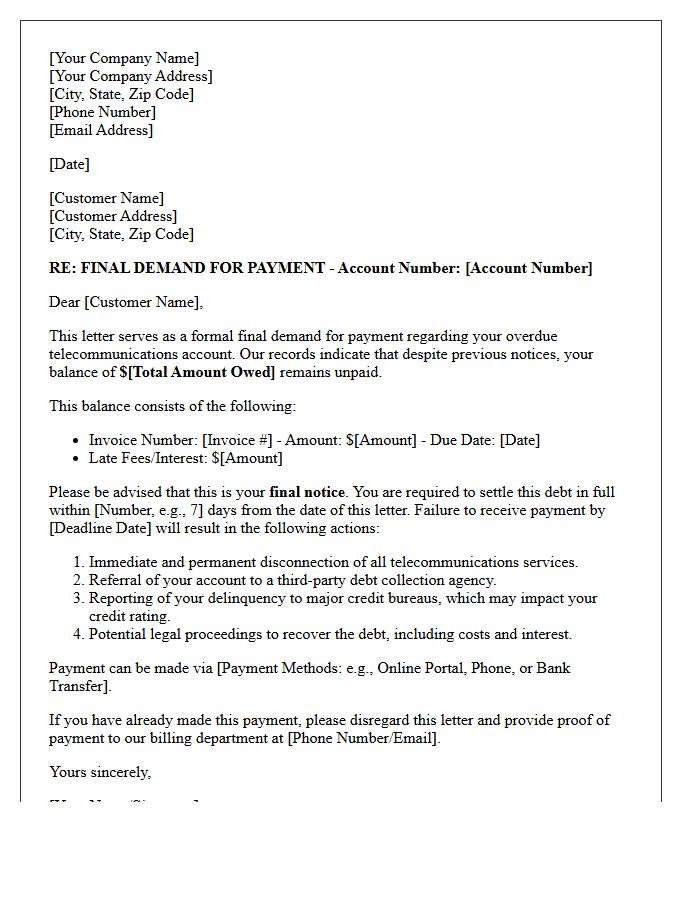
A Final Demand for Telecommunications Payment Letter is a legal notice issued when an account is severely overdue. It serves as a last warning before a service provider initiates disconnection or refers the debt to a collection agency. This document outlines the total outstanding balance, the deadline for payment, and potential consequences like credit score damage. To avoid litigation, it is crucial to respond immediately by settling the arrears or negotiating a repayment plan to maintain essential communication services and financial standing.
What is a telecommunications past due notice letter?
A telecommunications past due notice is a formal notification sent by a service provider to inform a customer that their account balance for phone, internet, or data services is overdue. The letter serves as a reminder to settle the outstanding payment to avoid service interruptions or late fees.
How long do I have to pay after receiving a past due notice?
Typically, most telecommunications providers offer a grace period of 5 to 10 days from the date of the notice before taking further action. Specific deadlines and potential disconnection dates are usually clearly outlined within the body of the letter.
Will a past due notice from my telecom provider affect my credit score?
Receiving an initial past due notice generally does not impact your credit score if the balance is paid promptly. However, if the account remains unpaid and is eventually handed over to a third-party collection agency or reported as a default, it can significantly lower your credit rating.
Can my internet or phone service be disconnected for one late payment?
Yes, providers have the right to suspend or disconnect services if terms of payment are not met. Most companies will send at least one past due notice or "Final Notice" before termination, but the specific timeline depends on your service agreement and local consumer protection regulations.
What should I do if I cannot afford to pay the full balance on my notice?
If you are unable to pay the full amount, you should immediately contact the provider's billing department to request a payment arrangement or a deferred payment plan. Many telecommunications companies offer financial hardship programs to help customers maintain essential connectivity while clearing their debt.


Comments