
Confirming a Renegotiated Payment Plan in writing ensures legal clarity and protects both parties. This formal letter documents updated installment amounts, revised deadlines, and interest adjustments to prevent future disputes. Establishing a clear paper trail is essential for professional debt management and financial stability. To help you get started, below are some ready to use template options.
Image cover: Official Confirmation Templates for Your Renegotiated Payment Plan
Letter Samples List
- Standard Renegotiated Payment Plan Confirmation Letter
- Financial Hardship Renegotiated Payment Plan Letter
- Restructured Debt Renegotiated Payment Plan Letter
- Mutual Agreement Renegotiated Payment Plan Letter
- Reduced Installment Renegotiated Payment Plan Letter
- Extended Term Renegotiated Payment Plan Letter
- Post-Default Renegotiated Payment Plan Letter
- Final Approval Renegotiated Payment Plan Letter
- Revised Schedule Renegotiated Payment Plan Letter
- Delinquent Account Renegotiated Payment Plan Letter
- Settlement Agreement Renegotiated Payment Plan Letter
- Good Faith Renegotiated Payment Plan Letter
- Temporary Adjustment Renegotiated Payment Plan Letter
Standard Renegotiated Payment Plan Confirmation Letter
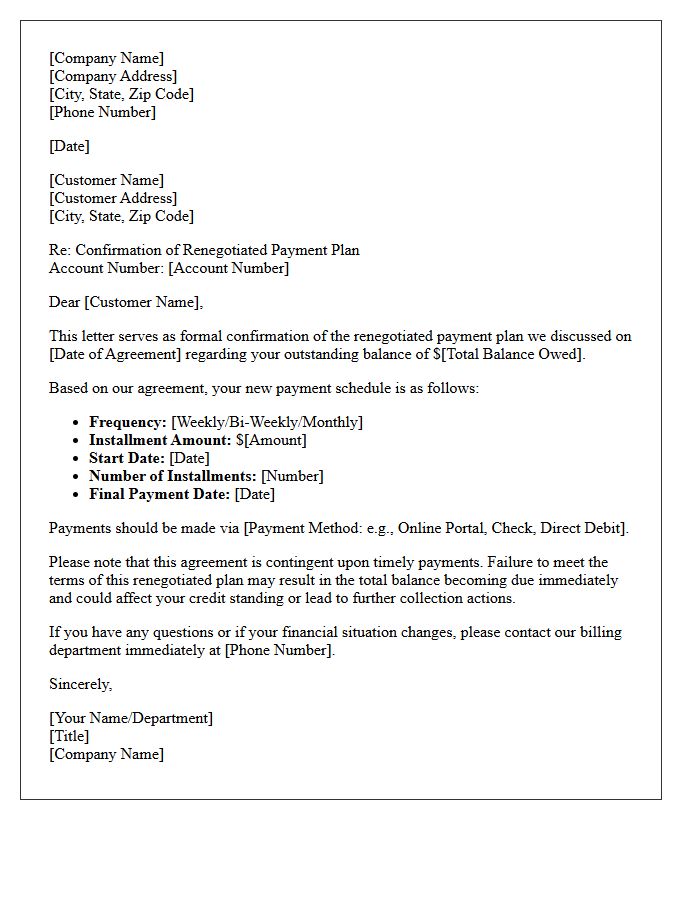
A Standard Renegotiated Payment Plan Confirmation Letter is a formal document verifying modified repayment terms between a creditor and debtor. It outlines the new monthly installment amount, interest adjustments, and the revised schedule to resolve outstanding debt. This letter serves as legal evidence of the agreement, protecting your credit standing by documenting the path to financial recovery. Always verify that all figures match your verbal negotiations before signing, as this serves as the binding framework for your future payments and ensures debt compliance.
Financial Hardship Renegotiated Payment Plan Letter
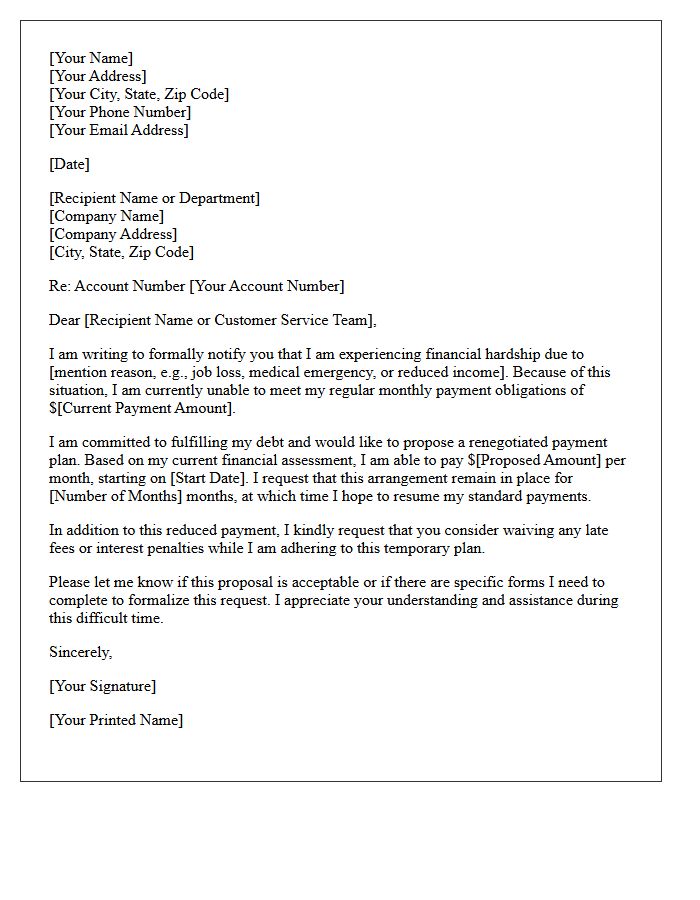
A financial hardship letter is a formal request to creditors to renegotiate payment terms due to unforeseen economic struggles. To be effective, the document must clearly state the cause of distress, such as medical bills or job loss, and provide a realistic proposed budget. Providing evidence of your situation encourages lenders to offer temporary relief or lower interest rates. This proactive communication is essential for protecting your credit score and avoiding collection actions while demonstrating a sincere commitment to settling your debts under modified conditions.
Restructured Debt Renegotiated Payment Plan Letter
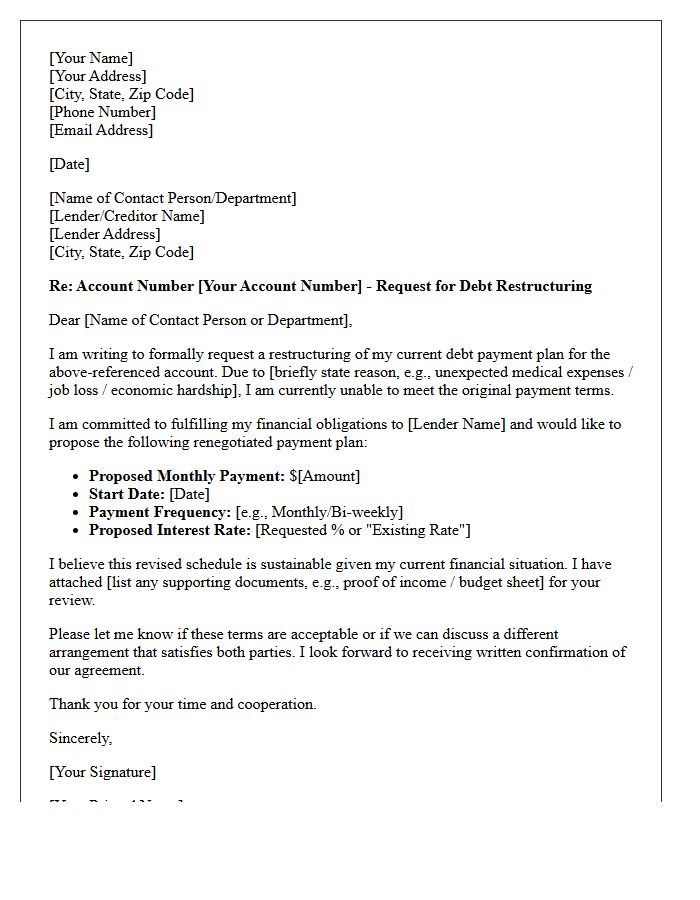
A Restructured Debt Renegotiated Payment Plan Letter is a formal document used to propose or confirm new terms for outstanding liabilities. It focuses on financial hardship, outlining a sustainable schedule to prevent default. Key elements include the revised interest rate, extended maturity dates, and exact installment amounts. This legal record ensures creditor transparency and protects both parties by documenting the mutual agreement. It serves as vital evidence that you are actively managing your obligations while seeking a mutually beneficial resolution to maintain credit stability and avoid aggressive collection actions.
Mutual Agreement Renegotiated Payment Plan Letter
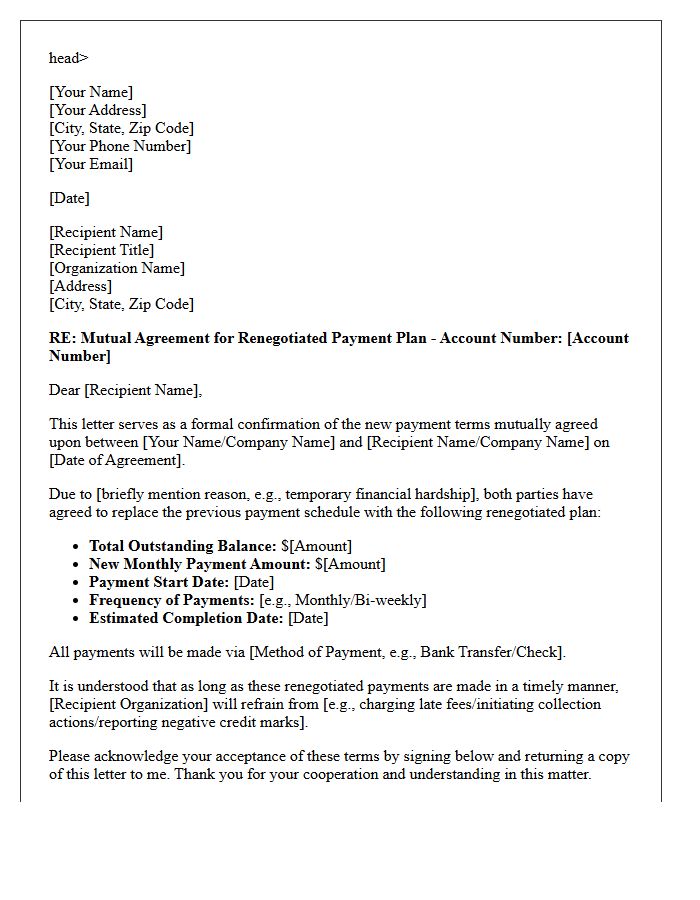
A Mutual Agreement Renegotiated Payment Plan Letter is a formal document used to propose or confirm new repayment terms when a debtor cannot meet original obligations. This legal communication outlines the revised installment amounts, updated deadlines, and any interest adjustments agreed upon by both parties. It serves as vital written evidence of a restructured debt, protecting the debtor from default actions while ensuring the creditor receives consistent payments. Clarity regarding the effective date and specific consequences of non-compliance is essential for maintaining a positive financial relationship and avoiding litigation.
Reduced Installment Renegotiated Payment Plan Letter
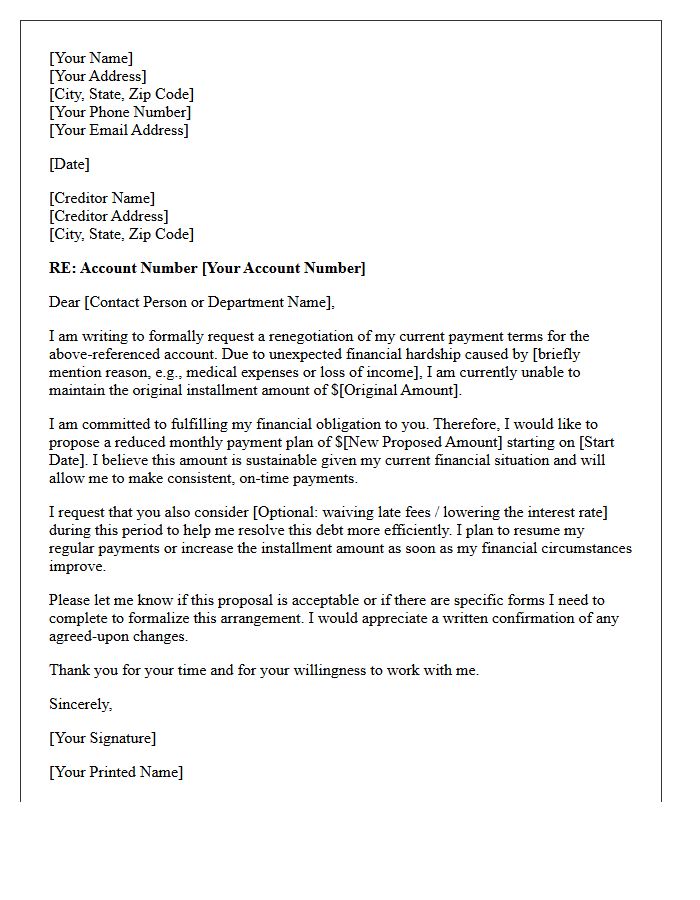
A Reduced Installment Renegotiated Payment Plan Letter is a formal request to creditors to lower monthly payments during financial hardship. This legally binding proposal outlines your current budget and a sustainable repayment schedule to prevent default. It is essential to include your account details, the proposed amount, and a specific timeframe. Obtaining written confirmation from the lender ensures both parties agree to the adjusted terms, protecting your credit score and providing structured debt relief while maintaining a positive relationship with your financial institution.
Extended Term Renegotiated Payment Plan Letter
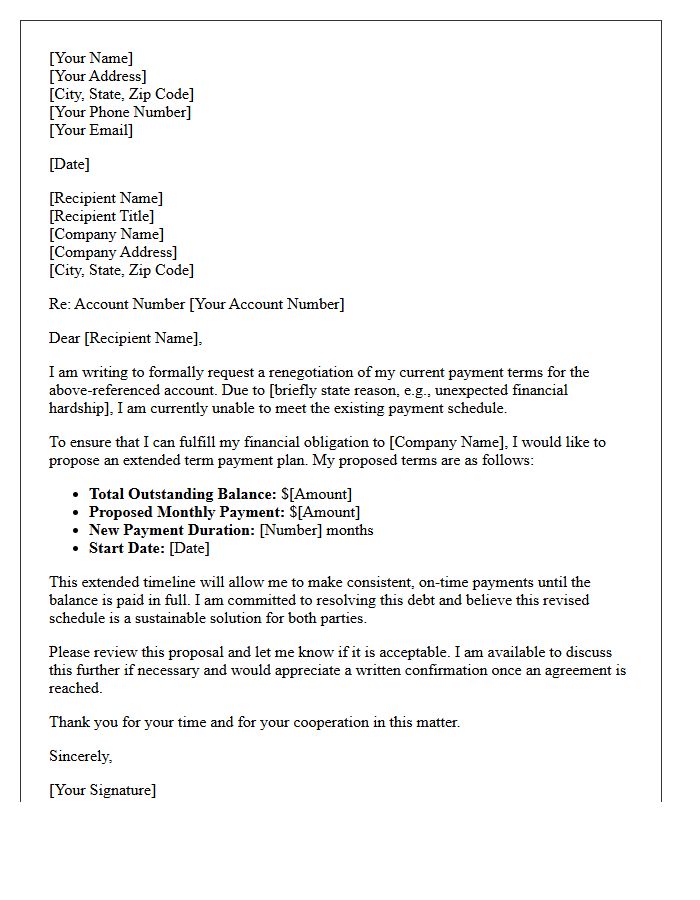
An Extended Term Renegotiated Payment Plan Letter is a formal document used to modify loan agreements when a borrower faces financial hardship. This letter serves as a legal written record of adjusted terms, typically resulting in a longer repayment duration and smaller monthly installments. It is essential for ensuring transparency between the lender and debtor, preventing default, and protecting credit scores. Both parties must sign this agreement to validate the new schedule, ensuring the debt remains manageable while providing the creditor with a revised commitment to full repayment.
Post-Default Renegotiated Payment Plan Letter
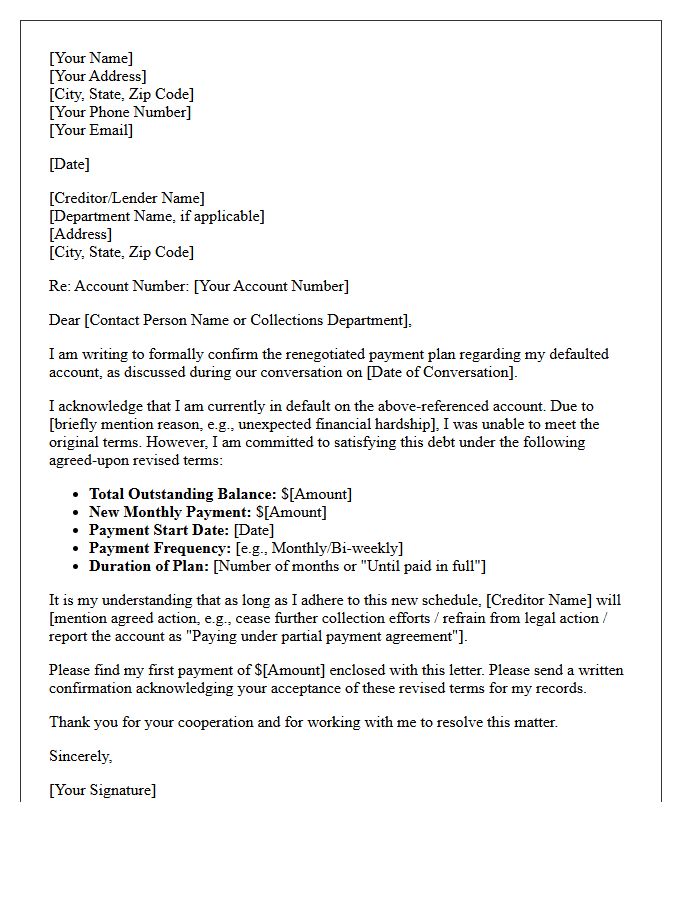
A Post-Default Renegotiated Payment Plan Letter is a formal document outlining new repayment terms agreed upon after a borrower has failed to meet original obligations. This letter serves as a legally binding amendment to the initial contract, detailing adjusted installment amounts, revised deadlines, and potential interest rate changes. It is essential for protecting both parties, as it provides clear written evidence that the default is being addressed. Receiving this confirmation ensures the lender will halt further collection actions or legal proceedings as long as the new schedule is strictly followed.
Final Approval Renegotiated Payment Plan Letter
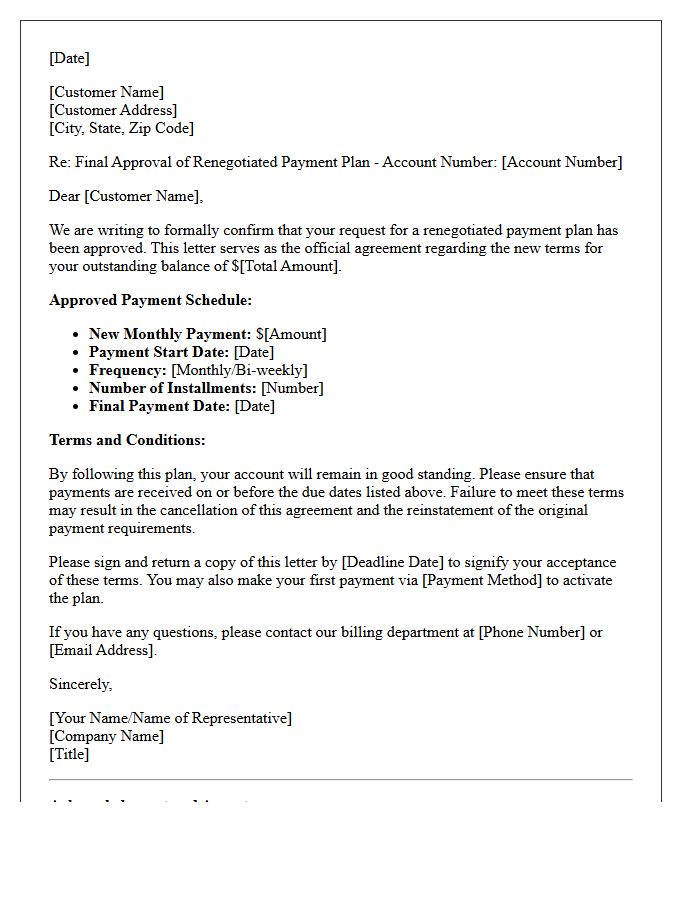
A Final Approval Renegotiated Payment Plan Letter serves as a legally binding confirmation that a creditor has formally accepted new installment terms. It is essential to ensure this document outlines the revised payment schedule, interest rates, and total balance due to prevent future disputes. Receiving this letter signifies the debt restructuring is complete, effectively superseding original agreements. Always verify that the letter explicitly states the account status is updated and keep a copy to protect against potential collection errors or credit reporting inaccuracies during the repayment period.
Revised Schedule Renegotiated Payment Plan Letter
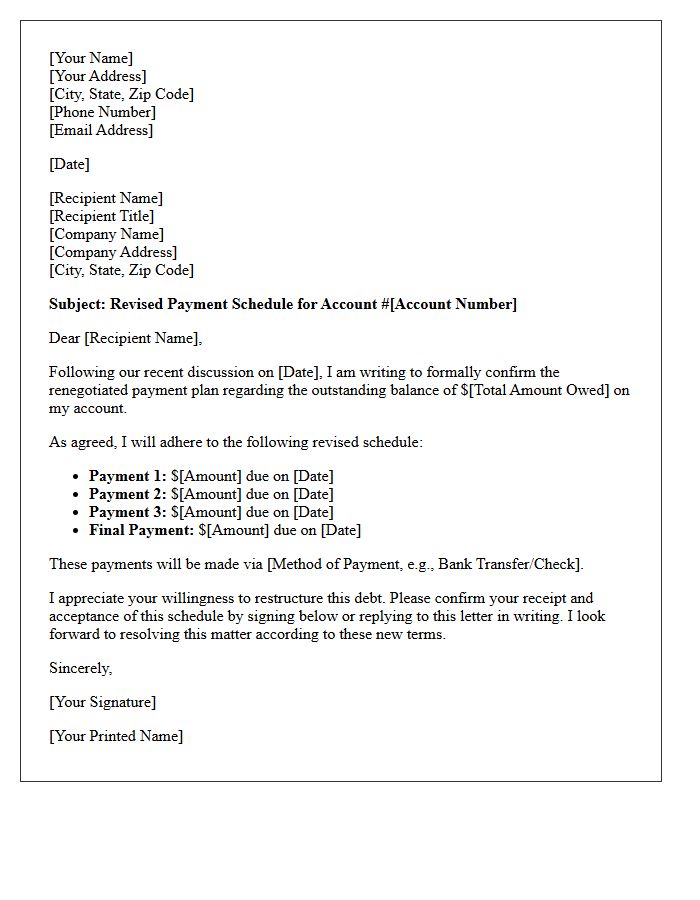
A Revised Schedule Renegotiated Payment Plan Letter is a formal document used to propose or confirm new debt repayment terms. It serves as a legal record of an agreement between a debtor and creditor to modify installment amounts or deadlines. Clearly outlining the new payment structure, including dates and specific sums, is essential to avoid financial delinquency. This written communication ensures transparency, helps protect your credit score, and demonstrates a proactive commitment to fulfilling financial obligations despite temporary liquidity challenges.
Delinquent Account Renegotiated Payment Plan Letter
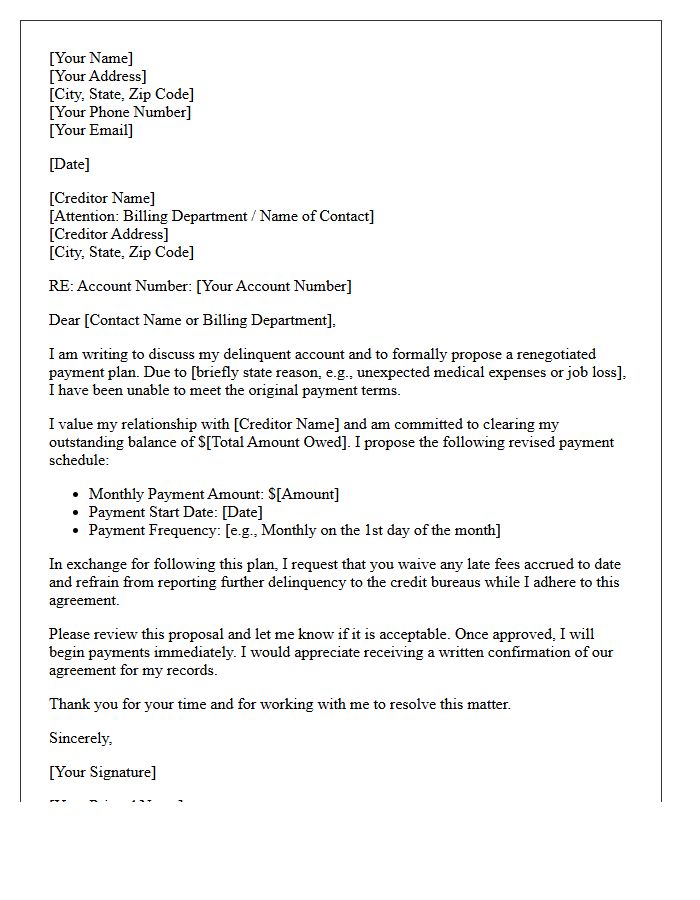
A Delinquent Account Renegotiated Payment Plan Letter is a formal document used to propose new repayment terms for overdue debt. This written proposal demonstrates a proactive commitment to resolving financial obligations while seeking to avoid collections or legal action. Key elements include the current balance, a specific repayment schedule, and a request for a waiver of late fees. Sending this letter helps protect your credit score and establishes a clear legal record of your intent to settle the debt under manageable conditions mutually agreed upon with the creditor.
Settlement Agreement Renegotiated Payment Plan Letter
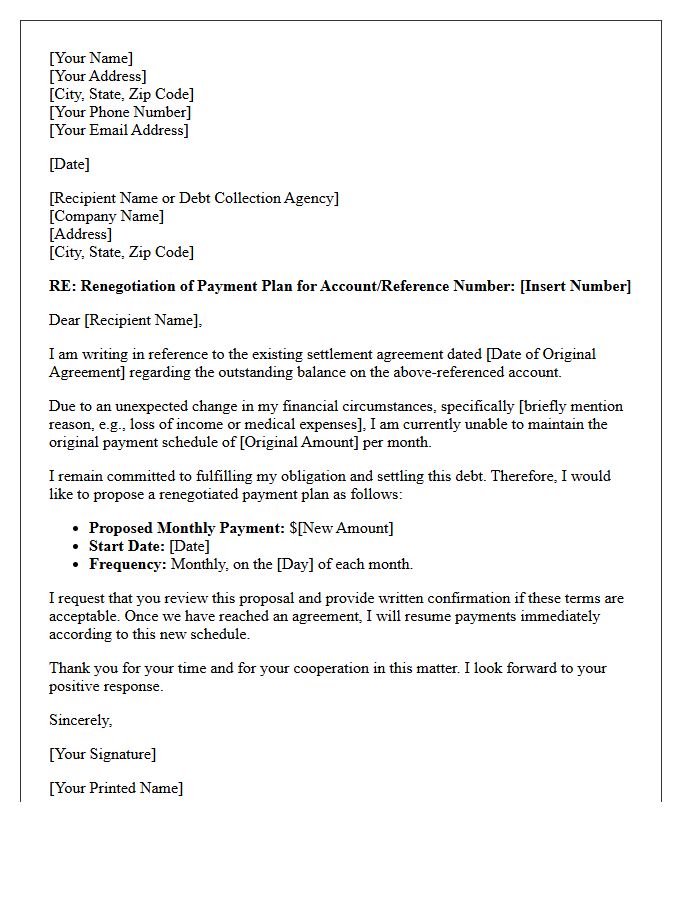
A settlement agreement renegotiated payment plan letter is a formal request to modify existing debt terms when financial hardships occur. This document proposes a revised installment schedule to prevent default and maintain legal compliance. It is crucial to clearly state the reason for the change, specify the new payment amounts, and outline the adjusted timeline. Once accepted, this letter serves as a binding amendment to your original contract, protecting your credit score and ensuring the creditor receives consistent, albeit adjusted, compensation without pursuing aggressive collection actions.
Good Faith Renegotiated Payment Plan Letter
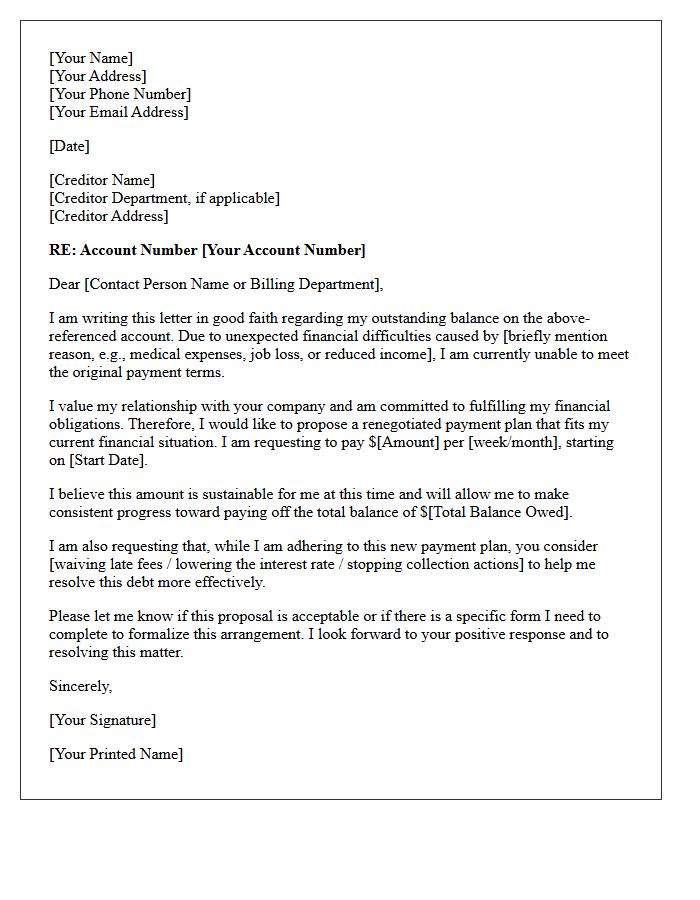
A Good Faith Renegotiated Payment Plan Letter is a formal proposal sent to creditors when facing financial hardship. This document demonstrates your sincere intent to repay debts by suggesting a temporary, affordable installment schedule. To be effective, the letter should clearly outline your current budget constraints and request a lower interest rate or waived late fees. Maintaining open communication through this written agreement helps protect your credit score and prevents aggressive collection actions while you work toward stabilizing your personal finances and fulfilling your legal obligations.
Temporary Adjustment Renegotiated Payment Plan Letter
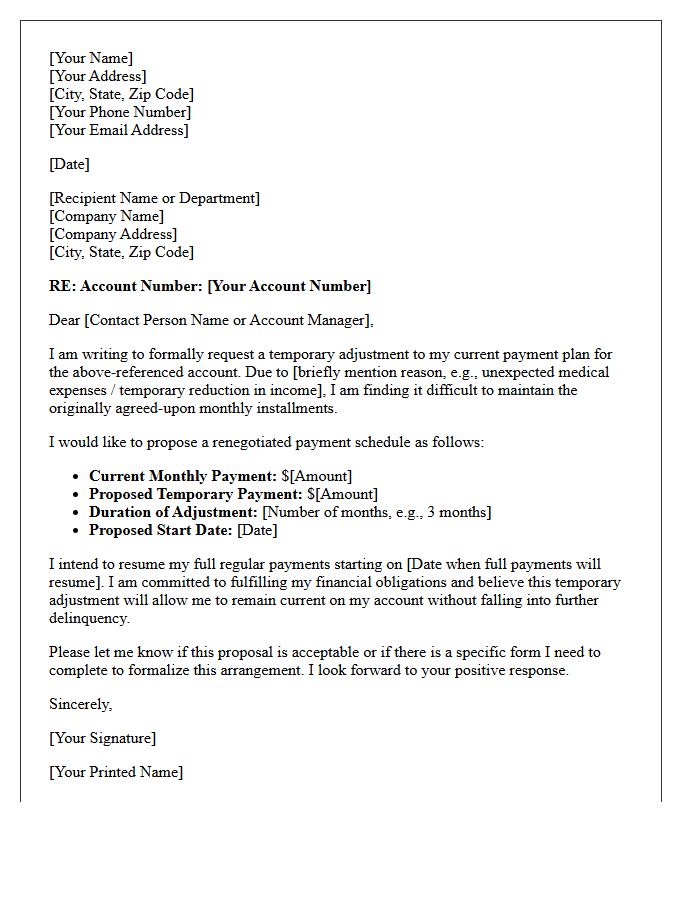
A Temporary Adjustment Renegotiated Payment Plan Letter is a formal document that modifies your existing debt obligations. It serves as legal evidence that a creditor has agreed to lower monthly installments or adjust interest rates for a set period. This letter is crucial for protecting your credit score during financial hardship. Ensure the document explicitly states the new payment amount, the duration of the agreement, and any impact on the total loan balance. Always keep a signed copy to prevent future disputes over missed payments or reported defaults.
What is a Renegotiated Payment Plan Confirmation Letter?
A Renegotiated Payment Plan Confirmation Letter is a formal written document issued by a creditor or service provider that outlines the newly agreed-upon terms for debt repayment, effectively replacing the original payment schedule.
What key details should be included in a payment plan confirmation letter?
The letter should include the total outstanding balance, the new installment amounts, specific payment due dates, the preferred payment method, and any conditions regarding interest rates or late fees.
Is a renegotiated payment plan legally binding?
Yes, once both the debtor and the creditor agree to the terms in writing, the confirmation letter serves as a legal amendment to the original contract, protecting both parties from disputes regarding payment obligations.
Why is it important to receive a written confirmation of a new payment agreement?
Written confirmation provides documented proof of the arrangement, ensuring there is no confusion regarding the new deadlines and preventing the creditor from pursuing collection actions as long as the new terms are met.
Can a renegotiated payment plan be changed after the confirmation letter is sent?
Terms can typically only be changed if both parties agree to a further modification. If a debtor cannot meet the new terms, they should contact the creditor immediately to request a formal amendment before a default occurs.

Comments