
Protect your financial reputation by sending an Identity Theft Debt Validation Notice Letter to creditors or collection agencies. This essential legal tool demands proof that a disputed debt belongs to you, effectively halting collections on fraudulent accounts. Use this formal notice to exercise your consumer rights and clear unauthorized charges. To simplify the process, below are some ready to use template options.
Image cover: Protecting Your Credit: Identity Theft Debt Validation Letter Templates
Letter Samples List
- Identity Theft Debt Validation Notice Letter
- Fraudulent Account Debt Dispute Notice Letter
- Identity Theft Victim Debt Verification Letter
- Unauthorized Debt Collection Dispute Letter
- Stolen Identity Account Validation Request Letter
- Notice of Identity Theft Debt Validation Letter
- Fraud Affidavit and Debt Validation Letter
- Victim of Identity Theft Debt Dispute Letter
- Unrecognized Account Debt Verification Letter
- Identity Fraud Debt Collection Cease Letter
- Consumer Identity Theft Debt Challenge Letter
- Third-Party Fraud Debt Validation Notice Letter
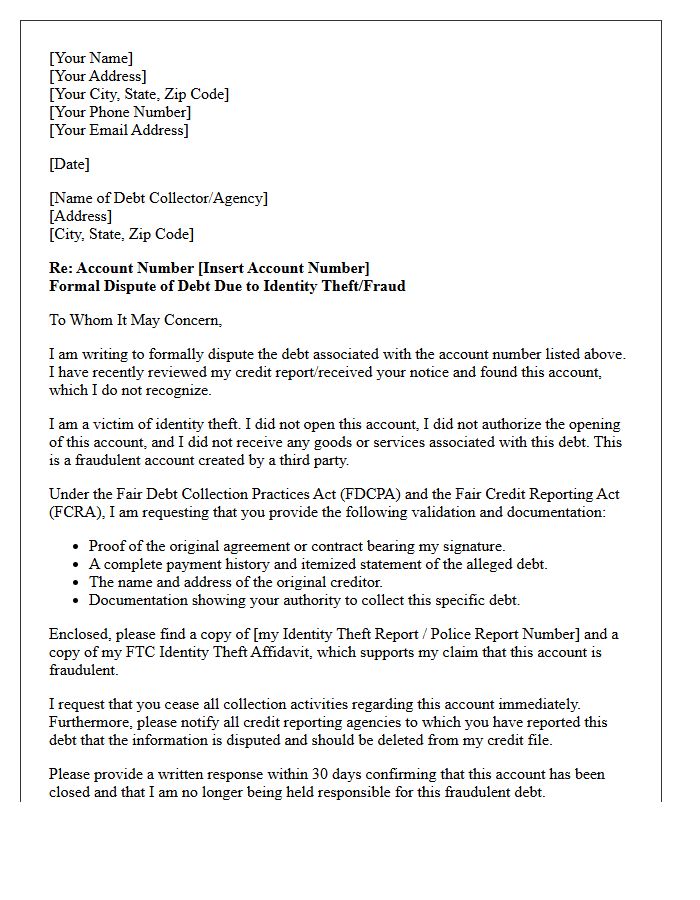
Identity Theft Debt Validation Notice Letter
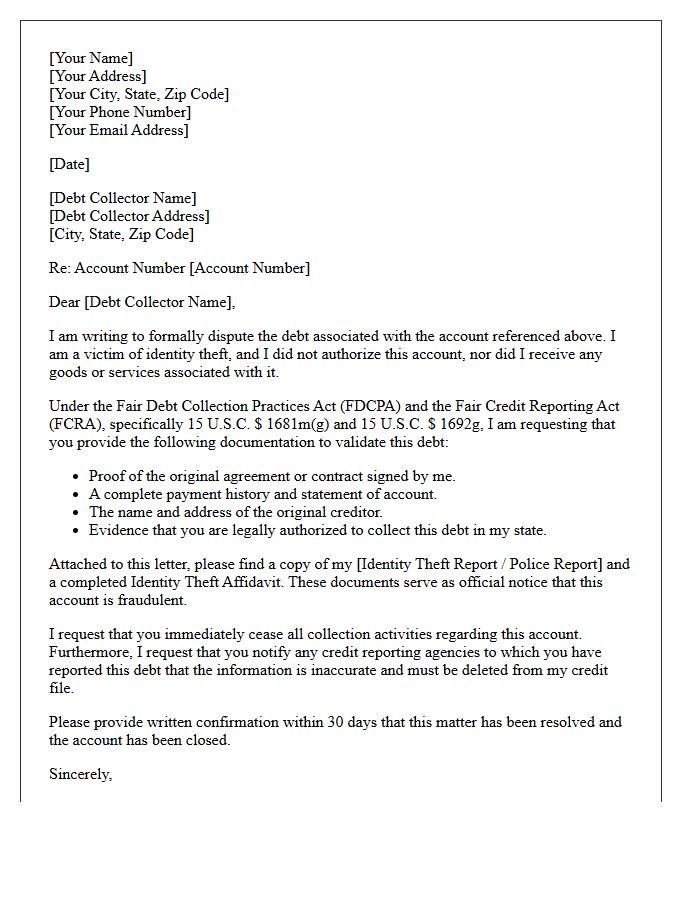
An Identity Theft Debt Validation Notice Letter is a critical legal tool used to dispute fraudulent accounts. Under the Fair Debt Collection Practices Act (FDCPA), you must send this written request within 30 days of initial contact to demand proof of debt from collectors. This document forces agencies to verify the debt's legitimacy and cease collection activities until verification is provided. Including an identity theft report or police record strengthens your claim, ensuring you are not held liable for unauthorized charges or criminal activity committed in your name.
Fraudulent Account Debt Dispute Notice Letter
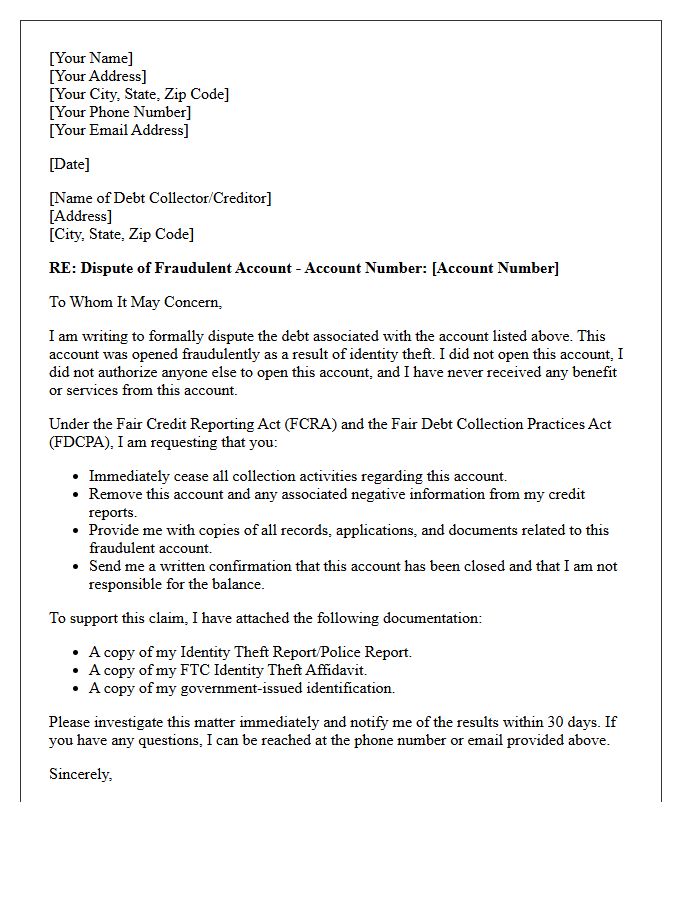
A Fraudulent Account Debt Dispute Notice Letter is a critical legal tool used to contest unauthorized debts resulting from identity theft. To protect your credit score, you must formally notify debt collectors and credit bureaus in writing that the account is invalid. Including a police report or an FTC Identity Theft Report strengthens your claim. Under the Fair Debt Collection Practices Act, once a debt is disputed, collectors must cease communication until they provide verification of the debt's legitimacy. Timely submission is essential to ensure the removal of fraudulent marks from your history.
Identity Theft Victim Debt Verification Letter
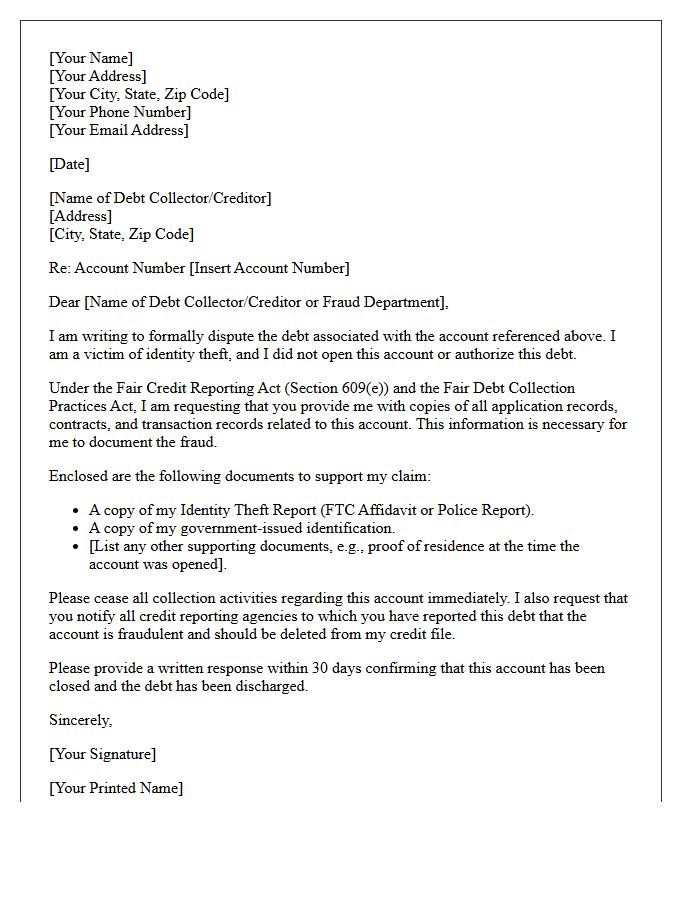
An Identity Theft Victim Debt Verification Letter is a formal legal notice sent to creditors or collection agencies to dispute fraudulent accounts. Under the Fair Credit Reporting Act, this document compels businesses to provide application records and transaction details related to the identity theft. You must include a copy of your Identity Theft Report and proof of identity to trigger mandatory consumer protections. This process forces collectors to cease communication while investigating, ensuring that unauthorized debts are removed from your credit profile and preventing further financial liability.
Unauthorized Debt Collection Dispute Letter
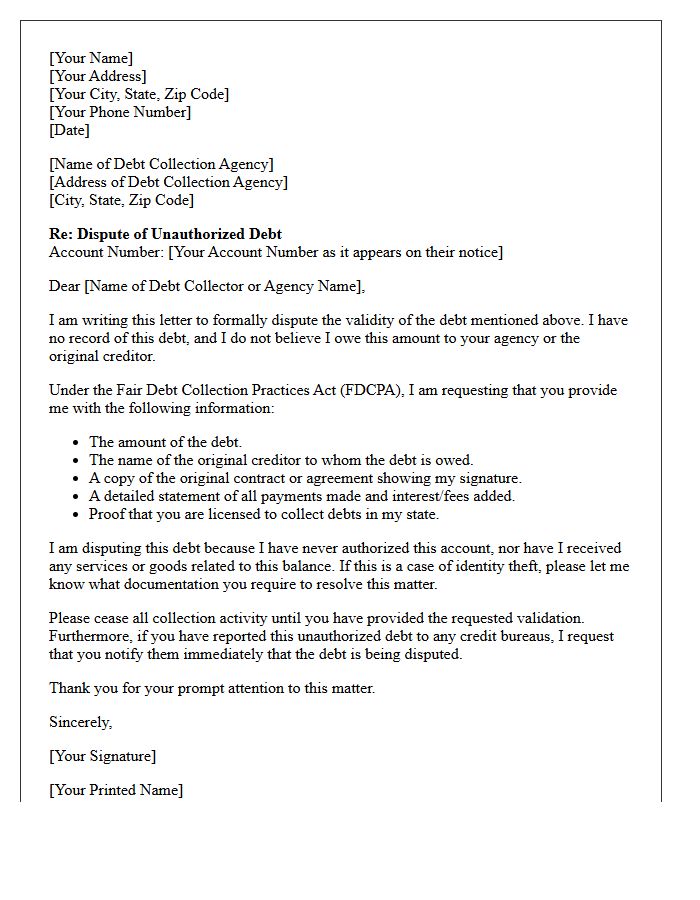
An Unauthorized Debt Collection Dispute Letter is a formal legal tool used to challenge unverified claims made by third-party collectors. Under the Fair Debt Collection Practices Act (FDCPA), sending this notice forces agencies to provide proof of debt and stops aggressive contact until verification is provided. To protect your consumer rights, you must mail this document via certified mail within thirty days of initial contact. This process prevents identity theft errors and ensures that inaccurate or expired collections do not negatively impact your credit score or financial standing.
Stolen Identity Account Validation Request Letter
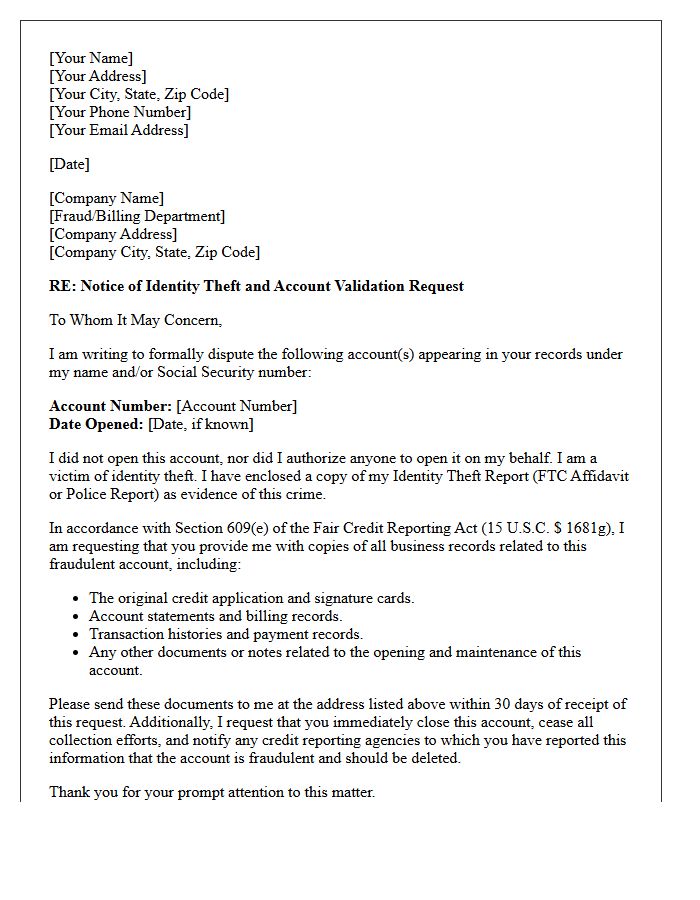
A Stolen Identity Account Validation Request Letter is a formal notice sent to creditors to challenge fraudulent accounts. Under the Fair Credit Reporting Act, this document compels lenders to provide physical proof of application and transaction history. Its primary purpose is to prove you did not authorize the debt, legally requiring the institution to cease collection activities and remove the entry from your credit report. Always include a police report and an identity theft affidavit to ensure the validation process is legally binding and effective in restoring your financial reputation.
Notice of Identity Theft Debt Validation Letter
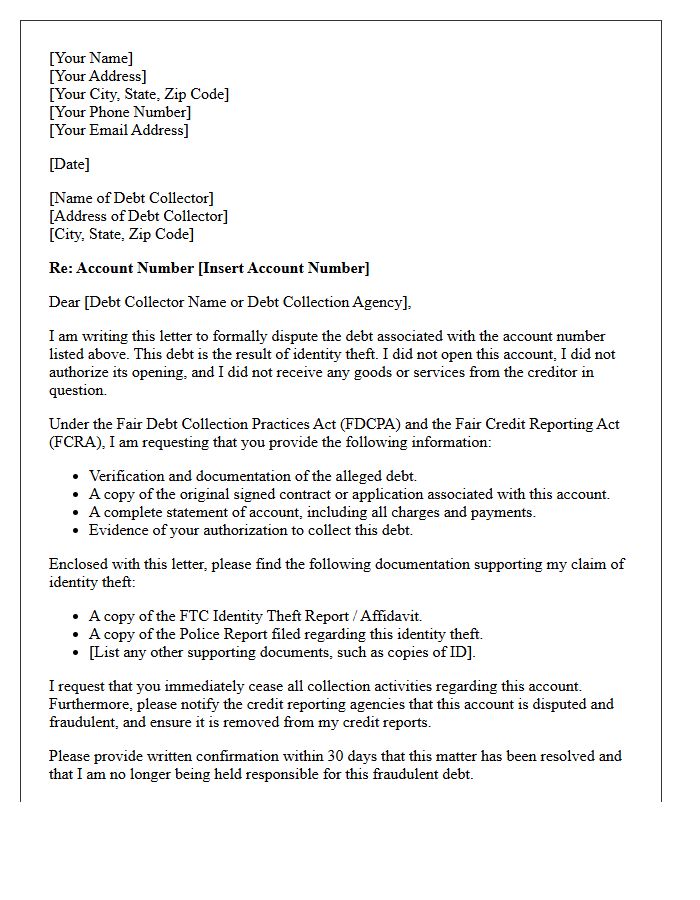
A Notice of Identity Theft Debt Validation Letter is a formal legal tool used to dispute fraudulent accounts. Under the Fair Credit Reporting Act, sending this document notifies debt collectors that a specific debt resulted from identity theft rather than personal spending. You must include a copy of your official police report or FTC Identity Theft Report to trigger mandatory legal protections. Once received, collectors must cease all collection activities and conduct a thorough investigation to remove the inaccurate information from your credit profile permanently.
Fraud Affidavit and Debt Validation Letter
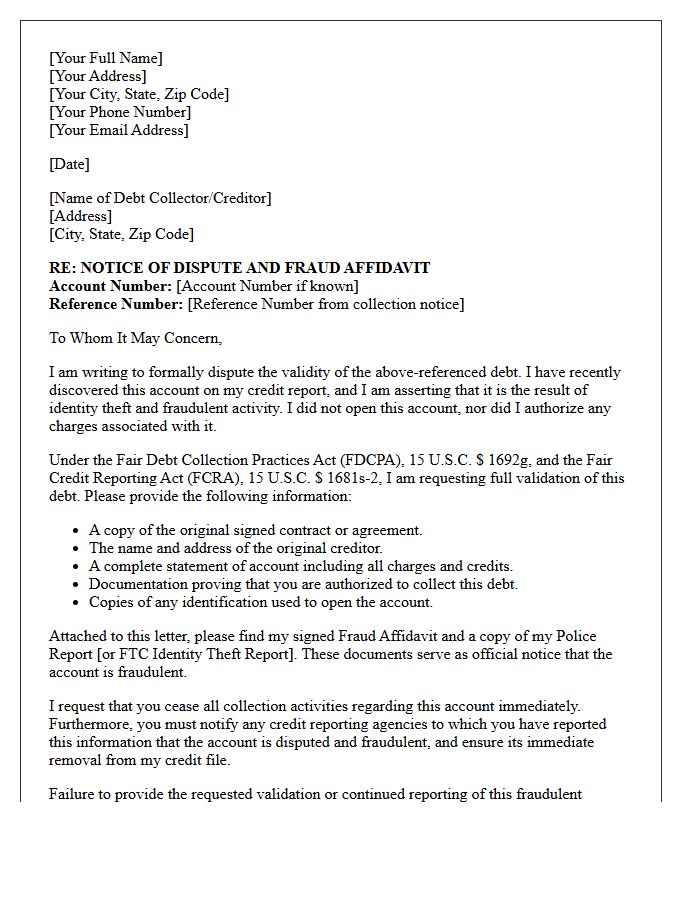
A Fraud Affidavit is a sworn legal statement used to report identity theft or unauthorized charges, providing formal evidence that a debt is not yours. In contrast, a Debt Validation Letter is a consumer right under the FDCPA, requiring collectors to prove a debt's legitimacy and accuracy. Utilizing these documents protects your credit score and legal standing. You must submit a fraud affidavit to dispute fraudulent accounts, while the validation letter ensures collectors possess the legal authority and correct balance information before you make any payments.
Victim of Identity Theft Debt Dispute Letter
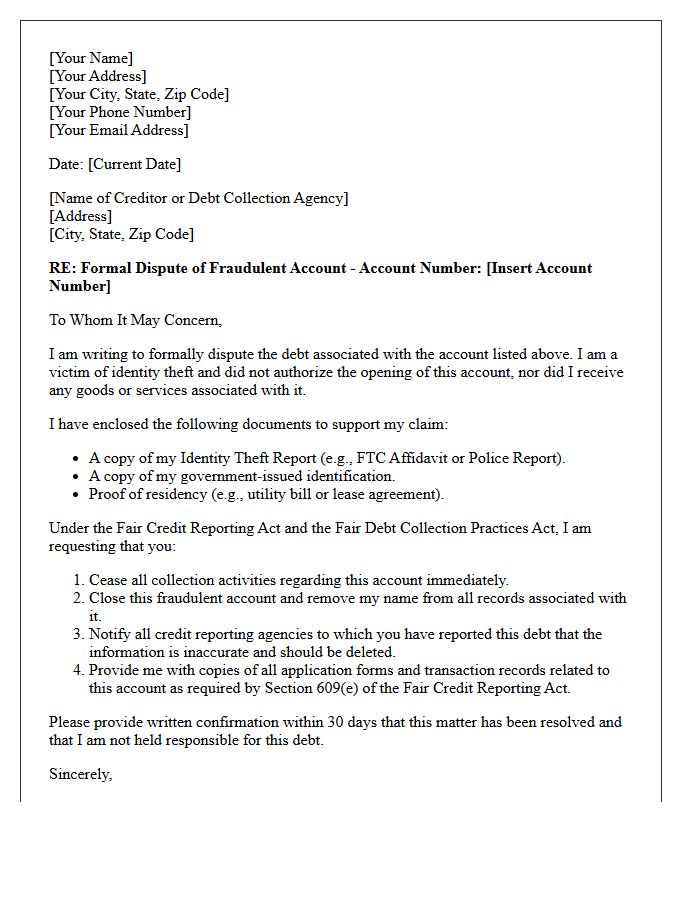
A Victim of Identity Theft Debt Dispute Letter is a formal legal notification sent to creditors and credit bureaus to contest fraudulent charges. You must clearly state that the debt resulted from unauthorized activity rather than your own spending. To ensure legal protection under the Fair Credit Reporting Act, include a copy of your FTC Identity Theft Report or a police report as evidence. This document forces creditors to investigate and remove inaccurate information from your credit profile, preventing long-term financial damage caused by criminal impersonation.
Unrecognized Account Debt Verification Letter
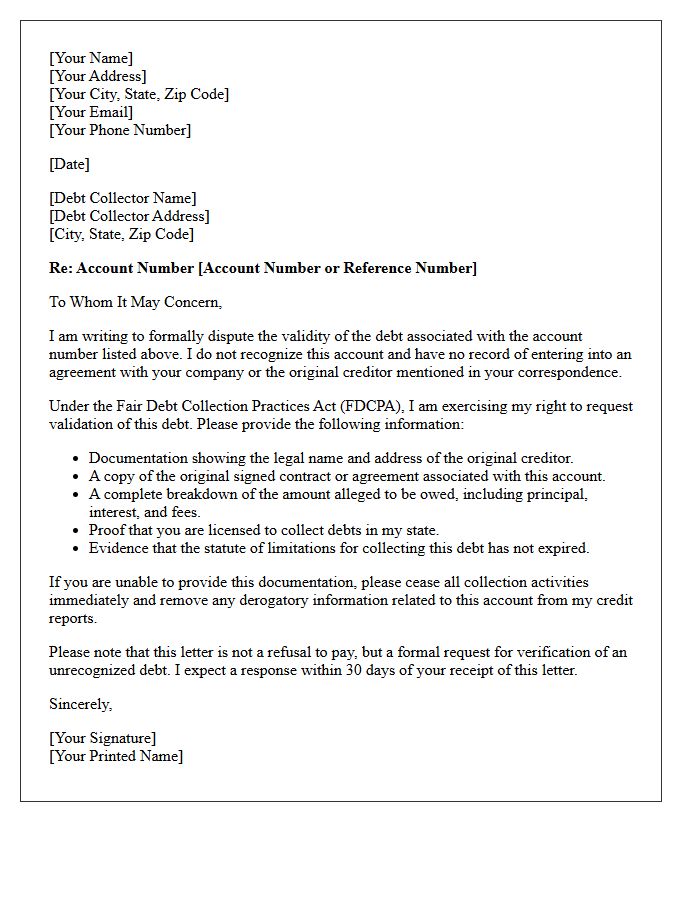
An Unrecognized Account Debt Verification Letter is a formal legal tool used to dispute unknown claims. Under the Fair Debt Collection Practices Act (FDCPA), sending this request forces collectors to provide valid proof of the debt's origin. This process is essential for identity theft victims or those facing clerical errors. Once received, the agency must cease collection activities until they verify the debt's accuracy and their legal right to collect. Using this letter protects your credit score and prevents potential harassment from unauthorized third-party agencies.
Identity Fraud Debt Collection Cease Letter
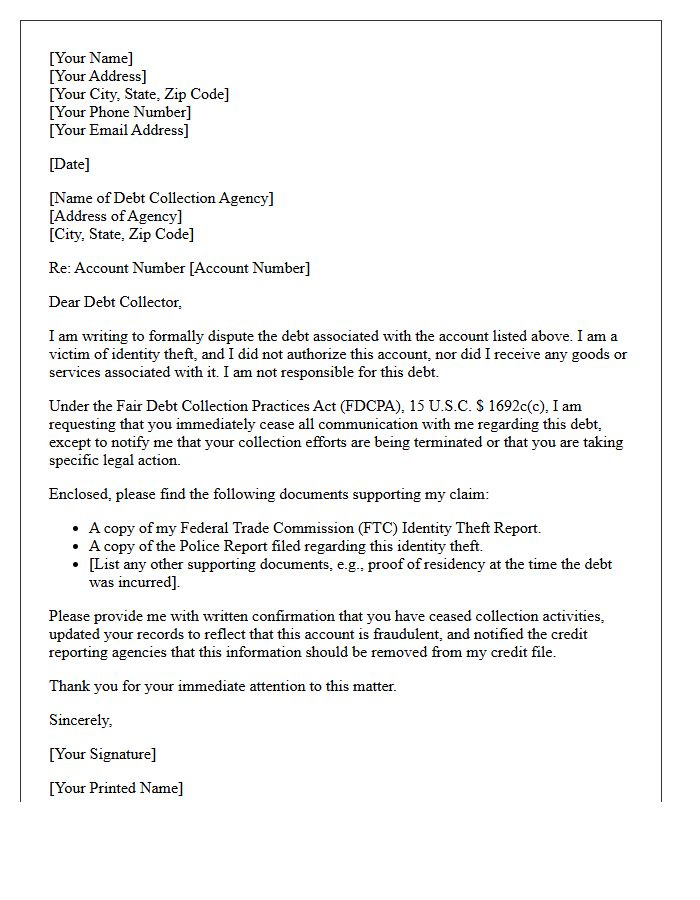
An Identity Fraud Debt Collection Cease Letter is a formal legal notice sent to creditors or agencies to stop harassment regarding unauthorized accounts. This document asserts your rights under the Fair Debt Collection Practices Act (FDCPA). You must clearly state that the debt resulted from identity theft and provide a police report or FTC affidavit as evidence. Once received, collectors must cease contact and investigate the fraud. Using this letter protects your credit score and prevents legal action for debts you do not owe. Always send via certified mail for proof of delivery.
Consumer Identity Theft Debt Challenge Letter
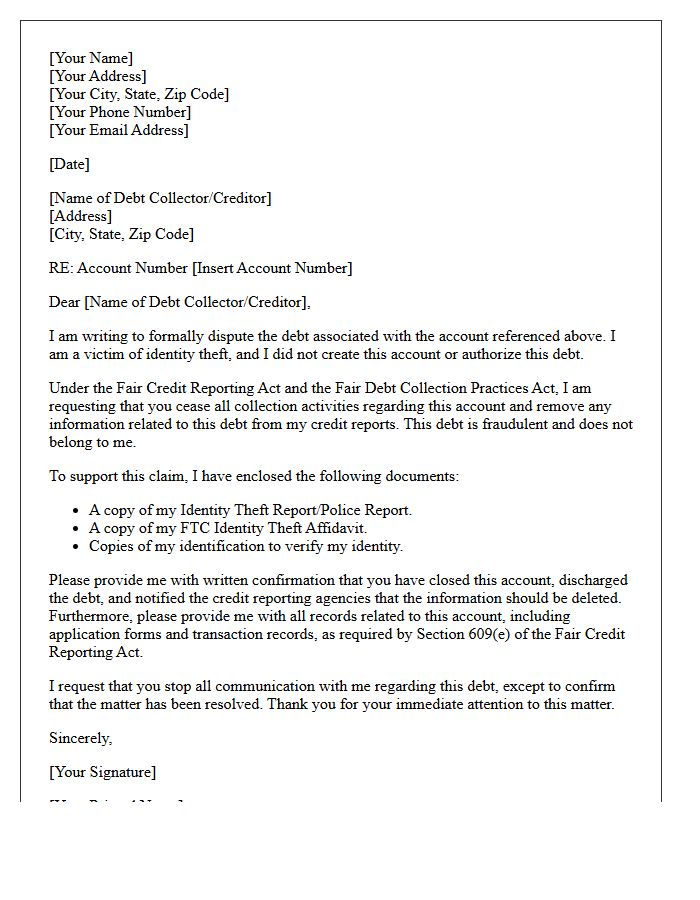
A Consumer Identity Theft Debt Challenge Letter is a formal legal notification sent to creditors to dispute fraudulent accounts. Under the Fair Credit Reporting Act, you must include a copy of your Identity Theft Report to prove the debt resulted from unauthorized activity. This document demands that the lender stops collection efforts and removes inaccurate information from your credit profile. Providing clear evidence and identifying the specific fraudulent transactions is essential to protecting your financial reputation and ensuring the permanent block of identity theft-related debt from your records.
Third-Party Fraud Debt Validation Notice Letter
A Third-Party Fraud Debt Validation Notice Letter is a critical legal tool used to dispute unauthorized accounts resulting from identity theft. Under the Fair Debt Collection Practices Act (FDCPA), you have the right to demand written verification of any debt. Sending this notice forces collectors to pause collection efforts and provide proof of the debt's legitimacy. It is essential to include police reports or identity theft affidavits to ensure debt discharge and protect your credit score from fraudulent reporting while asserting your consumer rights against unlawful collection activities.
What is an Identity Theft Debt Validation Notice Letter?
An Identity Theft Debt Validation Notice Letter is a formal written statement sent to debt collectors to dispute a fraudulent debt. It informs the collector that the debt resulted from identity theft and demands verification of the account's legitimacy under the Fair Debt Collection Practices Act (FDCPA) and the Fair Credit Reporting Act (FCRA).
When should I send a debt validation letter for identity theft?
You should send the letter within 30 days of receiving the initial notice of collection. Promptly sending this notice triggers your legal right to have the debt verified and forces the collection agency to cease all collection activities until they provide proof that the debt belongs to you.
What documents should be included with an identity theft debt dispute?
You should include a copy of your FTC Identity Theft Report (from IdentityTheft.gov), a police report if available, and a copy of your government-issued identification. Providing these documents helps prove the account was opened fraudulently and assists the collector in investigating the claim.
Can a debt collector contact me after receiving an identity theft validation notice?
No, once a debt collector receives a written dispute regarding identity theft, they must stop all collection efforts. They cannot contact you, sue you, or list the debt on your credit report until they have completed a thorough investigation and provided you with written evidence that the debt is valid.
How does a debt validation letter protect my credit score from fraud?
By sending this letter, you establish a paper trail that protects your rights under the FCRA. If the collector cannot prove the debt is yours, they are legally required to notify the credit bureaus to remove the fraudulent information, preventing long-term damage to your credit score and financial reputation.

Comments