
When a debt exceeds the legal collection timeframe, it becomes time-barred. Sending an Out Of Statute Debt Validation Notice is a critical step to assert your legal rights and stop collectors from pursuing expired obligations. This document prevents further harassment and protects your financial profile. To help you take action, below are some ready to use template options.
Image cover: Expired Statute of Limitations: Debt Validation Letter Templates and Samples
Letter Samples List
- Time-Barred Debt Validation Request Letter
- Out Of Statute Debt Dispute Letter
- Expired Statute Of Limitations Collection Cease Letter
- Out Of Statute Debt Validation Acknowledgment Letter
- Time-Barred Debt Collection Warning Letter
- Out Of Statute Account Verification Letter
- Unverifiable Out Of Statute Debt Deletion Letter
- Time-Barred Debt Payment Refusal Letter
- Out Of Statute Debt Validation Follow-Up Letter
- Expired Debt Consumer Rights Notification Letter
- Time-Barred Debt Invalidity Notice Letter
- Out Of Statute Account Closure Confirmation Letter
Time-Barred Debt Validation Request Letter
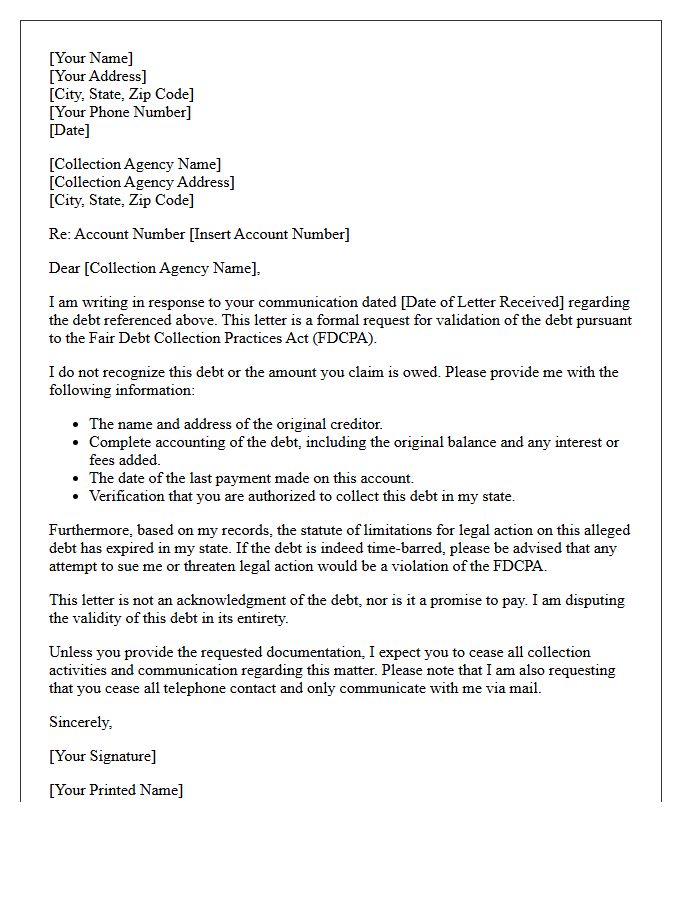
A Time-Barred Debt Validation Request Letter is a critical legal tool used to challenge collectors pursuing expired debts. When a debt surpasses the statute of limitations, you are no longer legally obligated to pay through court action. Sending this formal notice requires the collector to provide proof of the debt's validity and age. Most importantly, explicitly stating the debt is time-barred prevents further harassment. Always avoid making partial payments or acknowledging ownership of the debt, as these actions can reset the clock and restart your legal liability for the full amount.
Out Of Statute Debt Dispute Letter
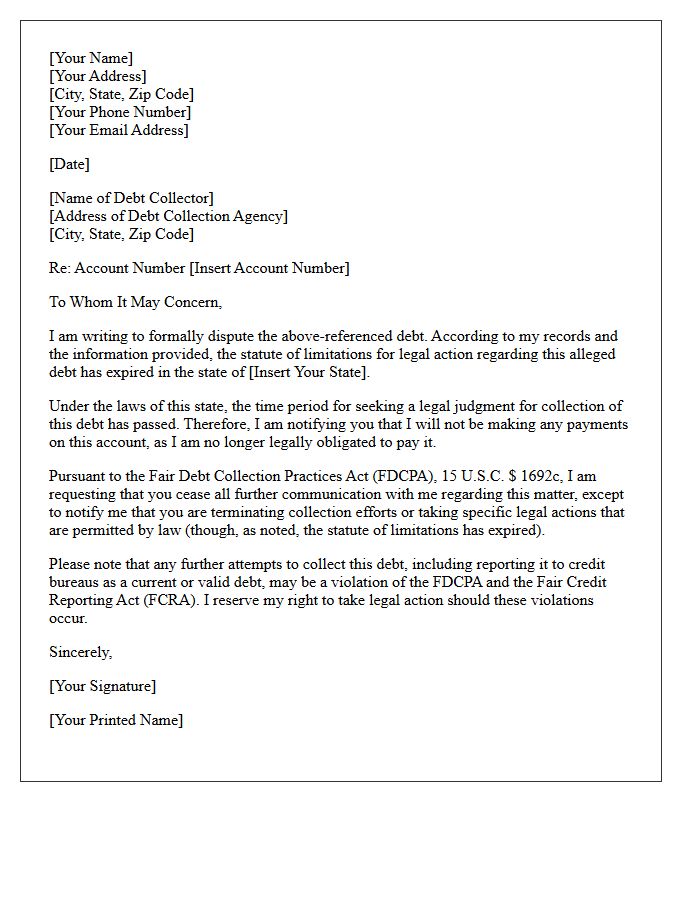
An Out of Statute Debt Dispute Letter is a formal notice sent to collectors regarding time-barred debt. Once the statute of limitations expires, creditors lose the legal right to sue for payment. Sending this letter asserts your rights under the Fair Debt Collection Practices Act, effectively stopping harassment. It is crucial to avoid making payments or acknowledging ownership of the debt before sending, as doing so can restart the clock on the legal timeframe. Use this document to demand that the agency cease all communication and mark the account as uncollectible.
Expired Statute Of Limitations Collection Cease Letter
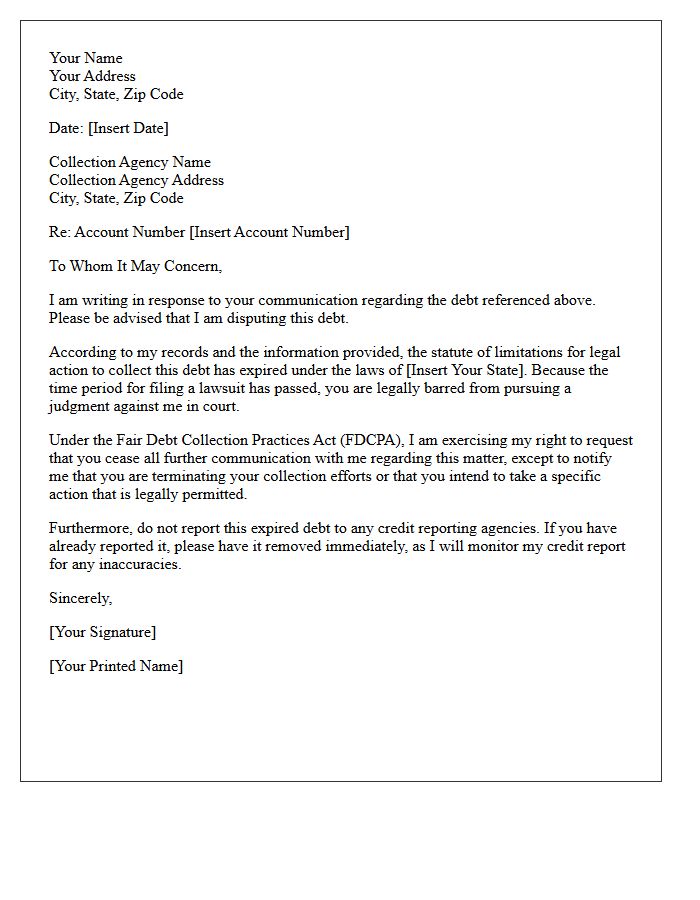
An Expired Statute of Limitations Collection Cease Letter is a formal notice sent to debt collectors stating that the legal timeframe to sue for a debt has passed. Sending this document prevents collectors from taking legal action and, under the Fair Debt Collection Practices Act (FDCPA), typically stops further communication. It is crucial to verify your state's specific time limits before sending, as any partial payment or acknowledgment of the debt can inadvertently restart the clock, reviving the collector's right to pursue the balance through the court system.
Out Of Statute Debt Validation Acknowledgment Letter
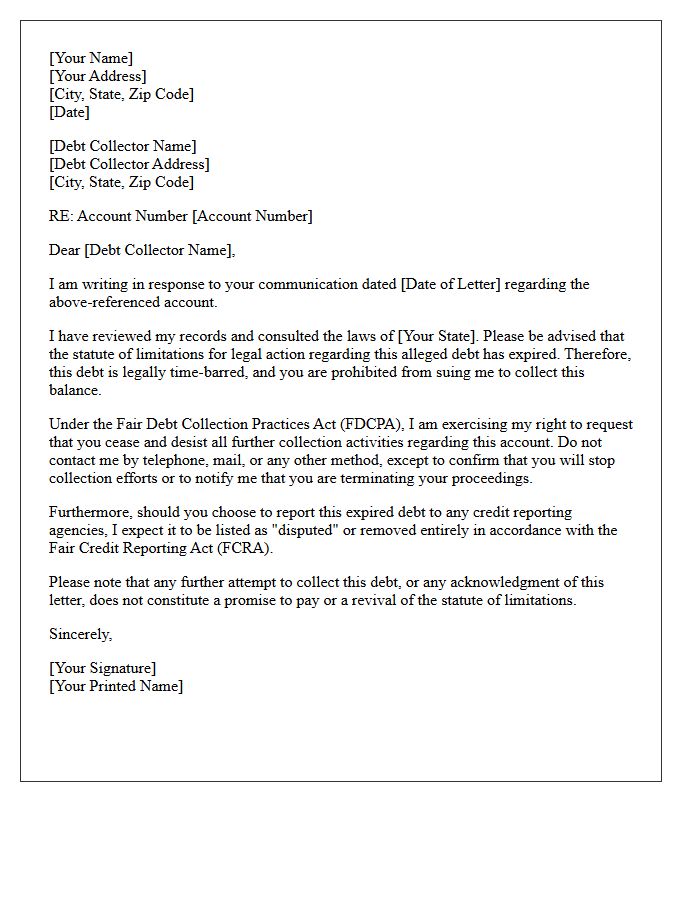
An Out of Statute Debt Validation Acknowledgment Letter is a critical document used when a collector pursues a "time-barred" debt. Sending this notice formally requests proof of legal authority to collect while asserting that the statute of limitations has expired. It is vital to avoid making a payment or acknowledging ownership of the debt, as doing so can restart the clock on your liability. Using this letter protects your rights under the Fair Debt Collection Practices Act by forcing collectors to cease contact regarding unenforceable, expired financial obligations.
Time-Barred Debt Collection Warning Letter
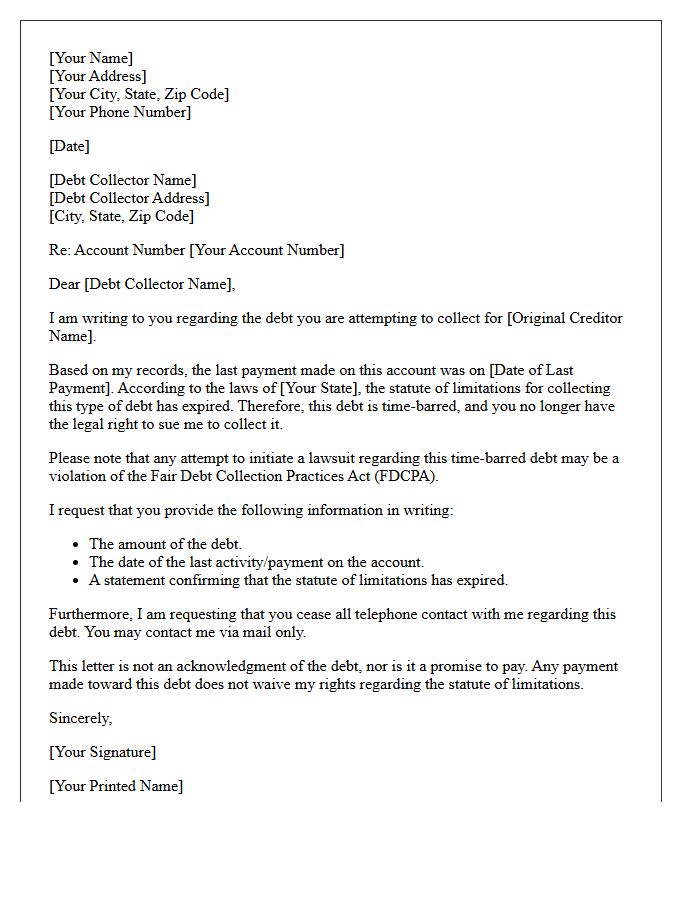
A Time-Barred Debt Collection Warning Letter is a formal notice sent when a creditor attempts to collect a debt that has passed the statute of limitations. It is crucial to understand that while you may still owe the money, collectors lose the legal right to sue for payment. You must exercise caution; making a partial payment or acknowledging the debt in writing can restart the clock, making the old debt legally enforceable again. Always verify your state's specific time limits before responding to protect your consumer rights.
Out Of Statute Account Verification Letter
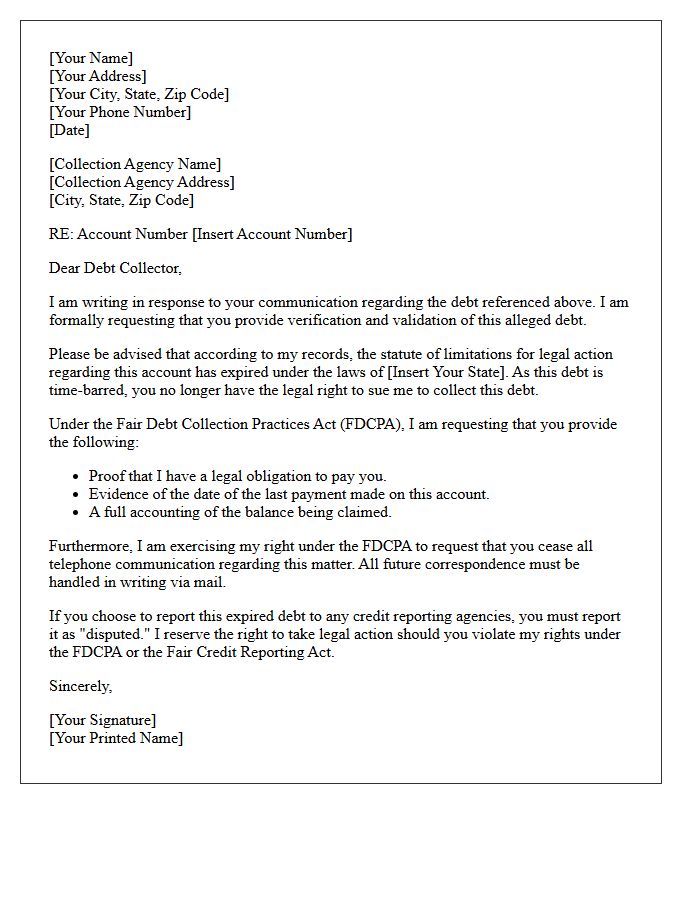
An Out of Statute Account Verification Letter is a formal legal notice sent to debt collectors regarding time-barred debts. Its primary purpose is to inform agencies that the statute of limitations for pursuing the debt through legal action has expired. By sending this document, you assert your consumer rights and demand that the collector cease further contact. This protection prevents creditors from successfully suing you for old balances, though it is crucial to avoid making any partial payments, which could inadvertently restart the legal clock on the debt.
Unverifiable Out Of Statute Debt Deletion Letter
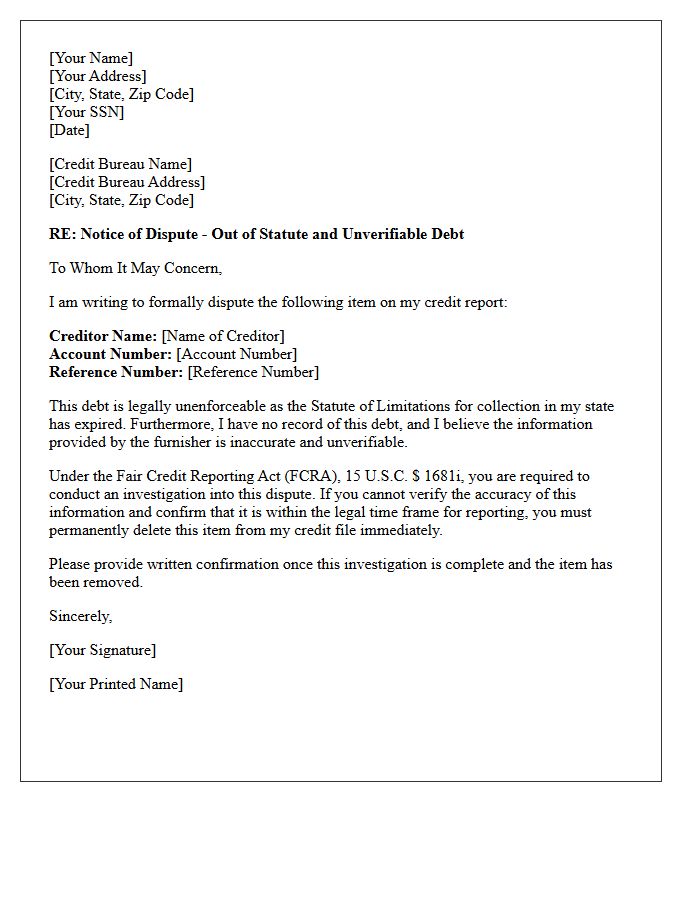
An Unverifiable Out Of Statute Debt Deletion Letter is a formal legal notice sent to creditors or bureaus to dispute time-barred debt. When a debt exceeds the Statute of Limitations, it becomes legally uncollectible in court. By demanding proof of the debt's validity and highlighting its expired status, you can force the permanent deletion of the negative entry from your credit report. This powerful tool leverages the Fair Credit Reporting Act to remove inaccurate or ancient information that no longer meets strict legal verification requirements.
Time-Barred Debt Payment Refusal Letter
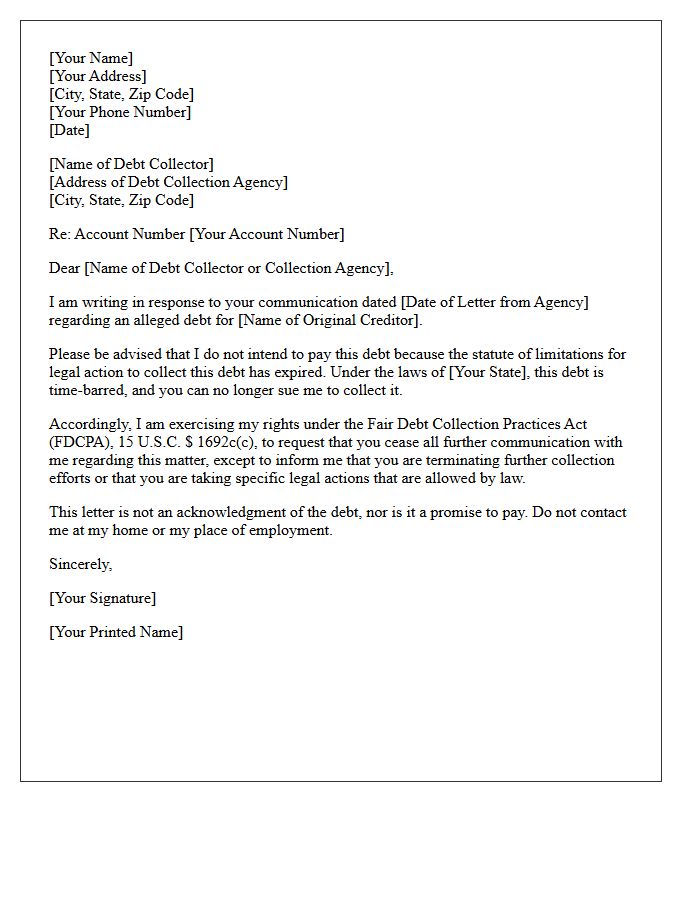
A Time-Barred Debt Payment Refusal Letter is a formal notice sent to collectors stating that a debt is legally uncollectible due to the statute of limitations expiring. Once this legal time limit passes, creditors lose their right to sue for recovery. You should clearly state that you will not pay the expired balance and demand they cease all communication. Sending this letter protects your rights under the Fair Debt Collection Practices Act. Avoid making even a partial payment, as doing so can reset the clock on the debt's expiration period.
Out Of Statute Debt Validation Follow-Up Letter
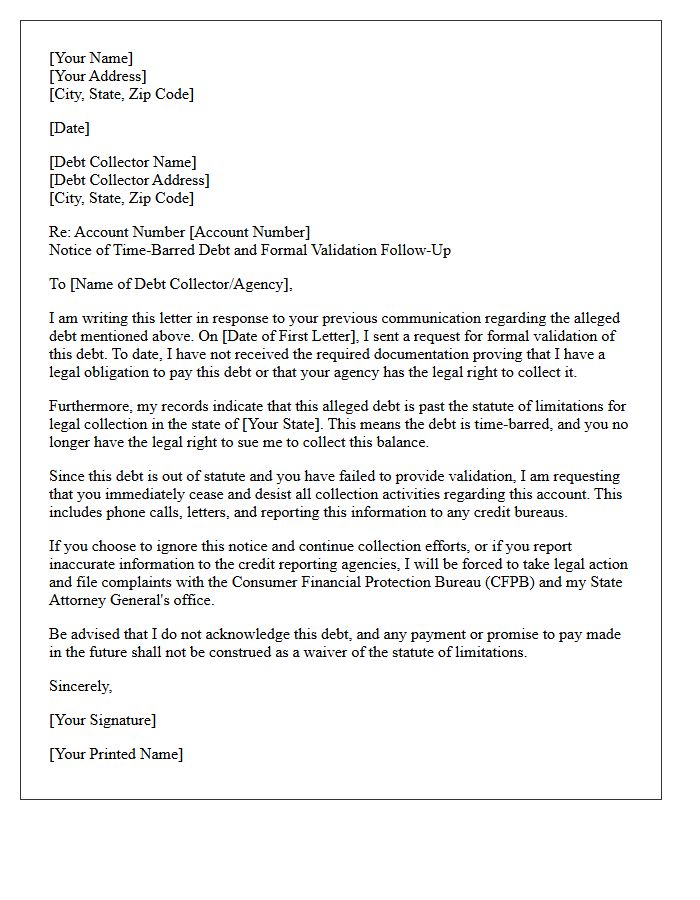
An Out of Statute Debt Validation Follow-Up Letter is a critical legal tool used when a creditor continues collection efforts on time-barred debt. This document formally asserts that the statute of limitations has expired, making the debt legally uncollectible through the courts. Sending this follow-up ensures you maintain a paper trail of your dispute. It demands that the agency cease all communication and prevents re-aging of the account. Understanding your rights under the FDCPA is essential to stop harassment and protect your credit profile from invalid, expired claims.
Expired Debt Consumer Rights Notification Letter
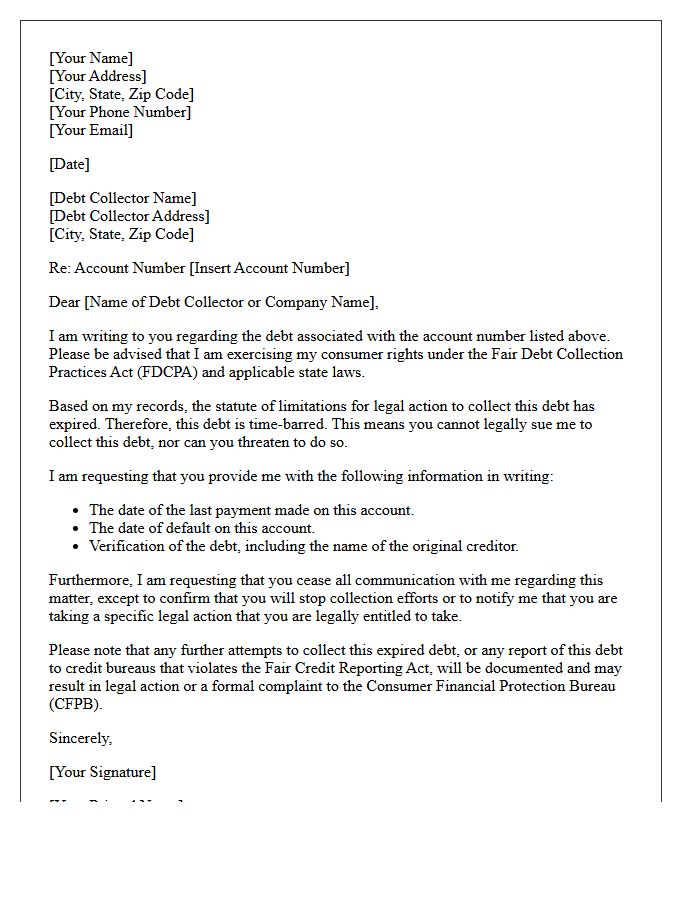
An Expired Debt Consumer Rights Notification Letter is a formal legal document sent to collectors regarding time-barred debts. Under the Fair Debt Collection Practices Act (FDCPA), consumers have the right to demand that agencies cease contact once the statute of limitations has passed. Sending this letter prevents legal harassment and ensures collectors cannot successfully sue for repayment. It is vital to state clearly that you do not acknowledge the debt, as making a payment or even a partial promise can restart the clock on the expiration period and revive legal liability.
Time-Barred Debt Invalidity Notice Letter
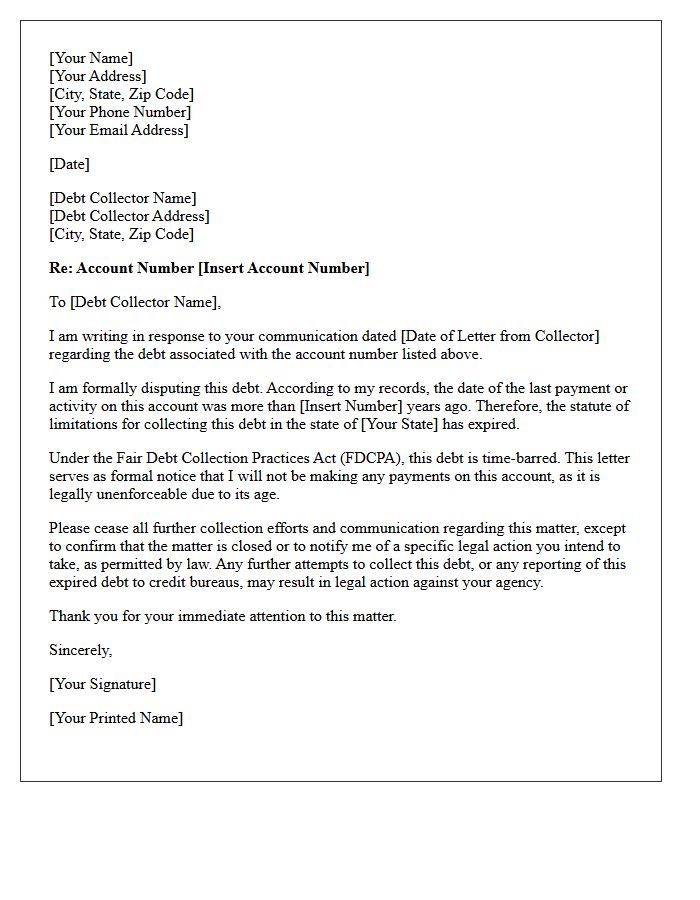
A Time-Barred Debt Invalidity Notice Letter is a formal legal notification sent to collectors regarding statute of limitations expired accounts. This document asserts that the debt is legally uncollectible through the court system due to its age. By sending this notice, you effectively dispute the collector's right to sue and demand they cease communication. It is a critical tool for consumer protection, preventing aggressive agencies from pursuing "zombie debt" that no longer carries a legal obligation for repayment under state laws.
Out Of Statute Account Closure Confirmation Letter
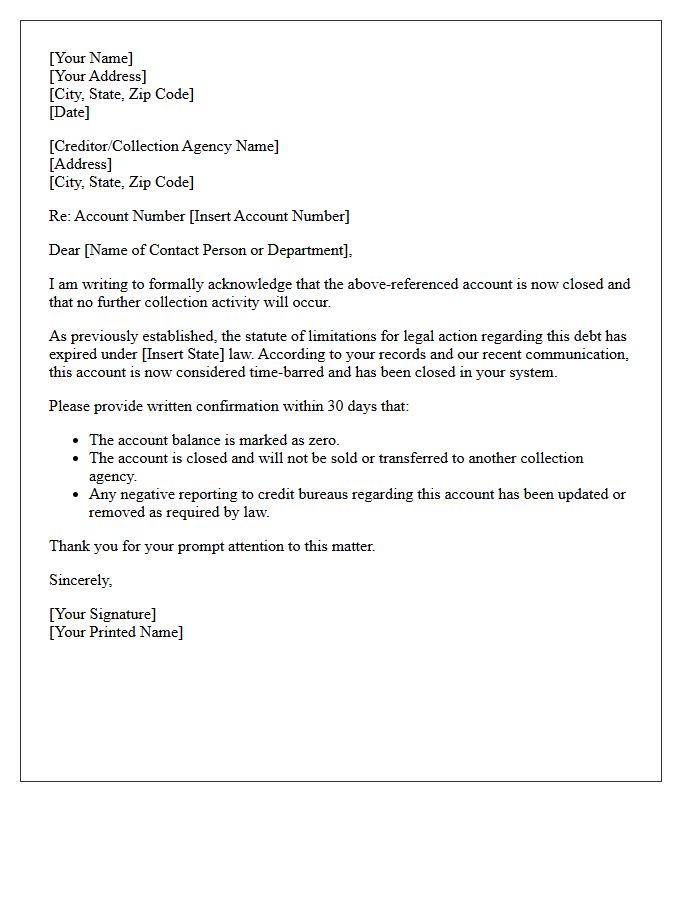
An Out of Statute Account Closure Confirmation Letter is a legal notice confirming that a debt is time-barred and the account is officially closed. This document serves as vital written proof that a creditor or collection agency can no longer pursue legal action to collect the balance due to the expiration of the statute of limitations. You should retain this letter permanently to prevent future collection attempts and ensure your credit report accurately reflects the closed status, protecting you from zombie debt litigation.
What is an out of statute debt validation notice?
An out of statute debt validation notice is a formal letter sent to a debt collector requesting verification of a debt that has passed the legal statute of limitations for collection. This notice informs the collector that you are aware the debt is legally uncollectible through the court system due to its age.
Can a debt collector still contact me if the debt is past the statute of limitations?
Yes, in most states, debt collectors can still attempt to contact you to request payment even if the statute of limitations has expired. However, sending a debt validation notice can force them to prove the debt's validity and, in many cases, serves as a precursor to a "cease and desist" letter to stop further communication.
What should be included in an out of statute debt validation letter?
The letter should include your account information, a formal request for proof of the original contract, a statement that the debt is time-barred under your state's statute of limitations, and a notice that any further legal threats may violate the Fair Debt Collection Practices Act (FDCPA).
Does acknowledging an out of statute debt restart the clock?
Potentially, yes. In many jurisdictions, making a partial payment or explicitly admitting the debt is yours in writing can "reset" or "toll" the statute of limitations. This is why it is critical to use specific language in a validation notice that does not acknowledge ownership of the debt.
What should I do if a collector sues me for an out of statute debt?
If you are sued for a time-barred debt, you must respond to the lawsuit and raise the statute of limitations as an affirmative defense. Providing the court with your out of statute debt validation notice documentation can help demonstrate that the collector was aware the debt was legally unenforceable before they filed the suit.

Comments