
A Post-Judgment Debt Validation Notice is a critical legal tool used to verify the accuracy and legitimacy of a court-ordered debt. This letter ensures creditors provide proper documentation before proceeding with enforcement actions like wage garnishment. Understanding your consumer rights helps protect your financial stability after a ruling. Below are some ready to use templates to help you get started.
Image cover: Winning the Dispute: Proven Post-Judgment Debt Validation Letter Templates
Letter Samples List
- Post-Judgment Debt Validation Notice Letter
- Formal Post-Judgment Debt Verification Letter
- Court-Ordered Debt Validation Notice Letter
- Post-Judgment Balance Confirmation Notice Letter
- Final Post-Judgment Debt Validation Letter
- Post-Judgment Account Verification Notice Letter
- Legal Post-Judgment Debt Confirmation Letter
- Post-Judgment Outstanding Debt Validation Letter
- Creditor Post-Judgment Debt Notice Letter
- Post-Judgment Collection Validation Notice Letter
- Official Post-Judgment Debt Validation Letter
- Certified Post-Judgment Debt Validation Letter
Post-Judgment Debt Validation Notice Letter
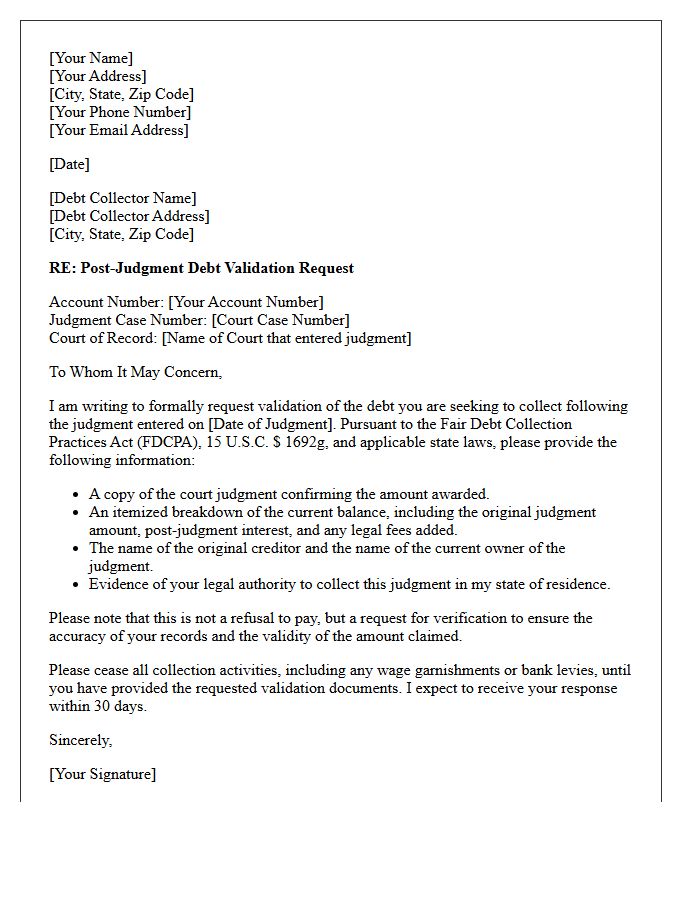
A Post-Judgment Debt Validation Notice Letter is a critical document sent after a court has already issued a judgment. Unlike pre-suit notices, this letter informs the debtor that the debt is legally established and outlines the balance owed, including interest and legal fees. It is the final opportunity to ensure the judgment amount is accurate before the creditor initiates aggressive collection actions like wage garnishment or bank levies. Receiving this notice means you must act immediately to negotiate a settlement or file for a stay of execution to protect your assets.
Formal Post-Judgment Debt Verification Letter
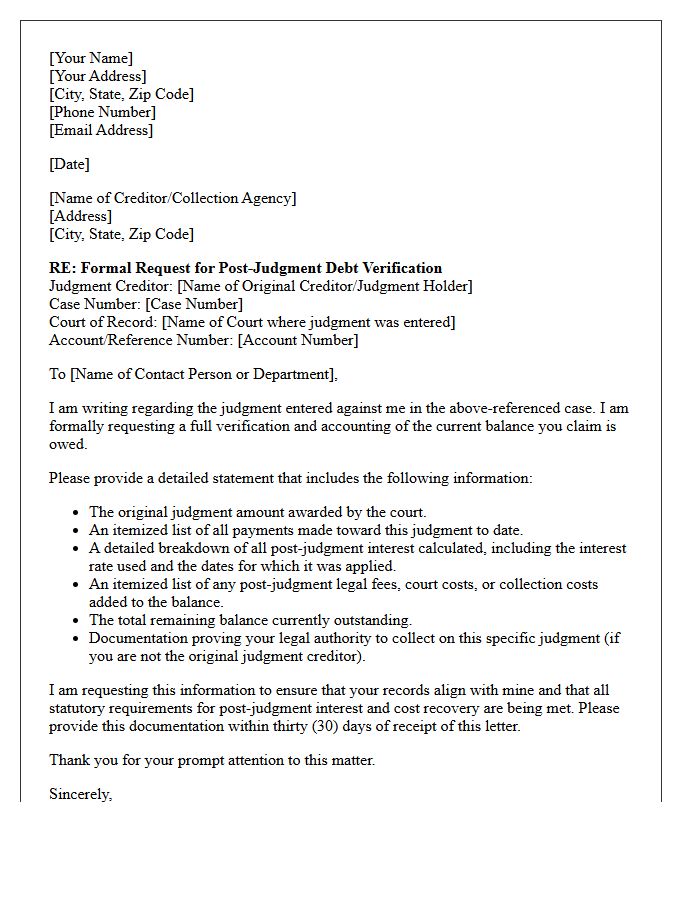
A Formal Post-Judgment Debt Verification Letter is a critical legal tool used by creditors or legal representatives to demand transparency regarding a debtor's financial standing. After a court issues a judgment, this document compels the judgment debtor to provide a verified disclosure of their assets, employment status, and bank accounts. Understanding this process is essential for judgment enforcement, as it establishes the evidentiary basis for wage garnishments or property liens. Failing to respond accurately to this formal inquiry can result in legal sanctions or contempt of court proceedings.
Court-Ordered Debt Validation Notice Letter
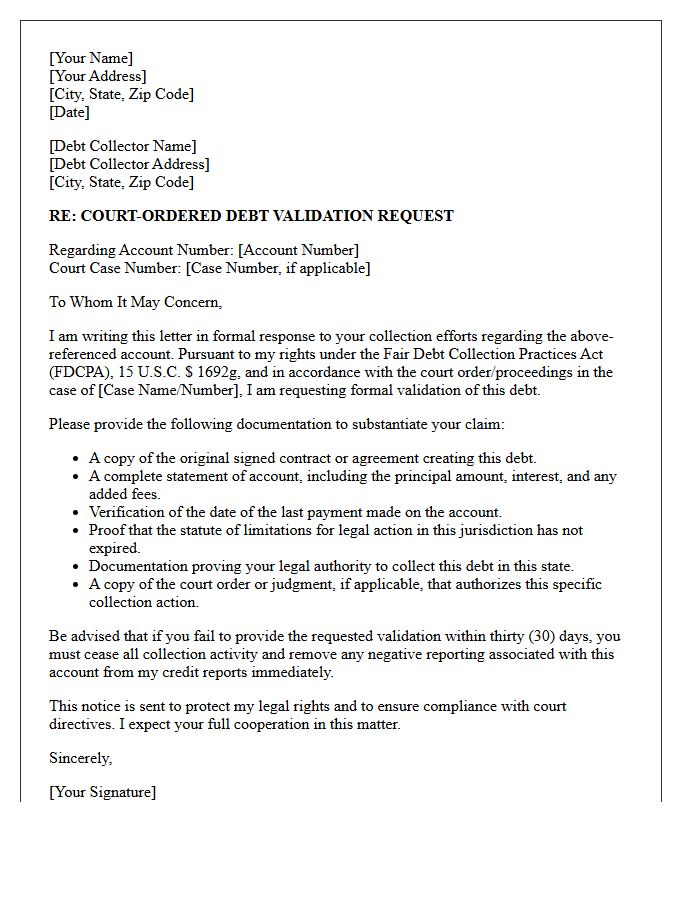
A Court-Ordered Debt Validation Notice Letter is a legal document used to verify the legitimacy of a financial claim during litigation. It requires the collector to provide competent evidence proving the debt's amount, origin, and their legal authority to collect it. For consumers, this is a critical defense strategy to challenge inaccurate records or expired statutes of limitations. If the creditor fails to produce verified documentation as ordered, the court may dismiss the case. Always respond within the specified legal deadline to preserve your rights and prevent a default judgment.
Post-Judgment Balance Confirmation Notice Letter
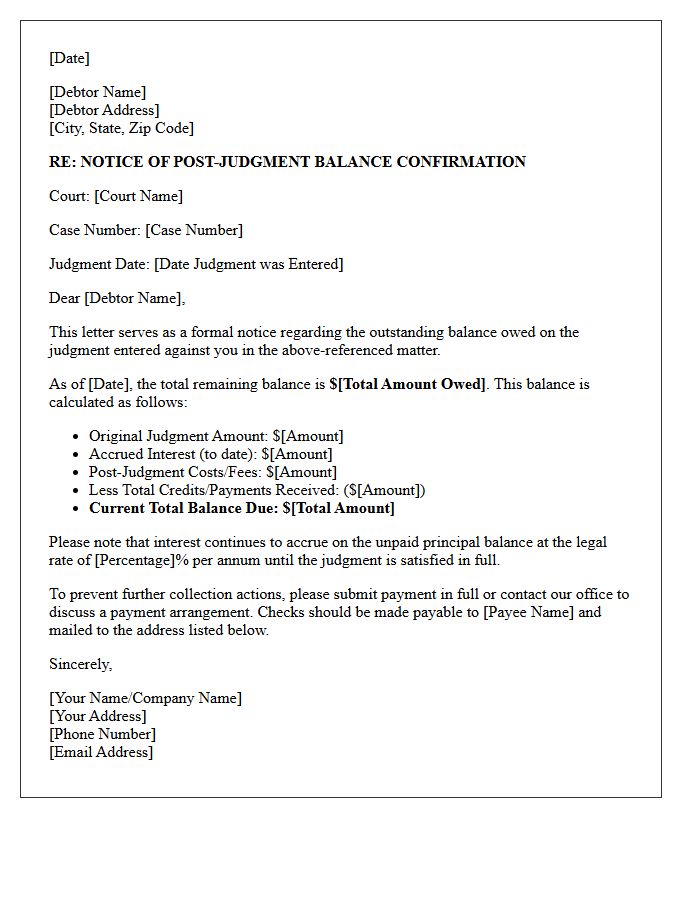
A Post-Judgment Balance Confirmation Notice Letter is a formal legal document issued after a court ruling to verify the outstanding debt owed by a debtor. This notice provides transparency regarding the total amount due, including the original judgment, accrued interest, and legal costs. It serves as a final verification step before the creditor pursues execution of judgment through wage garnishment or asset seizure. Reviewing this letter for accuracy is essential to prevent overpayment and ensure the legal record reflects any partial payments made after the trial concluded.
Final Post-Judgment Debt Validation Letter
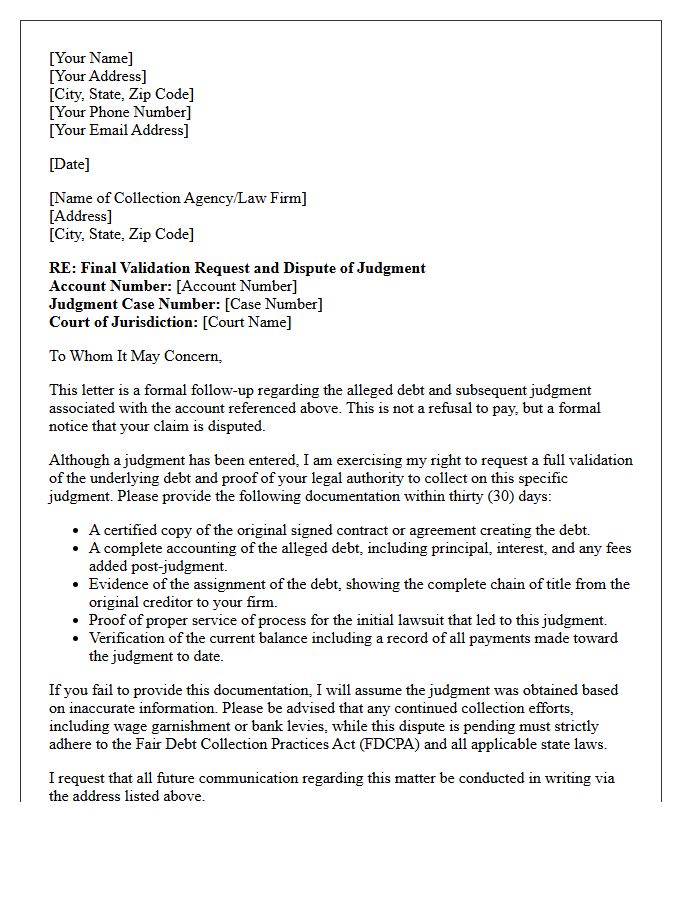
A Final Post-Judgment Debt Validation Letter is a formal legal notice sent after a court has issued a judgment. Its primary purpose is to confirm the exact judgment amount, including accrued interest and legal fees, while providing proof of liability. This document ensures the creditor has the legal authority to pursue debt collection through methods like wage garnishment or bank levies. Receiving this letter is a critical signal to seek legal advice or negotiate a settlement agreement to prevent further involuntary enforcement actions against your personal assets.
Post-Judgment Account Verification Notice Letter
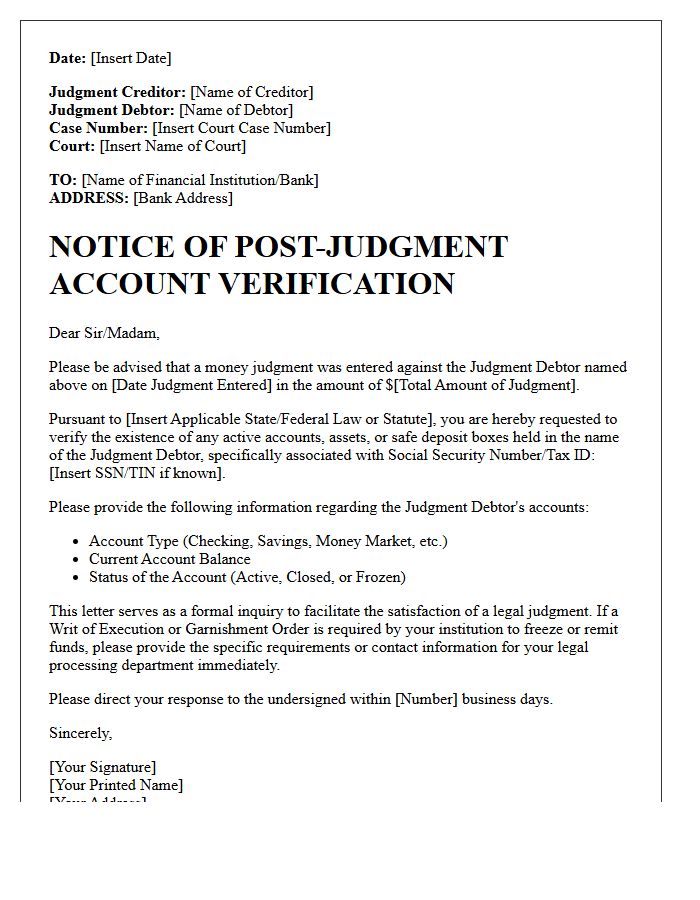
A Post-Judgment Account Verification Notice Letter is a formal legal document sent after a creditor wins a lawsuit. Its primary purpose is to confirm your financial assets and bank account details to facilitate debt collection. Receiving this means the court has already granted a judgment, allowing the creditor to pursue bank garnishment or asset seizure. It is crucial to review the notice for accuracy and understand your exemptions under state law. Failing to respond or challenge the verification promptly can result in the immediate freezing of your funds to satisfy the outstanding legal debt.
Legal Post-Judgment Debt Confirmation Letter
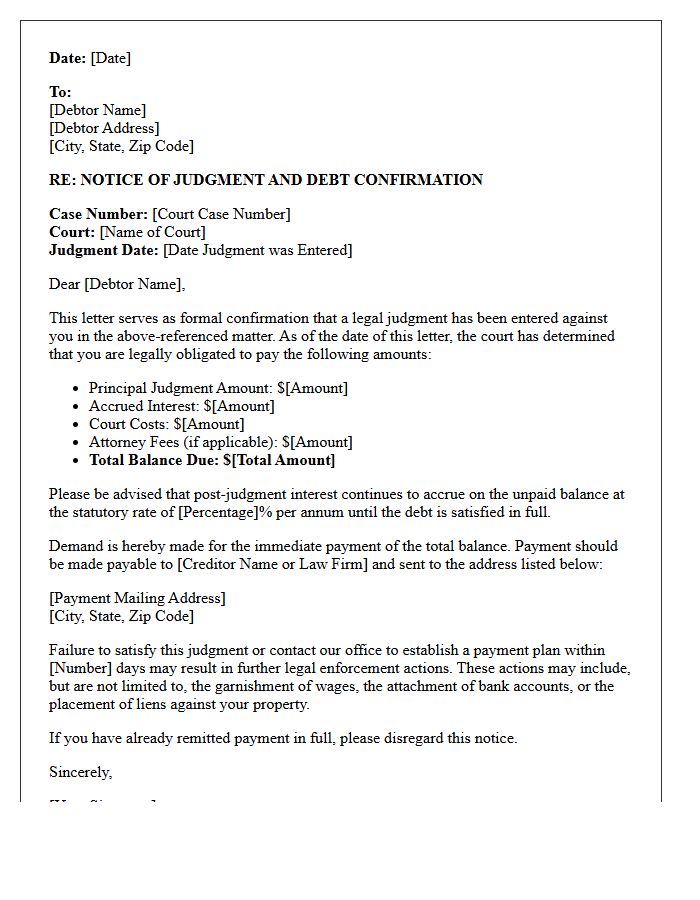
A legal post-judgment debt confirmation letter is a formal document sent after a court ruling to officially notify a debtor of their outstanding obligation. This letter serves as a verified record of the total amount owed, including court costs and accrued interest. It functions as a final demand for payment before the creditor initiates aggressive judgment enforcement actions, such as wage garnishment or asset seizure. Receiving this notice confirms that the debt is legally enforceable, making it essential for the debtor to arrange a settlement or seek legal counsel immediately.
Post-Judgment Outstanding Debt Validation Letter
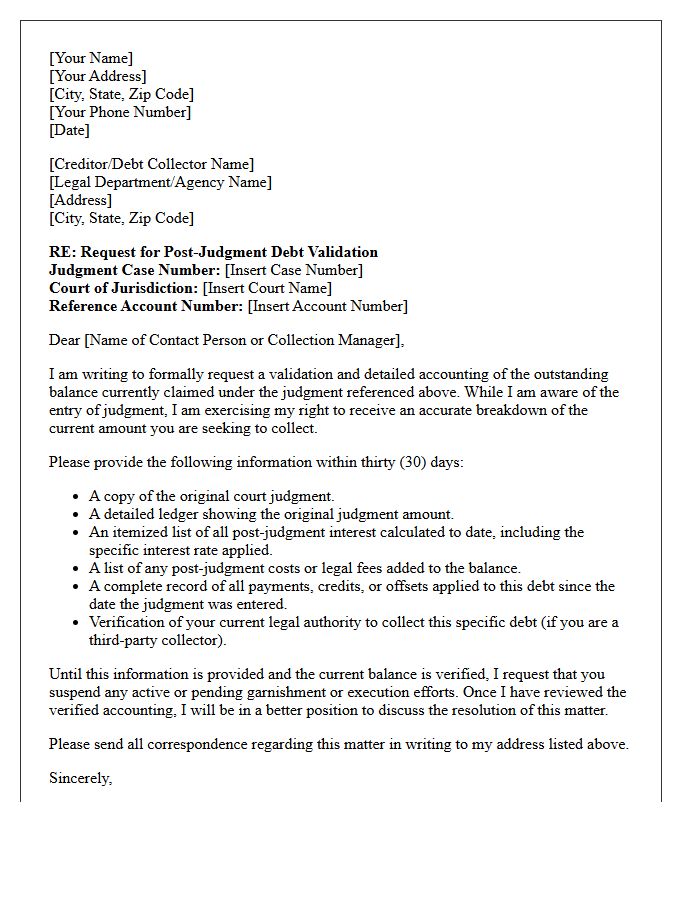
A Post-Judgment Outstanding Debt Validation Letter is a formal legal request sent after a court ruling. It requires the creditor to provide sworn proof that the specific amount claimed is accurate and legally collectible. This document is essential for verifying debt ownership and ensuring no unauthorized fees were added post-trial. If the collector cannot validate the judgment details, you may have grounds to challenge garnishment actions or report inaccuracies to credit bureaus. It serves as a vital protection against double-payment and ensures full compliance with financial regulations.
Creditor Post-Judgment Debt Notice Letter
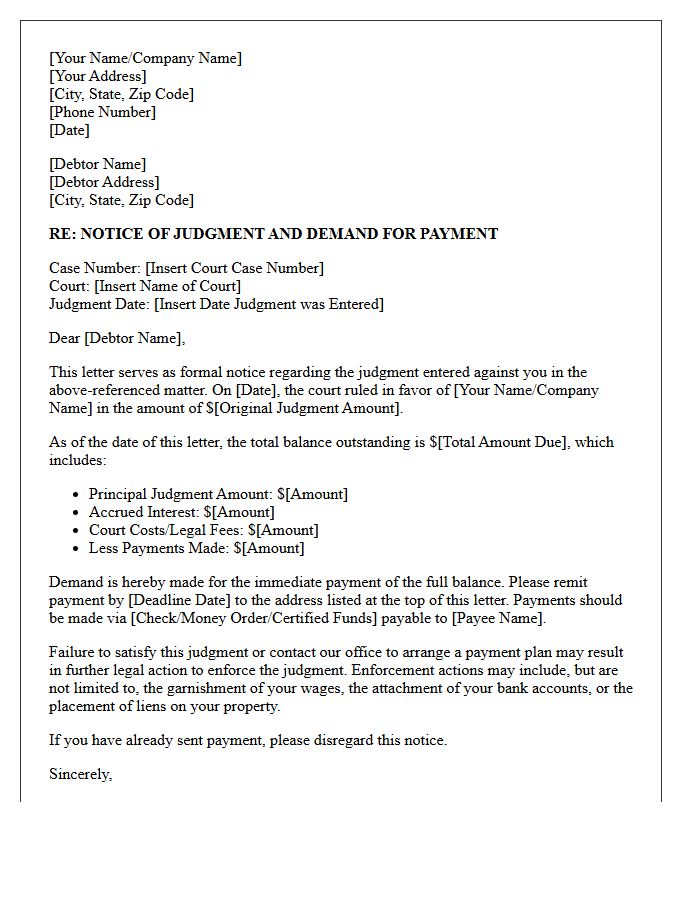
A Creditor Post-Judgment Debt Notice Letter is a formal legal notification sent after a court grants a judgment against a debtor. This document confirms the legal obligation to pay the specified sum, including potential interest and legal fees. It serves as a final demand before the creditor initiates enforcement actions, such as wage garnishment, bank account levies, or property liens. Understanding this notice is crucial because it outlines your remaining rights to dispute the amount or arrange a voluntary payment plan to avoid further aggressive collection tactics and additional costs.
Post-Judgment Collection Validation Notice Letter
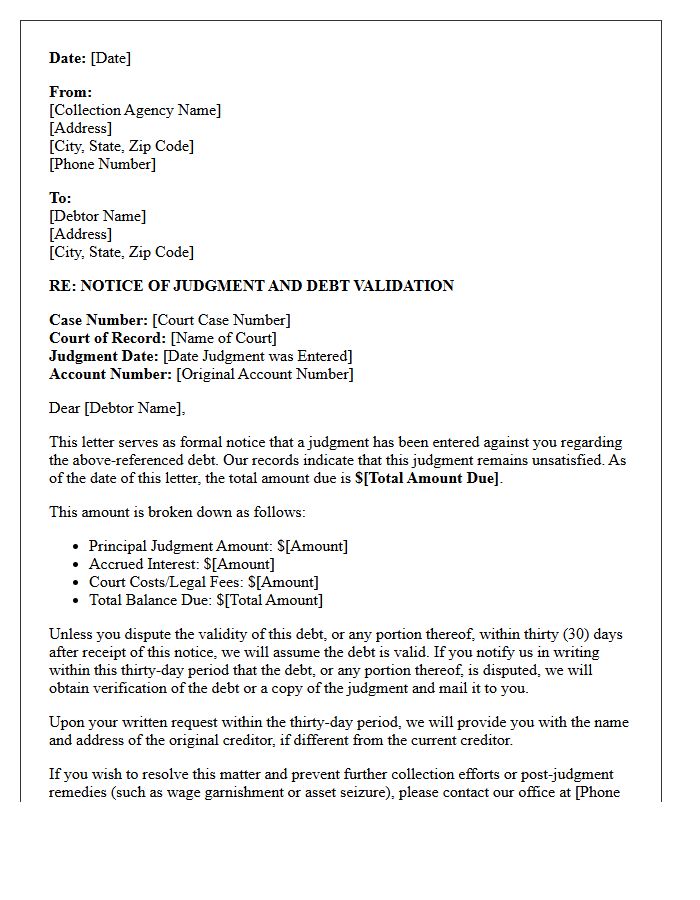
A Post-Judgment Collection Validation Notice Letter is a legal communication sent by creditors or debt collectors after a court judgment is entered. Its primary purpose is to provide due process by informing the debtor of the exact amount owed, including court costs and interest. Under the Fair Debt Collection Practices Act (FDCPA), this notice grants the debtor a specific window to dispute the debt's accuracy. Understanding this letter is critical, as failing to respond may lead to aggressive enforcement actions such as wage garnishment or bank account levies to satisfy the court's order.
Official Post-Judgment Debt Validation Letter
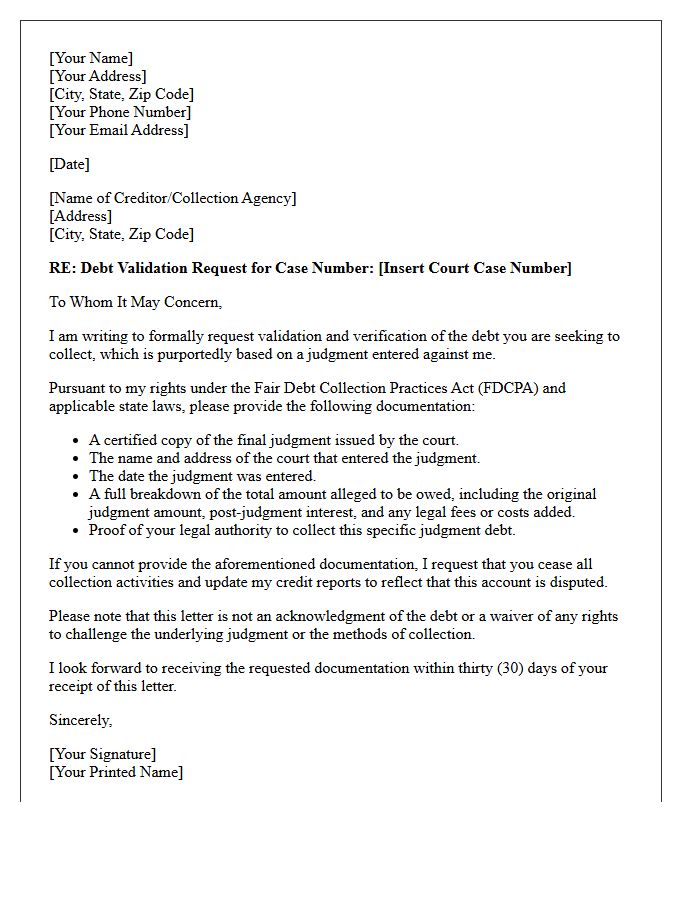
An Official Post-Judgment Debt Validation Letter is a formal legal document used after a court ruling to confirm the exact amount owed. This letter ensures the judgment creditor provides a detailed breakdown of the principal balance, accrued interest, and legal fees. It is a critical tool for debt verification, preventing overpayment or collection errors. Debtors should request this to ensure the legal judgment is accurate and to establish a clear paper trail before arranging a settlement or payment plan to satisfy the court-ordered obligation.
Certified Post-Judgment Debt Validation Letter
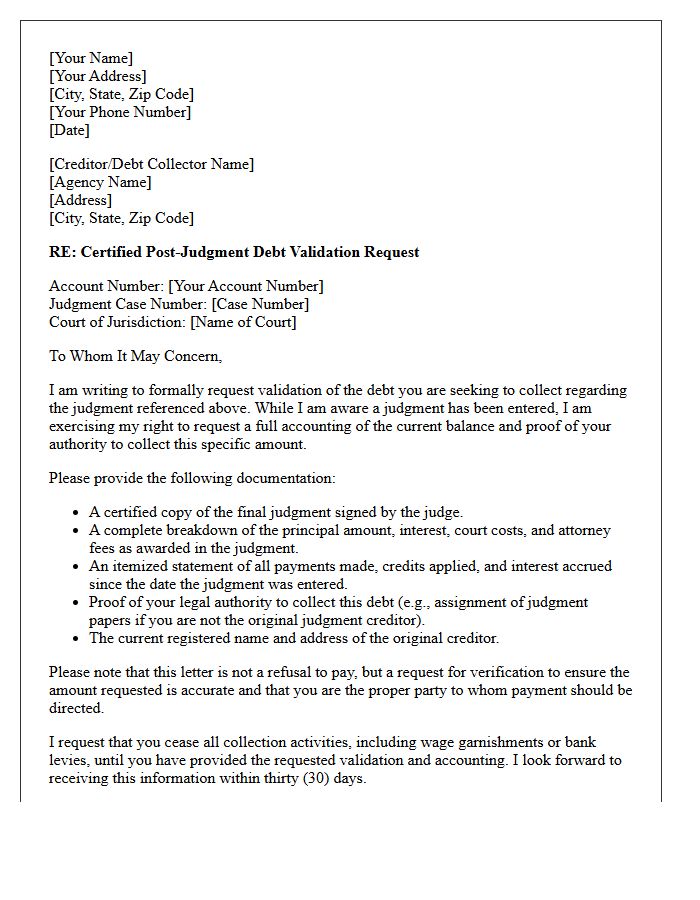
A Certified Post-Judgment Debt Validation Letter is a formal legal tool used to challenge the accuracy of a court-ordered debt. Unlike initial verification requests, this document demands sworn evidence that the judgment is valid, correctly calculated, and legally enforceable by the current collector. It serves to protect consumer rights by ensuring creditors strictly follow procedural compliance before continuing garnishments or seizures. Sending this via certified mail creates a vital paper trail, often revealing accounting errors or jurisdictional flaws that could potentially lead to a judgment being vacated or settled for less.
What is a Post-Judgment Debt Validation Notice?
A Post-Judgment Debt Validation Notice is a formal letter sent by a creditor or debt collector after a court has granted a legal judgment. It confirms the existence of the court-ordered debt, specifies the total amount owed including interest and legal fees, and provides the debtor with information on how to satisfy the judgment or dispute inaccuracies in the balance.
Is a debt collector required to send a validation notice after a judgment?
While the federal Fair Debt Collection Practices Act (FDCPA) requires an initial validation notice within five days of the first communication, many states and consumer protection laws require a supplemental notice once a judgment is entered. This ensures the debtor is aware that the debt has transitioned from a contractual claim to a legally enforceable court order.
How does a post-judgment validation notice differ from a standard debt validation letter?
A standard debt validation letter is sent before legal action to verify a creditor's claim. A Post-Judgment Debt Validation Notice is sent after a lawsuit is won; it includes the court case number, the date the judgment was entered, and details regarding post-judgment interest rates which are dictated by state law rather than the original contract.
What should I do if I receive a Post-Judgment Debt Validation Notice?
Upon receiving the notice, you should verify the case number and the judgment amount against court records. You have the right to request a breakdown of how the balance was calculated. If the information is correct, you may need to negotiate a payment plan or a lump-sum settlement to prevent further actions like wage garnishment or bank levies.
Can I still dispute the debt after receiving a post-judgment notice?
At this stage, you generally cannot dispute the validity of the underlying debt itself, as the court has already ruled on it. However, you can dispute the accuracy of the post-judgment interest, the application of previous payments, or legal fees added to the total. To challenge the judgment itself, you would typically need to file a motion to vacate the judgment in the court where it was issued.

Comments