
Retaining coverage for your business vehicles requires a proactive approach. A Commercial Auto Fleet Renewal Letter is a vital communication used to notify clients about expiring policies, updated premiums, and new coverage terms. Effective letters ensure seamless transitions and maintain legal compliance for your entire fleet operation. To help you draft professional notifications, below are some ready to use template.
Image cover: Streamline Your Commercial Auto Fleet Renewals: Professional Letter Samples and Templates
Letter Samples List
- Standard Commercial Auto Fleet Renewal Letter
- Early Notification Commercial Auto Fleet Renewal Letter
- Coverage Review Commercial Auto Fleet Renewal Letter
- Vehicle Schedule Update Commercial Auto Fleet Renewal Letter
- Driver Roster Verification Commercial Auto Fleet Renewal Letter
- Premium Estimate Commercial Auto Fleet Renewal Letter
- Policy Upgrade Commercial Auto Fleet Renewal Letter
- Final Reminder Commercial Auto Fleet Renewal Letter
- Lapse Warning Commercial Auto Fleet Renewal Letter
- Loss Run Analysis Commercial Auto Fleet Renewal Letter
- State Compliance Commercial Auto Fleet Renewal Letter
- Executive Summary Commercial Auto Fleet Renewal Letter
Standard Commercial Auto Fleet Renewal Letter
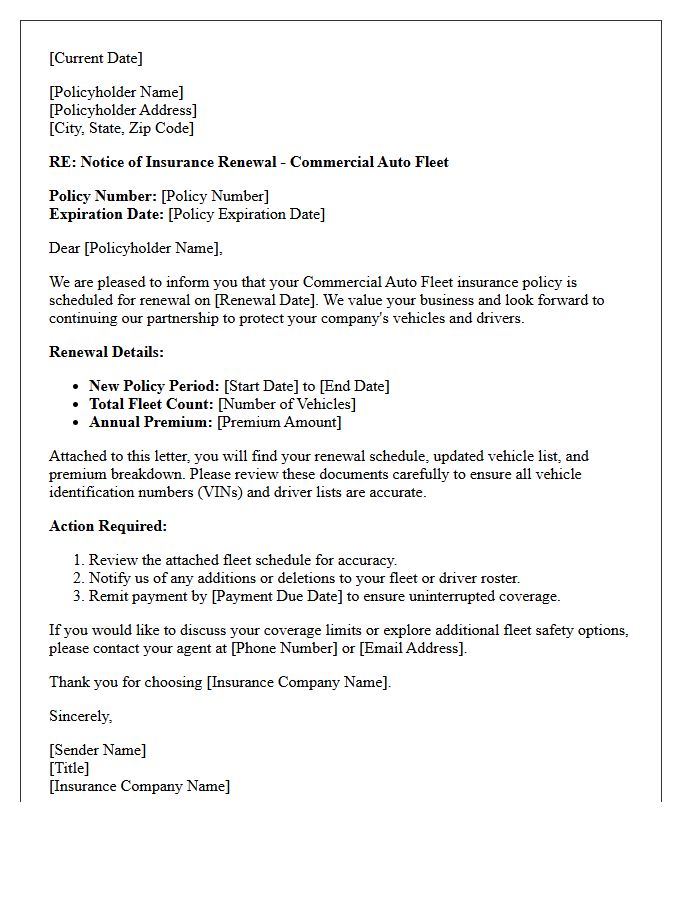
A Standard Commercial Auto Fleet Renewal Letter notifies businesses about upcoming policy expirations and coverage terms for the next period. It is essential to review the renewal premium and any changes in deductibles or limits. Timely submission of updated driver lists and vehicle schedules ensures continuous protection. Evaluating loss runs and safety protocols before the deadline can help in negotiating better rates. This document serves as a formal offer to extend liability and physical damage protection for your company's transportation assets.
Early Notification Commercial Auto Fleet Renewal Letter
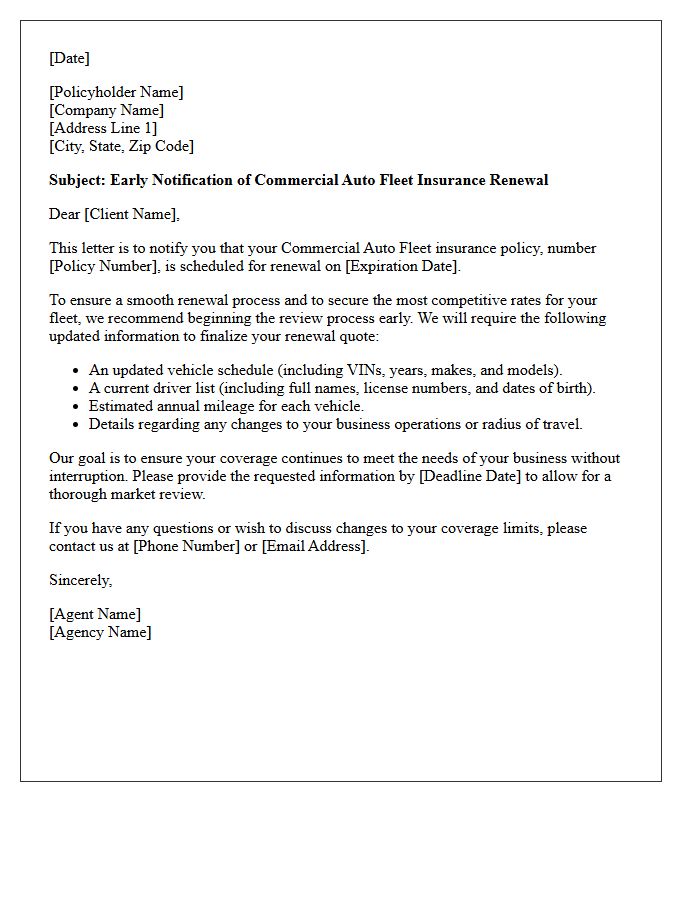
An Early Notification Commercial Auto Fleet Renewal Letter is a critical document sent by insurers to alert businesses about upcoming policy expirations. Its primary purpose is to provide advance notice regarding potential changes in premiums, coverage terms, or eligibility. Receiving this early allows fleet managers to perform a comprehensive risk assessment and gather necessary documentation for a seamless transition. Timely review of this letter ensures your business maintains continuous protection while providing a strategic window to negotiate rates or explore alternative market options before the current policy anniversary date.
Coverage Review Commercial Auto Fleet Renewal Letter
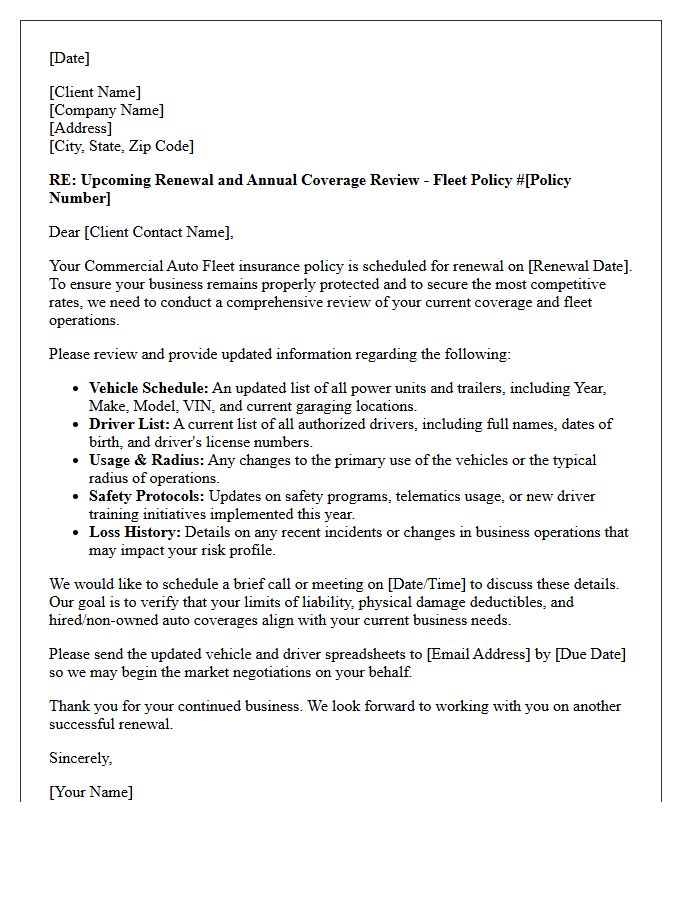
A Commercial Auto Fleet Renewal Letter notifies businesses of upcoming policy expiration and premium adjustments. The most critical step is the Coverage Review, which ensures the policy aligns with current asset values and operational risks. During this process, companies must update vehicle schedules, driver lists, and safety protocols to secure accurate pricing. Proactively addressing changes in fleet size or usage helps avoid protection gaps and simplifies the renewal cycle. Reviewing these documents carefully ensures your business remains compliant and adequately insured against potential liabilities.
Vehicle Schedule Update Commercial Auto Fleet Renewal Letter
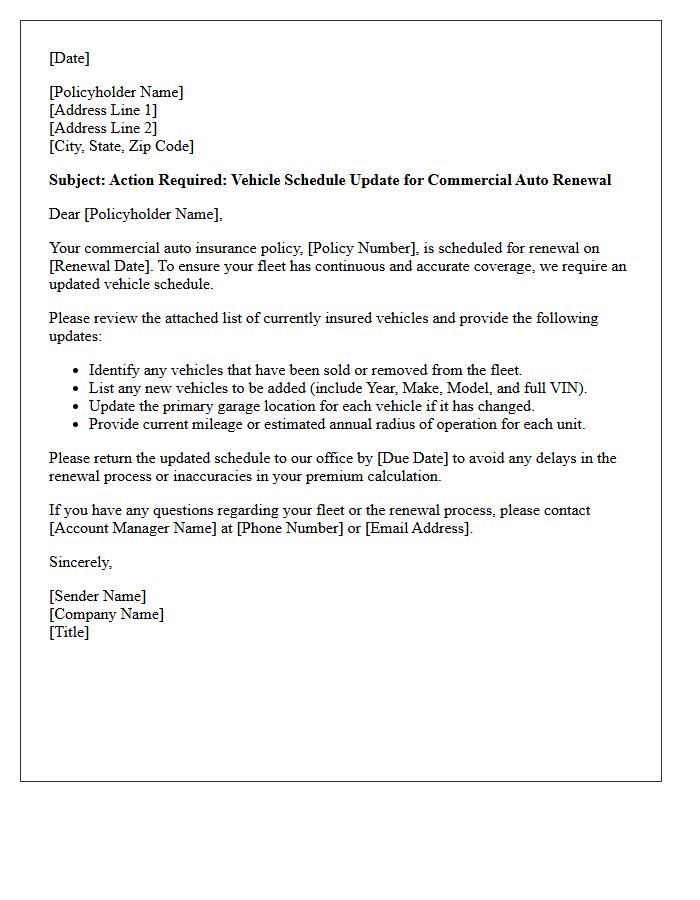
When reviewing your Commercial Auto Fleet Renewal Letter, the most critical step is verifying the accuracy of the Vehicle Schedule Update. This document lists all covered assets, including VINs, garaging locations, and usage classifications. Discrepancies can lead to premium overcharges or, more importantly, a denial of coverage during a claim. Ensure any newly acquired vehicles are added and retired units are removed immediately. Maintaining an up-to-date schedule guarantees seamless liability protection and ensures your business remains compliant with state insurance regulations during the upcoming policy term.
Driver Roster Verification Commercial Auto Fleet Renewal Letter
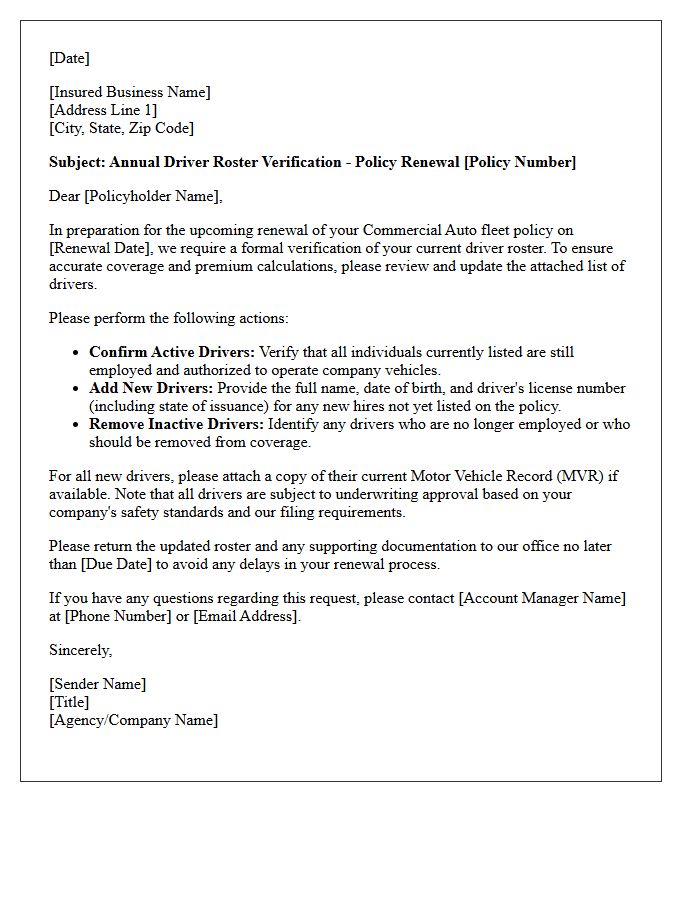
During a commercial auto fleet renewal, insurers require a formal letter to facilitate driver roster verification. This process ensures all operators meet safety standards and underwriting guidelines. Policyholders must provide an updated list including full names, license numbers, and dates of birth. Accurate reporting is essential to maintain coverage validity and determine final premium rates. Failure to disclose new drivers or remove terminated ones can lead to claim denials or policy cancellation. Always cross-reference your current payroll with the insurer's records to ensure compliance and optimal protection for your business assets.
Premium Estimate Commercial Auto Fleet Renewal Letter
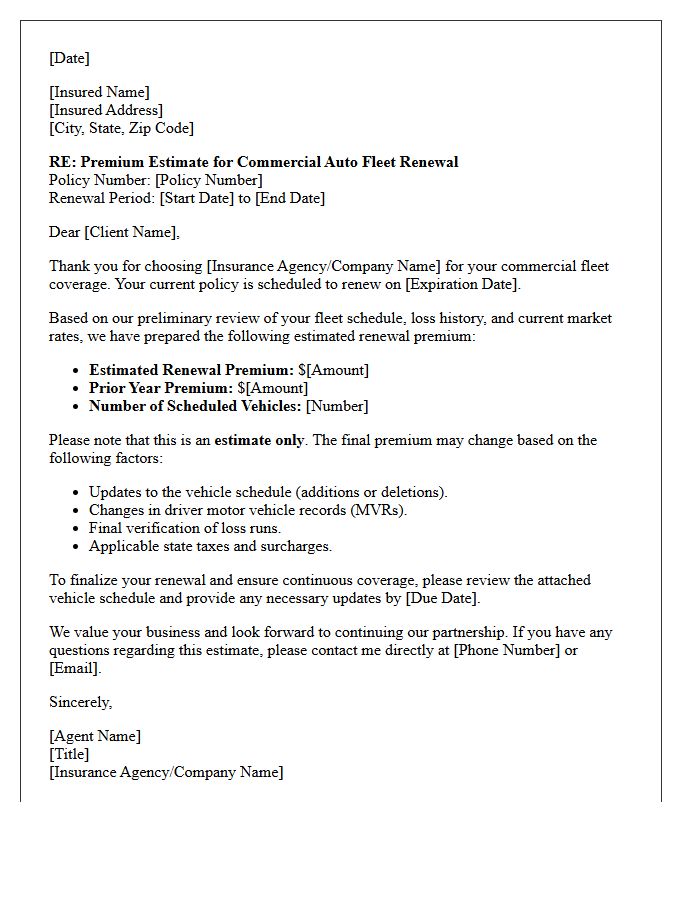
A Premium Estimate Commercial Auto Fleet Renewal Letter provides a projected cost for upcoming policy coverage. It is essential to review the scheduled vehicle list and driver data for accuracy, as these factors directly influence the final rate. This document serves as an early financial indicator, allowing businesses to adjust budgets or request risk management reviews before the formal binding. Always compare the estimated premium against current claims history to ensure all underwriting credits are applied correctly during the renewal process.
Policy Upgrade Commercial Auto Fleet Renewal Letter
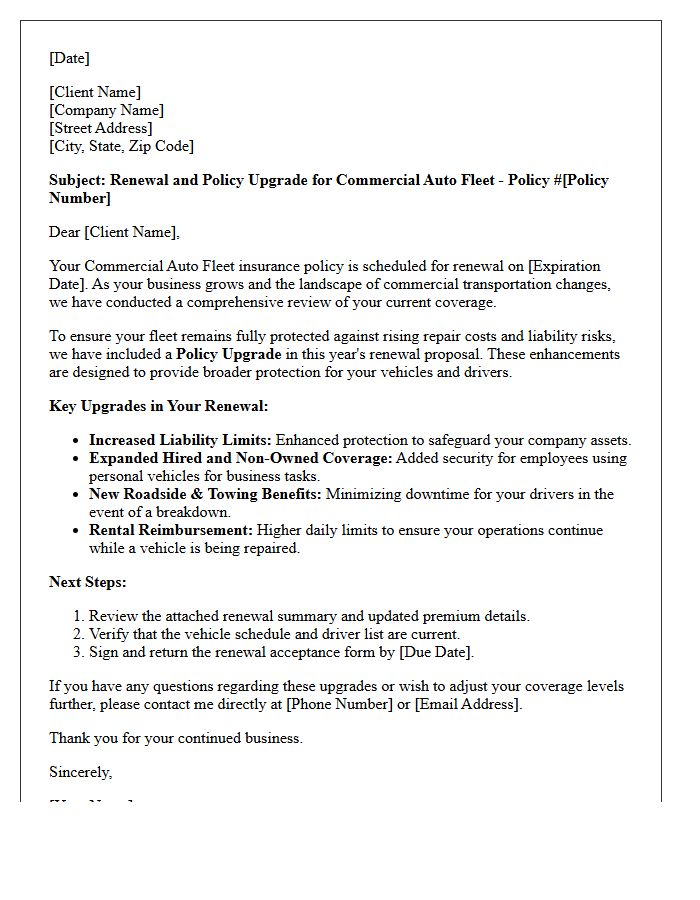
A commercial auto fleet renewal letter is a formal notification that your current policy is nearing expiration. It is the critical time to assess a Policy Upgrade to ensure comprehensive coverage for your business vehicles. Reviewing this document allows you to adjust limits, add new drivers, or incorporate telematics discounts to lower premiums. Failing to respond promptly can lead to a lapse in protection or missed opportunities for enhanced liability terms. Prioritize evaluating your fleet's risk profile during this cycle to maintain operational compliance and secure the most competitive market rates.
Final Reminder Commercial Auto Fleet Renewal Letter
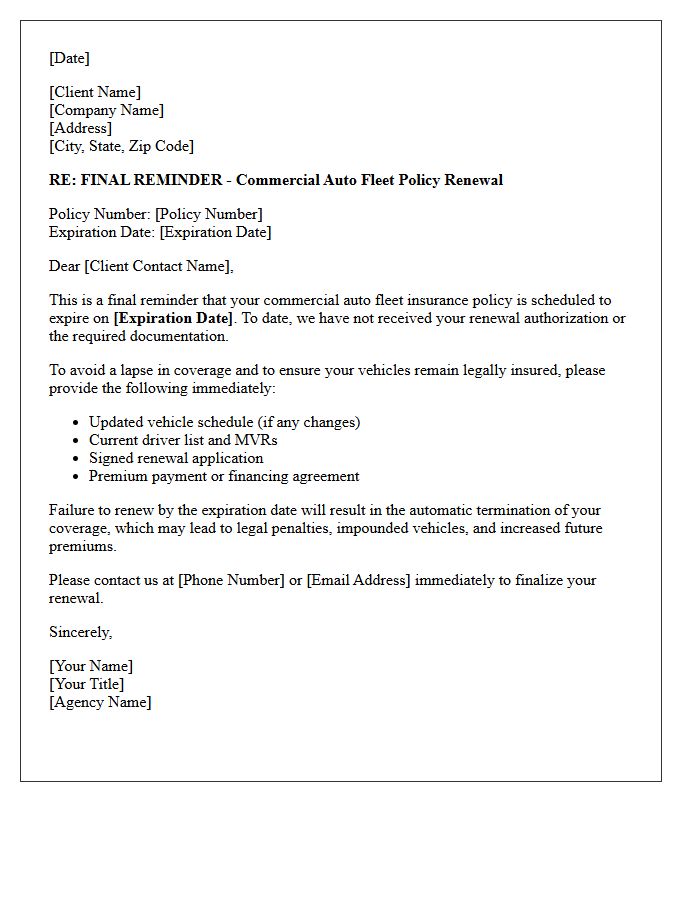
A Final Reminder Commercial Auto Fleet Renewal Letter is a critical notice alerting business owners that their vehicle coverage is nearing expiration. To maintain legal compliance and protect your assets, you must act immediately to avoid a lapse in coverage. Review your updated premium rates, verify vehicle counts, and submit required documentation before the deadline. Failing to renew on time can lead to uninsured claims, regulatory penalties, and increased future costs. Ensure your fleet remains protected by finalizing your policy renewal today to guarantee uninterrupted protection on the road.
Lapse Warning Commercial Auto Fleet Renewal Letter
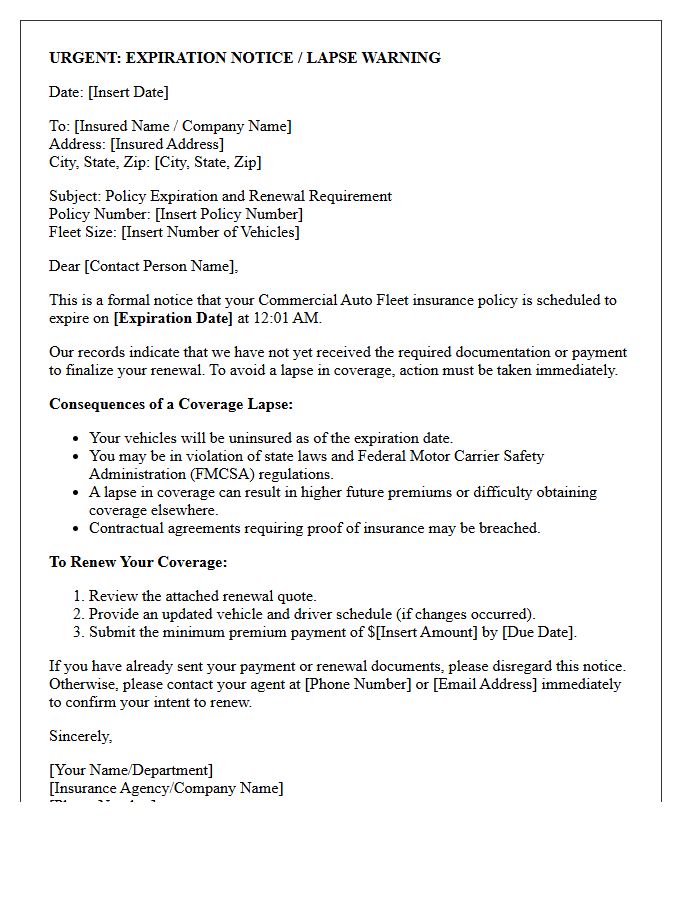
A Lapse Warning Commercial Auto Fleet Renewal Letter is a critical legal notification indicating your insurance coverage is set to expire. To maintain business continuity, you must address the expiration date immediately to avoid a dangerous gap in protection. Operating without valid insurance can lead to severe legal penalties, impounded vehicles, and financial liability for accidents. Prioritize reviewing your renewal terms and submitting required payments or documentation promptly to ensure your fleet remains fully compliant and protected against operational risks during the transition period.
Loss Run Analysis Commercial Auto Fleet Renewal Letter
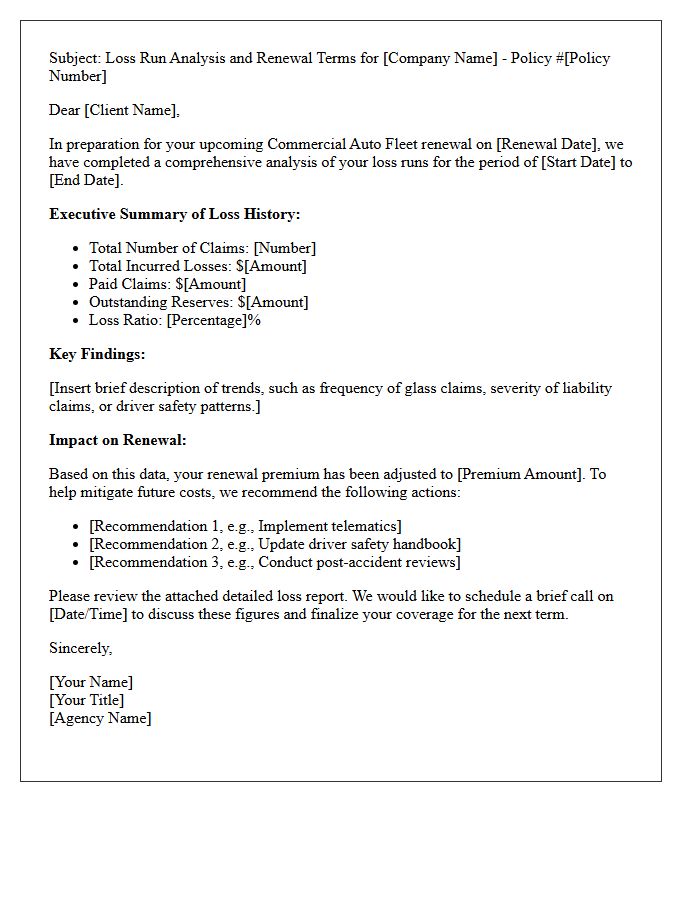
When preparing for a commercial auto fleet renewal, a detailed loss run analysis is essential. This report examines historical claims data to identify accident frequency and severity trends. Underwriters use these insights to determine your risk profile and calculate future premiums. A professional renewal letter should highlight proactive safety measures and fleet maintenance improvements implemented to mitigate past losses. Demonstrating a clear strategy for risk management can significantly improve your leverage, helping to secure more favorable insurance rates and comprehensive coverage terms during the upcoming policy period.
State Compliance Commercial Auto Fleet Renewal Letter
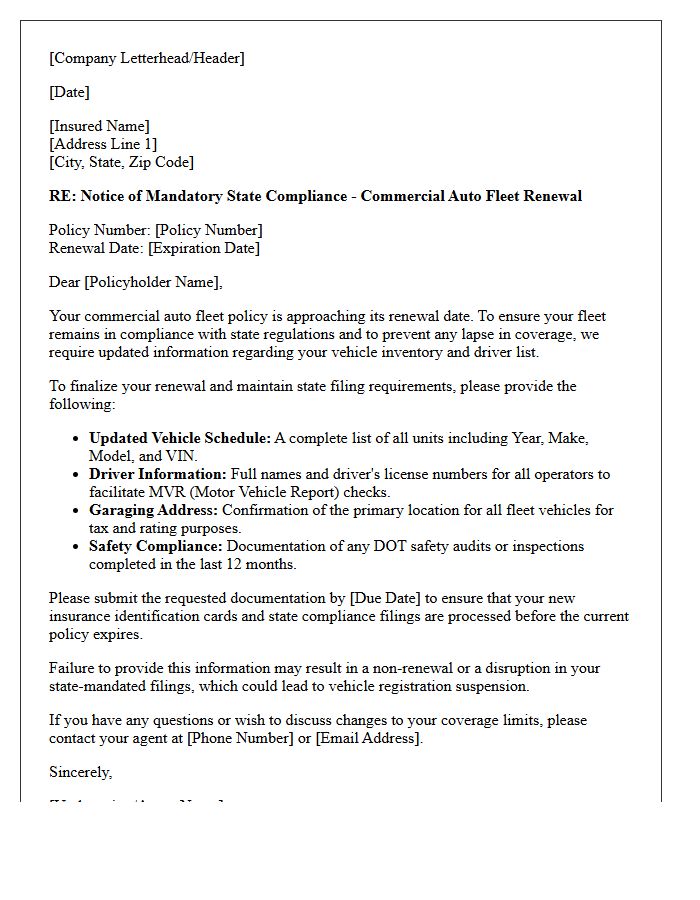
A State Compliance Commercial Auto Fleet Renewal Letter is a critical notice ensuring your business vehicles meet specific insurance mandates. To maintain legal operation, you must verify fleet schedules, driver information, and liability limits before expiration. Failure to respond can result in registration suspension or costly coverage gaps. Prioritize reviewing the compliance deadline mentioned in the letter to guarantee continuous protection and regulatory adherence. Promptly submitting updated vehicle data ensures your fleet remains fully authorized for commercial use under current state statutes.
Executive Summary Commercial Auto Fleet Renewal Letter
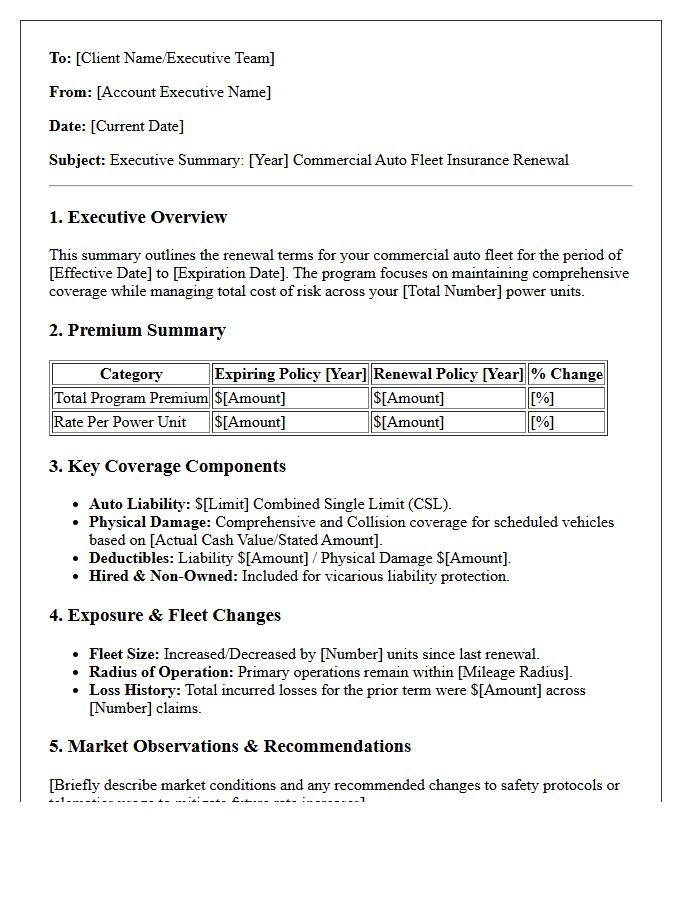
An executive summary for a commercial auto fleet renewal letter provides a high-level overview of policy changes, premium adjustments, and coverage updates. Its primary purpose is to justify rate fluctuations based on claims history, market trends, or fleet size modifications. This concise document helps decision-makers quickly grasp risk management strategies and financial impacts for the upcoming term. Highlighting proactive safety measures can often assist in securing more competitive pricing. Clear communication ensures transparency between the insurer and the business, streamlining the annual renewal process for corporate vehicle fleets.
What is a Commercial Auto Fleet Renewal Letter?
A commercial auto fleet renewal letter is a formal notification sent by an insurance provider to a business owner detailing the terms, updated premiums, and coverage options for the upcoming policy period of their vehicle fleet.
When should I expect to receive my fleet renewal notice?
Most insurance carriers issue fleet renewal letters 30 to 60 days before the current policy expiration date to allow businesses sufficient time to review changes, update vehicle schedules, and provide necessary safety documentation.
Why did my commercial fleet insurance premium increase at renewal?
Premium adjustments are typically driven by changes in the fleet size, the claims history of your drivers over the past year, inflationary costs of vehicle repairs, and updated risk assessments for your specific industry or operating radius.
What documents are required to process a fleet policy renewal?
To finalize your renewal, you generally need to provide an updated vehicle identification number (VIN) list, current driver motor vehicle records (MVRs), updated garage locations, and confirmation of any new safety technologies installed in your vehicles.
Can I negotiate the terms found in my fleet renewal letter?
Yes, businesses can often negotiate renewal terms by demonstrating improved safety protocols, implementing telematics tracking, or opting for higher deductibles to offset premium increases before the new policy term begins.

Comments