
A Commercial Property Vacancy Clause Renewal Notice is a critical formal communication used to update insurance terms when a building remains unoccupied. This notice ensures continuous coverage and compliance with policy requirements to mitigate financial risks during vacancy periods. Understanding the specific conditions and deadlines is essential for property owners. Below are some ready to use templates.
Image cover: Commercial Property Vacancy Clause: Renewal Notice Guide and Templates
Letter Samples List
- Commercial Property Vacancy Clause Policy Renewal Letter
- Vacant Commercial Property Insurance Renewal Notification Letter
- Upcoming Renewal Letter Regarding Commercial Property Vacancy Clauses
- Insurance Agency Renewal Letter for Commercial Property Vacancy
- Commercial Building Vacancy Clause Coverage Extension Renewal Letter
- Annual Renewal Letter Addressing Commercial Property Vacancy Terms
- Commercial Real Estate Vacancy Clause Premium Renewal Letter
- Vacancy Provision Commercial Property Policy Renewal Letter
- Standard Commercial Property Vacancy Clause Renewal Advisory Letter
- Insurance Renewal Letter for Commercial Property Vacancy Endorsements
- Commercial Property Unoccupied Status Clause Renewal Letter
- Agent Renewal Letter Concerning Commercial Property Vacancy Conditions
Commercial Property Vacancy Clause Policy Renewal Letter
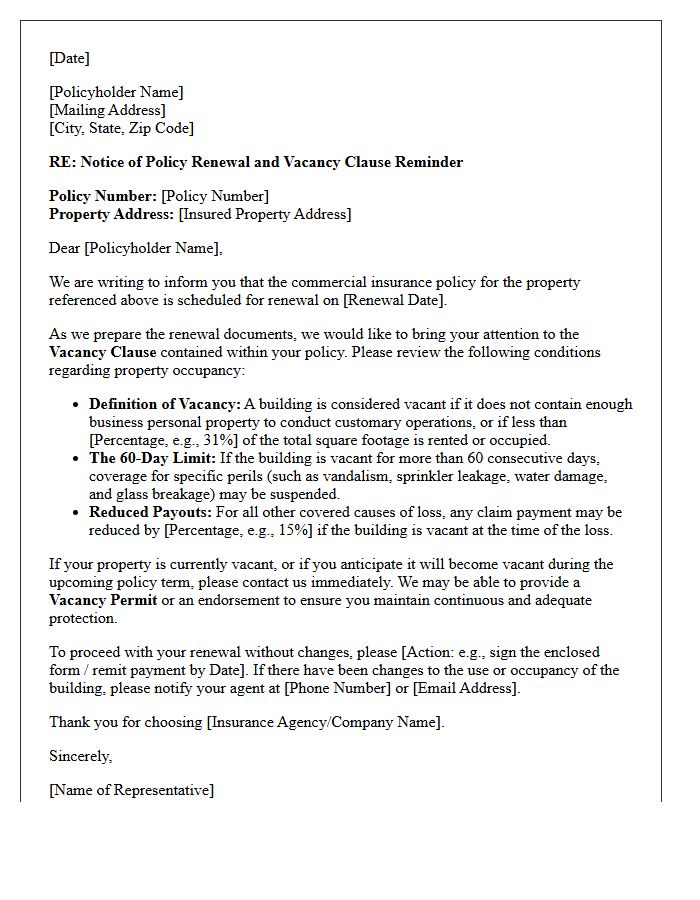
A Commercial Property Vacancy Clause Policy Renewal Letter informs owners that extended vacancy may trigger a vacancy clause. When a building remains empty for more than 30 or 60 days, coverage for risks like vandalism, glass breakage, or water damage is often restricted or excluded. During the renewal process, insurers evaluate occupancy levels to adjust premiums or apply restrictive endorsements. It is vital to notify your provider if your property is unoccupied to ensure you maintain valid protection and avoid denied claims during the upcoming policy term.
Vacant Commercial Property Insurance Renewal Notification Letter
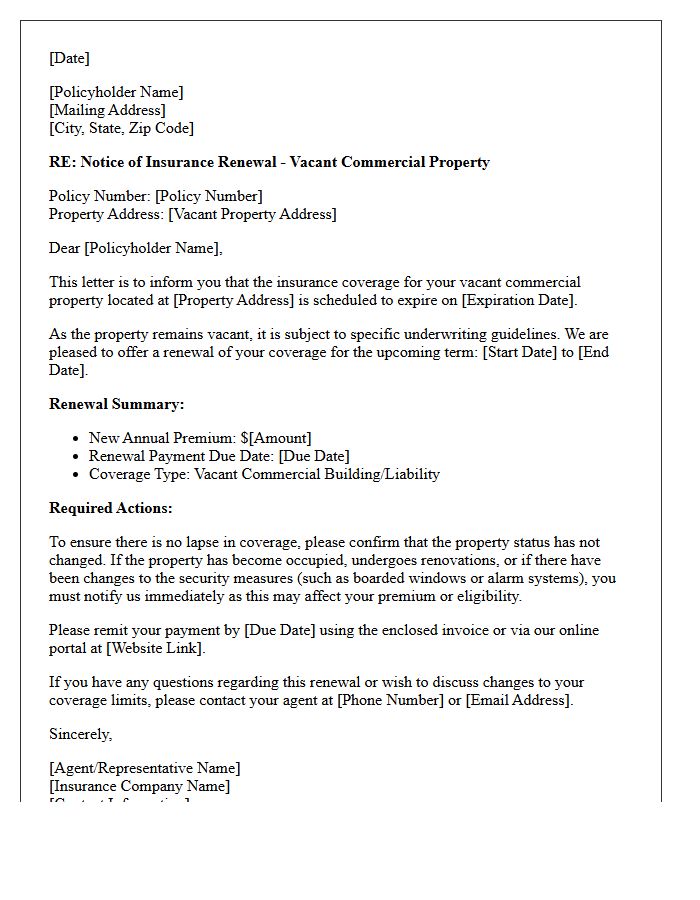
A Vacant Commercial Property Insurance Renewal Notification Letter serves as a formal notice that your current policy is nearing expiration. It is crucial to review the terms and coverage limits immediately, as unoccupied buildings face higher risks of vandalism, theft, or water damage. Failure to respond or renew can lead to a lapse in coverage, leaving the asset unprotected. Property owners must confirm if occupancy status has changed to ensure accurate underwriting and premium rates for the upcoming term. Always verify renewal deadlines to maintain continuous liability and property protection.
Upcoming Renewal Letter Regarding Commercial Property Vacancy Clauses
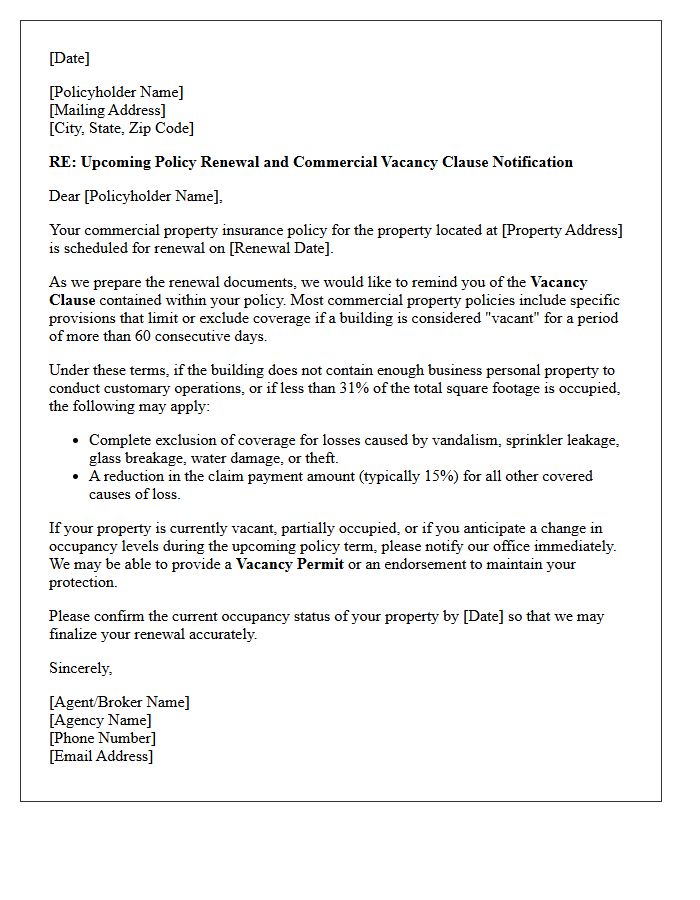
An upcoming renewal letter regarding commercial property vacancy clauses is a critical notice for policyholders. Most insurers strictly limit coverage if a building remains unoccupied for sixty consecutive days. During renewal, companies may adjust vacancy definitions or increase premiums to mitigate risks like vandalism or pipe bursts. It is essential to review these terms to ensure your asset remains protected. If your property is currently empty, you must notify your agent immediately to negotiate a vacancy permit or endorsement, preventing potential claim denials due to non-compliance with updated policy standards.
Insurance Agency Renewal Letter for Commercial Property Vacancy
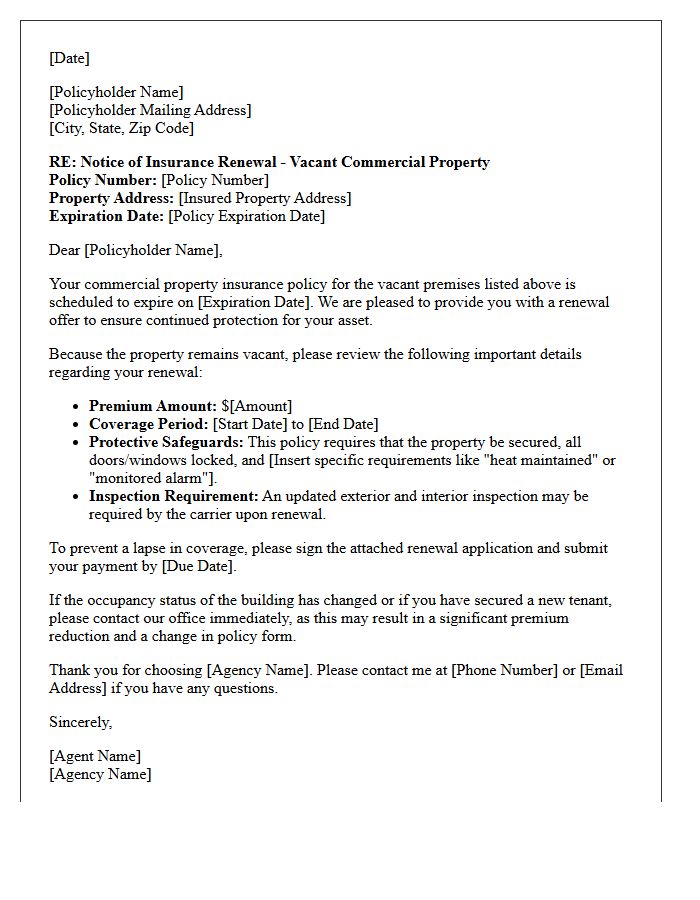
An insurance agency renewal letter for a vacant commercial property is a critical notice regarding coverage limitations. Most policies include a vacancy provision that reduces or suspends protection after sixty consecutive days of inactivity. It is vital to review the vacancy permit endorsement, which restores essential coverage for risks like vandalism or water damage. Failure to disclose occupancy changes during renewal can lead to denied claims. Always confirm if your premium reflects the increased risk profile to ensure your commercial asset remains fully protected under current underwriting guidelines.
Commercial Building Vacancy Clause Coverage Extension Renewal Letter
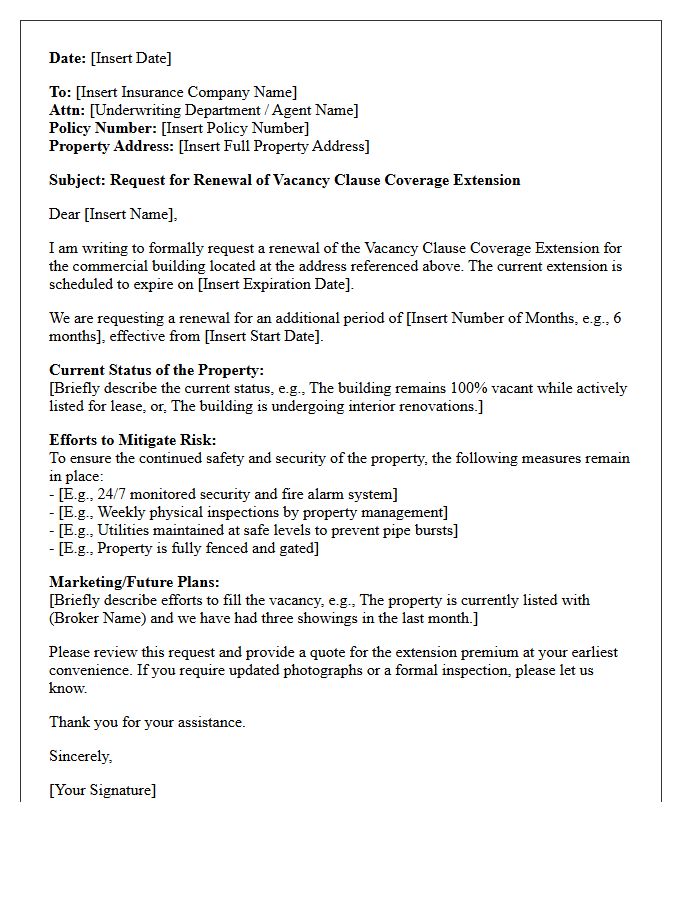
A commercial building vacancy clause renewal letter is essential for maintaining insurance coverage when a property remains unoccupied. Standard policies typically exclude or reduce protection for risks like vandalism or water damage after sixty days of vacancy. This extension reinstates specific perils and prevents a lapse in indemnity. Property owners must proactively submit this request to their insurer to ensure continuous financial safeguarding. Timely communication regarding occupancy status is the most critical factor in avoiding denied claims and ensuring the property remains fully protected during transitional periods.
Annual Renewal Letter Addressing Commercial Property Vacancy Terms
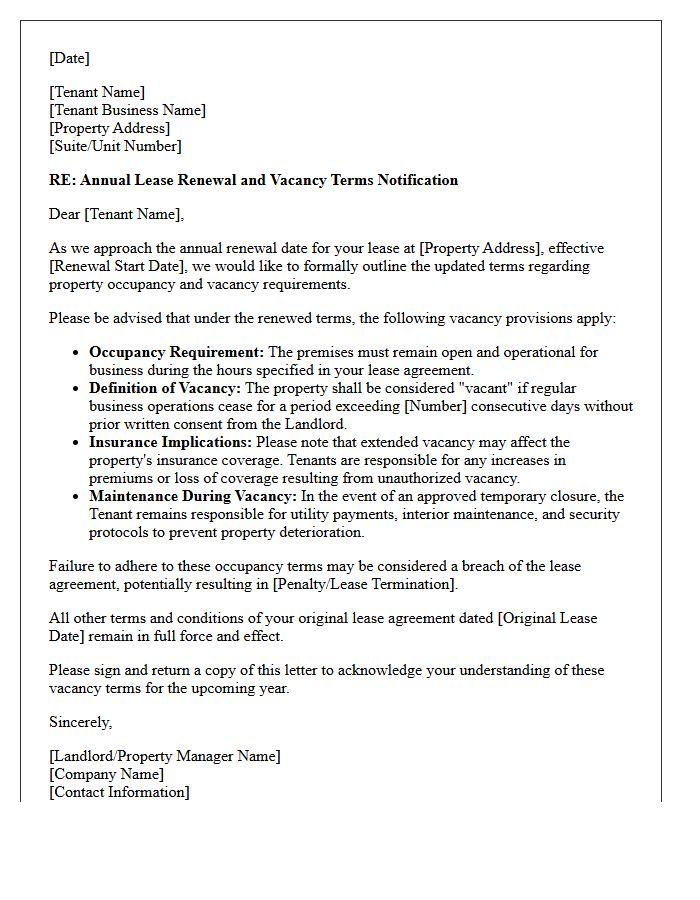
The Annual Renewal Letter is a critical document that outlines specific vacancy terms for commercial properties. If a building remains unoccupied beyond a set period, often sixty days, standard coverage may be significantly reduced or excluded. Property owners must proactively notify their insurer about changes in occupancy to avoid claim denials. Understanding these provisions ensures that your investment remains protected under a Commercial Property Policy, as unoccupied buildings carry higher risks for vandalism and water damage. Always review renewal notices to maintain continuous, effective insurance protection.
Commercial Real Estate Vacancy Clause Premium Renewal Letter
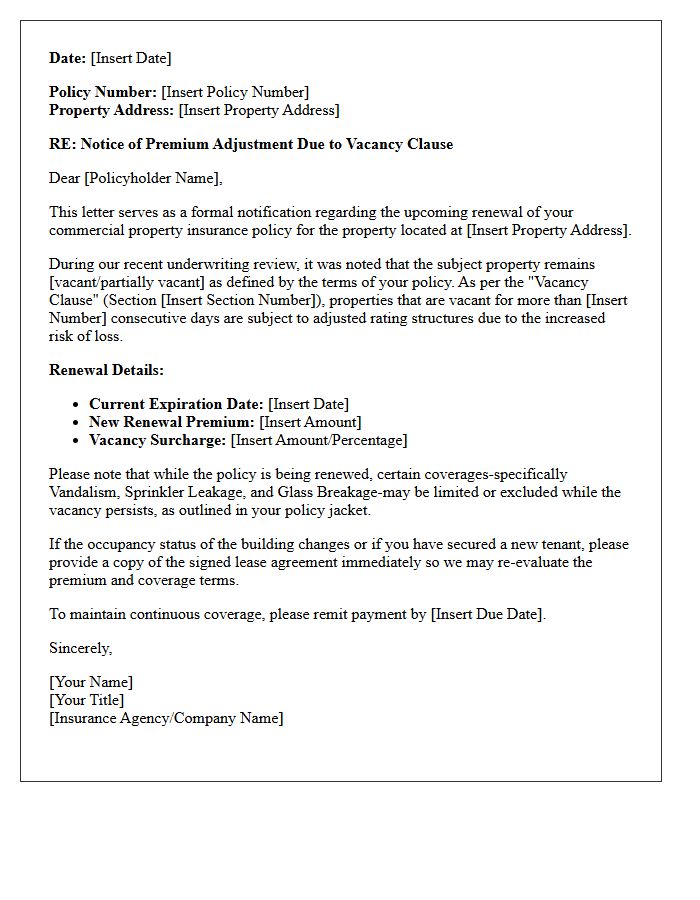
A commercial real estate vacancy clause premium renewal letter notifies policyholders of significant rate increases or coverage limitations when a building remains unoccupied. Most standard policies trigger vacancy provisions after 60 days, typically excluding risks like vandalism or water damage. This letter outlines the higher premiums required to maintain protection during high-risk periods. It is essential to review these terms carefully, as failure to comply with occupancy requirements can lead to claim denials. Owners should document security measures to potentially mitigate these specialized insurance costs during the renewal process.
Vacancy Provision Commercial Property Policy Renewal Letter
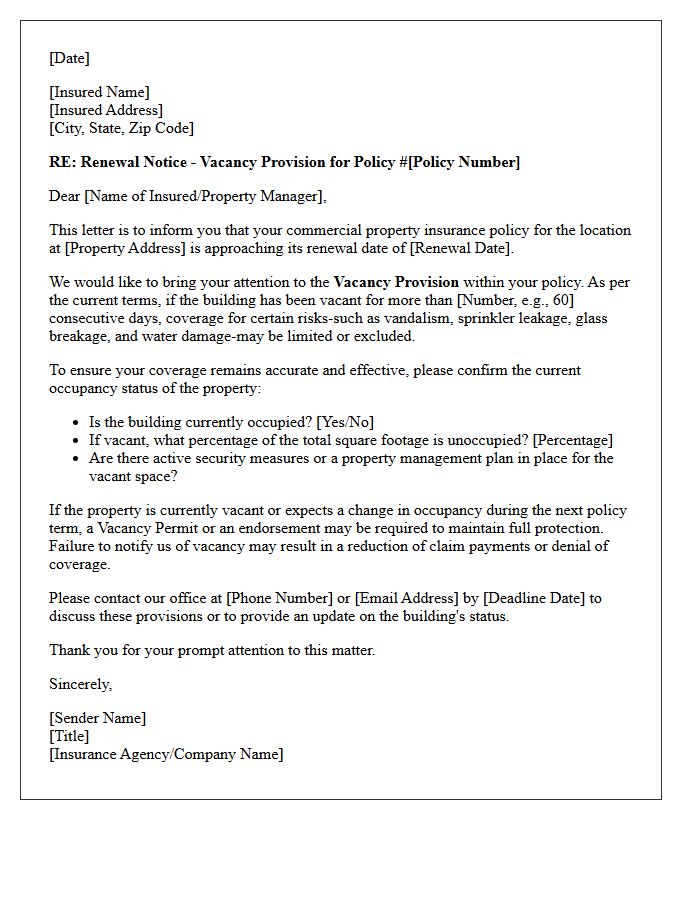
When reviewing a Commercial Property Policy Renewal Letter, the Vacancy Provision is critical to monitor. Most policies include a clause that reduces or excludes coverage if a building remains vacant for more than 60 consecutive days. During renewal, insurers may adjust these terms or increase premiums based on occupancy status. Failure to report a vacancy can lead to denied claims for risks like vandalism, water damage, or theft. Always verify the specific vacancy definitions and timeframes to ensure your asset protection remains fully effective throughout the new policy term.
Standard Commercial Property Vacancy Clause Renewal Advisory Letter
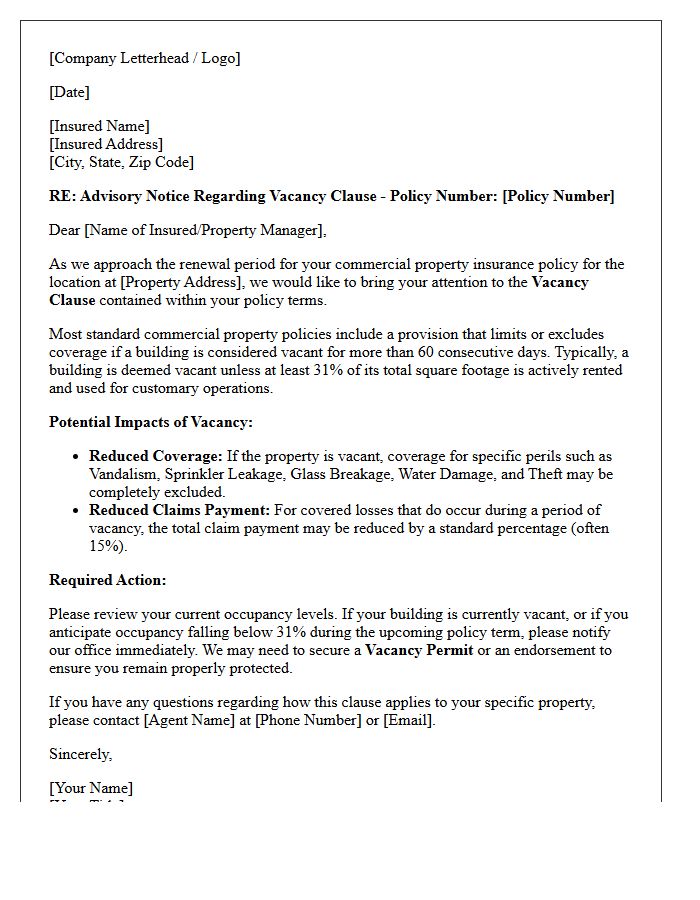
A Standard Commercial Property Vacancy Clause Renewal Advisory Letter is a critical formal notice informing policyholders about coverage limitations. When a building remains unoccupied for a specific period, typically 60 days, standard policies may exclude perils like vandalism, glass breakage, or water damage. This advisory emphasizes the need for a Vacancy Permit or endorsement to maintain full protection. Failure to acknowledge these terms during renewal can lead to denied claims. Property owners must proactively report occupancy changes to ensure their insurance indemnity remains intact throughout the upcoming policy term.
Insurance Renewal Letter for Commercial Property Vacancy Endorsements
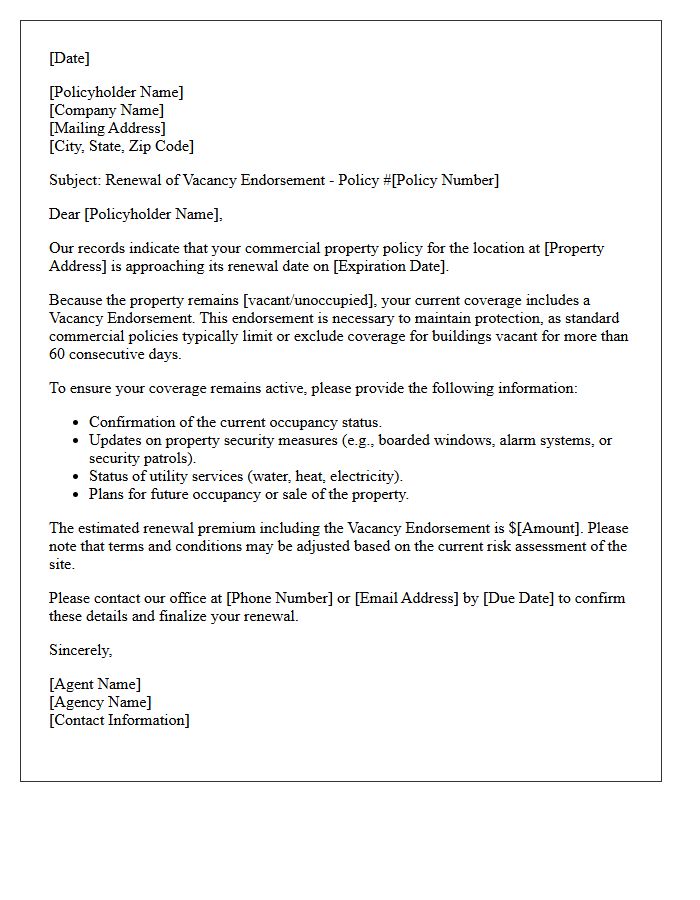
An insurance renewal letter for commercial property must highlight any vacancy endorsements. If a building remains empty for over sixty days, standard policies typically restrict coverage for risks like vandalism or water damage. It is critical to review these terms during renewal to ensure the vacancy permit matches your property's status. Failing to disclose an empty unit or ignoring the specific conditions of the endorsement can lead to denied claims. Always confirm the required security measures and premium adjustments to maintain full liability protection and asset security.
Commercial Property Unoccupied Status Clause Renewal Letter
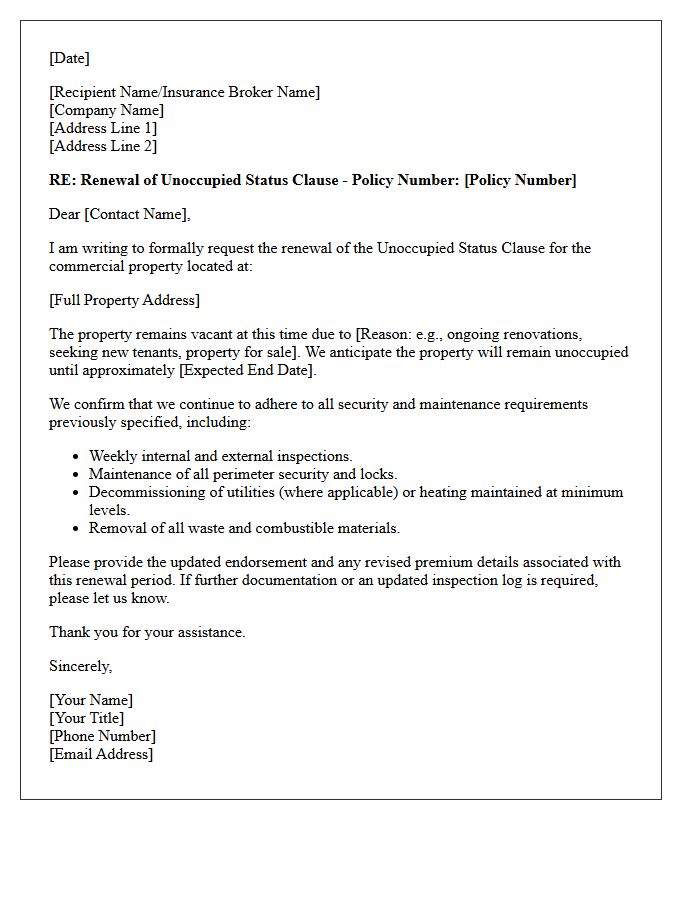
When receiving a renewal letter for commercial property insurance, it is critical to review the unoccupied status clause. This provision dictates coverage limitations if a building remains vacant for a specific duration, typically 30 days. Failure to notify your insurer of vacancy or strictly adhere to security requirements-such as sealing letterboxes or draining water systems-can result in denied claims or policy cancellation. Always confirm that your current occupancy levels align with the policy terms to ensure your asset remains fully protected against risks like arson, theft, or escape of water.
Agent Renewal Letter Concerning Commercial Property Vacancy Conditions
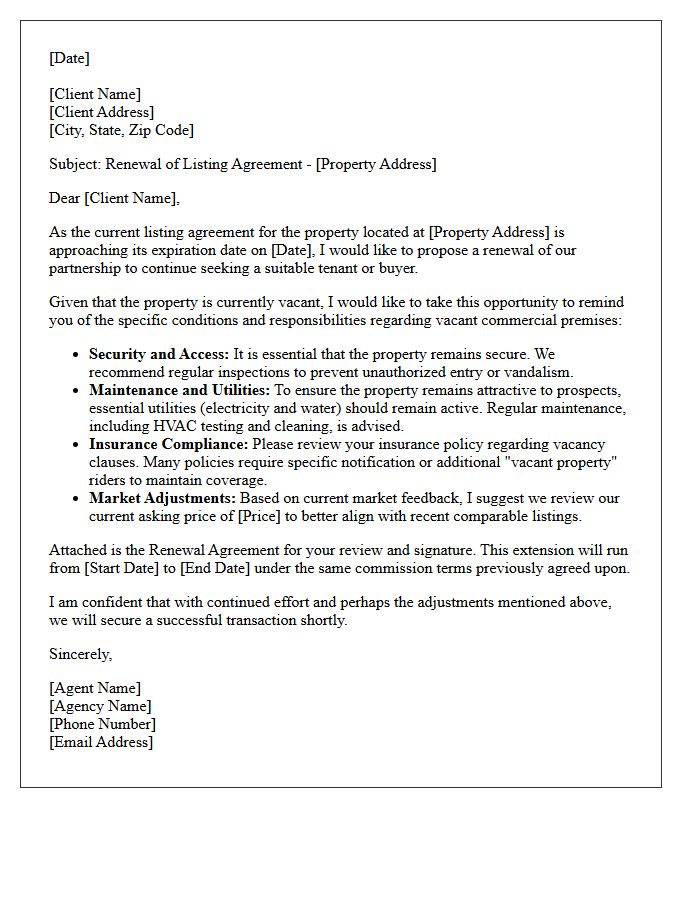
An Agent Renewal Letter is a vital document used to update insurance terms for commercial real estate. It is crucial to address vacancy conditions, as empty buildings face higher risks of vandalism or water damage. If a property remains unoccupied for a specific period, standard coverage may be restricted or excluded. Landlords must proactively disclose occupancy status to ensure the policy remains valid and to negotiate necessary vacancy permits or endorsements. Clear communication prevents claim denials and ensures the asset is protected under current market risks during its transition period.
What is a Commercial Property Vacancy Clause?
A vacancy clause is a provision in a commercial insurance policy that reduces or eliminates coverage if a building remains unoccupied for a specific period, typically 60 consecutive days. This clause addresses the increased risks of vandalism, theft, and water damage associated with empty properties.
When should I receive a Vacancy Clause Renewal Notice?
You should receive a vacancy clause renewal notice or endorsement update prior to the expiration of your current policy term or when a temporary vacancy permit is set to expire. It is critical to review this notice at least 30 days before renewal to ensure continuous coverage for an unoccupied asset.
How does a vacancy renewal notice affect my insurance premiums?
Renewing a policy with a known vacancy often results in higher premiums or a "Vacancy Permit" surcharge. Because unoccupied commercial buildings pose a higher risk to insurers, the renewal notice will outline any increased costs or limitations on specific perils like glass breakage or water damage.
Can I extend my vacancy permit during the policy renewal process?
Yes, most insurers allow you to request a vacancy permit extension during renewal by submitting a formal application. You may be required to prove that the building is being actively marketed for lease, undergoing renovations, or under 24/7 security surveillance to qualify for the extension.
What happens if I ignore a vacancy clause notice for my commercial building?
Ignoring a vacancy clause notice can lead to a total denial of claims if a loss occurs while the building is empty. If the property exceeds the vacancy threshold defined in your renewal documents without a valid permit, the insurer may legally void coverage for fire, theft, and liability.

Comments