
A Conditional Approval Subject to Well and Septic Inspection Letter ensures a real estate transaction proceeds only after verifying safe water and functional waste systems. This document protects buyers by making the final sale contingent upon successful health and safety reports. It outlines specific requirements for testing and system evaluations. Below are some ready to use templates.
Image cover: Conditional Approval Letter Templates: Well and Septic Inspection Requirements
Letter Samples List
- Conditional Approval Subject to Well and Septic Inspection Letter
- Well and Septic Inspection Requirement Notification Letter
- Outstanding Well and Septic Inspection Condition Letter
- Well and Septic Inspection Condition Clearance Letter
- Well and Septic Inspection Deficiency Notice Letter
- Well and Septic Repair Requirement Letter
- Final Approval Post Well and Septic Inspection Letter
- Well and Septic Inspection Deadline Extension Letter
- Well and Septic Escrow Holdback Agreement Letter
- Well and Septic Inspection Order Request Letter
- Borrower Acknowledgment of Well and Septic Condition Letter
- Government Loan Well and Septic Certification Letter
Conditional Approval Subject to Well and Septic Inspection Letter
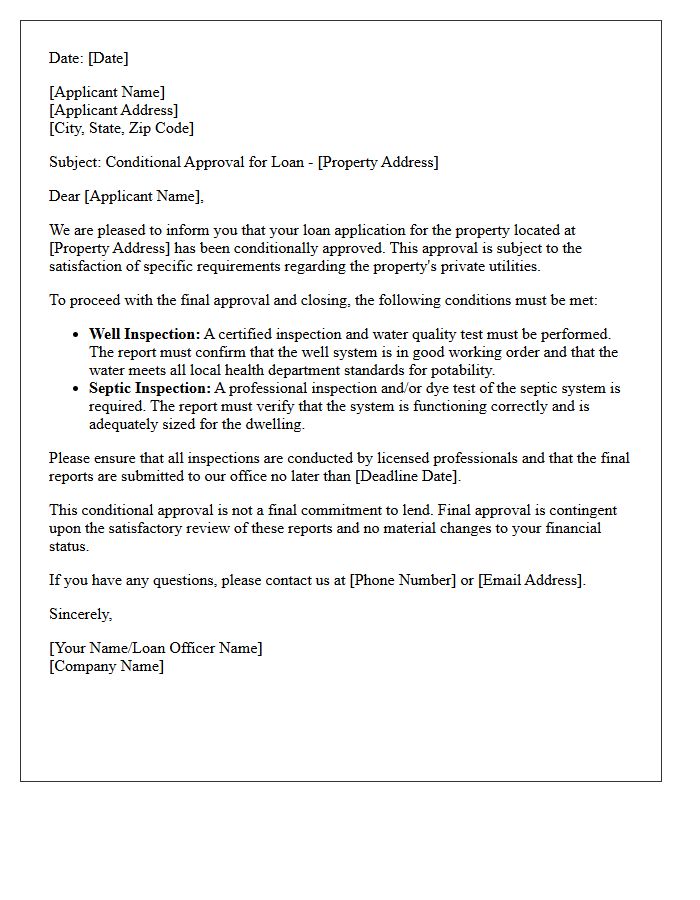
A Conditional Approval Subject to Well and Septic Inspection Letter is a formal notice from a lender indicating that your mortgage is approved pending a satisfactory evaluation of private utility systems. This document ensures the property has a safe, potable water supply and a functional waste disposal system meeting local health standards. It is a critical contingency because any failed inspection may require expensive repairs or lead to a loan denial. Buyers must ensure these tests are completed within the specified timeframe to satisfy the lender's underwriting requirements and finalize the home purchase.
Well and Septic Inspection Requirement Notification Letter
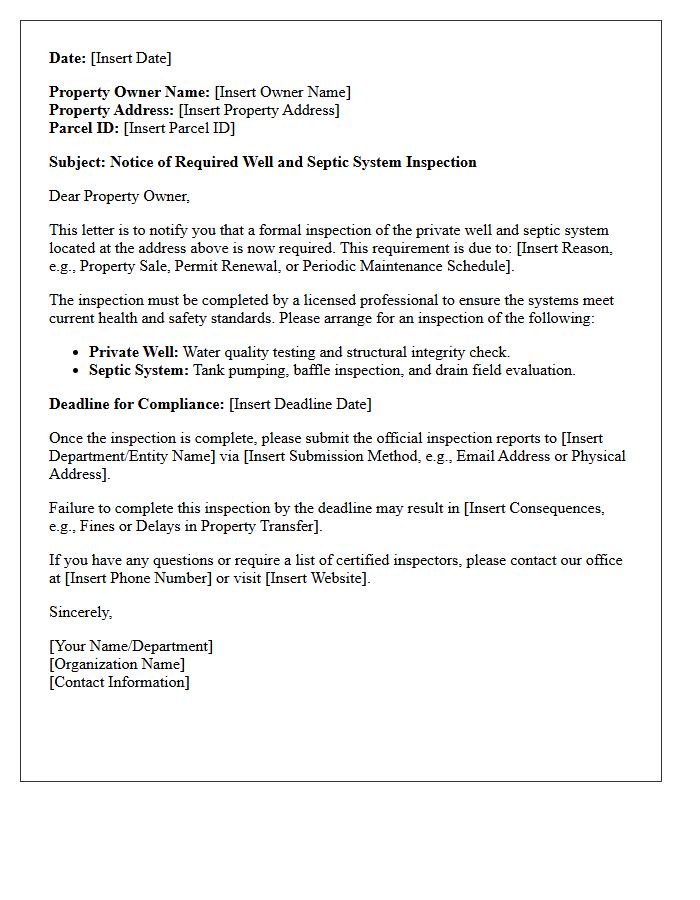
A Well and Septic Inspection Requirement Notification Letter is an official notice issued to property owners, typically during a real estate transaction or periodic compliance review. This document informs the owner that a professional evaluation of their private water supply and sewage disposal system is mandatory. Ensuring these systems meet local health department standards is critical to verify potability and prevent environmental contamination. Failure to complete these inspections and submit the required documentation can delay property transfers, result in fines, or require mandatory repairs to ensure safety.
Outstanding Well and Septic Inspection Condition Letter
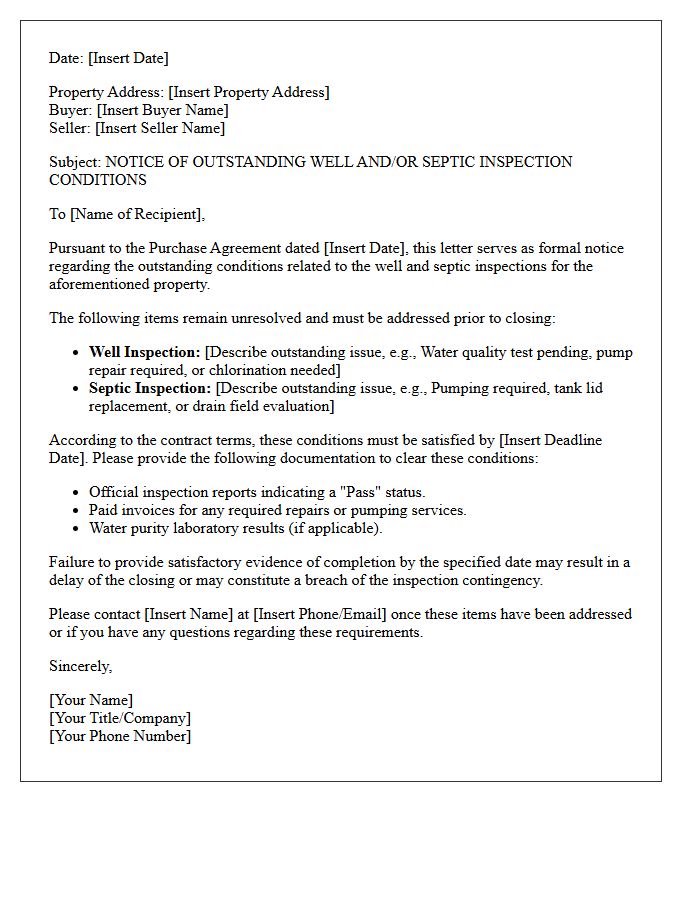
An Outstanding Well and Septic Inspection Condition Letter is a formal document issued when a private water or waste system fails to meet health and safety standards. It outlines specific remedial actions, such as repairs or water treatments, required before a property transfer can be finalized. Lenders typically mandate this letter to ensure the home is habitable and compliant with local environmental regulations. Resolving these listed deficiencies promptly is essential for securing financing and protecting the long-term health of the occupants and the surrounding environment.
Well and Septic Inspection Condition Clearance Letter
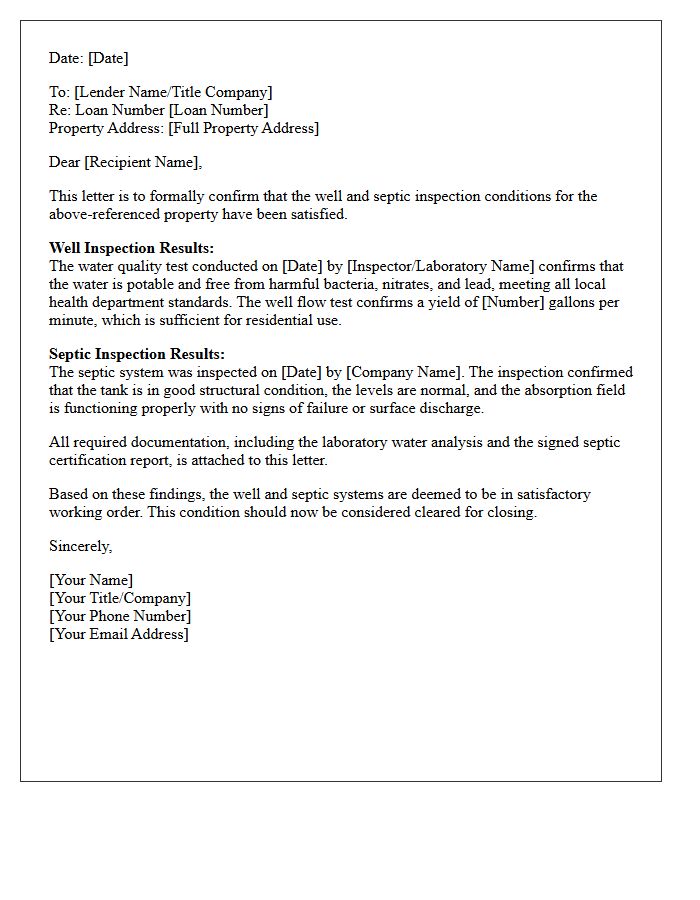
A Well and Septic Inspection Condition Clearance Letter is a vital document confirming that a property's private water and waste systems meet safety standards. It ensures the well water is potable and the septic system functions correctly without leaks. Lenders often require this clearance to approve financing, protecting the buyer from costly future repairs. Obtaining this certified inspection validates that the infrastructure is sanitary and compliant with local health regulations, making it a critical step for a successful real estate closing.
Well and Septic Inspection Deficiency Notice Letter
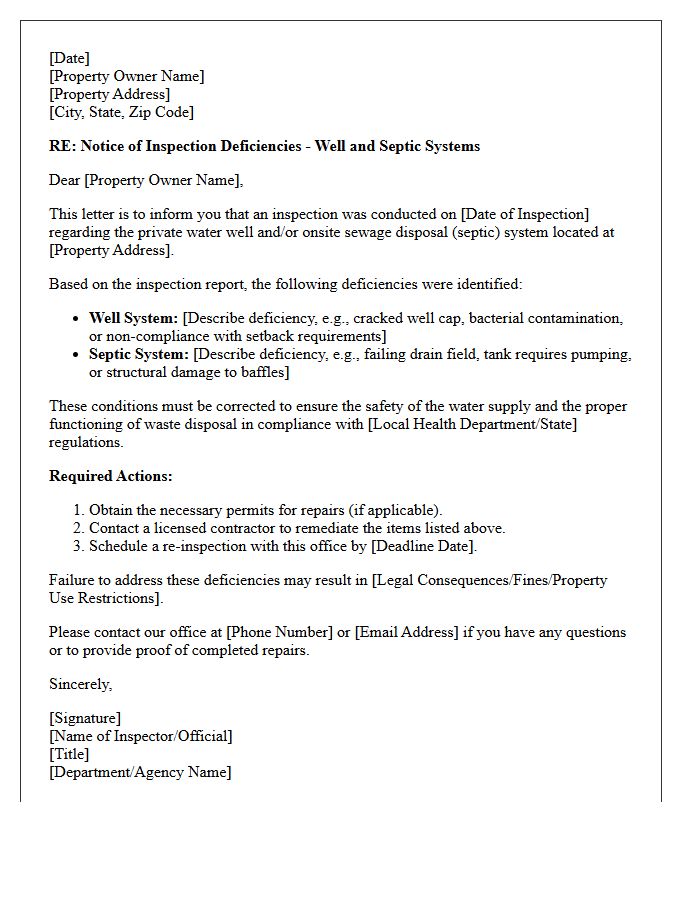
A Well and Septic Inspection Deficiency Notice Letter is a formal document notifying property owners of failed safety standards or system malfunctions. This legal notification outlines specific issues, such as bacterial contamination or structural cracks, that require immediate remediation. It typically includes a deadline for repairs to ensure compliance with local health regulations and environmental protection laws. Addressing these deficiencies is critical to maintaining a potable water supply and preventing soil pollution. Homeowners must provide proof of corrective action to clear the notice and ensure the property remains habitable and legally compliant.
Well and Septic Repair Requirement Letter
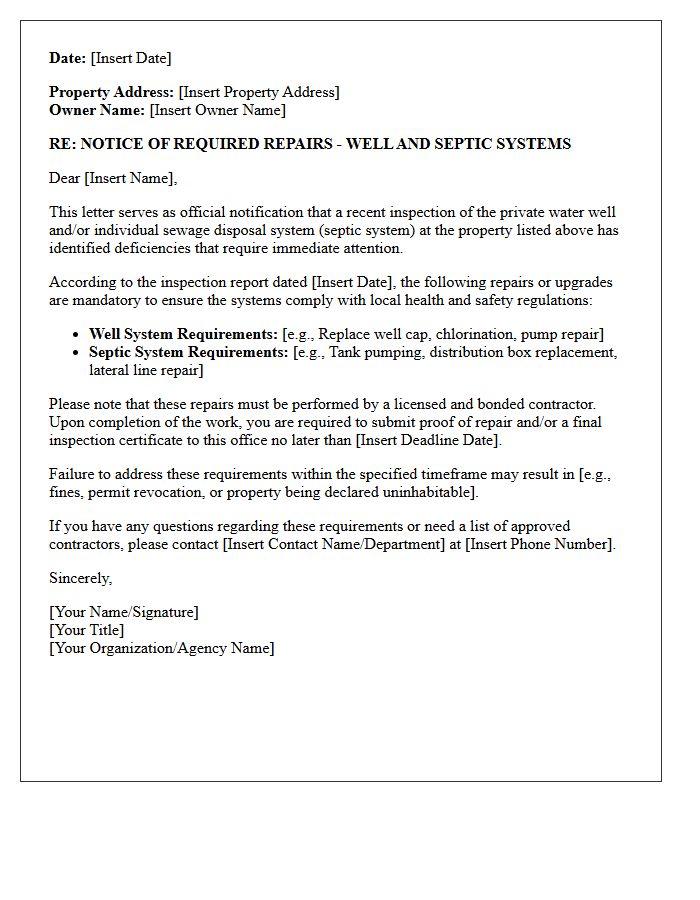
A Well and Septic Repair Requirement Letter is a formal notice issued by health departments or lenders during property transfers. It outlines necessary remediation steps for failing systems to ensure compliance with safety standards. This document is critical for real estate closings, as it identifies contamination risks or structural defects that must be fixed. Property owners must address these mandates promptly to protect public health and secure financing approval. Understanding these requirements prevents legal delays and ensures a safe, functional wastewater and water supply system for future residents.
Final Approval Post Well and Septic Inspection Letter
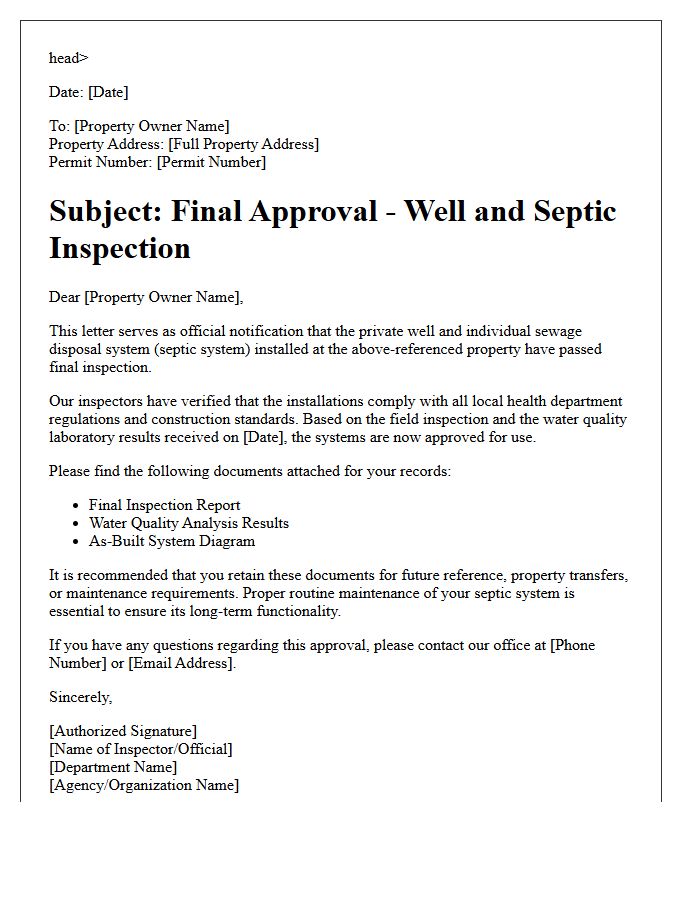
The Final Approval Post Well and Septic Inspection Letter is a critical document confirming that a property's private water and waste systems meet safety standards. It serves as official verification that bacterial tests, flow rates, and tank integrity comply with health regulations. Mortgage lenders and local authorities typically require this letter to authorize property transfers or occupancy. Receiving this approval ensures the infrastructure is functional, sanitary, and legally compliant, protecting the buyer's health and investment before closing a real estate transaction.
Well and Septic Inspection Deadline Extension Letter
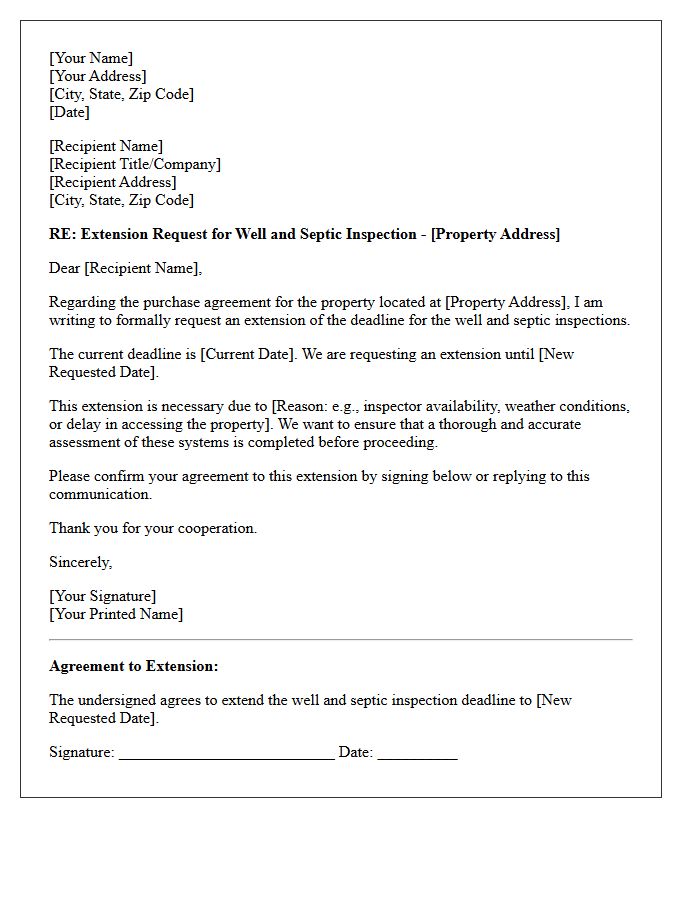
A Well and Septic Inspection Deadline Extension Letter is a formal request used during real estate transactions to postpone the evaluation of private utility systems. This document is essential when environmental conditions, such as frozen ground or high water tables, prevent accurate testing by the required date. It must clearly state the new expiration date and be signed by all parties to maintain the contract's validity. Timely submission ensures that the buyer's contingency rights remain protected while allowing necessary time for professional inspectors to provide a comprehensive health report.
Well and Septic Escrow Holdback Agreement Letter
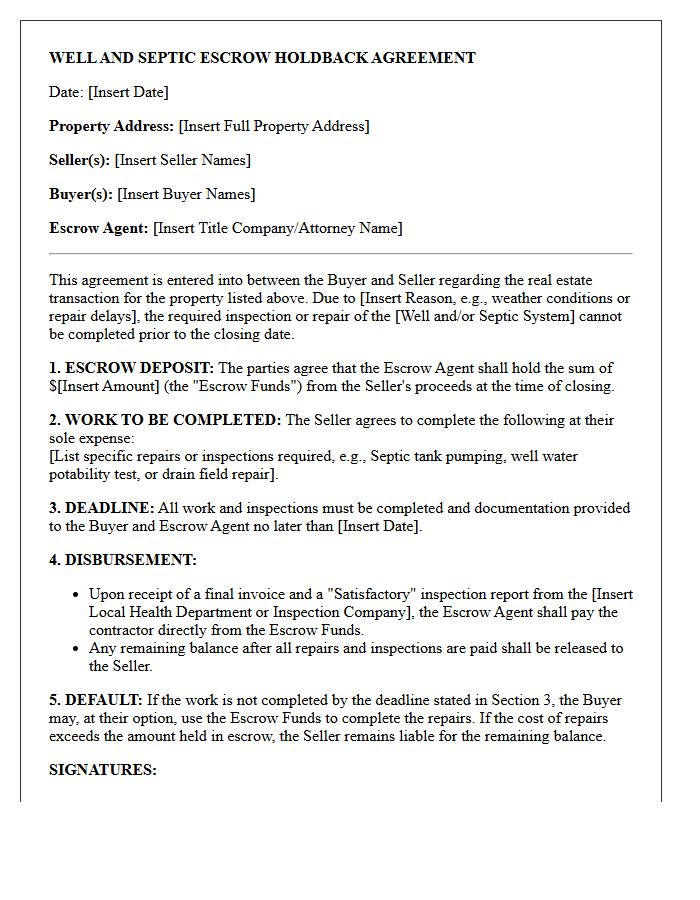
A Well and Septic Escrow Holdback Agreement Letter is a legal document used during real estate transactions when inspections or repairs cannot be completed before closing. It ensures funds are set aside in an escrow account to guarantee that the seller fulfills obligations regarding water quality or waste system functionality. This protects the buyer's investment by providing financial security for necessary improvements. The letter specifies the exact withheld amount, completion deadlines, and conditions for releasing the remaining balance to the seller once the system certification is finalized.
Well and Septic Inspection Order Request Letter
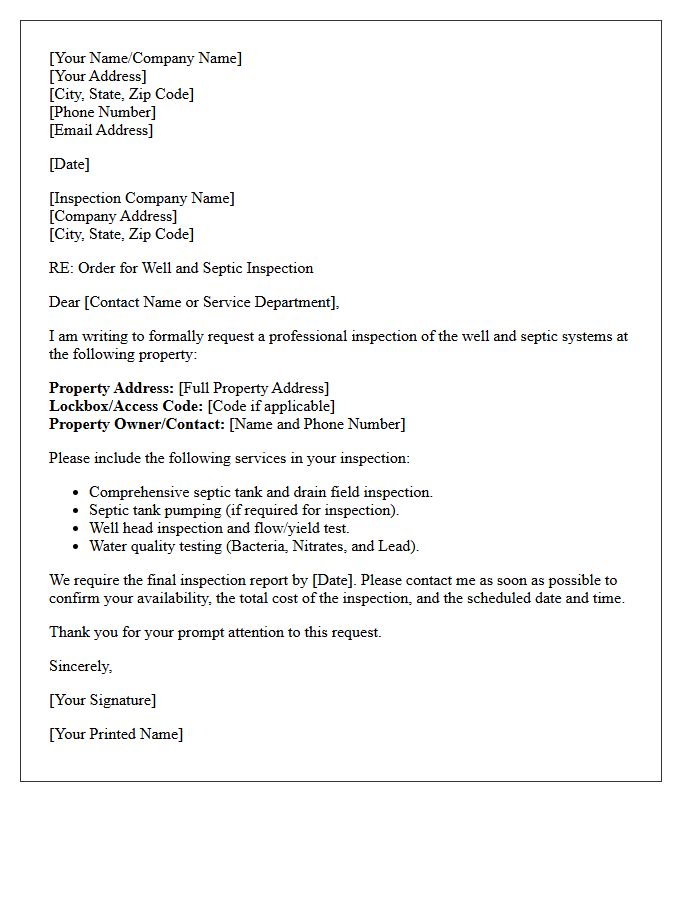
A Well and Septic Inspection Order Request Letter is a formal document used during real estate transactions to authorize professional testing of private water and waste systems. It serves as a legal directive to ensure environmental safety and structural integrity. The letter should clearly specify the property address, required testing types-such as water potability and tank capacity-and the deadline for results. Providing this written request protects the buyer by confirming that the property's essential utilities meet local health department standards before closing the deal.
Borrower Acknowledgment of Well and Septic Condition Letter
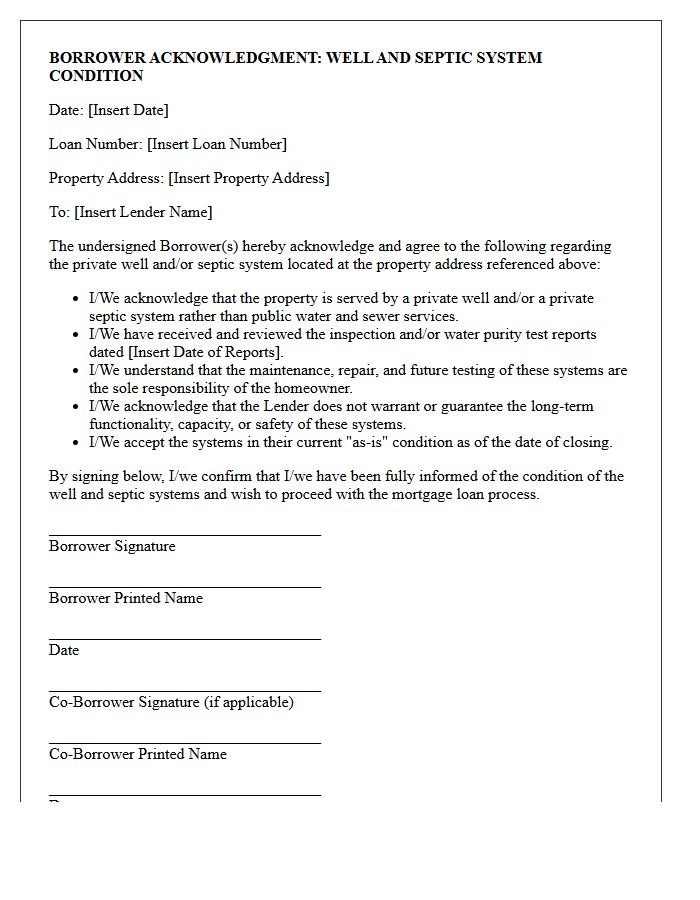
The Borrower Acknowledgment of Well and Septic Condition Letter is a vital document confirming that the buyer understands the operational status and risks of private utility systems. This disclosure ensures informed consent regarding the maintenance responsibilities for onsite water and waste disposal. Lenders require this signed statement to mitigate liability and verify that the property meets basic habitability standards. By signing, the borrower accepts the systems in their current state, acknowledging any inspection results or disclosures provided during the real estate transaction process.
Government Loan Well and Septic Certification Letter
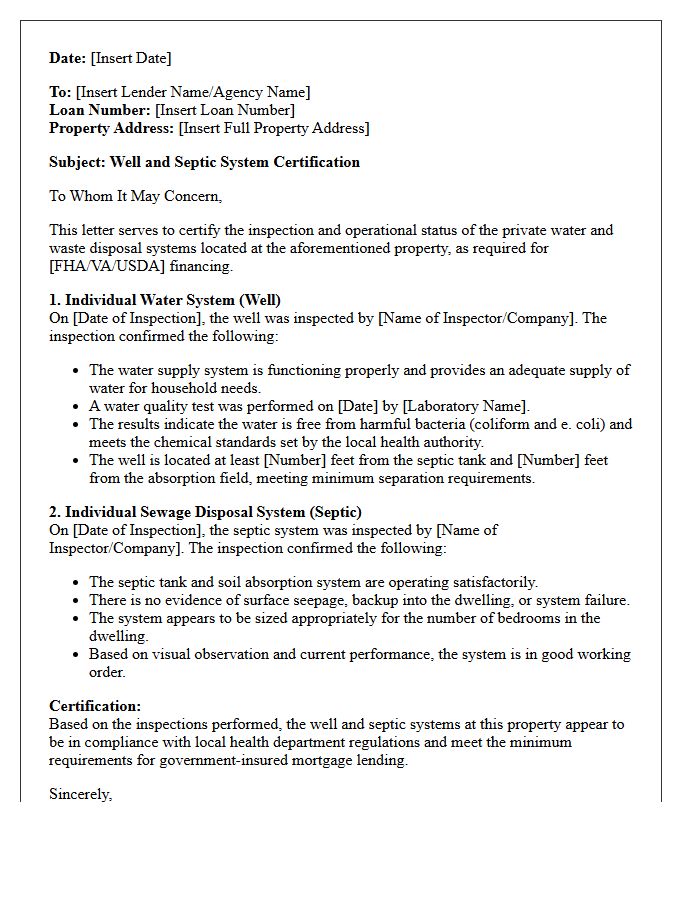
A Government Loan Well and Septic Certification Letter is a vital document for properties with private utilities. It confirms that the water quality and septic system meet specific safety and functionality standards required by FHA, VA, or USDA financing. This official certification protects the lender and buyer by ensuring the systems are sanitary, structurally sound, and capable of supporting the household. Obtaining this letter typically involves inspections and laboratory testing to verify that the private infrastructure is compliant with local health department regulations and federal lending guidelines.
What is a Conditional Approval Subject to Well and Septic Inspection letter?
It is a formal notification from a mortgage lender stating that your loan application is approved, provided that the property's private well and septic systems pass a professional inspection and meet health department standards.
Why do lenders require well and septic inspections for loan approval?
Lenders require these inspections to ensure the property has a safe, potable water supply and a functional waste disposal system, which protects the asset's value and ensures the home is habitable for the occupants.
What happens if the well or septic system fails the inspection?
If the systems fail, the loan will remain in a conditional state until repairs are made or the system is replaced. The buyer and seller must negotiate who will cover the costs to bring the systems up to code before the final loan approval is granted.
Who is responsible for paying for the well and septic inspections?
Responsibility is typically determined in the real estate purchase contract. While it is often the buyer's responsibility as part of their due diligence, some loan programs or local customs may require the seller to provide certification of a functioning system.
How long does it take to clear a well and septic contingency?
Clearing the contingency usually takes 7 to 14 days. This timeframe allows for the physical inspection, laboratory testing of water samples for bacteria or nitrates, and the issuance of a formal report to the mortgage underwriter.

Comments