
A Notice of Escrow Advance is issued when your mortgage escrow account lacks sufficient funds to cover property taxes or insurance premiums. To ensure timely payment, your lender advances the necessary capital, often resulting in adjusted monthly payments or a lump-sum shortage. Understanding these notifications helps you manage your homeownership costs effectively. Below are some ready to use template options to assist you.
Image cover: Managing Escrow Shortages: Notification Templates and Best Practices
Letter Samples List
- Initial Notice of Escrow Advance for Insufficient Funds Letter
- Annual Escrow Analysis Advance Notification Letter
- Property Tax Shortage Escrow Advance Letter
- Hazard Insurance Insufficient Funds Escrow Advance Letter
- Force Placed Insurance Escrow Advance Letter
- Flood Insurance Premium Escrow Advance Letter
- Escrow Advance Repayment Plan Option Letter
- Lump Sum Escrow Advance Reimbursement Letter
- Delinquent Escrow Advance and Shortage Notice Letter
- Corporate Advance for Negative Escrow Balance Letter
- Post Closing Insufficient Escrow Funds Advance Letter
- Final Request for Escrow Advance Repayment Letter
Initial Notice of Escrow Advance for Insufficient Funds Letter
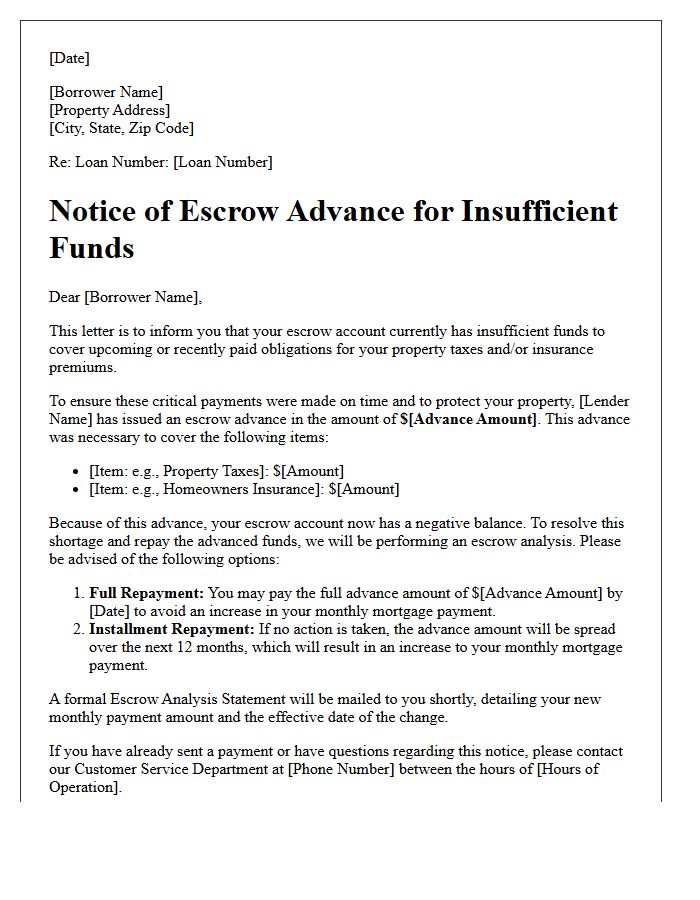
An Initial Notice of Escrow Advance is a critical formal alert sent when your mortgage escrow account lacks sufficient funds to cover property taxes or insurance premiums. The lender issues this escrow advance to pay these obligations on your behalf, preventing coverage lapses or tax penalties. Consequently, your monthly mortgage payment will likely increase to repay the advanced amount and re-establish a minimum balance. It is essential to review this notice immediately to understand the shortage, repayment options, and the impact on your future housing expenses.
Annual Escrow Analysis Advance Notification Letter
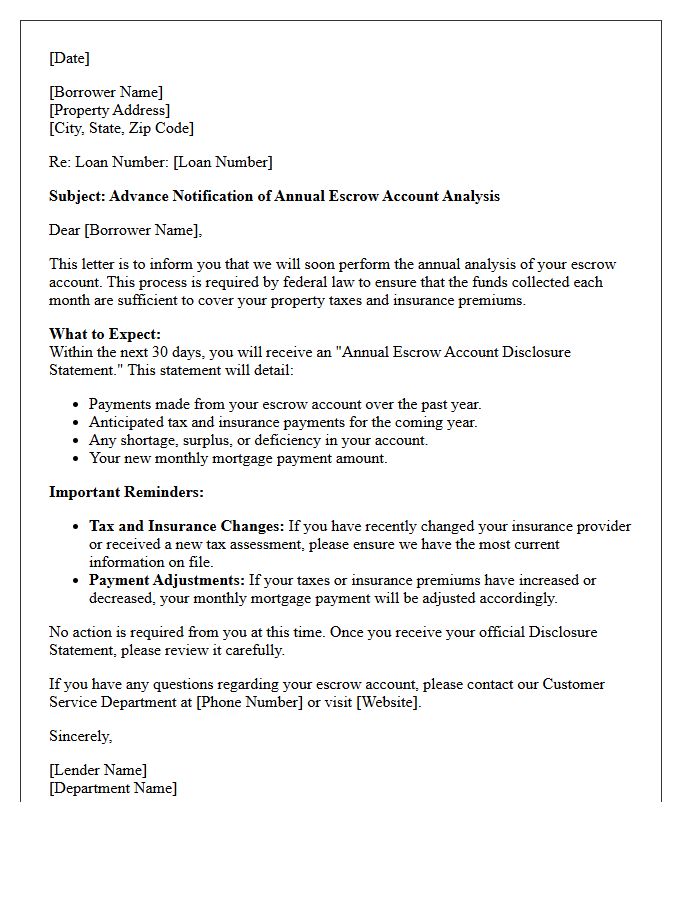
An Annual Escrow Analysis Advance Notification Letter informs homeowners about changes in their monthly mortgage payments. This document reviews your escrow account to ensure sufficient funds exist for property taxes and insurance. It highlights any escrow shortage or surplus based on updated tax assessments. If a deficit occurs, your payment will likely increase to cover the gap. Reviewing this notice is crucial for financial planning and understanding how your servicer manages your impound account to prevent unexpected delinquency or payment shocks during the upcoming year.
Property Tax Shortage Escrow Advance Letter
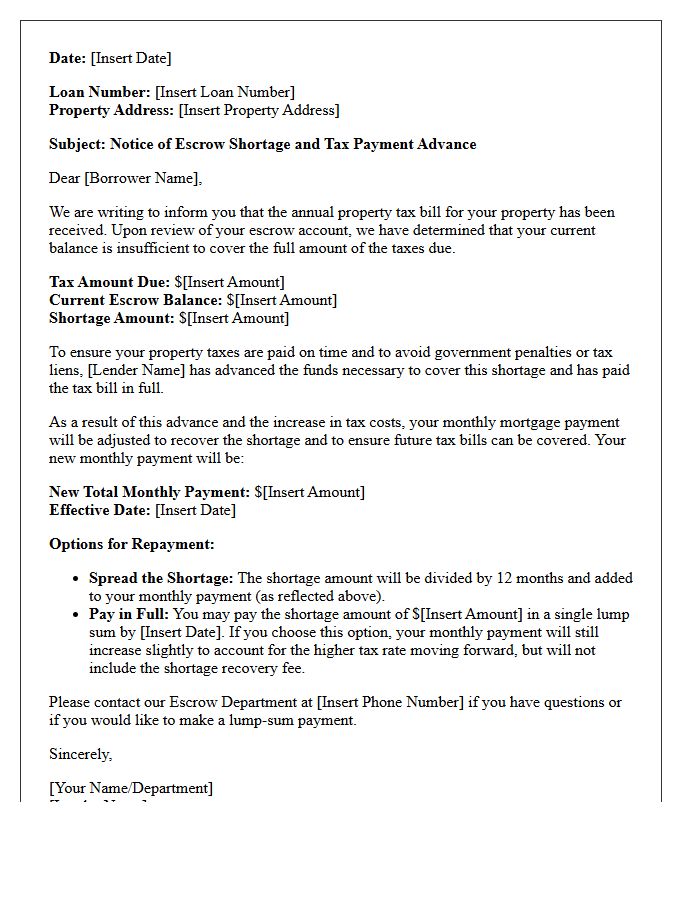
A property tax shortage escrow advance letter notifies homeowners that their escrow account has insufficient funds to cover rising property taxes. To prevent payment failure, the lender pays the deficit upfront as an escrow advance. This document outlines your new monthly mortgage payment, which typically increases to repay the advanced funds and re-establish a required minimum balance. Reviewing this notice is essential for budgeting, as it explains the specific shortage amount and provides options, such as making a one-time lump-sum payment to keep monthly costs stable.
Hazard Insurance Insufficient Funds Escrow Advance Letter
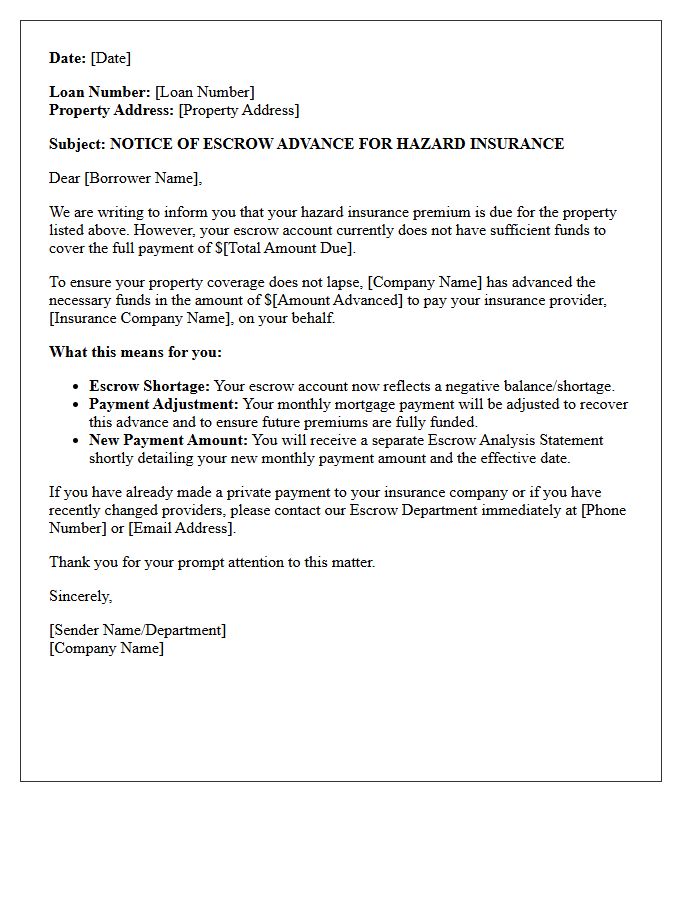
A Hazard Insurance Insufficient Funds Escrow Advance Letter notifies homeowners that their escrow account lacks the balance to cover property insurance premiums. To prevent policy cancellation, your lender will advance the payment on your behalf. This creates a shortage that typically results in a higher monthly mortgage payment to repay the advanced funds and re-establish a required cushion. Recipients should promptly review their escrow analysis to understand the adjustment and ensure their home remains protected against physical damage without coverage gaps.
Force Placed Insurance Escrow Advance Letter
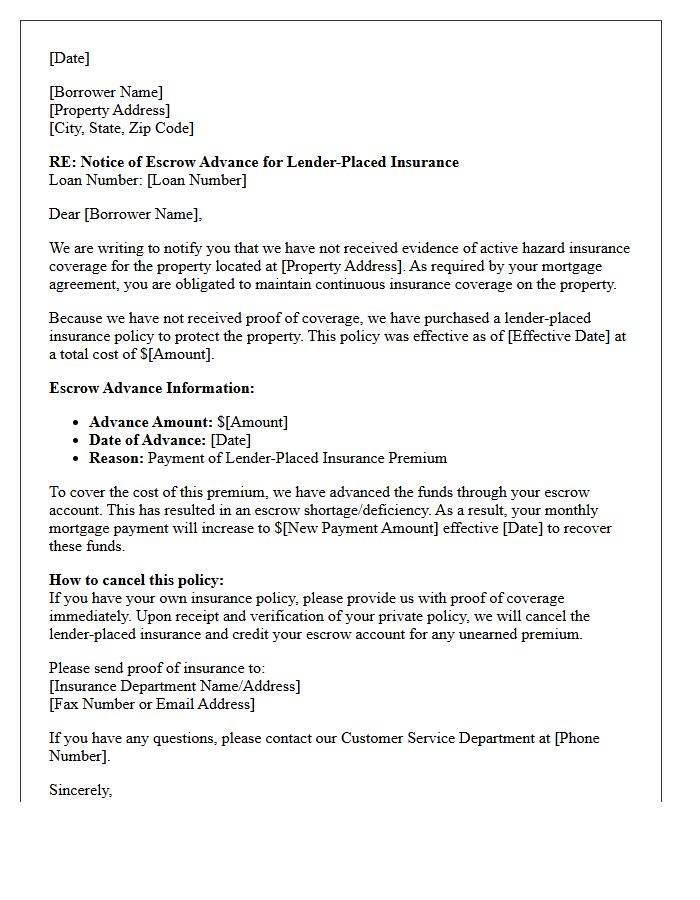
A Force Placed Insurance Escrow Advance Letter notifies homeowners that their lender purchased a property insurance policy on their behalf. This occurs if your previous coverage lapsed or was deemed insufficient. The letter details the escrow advance, meaning the lender paid the premium upfront and will now recover those costs through increased monthly mortgage payments. This insurance is typically significantly more expensive and provides less protection than private policies. To resolve this, you must immediately provide proof of active coverage to your loan servicer to cancel the forced policy and adjust your escrow account.
Flood Insurance Premium Escrow Advance Letter
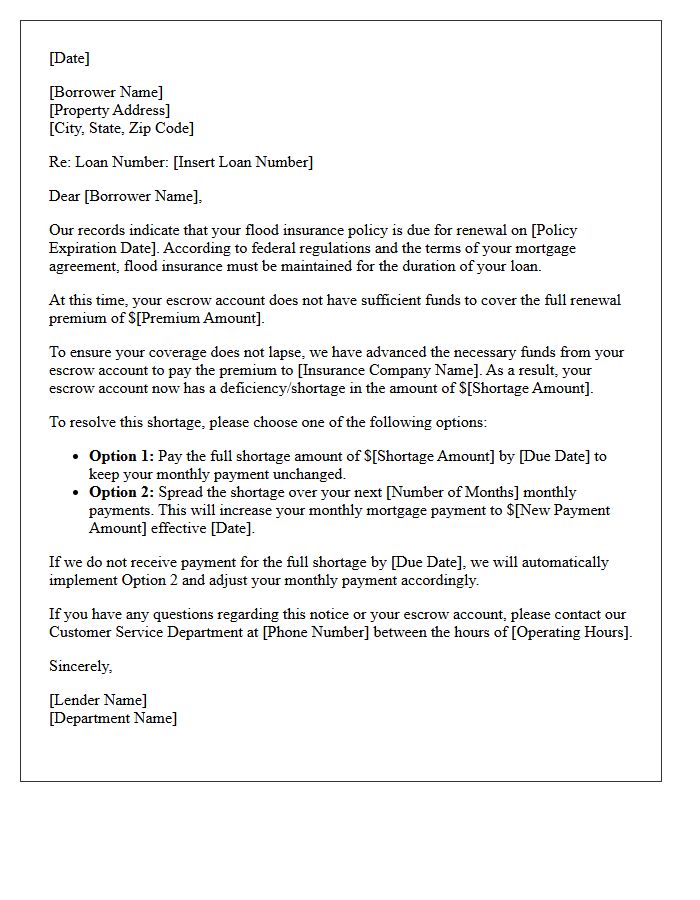
A Flood Insurance Premium Escrow Advance Letter notifies homeowners that their mortgage servicer paid a mandatory flood insurance premium on their behalf. This occurs when the escrow account lacks sufficient funds to cover the policy cost. The notice details the advanced amount and outlines how the borrower must repay the deficiency, often through a lump sum or adjusted monthly payments. Receiving this letter is critical as it ensures continuous coverage while highlighting a shortage in your current escrow analysis that requires immediate financial attention.
Escrow Advance Repayment Plan Option Letter
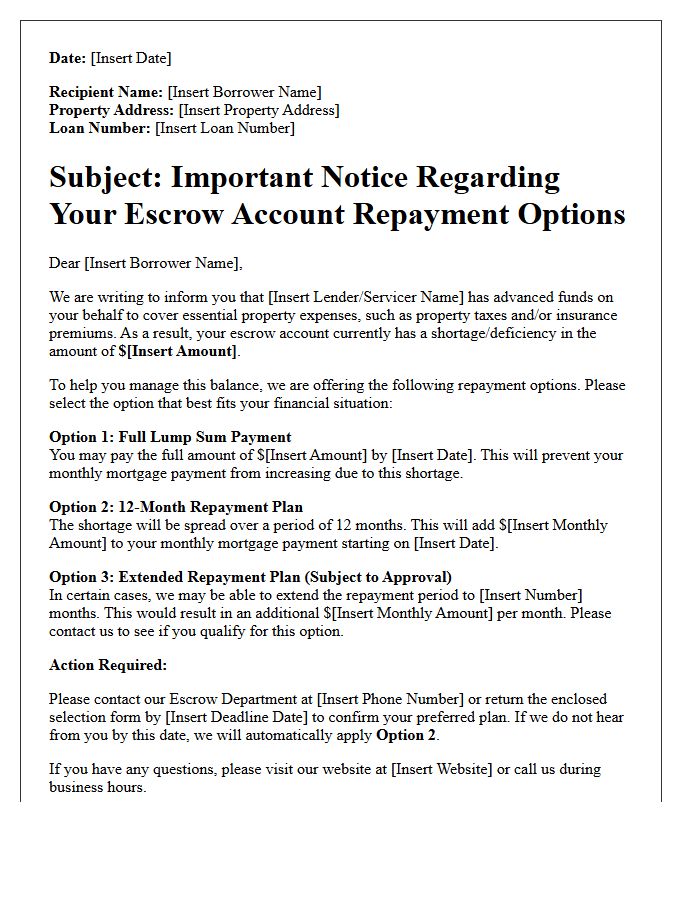
The Escrow Advance Repayment Plan Option Letter is a formal notice sent by mortgage servicers when an escrow account has a negative balance. This document outlines your repayment choices for funds the lender advanced to cover property taxes or insurance. It typically offers options like a one-time lump sum payment or spreading the shortage over monthly installments. Understanding this letter is essential for managing your monthly mortgage obligations and avoiding unexpected increases in your total housing payment while ensuring your essential property expenses remain fully funded.
Lump Sum Escrow Advance Reimbursement Letter
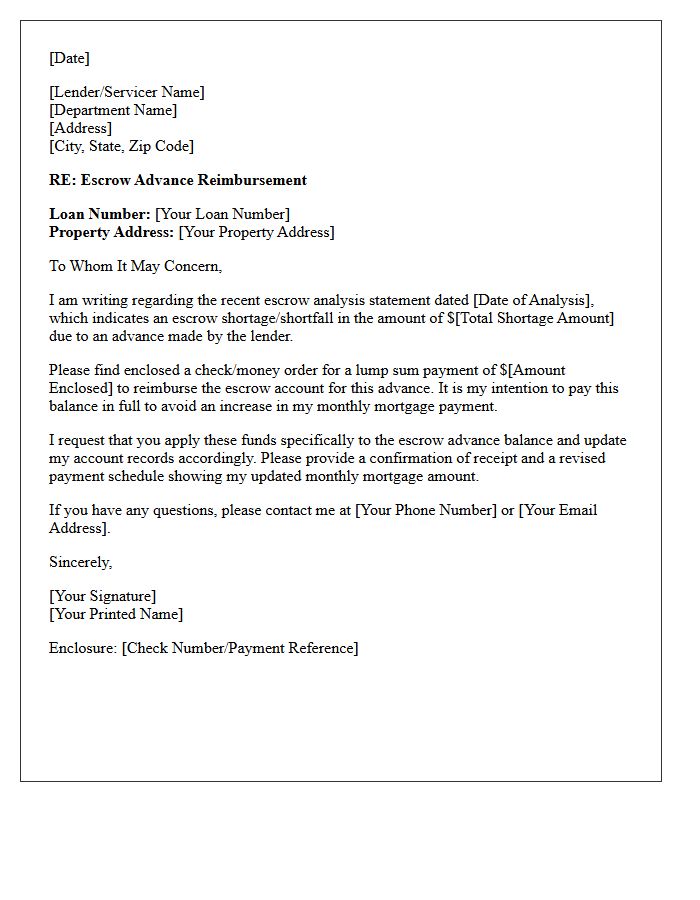
A Lump Sum Escrow Advance Reimbursement Letter is a formal notice sent by a mortgage servicer requiring the borrower to repay escrow shortages immediately. When a lender pays property taxes or insurance premiums that exceed the account balance, they create a deficiency. This letter outlines the total amount advanced and provides a deadline for a single payment to restore the account. Failing to reimburse these funds can lead to increased monthly mortgage payments or loan default, making prompt communication with your lender essential for financial stability.
Delinquent Escrow Advance and Shortage Notice Letter
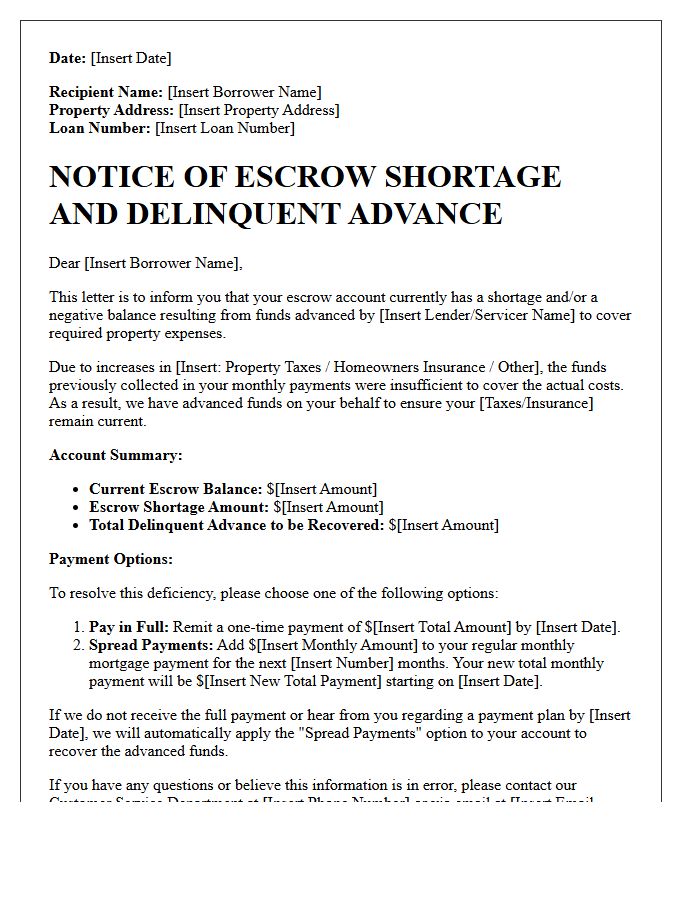
A Delinquent Escrow Advance and Shortage Notice Letter informs homeowners that their escrow account has a negative balance. This occurs when the mortgage servicer pays property taxes or insurance premiums that exceed the funds collected. The notice outlines a shortage that must be repaid to balance the account. Failure to address this can lead to significantly higher monthly mortgage payments or foreclosure risks. It is essential to review the statement for accuracy and contact your lender immediately to discuss repayment options or adjust your monthly withholding amounts.
Corporate Advance for Negative Escrow Balance Letter
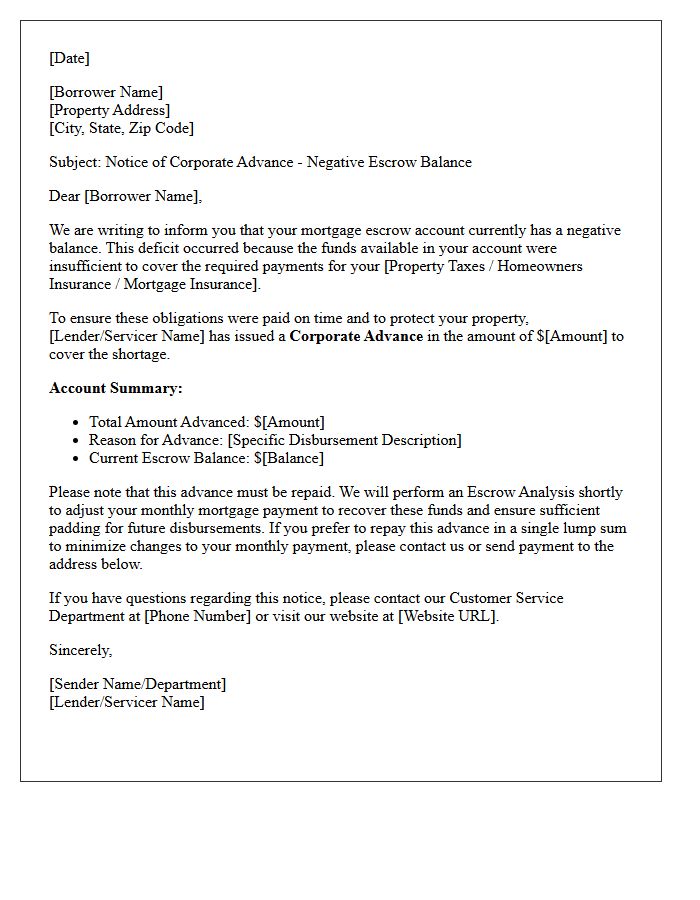
A corporate advance for a negative escrow balance occurs when a mortgage servicer covers a shortage in your escrow account to pay for property taxes or insurance. This temporary loan prevents payment lapses but must be repaid. Upon receiving this letter, homeowners should review the breakdown of disbursements to understand why the shortage occurred. Typically, you can resolve the balance through a one-time payment or by increasing your monthly mortgage installment. Addressing this promptly ensures your account remains current and avoids unexpected spikes in your long-term housing costs.
Post Closing Insufficient Escrow Funds Advance Letter
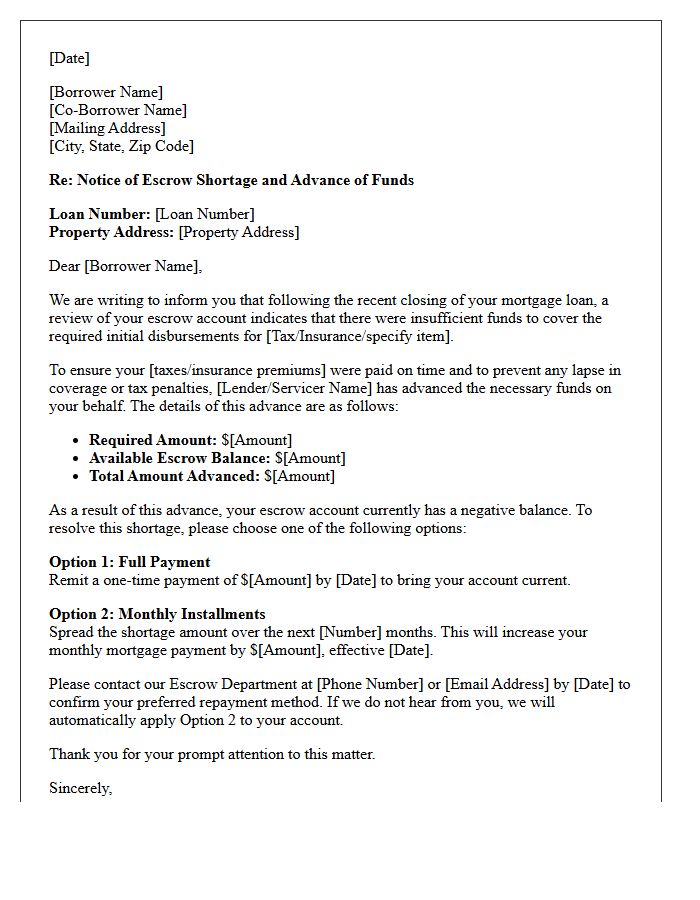
A Post Closing Insufficient Escrow Funds Advance Letter is a formal notification sent by a lender when a shortage occurs in a homeowner's escrow account after closing. This typically happens due to underestimated property taxes or insurance premiums. The letter details the escrow deficiency and outlines repayment options, such as a one-time payment or increased monthly installments. It is crucial for borrowers to address this promptly to maintain account compliance and ensure all future tax and insurance obligations are fully funded by the servicer.
Final Request for Escrow Advance Repayment Letter
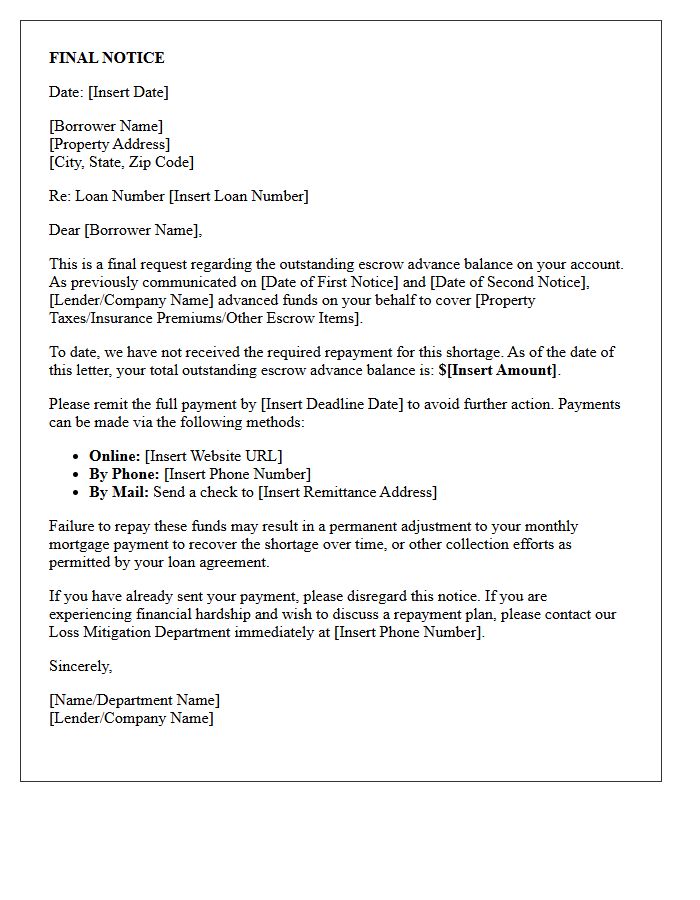
A Final Request for Escrow Advance Repayment Letter is a critical formal notice sent to borrowers who have failed to reimburse their lender for property-related expenses. This document serves as the last warning before potential legal action or debt collection begins. It clearly outlines the outstanding balance, specific payment deadlines, and original disbursement details for taxes or insurance. Receiving this letter indicates that the repayment obligation is urgent, and failure to respond may result in negative impacts on your credit score or formal foreclosure proceedings against the property.
What is a Notice of Escrow Advance for Insufficient Funds?
A Notice of Escrow Advance for Insufficient Funds is a formal communication from your mortgage lender stating that your escrow account lacked the necessary balance to cover a scheduled payment for property taxes or homeowner's insurance, requiring the lender to pay the difference on your behalf.
Why did my mortgage lender have to advance funds to my escrow account?
Your lender advances funds when your escrow balance is too low to meet a third-party obligation. This usually occurs due to an unexpected increase in property tax assessments, rising insurance premiums, or a timing discrepancy between your monthly payments and the bill's due date.
How do I repay an escrow advance made by my lender?
Typically, you can repay an escrow advance in two ways: by making a one-time lump-sum payment to cover the shortage, or by spreading the repayment over 12 months, which will result in an increase to your total monthly mortgage payment.
Will an escrow advance affect my monthly mortgage payment?
Yes, an escrow advance usually leads to a higher monthly mortgage payment. Beyond repaying the advanced funds, your lender will likely perform an escrow analysis and adjust your monthly collection amount to ensure future tax and insurance bills are covered.
Can I prevent future escrow shortages and advances?
To prevent future advances, regularly monitor your annual escrow analysis statements, notify your lender immediately of any changes to your insurance premiums, and consider making voluntary supplemental payments to your escrow account if you anticipate a tax hike.


Comments