
A Notice of Property Sale and Ownership Transfer is a formal document used to notify tenants, local authorities, and utility providers that a real estate asset has changed hands. It ensures a smooth transition of legal responsibilities, rent payments, and management duties to the new owner. To simplify your documentation process, below are some ready to use template.

Image cover: Professional Property Sale and Ownership Transfer Notification Templates
Letter Samples List
- Notice of Property Sale Letter to Tenants
- Ownership Transfer Notification Letter for Vendors
- Official Letter of Property Sale and Management Transition
- Introduction Letter from New Property Owners and Management
- Security Deposit Transfer Notice Letter to Residents
- Letter of Intent to Sell Property to Current Leaseholders
- Change of Ownership and Rent Payment Instructions Letter
- Final Account Settlement Letter Following Property Sale
- Property Ownership Reassignment Letter for Maintenance Contractors
- Letter of Formal Notice Regarding Commercial Property Sale
- Residential Complex Ownership Transfer Announcement Letter
- Lease Agreement Continuity Letter Post Property Sale
Notice of Property Sale Letter to Tenants
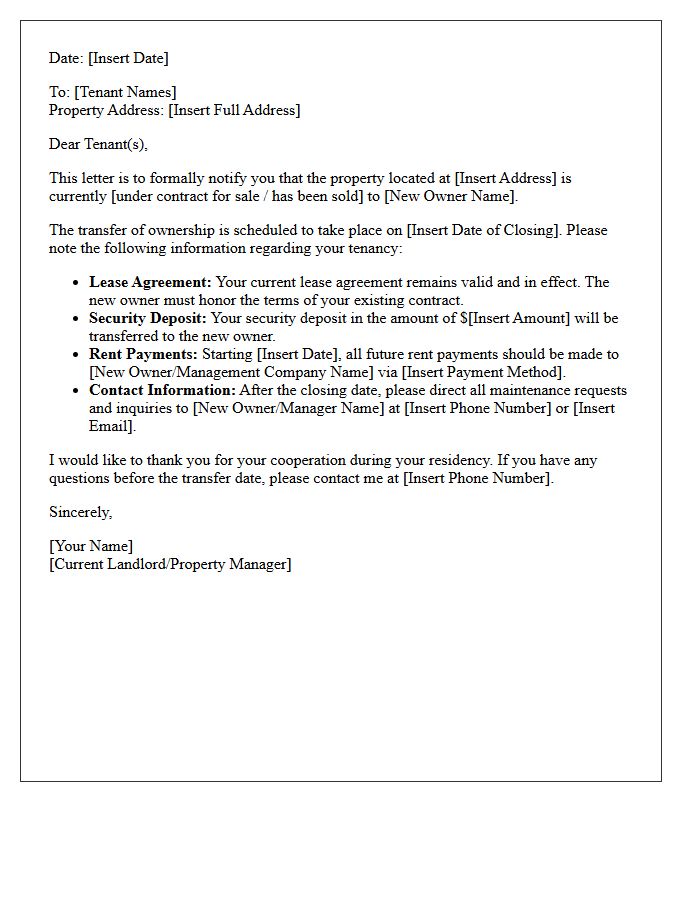
A Notice of Property Sale is a legal document informing tenants that the building is being sold. It is crucial for maintaining transparency regarding changes in ownership or management. The letter should clearly outline whether the current lease agreement remains valid and provide instructions for future rent payments. Tenants must be notified of their rights, including details about the security deposit transfer. Providing this notice promptly ensures legal compliance and helps foster a smooth transition for both the new landlord and the existing residents.
Ownership Transfer Notification Letter for Vendors
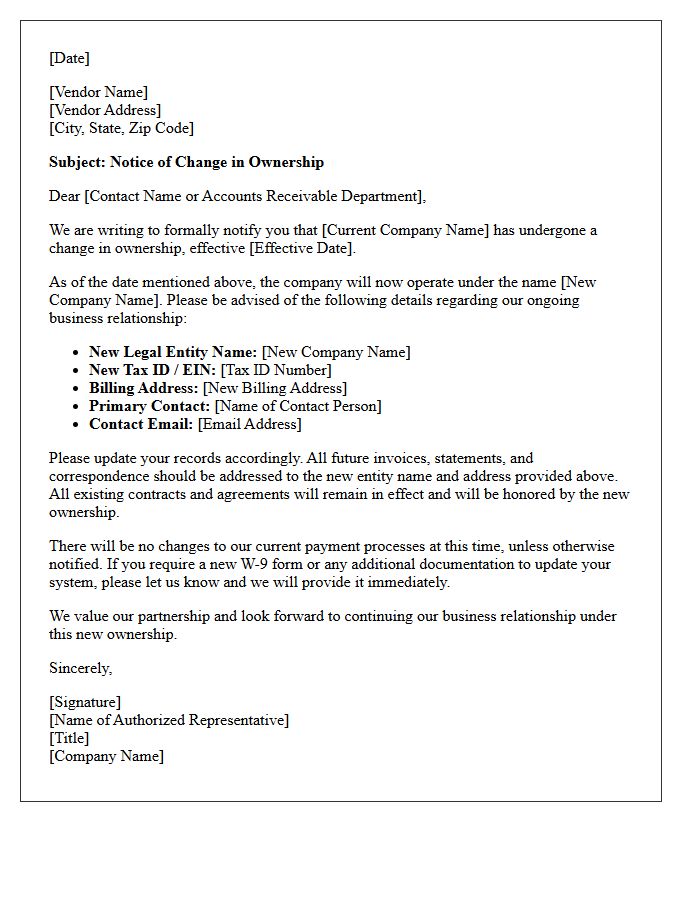
An Ownership Transfer Notification Letter is an essential formal document informing vendors about a change in business legal structure or proprietorship. It ensures uninterrupted service and precise financial record-keeping during the transition. The letter must clearly state the effective date of transfer, the new entity's legal name, and updated billing addresses. Providing new tax identification numbers and updated contact details helps prevent payment delays. Clear communication maintains vendor relationships and guarantees that future invoices and contracts are legally compliant under the new management's authority.
Official Letter of Property Sale and Management Transition
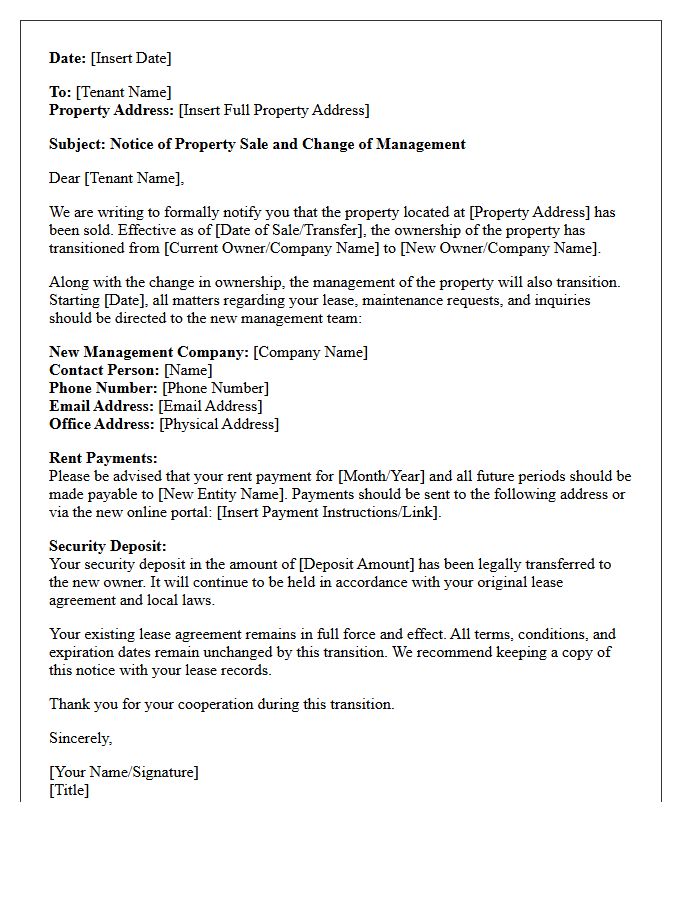
An official letter regarding a property sale and management transition is a critical legal notice for tenants. It confirms the change in ownership and introduces the new property management company. This document typically outlines updated instructions for rent payments, maintenance requests, and contact details. Tenants should verify the effective date of the transfer to ensure compliance with their lease terms. Retaining a copy is essential for documenting the formal handover and protecting tenant rights during the administrative shift between the outgoing and incoming landlords.
Introduction Letter from New Property Owners and Management
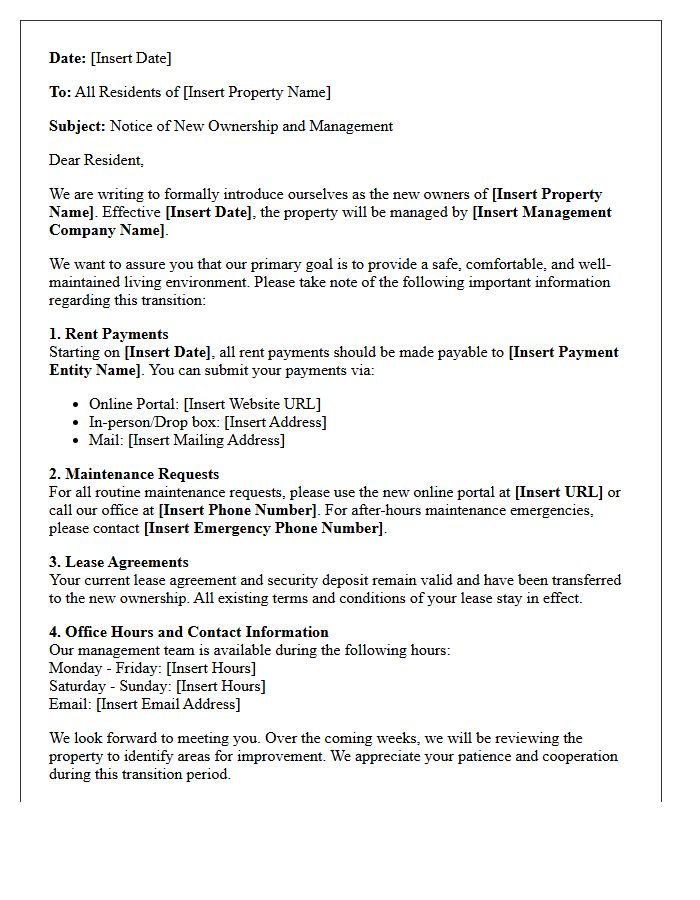
An introduction letter from new property owners or management is a vital formal notice that establishes a professional relationship with tenants. This document must clearly state the effective date of the ownership change and provide updated contact details for inquiries. It should outline new procedures for rent payments, maintenance requests, and emergency protocols. Providing these details promptly ensures a smooth transition, maintains legal compliance, and helps build tenant trust by addressing potential concerns regarding lease agreements and security deposits early in the new management period.
Security Deposit Transfer Notice Letter to Residents
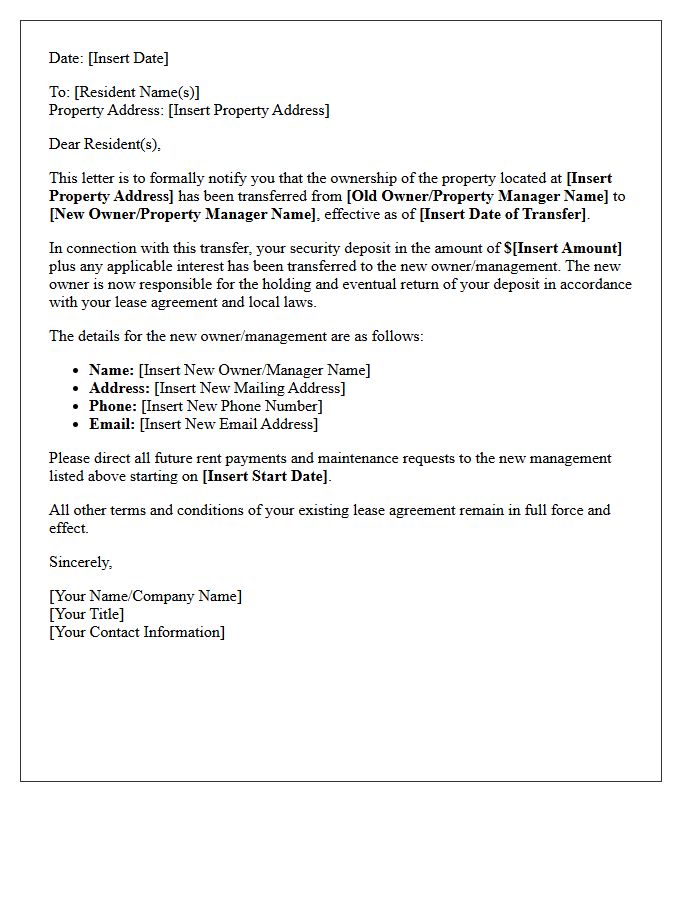
A Security Deposit Transfer Notice is a legal requirement when a rental property changes ownership. It informs residents that their security deposit has been transferred to the new landlord or management company. The letter must include the new owner's contact information and the specific bank where funds are held. Providing this notice ensures compliance with state laws and maintains transparency, protecting both parties. Timely delivery of this document is crucial for a smooth transition and ensures residents know exactly who is responsible for returning their deposit upon move-out.
Letter of Intent to Sell Property to Current Leaseholders
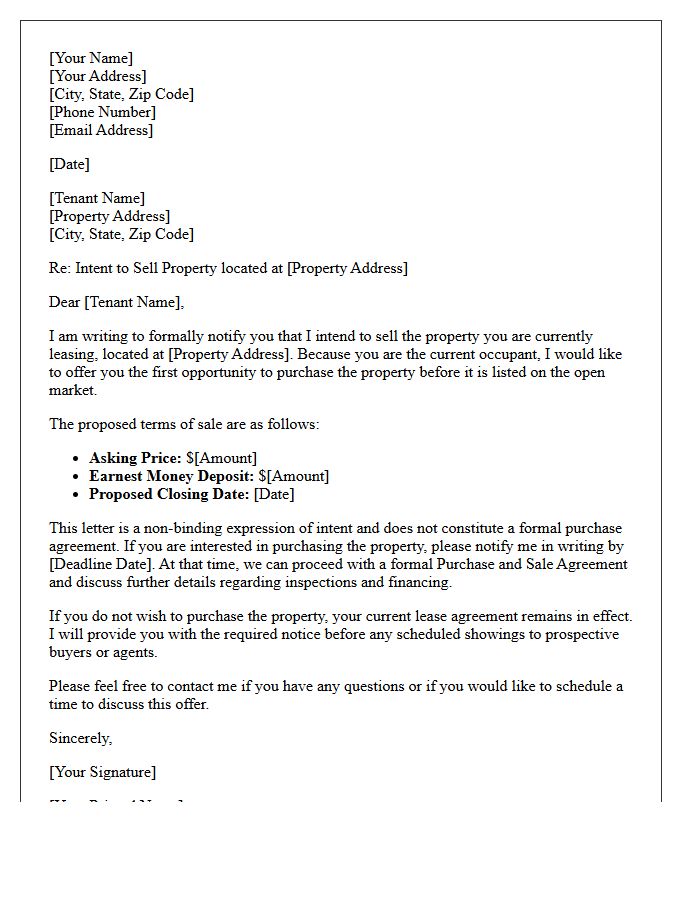
A Letter of Intent to Sell Property serves as a formal declaration of your intent to offer the premises to existing tenants. This document outlines preliminary terms, such as the proposed purchase price and closing timeline, without being legally binding. It provides leaseholders the first opportunity to negotiate, fostering transparency and streamlining the transition from leasing to ownership. Clearly stating that the agreement is subject to contract ensures legal protection for both parties until a formal purchase agreement is executed.
Change of Ownership and Rent Payment Instructions Letter
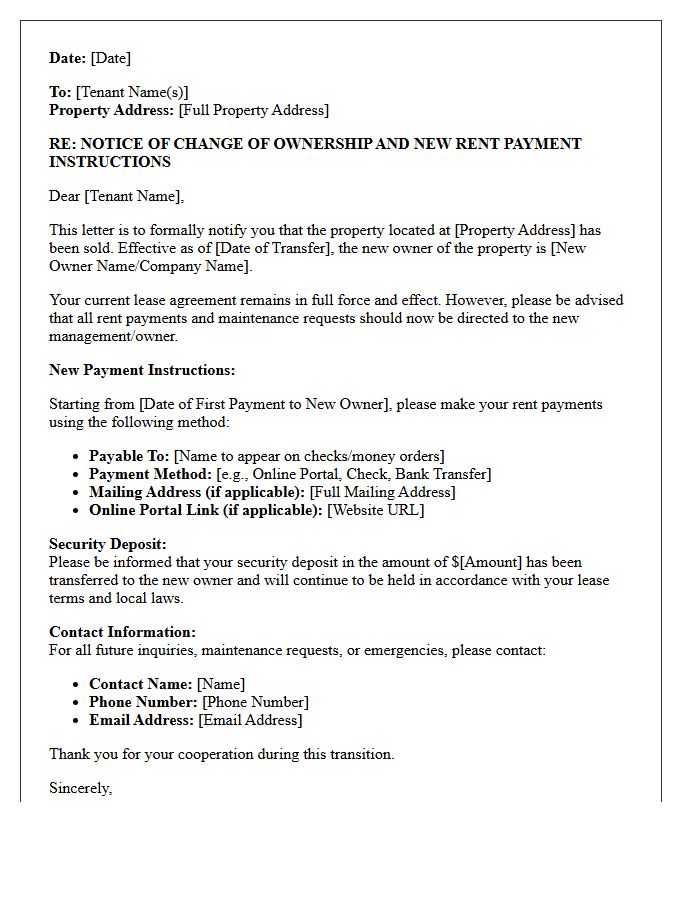
A Change of Ownership and Rent Payment Instructions Letter is a legal notification informing tenants that their property has a new landlord. This document is essential because it provides updated payment methods and specifies where future rent should be directed to avoid delinquency. It typically includes the effective date of transfer and new contact information for property management. Tenants must verify this letter's authenticity to prevent fraudulent redirects of funds. Retaining a copy ensures a clear paper trail for legal protection during the transition of ownership.
Final Account Settlement Letter Following Property Sale
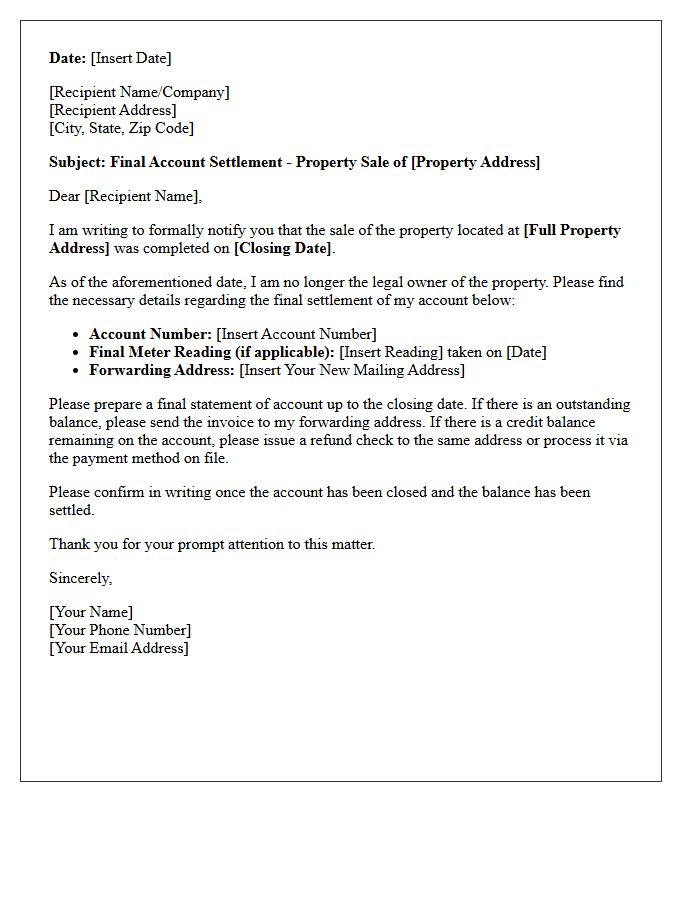
A Final Account Settlement Letter is a formal document issued by a solicitor or conveyancer after a property sale completes. This essential statement provides a financial breakdown of the entire transaction, detailing the sale price, legal fees, and outstanding mortgage discharges. It confirms the exact amount of net proceeds being transferred to the seller's bank account. Retaining this letter is crucial for tax purposes, particularly when calculating Capital Gains Tax liability. Always verify the figures against your initial quote to ensure all disbursements and agency commissions are accurately recorded.
Property Ownership Reassignment Letter for Maintenance Contractors
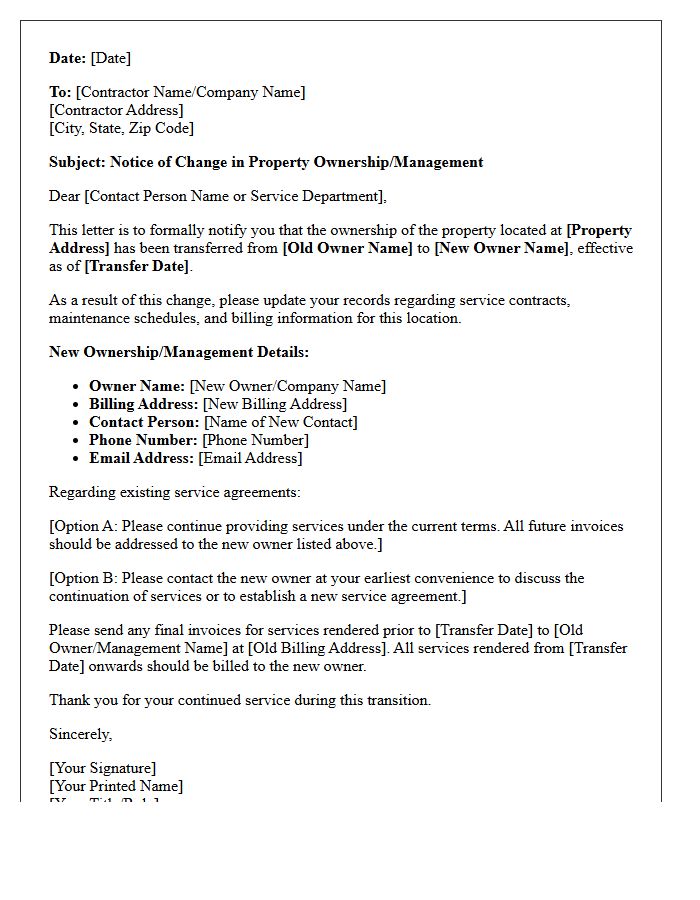
A Property Ownership Reassignment Letter is a formal notification sent to maintenance contractors when a building changes hands. This document ensures service continuity by detailing the new owner's contact information and billing procedures. It serves as a legal directive to update service contracts, insurance records, and payment profiles. Clear communication prevents administrative delays, ensuring that essential repairs and routine upkeep remain uninterrupted during the management transition. Providing this letter promptly protects the asset's value and maintains professional relationships with external vendors.
Letter of Formal Notice Regarding Commercial Property Sale
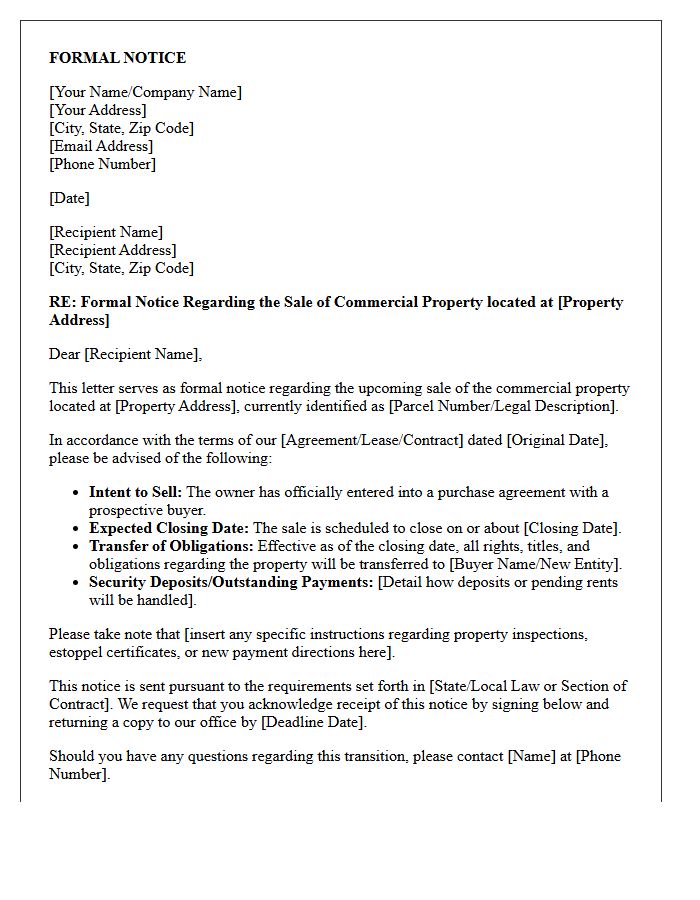
A Letter of Formal Notice serves as a critical legal step before initiating litigation in a commercial property sale dispute. It officially notifies the recipient of a breach of contract, such as failure to close, undisclosed property defects, or missed payment deadlines. This document must clearly outline the specific grievances, demand corrective action within a set timeframe, and state the intent to pursue legal remedies. It acts as essential evidence of a good-faith attempt to resolve the conflict, often facilitating a settlement without requiring a formal court trial.
Residential Complex Ownership Transfer Announcement Letter
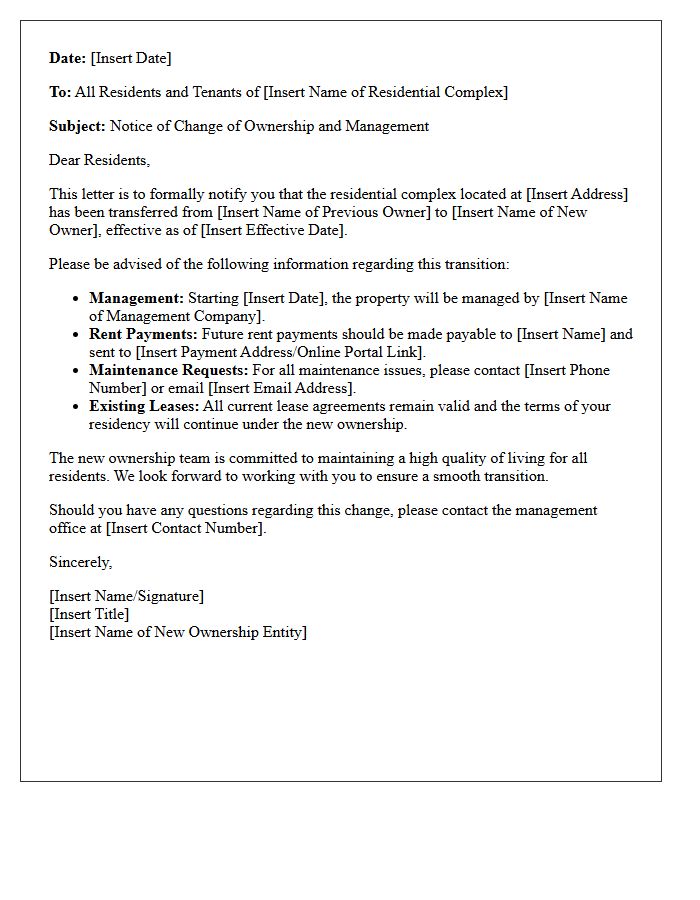
A Residential Complex Ownership Transfer Announcement Letter is a formal document notifying tenants and stakeholders about a change in property management or ownership. This essential legal notice ensures a smooth transition by detailing new contact information, payment methods, and effective dates. Providing clear instructions helps maintain tenant stability and prevents confusion regarding rent collection or maintenance requests. Clear communication during this handover process is vital for transparency and protecting the rights of both the new owner and the current residents.
Lease Agreement Continuity Letter Post Property Sale
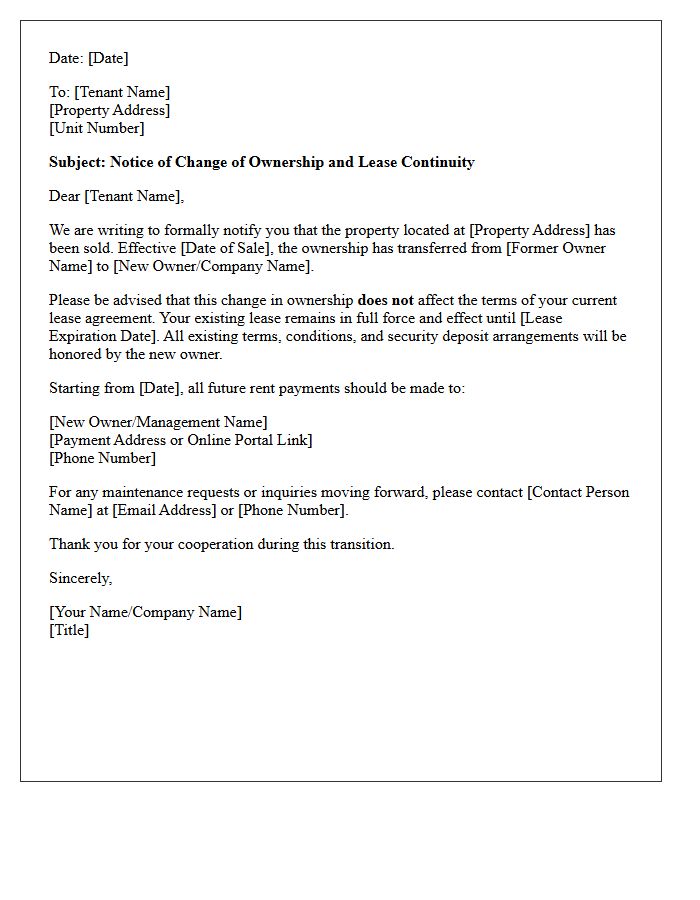
A Lease Agreement Continuity Letter is a vital document issued after a property sale to confirm that the existing lease remains legally binding. It serves as formal notice to tenants that the new owner must honor all original terms, including rent amounts and expiration dates. This letter ensures a seamless transition of legal obligations, protects tenant rights, and provides updated instructions for future rent payments. Understanding this document is essential for maintaining tenancy stability and ensuring clear communication between the new landlord and the current residents during an ownership transfer.
What is a Notice of Property Sale and Ownership Transfer?
A Notice of Property Sale and Ownership Transfer is a formal legal document used to notify relevant government authorities, utility providers, and interested parties that the legal title of a property has been conveyed from a seller (grantor) to a buyer (grantee).
When should I file a notice of ownership transfer after a sale?
In most jurisdictions, a notice of ownership transfer should be filed within 30 days of the closing date. Timely filing ensures that property tax assessments, water bills, and municipal records are updated to reflect the new owner's information.
Who is responsible for notifying the tax assessor of a property sale?
While the responsibility can vary by region, it is typically the buyer's obligation to ensure the change of ownership is recorded. However, many title companies or real estate attorneys handle the submission of the Preliminary Change of Ownership Report (PCOR) during the deed recording process.
Does a notice of sale automatically update utility billing accounts?
No, a formal notice of property sale filed with the county recorder does not automatically transfer utility accounts. Both the seller and buyer must contact electricity, gas, and water providers separately to close old accounts and establish new billing services.
What happens if a property transfer is not reported to the local authorities?
Failure to report a property transfer can result in "escaped assessments," where the new owner is hit with back-taxes later. Additionally, the previous owner may remain legally liable for property taxes, code violations, and municipal liens incurred after the sale date.


Comments